The Return to Feudalism in 21st Century Garb A simple observer's viewpoint, with no claim to hold any absolute truth. The Veneer Cracks There is something strangely archaic about the world unfolding before our eyes, despite its satellites, artificial intelligence, and promises of infinite progress. Here and there, we witness heads of state behaving like feudal lords of another age, patiently nibbling away at the neighboring territory, redrawing borders through force rather than law, as if governing a nation mattered less than expanding one's fiefdom. No names need be mentioned here: current events provide plenty of illustration, and each reader will recognize, according to their own geography and moment of reading, the faces that embody this observation. But this return to the archaic is not confined to grand geopolitical stages. It also permeates the most ordinary daily life—that of social media, where anyone can pour out venom against another without filter, without form, and often without the slightest argument. The verbal jousting of yesteryear, with its codes, its rhetoric, its tacit limits, has given way to raw invective, snap judgment, instant condemnation. We no longer debate: we execute, verbally—and sometimes it doesn't stop at words. The Vanished Inhibition What strikes one, in this dual observation—macro-political and micro-social—is the lifting of an inhibition we thought firmly anchored. Centuries of cultural construction, education, philosophy, sometimes religion, had patiently shaped mechanisms of restraint: politeness as social ritual, argumentation as a mode of resolving disagreement, respect for one's opponent as the very foundation of democratic debate. This civilizational veneer, however fragile it always was, seemed to hold. Today it is cracking, and the question—which for me remains a simple hypothesis, not a certainty—is why. A convenient explanation would blame social media: anonymity, the distance of the screen, the instantaneousness of publication would favor verbal acting-out without the usual mediation of reflection. This is probably true, but likely insufficient. For technology here is only an accelerant, an amplifier—not necessarily a root cause. A Poorly Formatted Neocortex? The more unsettling hypothesis—and I frame it explicitly as hypothesis, not scientifically established fact—is that of a failure in the formation of moral judgment and tolerance toward otherness. The human brain possesses the neural structures enabling empathy, the distancing of impulsive reaction, the acceptance of difference—but these capacities are not innate in their full exercise: they must be built, educated, cultivated, like a muscle that needs patient training from childhood onward. If this education in otherness, nuance, and tolerance of disagreement erodes—for multiple and undoubtedly complex reasons that are not mine to settle here—then older reflexes resurface: instinctive distrust of the stranger outside the clan, the law of the strongest, the logic of territorial or symbolic predation. The other ceases to be a possible interlocutor and becomes once again a potential threat, unless they belong to my tribe, my clan, my party, my digital bubble. Two Scales, One Logic What is striking, in this deliberately provocative reading, is the structural similarity between these two scales. The leader who invades a neighbor in the name of a rediscovered greatness or a reinvented historical right, and the anonymous internet user who insults a stranger in the name of an unnegotiable conviction, may obey the same underlying grammar: that of territory to defend, clan to protect, the other to subdue or exclude rather than understand. The form has changed—satellites instead of horses, tweets instead of heralds—but the substance, in this reading that remains mine alone and commits no one else, seems strangely identical to that of feudal rivalries: the absence of a recognized third party, of an accepted common rule, of a respected arbitrating authority. Everyone becomes judge and party, lord of their own digital or territorial fiefdom. A Civilization on a Knife's Edge Norbert Elias, in his Civilizing Process, showed how Western societies had historically built, with remarkable slowness, an increasing control over impulses and direct violence, in favor of more sublimated forms of social regulation. What we may be observing today—and I stress again the conditional—is a form of regression in this process, or at least a fragilization of the veneer it had patiently laid down. Should we see this as an effect of great technological accelerations, which shake up our cognitive rhythms without leaving education time to adapt? A deeper crisis of the institutions tasked with transmitting these values of tolerance—school, family, religion, the rule of law? Or simply a cyclical movement of human history, where phases of policed civilization alternate with darker backlashes? I have no certain answer, and I would be wary of anyone claiming to hold one. In Conclusion, a Shared Concern This text is only a viewpoint, necessarily partial and subjective, on a world that sometimes seems to replay ancient logics in new clothing. Perhaps I am wrong to perceive a continuity between the feudal lord and the contemporary dictator, between the anonymous online insult and the absence of education in nuance. Perhaps these phenomena are unrelated, or too complex to be thus summarized. But if this reading, even partially, hits the mark, then the question that arises is less one of technological regulation—though necessary—than the far more arduous question of how to rebuild, generation after generation, this capacity to accept the other in their difference, to debate without destroying, to coexist without necessarily dominating. This undertaking, if it exists, will not be resolved by an algorithm nor by an international treaty. It plays out, patiently, in the most elementary education—the one that teaches a child that the other is not a threat, but a possibility. Bibliography Elias, N. (1939). Über den Prozess der Zivilisation [The Civilizing Process]. Oxford: Blackwell (Eng. trans. 1978-1982). Lorenz, K. (1963). Das sogenannte Böse [On Aggression]. London: Methuen (Eng. trans. 1966). Arendt, H. (1970). On Violence. New York: Harcourt, Brace & World. Han, B.-C. (2013). Im Schwarm [In the Swarm: Digital Prospects]. Cambridge, MA: MIT Press (Eng. trans. 2017).


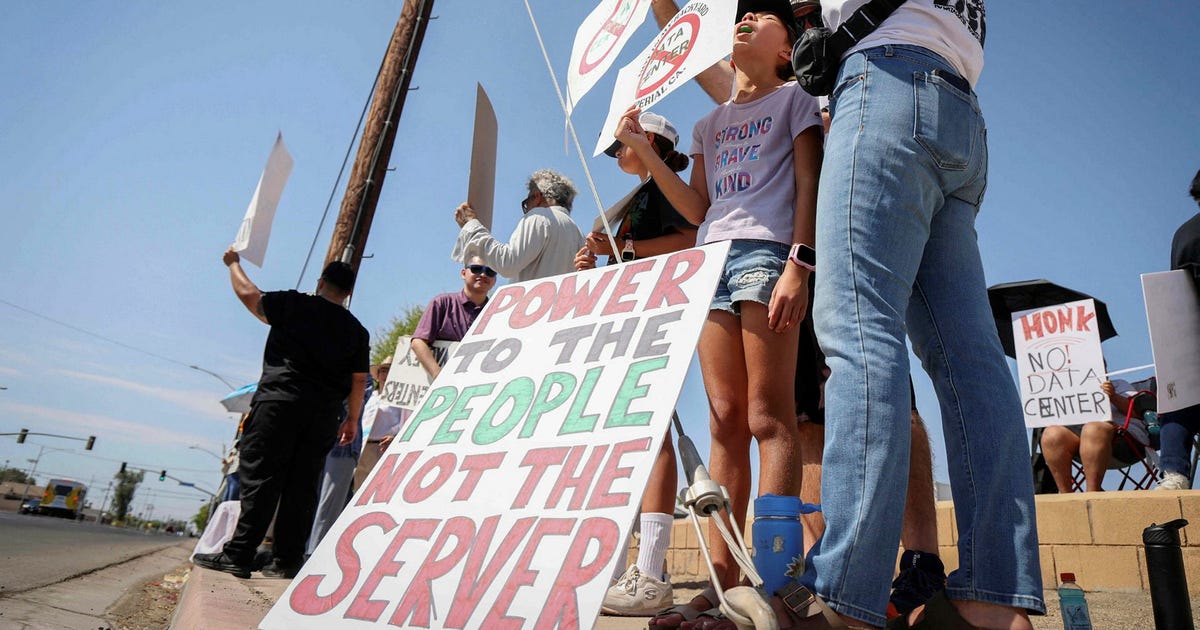
We had a major win in Mayo where a data centre was stopped because of climate concerns but this might only be the start of a real backlash from the state to clamp down on the anti-data centre and climate movement coalescing across Ireland. https://t.co/BDS5C6R6xw #ClimateAction #DataCentre #Ireland #IE

Deaths of eight women have led to a backlash against government’s response to endemic violence Women were killed in South Africa at a rate of 12.2 per 100,000 people in 2022, nearly six times the global rate https://t.co/2uPHVFJsJr via @ft #EndViolence #JusticeForWomen #SouthAfrica #ZA


🇺🇸 Democrats See Wider Path to Take Senate as Trump Backlash Grows - Bloomberg https://t.co/2WsNi3QEsD https://t.co/QV37J1NTf1 #Democrats #TrumpBacklash #Senate2024 #US


le top 2 par contre ça se voit tellement que la prod a voulu se racheter en urgence après avoir vu tout le backlash pendant toute la saison 💀💀 #dragracefrance #DragRaceFrance #Télévision #Backlash
Na de Grand Prix van Nederland hebben de stewards online bedreigingen ontvangen wegens het uitgedeeld straffen aan coureurs, waaronder Franco Colapinto, wat leidde tot een backlash van fans en sponsors die de straffen als onterecht beschouwen. #DutchGP #FrancoColapinto #F1


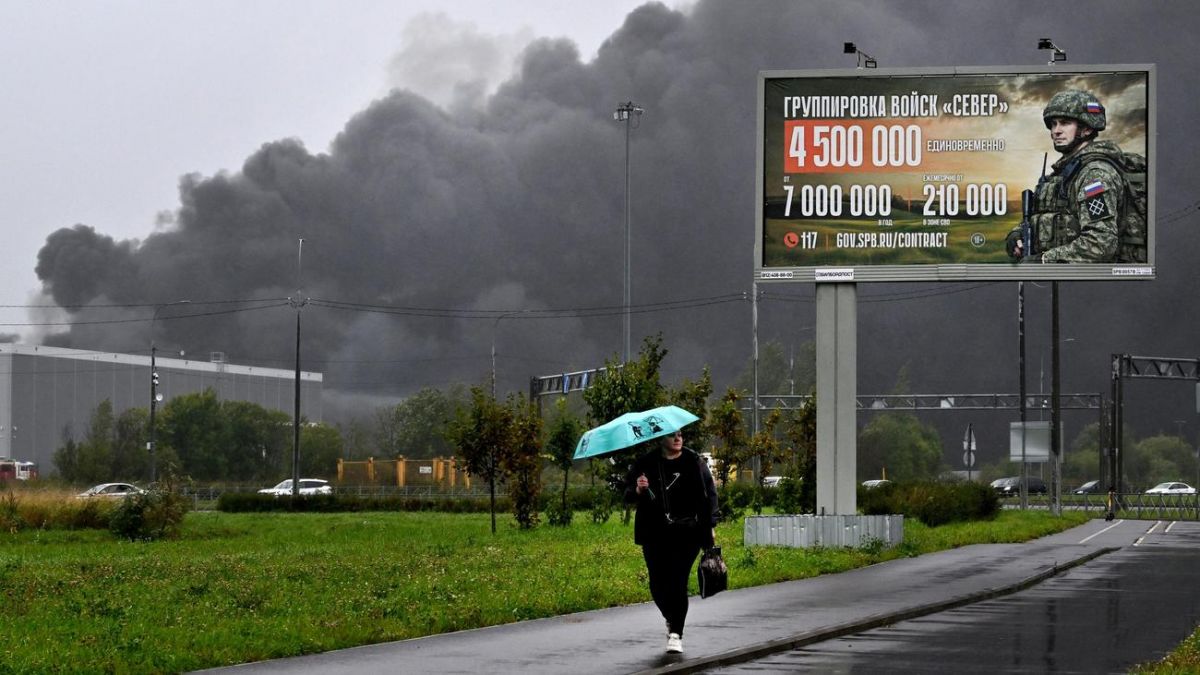
Laut westlichen Geheimdiensten bereitet der Kreml möglicherweise eine Zwangsmobilisierung vor, um angesichts der aktuellen militärischen Rückschläge im Donbas zusätzliche Soldaten zu rekrutieren, während Putin sich strategisch als Hardliner präsentiert und das Risiko eines innenpolitischen Backlash abwägt. #Putin #Zwangsmobilisierung #Russland

An American fashion brand based out of New York, JW PEI, has sparked major online backlash for allegedly stealing the traditional Indian saree design. The fast-fashion label listed a garment that replicates the exact structure and drapes of a traditional saree but rebranded it #FashionCulture #Saree #FastFashion #US #IN

Thailand, som legaliserade cannabis för att stimulera ekonomin och hjälpa bönder, står nu inför en backlash fyra år senare och försöker begränsa den växande cannabisindustrin på grund av oönskade konsekvenser av beslutet. #Thailand #cannabis #ekonomi


The French Constitutional Council just threw out as unconstitutional that law that would’ve banned kids under 15 from social media. Macron’s totalitarian power trip is crashing and burning hard. The backlash is gonna land straight on Ursula von der Leyen, who’s got the exact same #France #SocialMedia #ConstitutionalCouncil #FR #EU

„Tip Toe“, die neue Serie von Russell T Davies, handelt vom gesellschaftlichen Backlash gegen LGBTQ. Sie ist brutal, nicht subtil. Mit einem fantastischen Alan Cumming. Meine Rezension für die SZ: https://t.co/do3AIewvms (€) #TipToe #RussellTDavies #LGBTQ #DE

Alexandria Ocasio-Cortez nutzt ihren Körper als politisches Statement, indem sie auf Social Media und im Fernsehen dokumentiert, wie sie ihre Eizellen einfriert, um damit auf reproduktive Selbstbestimmung aufmerksam zu machen und gleichzeitig den Backlash aus rechten Kreisen herauszufordern, was den biopolitischen Konflikt um Mutterschaftsentscheidungen und Gleichberechtigung verdeutlicht. #AlexandriaOcasioCortez #ReproduktiveSelbstbestimmung #Frauenrechte


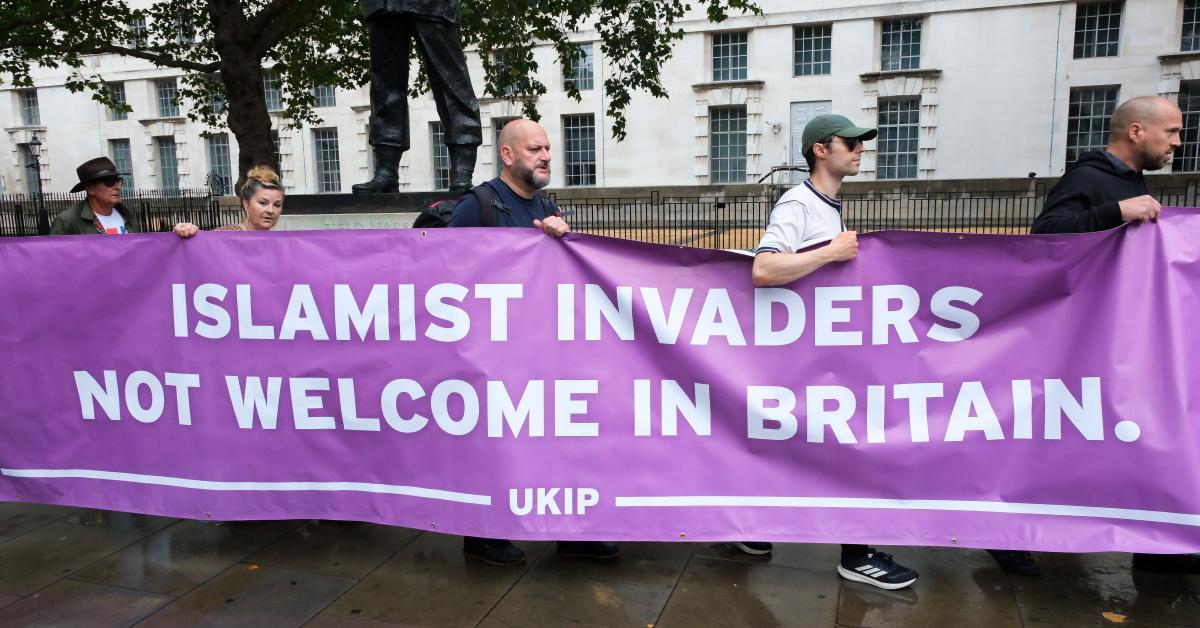
How the migrant crisis in Spanish Ceuta ignited a backlash against the Spanish far-right https://t.co/rEVooB2uI9 https://t.co/rEVooB2uI9 #Ceuta #MigrantCrisis #SpanishPolitics #ES
AI backlash is only getting started — AI is unpopular and climbing up the political agenda. The fiercest fights so far have been in US, where protests against data centres have scuppered $100bn-worth of projects, and 40% want AI banned from most industries https://t.co/3kGYnCvS7O #AIBacklash #DataPrivacy #TechPolicy #US
Der Artikel von Heike Specht thematisiert, wie Frauen in der Geschichte oft eine tragende Rolle in egalitären Bewegungen spielten, nur um nach deren Institutionalisierung von Männern marginalisiert zu werden, und warnt vor dem gegenwärtigen globalen Backlash gegen Frauenrechte, der ein erneutes Umschwenken der gesellschaftlichen Machtverhältnisse zur Folge haben könnte, wobei er zu mehr Wachsamkeit und breiten Allianzen aufruft. #Gleichberechtigung #Feminismus #Frauenrechte

I sin kommentar framhäver Martin Gelin att vi bevittnar början på en global backlash mot AI-företag, där allmän oro över jobbförlust och maktkoncentration leder till både fredliga protester och våldsamma aktioner mot kända personer inom branschen. #AI #Demokrati #Protest