WRLD

Search

#Canna
Eto 🇧🇷 8h

He joked by imagining KC winning the Worlds after eliminating T1 in a BO5, with Canna facing his former team. He said that the idea of a trailer for a KC-T1 quarterfinal made him laugh in front of his screen. #Worlds2023 #LeagueOfLegends #Esports (translated)


1771
OTP LoL 13h

OTP LoL indicated that Canna was back in the quarter-finals with Karmine Corp, five years after his first qualification at this stage with T1. The account also wrote that the Korean toplaner had surpassed 100 eliminations at Worlds. https://t.co/ZcHNWPva96 #LeagueofLegends #KarmineCorp #Worlds2023 (translated)

2303
Actu Foot 24h

Actu Foot indicated that Fabio Cannavaro had ranked Pau Cubarsi at the top of his vote for the Kopa Trophy 2026, ahead of Lamine Yamal and Ayyoub Bouaddi. The account attributed this information to France Football. https://t.co/uqX9ye3t42 #TrophéeKopa #Football #Vote (translated)

2332
Eto 🇧🇷 2d

Eto wrote that only one BO3 was missing to reach the final phase of the Worlds and that a draw would be experienced again. He also mentioned Kim Canna and thanked Karmine Corp. #Worlds2023 #KarmineCorp #Esports (translated)

3118
BeFootball 5d

BeFootball wrote that Lionel Messi remains, by far, the player who has won the most Ballon d'Ors, with 8 trophies, ahead of Cristiano Ronaldo, who has 5. The account then cited Michel Platini, Johan Cruyff, and Marco van Basten with 3 each, and then Franz Beckenbauer, Ronaldo Nazário, Karl-Heinz Rummenigge, Kevin Keegan, and Alfredo Di Stéfano with 2 each. According to the list published by BeFootball, Harry Kane was among the players who have won a Ballon d'Or, alongside Luis Suárez, Eusébio, Bobby Charlton, Raymond Kopa, Gerd Müller, Zinédine Zidane, Gianni Rivera, Ruud Gullit, Lothar Matthäus, Roberto Baggio, Hristo Stoitchkov, Andriy Chevtchenko, George Best, Allan Simonsen, Ronaldinho, Stanley Matthews, Omar Sívori, Josef Masopust, Lev Yachine, Denis Law, Flórián Albert, Oleg Blokhine, Paolo Rossi, Igor Belanov, Jean-Pierre Papin, George Weah, Matthias Sammer, Rivaldo, Luís Figo, Michael Owen, Pavel Nedvěd, Fabio Cannavaro, Kaká, Luka Modrić, Karim Benzema, Rodri, and Ousmane Dembélé. #BallonDor #Messi #Football (translated)

3276
L
Le Soir 7d

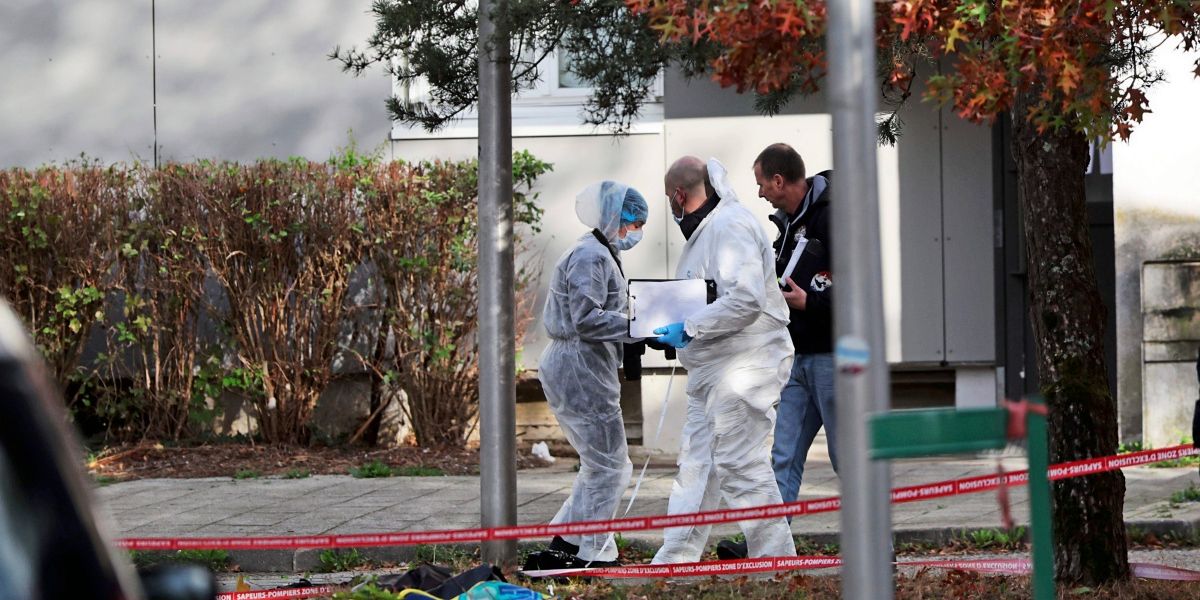
The suspect of the fatal attack in Yvelines, which is believed to have racism as a motive, had been diagnosed with schizophrenia and was under treatment, while toxicological analyses found cannabis and cocaine in his blood. #Yvelines #schizophrénie #racisme (translated)

www.lesoir.be
Attentat dans les Yvelines : le suspect était sous traitement pour schizophrénie
2608
Luciano Magaldi Sardella (PhD) 7d

THE "BATTLE OF CERIGNOLA (1503)" ON "POPULAR ARCHAEOLOGY USA" (by LUCIANO MAGALDI SARDELLA) SOURCE 1: https://popular-archaeology.com/author/sardella/ SOURCE 2: https://popular-archaeology.com/article/the-2026-battlefield-archaeology-of-the-battle-of-cerignola-1503/ -------------------------------------------------------------------- CERIGNOLA (FG) — On April 28, 1503, at sunset, a shallow trench cut between the vineyards outside Cerignola rendered heavy cavalry obsolete. For five centuries, its exact location has only been conjectured, its archaeology ignored, its most important sources never translated into English. We are on the Tavoliere of Puglia, a corridor of battles for two thousand years: from Cannae in 216 BC to the falcon hunt of Frederick II from Torre Alemanna. Cerignola, at that time, was not a city but a rural village of 350 families at 120 meters above sea level, custodian of the Mena della Dogana delle Pecore, the great pastoral system of transhumance that financed the Kingdom of Naples. Its possession was fiercely contested. Facing each other were two worlds. Louis d’Armagnac, Duke of Nemours, Viceroy of Naples for Louis XII, in his thirties, splendidly armored, confident of victory. On the other side was Gonzalo Fernández de Córdoba, the Gran Capitán, who on April 27-28 marched from Barletta with about 9,000 exhausted men and decided to settle on a low ridge. He deepened what was already there: not an invention, but an agricultural ditch. The French gendarmes, the last heirs of the medieval knight, lowered their lances and never reached the line. From behind a parapet reinforced with vine stakes, over 1,000 Spanish arquebusiers opened fire. Nemours fell, almost certainly the first European army commander to die from a portable firearm. With him, the charge of cavalry as a dominant tactic died. And here is the scandal denounced by the article: no cartographer of the 17th-18th centuries ever mapped the battlefield. No monument commemorates it. It is not protected as a cultural landscape under the Code of Cultural Heritage. Every deep plowing of the Tavoliere, standard practice since the Bourbon reforms, destroys an archaeology never recorded. Yet the perimeter can be reconstructed. By cross-referencing the 16th-century descriptions of "vine-covered slopes fifteen miles north of the Ofanto" with the Via Traiana, the engagement area is a rectangle of 3-4 square kilometers northeast of the current settlement. With the 1m LiDAR DTM from ISPRA, it could reveal anomalous linear depressions, and the lower filling of a ditch 2-3 meters deep, under the plowed layer, is still readable with magnetometry and ground radar. Why did we arrive late? Not for lack of sources, but for lack of translation. The Municipality of Cerignola and the Torre Alemanna Research and Study Center of Prof. Matteo Stuppiello, who in 1978 obtained the first monumental protection for Torre Alemanna, have digitized a corpus that has never entered Anglophone historiography. Here are the 3 pillars: 1. The letter that still smells of gunpowder. The “Letter from Consalvo de Córdoba to the Spanish royals dated April 29, 1503,” edited by Stuppiello in 2003 and updated to 2025 on comune.cerignola.fg.it/biblioteche-digitali. A handwritten page written in Cerignola the day after the battle, “rich in flashes, twilight lights, and gunfire.” Not a polished chronicle like that of Giovio, but a field dispatch: the fatigue of the night march, the decision to entrench upon arrival, the recovery and honorable burial of Nemours, the intact capture of the French artillery. 2. The graffiti, a monument inside the monument. In the 14th-century church of Santa Maria delle Grazie, known as the Incoronatella, on the Via Trinitapoli Vecchia, where tradition holds that the body of Nemours was brought. On the triumphal arch, a 1503 graffiti gives, in almost notarized form, the date, sixth indiction, Friday at the hour XXIII-XXIIII. It was indeed Friday, as confirmed by the perpetual calendar of Cappelli. Decoded in 1995 by Prof. Francesco Magistrale, Latin paleographer at the University of Bari, in *The Battle of Cerignola (1993)* and in the municipal monograph *S.M. delle Grazie (1999)*. Today it is fading due to humidity and neglect. 3. The land registry that explains the ditch. The Survey of 1672 preserved at the State Archive of Naples, Pignatelli Aragona Cortes fund, Scanzia 63, fasc.1: “At the time of the battle, thick vineyards covered the hill reaching to the plain, and were distinctly separated from the rest of the countryside by a not very deep ditch.” Córdoba did not improvise; he adapted. This is confirmed by the catasti of the Giustiniani: 277 households in 1532, 699 in 1595. The landscape of 1503 was intensely horticultural, not the deeply plowed monoculture of today. In addition to these, there is the first monograph by Vincenzo Buonassisi, *The Battle of Cerignola* (1908, died in Via Fanfulla 10 on June 27, 1928), and the first modern military analysis by Piero Pieri, “Consalvo de Córdoba and the Battle of Cerignola,” Archivio Storico Pugliese 1952, which 30 years before the Anglophone rediscovery of the “pike-and-shot” defined Cerignola as an engineered killing ground. While Cerignola forgot, others remembered. The “Regimiento de Infantería Cerinola n.42”, later “Fuerteventura n.56”, carried the name of Cerignola until the 20th century. The coat of arms, described in *Heraldica e Historiales del Ejercito, Tomo V” (Madrid, 1981): silver field, dying white swan entangled in a hedge, golden wall crown, with the scroll “Cerignola.” Dossier officially transmitted on April 30, 1986, prot. 4565/509, from the Servicio Histórico Militar of Madrid to the Torre Alemanna Center thanks to Col. Alessio Antonutti and Gen. José Cifuentes. And in Amsterdam, at the Rijksmuseum, the anonymous bronze commemorative medal: Hercules with lion skin and club and Janus with the keys next to an eagle-armed coat of arms, legend “Consalvus Agidarius… Janum clausit,” on the reverse a battle scene “Consalvi Agidari Victoria de Gallis ad Cannas,” an artist's mistake that confuses Cerignola with Cannae. It belonged to Mrs. J.M. van Gelder-Nijhoff, donated in 1885. The author's conclusion is clear: Gonzalo's ditch is the most consequential earthwork in European military history. It inaugurates the infantry armed with firearm and conditions the Mediterranean for 160 years. It may still be there, filled, plowed, invisible to the naked eye but accessible to a magnetometer. It is not a matter of medieval archaeology but of the will to protect. (translated)

681
Luciano Magaldi Sardella (PhD) 7d

THE “BATTLE OF CERIGNOLA (1503)” ON “POPULAR ARCHAEOLOGY USA” (by LUCIANO MAGALDI SARDELLA) SOURCE 1: https://popular-archaeology.com/author/sardella/ SOURCE 2: https://popular-archaeology.com/article/the-2026-battlefield-archaeology-of-the-battle-of-cerignola-1503/ __________________________________________________________________ CERIGNOLA (FG) — On 28 April 1503, at sunset, a shallow trench cut through the vineyards outside Cerignola rendered heavy cavalry obsolete. For five centuries its exact position has been merely conjectured, its archaeology ignored, its most important sources never translated into English. We are on the Puglian Tablelanda, a corridor of battles for two thousand years: from Cannae in 216 BC to Frederick II’s falconry from Torre Alemanna. Cerignola, at that time, was not a town but a rural hamlet of 350 families at 120 metres above sea level, guardian of the Mena of the Dogana delle Pecore, the great customs system of transhumance that financed the Kingdom of Naples. It was for its possession that the battle was fought. Opposed, two worlds. Louis d’Armagnac, Duke of Nemours, Viceroy of Naples for Louis XII, thirty years old, splendidly armed, certain of victory. On the other side, Gonzalo Fernández de Córdoba, the Great Captain, who on 27–28 April marches from Barletta with some 9,000 exhausted men and decides to entrench himself upon a low ridge. In front of it he has deepened what was already there: not an invention, but an agrarian ditch. The French gendarmes, the last heirs of the mediaeval knight, lower their lances and never reach the line. From behind an embankment reinforced with vine stakes, more than 1,000 Spanish arquebusiers open fire. Nemours falls, almost certainly the first European army commander to die by a portable firearm. With him dies the cavalry charge as a dominant tactic. And here lies the scandal denounced by the article: no cartographer of the seventeenth or eighteenth century ever mapped the field. No memorial stone recalls it. It is not protected as a cultural landscape under the Code of Cultural Heritage. Every deep ploughing of the Tavoliere, standard practice since the Bourbon reforms, destroys an archaeology never recorded. Yet the perimeter is reconstructable. By cross-referencing sixteenth-century descriptions of “slopes covered with vineyards fifteen miles north of the Ofanto” with the Via Traiana, the engagement zone is a rectangle of 3–4 sq km to the north-east of the present settlement. With ISPRA’s 1m DTM LiDAR, anomalous linear depressions could be revealed, and the lower fill of a 2–3 metre ditch, beneath the ploughed layer, is still legible by magnetometry and ground-penetrating radar. Why have we arrived so late? Not for lack of sources, but for lack of translation. The Comune di Cerignola and the Centro Studi e Ricerche Torre Alemanna of Prof. Matteo Stuppiello, who in 1978 obtained the first monumental protection for Torre Alemanna, have digitised a corpus that has never entered Anglophone historiography. Here are the 3 pillars: 1. The letter that still smells of powder. The “Letter of Consalvo da Cordova to the Sovereigns of Spain of 29 April 1503,” edited by Stuppiello in 2003 and updated in 2025 on comune.cerignola.fg.it/biblioteche-digitali. A manuscript page written at Cerignola the day after the battle, “rich in flashes, twilight gleams, and gunfire.” Not a polished chronicle à la Giovio, but a field dispatch: the exhaustion of the night march, the decision to entrench upon arrival, the recovery and honourable burial of Nemours, the intact capture of the French artillery. 2. The graffito, a monument within the monument. In the fourteenth-century church of Santa Maria delle Grazie, known as the Incoronatella, on the Via Trinitapoli Vecchia, where tradition holds the body of Nemours was taken. On the triumphal arch, a graffito of 1503 gives in quasi-notarial form the date, sixth indiction, Friday at the twenty-third to twenty-fourth hour. It truly was a Friday, as confirmed by Cappelli’s perpetual calendar. Deciphered in 1995 by Prof. Francesco Magistrale, Latin palaeographer at the University of Bari, in La Battaglia di Cerignola (1993) and in the municipal monograph S.M. delle Grazie (1999). It is now fading through damp and neglect. 3. The cadastre that explains the ditch. The Apprezzo of 1672 preserved in the Archivio di Stato di Napoli, fondo Pignatelli Aragona Cortes, Scanzia 63, fasc.1: “At the time of the battle, dense vineyards covered the hill reaching down to the plain, and were clearly separated from the rest of the countryside by a not very deep ditch”. Córdoba did not improvise; he adapted. This is confirmed by the Giustiniani cadastres: 277 hearths in 1532, 699 in 1595. The landscape of 1503 was one of intensive horticulture, not the deep-ploughed cereal monoculture of today. To these are added the first monograph by Vincenzo Buonassisi, La Battaglia di Cerignola (1908, died at Via Fanfulla 10 on 27 June 1928), and the first modern military analysis by Piero Pieri, “Consalvo di Cordova e la battaglia di Cerignola”, Archivio Storico Pugliese 1952, which 30 years before the Anglophone rediscovery of “pike-and-shot” defined Cerignola as an engineered killing ground. While Cerignola forgot, others remembered. The “Regimiento de Infantería Cerinola n.42”, later “Fuerteventura n.56”, bore the name of Cerignola until the twentieth century. Its coat of arms, described in Heráldica e Historiales del Ejército, Tomo V (Madrid, 1981): argent field, a dying white swan entangled in a hedge, a gold mural crown, with scroll “Cerignola”. Dossier officially transmitted on 30 April 1986, prot. 4565/509, by the Servicio Histórico Militar in Madrid to the Centro Torre Alemanna through Col. Alessio Antonutti and Gen. José Cifuentes. And in Amsterdam, in the Rijksmuseum, the anonymous commemorative bronze medal: Hercules with lion-skin and club and Janus with keys beside an eagled coat of arms, legend “Consalvus Agidarius… Janum clausit”, on the reverse a battle scene “Consalvi Agidari Victoria de Gallis ad Cannas” — an error by the artist who confuses Cerignola with Cannae. It belonged to Mrs J.M. van Gelder-Nijhoff, donated in 1885. The author’s conclusion is unequivocal: Gonzalo’s ditch is the most consequential earthwork in European military history. It inaugurates the infantryman armed with a firearm and conditions the Mediterranean for 160 years. It may still be there, infilled, ploughed over, invisible to the naked eye but accessible to a magnetometer. It is not a question of mediaeval archaeology but of the will to protect.

907
D
der Standard 7d

A racist attack near Paris, in which one person was killed and several others were injured, was carried out by a 39-year-old suspect who was under the influence of cannabis and cocaine. #Rassismus #Terroranschlag #Drogen (translated)

www.derstandard.at
Rassistischer Anschlag bei Paris: Verdächtiger stand unter Drogen
2610
Jon De Lorraine 7d

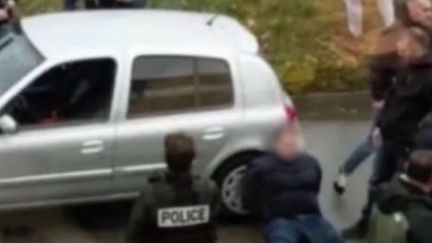
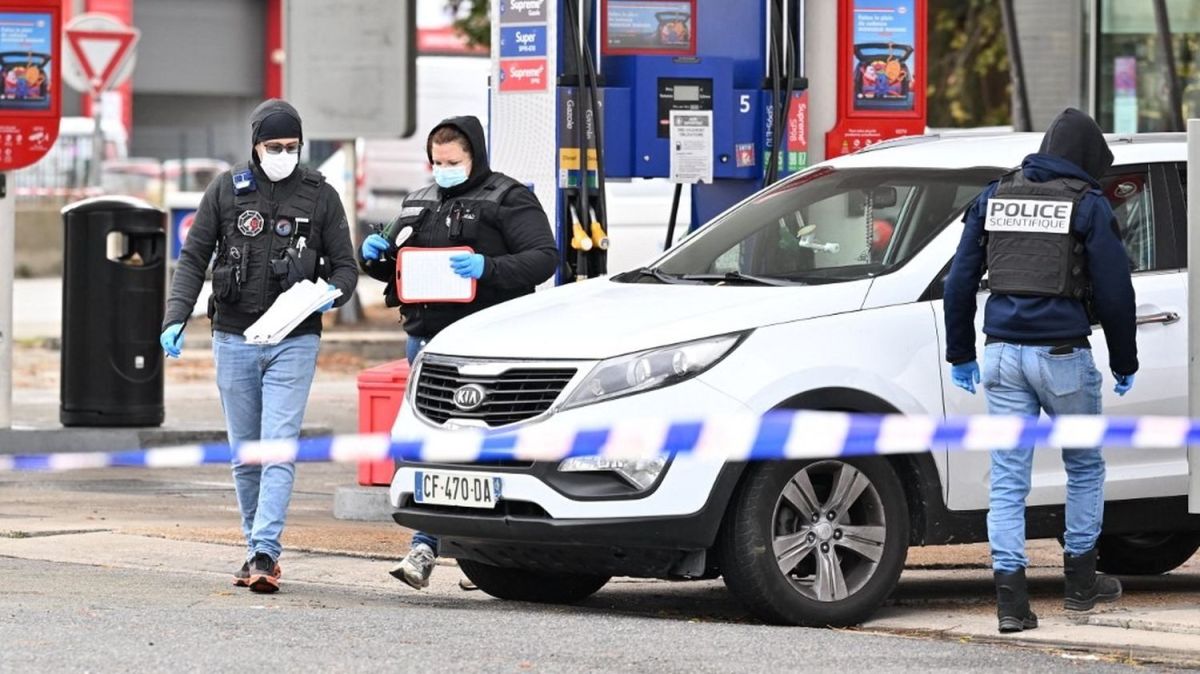
Jon De Lorraine indicated that the police custody of Kévin T., 39 years old, suspected in the Trappes attack, had been suspended for psychiatric reasons after a medical examination. According to him, the man had been transferred to the psychiatric infirmary of the Paris police prefecture, and the toxicological analyses had tested positive for cannabis and cocaine. He added that the suspect was to be placed under observation for 48 hours and that the PNAT remained seized of the investigation. De Lorraine specified that the attack had resulted in one death and five injuries, including a 12-year-old girl who was seriously injured, and cited AFP, RTL, and the PNAT as sources. #AlerteInfo #Justice #SantéMentale (translated)

3518
Impact 7d

Impact indicated that the police custody of Kevin T., whom he presented as the perpetrator of the Trappes attack, had been suspended. He wrote that he had been placed in psychiatric observation for a period of up to 48 hours and that blood tests had revealed the presence of cannabis and cocaine. Impact attributed this information to Le Parisien. #attentat #Trappes #terrorisme (translated)

3064
Cerfia 7d

Cerfia indicated, citing Le Parisien, that the police custody of Kevin T., presented as the shooter from Trappes, had been suspended for psychiatric observation which could last 48 hours. The media also reported that cannabis and cocaine had been detected in his blood. https://t.co/BOVlpIGm0M #Trappes #Cannabis #Cocaïne (translated)

3404
Le Monde.fr 7d

The suspect in the racist attack in Trappes has been transferred to psychiatric care after a toxicological analysis revealed the presence of cannabis and cocaine in his blood. #ProblemasDeConexión #SoporteTécnico #NavegaciónWeb (translated)

www.lemonde.fr
Attentat raciste de Trappes : le suspect transféré en soins psychiatriques ; l’analyse toxicologique a révélé la présence de cannabis et de cocaïne dans son sang
2383
Bleu Blanc Rouge ! 🇫🇷 7d

Blue White Red! stated that the police custody of Kevin.T, whom he presented as the attacker in Trappes, had been lifted for psychiatric reasons. According to his message, Kevin.T had been transferred to the psychiatric infirmary of the Paris police headquarters and the toxicological analysis had tested positive for cannabis and cocaine. #Trappes #Justice #Sécurité #Psychiatrie (translated)

3291
Franceinfo 7d

The police custody of the suspect in the racist attack in Trappes has been suspended for a 48-hour psychiatric observation period, during which toxicological analyses revealed the presence of cannabis and cocaine in his blood. #AttentatRaciste #Trappes #Justice (translated)

www.franceinfo.fr
La garde à vue du suspect de l'attentat raciste à Trappes "suspendue" le temps "d'une période d'observation psychiatrique susceptible de durer 48 heures", annonce le parquet antiterroriste
2610

KCBS "Worst of them All" III asked for help in finding images of Canna at the front of the parade during this demonstration. He indicated that he remembers that he was wearing a crossbow and a green jacket, and invited people with these images to share them. https://t.co/j6Xu2F0t09 #manif #Canna #aide (translated)

2961
Eto 🇧🇷 1w

Eto presented three rules of the League of Legends world. He claimed that Karmine Corp never lost against racist, harassing, or sexually predatory individuals, and that Kim Canna, whom he accused of racism, never lost against a Chinese player. He also strongly insulted the Solary club. #LeagueOfLegends #KarmineCorp #Gaming (translated)

2505
L
lastampa.it 1w

Prime Minister Meloni, speaking at the summit in San Patrignano, stated that defining cannabis as light is irresponsible and emphasized that prison cannot be the only response to addiction, advocating for prevention and recovery measures in drug treatment. #Droga #Cannabis #SanPatrignano (translated)

www.lastampa.it
Meloni: “Da irresponsabili definire leggera la cannabis. Il carcere non può essere l’unica risposta”
3533
ANSA.it 1w

The President of the Council Giorgia Meloni stated that it is irresponsible to consider cannabis a soft drug, highlighting the increase in potency and accessibility of substances during an international meeting in San Patrignano on prevention and recovery from addiction. #Droghe #Dipendenze #Prevenzione (translated)

www.ansa.it
San Patrignano, Meloni: 'Da irresponsabili ostinarsi a definire la cannabis droga leggera'
3420
L
Le Soir 1w

An 82-year-old Democratic senator from Virginia, Louise Lucas, has been charged with corruption and cannabis sales, while the recreational use of the drug was not yet legal in the state, along with six others involved, including her daughters and grandson. #Corruption #TraficDeDrogues #Virginie (translated)

www.lesoir.be
Etats-Unis : une sénatrice démocrate de 82 ans inculpée de corruption et trafic de cannabis
2511