BETA nonprofit public democratic european moderated

Search

#Choice

Asia's next growth chapter is still being written. In a world of technological change, demographic shifts, and uncertainty, opportunity abounds. The latest F&D magazine explores the choices that can shape the region’s future. Read it here: https://t.co/d64wRGN20J https://t.co/Rlz78FIJtk #AsiaGrowth #Innovation #FutureTrends #Thetweetdoesnotmentionanyspecificcountries.Therefore #therearenocountrycodestoreturn.

🇨🇭 SWITZERLAND: VOTE NO TO THE NEUTRALITY INITIATIVE! On 27 September 2026, Switzerland faces an important choice. ❌ NO to rigid, permanent neutrality. ✅ YES to a free, secure and cooperative Switzerland. Europe is confronting Russia’s war against Ukraine and a fundamental https://t.co/unAkc4Hcee #Switzerland #NeutralityInitiative #VoteNo #CH

🇦🇲 ARMENIA, CHOOSE EUROPE. @NikolPashinyan Lavrov says Armenia must choose between the European Union and the Russian-led Eurasian Economic Union. Then the strategic choice should be clear: EUROPE OR PUTIN’S RUSSIA. EURO OR EAEU. FREEDOM OR DEPENDENCY. For years, Moscow claimed https://t.co/EIkztI2GGQ #Armenia #ChooseEurope #EUvsEAEU #AM #RU #EU

🇮🇹 SAVE MELONI FROM PUTIN’S TROJAN HORSE Italy faces a strategic choice. Roberto Vannacci is trying to build political momentum around positions that would weaken support for Ukraine, undermine NATO unity and reopen the door to normalization with Putin’s Russia. That is https://t.co/SQBtuHXl4J #SaveMeloni #Ukraine #NATO #IT #RU #UA

🇫🇷 I ENDORSE ÉDOUARD PHILIPPE FOR PRESIDENT OF FRANCE 2027. 🇪🇺🇺🇦 @EPhilippe_LH France faces a historic choice. Europe needs a strong France. Ukraine needs a reliable France. NATO needs a serious France. And France needs a President capable of defeating Marine Le Pen at the ballot https://t.co/GJ95jQ8sJE #ÉdouardPhilippe #France2027 #NATO #FR #EU #UA

🇮🇸The Icelanders made a sovereign choice that must be fully and unconditionally respected. Nearly half of Iceland's population supports European integration, and Reykjavik is eager to cooperate with the EU through the EEA Agreement. Geopolitical instability reminds us that #Iceland #EuropeanIntegration #EEAAgreement #IS

H

When Therapy Replaces Morality: The Rise of the Therapy State By replacing religious frameworks with therapy speak, Western society may have lost its moral “grammar” and traded it for clinical language—though moral and psychological categories work differently. The DSM has expanded dramatically: in 1952 it listed 102 disorders; by 2013 it had over 400. Meanwhile, young adults report worsening mental health: poor mental-health days among 18–25-year-olds rose from 3.5 to 6 per month between 1993 and 2020, and depression diagnoses more than doubled from 2006 to 2020. Yet the most striking shift is self-diagnosis. About one in four American adults suspect they have ADHD, while actual prevalence is around 6%. Social media fills the gap: many popular ADHD and autism clips include misleading or unsupported claims. The label persists because it serves a function. A diagnosis increasingly becomes identity—and identity becomes a shield. When someone claims ADHD, anxiety, or trauma, they may be drawing a boundary others are not allowed to cross. Where moral language asks what we should become, therapeutic language labels what we are; once the label becomes identity, the conversation often ends. Religious language framed forces as external, preserving agency—you could resist. Therapeutic culture internalizes them: you don’t have weakness to overcome; you have ADHD. Jung argued that old gods and demons didn’t vanish; they became neuroses, anxieties, and addictions—turning questions of conscience and choice into labels to accept. The result isn’t greater freedom but greater control. If a civilization can’t say “wrong,” it doesn’t necessarily become more tolerant. Moral language permits disagreement and growth; therapeutic language can pathologize it and end discussion. The therapy state is the successor to moral authority—and it may be easier to enforce.

H

Compassion as a Weapon Western civilization is increasingly trapped in a culture of entitlement, where victimhood can become a route to status, privilege, and power. Some elite universities report unusually high disability registrations—e.g., 20%+ at Brown and Harvard and around 40% at Stanford—far above community colleges. Whatever the causes, it raises a troubling question: when systems meant to protect the truly vulnerable become incentives, what happens to everyone else? Rob Henderson describes how accommodations can turn into “status games.” Extra time, special housing, and exemptions can make diagnosis feel like the logical choice, and the lesson travels outward: tomorrow’s leaders in journalism, HR, law, academia, and politics may learn that displaying weakness is rewarded. Research links habitual victimhood displays with traits associated with the Dark Triad (narcissism, Machiavellianism, psychopathy). That doesn’t mean genuine victims are manipulative—it means rewarding victimhood gives manipulators an incentive to enter. In the “virtue game,” grievance becomes currency. Pity can also function as covert power: the weak person gains leverage, while the giver gains moral superiority. When compassion is treated like a currency, it can become a mutually reinforcing racket. The danger isn’t helping the weak. It’s teaching that appearing weak is the surest way to gain power.

H

When Morality Becomes a Weapon Having the “correct” opinion doesn’t make you a good person. Our age is increasingly ruled by those who believe it does. In *The Brothers Karamazov*, Dostoevsky shows this through the Grand Inquisitor, who imagines Christ returning during the Spanish Inquisition. He arrests Him for threatening an institution that claims to represent Him. The Inquisitor argues people don’t truly want Christ’s freedom; they want bread, certainty, and someone to carry the burden of choice. He eventually admits they don’t need Christ’s teachings—only His moral authority. Dostoevsky reveals how power works: dominators can hide behind morality, while the dominated may trade freedom for the comfort of having others decide. Later, Polish psychiatrist Andrew Lobaczewski observed communism invoking “the people” to justify terror and execution. He argued that a small minority without conscience can rise during revolutionary upheavals, with ideology serving as moral camouflage. The lesson: moral language can be weaponized by those lacking moral character. Words like justice, equality, safety, harm, care, and compassion can become tools of control. Return to Aristotle’s view of virtue: virtue isn’t a belief you hold but a habit you practice. We become just by repeatedly doing just things; bravery comes from doing brave things. No slogan can replace character.

H

Five Thomas Sowell Lessons the West Refuses to Learn The West has proven Thomas Sowell right: “compassionate” policies often ignore trade-offs and incentives. Sowell offers no villains—only reality. 1) **Ask the right question.** Poverty is the default; prosperity is what needs explaining. Study what creates abundance, not inequality as automatic proof of injustice. 2) **Pick your poison.** There are no perfect solutions, only costs and benefits. Every policy uses scarce resources and shifts who pays. No free lunch. 3) **Leaders need skin in the game.** It’s dangerous to grant power to people insulated from consequences. When decision-makers aren’t harmed by error, bad choices spread. 4) **Keeping what you earn isn’t greed.** Treating production as selfish and redistribution as virtue inverts morals—and concentrates power in those who control taking and giving. 5) **Judge ideas by outcomes, not vibes.** The West keeps discarding institutions that worked because their reasoning feels unfashionable. Sowell’s core point: reality ignores intentions—scarcity, incentives, and consequences still rule.

H

Why Good Times Make Weak People The pinnacle of tyranny is a society in which people are controlled without force because they love their servitude. Aldous Huxley’s Brave New World explored this idea. Unlike Orwell’s 1984, its citizens are controlled not through terror but pleasure. Soma provides instant relief from discomfort—a “holiday from the facts.” Huxley’s people are not prisoners but satisfied customers: the State produces children, promiscuity is normalized, and entertainment fills every empty moment. As Neil Postman observed, Orwell feared that truth would be hidden from us, while Huxley feared that we would become so distracted that we would no longer care about it. The Softening of Man Good times can make bad times possible. When safety and luxury become normal, people can lose sight of the struggles that created them. Andrew Lobaczewski argued that prosperity can weaken profound reflection. Pleasure becomes dominant, while uncomfortable truths are dismissed because thinking about them requires effort. Those who think critically may even be ridiculed. This creates a dangerous cycle: societies lose the capacity for psychological reasoning and moral criticism, allowing catastrophe to develop unnoticed. Sterilizing Genius Nietzsche understood that comfort, elevated above all else, can destroy the qualities that made civilization possible. Struggle, ambition, discipline, passion, and courage helped create prosperity—but prosperity can weaken the virtues that produced it. The Odyssey illustrates this. The Lotus-Eaters simply lose the desire to return home. Odysseus must drag his men back while they weep to remain. He rejects Calypso’s offer of immortality and endless comfort, choosing the difficult path home. We admire that choice because comfort without purpose is not a life worth admiring. Nietzsche imagined the endpoint in Thus Spoke Zarathustra: a society where safety and sameness become the highest ideals, producing “no shepherd, and one herd.” Anyone who seeks greatness becomes an aberration.

H

The Therapy State Western society has traded moral language for therapy-speak, losing moral grammar and replacing it with clinical categories that don’t work the same way. About 25% of American adults suspect they have ADHD, though prevalence is 6%; on TikTok, most top ADHD videos include unsupported claims. People misdiagnose themselves far more often than they correctly identify mental illness—and yet self-diagnosis persists because it serves a social function. Moral categories allow disagreement: you can argue about right and wrong, measure choices against standards, and debate what those standards require. Psychological categories pathologize disagreement: diagnosis becomes identity, and identity becomes a shield. When someone claims ADHD, anxiety, or trauma, they’re not just describing symptoms—they’re setting a boundary you’re not allowed to question. The shift from “what we should aim for” to “what we are” ends the conversation. Jung saw this displacement mechanism: modern gods and demons don’t vanish; they become neuroses, anxieties, addictions, and therapeutic labels. The question of conscience and choice becomes a fixed identity that must be accepted. Unlike religious frameworks that locate forces outside you and invite struggle, therapy culture internalizes the forces—so the label replaces agency. You don’t resist weakness; you *are* it. And because boundaries can’t be crossed, change becomes harder. When a civilization loses the ability to say “wrong,” it doesn’t become more tolerant—it becomes more rigid. The therapy state replaces moral authority, with disastrous results.

H

Why Weak Societies Choose Tyranny The pinnacle of tyranny would be a system that allows politicians, elites, and bureaucrats to control a population without force or coercion because the people love their servitude. Aldous Huxley wrote Brave New World, an eerily relatable dystopian novel, with this idea at the forefront. Unlike Orwell’s 1984, there is no overt oppression. The state does not have to stamp on human faces with its jackboots or erect an inescapable surveillance state. Rather, the people of Brave New World happily chain themselves with meaningless pleasure and distractions. The authorities do not rule through terror and rage, the central elements of 1984, but instead give the people everything they ever wanted. A pharmaceutical called Soma becomes the opiate of the masses. Mustapha Mond, the World Controller, likens it to Christianity without tears. While religion requires years of moral training, Soma allows citizens to achieve peace simply by swallowing tablets. It is the perfect escape from reality, a holiday from the facts. Lenina, the female counterpart to the protagonist Bernard, cannot comprehend why he refuses Soma, preferring discomfort to something that can remove it. When Bernard states, “I’d rather be myself, myself and nasty, not somebody else, however jolly,” Lenina sees this as a sort of pathology and repeatedly encourages him to take the wonder drug. Bernard explains, “I want to know what passion is.” He understands that there is more to life than merely being content, craving genuine experience, including suffering and intensity, rather than being emotionally regulated by the World State. Lenina’s bewilderment stems from her conditioning to regard unhappiness as a technical problem, encapsulated in the society’s common saying that “a gram is better than a damn.” The people of Brave New World are not captives but satisfied customers. Children are produced by the scientific state, relieving people of the responsibility of parenthood. This grants them the ability to engage in promiscuity, where everyone belongs to everyone else, while filling their free time with cheap entertainment and endless sporting events—what would be referred to as slop today. As Neil Postman observed, Orwell saw totalitarianism through the lens of fear, while Huxley saw it through pleasure. There was no need to ban a book in Brave New Worldbecause there was no one who wanted to read one. An abundance of low-quality information rendered censorship unnecessary because no one could hear the truth through all the noise. Huxley threw shade at civil libertarians who passionately opposed tyranny because they failed to take into account man’s almost infinite appetite for distractions. Humanity in its rawest form is portrayed by John the Savage, an outsider free from the World State’s conditioning. Upon coming face-to-face with this spiritually neutered society, he completely rejects it: “I don’t want comfort, I want God, I want poetry, I want real danger, I want freedom, I want goodness, I want sin.” Huxley’s dystopia is not imposed on an unwilling population but instead requested by a hollow one. Which leads us to the question: How do people become so weak that they get on their knees and beg for totalitarianism? Good times make bad times possible. Once a certain level of luxury and safety is achieved, people start to resemble the hobbits from the Shire. They are so far removed from evil that they forget it even exists and become defenseless in the face of it. Andrew Lobaczewski, who studied the psychology of totalitarianism from inside Poland’s communist takeover, wrote: “During good times, people progressively lose sight of the need for profound reflection. They lose the capacity to differentiate human nature, and emotion begins to dominate intellect. Once a critical mass starts operating on the pleasure principle, any excess mental effort seems like pointless labor.” Lobaczewski warned that it is not as simple as some people losing the ability to think rationally. It is worse, because those people then shame anyone capable of doing so. A clever, liberal, and merry individual is a good sport. A more far-sighted person predicting dire results becomes a wet blanket, a killjoy. The ability to have uncomfortable conversations without emotion taking over is, in Lobaczewski’s view, an indicator of whether a society’s future will be good or bad. It is easier to think about pleasant things. This leads people to eliminate any data or facts that cause them discomfort. That becomes a habit and eventually a custom accepted by society at large. Once the general populace accepts that inconvenient truths should be left unsaid, it becomes incapable of reaching correct conclusions. After all, how could you ever describe a picture that you refuse to look at? “Catastrophe waits in the wings of the communities that lose the capacity for psychological reason and moral criticism,” Lobaczewski wrote. “It is on the other side of this weakening of thought that the processes of the generation of evil are intensified at every social scale until they give rise to bad times.” It is precisely man’s dreams of happiness that can lead to chaos and suffering. This hedonistic view of happiness contains the seeds of misery, feeding the eternal cycle whereby good times give birth to bad times. Friedrich Nietzsche viewed socialism as demanding comfort for the greatest number of people possible. To question whether it is good for the masses to live in comfort has become a form of heresy. This reveals the spiritual atrophy that so many suffer from. Considering only the weak believe comfort to be a virtue, it is what Carl Jung would describe as the infantile dream state of mass dependency: the desire to gently slip back into the kingdom of childhood, into the paradise of parental care. Except this lack of friction has consequences. The perfect state destroys the soil in which great intellect grows. Genius, struggle, passion, strength, and wisdom are required to build a safe and abundant society. Yet once a certain level of comfort is achieved, it can destroy the very virtues required to obtain it. Nietzsche observed that it is the warmest heart that aims to alleviate suffering and hardship but fails to realize that it thereby wills the destruction of its own foundation. Comfort breeds mediocrity, which is then called good. Small people want one thing above all: that no one hurt them. We have taken this pathology to such a degree that we now obsess over hurt feelings and call this virtue. Pleasure, in its proper place, is a byproduct of meaningful goals, not a goal in itself. Aristotle saw that pleasure and comfort distort perception and proper judgment. While they do not cause us to misjudge something like geometry or mathematics, they can destroy our ability to decide what is worth pursuing and, therefore, what to do. Consider The Odyssey. Homer depicts Odysseus’ men on the island of the Lotus-Eaters, where they taste the fruit and lose all desire to go home. Much like Huxley’s Brave New World, they are not imprisoned. Rather, they simply stop wanting anything more. Odysseus has to drag his men back to the ships while they weep to stay. This is what comfort can do to men. It empties them of purpose. We intuitively understand this but fail to apply it to our own lives. We must make the same choice as Odysseus when he refuses Calypso’s offer of endless comfort and immortality. He knows she is more beautiful than his wife Penelope waiting at home. He knows that he and Penelope will grow old and die, a fate he could avoid by staying with Calypso. No one who reads these stories wishes he had stayed. We want him to choose the hard way home because if he took the offer, he would stop being admirable. Yet staying is exactly what our modern society asks of us. We are told that the island is the good life. But what happens to the man who caves to this temptation? In Thus Spoke Zarathustra, Nietzsche imagines a risk-averse society taken to its logical endpoint. The elimination of all struggle produces a man so diminished that he fails to possess even self-contempt or higher aspiration. Safety and sameness become the highest goals, creating “no shepherd in one herd.” Anyone who seeks to be anything more than normal becomes an aberration to be dealt with. Or, as Nietzsche puts it, they have “made the wolf a dog in man himself, man’s best domestic animal.”

The Choices We Make About AI Are Critical: Gerd’s comments on the Bill Gates AI and Humanity Manifesto (5* must-read, btw) https://t.co/L8B9RRFnZe #thegoodfuture #techvshuman https://t.co/xAn8HaNBDR #AI #BillGates #Humanity #Therearenospecificcountryreferencesinthetweetprovided.

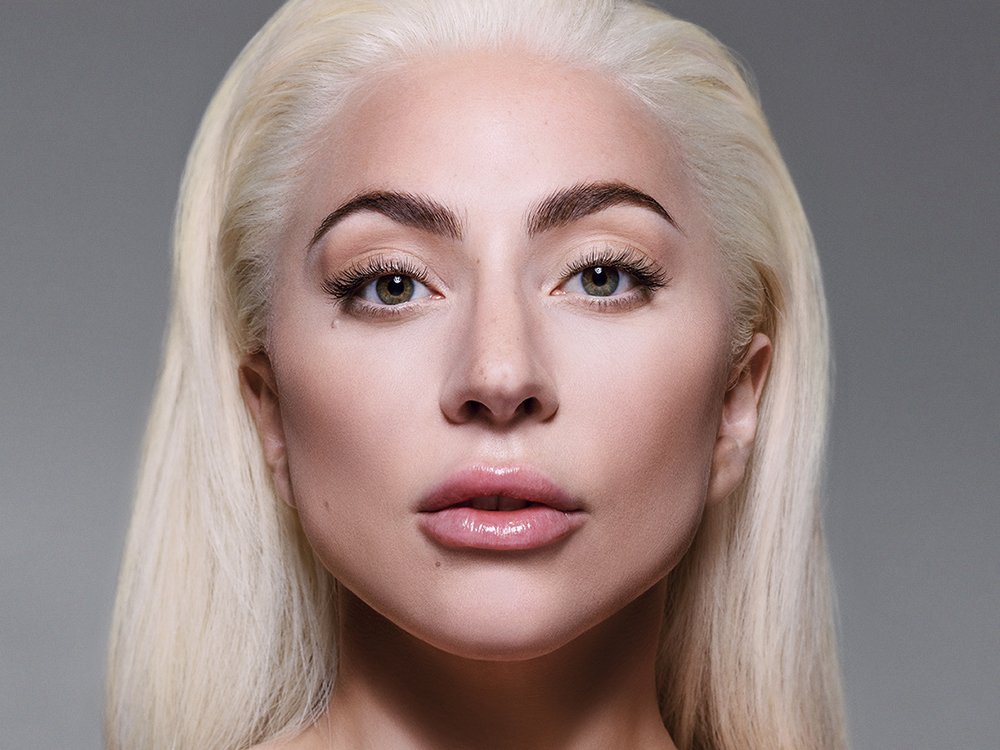
🏆 Pelo 5º ano consecutivo, a icônica base da Haus Labs, de Lady Gaga, vence o Allure Readers’ Choice Awards na categoria 'Best Foundation'. https://t.co/fUtGo6bLqc #HausLabs #LadyGaga #MelhorBase

The question isn't whether institutional childcare or home care is "better." The question is whether public policy treats families fairly when they make different choices about caring for their children. #FamilyPolicy #ParentalLeave #Childcare #ChildRights #FamilyPolicy #Childcare #ChildRights #Nospecificcountriesarementionedinthetweet.

🚨 DIFUNDAN! SE NOS VIENE LA VOTACIÓN DE LOS MAMA Y DEBEMOS ESTAR PREPARADOS👇🏻 Ya está abierta la aplicación para Super Fan de los premios MAMA, asegúrense de elegir a #BTS y apliquen ahora: 🖇️https://t.co/byaaKNqn4E “Convertirse en un MAMA SUPERFAN te dará más beneficios: 🖇️Derecho a votar para seleccionar a los nominados en la categoría FANS’ CHOICE de los MAMA AWARDS. 🖇️Tarjeta de identificación especial de MAMA SUPER FAN. 🖇️Oportunidades de obtener recompensas adicionales mediante misiones.” NECESITAMOS QUE ESTO LLEGUE A TODOS🙏🏻🔥 ARMY MAMA SUPERFAN 2026 #MAMAAWARDS #2026MAMAAWARDS #MAMASUPERFAN #MAMAAWARDS #MAMASUPERFAN #BTS

Strategic autonomy is not a slogan. It is infrastructure, capability and choice. Europe must have all three. The first @esa contracts under the European Launcher Challenge are now signed — a major step towards a more autonomous Europe in space. Now, the challengers must #EuropeanSpace #StrategicAutonomy #SpaceInnovation #EU

🇧🇩 BANGLADESH: CHOOSE ASEAN — NOT THE MAKKAH PACT @bbcbangla Bangladesh faces a clear strategic choice. @banglanews24com Choose ASEAN. Not a military pact. @BDnews The future of Bangladesh lies in full ASEAN membership, regional economic integration, trade, investment, https://t.co/Fw0PDmzpNH #Bangladesh #ASEAN #RegionalIntegration #BD

🇨🇳 GLM-5.3 Flash aka Ox Alpha is here 🚨 https://t.co/qPrLBbctHz has confirmed it’s a new GLM-series model — and it may now be the best intelligence-per-dollar choice. ➡ Intelligence / cost per task: • GLM-5.3 Flash: 63% / $0.24 • DeepSeek-V4 Flash: 53% / $0.46 • GPT-5.6 https://t.co/HjxrT7W5su #GLM53Flash #AI #TechNews #CN