BETA nonprofit public democratic european moderated

Search

#Datum
I

Kā var viegli konstatēt, ka KNAB nepilda ar likumu uzliktos pienākumus un proaktīvi nepārbauda politiķus? Vienkārši jāpaskatās uz Jūlijas Stepaņenko gada deklarāciju publicēšanas datumiem - pirms 3,5 gada deklārācija ar dāvinājumu 240K, pirms 1,5 gada - dzīvoklis 180K: Beidzot darbu - 2022. gada 31. oktobrī Iesniegta VID:02.01.2023 Publicēta:10.01.2023 SERGEJS FEDOTOVS Dāvinājums 239598.05 Beidzot darbu - par otro gadu - no 2023. gada 01. novembra līdz 2024. gada 31. oktobrim Iesniegta VID:16.03.2025 Publicēta:20.03.2025 Dāvinājums. 2024.gada 12.janvārī saņēmu dāvinājumā dzīvokli Rīgā no sava tēva 180000.00 EUR Skaidrās naudas uzkrājums 72000.00 EUR tāds sīkums vien. #KNAB #politika #deklārācijas


The date of Lionel Messi's last appearance for the Argentine national team has been announced, which will take place on October 6, 2026, against Benin in Buenos Aires, marking the star's retirement from international football. (translated)

Objavljen datum ‘posljednjeg plesa‘ jednog od najvećih nogometaša svih vremena

Ohne die Sichtbarmachung der Pandemie hätte sie keiner bemerkt Teil 2 - der angekündigten BfArM Aktenauswertung: Der Maskenzwang — oder was der Staat über seine eigenen Masken wusste Eine Pandemie ist unsichtbar. Man sieht kein Virus. Man sieht keine Inzidenz. Man sieht keinen R-Wert. Das muss erst kreativ erschaffen werden - also her mit dem PCR - Test - Regime für die Etablierung der Testplandemie (ich berichtete https://t.co/PcyzKjW28d Was man sah, waren Masken. Die mussten her, weil sich nur so eine nicht existente Testplandemie auch in den Köpfen der Bürger einfräst. Drei Jahre lang war das Stück Stoff, OP Maske bis FFP3 vor dem Gesicht das einzige physische Zeichen dafür, dass etwas Außergewöhnliches im Gange sei. Es hing in der Bahn, im Supermarkt, im Klassenzimmer, im Wartezimmer, auf dem Bahnsteig. Es war das Dauersignal, dass die Lage ernst sei. Wer die Maske abnahm, widersprach nicht einer Hygieneregel — er widersprach der Lage selbst und jene die es sahen befürchteten den eiligen Tod, weil es da einen gab, der die Regeln nicht befolgte. Genau deshalb lohnt sich der Blick in die Akten der BfArM (einer Bundesoberbehörde unter der Fachaufsicht des Bundesministerium der Gesundheit - seinerzeit also unter Jens Spahn, derzeit eine Vertrauensperson für Fragen des Deutschen Haushalts - soweit der Parallelblick zur Lernkurve) . Denn dort steht, was die zuständige Behörde über diese Masken tatsächlich wusste. Und es steht nicht das, was am Bahnsteig zu lesen war. Genau deshalb lohnt sich der Blick in die Akten der BfArM (einer Bundesoberbehörde unter der Fachaufsicht des Bundesministerium der Gesundheit - seinerzeit also unter Jens Spahn, derzeit eine Vertrauensperson für Fragen des Deutschen Haushalts - soweit der Par . Denn dort steht, was die zuständige Behörde über diese Masken tatsächlich wusste. Und es steht nicht das, was am Bahnsteig zu lesen war. Zum Stichtag 2. April 2020 lagen dem Bundesinstitut für Arzneimittel und Medizinprodukte 43 Anträge auf Sonderzulassung für Atemschutzmasken vor — medizinische Masken wie FFP-Masken [BfArM-Akten, BER p936/p942; Lagebild Bundeskanzleramt, 06.04.2020]. Die Prüfung erfolgte, so die Akte wörtlich, „nach internen Kriterien". Halten wir das fest. Nicht nach der Norm EN 149. Nicht nach einer Konformitätsbewertung durch eine Benannte Stelle. Nicht nach einem veröffentlichten Prüfmaßstab, den irgendein Bürger hätte nachlesen können. Sondern nach internen Kriterien, die bis heute nicht im Volltext veröffentlicht sind. Möglicherweise ist der Punkt - Prüfung wer am meisten Geld zahlt enthalten - niemand weiß es bis heute. Das war der Marktzugang für das Produkt, das wenige Wochen später bundesweit zur Rechtspflicht wurde. „Nicht an Formalien scheitern" Es blieb nicht bei der Sonderzulassung der Masken. Der Bund beantragte in der 93. Gesundheitsministerkonferenz die Ergänzung der Medizinischer-Bedarf-Versorgungssicherstellungsverordnung (MedBVSV). Der Beschlussvorschlag ist in den Akten. Er lautet, sinngemäß und in Teilen wörtlich: Ein fehlendes oder unvollständiges Konformitätsbewertungsverfahren einschließlich fehlender CE-Kennzeichnung sei für das Inverkehrbringen „unschädlich", sofern das BMG oder eine von ihm beauftragte Stelle in einem vom BMG gebilligten Verfahren festgestellt habe, dass die Ware den Anforderungen entspreche [T3 p74; 93. GMK, Beschlussvorschlag Bund, Ziff. 1a]. Die Begründung dafür steht direkt daneben. Sie ist nicht medizinisch. Sie ist nicht epidemiologisch. Sie lautet: Der Einsatz qualitativ geeigneter Schutzmasken solle „nicht an Formalien scheitern" [T3 p74]. Übersetzt heißt das, dass der Staat Millionen Masken gekauft hatte, die formal nicht verkehrsfähig waren. Statt sie zu vernichten, änderte Spahn die Regel, an der sie gescheitert waren. Das ist der Vorgang in einem Satz — und er stammt nicht von einem Kritiker, sondern aus dem Beschlussvorschlag des Bundes. Der Haftungstrick, den kaum jemand bemerkt hat Im selben GMK-Beschluss steht eine Zeile, die juristisch mehr wiegt als alles andere: „Bund und Länder stellen fest, dass sie bei der Beschaffung, Bevorratung und Abgabe von Persönlicher Schutzausstattung [...] hoheitlich und im Wege der Amtshilfe handeln." [T3 p75; 93. GMK Beschluss Nr. 2] Man muss wissen, was dieser Satz bewirkt. Wer ein mangelhaftes Produkt in Verkehr bringt, haftet nach dem Produkthaftungsgesetz — verschuldensunabhängig. Der Geschädigte muss keinen Vorwurf beweisen, nur den Fehler, den Schaden und die Ursächlichkeit. Wer dagegen „hoheitlich" handelt, haftet nach § 839 BGB in Verbindung mit Art. 34 GG. Und da gilt: Verschulden erforderlich. Amtspflichtverletzung erforderlich. Dazu die Subsidiaritätsklausel des § 839 Abs. 1 Satz 2 BGB. Der Bund hat sich mit einem Federstrich aus der Gefährdungshaftung in die Verschuldenshaftung bewegt — für Produkte, die er zeitgleich zur Rechtspflicht machte, und deren Konformitätsmängel er zeitgleich für „unschädlich" erklärte. Das ist kein Zufall. Das ist Handwerk. 15 Masken pro Woche — der eigentliche Treiber Woher kam die Nachfrage? Nicht aus einer neuen Studienlage. Das Protokoll der 20. Bund-Länder-Besprechung (Gewaltendurchbrechung) Medizinprodukte vom 16. Dezember 2020 hält fest: Das BMG informiert über die Entscheidung der Ministerpräsidenten und der Bundeskanzlerin, vulnerable Personen über die Wintermonate mit insgesamt 15 FFP2-Masken auszustatten — eine Maske pro Woche, ausgegeben über die Apotheken [T3 p103]. Eine Maske pro Woche. Für ein Produkt, dessen Schutzwirkung wesentlich vom korrekten Sitz, von Dichtsitzprüfung und von der Tragedauer abhängt. Die Zahl 15 folgt aus dem Kalender, nicht aus der Aerosolforschung. Der Treiber war ein politischer Zielwert. Die Evidenz kam gar nicht vor. Der doppelte Maßstab war, dass dieselbe Behörde, dieselbe Woche sich widerprach. Am 27. März 2020 übermittelte der BfArM-Präsident dem BMG einen Bericht zum Regelungsbedarf. In einem einzigen Dokument stehen beide Maßstäbe nebeneinander. Zu Arzneimitteln heißt es: Eine weitere Vereinfachung oder Beschleunigung des Zulassungsverfahrens sei „nicht erforderlich". Das AMG sehe mit § 28 Abs. 3 AMG bereits die beschleunigte bzw. vorzeitige Zulassung vor; unter Berücksichtigung des Zwecks, die Bevölkerung mit „ausreichend geprüften und damit sicheren Arzneimitteln" zu versorgen, seien die bestehenden Regelungen ausreichend [BER p306]. Wenige Seiten weiter, zu Schutzausrüstung: Man solle überlegen, die Bundesoberbehörde zu ermächtigen, Sonderzulassungen auch an andere als die Hersteller zu erteilen. Das BfArM habe derartige Sonderzulassungen „jüngst bereits erteilt; dies begegnet jedoch rechtlichen Bedenken" [BER p310]. Für Arzneimittel galt ausreichend geprüft und damit sicher. Für Masken kann man die Norm nachträglich ausweiten, weil man sie schon überschritten hatte. Dieselbe Behörde. Derselbe Bericht. Dasselbe Datum. Und die Wirksamkeit? Jetzt die Frage, die man eigentlich zuerst hätte stellen müssen. Die maßgebliche systematische Übersichtsarbeit ist der Cochrane-Review von Jefferson u. a., veröffentlicht am 30. Januar 2023 (Cochrane Database Syst Rev 2023;1:CD006207). Er wertet randomisierte und cluster-randomisierte Studien zu physikalischen Maßnahmen aus. Ergebnis für das Maskentragen in der Allgemeinbevölkerung: Es macht wahrscheinlich wenig oder keinen Unterschied für grippeähnliche bzw. COVID-ähnliche Erkrankungen. Auch für den Vergleich FFP2/N95 gegen medizinische Masken blieb das Ergebnis unsicher. Nun die faire Gegenrede, die man kennen muss, bevor man diesen Satz zitiert: Die Chefredakteurin der Cochrane Library, Karla Soares-Weiser, stellte am 10. März 2023 klar, die Behauptung, der Review zeige „Masken wirken nicht", sei eine unzutreffende und irreführende Auslegung. Zutreffend sei: Untersucht worden sei, ob Maßnahmen zur Förderung des Maskentragens die Ausbreitung verlangsamen — und das Ergebnis sei ergebnisoffen („inconclusive"). Angesichts der Grenzen der Primärstudien könne der Review die Frage, ob das Maskentragen selbst das Risiko senke, nicht beantworten. Man lese diesen Satz zweimal. Die Klarstellung, die als Verteidigung der Maskenpflicht zitiert wird, ist ihre schärfste Anklage. Denn Gegenstand jeder staatlichen Maßnahme ist nicht das Maskentragen als Naturvorgang. Gegenstand ist genau das, was Cochrane untersucht hat: die Maßnahme zur Durchsetzung des Maskentragens. Der Bußgeldbescheid. Das Hausverbot. Die 3G-Kontrolle. Die Schulordnung. Cochrane sagt zu genau dieser Maßnahme: Die Evidenz ist ergebnisoffen. Ein Grundrechtseingriff, der Millionen Menschen über Jahre traf, ruht auf einer Evidenzbasis, die die weltweit angesehenste Institution für Evidenzsynthese als ergebnisoffen bezeichnet. Das ist kein Randbefund. Das ist der Befund. Die Einzelstudien passen dazu. Die dänische DANMASK-19-Studie (Bundgaard u. a., Annals of Internal Medicine 2021) fand bei rund 4.800 ausgewerteten Teilnehmern keinen statistisch signifikanten Unterschied: 1,8 Prozent Infektionen in der Maskengruppe, 2,1 Prozent in der Kontrollgruppe. Man kann über diese Zahlen streiten. Man kann nicht behaupten, sie trügen einen jahrelangen bundesweiten Zwang. Was am Ende übrig blieb Die Bilanz der Beschaffung ist inzwischen öffentlich, und sie stammt vom Bundesrechnungshof. Unter Bundesgesundheitsminister Jens Spahn wurden 5,8 Milliarden Masken beschafft — ohne Verhandlung, zu Festpreisen. Bis 2024 hat der Bund dafür rund 5,9 Milliarden Euro ausgegeben. Im Inland verteilt wurden etwa 1,7 Milliarden Masken. Mehr als die Hälfte der Beschaffungsmenge musste vernichtet werden oder steht zur Vernichtung an. Der Bundesrechnungshof nennt das eine massive Überbeschaffung. Aus nicht abgenommener Ware laufen nach dessen Bericht rund 100 Klagen mit einem Gesamtstreitwert von 2,3 Milliarden Euro. Der Bericht der Sonderbeauftragten Margaretha Sudhof — rund 170 Seiten, im Auftrag des damaligen Ministers Lauterbach erstellt — wurde monatelang im Ministerium zurückgehalten, dem Haushaltsausschuss als Verschlusssache und in geschwärzter Fassung zugeleitet. Einzelne Seiten sind vollständig unlesbar. Sudhof selbst durfte im Ausschuss nur vertraulich aussagen; eine unbeschränkte Aussagegenehmigung hatte sie nicht. Ein Untersuchungsausschuss nach Art. 44 GG ist bis heute nicht zustande gekommen. Grüne und Linke erreichen das Quorum nicht; die Regierungsfraktionen machen den Weg nicht frei. Die am 10. Juli 2025 eingesetzte Enquete-Kommission „Aufarbeitung der Corona-Pandemie" soll ihren Abschlussbericht erst Ende Juni 2027 vorlegen — sie erhebt keine Beweise mit den Mitteln des Strafprozesses. Über 170 Strafanzeigen bei der Generalstaatsanwaltschaft Berlin wurden nach Pressedarstellung am 9. März 2026 ohne Aufnahme von Ermittlungen eingestellt: kein Anfangsverdacht - so geht ministeriales Weisungsrecht für Staatsanwaltschaften. Fünf Komma neun Milliarden Euro. Die Hälfte der Ware in der Verbrennung. Kein Untersuchungsausschuss. Keine Ermittlungen. Ein geschwärzter Bericht. Alle warten mutmaßlich sehnsüchtig auf den Eintritt der Verjährung. Jens Spahn indes gelangt wegen seiner besonderen Expertise wieder in den Haushaltsausschuss. Dort - so finden die Genossen und Christdemokraten - hat er sein größtes Talent schon im BMG unter Beweis gestellt. Der Kern Fassen wir zusammen, was aus den Akten der eigenen Behörde folgt: Der Staat erklärte fehlende Konformitätsbewertungen für unschädlich, damit seine Bestände in den Verkehr durften. Er erklärte sich beim Vertrieb zum Hoheitsträger, damit er nicht nach Produkthaftungsrecht einstehen musste. Er setzte eine politische Zielzahl fest, bevor er eine Evidenzfrage stellte. Und er machte das Produkt, für das er all das tat, zur bußgeldbewehrten Pflicht für 83 Millionen Menschen. Zur Wirksamkeit dieses Zwangs sagt die beste verfügbare Evidenzsynthese: ergebnisoffen. Invertiert gesprochen: "evidenzlos". Die Maske hat vieles getan. Sie hat eine unsichtbare Lage sichtbar gemacht. Sie hat Zustimmung durch Panikmache organisiert, Abweichung markiert und so Coronaleugner und "Staatsfeinde" sichtbar gemacht, die es zu unterdrücken galt. Die Dringlichkeit wurde permanent gehalten. Sie hat die Pandemie in jedem Bus, jedem Klassenzimmer, jedem Supermarkt präsent gehalten — dort, wo kein Mensch je einen Ct-Wert oder eine Intensivbelegung zu Gesicht bekam. Alle sollten Todesangst bekommen. Was sie nachweislich nicht getan hat, ist das, wofür sie angeordnet wurde, nämlich die Infektionszahlen eindämmen. Quellen BfArM-Aktenbestand (nach IFG freigegebenes Konvolut Referat 93, Zitierschema [Quelle pSeite; Datum; Betreff]): BER p306, p310 (27.03.2020, Regelungsbedarf Rechtsverordnung nach IfSG) · BER p936/p942 (06.04.2020, Lagebild Bundeskanzleramt) · T3 p73–75 (93. GMK, Beschlussvorschlag Bund) · T3 p103 (16.12.2020, 20. Bund-Länder-Besprechung, TOP II) Evidenz:Jefferson T u. a., Physical interventions to interrupt or reduce the spread of respiratory viruses, Cochrane Database of Systematic Reviews 2023, Issue 1, Art. No. CD006207 (DOI 10.1002/14651858.CD006207.pub6) · Soares-Weiser K, Statement on „Physical interventions…" review, Cochrane, 10.03.2023 · Bundgaard H u. a., Effectiveness of Adding a Mask Recommendation to Other Public Health Measures to Prevent SARS-CoV-2 Infection in Danish Mask Wearers, Ann Intern Med 2021;174:335–343 · Abaluck J u. a., Impact of community masking on COVID-19: a cluster-randomized trial in Bangladesh, Science 2022;375:eabi9069 Beschaffung und Aufarbeitung:Bericht des Bundesrechnungshofes zur Maskenbeschaffung (Zahlen nach Berichterstattung t-online v. 08.07.2025 und https://t.co/hlBH271abv v. 13.09.2026) · Bericht der Sonderbeauftragten Margaretha Sudhof (Deutsches Ärzteblatt v. 10.07.2025; Tagesspiegel v. 08./09.07.2025) · Deutscher Bundestag, Einsetzung der Enquete-Kommission „Aufarbeitung der Corona-Pandemie und Lehren für zukünftige pandemische Ereignisse", BT-Drs. 21/562, Beschluss v. 10.07.2025 · S. Michel, (Kein) Untersuchungsausschuss Masken, JuWissBlog Nr. 96/2025 v. 21.10.2025 #Pandemie #Maskenpflicht #COVID19

Today marks the anniversary of the worst Islamic terrorist attack in the USA with 2977 victims, which forever changed the world. On this day, the Western world should learn everything about what is, according to Erdogan, the true (i.e., radical) Islam. The date of the attack was chosen because on this day Jan III Sobieski... (translated)

„We hebben het contract getekend, we wachten op een datum. Je kunt je niet zomaar terugtrekken uit een contract.”

Tyson Fury niet tegen Anthony Joshua, maar tegen Oleksandr Usyk? Oekraïner reageert: ‘Ik kom voor je’
www.ad.nl

Gerade gemeldet: Das Ende der Steuerfreiheit für Bitcoin hat so wie es gerade aussieht ein Datum: den 31. Dezember 2026. Die WELT berichtet heute über einen Referentenentwurf aus dem Bundesfinanzministerium von Mitte August. Die Eckdaten: - Gewinne aus Bitcoin und Krypto sollen unabhängig von der Haltedauer steuerpflichtig werden, als Einkünfte aus Kapitalvermögen mit Abgeltungsteuer, also pauschal 25% plus Soli und gegebenenfalls Kirchensteuer - Bestandsschutz: erfasst wird nur, was nach dem 31.12.2026 gekauft oder zugeflossen ist. Wer heute hält oder bis Jahresende kauft, bleibt in der alten Regel mit Steuerfreiheit nach zwölf Monaten - Lending und passives Staking werden mit erfasst, ebenfalls mit Übergangsregelungen - Inkrafttreten 1.1.2027, automatischer Steuerabzug bei den Handelsplattformen aber erst ab 1.1.2028 Was gerade falsch durch die Timeline läuft: Klingbeil hat heute nichts vorgestellt. Der Entwurf steckt in der Frühkoordinierung zwischen Kanzleramt und Ministerien. Kein Kabinettsbeschluss, keine Lesung, kein Bundesrat. Die Union bremst, im Koalitionsvertrag steht, dass keine Steuern erhöht werden. Nichts davon ist beschlossen. Aber wenn der Entwurf so kommt, trennt der 31. Dezember 2026 zwei völlig verschiedene Steuerwelten für dasselbe Asset. #Bitcoin #Krypto #Steuern

Vánice, která rozbila atom: Skutečný příběh Lise Meitner Vánoce roku 1938. Zatímco Evropa se propadá do stínu nacismu, v malém švédském městečku Kungälv kráčí hlubokým sněhem šedesátiletá žena v těžkém kabátě. Vedle ní na běžkách jede její čtyřiatřicetiletý synovec. Nepřijeli na dovolenou. Žena v červenci jen o vlásek unikla zatčení nacistickým režimem – po březnovém anšlusu Rakouska přišla o občanství i platný pas a kolega z institutu ji navíc udal na ministerstvu. Ze dne na den ztratila domov i vlastní laboratoř. Přesto má v kapse kabátu dopis z Berlína, který během několika následujících hodin změní dějiny moderní vědy. Jmenuje se Lise Meitner. A v tento mrazivý den, s kouskem tužky na útržku papíru opřeném o zasněžený kmen, právě přišla na to, jak funguje jaderné štěpení. O šest let později za tento objev převezme Nobelovu cenu za chemii její dlouholetý kolega Otto Hahn. Sám. Její klíčový teoretický přínos zůstane v oficiálním zdůvodnění ceny opomenut. Vítejte v dalším díle mého seriálu zaměřeném na opomíjené #ZenyVeVede. Jestli se vám líbí, prosím sdílejte jej svým sledujícím. Dívka, která nesměla ani na univerzitní toaletu Lise Meitner se narodila ve Vídni v listopadu 1878 do vzdělané rodiny židovského původu. Už od dětství ji fascinovala matematika a záření. V té době však dívky v Rakousku-Uhersku nesměly oficiálně studovat veřejná gymnázia. Všechno dohnala soukromým studiem a stala se teprve druhou ženou v historii, která na Vídeňské univerzitě získala doktorát z fyziky. Jejím mentorem a inspirací byl geniální Ludwig Boltzmann. V roce 1907 odešla do Berlína, aby se učila od Maxe Plancka. V Prusku byl přístup žen k vysokoškolskému vzdělání stále tabu. Když začala spolupracovat s mladým chemikem Ottou Hahnem v Ústavu Emila Fischera, slavný chemik jí povolil vstup pouze pod přísnou podmínkou: bude pracovat výhradně v bývalé truhlářské dílně v suterénu s vlastním vchodem z ulice a nesmí vstoupit do poslucháren ani horních pater. Do budovy neměla povolený vstup ani na toaletu – musela chodit do nedaleké restaurace. Zatímco Hahn dostával plat vědce, Lise pracovala celých pět let bez nároku na honorář a žila ze skromné podpory své rodiny. Teprve v roce 1912 se stala Planckovou asistentkou a získala své první placené místo. Byla to mimořádně silná dvojice: Otto Hahn byl precizní analytický chemik, mistr v izolování i stopových množství radioaktivních prvků. Lise Meitner byla teoretická i experimentální fyzička s pronikavou matematickou intuicí, která dokázala naměřeným datům vtisknout fyzikální smysl a řád. Společně objevili prvek protaktinium a zkoumali radioaktivní záření. Lise si postupně vydobyla takové renomé, že se v roce 1926 stala první ženou s řádnou profesurou fyziky v celém Německu. Albert Einstein jí s obdivem přezdíval „naše Marie Curie“. Pak ale přišel rok 1933. Útěk s diamantovým prstenem v kapse Po nástupu Adolfa Hitlera k moci byli židovští vědci hromadně zbavováni funkcí. Lise zpočátku chránilo rakouské občanství i práce v polozávislém Ústavu císaře Viléma. Věřila, že věda v Německu dokáže odolat politickému šílenství. V březnu 1938 však proběhl anšlus Rakouska. Přes noc se stala občankou Třetí říše a spadala pod norimberské rasové zákony. Hranice se pro osoby židovského původu uzavíraly, její pas byl neplatný a fanatický nacistický chemik Kurt Hess z téhož institutu ji nahlásil úřadům jako nežádoucí osobu. V červenci 1938 zorganizovali přátelé v čele s holandským fyzikem Dirkem Costerem tajnou záchrannou misi. Coster neohlášeně přijel do Berlína a doprovodil Lise do vlaku směr Nizozemsko. Na rozloučenou jí Otto Hahn vtiskl do ruky diamantový prsten po své matce – pro případ, že by bylo nutné podplatit pohraničníky. Nacistická hlídka na hranicích její neplatné doklady zkoumala, ale po napjatých minutách ji nechala projet. Lise vyvázla s deseti markami v peněžence a dvěma kufry. Přes Nizozemsko a Dánsko zamířila do švédského exilu. Ve Stockholmu získala místo v novém ústavu nobelisty Manneho Siegbahna. Ten však vůči ní zůstal rezervovaný – neposkytl jí téměř žádné vybavení, spolupracovníky ani odpovídající plat. Jediné spojení se špičkovou vědou tak představovala intenzivní korespondence s berlínskou laboratoří. Chemická záhada, která popírala fyzikální zákony V Berlíně Otto Hahn a mladý chemik Fritz Strassmann pokračovali v experimentech, které předtím naplánovali společně s Meitnerovou: ostřelovali těžké jádro uranu pomalými neutrony. Krátce před Vánocemi roku 1938 však narazili na výsledek, který nedával žádný smysl. V očekávaných rozpadových produktech nenašli těžší transurany, ale stopy barya. Baryum je však zhruba o polovinu lehčí než uran (uran má v jádře 92 protonů, baryum pouhých 56). Tehdejší fyzika považovala rozpad jádra na dva velké kusy za zhola nemožný. Předpokládalo se, že dopadající neutron může z jádra vyrazit nanejvýš malou částici (např. proton nebo jádro helia). Zmatený Hahn usedl v noci 19. prosince 1938 k psacímu stolu a poslal Lise dopis s přesným chemickým nálezem: „Naše izotopy radia se chovají jako baryum... Jako chemici bychom vlastně měli říci, že u těch nových látek nejde o radium, ale o baryum... Ale jako ‚jaderní fyzici‘ se k tomuto skoku, odporujícímu všem dosavadním poznatkům, zkrátka ještě nemůžeme odhodlat. Snad dokážeš navrhnout nějaké fantastické vysvětlení.“ Hahn věděl, že bez jejího teoretického posvěcení se chemický výsledek neodváží publikovat jako fakt. Průlom v zasněženém lese O několik dní později navštívil Lise v Kungälvu její synovec Otto Robert Frisch, talentovaný experimentální fyzik pracující v Kodani u Nielse Bohra. Během dopolední procházky mrazivou krajinou Frisch původně plánoval diskutovat o svém vlastním výzkumu, ale Lise odmítala mluvit o čemkoliv jiném než o Hahnově dopise. Znala Hahnovu analytickou pečlivost – pokud tvrdil, že chemicky prokázal baryum, nemohl to být omyl. Usedli na padlý kmen v lese a začali počítat. Lise si vybavila Bohrův kapkový model atomového jádra. Podle této představy se jádro nechová jako tuhá kulička, ale jako kapka kapaliny, jejíž tvar drží pohromadě povrchové napětí (způsobené silnou jadernou silou). Jádro uranu je však obrovské a natěsnané 92 kladně nabitými protony, které se navzájem mohutně elektrostaticky odpuzují. Povrchové napětí je u takto obřího jádra na samé hranici stability. Co když dopadající neutron kapku jen mírně rozkmitá? Jádro se protáhne do tvaru piškotu či činky. Uprostřed vznikne zaškrcení. V tu chvíli elektrické odpuzování na obou koncích převáží nad povrchovým napětím a jádro se roztrhne na dva menší fragmenty – například baryum a krypton: 56 + 36 = 92 Matematika seděla. Zůstávala však otázka: kde se vezme kinetická energie nově odmrštěných fragmentů? Lise spočítala, že elektrostatické odpuzování obou vzniklých jader musí uvolnit přibližně 200 MeV (megaelektronvoltů) na jedno jediné rozštěpené jádro. To bylo číslo v říši atomů nevídané – milionykrát převyšující jakoukoliv chemickou reakci. Odkud se tato energie vzala? Lise si z paměti vybavila hodnoty pro výpočet jaderných hmotností. Sečetla hmotnosti nově vzniklých jader a porovnala je s hmotností původního uranu. Výsledek ukázal nepatrný úbytek hmoty – nová jádra byla dohromady o zhruba pětinu hmotnosti protonu lehčí. Hmota se ztratila. Lise okamžitě použila nejslavnější rovnici světa, kterou zformuloval její přítel Albert Einstein: E = m c² Když do rovnice dosadila onen úbytek hmotnosti, vyšlo přesně: 200 MeV Vše do sebe beze zbytku zapadlo. Frisch termín pro tento děj převzal z biologie – nazval jej štěpení (nuclear fission), po vzoru dělení živé buňky. Zkreslený příběh a Matildin efekt Otto Hahn v lednu 1939 publikoval chemický nález barya v německém časopise Naturwissenschaften. Z politických důvodů v nacistickém Německu jméno Meitnerové uvést nemohl – článek s židovskou emigrantkou by byl okamžitě cenzurován. V únoru 1939 vyšla v britském časopise Nature teoretická práce Meitnerové a Frische, která celý proces poprvé fyzikálně vysvětlila, spočítala energii a pojmenovala štěpení. Světová fyzika byla v pozoru. Politická nutnost z roku 1939 se však po válce proměnila v pohodlnou legendu. Když v roce 1945 Královská švédská akademie věd udělila Nobelovu cenu za chemii za rok 1944, laureátem byl výhradně Otto Hahn. Ačkoliv Hahn jejich dlouholetou spolupráci před rokem 1938 v obecné rovině uznával, v otázce samotného štěpení po válce setrvale hájil narativ, že šlo o čistě chemický objev, na kterém fyzika neměla podíl a teoretici jej zprvu zpochybňovali. Historici vědy (zejména Ruth Lewin Sime a Elisabeth Crawford na základě odtajněných archivů Nobelovy nadace) prokázali, že švédský výbor pro chemii fyzikální rozměr objevu bagatelizoval a zásadní podíl Meitnerové ignoroval. Podle oficiálních záznamů byla Lise Meitner během svého života nominována na Nobelovu cenu celkem 49krát (30krát za fyziku, 19krát za chemii) – mimo jiné Maxem Planckem, Nielsem Bohrem či Arthurem Comptonem. Cenu nikdy nezískala. Jde o jeden z nejkřiklavějších projevů tzv. Matildina efektu v dějinách moderní vědy. „S bombou nebudu mít nic společného!“ Když spojenci zahájili přísně tajný projekt Manhattan na konstrukci atomové zbraně, Lise Meitner byla oficiálně vyzvána, aby se k vývoji v Los Alamos připojila. Její odpověď byla nekompromisní: „S bombou nebudu mít nic společného!“ Byla jednou z mála předních jaderných vědců, kteří účast na zbrani rezolutně odmítli z etických důvodů. Když po svržení bomb na Hirošimu a Nagasaki americký tisk senzacechtivě psal o „židovské matce atomové bomby“, která recept na zbraň vynesla z Berlína v kabelce, hluboce ji to zraňovalo. Celý zbytek života zasvětila obhajobě mírového využití jádra a etické odpovědnosti badatelů. Odkaz, který žádná cena nesmaže Lise Meitner se dočkala uznání, které je ještě vzácnější než Nobelova medaile. Zatímco nobelistů jsou stovky, stabilních i umělých chemických prvků zná periodická tabulka jen 118. V roce 1997 byl prvek s protonovým číslem 109 pojmenován na její počest: meitnerium (Mt). Je dodnes jedinou historickou ženou v dějinách, jejíž jméno nese chemický prvek zcela samostatně (Marie Curie jej v curiu sdílí s manželem Pierrem). Lise Meitner zemřela v anglické Cambridgi v říjnu 1968, krátce před svými 90. narozeninami. Její synovec Otto Frisch pro její náhrobek v Bramley vybral epitaf, který vystihuje celý její pohnutý osud: „Lise Meitner: fyzička, která nikdy neztratila své lidství.“ P.S.: Díky, že jste dočetli až sem, sdílejte prosím příběh svým sledujícím. Každý den sem píšu vedle vědeckých novinek příběh jedné opomíjené vědkyně, nezapomeňte dát sledovat @tkapler pro další. #ŽenyVeVědě #LiseMeitner #JadernáFyzika

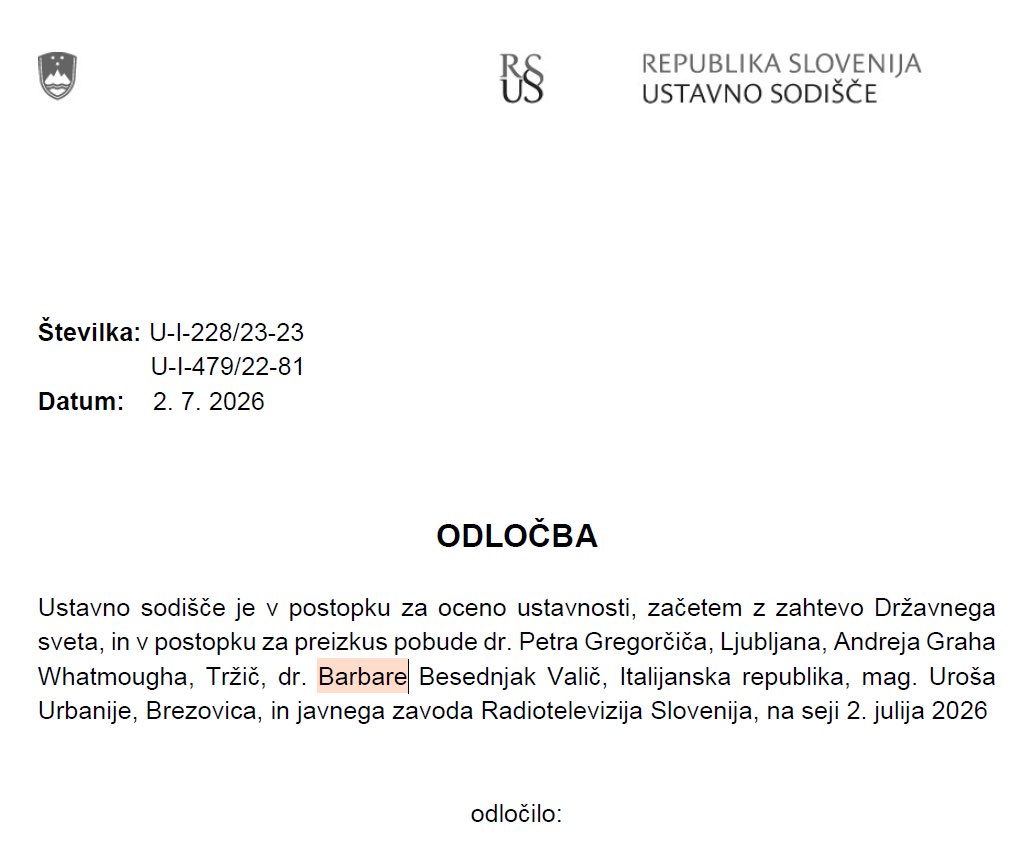
⁉️Kako naj javnost zaupa sodišču, ki ne zmore niti osnovne institucionalne skrbnosti? 👉 V zadevi @RTV_Slovenija je @UstavnoSodisce - ob zlorabi prava - ravnalo tudi skrajno malomarno 😳: ➡️ Ime pobudnice (Tamara) je spremenilo v Barbara ➡️ Zmotilo se je pri datumu umika pobude nove uprave #RTVS (2025, namesto 2023) #sodstvo #inštitucije #pravo

Freeman of the City of London: An Ordinary Honour for All, an Honorary One for Few SOURCE: https://www.linkedin.com/pulse/freeman-city-london-ordinary-honour-all-honorary-one-sardella-ph-d--m1alf/ Abstract The Freedom of the City of London is an institution of mediaeval origin, attested as far back as 1237, originally conceived to afford freeborn citizens protection from feudal obligations, the right to trade, and the ownership of property within the bounds of the Square Mile — the territory of the City of London proper. Having evolved progressively from a concrete economic privilege into a civic and symbolic distinction, it has preserved its relevance over the centuries through successive legislative reforms — most notably the extension of eligibility to all nationalities in 1996 — and today records approximately 1,800 to 2,000 new admissions annually. The present article examines the historical and juridical evolution of the title, sets out the several routes of access provided by current regulation (by servitude through apprenticeship, by patrimony, by redemption through direct nomination, by presentation through the Livery Companies, and by registration on the electoral roll), and analyses the contemporary profile of the Freemen in the light of recent admissions of prominent figures from the worlds of finance, culture, sport, and public life. Contrary to the elitist image surrounding many British honours, the ordinary Freedom proves accessible to any person whatsoever, regardless of nationality or financial standing, upon the satisfaction of minimal requirements and the payment of an administrative fee of £180–185. The article concludes by reflecting upon the contemporary significance of the institution: not in the residual privileges, now largely ceremonial, but in its identity-forming, civic-participatory function and its connection to the long history of the oldest and most venerable city in Europe. Keywords: Freedom of the City of London; Livery Companies; City of London Corporation; British honours; urban civic identity. Contenuto dell’articolo Introduction Amongst the historic honours of Britain, few institutions evoke an imaginative world as rich as the Freedom of the City of London. Cited in films, novels, and articles on manners and custom with tones of exclusivity and mystery, it is frequently associated with figures of the very highest standing: sovereigns, heads of state, military commanders returning from the wars. Yet, upon closer and more methodical scrutiny, a markedly different picture emerges: that of a title which, in its ordinary and non-honorary dimension, is today accessible to a considerable number of persons each year, without the requirement of extraordinary merit or elevated financial means. The present contribution aims to examine the institution in its twofold aspect, historical and contemporary, with the object of dispelling the most prevalent misconception: that which confounds the ordinary Freedom with the Honorary Freedom — the latter genuinely rare and reserved for figures of international standing. This article traces the mediaeval origins and legislative evolution (§ 2), sets out the current routes of access (§ 3), discusses requirements, costs, and procedure (§ 4), analyses the contemporary composition of the body of Freemen (§ 5), examines rights, privileges, and obligations (§ 6), reviews the most distinguished recipients of recent decades (§ 7), and concludes with some reflections upon the contemporary significance of the institution (§ 8). Origins and Historical Development of the Institution The Freedom of the City of London is attested from 1237, during the reign of Henry III, as a form of civic status designating individuals not subject to a feudal lord, and therefore entitled to the protections guaranteed by the City's charters. In this original sense, the term freeman denoted the free man in the fullest sense of the word: one who might trade freely within the perimeter of the Square Mile, hold property, and join the trade guilds without external interference. The practical privileges were of concrete scope and directly functional to the mediaeval economy: exemption from certain tolls, including the celebrated right to drive flocks of sheep across London Bridge without payment — a concession rooted in the wool trade that dominated the English economy — protection against arbitrary arrest beyond the jurisdiction of the City, and access to the markets regulated by the guilds. As confirmed by the subsequent reissues of Magna Carta by Henry III in 1225, such liberties were intrinsically bound to the self-governance of the City, which defended them against royal and baronial interference. The progressive codification of the institution took place through royal ordinances from the fourteenth century onwards. In 1319, Edward II issued constitutions restricting access to the Freedom to members of the trade guilds, prohibiting the admission of unaffiliated outsiders, and thereby formalising servitude through apprenticeship as the principal route for new entrants, whilst the patrimonial route ensured continuity for established families. Subsequent monarchs, from Edward III onwards, repeatedly confirmed the civic liberties through charters granted often in exchange for financial loans, consolidating the City's autonomy and its role as creditor to the Crown. In the nineteenth century, with industrialisation and the demographic expansion of London, corporate control over trade proved increasingly unenforceable. The Municipal Corporations Act of 1835 extended eligibility to any person living, working in, or having a significant connection with London, partially detaching the title from corporate membership and progressively transforming it into an honorary distinction of a civic character. During the twentieth century, further reforms rendered access more inclusive. Women, already admitted informally as widows by inheritance in earlier periods but formally excluded from the standard routes, saw their right to ordinary admission recognised — Angela Burdett-Coutts having already received the Honorary Freedom in 1872, and Florence Nightingale in 1908 — while formal equality was consolidated in the twentieth century. Finally, in 1996, the requirement of British or Commonwealth citizenship was abolished, opening the title to any nationality whatsoever. Routes of Access: The Current Regulatory Framework The current regulations, administered by the Court of the Lord Chamberlain of the City of London Corporation, provide for five principal modes of access to the Freedom of the City of London, each reflecting different historical ties between the individual and the City's institutions. By servitude confers the title upon the completion of a formal apprenticeship under the Custom of London, traditionally of seven years' duration, under a master freeman of a Livery Company. This route, the oldest and of the greatest historical significance, verifies merit through practical competence and loyalty to the guild. Completing apprentices are admitted without the need for approval by the Court of Common Council, provided they have been registered on the City's electoral roll for at least one year, and in such cases no financial contribution is required. By patrimony confers automatic eligibility upon the children of Freemen, provided the parent held the title at the time of the candidate's birth and appropriate documentation is furnished. Historically restricted to sons, it was extended to daughters by the Municipal Corporations Act of 1835. The candidate must have attained the age of eighteen, must not be an undischarged bankrupt, and must not have relevant unspent criminal convictions. By redemption constitutes the route open to any person whatsoever. The candidate submits an application to the Court of the Lord Chamberlain, supported by two sponsors — Common Councillors, Aldermen, or Liverymen of at least one year's standing who attest to their reputation — and the matter is examined by the Freedom Applications Sub-Committee and approved by the Court of Common Council. The administrative fee (the Freedom Fine) amounts to £180 following the tariff revision of 1 April 2024 (£185 in the case of direct nomination). For candidates registered on the Ward List, the City's electoral roll, the procedure is free of charge. By presentation through a Livery Company is the route most frequently taken in contemporary practice. The candidate first becomes a member of their relevant guild, following a procedure that varies amongst each of the 113 Livery Companies currently active, and subsequently submits an online application to the Court of the Lord Chamberlain for admission to the Freedom of the City, with approval in the vast majority of cases being a matter of routine. Requirements, Costs, and Procedure The requirements for access to the ordinary Freedom are of a simplicity that may well surprise, given the aura of exclusivity surrounding the title. The candidate must have attained the age of eighteen, must not be an undischarged bankrupt, and must not have unspent criminal convictions within the meaning of the Rehabilitation of Offenders Act of 1974. No requirement of nationality, residence, educational attainment, or financial standing is imposed. The documentation required is of a standard biographical character: a full birth certificate, a marriage certificate or name-change document where applicable, and, where admission is by presentation, the certificate of membership issued by the relevant Livery Company. The application is submitted online through the City of London Corporation's portal. The admission ceremony is held at the Guildhall in London, in the Court Room of the Lord Chamberlain, on every working day between 10.30 and 12.00, and between 14.00 and 15.30. The newly admitted Freeman is invited to read aloud the Declaration of a Freeman and to sign the Admissions' Book, receiving upon its conclusion a calligraphed certificate on vellum and a copy of the Rules for the Conduct of Life — the eighteenth-century document of moral guidance that enjoins the holder to lead a life of rectitude, compassion, and social engagement. For those unable to attend in person, the City Corporation has retained the option of conducting the ceremony virtually, a facility introduced during the pandemic and subsequently preserved. The Contemporary Composition of the Body of Freemen One significant empirical datum serves to diminish the elitist dimension of the title: between 1,800 and 2,000 new persons are admitted each year, within a body that counts over 300,000 documented admissions across the centuries. As the City of London Corporation itself observes, contemporary Freemen comprise 'a broad cross-section of the population', encompassing professionals, students, craftspeople, entrepreneurs, military personnel, and foreign nationals. The growing contribution of university students, frequently presented in groups by their academic institutions, and of international professionals, has further broadened the demographic base. The group ceremony of 2024, in which 40 individuals drawn from fields ranging from science and medicine to entrepreneurship and diversity initiatives received the title simultaneously, is illustrative of this openness. A fundamental distinction must, however, be emphasised. The Honorary Freedom of the City of London constitutes an entirely separate institution of radically different scope. Granted by the Court of Common Council by special resolution, it is reserved for figures of exceptional international stature — typically fewer than a dozen conferred annually — and represents, in the words of the City Corporation itself, the highest honour it is able to bestow. It is this Freedom that has been enjoyed by Winston Churchill, Her Majesty Queen Elizabeth II, and, more recently, the television presenter Rachel Riley (October 2025), in recognition of her commitment to Holocaust education and the combating of antisemitism. The confusion between the two forms is the principal source of the distorted public perception of the institution. The Contemporary Significance: Between Identity and Participation While the great majority of the practical privileges once associated with the condition of Freeman have today disappeared or been reduced to solemn ceremonial form, what persists is the powerful symbolic and identity-forming value of the title. The ceremony retains elements of ritual solemnity — the reading of the Declaration, the signing of the historic Admission Register, the receipt of the calligraphed certificate on vellum — which inscribe the new Freeman within a chain of continuity of nearly eight centuries, linking diverse figures through a shared bond with the history of the Square Mile. This venerable London institution also performs a cohesive function within the ecosystem of the City and the Livery Companies. The 113 active guilds collectively disbursed over £81 million in charitable activities in 2024, through programmes of vocational training, scholarships, and technical apprenticeships that preserve specialist skills in economically significant sectors. Being a Freeman constitutes a formal prerequisite for advancement to Liveryman, and therefore for the exercise of voting rights in the governance of the City: a vestige of corporate democracy which, however distant from the models of universal suffrage, retains its own institutional logic within the unique legal architecture of the London Square Mile. Critics of a progressive persuasion have observed that the system favours established networks and access by hereditary or professional routes, potentially excluding broader strata of the London population, with the pool of living Freemen well below one per cent of the nine million residents of Greater London. Nevertheless, the data on recent admissions — encompassing recognition spanning African entrepreneurship, community sport, broadcasting, and medicine — suggest a trajectory of progressive opening which, whilst falling short of full demographic representativeness, attests to the institutional will to maintain the institution as a living tradition rather than an exclusive relic. Conclusions The foregoing analysis permits the formulation of several concluding observations. The Freedom of the City — the ordinary Freedom — is today an honour accessible to a far wider audience than the collective imagination suggests. The admission requirements are minimal, the costs modest, the procedures relatively streamlined and open to any nationality. The persistent confusion with the Honorary Freedom, reserved for figures of exceptional international eminence, is the principal source of a distorted perception that merits correction. The contemporary value of the title resides not in the residual privileges, now largely solemn and ceremonial, but in three complementary dimensions: the identity-forming, which connects the holder to nearly eight centuries of institutional history; the civic-participatory, which through access to the Livery Companies and the City's electoral system inserts the Freeman into genuinely operative networks; and the communitarian, which through the mechanisms of honorary recognition celebrates contributions of an ever more varied scope and provenance. In this respect, the Freedom represents an instructive case study in how historic institutions may reinvent themselves without losing authenticity, preserving their significance through inclusion rather than exclusion. References and Sources: City of London Corporation. (2024). Freedom of the City of London. https://www.cityoflondon.gov.uk/about-us/law-historic-governance/freedom-of-the-city Guild of Freemen of the City of London. (2025). Freedom of the City. https://www.guild-freemen-london.co.uk/freedom-of-the-city Livery Committee. (2025). Freedom of the City. https://liverycommittee.org/about/membership-freedom-and-livery-clothing/freedom-of-the-city/ Municipal Corporations Act 1835. UK Parliament. Rehabilitation of Offenders Act 1974. UK Parliament. Grokipedia. (2025). Freedom of the City of London. https://grokipedia.com/page/Freedom_of_the_City_of_London City Solicitors' Educational Trust. (2025). Applying for the Freedom of the City of London. LondradaVivere.com. (2025). La 'Freedom of the City of London': un'antica libertà ancora viva. City of London Corporation. (2023). Livery Companies: Charitable Activities Report 2024. ONS / City of London Corporation. (2023). Financial Services Contribution to UK GDP.

Freeman of the City of London: An Ordinary Honour for All, an Honorary One for Few
JAN 3w

Ubytování a letenky do Milána rezervovány s flexibilními datumy. Do Dortmundu pojedu autem a na Barcelonu se mi s turisty nechce. Jsem ready! #Cestování #Ubytování #Flexibilita

Golobova Sluga, lahko te je sram! Po mojih informacijah je direktor @SOVA_SLO Janez Stušek lepo prosil Golobovo Slugo, da prestavi sejo #KNOVS, ker je že imel kupljene letalske karte in rezerviran hotel, da pelje hči na koncert na Dansko. Pri tem je celo predlagal, da se seja izvede bodisi prej bodisi kasneje – na katerikoli drug datum, ki bi članom KNOVS ustrezal. Kljub prošnji Golobova Sluga ni prestavila seje KNOVS. Zato je pot na Dansko za danes odpovedal, s tem pa mu je nastalo več sto evrov stroškov. Ob 11:00 pa je Golobova Sluga sporočila, da je seja KNOVS prestavljena. Golobovi Svobodnjaki ste res ljudje najslabše sorte! Kot bi rekla Lena Grgurevič – hudičevo seme! #KNOVS #Slovenija #Politika

Datum. Podpis. Protože přesně tak to je. Ještě k tomuto textu vyjádření z fb profilu Jan Čepelka: Ze svojí osobní zkušenosti, protože táta vstoupil do KSČ jako mladý učitel, mohu potvrdit, že neplatí, jednou člen KSČ, tedy navždy komunista. Táta vystoupil z KSČ v roce 1969, kdy pochopil, že je nereformovatelná. Je potřeba ty věci posuzovat v kontextu doby, věku, povolání. Via fb Mirka Nedvídková: Tak prý máme na Hradě „komunistu“. Fíha. Ze všech stran se to na nás dokola na sockách hrne jak hudba z flašinetu. Dobře. Pojďme být důslední 🤘 Václav Havel byl komunistickým režimem vězněn. Po revoluci se stal symbolem demokratické změny a naším prezidentem. Všichni víme, všichni známe, doufám✌🏻. Václav Klaus byl před revolucí členem KSČ. Přesto ho mnozí z těch, kteří dnes křičí „komouš na Hradě“, dodnes obdivují. A jeho postoje k Rusku a válce na Ukrajině? O těch raději pomlčíme, koneckonců Adéla Snopová nedávno brnkla na správnou struhu a ruské noty zazněly. Miloš Zeman byl také členem KSČ. A během svého prezidentství rozhodně nepatřil k lidem, kteří by měli problém s velmi úzkými vztahy k Rusku. A potom tady máme Petra Pavla ✌🏻 Petr Pavel byl před rokem 1989 členem KSČ. Nesnažím se to nijak mazat ani omlouvat. On sám se za to omluvil. Byla to součást jeho života v době komunistického režimu. Jenže pak přišla revoluce. Pavel svůj další profesní život nezasvětil budování komunismu. Naopak. Pokračoval v armádě demokratického státu, stal se náčelníkem Generálního štábu Armády ČR a nakonec předsedou Vojenského výboru NATO. Takže mi někdo, prosím, vysvětlete jednu věc: Jak přesně může být jeho členství v KSČ před rokem 1989 důkazem, že je dnes „komunista“, zatímco u Klause a Zemana je jejich členství v KSČ jaksi možné velkoryse odsunout do složky „to už přece bylo dávno“? Buď je pro vás komunistická minulost zásadní kritérium u všech, nebo není. Nemůžete si vytvořit pravidlo jen pro prezidenta, kterého nemáte rádi. Tohle už není zásadovost, nýbrž dvojí metr převlečený za jakýsi morální postoj. Petr Pavel nemusí být váš politický ideál. Můžete kritizovat jeho rozhodnutí, jeho názory i jeho výkon funkce. Ale nazývat člověka v roce 2026 „komunistou“ jen proto, že byl v roce 1988 členem KSČ, je stejně intelektuálně poctivé jako označit každého, kdo někdy udělal chybu ve dvaceti, za stejného člověka i o třicet let později. Minulost je důležitá. Ale člověk není navždy odsouzen k tomu, kým byl před revolucí. A jestli opravdu věříte, že členství v KSČ člověka automaticky diskvalifikuje na celý život, pak by bylo fér začít stejným metrem u všech. Ne jen u toho, jehož jméno vám dnes tolik leží v žaludku✌🏻 Nebyl to agent STB, nepráskal na kamarády, partnerky ani kolegy z práce ♥️✌🏻 #Politika #Historie #Demokracie

The date of August 21, 1968 is etched in my memory, we must never forget it 🙌🏻 Today, totalitarianism does not have to return in tanks. It can come quietly, like a persuasive argument, gentle pressure, false security, chains of lies, and cultivated envy and hatred. All the more we must protect freedom of speech, institutions. (translated)

August 21. We must not forget that date and the occupation. The true face of Russia can be seen today in Ukraine: the murder of civilians with the help of China and North Korea. And with the help of Trump. We did not expect the year '68, but something even more frenzied. (translated)

VDD aizturējis trīs sabotierus! Valsts drošības dienests ir ļoti labi pastrādājis - dažas dienas pēc notikušā ir aizturētas trīs personas saistībā ar tehnoloģiju uzņēmuma dedzināšanu Igaunijā. VDD izmeklēšanā iegūtā informācija liecina, ka ļaunprātīgā dedzināšana veikta Krievijas interesēs. Esmu ļoti apmierināts ar VDD veikto darbu gan Latvijā, gan mūsu kaimiņvalstīs veiktu sabotāžas gadījumu izmeklēšanā, saņemot pozitīvu novērtējumu arī no Igaunijas kolēģiem. Šādi gadījumi apliecina Baltijas valstu specdienestu ikdienas ciešo sadarbību Krievijas pieaugošo draudu apstākļos. Būtiska ir mūsu valsts atbilde tiem, kas Kremļa interesēs rīkojas pret mūsu valsts drošību - jums atnāks pakaļ! Valsts drošības dienests (VDD) šā gada 16. augustā ir uzsācis kriminālprocesu uz aizdomu pamata, ka trīs Latvijas pilsoņi naktī uz 15. augustu veikuši aizsardzības tehnoloģiju uzņēmuma "Milrem Robotics" ēkas ļaunprātīgu dedzināšanu Igaunijā. Ņemot vērā izmeklēšanā noskaidroto, VDD divus aizdomās turētos Latvijas pilsoņus aizturēja 17. augustā, savukārt vienu – 18. augustā. Visām aizturētajām personām kā drošības līdzeklis ir piemērots apcietinājums. Papildus VDD minētajos datumos septiņos ar personām saistītos objektos – dzīvesvietās un transportlīdzekļos – veica kriminālprocesuālas darbības. #Drošība #Latvija #Sabotāža



Het zat er wel in: ook het AZC in Balk (@gemeenteDFM) gaat niet op de afgesproken datum van 1 oktober dicht. Burgemeester, wethouders en ambtenaren bellen as we speak bij omwonenden aan om een brief te overhandigen. #azc #balk #COA #betrouwbareoverheid En de gemeente bereidt juridische stappen tegen het COA voor: https://t.co/MfjYuoeIuc (Zo heb ik blonde krullen en een sixpack) #azc #balk #betrouwbareoverheid

20/8/26: AANGIFTE Aan: Politie / Openbaar Ministerie Van: Naam: Adres: Postcode + woonplaats: Geboortedatum: Telefoon: E-mail: Datum: 20 augustus 2026 Betreft: Aangifte wegens belediging (artikel 266 Wetboek van Strafrecht) Geachte heer/mevrouw, Hierbij doe ik aangifte tegen: Verdachte mr. Sidney Florens Johannes Smeets X-account: @SmeetsLaw Feiten Op 18 augustus 2026 om 15:42 uur heeft verdachte via zijn openbare X-account @SmeetsLaw de volgende uitlating gedaan en openbaar gemaakt: “Stelletje p*do’s daar bij FvD dus…” Deze tweet is kort daarna door verdachte zelf verwijderd. Ik ben lid/aanhanger van Forum voor Democratie. Met de woorden “stelletje p*do’s daar bij FvD” heeft verdachte de gehele groep, en daarmee ook mij persoonlijk, bestempeld als pedofiel. Dit is een opzettelijke openbare belediging die mijn eer en goede naam aantast. Bewijs • Screenshot van de originele tweet van @SmeetsLaw d.d. 18 augustus 2026, 15:42 uur, vastgelegd en openbaar gemaakt door Erik de Vlieger:
https://t.co/OgGOkwwbYZ • Nadere openbaarmaking:
https://t.co/75UCC8xpeY
en https://t.co/fvIBmeg6zk Wettelijke grondslag Artikel 266 Wetboek van Strafrecht (eenvoudige belediging) Motivering De uitlating is: • openbaar gedaan; • duidelijk beledigend en onnodig grievend; • door verdachte zelf verwijderd (wat duidt op bewustzijn van de onjuistheid/schadelijkheid); • zonder enige feitelijke grondslag jegens mij. Verzoek Ik verzoek het Openbaar Ministerie tot strafrechtelijke vervolging over te gaan. Hoogachtend, Handtekening: #aangifte #belediging #rechtspraak

𝐋𝐄𝐙𝐇𝐈𝐍 𝐖𝐎𝐑𝐋𝐃 𝐓𝐎𝐔𝐑✈️ — 𝐋𝐞𝐭’𝐬 𝐆𝐨 𝐃𝐄𝐔𝐓𝐒𝐂𝐇𝐋𝐀𝐍𝐃 ! Deine Lieblingscharaktere kommen nach Deutschland! Entdecke die exklusiven offiziellen Goodies der World Tour. 📅 Datum : 19.08.2026 - 26.08.2026 🔗 Hier kaufen : https://t.co/LPbosUfiR3 *Nur solange der Vorrat reicht. #FlashLight #HighSchoolSaltyHeart #Lezhin #LezhinDE #WorldTour #Lezhin #WorldTour #Deutshland

CSDD kiberuzbrukumā iegūti 1,2 miljonu cilvēku personas dati. Varētu pat teikt, ka skarta gandrīz katra ģimene Latvijā. Būtu ļoti vērtīgi, ja tagad kāda atbildīgā valsts institūcija cilvēkiem vienkāršā valodā pateiktu – ko tieši darīt? Ko ar iegūtajiem datiem iespējams izdarīt? Kādi ir reālākie krāpšanas scenāriji? Kam tuvākajos mēnešos pievērst īpašu uzmanību? Vai cilvēkam un uzņēmumam kaut kur kaut kas jāmaina vai jāpārbauda? Skaidrs, ka jāuzmanās no viltus e-pastiem un īsziņām CSDD vārdā. Bet ar to vien nepietiek. Ja krāpnieks zina cilvēka vārdu, personas kodu, adresi, automašīnas numuru un to, ka konkrētā datumā ir veikts maksājums CSDD, viņa stāsts jau var izklausīties ļoti ticams. #kiberuzbrukums #personasdati #krāpšana

Apple inadvertently revealed details about its upcoming AirPods with cameras through a video in the beta version of macOS Tahoe, which shows that these headphones will have features focused on environmental recognition and interaction with Siri, although the release date has not yet been confirmed. (translated)

Apple filtra sin querer sus AirPods con cámaras y confirma uno de sus secretos