BETA nonprofit public democratic european moderated

Search

#Experience
BFMTV 5h

Clémentine Autain, in opening the debate in the Assembly on a comprehensive law against sexist and sexual violence, shares her traumatic experience of rape at the age of 22, highlighting the urgency of this legislation following recent tragedies like that of Lyhanna. (translated)
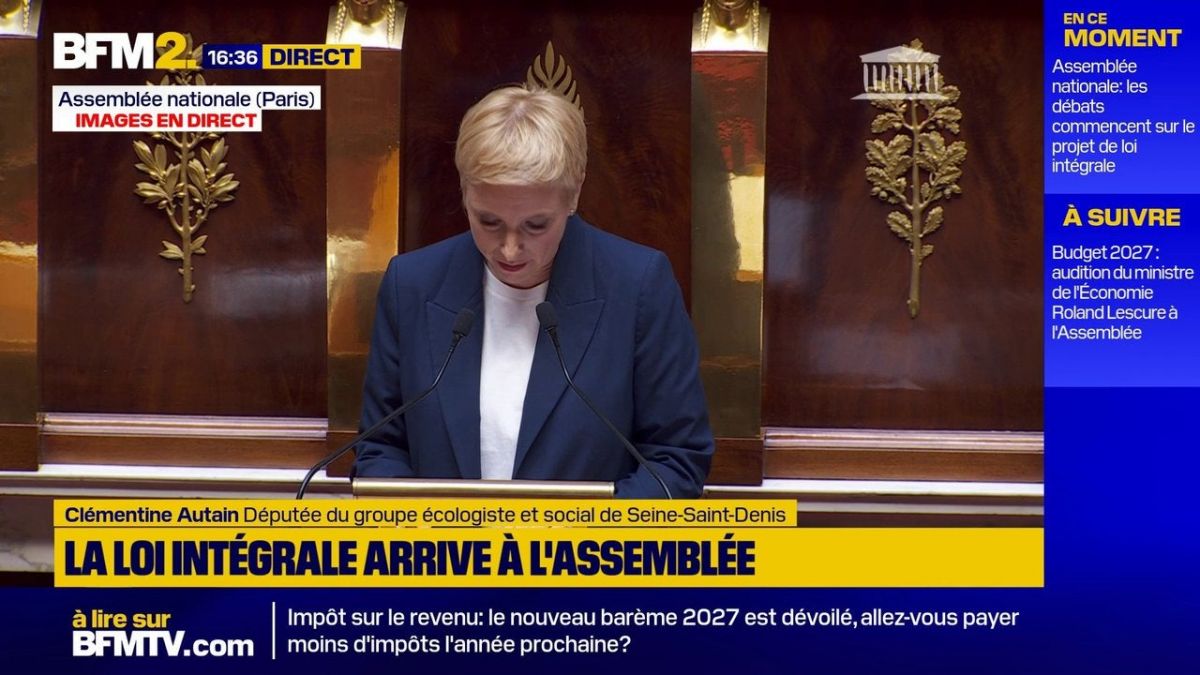
"J'avais 22 ans quand un inconnu m'a plaquée au mur, il m'a mis un couteau sous la gorge et m'a violée": Clémentine Autain ouvre les débats à l'Assemblée sur la loi intégrale

Africa Daily Report — 1 October 2026 Major developments reported during the previous 24 hours 1. Kenya / East Africa — $16 billion Dangote refinery breaks ground in Lamu. Five African heads of state joined the groundbreaking of Dangote Group's planned $16 billion refinery in Lamu. The plant is designed to process 700,000 barrels per day and is expected to take about 40 months to complete. It is intended to reduce East Africa's dependence on imported refined petroleum, but the project still faces land-rights litigation and environmental concerns. Importance: VERY HIGH — the project could materially reshape East African fuel supply, trade flows, infrastructure investment and regional industrialisation. Direct source: https://apnews.com/article/a0ae7108ae4f4144222aea101baed3a5 2. South Africa — Ramaphosa announces response to gender-based violence. President Cyril Ramaphosa announced additional measures after the discovery of multiple murdered women in Ekurhuleni. Measures include a 60-day local-government safety audit and reviews of unresolved murder, rape and other gender-based-violence cases. Police have not established that the recent killings were committed by a single perpetrator. Importance: VERY HIGH — gender-based violence remains a major public-safety and criminal-justice challenge in South Africa. Direct source: https://www.reuters.com/world/africa/violence-against-women-south-africa-is-national-shame-president-says-2026-09-30/ 3. DR Congo — Mistrust complicates Ebola response after politician killed. Congolese politician Marie-Célestin Karondwa was killed after publicly supporting the government's Ebola response, according to AP. The killing illustrates the severe community mistrust confronting health authorities as the Bundibugyo-virus outbreak continues. Congo has recorded more than 8,000 confirmed infections and nearly 4,000 deaths in the current outbreak. Importance: CRITICAL — the combination of rapid transmission, very high mortality, insecurity and resistance to health measures poses a major regional public-health risk. Direct source: https://apnews.com/article/1ff629474298a62db44438c6eb178270 4. Zambia — Government opens talks with IMF on a new programme. Zambia began discussions with a visiting IMF mission on a successor lending programme. The country's previous $1.7 billion IMF arrangement expired in January, and Lusaka wants a new agreement before year-end. The IMF mission is scheduled to remain through October 10. Importance: HIGH — a new IMF programme could affect Zambia's fiscal policy, investment environment and economic strategy after its sovereign-debt restructuring. Direct source: https://www.reuters.com/world/africa/zambia-starts-talks-with-visiting-imf-mission-new-loan-programme-2026-09-30/ 5. South Africa / United States — Pretoria summons US ambassador. South Africa's foreign ministry summoned US Ambassador Leo Brent Bozell III over what it described as “undiplomatic conduct.” It was the third such summons in nine months, reflecting continuing strain in bilateral relations. Both governments have nevertheless indicated that dialogue is continuing. Direct source: https://www.reuters.com/world/africa/south-africa-summons-us-ambassador-again-over-undiplomatic-conduct-official-says-2026-09-30/ 6. South Africa — Anti-immigration protests held in Durban. Hundreds of demonstrators marched in Durban calling for more deportations of undocumented migrants and tighter border controls. The demonstration comes amid heightened tensions over migration and previous violence against foreign nationals. Authorities did not recognise an ultimatum previously issued by organisers demanding that undocumented migrants leave the country. Direct source: https://apnews.com/article/c086e617b555643510541f9c9906ca4b 7. Africa — WHO data show sharp increase in cholera deaths. New WHO surveillance data show that reported cholera deaths globally rose by about 30% in 2025 despite fewer reported cases. The African Region experienced a particularly sharp deterioration: reported cases increased by 34% and deaths by 58%. Angola, DR Congo, Nigeria, South Sudan and Sudan were among seven countries accounting for roughly 90% of reported global cases and deaths. Importance: VERY HIGH — the figures highlight persistent weaknesses in water, sanitation, surveillance and access to timely treatment across several African states. Direct source: https://allafrica.com/stories/202609300113.html 8. Zambia — New cholera outbreak reaches 304 cases and 11 deaths. Zambian health authorities reported 304 cholera cases across seven districts in five provinces as of September 29, with 11 deaths. Lusaka was among the affected areas. The government said eight deaths occurred in communities, pointing to delays in patients reaching treatment. Importance: HIGH — Zambia only recently ended its previous outbreak, making renewed transmission a significant public-health concern. Direct source: https://www.mwebantu.com/11-die-as-cholera-hits-seven-districts-in-five-provinces-says-ministry-of-health/ 9. Burkina Faso — Country opens its first gold refinery. Burkina Faso inaugurated its first domestic gold refinery, RAFFINOR-BF, in Ouagadougou. The facility cost more than 11 billion CFA francs and has an initial annual refining capacity of about 164 tonnes, with plans for substantial expansion. The project is intended to retain more value from the country's gold production through domestic refining, certification and processing. Importance: HIGH — the refinery is part of a wider African trend toward local mineral beneficiation and greater domestic control of commodity value chains. Direct source: https://apnews.com/article/f39f714232e1784bb5051cdf44f0b992 10. Zimbabwe — Helicopter crash reported with six people aboard. A helicopter carrying four passengers and two crew members crashed in Zimbabwe's Marondera district southeast of Harare. Government and police officials said initial information indicated there were no survivors. Authorities had not immediately released all identities or a cause for the crash. Importance: MODERATE — a significant domestic aviation accident, with investigation and identification of those aboard still pending. Direct source: https://abcnews.com/International/wireStory/helicopter-6-aboard-crashes-zimbabwe-survivors-officials-136898678 #Africa #AfricaNews #TopNewsOfAfrica #DRCongo #Ebola #EbolaOutbreak #PublicHealth #HealthSecurity #CommunityTrust #DiseaseResponse #Zambia #IMF #InternationalMonetaryFund #EconomicReform #DebtRestructuring #FiscalPolicy #AfricanEconomy #SouthAfrica #CyrilRamaphosa #GenderBasedViolence #Femicide #PublicSafety #CriminalJustice #Ekurhuleni #ViolenceAgainstWomen #AfricanSecurity #RegionalStability #Geopolitics #AfricaToday #wrldorg

Instead of caricaturing the Argentine experience, let's look at what it can teach us. France needs liberal reforms, and quickly. (translated)

A piece of fruit. A glass of🥛A visit to a farm➡️These simple experiences can connect children with healthy food & the farmers who produce it. With 143000+ schools already taking part, I want to keep the #EUSchoolScheme strong: mandatory, simpler & adapted to national realities. #HealthyEating #FarmToSchool #NutritionEducation #EU

We are approaching the weird part of the Iran conflict where it becomes almost impossible to trust anything we are told. Increasingly, the information environment looks like that experienced by citizens of the late-Soviet Union. Welcome to the USSA!! Link in comment. 🔗👇 https://t.co/iYItpxgsHT #IranConflict #Misinformation #USPolitics #IR #US

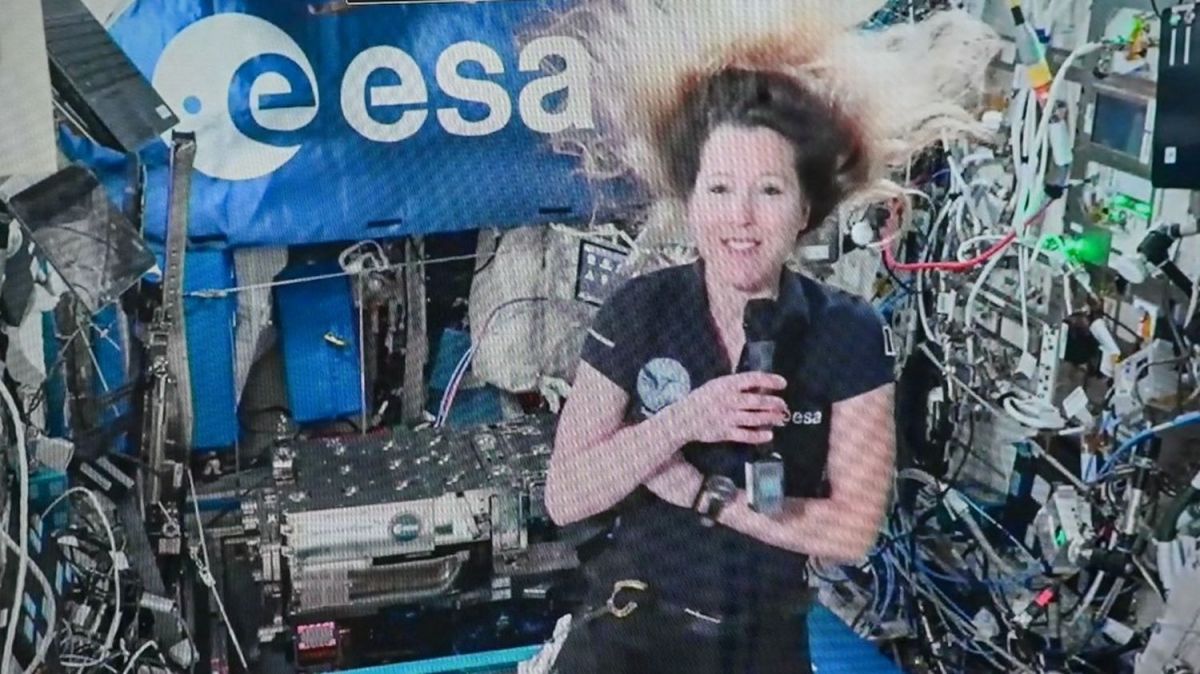
Sophie Adenot, the French astronaut, is preparing to leave the International Space Station after completing a mission of over seven months, filled with numerous scientific experiments and shared with the general public through photos and videos. (translated)

Fin de mission en vue pour Sophie Adenot, qui s'apprête à quitter l'ISS après plus de sept mois dans l'espace

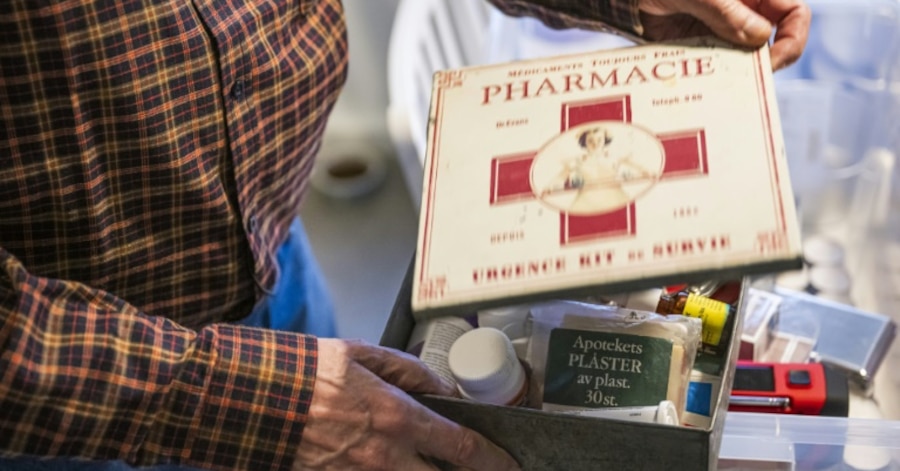
Despite growing awareness of crisis preparedness, the majority of Belgians remain reluctant to assemble emergency kits, as revealed by Stéphanie's experience, who feels isolated in her preparation efforts against potential threats. (translated)

”Même mon compagnon m’a prise pour une folle quand j’ai fait les sacs de survie” : les Belges restent peu préparés face aux crises

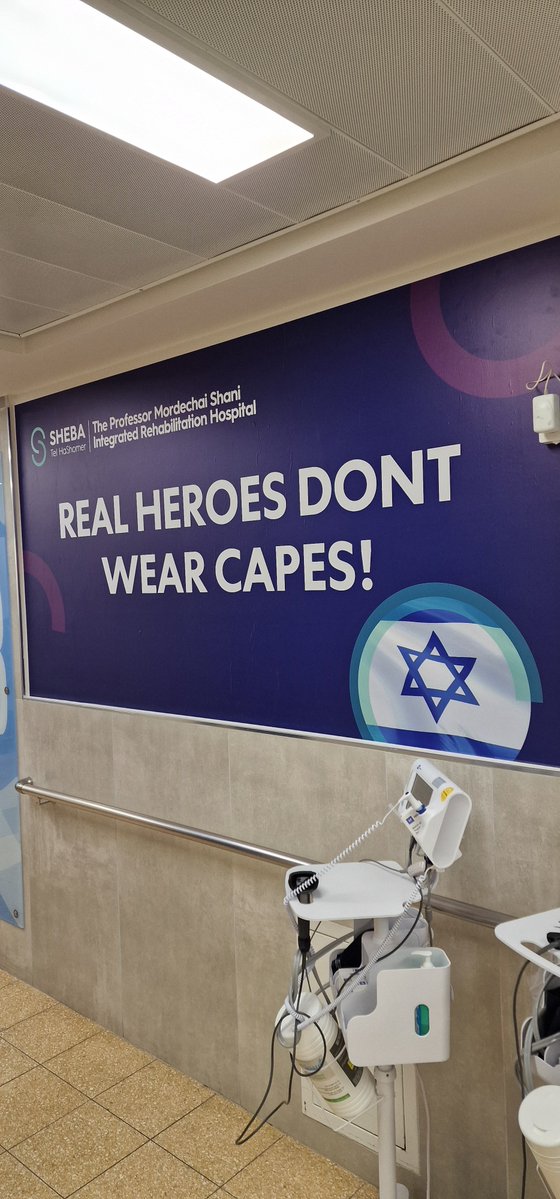
𝗥𝗲𝗮𝗹 𝗵𝗲𝗿𝗼𝗲𝘀 𝗱𝗼𝗻'𝘁 𝘄𝗲𝗮𝗿 𝗰𝗮𝗽𝗲𝘀! 💙💪🏻 (I took this photo after October 7 at Tel HaShomer Sheba Medical Center, a deeply moving experience I'll never forget) 👇🏻 https://t.co/FOnvmy0nwH #Heroes #Inspiration #Healthcare #IL

BFMTV 1d

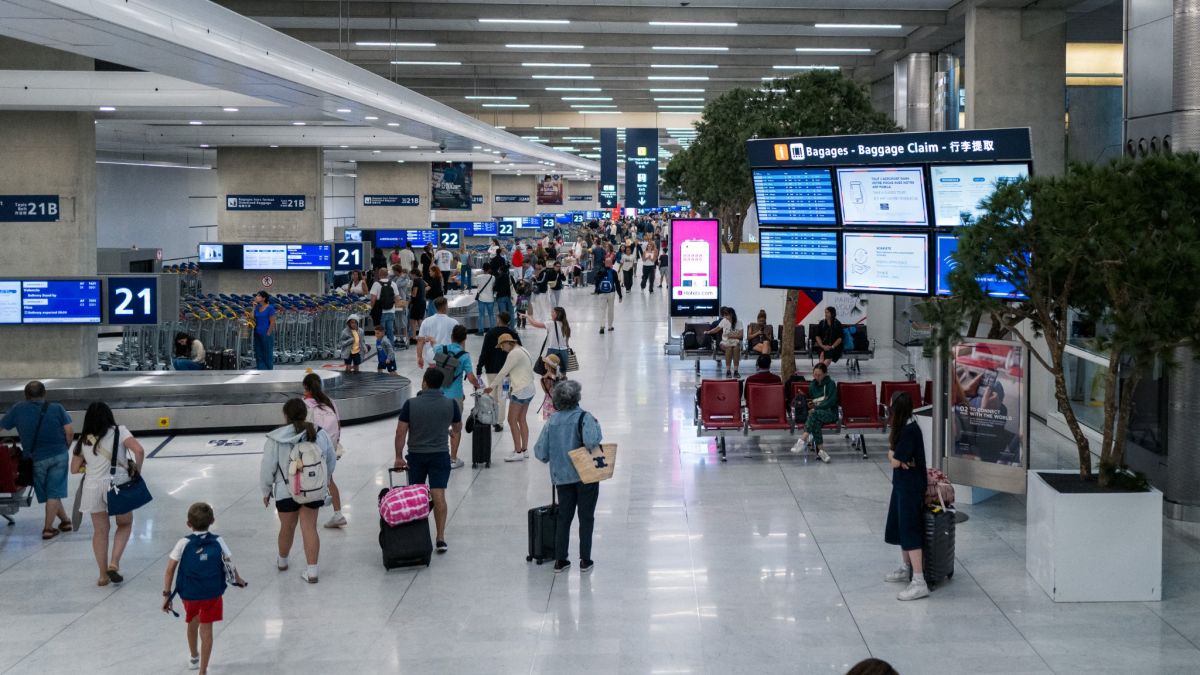
According to the AirAdvisor global airport rankings, Paris-Charles de Gaulle Airport ranks last, with a score of 4.1, due to its low punctuality and the expensive access to the city center. (translated)

Ponctualité, avis Google, accès au centre-ville et shopping: Paris-Charles de Gaulle termine bon dernier d'un classement mondial des aéroports qui offrent la meilleure expérience passager

I wanted and needed to express myself this Wednesday evening. Honestly, I have a chance that few people have: to live off my passion. I have never felt so good inside these past few weeks, and all of that, I owe solely to my family, my friends, and God. I am living the life I have always dreamed of. Despite the personal problems we may have, always be grateful for the "mundane" things you have. In the environment I am in, I have always preferred to live a human experience, beyond the money that is offered to me today here and there. All of this is values that were taught to me throughout my life and that I truly intend to respect. Take care of yourselves, and I look forward to seeing what the future holds for us. It’s really Enzo who is speaking to you tonight, and not Enkeo. (translated)

"40% of daily AI users say AI has made their customer experience feel impersonal, compared with 22% of consumers who never use it." #InteligenciaArtificial #ExperienciaDelCliente #Tecnología #Thetweetdoesnotmentionanyspecificcountries.Therefore #therearenocountrycodestoreturn.

Yesterday, an explosion - the strongest one yet I have experienced in my three years here - jolted me out of my chair in Kyiv. This morning, sitting in the very same chair in my ofice - I was thinking about what happened in this city 85 years ago. On 29 September 1941, Kyiv’s https://t.co/zPR46QF4cj #Kyiv #History #Explosion #UA

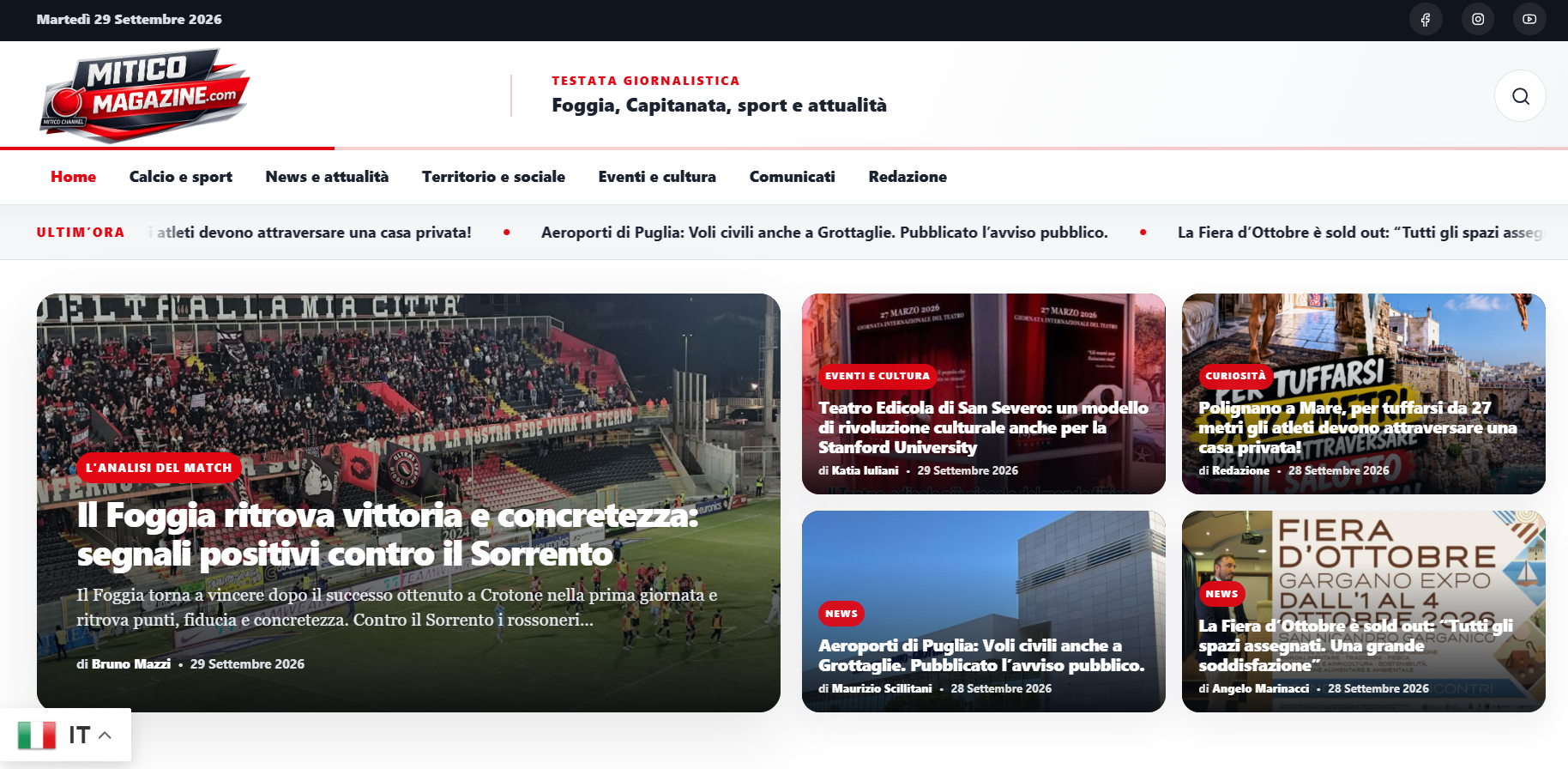
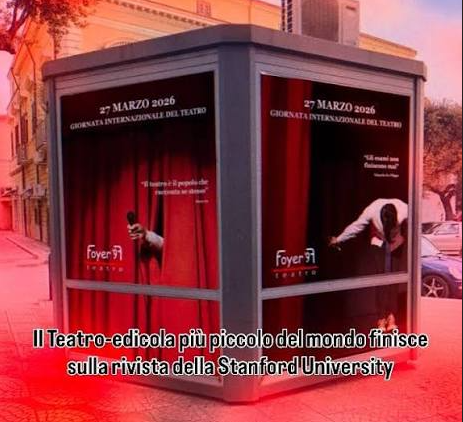
Mitico Magazine - The Teatro Edicola of San Severo: A Model of Cultural Revolution for Stanford University as Well Source: https://www.miticomagazine.com/territorio-e-sociale/teatro-edicola-di-san-severo-un-modello-di-rivoluzione-culturale-anche-per-la-stanford-university/ The Teatro Edicola in Via Tondi In San Severo, a singular metamorphosis has taken place: a newsstand abandoned for at least six years has found a new function and a new identity, transforming into one of the smallest and most unusual theatre stages in the world. An experiment born in the heart of the town which, in just a few months, has moved beyond local boundaries, attracting attention even overseas. It is called Teatro Edicola and it is a project conceived by the company Foyer '97, artistically directed by Francesco Gravino, which has brought the old newsstand in Via Tondi back to life through a formula that is both essential and surprising. Foyer '97 Foyer '97 APS was established as a formally constituted association active in the cultural sector in San Severo in 1997, born from the vocation of a group of actors, directors and theatre enthusiasts, with the aim of building a "living" and accessible theatre in the town. Over the years the company has developed a repertoire that includes texts from the classical tradition, contemporary dramaturgy, comedy and experimental projects, not limiting itself to the mere production of theatre shows, but also organising theatre courses and workshops and educational and cultural projects characterised by a strong inclusive ethos, particularly in schools. Foyer '97 does not always have a fixed artistic ensemble, but works with different performers and collaborators depending on the project; the only indispensable presence is that of Francesco Guido Gravino himself, actor, director and artistic director of the theatre company. The distinctive feature of Foyer '97 is certainly the value of social and cultural promotion attributed to theatre, the extremely close relationship with the audience and the search for a type of theatre outside conventional spaces, with cemeteries, trains, bell towers, and now a newsstand, as its backdrop. Six spectators, a few minutes and a minimal distance between stage and audience The project was launched on 27 March 2026, on the occasion of World Theatre Day, offering a theatrical experience built around a radical reduction of the conventional spaces and times of performance. The idea was born not only from the search for unconventional spaces, but also from "Edicola Fiore", the morning press review with a strongly ironic tone presented by Rosario Fiorello and Stefano Meloccaro, which was broadcast first only on Fiorello's social channels between 2011 and 2014, and then also on radio and television between 2016 and 2018. The review took its name from the diminutive of its founder, Fiore, and from the newsstand of a friend of Fiorello's in Via Flaminia Nuova in Rome, where the showman would meet early in the morning with a group of friends to read the newspapers. The San Severo newsstand was granted free of charge by its owner Pino Frau to the theatre group which, after obtaining temporary authorisation and institutional support from the Municipality of San Severo, refurbished it within two weeks at a cost of less than €3,000. Just six seats, a total surface area of 4 sq m, of which only 2 are for the stage area, less than a metre between actors and audience, a curtain, a lectern, two lights, performances lasting between 5 and 15 minutes, audience rotation every quarter of an hour: apparently minimal elements that end up subverting the usual relationship between stage and auditorium. Spectators, in fact, find themselves immersed in the stage action, in such proximity to the actors that every gesture, expression and word becomes immediately perceptible. In this way, theatre abandons its traditional spaces and insinuates itself into the everyday life of the street, becoming an intimate, concentrated and almost participatory experience. During the inaugural period admission was free with a subsequent voluntary donation from spectators; in the event of a more stable and longer-term concession, which could lead to seasonal theatre performances, the proposed ticket price would be €5. Audiences reward the experiment Foyer '97's gamble met with public interest right from the start: over 60 people attended the shows in a single afternoon, while the three days that inaugurated the season sold out. From a singular local experiment, the Teatro Edicola thus began to arouse curiosity even outside the province of Foggia, gradually transforming into a case of cultural and social interest, until it reached the American continent. From the province of Foggia to the "Stanford Social Innovation Review" The San Severo experience has now come under the international spotlight: in September 2026, the Stanford Social Innovation Review, an international journal and platform dedicated to social innovation published by the Stanford Center on Philanthropy and Civil Society at Stanford University in California, published on its website and in the Fall 2026 print edition the reportage "The Six-Seat Revolution", written by Dr Luciano Magaldi Sardella, independent journalist and researcher affiliated with the European Open University, and editorially supervised by deputy editor David V. Johnson. In the article, it is argued that the Teatro Edicola attracted attention overseas because the project concentrates cultural innovation, urban regeneration and proximity theatre into just a few square metres: starting from a real urban problem, it recovers an abandoned place with a modest investment, brings performance directly into public space and experiments with a much closer relationship between actors and spectators. From the point of view of theatrical representation, it also highlights how the format, based on micro-stories of five to twelve minutes, taken from great classics such as Goldoni, Chekhov, Ibsen, Euripides and Benni, and on audience rotation every fifteen minutes, transforms the physical limitations of the space into a precise dramaturgical choice, proving to be extremely innovative. All of this makes it possible to address some of the main critical issues in the sector: falling audience numbers, an exclusively elderly audience, reduced resources and distance from traditional cultural venues. The journal also highlights, however, the potential problems: economic sustainability, the need for stable institutional support and the difficulty of replicating the model, which is closely linked to the community and territory of San Severo. A model looking beyond San Severo Despite the difficulties, initial requests for information have already arrived from Lucca and Rome, where there is curiosity about the possibility of getting to know the model more closely and the steps needed to replicate it. The replicability formula, in fact, does not seem to require particularly costly infrastructure: an unused space, a targeted intervention, a cultural idea, in-depth knowledge of the surrounding area and a willingness to return that place to the community can be enough to trigger a new urban function. It is precisely in the disproportion between the modesty of the resources employed and the resonance generated by the initiative that perhaps the most original feature of the Teatro Edicola lies, certainly unique of its kind; there are, however, other examples in Italy of newsstands reused for other purposes: "Edicola 518", a twentieth-century kiosk abandoned in the centre of Perugia, now dedicated to independent publishing, art and cultural production; and in Rome itself, the abandoned newsstand in Piazza Testaccio used temporarily as a stage for a show by Fabio Morgan and the Erno newsstand in the Prati district, which almost every month offers a calendar of events, exhibitions, pop-ups and collaborations with artists and creative enterprises. Small revolutions, therefore, that tell stories of the reappropriation of urban spaces, of creativity and social innovation. And which, it is hoped, will take root in order to look ever further afield.

Teatro Edicola di San Severo: un modello di rivoluzione culturale anche per la Stanford University

Mitico Magazine - The Teatro Edicola of San Severo: A Model of Cultural Revolution for Stanford University as Well Source: https://www.miticomagazine.com/territorio-e-sociale/teatro-edicola-di-san-severo-un-modello-di-rivoluzione-culturale-anche-per-la-stanford-university/ The Teatro Edicola in Via Tondi In San Severo, a singular metamorphosis has taken place: a newsstand abandoned for at least six years has found a new function and a new identity, transforming into one of the smallest and most unusual theatre stages in the world. An experiment born in the heart of the town which, in just a few months, has moved beyond local boundaries, attracting attention even overseas. It is called Teatro Edicola and it is a project conceived by the company Foyer '97, artistically directed by Francesco Gravino, which has brought the old newsstand in Via Tondi back to life through a formula that is both essential and surprising. Foyer '97 Foyer '97 APS was established as a formally constituted association active in the cultural sector in San Severo in 1997, born from the vocation of a group of actors, directors and theatre enthusiasts, with the aim of building a "living" and accessible theatre in the town. Over the years the company has developed a repertoire that includes texts from the classical tradition, contemporary dramaturgy, comedy and experimental projects, not limiting itself to the mere production of theatre shows, but also organising theatre courses and workshops and educational and cultural projects characterised by a strong inclusive ethos, particularly in schools. Foyer '97 does not always have a fixed artistic ensemble, but works with different performers and collaborators depending on the project; the only indispensable presence is that of Francesco Guido Gravino himself, actor, director and artistic director of the theatre company. The distinctive feature of Foyer '97 is certainly the value of social and cultural promotion attributed to theatre, the extremely close relationship with the audience and the search for a type of theatre outside conventional spaces, with cemeteries, trains, bell towers, and now a newsstand, as its backdrop. Six spectators, a few minutes and a minimal distance between stage and audience The project was launched on 27 March 2026, on the occasion of World Theatre Day, offering a theatrical experience built around a radical reduction of the conventional spaces and times of performance. The idea was born not only from the search for unconventional spaces, but also from "Edicola Fiore", the morning press review with a strongly ironic tone presented by Rosario Fiorello and Stefano Meloccaro, which was broadcast first only on Fiorello's social channels between 2011 and 2014, and then also on radio and television between 2016 and 2018. The review took its name from the diminutive of its founder, Fiore, and from the newsstand of a friend of Fiorello's in Via Flaminia Nuova in Rome, where the showman would meet early in the morning with a group of friends to read the newspapers. The San Severo newsstand was granted free of charge by its owner Pino Frau to the theatre group which, after obtaining temporary authorisation and institutional support from the Municipality of San Severo, refurbished it within two weeks at a cost of less than €3,000. Just six seats, a total surface area of 4 sq m, of which only 2 are for the stage area, less than a metre between actors and audience, a curtain, a lectern, two lights, performances lasting between 5 and 15 minutes, audience rotation every quarter of an hour: apparently minimal elements that end up subverting the usual relationship between stage and auditorium. Spectators, in fact, find themselves immersed in the stage action, in such proximity to the actors that every gesture, expression and word becomes immediately perceptible. In this way, theatre abandons its traditional spaces and insinuates itself into the everyday life of the street, becoming an intimate, concentrated and almost participatory experience. During the inaugural period admission was free with a subsequent voluntary donation from spectators; in the event of a more stable and longer-term concession, which could lead to seasonal theatre performances, the proposed ticket price would be €5. Audiences reward the experiment Foyer '97's gamble met with public interest right from the start: over 60 people attended the shows in a single afternoon, while the three days that inaugurated the season sold out. From a singular local experiment, the Teatro Edicola thus began to arouse curiosity even outside the province of Foggia, gradually transforming into a case of cultural and social interest, until it reached the American continent. From the province of Foggia to the "Stanford Social Innovation Review" The San Severo experience has now come under the international spotlight: in September 2026, the Stanford Social Innovation Review, an international journal and platform dedicated to social innovation published by the Stanford Center on Philanthropy and Civil Society at Stanford University in California, published on its website and in the Fall 2026 print edition the reportage "The Six-Seat Revolution", written by Dr Luciano Magaldi Sardella, independent journalist and researcher affiliated with the European Open University, and editorially supervised by deputy editor David V. Johnson. In the article, it is argued that the Teatro Edicola attracted attention overseas because the project concentrates cultural innovation, urban regeneration and proximity theatre into just a few square metres: starting from a real urban problem, it recovers an abandoned place with a modest investment, brings performance directly into public space and experiments with a much closer relationship between actors and spectators. From the point of view of theatrical representation, it also highlights how the format, based on micro-stories of five to twelve minutes, taken from great classics such as Goldoni, Chekhov, Ibsen, Euripides and Benni, and on audience rotation every fifteen minutes, transforms the physical limitations of the space into a precise dramaturgical choice, proving to be extremely innovative. All of this makes it possible to address some of the main critical issues in the sector: falling audience numbers, an exclusively elderly audience, reduced resources and distance from traditional cultural venues. The journal also highlights, however, the potential problems: economic sustainability, the need for stable institutional support and the difficulty of replicating the model, which is closely linked to the community and territory of San Severo. A model looking beyond San Severo Despite the difficulties, initial requests for information have already arrived from Lucca and Rome, where there is curiosity about the possibility of getting to know the model more closely and the steps needed to replicate it. The replicability formula, in fact, does not seem to require particularly costly infrastructure: an unused space, a targeted intervention, a cultural idea, in-depth knowledge of the surrounding area and a willingness to return that place to the community can be enough to trigger a new urban function. It is precisely in the disproportion between the modesty of the resources employed and the resonance generated by the initiative that perhaps the most original feature of the Teatro Edicola lies, certainly unique of its kind; there are, however, other examples in Italy of newsstands reused for other purposes: "Edicola 518", a twentieth-century kiosk abandoned in the centre of Perugia, now dedicated to independent publishing, art and cultural production; and in Rome itself, the abandoned newsstand in Piazza Testaccio used temporarily as a stage for a show by Fabio Morgan and the Erno newsstand in the Prati district, which almost every month offers a calendar of events, exhibitions, pop-ups and collaborations with artists and creative enterprises. Small revolutions, therefore, that tell stories of the reappropriation of urban spaces, of creativity and social innovation. And which, it is hoped, will take root in order to look ever further afield.

Teatro Edicola di San Severo: un modello di rivoluzione culturale anche per la Stanford University

🚨 ANDY DIOUF EN ARRIÈRE GAUCHE : ZIDANE RELANCE UNE VIEILLE TRADITION DES BLEUS ! 🇫🇷🔄 En alignant le milieu de terrain (déjà transformé en piston droit à l'Inter Milan) au poste de latéral gauche face à la Belgique, Zinédine Zidane tente un coup osé. Mais dans l'histoire de l'équipe de France, reculer des milieux d'un cran a connu des fortunes diverses ! Les réussites : Eduardo Camavinga (véritable couteau suisse depuis le Mondial 2022), le match d'anthologie de Lassana Diarra face à l'Italie en 2007, ou encore Christian Karembeu. ✅ Les galères : Le replacement d'Adrien Rabiot face à la Suisse à l'Euro 2021 ou encore l'expérience écourtée de Luis Fernandez à l'Euro 84, qui manquait de discipline défensive. ❌ Aimé Jacquet avait tenté ce même pari avec Alain Boghossian avant la Coupe du Monde. Son débriefing de l'époque résume cependant le piège qui guette un milieu replacé derrière : 🗣️ « Tactiquement, il a été excellent. C'est dans la relance qu'il a pêché. Comme il est milieu, il cherche toujours la passe décisive au lieu d'assurer une relance plus propre et plus simple. » 🗞️ @lequipe #EquipeDeFrance #Zidane #Football

❗️L'OM annonce que le Groupe Chiliz, leader mondial des solutions blockchain sport et divertissement, devient partenaire officiel. Les supporters pourront bénéficier d'expériences exclusives : fouler la pelouse du Vélodrome, visiter le centre d'entraînement, participer à des rencontres virtuelles avec les joueurs ou encore participer à des votes autour de la vie du club. [@OM_Officiel] #OM #Chiliz #Blockchain

H

Researchers proved AI has deleted every reason universities exist. Harvard University ran a controlled experiment pitting a custom AI against their own top-tier classrooms. And the results are going to collapse the higher education bubble. They took 194 undergraduates and split them up. One group learned physics in one of Harvard’s best hands-on, active-learning physical classrooms. Group work. Instructor support. The premium university experience. The other group went home and learned the exact same material with an AI tutor. The AI didn't just win. It embarrassed the institution. Students using the AI learned more than twice as much as the students in the elite Harvard classroom. They scored 30% higher on the final assessment. And they did it in less time. Let that sink in. A piece of software sitting on a laptop outperformed a world-class faculty in one of the most elite learning environments on Earth. Universities have always justified their exorbitant tuition with two things: access to elite knowledge and the physical classroom experience. This study just proved both of those moats are gone. When software can teach you complex physics twice as well as a $60,000-a-year institution, the math of higher education breaks permanently. The AI didn't just give the students answers. It used strict pedagogical guardrails. It guided. It questioned. It forced the students to do the cognitive work. It offered perfect, one-to-one tutoring, personalized to the exact moment a student misunderstood a concept. That level of attention is mathematically impossible to scale in a physical lecture hall. For a thousand years, the university was the only place to get a premium education. Now, it’s the bottleneck. If AI can double your learning speed for a fraction of the cost, what exactly are students taking on decades of debt to pay for? https://x.com/thesupermannx/status/2104519995292344521

Superman (@thesupermannx) on X

Un récent sondage révèle que 45 % des travailleurs de plus de 55 ans en Belgique se sentent marginalisés sur le marché du travail, où leur expérience professionnelle est souvent sous-évaluée. #Mentorat #EmploiSenior #Inégalités

Après 55 ans, l’expérience professionnelle ne vaut plus tripette : 45 % des personnes concernées se sentent mises sur le côté

D'abord Marine Le Pen, qui a chanté les louanges des métiers du bâtiment "métiers de passion", de "savoir-faire", d-"expérience et d'intelligence", avant de développer les propositions qu'elle avait annoncées le 13 septembre. #CriseDuLogement #RénovationÉnergétique #Bâtiment

Normes, rénovation énergétique, investissements: Attal, Le Pen et Mélenchon interpelés sur la crise du logement et la "grande souffrance" du bâtiment
www.bfmtv.com

🚨🚨 ANTHONY GORDON : « EN ANGLETERRE, LES GENS ME VOYAIENT SIMPLEMENT COMME QUELQU’UN DE TRÈS RAPIDE » 🗣️ Anthony Gordon : « Je pense que je suis devenu un joueur différent aux yeux de beaucoup de gens, parce que j’ai toujours eu le sentiment qu’en Angleterre, les gens me respectaient pour ma vitesse et mon pressing, mais qu’ils ne respectaient jamais vraiment la qualité et l’intelligence de jeu dont je faisais preuve. Seuls les joueurs avec qui je jouais semblaient vraiment le remarquer. Je pense que maintenant que je suis à Barcelone et que je joue dans un style différent, ces qualités sont beaucoup plus mises en avant et les gens commencent réellement à se rendre compte que je ne suis pas seulement rapide. » 🎤 Journaliste : « Les gens en Angleterre ou les gens en Espagne ? » 🗣️ Anthony Gordon : « Je pense qu’en Angleterre, ça n’a jamais vraiment été reconnu. Les gens me voyaient simplement comme quelqu’un de très rapide et très agressif, alors qu’en Espagne, ils apprécient beaucoup plus mon intelligence de jeu et ma qualité technique. Parce qu’à Barcelone, si tu n’es pas technique, si tu n’es pas intelligent dans ton jeu, ça se voit immédiatement. 🎤 Journaliste : « Est-ce que les gens en Angleterre commencent maintenant à davantage apprécier ton intelligence de jeu, ou est-ce que ça viendra ? » 🗣️ Anthony Gordon : « Je pense que ça commence. Je pense que ça peut encore davantage arriver, mais ça commence, parce qu’ils me voient jouer à Barcelone, comme je l’ai dit, dans un style de football différent où ces qualités sont peut-être davantage mises en avant. À Newcastle, je jouais dans une équipe très intense, où il fallait énormément courir. Mes qualités physiques, mon activité et mon agressivité étaient donc toujours mises en avant. Maintenant, je joue dans un style de football totalement opposé, où mes autres qualités peuvent davantage s’exprimer. » 🎤 Journaliste : « Il faut parfois partir pour être apprécié à sa juste valeur. » 🗣️ Anthony Gordon : « Oui, et c’est en quelque sorte ce que je voulais, pour être honnête. Je voulais quitter la Premier League, découvrir une autre expérience, et je voulais exactement ça. J’avais le sentiment d’avoir plus à offrir que ce que les gens pensaient de moi, et je voulais le montrer sur la plus grande scène du monde. Donc partir à l’étranger était très important pour moi. » https://t.co/eBp8DQ9jRP #AnthonyGordon #Football #Barcelone