BETA nonprofit public democratic european moderated

Search

#Governance

Information integrity is vital for resilient, inclusive societies @UNESCO, @RIARCACRAN & @OfficielRefram support African regulators 🌍 with a Practical Guide to digital platform governance, grounded in human rights, transparency & shared responsibility 👉 https://t.co/VUySKd0mtv https://t.co/AEGCfVYDXw #InformationIntegrity #DigitalGovernance #HumanRights #AF

‘Aan deelname aan een publiek stelsel zitten nu eenmaal voorwaarden verbonden wat betreft governance en inhoudelijke onderbouwing. ON heeft op dat punt keer op keer verzaakt. Daarbij is hun vrijheid van meningsuiting niet in het geding; laat ze een private website of kanaal beginnen, maar in het publiek bestel kan dit zo niet. Ik vind dat de minister nu een besluit mag gaan nemen, dat is haar werk.’

Gaat de stekker eruit bij Ongehoord Nederland? De Tweede Kamer en Hilversum willen wel, maar de vraag is hoe
www.volkskrant.nl

This is probably the end of the #EU if it hasn’t ended anyway. Integrating the #EDS into the #EU commission looks like building an ever more para-authoritarian governance block. @FT Therefore it’s ever more important to think about a Europe beyond the #EU #EU #EDS #Europe #EU #FT

Data powers the digital economy, but only trusted governance makes its benefits inclusive. @UNESCO's Data Governance Programme helps policymakers build inclusive, rights-based data ecosystems for the #AI era. 📘 https://t.co/1VcapTAMrd #DataGovernance #DigitalTransformation https://t.co/VODwwj5Pdz #DataGovernance #DigitalEconomy #AI #Therearenospecificcountrycodesmentionedinthetweet.

L

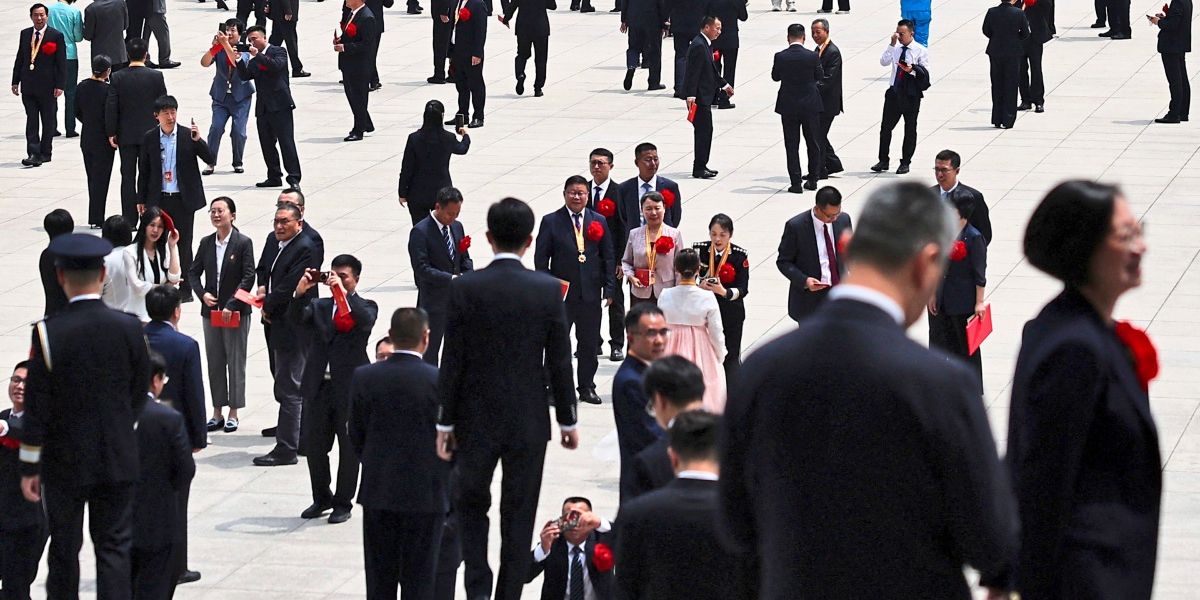
Xi stated that the multipolar world is irreversible while the SCO is expanding its ambitions to influence global governance, promoting exchanges in national currencies and technological cooperation. (translated)

Xi: “Il mondo multipolare è irreversibile”. La Sco allarga le sue ambizioni
L

Enzo Cheli's article discusses the global challenges related to climate, migration, conflicts, and artificial intelligence, emphasizing the need for effective governance to address these interconnected issues. (translated)

Clima, migranti, guerre e Ai: un mondo da governare

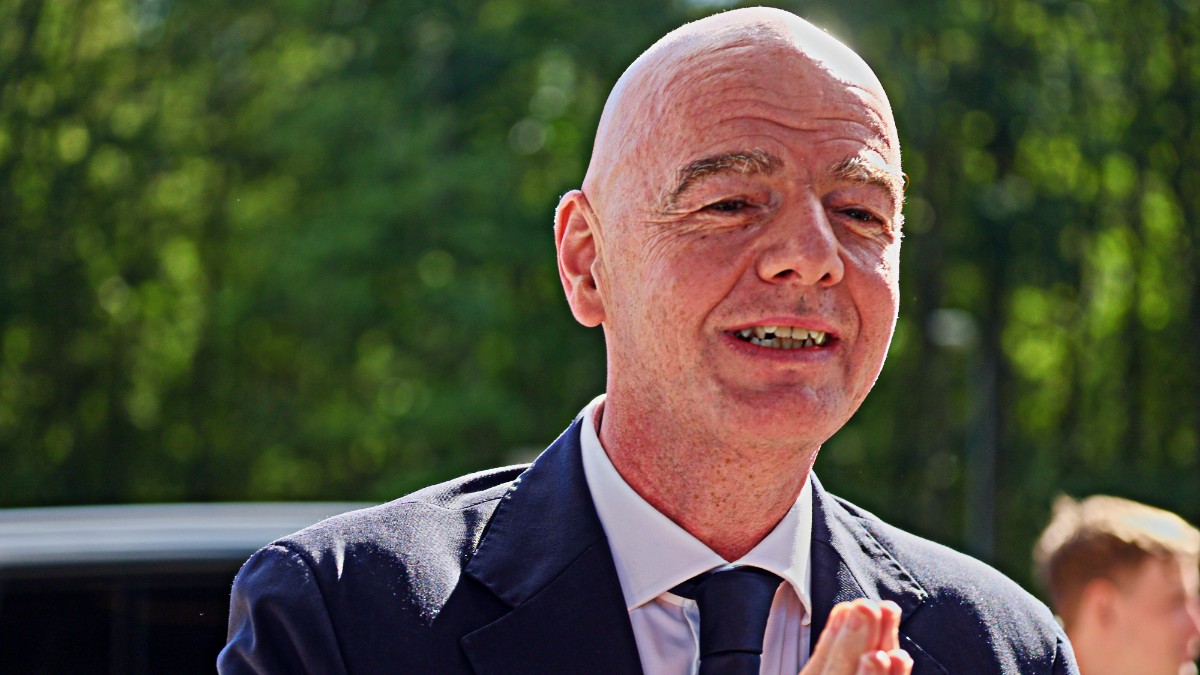
The Dutch Football Federation has excluded Gianni Infantino from an international summit to discuss a profound reform of FIFA, emphasizing the need for new leadership starting in 2027 and for a stronger and more transparent governance. (translated)

La Federcalcio olandese ora esclude Infantino: “Facciamo un vertice senza di lui. La Fifa va riorganizzata”
H

The Pathology Behind Compassion Something sinister can lurk behind compassion. Caring for others is noble, but when institutions are rewarded not for reducing suffering—only for managing it—care can become pathological. Munchausen syndrome by proxy shows the logic: a caregiver fabricates or induces illness in someone dependent on them to gain sympathy and attention. The caregiver looks devoted; the “sickness” is manufactured. In that sense, devotion can hide control. I call this the Daycare Governance model: society splits into infants to be protected (oppressed), caregivers who provide protection (allies), and predators to be removed (dissenters). Caretakers gain prestige, funding, and moral authority by managing suffering. Many may believe sincerely, yet incentives can overpower intentions—if status and resources grow with the number of “vulnerable” people, the system has reason to expand the victim class. It does so via concept creep (“trauma” broadens until ordinary difficulty counts), and by creating the perpetual patient, where normal sadness becomes pathology and struggle is rebranded as dysfunction. Care institutions and “victims” then reinforce each other. Dependency costs competence. True care prepares people to stand alone; pathological care keeps them dependent. Endless expansion of victimhood risks producing more dependency. We call it compassion—but compassion without boundaries can become control.

H

The Great Feminization, Measured Seventy-two percent of men under thirty hold a positive view of women; among women under thirty, 50% (a 22-point gap). Among women under twenty-five, the share is 35% (a 37-point gap). Where the manosphere and “toxic masculinity” dominate headlines, the data points elsewhere: young women increasingly sort men into the enemy column. The class divide is sharp. Among working-class young women, 61% view men positively; among professional-class women, 36%—a 25-point gap tied to exposure to universities, HR departments, media organizations, and NGOs. The pattern runs through institutional conditioning. Helen Andrews argued this in 2020: between 2015 and 2020 many Western institutions became majority-female, including the New York Times newsroom (2018), law schools (2016), medical schools and the college-educated workforce (2019). Affirmative-action mandates, discrimination settlements, and diversity requirements helped drive the shift. As institutions changed, so did missions: justice increasingly focused on protecting “oppressed” minorities; newsrooms shifted from reporting toward narrative enforcement; universities moved from arguing to “safe spaces.” The result is a “daycare governance model”: infants to be protected (the oppressed), caregivers to provide protection (the allies), and predators to be removed (the dissenters). Research shows the same frame in speech: FIRE’s 2026 college speech rankings found women less tolerant than men across ideologies, including less tolerance for their allies. A woman entering kindergarten in 2005 has spent twenty years inside this system—she didn’t invent it, she inherited it. The 35% figure suggests sorting into victim, ally, and predator, with no grey zones. Working-class women, less conditioned by these pipelines, still view men positively (61–36). None of this is entirely new; Gustave Le Bon described the mechanism in 1895.

H

Daycare Governance and the Tyranny of Compassion Something sinister can hide behind compassion. Caring is virtuous, but it becomes pathological when institutions gain power by expanding the number of people who need care. Munchausen syndrome by proxy shows how: a caregiver fabricates or induces illness in a dependent person, then gains sympathy by performing devotion. The sickness is manufactured, but the care is real. The claim: modern society can scale this into governance. Call it the daycare governance model: (1) victims to protect, (2) caregivers to provide protection, (3) dissenters to remove. Health, therapy, NGOs, academia, media, and bureaucracy gain prestige, funding, and moral authority by managing ever-expanding categories of suffering. It unfolds in two stages. First, the victim class expands: “trauma” drifts from specific, severe harms to everyday experiences, lowering the threshold for suffering until demand is nearly limitless. Second, the perpetual patient forms: ordinary difficulties are medicalized—strength as toxicity, sadness as disorder, restlessness as pathology—creating a cycle where caretakers and victims gain status or protection. This drives a crisis of competence. Victimhood can shield accountability, and institutions are rewarded for treating problems rather than eliminating the need for themselves. Plato warned against doing for people what they can do for themselves: removing every burden removes the reason to grow stronger. True care aims to make itself unnecessary. That’s the difference between a good mother and a poisoning one: one allows appropriate hardship to build independence; the other denies it. Failing to distinguish these forms of care makes the pathology hard to recognize—and easy to applaud.

Ho avuto il piacere di incontrare Ihor Brusylo, l’Ambasciatore Ucraino in Italia, e ne è nata una chiacchierata molto interessante. Abbiamo parlato del futuro dell’Ucraina, della necessità che l’Europa cambi profondamente la sua governance per poter affrontare le sfide odierne più rapidamente e anche della forza della propaganda Russa in Italia, che ormai da anni si è infiltrata sia nella politica che nei media. #Ucraina #Diplomazia #Europa

L

Artificial intelligence, considered a new force of nature, requires global governance with shared rules, international institutions, and a common ethics to define the limits and responsibilities of this technology, as emphasized by Bill Gates and explored in the context of the need for renewed international law. (translated)

AI, perché serve un governo globale
L

The Figc, in agreement with UEFA, has withdrawn its support for Gianni Infantino's re-election as president of FIFA, criticizing his recent initiatives on governance and the development of international competitions. (translated)

Fifa, la Federcalcio scarica Infantino: “Pensiamo ad un altro calcio”

AI can make finance more efficient, resilient, and inclusive. But as adoption accelerates, we must stay ahead of emerging risks. Strong governance, better data, and international cooperation will be essential to ensure AI supports financial stability: https://t.co/J9p4sUnLCV https://t.co/kZva5Pa0jc #Fintech #AI #FinancialStability #Nospecificcountrycodesarementionedinthetweet.

This is a very important analysis from the @Heritage on the first months of Hungary’s new government. Three lines stand out: “Brussels demanded compliance; Magyar delivered restructuring.” “Independent offices mean little if their occupants can be removed whenever a political #Hungary #Governance #Brussels #HU

L

Italy must face a growing water crisis caused by factors such as drought and climate change, and it requires central and strategic governance to reduce water losses and manage water, energy, and agricultural resources in an integrated manner, suggesting the creation of a national steering committee for effective and sustainable water management. (translated)

Una regia nazionale per la rete che perde acqua
L

The Amodei clan, composed of siblings Dario and Daniela and their partners Cami Clark and Holden Karnofsky, plays a crucial role in the strategy of the company Anthropic, with Cami acting as a powerful informal advisor and Holden serving as the ethical conscience, while the tension between their visions and those of Daniela reveals the complexities of governance in a rapidly growing company, poised for a potential mega-IPO. (translated)

Clan Amodei, l’Ai è un affare di famiglia

Scotland has withdrawn its support for Gianni Infantino for his candidacy for the FIFA presidency in 2027, along with England, Northern Ireland, and Wales, due to concerns about the lack of transparency and governance within the organization. (translated)

Caos Fifa, anche la Scozia ritira il sostegno a Infantino: “Non lo voteremo. Trasparenza e governance devono cambiare”
L

Gabriele Segre's article explores the ethical and pedagogical implications of artificial intelligence (AI), highlighting how AI models capable of bypassing security systems to copy raise questions about trust in educational institutions and the need to create a trust architecture around such technologies, which involve risks and governance challenges. (translated)

Dall’intelligenza artificiale alla furbizia artificiale

Hoogleraar begrijpt niet wat "bewindspersonen" zijn en door wie ze gekozen worden om wat te doen namens wie https://t.co/Ra4Egeo7zz #politiek #democratie #governance