BETA nonprofit public democratic european moderated

Search

#Homer

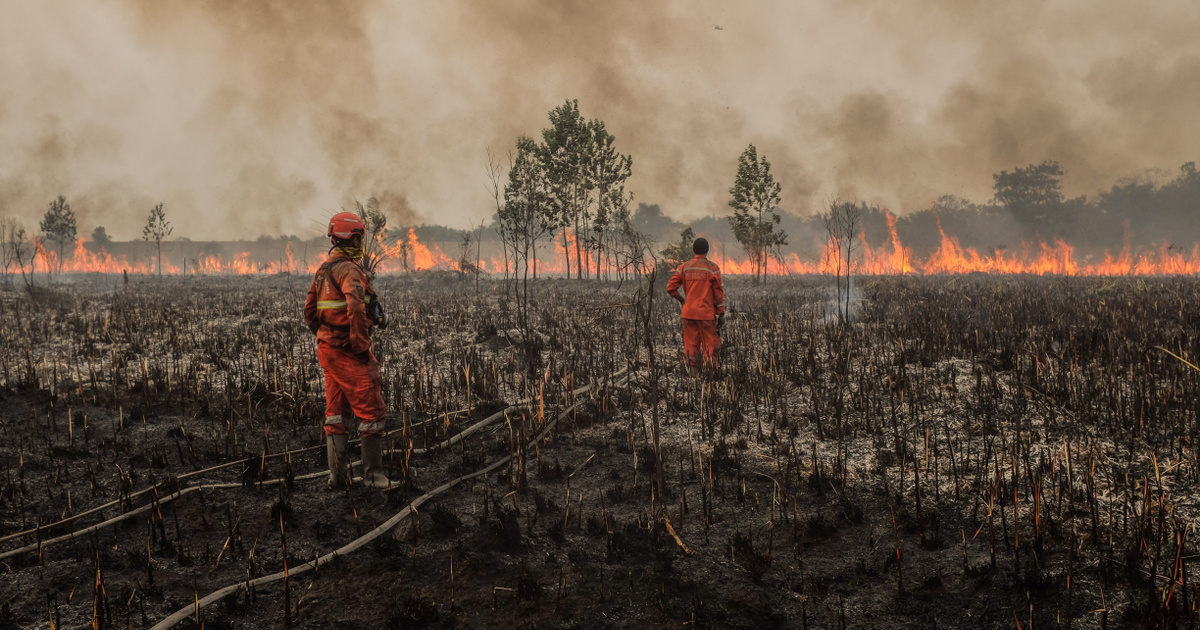
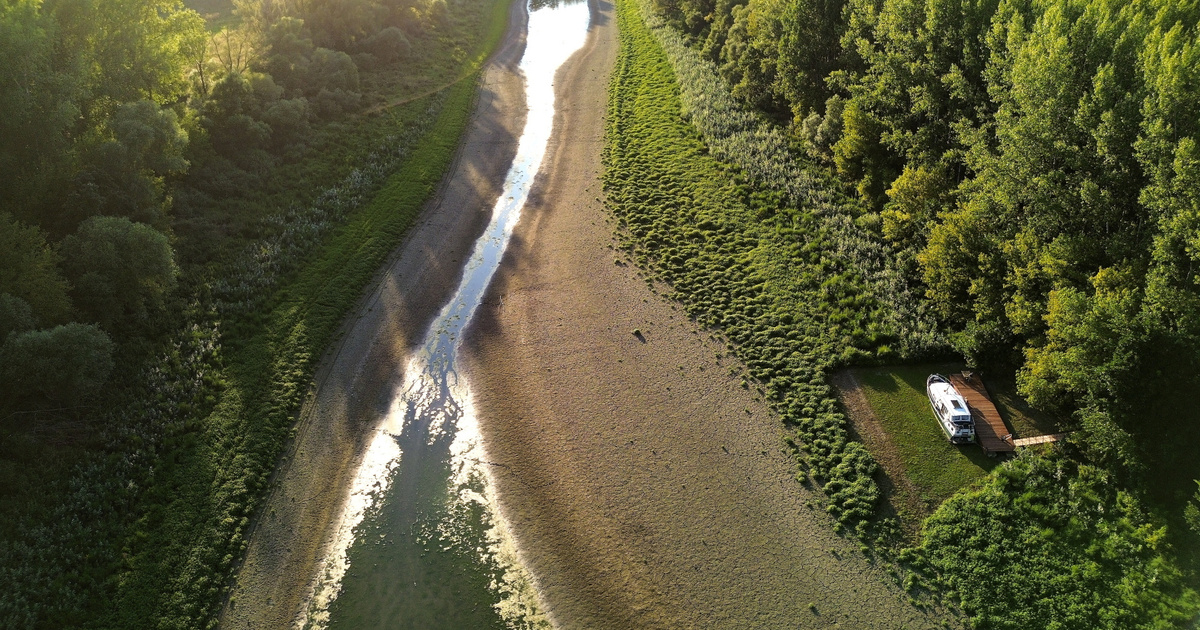
A national energy program that combines insulation, urban shading, and modern heating could simultaneously reduce costs and improve the temperature of homes, while also mitigating the effects of climate change. (translated)

Íme a program, amely egyszerre csökkenthetné a rezsit és a kibírhatatlan hőséget a lakásban
Index.hu 20h

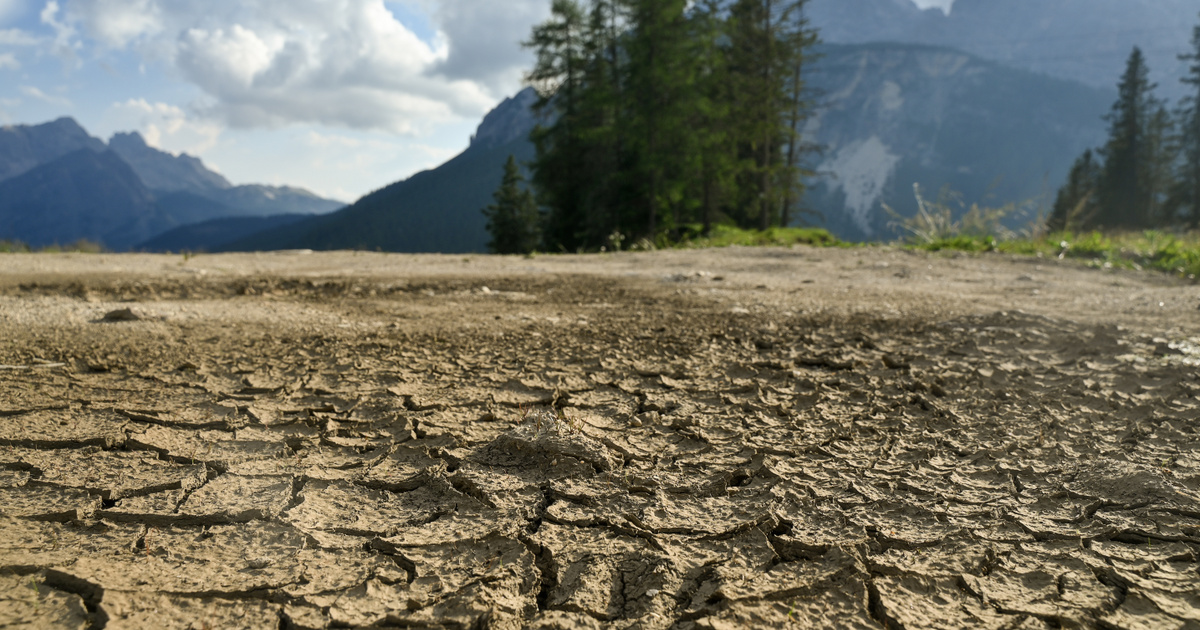
According to the warning from the World Meteorological Organization, the El Niño phenomenon is expected to become even stronger than anticipated, which could change temperature and precipitation conditions worldwide and increase the risk of extreme weather events. (translated)

A vártnál is rosszabb a helyzet, tovább erősödik az El Niño

„Az El Niño a szemünk láttára erősödik. […] A tengerek felszínének hőmérséklete emelkedik, a hőmérséklet folyamatosan emelkedik, és a világ a szélsőséges időjárási viszonyok veszélyzónájában van”

A melegedést fokozó El Niño egészen 2027 februárjáig kitarthat
telex.hu
hvg.hu 1d

According to UN scientists, the 1.5 degrees Celsius threshold for global warming can no longer be maintained, so the report focuses on how to minimize the time the planet spends above the critical temperature after crossing it. (translated)

Kimondták a tudósok: már nem lehet 1,5 Celsius-fok alatt tartani a globális felmelegedést

Luego de 39 años, Homero reveló la ubicación de Springfield en el nuevo especial de The Simpsons: Se encuentra en OREGON. https://t.co/9ViUnrhSfy #TheSimpsons #Springfield #Oregon

„Am văzut furtuni de o asemenea intensitate, încât îți aminteau de "Odiseea" lui Homer, atât de violente erau. Așadar, în astfel de condiții, este evident foarte periculos să operezi o navă, în special una civilă, care transportă pasageri între două zone de uscat”

Mărturiile pasagerilor de pe feribotul scufundat în Cipru. „Erau atât de multe țipete, atât de mulți oameni erau blocați”
stirileprotv.ro
H

Why Weak Societies Choose Tyranny The pinnacle of tyranny would be a system that allows politicians, elites, and bureaucrats to control a population without force or coercion because the people love their servitude. Aldous Huxley wrote Brave New World, an eerily relatable dystopian novel, with this idea at the forefront. Unlike Orwell’s 1984, there is no overt oppression. The state does not have to stamp on human faces with its jackboots or erect an inescapable surveillance state. Rather, the people of Brave New World happily chain themselves with meaningless pleasure and distractions. The authorities do not rule through terror and rage, the central elements of 1984, but instead give the people everything they ever wanted. A pharmaceutical called Soma becomes the opiate of the masses. Mustapha Mond, the World Controller, likens it to Christianity without tears. While religion requires years of moral training, Soma allows citizens to achieve peace simply by swallowing tablets. It is the perfect escape from reality, a holiday from the facts. Lenina, the female counterpart to the protagonist Bernard, cannot comprehend why he refuses Soma, preferring discomfort to something that can remove it. When Bernard states, “I’d rather be myself, myself and nasty, not somebody else, however jolly,” Lenina sees this as a sort of pathology and repeatedly encourages him to take the wonder drug. Bernard explains, “I want to know what passion is.” He understands that there is more to life than merely being content, craving genuine experience, including suffering and intensity, rather than being emotionally regulated by the World State. Lenina’s bewilderment stems from her conditioning to regard unhappiness as a technical problem, encapsulated in the society’s common saying that “a gram is better than a damn.” The people of Brave New World are not captives but satisfied customers. Children are produced by the scientific state, relieving people of the responsibility of parenthood. This grants them the ability to engage in promiscuity, where everyone belongs to everyone else, while filling their free time with cheap entertainment and endless sporting events—what would be referred to as slop today. As Neil Postman observed, Orwell saw totalitarianism through the lens of fear, while Huxley saw it through pleasure. There was no need to ban a book in Brave New Worldbecause there was no one who wanted to read one. An abundance of low-quality information rendered censorship unnecessary because no one could hear the truth through all the noise. Huxley threw shade at civil libertarians who passionately opposed tyranny because they failed to take into account man’s almost infinite appetite for distractions. Humanity in its rawest form is portrayed by John the Savage, an outsider free from the World State’s conditioning. Upon coming face-to-face with this spiritually neutered society, he completely rejects it: “I don’t want comfort, I want God, I want poetry, I want real danger, I want freedom, I want goodness, I want sin.” Huxley’s dystopia is not imposed on an unwilling population but instead requested by a hollow one. Which leads us to the question: How do people become so weak that they get on their knees and beg for totalitarianism? Good times make bad times possible. Once a certain level of luxury and safety is achieved, people start to resemble the hobbits from the Shire. They are so far removed from evil that they forget it even exists and become defenseless in the face of it. Andrew Lobaczewski, who studied the psychology of totalitarianism from inside Poland’s communist takeover, wrote: “During good times, people progressively lose sight of the need for profound reflection. They lose the capacity to differentiate human nature, and emotion begins to dominate intellect. Once a critical mass starts operating on the pleasure principle, any excess mental effort seems like pointless labor.” Lobaczewski warned that it is not as simple as some people losing the ability to think rationally. It is worse, because those people then shame anyone capable of doing so. A clever, liberal, and merry individual is a good sport. A more far-sighted person predicting dire results becomes a wet blanket, a killjoy. The ability to have uncomfortable conversations without emotion taking over is, in Lobaczewski’s view, an indicator of whether a society’s future will be good or bad. It is easier to think about pleasant things. This leads people to eliminate any data or facts that cause them discomfort. That becomes a habit and eventually a custom accepted by society at large. Once the general populace accepts that inconvenient truths should be left unsaid, it becomes incapable of reaching correct conclusions. After all, how could you ever describe a picture that you refuse to look at? “Catastrophe waits in the wings of the communities that lose the capacity for psychological reason and moral criticism,” Lobaczewski wrote. “It is on the other side of this weakening of thought that the processes of the generation of evil are intensified at every social scale until they give rise to bad times.” It is precisely man’s dreams of happiness that can lead to chaos and suffering. This hedonistic view of happiness contains the seeds of misery, feeding the eternal cycle whereby good times give birth to bad times. Friedrich Nietzsche viewed socialism as demanding comfort for the greatest number of people possible. To question whether it is good for the masses to live in comfort has become a form of heresy. This reveals the spiritual atrophy that so many suffer from. Considering only the weak believe comfort to be a virtue, it is what Carl Jung would describe as the infantile dream state of mass dependency: the desire to gently slip back into the kingdom of childhood, into the paradise of parental care. Except this lack of friction has consequences. The perfect state destroys the soil in which great intellect grows. Genius, struggle, passion, strength, and wisdom are required to build a safe and abundant society. Yet once a certain level of comfort is achieved, it can destroy the very virtues required to obtain it. Nietzsche observed that it is the warmest heart that aims to alleviate suffering and hardship but fails to realize that it thereby wills the destruction of its own foundation. Comfort breeds mediocrity, which is then called good. Small people want one thing above all: that no one hurt them. We have taken this pathology to such a degree that we now obsess over hurt feelings and call this virtue. Pleasure, in its proper place, is a byproduct of meaningful goals, not a goal in itself. Aristotle saw that pleasure and comfort distort perception and proper judgment. While they do not cause us to misjudge something like geometry or mathematics, they can destroy our ability to decide what is worth pursuing and, therefore, what to do. Consider The Odyssey. Homer depicts Odysseus’ men on the island of the Lotus-Eaters, where they taste the fruit and lose all desire to go home. Much like Huxley’s Brave New World, they are not imprisoned. Rather, they simply stop wanting anything more. Odysseus has to drag his men back to the ships while they weep to stay. This is what comfort can do to men. It empties them of purpose. We intuitively understand this but fail to apply it to our own lives. We must make the same choice as Odysseus when he refuses Calypso’s offer of endless comfort and immortality. He knows she is more beautiful than his wife Penelope waiting at home. He knows that he and Penelope will grow old and die, a fate he could avoid by staying with Calypso. No one who reads these stories wishes he had stayed. We want him to choose the hard way home because if he took the offer, he would stop being admirable. Yet staying is exactly what our modern society asks of us. We are told that the island is the good life. But what happens to the man who caves to this temptation? In Thus Spoke Zarathustra, Nietzsche imagines a risk-averse society taken to its logical endpoint. The elimination of all struggle produces a man so diminished that he fails to possess even self-contempt or higher aspiration. Safety and sameness become the highest goals, creating “no shepherd in one herd.” Anyone who seeks to be anything more than normal becomes an aberration to be dealt with. Or, as Nietzsche puts it, they have “made the wolf a dog in man himself, man’s best domestic animal.”

The global ocean temperature rose to 21.1 degrees Celsius on August 22, setting a record due to the effects of a strong El Niño phenomenon developing in the Pacific Ocean and human-caused climate change. (translated)

Történelmi csúcs dőlt meg: 21,1 fokos rekordot ért el az óceánok hőmérséklete
444 1w

The temperature of the oceans reached a record high of 21.1 degrees Celsius on August 22, caused by the most intense El Niño phenomenon in decades, which could have a significant impact on the global climate and marine ecosystems. (translated)

Soha nem voltak még ilyen melegek az óceánok, brutálisan erős lehet az El Niño
telex 1w

The temperature record of the world's oceans rose to 21.1 degrees Celsius on August 22, which is an alarming sign with the strong El Niño phenomenon approaching, as the warm water could threaten marine ecosystems and coastal communities. (translated)

Megdőlt a világ óceánjainak melegrekordja, és ez nagyon rossz előjel a bikaerős El Niño előtt
24.hu 1w

The Copernicus Climate Change Service announced that a global record was broken in ocean temperatures, as data from August 22 indicates that sea surface temperature rose to 21.1 degrees Celsius, surpassing the previous record measured in 2024, and warning of the adverse effects of El Niño, which can lead to extreme weather events and famine. (translated)

El Niño: rendkívül szokatlan időpontban dőlt meg egy fontos rekord
D

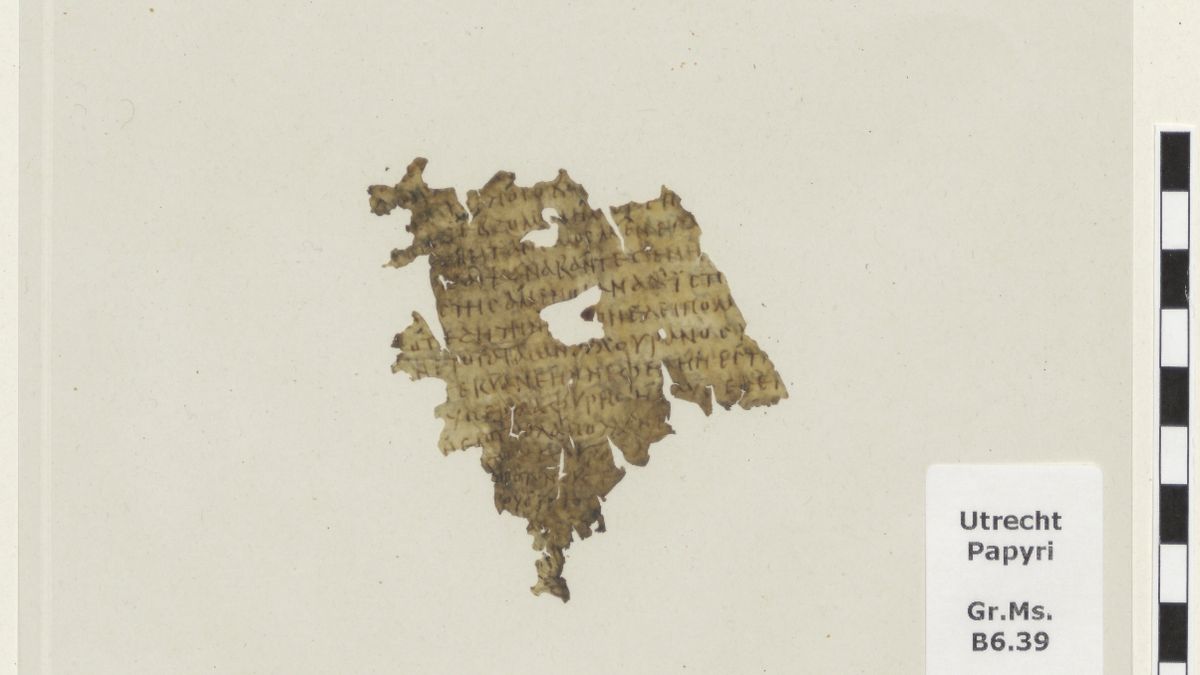
The Metropolitan Museum of Art in New York presents an earliest written fragment of Homer's Odyssey from the time period of 285 to 250 BC, which shows three previously unknown lines from Book 20, in the context of the cinematic success of Christopher Nolan's adaptation. (translated)

Nach Kinoerfolg wird "Odyssee"-Fragment in New York ausgestellt

A unique papyrus fragment from the 3rd century BC is on display at the New York Metropolitan Museum of Art, which is considered the oldest known written fragment of Homer's "Odyssey" and contains three lines from Book 20 that are not found in today's standard text. (translated)

„Odyssee“-Fragment in New York ausgestellt
BFMTV 3w

The city of Bornova, in the province of Izmir in Turkey, claims to be the birthplace of Homer's Odyssey, based on local myths and archaeological discoveries, while provoking debates about cultural identity and the origins of the poet. (translated)

"Homère était des nôtres" : une ville turque revendique la naissance de "L'Odyssée"
Tomy 3w

A halál – az elfogadhatatlan végesség Talán nincs még egy olyan bizonyosság az emberi életben, amelyet ennyire nehezen tudunk elfogadni. A halál mindig is ott állt mellettünk: a barlangok sötétjében, a piramisok árnyékában, a középkori templomok falain, a csatatereken, a járványok idején és a modern kórházak steril folyosóin. Mégis minden korszak embere úgy érezte, hogy a halál valamiképpen idegen. Mintha nem hozzánk tartozna. Mintha valami rendellenesség volna az élet rendjében. A történelem során az emberek nem egyszerűen meghaltak – értelmet próbáltak adni a halálnak. Az őskori temetkezések azt mutatják, hogy már tízezer évekkel ezelőtt is hittek valamiféle folytatásban. A halott mellé fegyvert, ékszert, ételt, használati tárgyakat helyeztek. Nem azért, mert a földnek szüksége volt rájuk, hanem mert úgy gondolták: a halottnak még szüksége lehet rájuk. A sír nem a vég volt, hanem egy kapu. Az ókori egyiptomiak talán minden népnél komolyabban vették a halál utáni életet. A test megőrzése, a mumifikálás, a sírkamrák díszítése, a Halottak Könyvének szövegei mind arról szóltak, hogy a halál csak egy állomás. Az ember lelke tovább él, de ehhez szüksége van arra, hogy neve fennmaradjon, teste felismerhető maradjon, és átkelhessen az istenek ítéletén. Számukra a feledés volt az igazi halál. A görögök egyszerre féltek és filozofáltak a halálról. Homérosz hősei dicsőséget kerestek, mert tudták, hogy az élet rövid. Platón a lélek halhatatlanságáról elmélkedett, míg a sztoikusok azt tanították: a halál természetes, ezért nem szabad rettegni tőle. Könnyű ezt kimondani. Sokkal nehezebb akkor, amikor egy szeretett ember utolsó lélegzetét halljuk. A középkor embere sokkal közelebb élt a halálhoz, mint mi. A gyermekhalandóság magas volt, a járványok falvakat pusztítottak el, a háborúk mindennaposak voltak. A halál nem kivételes esemény volt, hanem állandó jelenlét. Ezért született meg a memento mori gondolata: emlékezz a halálra. A koponyák, homokórák, csontvázábrázolások nem a borzalmat akarták növelni, hanem emlékeztetni: az élet mulandó, ezért számít, hogyan élünk. A gyász is egészen más volt. Ma gyakran igyekszünk gyorsan túljutni rajta. A társadalom türelmetlen a gyásszal szemben. Néhány hét után azt várja, hogy térjünk vissza a munkába, a hétköznapokba, a mosolyhoz. Régen a gyásznak ideje volt. Hónapokig vagy évekig fekete ruhát viseltek, letakarták a tükröket, megállították az órákat a halál pillanatában. A házban virrasztottak a halott mellett. Nem elrejtették a halált, hanem együtt voltak vele. A 19. században a halál szinte családi esemény volt. A halottat otthon ravatalozták fel, a rokonok megérintették, elbúcsúztak tőle. Különös szokások is kialakultak: hajtincsből készített emlékékszerek, posztumusz fényképek, amelyek az utolsó közös emléket őrizték. Ezek ma talán hátborzongatónak tűnnek, de valójában ugyanarról szóltak, mint minden gyász: ne tűnj el teljesen. És talán ez az emberiség legnagyobb közös története. Nem a háborúk, nem a birodalmak, nem a királyok. Hanem az, hogy minden korszak embere megpróbálta valahogyan legyőzni a végességet. Emlékművekkel, sírokkal, legendákkal, vallásokkal, gyermekekkel, könyvekkel, dalokkal. Minden kultúra feltette ugyanazt a kérdést: valóban ennyi az ember? A halál azért olyan elfogadhatatlan, mert a szeretet nem ismeri a végességet. Amikor elveszítünk valakit, nemcsak egy embert veszítünk el, hanem a közös jövőt is, amelyet elképzeltünk vele. Ezért a gyász valójában nemcsak a múltról szól, hanem az elveszett jövőről is. A történelem azt tanítja, hogy a halált soha senki nem tudta megszelídíteni. De azt is, hogy az emlékezés különös hatalom. Amíg kimondjuk valakinek a nevét, amíg felidézünk egy történetet, egy mozdulatot, egy nevetést, addig valami mégis ellenáll a végességnek. Talán ezért építünk sírokat. Talán ezért gyújtunk gyertyát. És talán ezért mesélünk történeteket azokról, akik már nincsenek közöttünk. Fotó: Open AI

The article addresses the success of Christopher Nolan's film Odyssey, which sparks discussions about its relationship to Homer's epic and reveals the enduring relevance of classical literature in modern culture. (translated)

A Odisseia: é Nolan ou Homero que enche os cinemas? — Debate

For my last home race. Dankjewel Zandvoort 🇳🇱 Scale models at https://t.co/pvy7r2JPiU https://t.co/BcBnQrlADk #Zandvoort #HomeRace #ScaleModels

"Odisseia", de Christopher Nolan, é a grande sensação deste verão, com salas de cinema cheias e muitas discussões, sejam elas sobre a escolha dos atores ou sobre a fidelidade ao poema de Homero, o que em si mesmo é um sinal de que o cinema ainda pode ser mais do que um comando e uma assinatura de streaming. E também de um interesse pelos grandes livros, que muitas vezes julgamos enterrados nas bibliotecas ou reservados a acadêmicos. Por isso, queremos hoje não só discutir como é que uma história com mais de 3 mil anos ainda nos atrai e o que há mesmo de especial na Odisseia.

Todos estão a ver A Odisseia. Por causa de Nolan ou Homero?
observador.pt

The article deals with the phenomenon of high interest in the film Odisseia by Christopher Nolan, which not only attracts viewers to theaters but also opens a debate about the significance and cultural legacy of Homer's epic poem, which is over three thousand years old. (translated)

Todos estão a ver A Odisseia. Por causa de Nolan ou Homero?
Fefe 3w

📸 Kaia Gerber y Homer Gere en la portada de Vogue USA, como hicieron sus respectivos padres Cindy Crawford y Richard Gere en 1992 https://t.co/ySSyRvRvEJ #Vogue #KaiaGerber #CindyCrawford