BETA nonprofit public democratic european moderated

Search

#Instituições

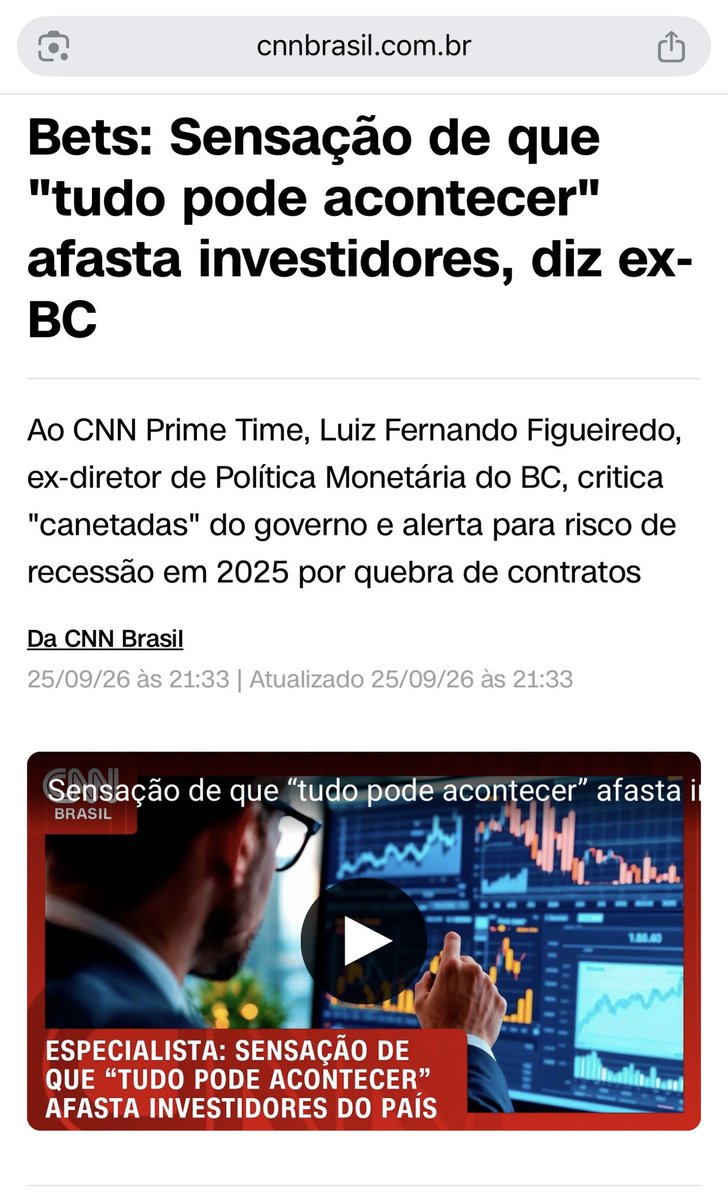
I really hate the bets. If there’s something that makes me more enraged on the face of the Earth, it’s the bets, for all the harm they produce to families. (including we were one of the first to make a video against the bets more than 3 years ago) But there is one point: this government has spent the last four years supporting and encouraging the bets. They had the bets as their main ally for a long time. And now, for purely electoral reasons, without apparently making a true and long-term decision, they resolved to prohibit the bets with a stroke of the pen. What does this mean in practice? As much as I don’t like the bets, it means great legal instability in the country. This has happened in the past: a government encourages borrowing and the purchase of small credits when interest rates are lower. Then, they say these were risky operations. This happens every now and then: they encourage something and then legally prohibit it when it’s not electorally convenient. It’s the use of the Judiciary for politics. And if we do an economic analysis of the legal institutions, what do we find? Legal instability and lack of credibility, which drives away investors because they cannot trust even the minimal legal basis of how the rules work. But at least they banned the bets, right? I don’t know, after the election it might change again. (translated)
B

“Instead of creating a process where each person, each family member goes to the bank to try to renegotiate their own debt, here we have the Brazilian state, the federal government acquiring debt portfolios from financial institutions,” explained the Minister of Planning and Budget, Bruno Moretti, at a press conference. (translated)

Lula anuncia plano de compra de dívida da população
observador.pt
P

"The eviction of Maricarmen is a social tragedy that we cannot accept either as a country or, evidently, from the perspective of public institutions," said the Spanish Prime Minister, Pedro Sánchez, on Wednesday. (translated)

Despejo de idosa em Madrid leva milhares às ruas
observador.pt

Abuse of political power laid bare. If it were Bolsonaro... Lula has taken over the institutions over the course of 20 years. He formed networks of power that make up a system that works in his favor. Moreover, with the scandal involving the STF, the system also needs him. (translated)

What will happen with football teams having to sell players is not written. The government tore up the contract in a tyrannical way. I have numerous objections against the bets, but I do not believe that destroying institutions is the way to solve the problem (which the current government has amplified). (translated)

Lula 1d

Today I have the joy of sanctioning the creation of the Federal University of Northern Frontier, Unifron, in Oiapoque, Amapá. I also sanction the transformation of the Cefet of Minas Gerais and the Cefet of Rio de Janeiro into federal universities. These institutions gain even more strength to train professionals, conduct research, and produce the knowledge that Brazil needs to develop. For a long time, those who governed this country did not want the people to have access to education. We changed this story. I am proud to be the president who has created the most universities and federal institutes in Brazil and to see so many young people change their lives with technical and higher education. There is no country that grows without investing in education, science, and technology. We will continue to advance towards the future, with more production of science and technology made here in Brazil. (translated)

Whoever shies away from the debate has a lot to explain! Organized crime and militias are advancing over the institutions and this needs to be faced with firmness, intelligence, and courage. São Paulo cannot allow these groups to occupy even more space in politics and power. Simone Senator 400 Coalition Awakens São Paulo — PDT and PSB / Federation Brazil of Hope — PT, PCdoB, and PV / Federation PSOL and Network. CNPJ 68.581.880/0001-70 #SimoneSenator #Simone400 (translated)

Brazil spent years discussing how to regulate sports betting. Congress approved it, the government regulated it, companies paid to operate legally in the country, made investments, and began to comply with rules for supervision, taxation, and consumer protection. One cannot create a rule, get companies and institutions to commit based on it, and then overnight change the entire regulatory framework. No regulation is untouchable. If there are problems, the rules need to be improved. If they need to be stricter, let them be. Those who violate the law should be punished. But there is a fundamental difference between improving regulation and simply dismantling it. This is a matter of legal certainty. And legal certainty is not only of interest to betting companies. It matters to anyone, company, or institution that invests, contracts, and makes long-term plans in Brazil trusting in the rules established by the state itself. The change heavily impacts Brazilian sports. A decision of this magnitude affects professional football, youth categories, women's football, Olympic sports, and championships. Brazilian sports cannot be analyzed solely from the financial reality of the highest-earning clubs. And it is not just the clubs that are affected; it is a chain that receives an immediate impact: direct and indirect jobs, communication, marketing, and technology companies, suppliers, arenas, service providers, and an entire economic chain. It also affects public revenue. The regulated market generates resources through taxes and allocations provided by law, which reach the public coffers and are directed to areas of societal interest. Weaken the legal market can produce a particularly bad combination: less resources for sports and less revenue for the country. And will the Brazilian be better protected? This may be one of the central questions of this discussion. Prohibiting companies that operate legally does not mean ending betting. The game does not disappear, and the underground market, which represents a significant portion of the activity, will grow and occupy this space. A survey by the Locomotiva Institute, conducted in May 2026 across the country with 2,291 bettors, indicates the relevant presence of practices associated with the illegal market. A study by LCA Consultores, based on this research, estimates that between 38% and 44% of the value bet online in Brazil currently occurs on clandestine platforms. There is one particularly important piece of data: the estimated share of the illegal market decreased after regulation, moving from the range of 41% to 51% in 2025 to 38% to 44% in the first half of 2026. The game will not end with a stroke of a pen. What ends is the part that Brazil can regulate, supervise, tax, and hold accountable. And the result may be less security for investors, fewer resources for sports and the country, and less capacity for oversight of the activity. Brazil needs to combat illegal gambling. It needs to protect its population. But it also needs to preserve legal certainty, investment capacity, and the sustainability of its sports institutions. Brazilian sports cannot be weakened by a decision that does not eliminate gambling, does not eliminate the illegal market, and still puts at risk the investments, jobs, and commitments built within the rules that the country itself established. (translated)

🚨 NOW! Official statement from Flamengo: "Brazil spent years discussing how to regulate sports betting. Congress approved it, the government regulated it, companies paid to operate legally in the country, made investments, and began to comply with oversight, taxation, and consumer protection rules. One cannot create a rule, lead companies and institutions to make commitments based on it, and then, overnight, change the entire regulatory framework. No regulation is untouchable. If there are problems, the rules need to be improved. If they need to be stricter, then let them be. Those who violate the law must be punished. But there is a fundamental difference between improving regulation and simply dismantling it. This is a matter of legal certainty. And legal certainty is not only of interest to betting companies. It matters to anyone, company, or institution that invests, contracts, and makes long-term plans in Brazil relying on the rules established by the State itself. The change hits Brazilian sports hard. A decision of this magnitude affects professional football, the youth categories, women's football, Olympic sports, and championships. Brazilian sport cannot be analyzed solely based on the financial reality of the highest-revenue clubs. It is not just the clubs that are affected; it is a chain that receives an immediate impact: direct and indirect jobs, communication, marketing and technology companies, suppliers, arenas, service providers, and an entire economic chain. It also affects public revenue. The regulated market generates resources through taxes and legal allocations, which reach public coffers and are directed to areas of interest to society. Weakening the legal market can produce an especially bad combination: fewer resources for sports and less revenue for the country. And will the Brazilian be more protected? This may be one of the central questions of this discussion. Prohibiting legally operating companies does not mean ending betting. The game does not disappear, and the clandestine market, which represents a significant portion of the activity, will grow and occupy that space. Research from Instituto Locomotiva, conducted in May 2026 nationwide with 2,291 bettors, points to the relevant presence of practices associated with the illegal market. A study by LCA Consultores, based on this research, estimates that between 38% and 44% of the online betting value in Brazil currently takes place on clandestine platforms. There is a particularly important data point: the estimated participation of the illegal market decreased after regulation, dropping from that range of 41% to 51% in 2025 to 38% to 44% in the first half of 2026. The game will not end with a stroke of a pen. What ends is the part that Brazil can regulate, oversee, tax, and hold accountable. And the result may be less security for investors, fewer resources for sports and the country, and less oversight capacity over the activity. Brazil needs to combat illegal gambling. It needs to protect its population. But it also needs to preserve legal certainty, investment capacity, and the sustainability of its sports institutions. Brazilian sports cannot be weakened by a decision that does not eliminate gambling, does not eliminate the illegal market, and still puts at risk the investments, jobs, and commitments built within the rules that the country itself established." 🗞️ @simpraisa (translated)

Official note from Flamengo: Brazil spent years discussing how to regulate sports betting. Congress approved it, the government regulated it, companies paid to operate legally in the country, made investments, and began to comply with oversight, taxation, and consumer protection rules. One cannot create a rule, lead companies and institutions to commit based on it, and then, overnight, change the entire regulatory framework. No regulation is untouchable. If there are problems, the rules need to be improved. If they need to be stricter, then let them be. Those who violate the law should be punished. But there is a fundamental difference between improving regulation and simply dismantling it. This is a matter of legal security. And legal security is not only of interest to betting companies. It is of interest to anyone, company, or institution that invests, contracts, and makes long-term plans in Brazil, trusting the rules established by the State itself. The change strikes at the heart of Brazilian sports. A decision of this magnitude affects professional football, youth categories, women's football, Olympic sports, and championships. Brazilian sports cannot be analyzed solely from the financial reality of the clubs with the highest revenue. And it is not only the clubs that are affected; it is a chain that receives an immediate impact: direct and indirect jobs, communication, marketing and technology companies, suppliers, arenas, service providers, and an entire economic chain. It also impacts public revenue. The regulated market generates resources through taxes and allocations provided by law, which go to public coffers and are allocated to areas of societal interest. Weakening the legal market could produce a particularly bad combination: less funding for sports and less revenue for the country. And will Brazilians be better protected? This may be one of the central questions of this discussion. Prohibiting companies that operate legally does not mean ending betting. The game does not disappear, and the underground market, which represents a significant portion of the activity, will grow and fill that space. A survey by the Locomotiva Institute, conducted in May 2026 across the country with 2,291 bettors, points to a significant presence of practices associated with the illegal market. A study by LCA Consultores, based on this research, estimates that between 38% and 44% of the value bet online in Brazil currently occurs on clandestine platforms. There is one particularly important piece of data: the estimated share of the illegal market fell after regulation, moving from the range of 41% to 51% in 2025 to 38% to 44% in the first half of 2026. The game will not end with a stroke of a pen. What will end is the part of the activity that Brazil can regulate, oversee, tax, and hold accountable. The result may be less security for investors, fewer resources for sports and for the country, and less oversight capacity over the activity. Brazil needs to combat illegal gambling. It needs to protect its population. But it also needs to preserve legal security, investment capacity, and the sustainability of its sports institutions. Brazilian sports cannot be weakened by a decision that does not eliminate gambling, does not eliminate the illegal market, and still jeopardizes investments, jobs, and commitments built within the rules established by the country itself. (translated)

The TSE being thrown in the trash by the left. Until 2022, while it hindered Bolsonaro's candidacy, the court was the last cookie in the package. Now, the press itself treats the petist movement as a dribble. This is relative democracy, since institutions are used as per convenience without the State offering resistance. (translated)

The PT has decided that it will not leave the government. If Lula loses the election, he will try to annul it or revoke the mandate of whoever is elected for any reason via the Supreme Court. If the justice system, the police, and other institutions of the state and government continue to interfere, the elections will not be legitimate. (translated)

The article explores the apparent paradox of the Portuguese education system, highlighting that excellence in school performance is not related to the public or private status of the institutions, but to the ability to create a virtuous circle between reputation, talent, and results. (translated)

Do colégio privado à universidade pública: aparente paradoxo

"It includes everyone, this is absurd, we are all being harmed, we are all being penalized, we are all contributing to making the environment, the social and economic atmosphere around the world heavier and that difficulties arise in people's lives, in companies' lives, and in the lives of institutions and organizations as well." (translated)

Combustíveis. Montenegro critica todos, incluindo Trump
observador.pt

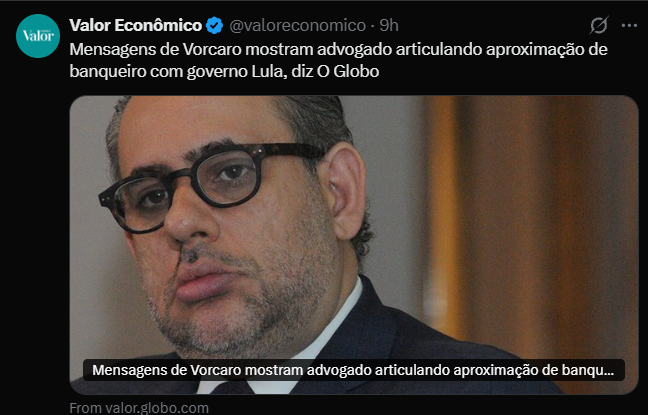
The parallel government that Master exposed There is something much more sinister in the Master scandal than the negotiations themselves. O Globo revealed messages from Vorcaro's cell phone in which his then-lawyer, Walfrido Warde, reports the construction of a dialogue with Lula's government. In April 2024, he said that Marcola, Lula's chief of staff, was asking for the email with the "group's interests." In September: "I was with President Lula for a long time yesterday. You'll like it." In January 2025, he reported that the president had "once again thanked for the whisky." The Planalto denies the whisky and the messages. It only admits what it cannot deny: Lula received Vorcaro on December 4, 2024, outside the official agenda. Warde now says he was dealing with Marcola and other government members, not directly with Lula. In other words, the dialogue with the Planalto existed. And look who the messenger is. Warde's office had Roberta Rangel as a partner, who was then Toffoli's wife. Toffoli later took on the rapporteurship of the Master case and only let go of it when links between his family environment and characters and funds related to the case came to light. Moraes's wife's office had a contract worth R$ 131 million with Master, R$ 3.6 million per month, to act in inquiries from the Federal Police, the Central Bank, the Revenue Service, the CADE, and Congress. The Lewandowski family's office received R$ 250,000 monthly from the bank, a contract that continued while he was Minister of Justice. In December 2024, Vorcaro instructed his legal director to call the minister's son: "We have a contract. He needs to be called urgently. [...] And give some case or opinion for him to do." Here is the exposed juristocracy: powerful lawyers, former ministers, and relatives of ministers circulating between the Planalto, Esplanada, and Supreme Court, with the same key for all doors. This is not the lobby that has always existed, however nefarious it may be. The traditional lobby sought interests: a contract, a favorable rule. It pressured power but remained outside. The network exposed by Master evolved to exercise effective political control of the country: it defines who is investigated and who is spared, who is censored, who goes to prison, and who can run for election. It became a parallel government that swallowed the institutions and holds the power in fact, without ever having received a vote. And it took the authoritarian path in 2019 when the Supreme Court opened an inquiry into fake news by decree, without the Public Prosecutor's Office. One of its first acts was to censor a report linking Toffoli to Marcelo Odebrecht. To protect the network, it was necessary to silence those who exposed it. After that, repression only expanded. In the name of combating "antidemocratic acts," thousands went through the machine of inquiries and processes, profiles were censored, and hundreds ended up behind bars. The exceptional became permanent: questioning the system came to mean being treated as its enemy. The most serious: no control mechanism stopped the network in time. It only emerged when Master collapsed. And even when exposed, it does not correct itself. In December 2025, Gonet shelved the investigation request on Moraes's wife's contract. Now, claiming procedural vice, he seeks the annulment of the Federal Police report that dedicated almost 190 out of 218 pages to Moraes. Detail: Gonet's own name appears in the messages. The offensive for protection is open. Four ministers have already aligned: Gilmar, Zanin, and Moraes himself voted to unite, thus tying Moraes's case to the judgment of supposed irregularities of Mendonça, the minister who exposed the report; Dino, who also expressed support for the union, requested a pause and interrupted the judgment. And Zanin has just denied, for now, the injunction that would force the Senate to install the CPI on Moraes, Toffoli, and Vorcaro, which has been stalled since March with 41 signatures. And who holds the CPI? The president of the Senate, Davi Alcolumbre. According to Veja, in a rejected plea bargain proposed to the Federal Police, Vorcaro reported paying US$ 30 million to the senator, in an overseas account, in exchange for support for the bank's interests. Alcolumbre denies it. It is the same Alcolumbre who, according to a message from Fábio Faria to Vorcaro obtained by the Federal Police, was "crazy asking if the Swiss will come" to a banker’s party. It was precisely his alleged omission that Zanin deemed unproven. Seven years have passed selling us "defense of democracy." Few businesses in Brazil yield so much. (translated)

The article by Carlos Vargas emphasizes the importance of national theaters in Portugal as strategic cultural institutions that promote democratic participation and strengthen communities, especially after the municipalization of culture that occurred as a result of the Carnation Revolution. (translated)

Teatros Nacionais: um desafio político para o nosso tempo

THE TRUTH EMERGED! In the CPMI of INSS, we managed to approve a request to seek information about the flights of the jet linked to Daniel Vorcaro. We wanted to know who used the aircraft and to understand what was behind this story. However, the CPMI was closed before this information reached us - and Alexandre de Moraes also voted for the end of the commission's work, benefiting himself. Now, new information and images about the use of this aircraft are appearing. Our intuition and investigative nose were right! That's why an investigation cannot be buried when it starts to get close to those in power. Brazil needs transparency and institutions that are not afraid to investigate. In the Senate, Sanderson and I will continue to work for those who commit crimes, whether they wear a robe or not, to be punished! On October 4th, the candidates of courage and transparency are Marcel van Hattem 300 and Sanderson 222. (translated)

PREVISÍVEL! Já começou, na Abin, a narrativa de que existem grupos extremistas de direita colocando as instituições e o processo eleitoral em risco. E sabe por quê? Porque há loucos defendendo a nepalização do Brasil. https://t.co/6ftrz1nQ0d #Brasil #Extremismo #Eleições

A carta traduzida: À Alta Representante da União para os Negócios Estrangeiros e a Política de Segurança, Vice-Presidente da Comissão Europeia Sra. Kaja Kallas Senhora Alta Representante, Escrevemos-lhe à luz das alegações profundamente preocupantes sobre a crescente crise do Estado de Direito no Brasil, a politização do Poder Judiciário e o seu uso contra opositores políticos, bem como escândalos de corrupção de alto nível, incluindo relatos particularmente perturbadores em torno do Supremo Tribunal Federal (STF) do Brasil. A credibilidade das instituições democráticas brasileiras, a independência e a imparcialidade do seu Judiciário e a integridade do próximo processo eleitoral exigem a nossa particular atenção, especialmente à luz dos crescentes laços econômicos entre o Brasil e a União Europeia. Os desenvolvimentos recentes levantam sérias questões sobre a responsabilização judicial, a liberdade de expressão política, a igualdade na competição política e a possibilidade de interferência institucional indevida no processo democrático no Brasil. De particular preocupação é a conduta e a aparente falta de transparência do ministro do Supremo Tribunal Federal Alexandre de Moraes, que já esteve no centro de procedimentos altamente controversos relativos à liberdade de expressão. Como a União Europeia reafirmou recentemente perante o Conselho de Direitos Humanos das Nações Unidas, ela “permanece firmemente comprometida com a defesa da liberdade de expressão e com a promoção de um ambiente seguro e favorável no qual essa liberdade possa ser exercida livremente”. Esse compromisso deve ser refletido de forma consistente nas relações da União com os seus parceiros internacionais, especialmente onde a UE busca aprofundar laços políticos e econômicos. Em 30 de julho de 2025, o Office of Foreign Assets Control do Departamento do Tesouro dos Estados Unidos impôs sanções ao ministro de Moraes com base na Ordem Executiva 13818, que implementa a Lei Global Magnitsky de Responsabilização por Direitos Humanos. O Tesouro dos EUA acusou-o de autorizar prisões preventivas arbitrárias, suprimir a liberdade de expressão e conduzir processos politicamente motivados, inclusive envolvendo o ex-presidente do Brasil Jair Bolsonaro. Revelações recentes intensificaram ainda mais as preocupações em torno do ministro de Moraes. Material divulgado a partir de uma investigação da Polícia Federal brasileira levantou questões sobre os seus contatos com Daniel Vorcaro, o banqueiro no centro do escândalo do Banco Master, incluindo possíveis trocas relativas à investigação. Outras preocupações decorrem de relatos de um contrato de R$ 130 milhões entre o Banco Master e o escritório de advocacia da esposa do ministro de Moraes. Dado o papel central de de Moraes nos processos que levaram à condenação do ex-presidente Jair Bolsonaro, essas revelações levantam sérias questões sobre a imparcialidade judicial e justificam um escrutínio independente e transparente. Nesse contexto, acreditamos que meras expressões de preocupação já não são suficientes. Por isso, apelamos à Alta Representante para que tome medidas concretas em resposta a esses desenvolvimentos. Primeiro, pedimos que o SEAE realize uma avaliação urgente das alegações relativas ao ministro Alexandre de Moraes e da conduta mais ampla do STF em processos politicamente sensíveis, incluindo possíveis violações da liberdade de expressão, das garantias do devido processo legal, do pluralismo político e de outros direitos fundamentais. #DireitosHumanos #LiberdadeDeExpressão #Democracia

Segundo, pedimos um exame sobre se a conduta documentada atribuída ao ministro de Moraes, incluindo os fundamentos citados pelos Estados Unidos ao impor as sanções da Lei Magnitsky Global, deve justificar medidas restritivas no âmbito do respectivo regime europeu de sanções por violações de direitos humanos. Caso provas credíveis estabeleçam responsabilidade por violações ou abusos graves de direitos humanos abrangidos por esse regime, a União deve estar preparada para impor medidas seletivas contra os indivíduos responsáveis. Terceiro, tendo em vista o primeiro turno da eleição presidencial em 4 de outubro de 2026, pedimos um monitoramento particularmente rigoroso e independente de todo o processo eleitoral, a fim de garantir a sua integridade e salvaguardar a credibilidade das eleições. A União Europeia deve utilizar todos os instrumentos diplomáticos e de observação eleitoral adequados de que dispõe para verificar se as eleições são realizadas de forma livre, justa e transparente e se os resultados oficialmente anunciados refletem com precisão os votos depositados pelos cidadãos brasileiros. Esse escrutínio deve abranger não apenas a votação e a apuração, mas todo o ambiente eleitoral, incluindo o tratamento dos candidatos, o acesso aos meios de comunicação, restrições ao discurso político, censura ou remoção de conteúdo político, decisões judiciais que afetem candidatos e campanhas, o funcionamento dos sistemas de votação e de totalização, a publicação e a verificação dos resultados, e a existência de procedimentos efetivos para impugnar alegadas irregularidades. Dada a extraordinária influência política exercida pelo STF nos últimos anos, deve ser dada particular atenção à questão de saber se as autoridades judiciais e eleitorais atuam com imparcialidade e se abstêm de medidas que possam favorecer ou prejudicar indevidamente qualquer candidato presidencial. A União Europeia não pode defender de forma credível a democracia, os direitos humanos e o Estado de Direito no plano internacional enquanto permanecer em silêncio quando graves violações ocorrem numa das instituições judiciais mais poderosas de um país parceiro crucial. Por isso, instamos Vossa Excelência a assegurar que a União Europeia trate a situação no Brasil com a seriedade que ela exige, monitore de perto a condução da próxima eleição presidencial, avalie as alegações relativas ao ministro Alexandre de Moraes e ao STF, e esteja pronta a adotar medidas apropriadas quando provas credíveis estabelecerem violações graves de direitos fundamentais. Pedimos ainda que Vossa Excelência preste contas ao Parlamento Europeu e aos abaixo-assinados sobre essas questões, incluindo qualquer ação adotada ou prevista. Nesse sentido, apreciaríamos uma resposta descrevendo as medidas concretas que o SEAE pretende tomar antes da próxima eleição presidencial no Brasil. Atenciosamente, Adam Bielan, eurodeputado Carlo Fidanza, eurodeputado Mariusz Kamiński, eurodeputado Bruxelas, 21 de setembro de 2026 #DireitosHumanos #Eleições2026 #UniãoEuropeia