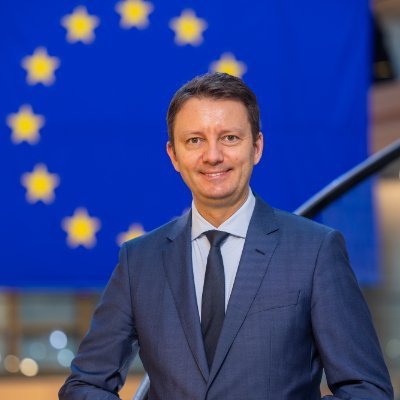
The author argued that judicial independence was essential to a strong democracy and economy, saying people and businesses invested where rules were clear, contracts were respected and the law applied equally to everyone.
The author argued that judicial independence was essential to a strong democracy and economy, saying people and businesses invested where rules were clear, contracts were respected and the law applied equally to everyone.

The era of political show trials are back! Today the authoritarian rule in Hungary reached a new low. The judiciary is acting on the PM's personal instructions. Two months ago, during a heated outburst at the session of the Hungarian Parliament, PM Péter Magyar accused Balázs #Hungary #Authoritarianism #Judiciary #HU

MY PRESIDENTIAL PLEDGE 🇦🇹🇹🇷 Ekrem İmamoğlu remains imprisoned in Türkiye amid multiple criminal proceedings that he denies; opposition parties and international critics describe the cases as politically motivated, while the Turkish government says the judiciary is independent. https://t.co/UF3I57ylJP #Ekremİmamoğlu #Türkiye #PoliticalPrisoner #AT #TR

Hvor højt tror du staten er parat til at lade topskatten stige til? The Kennedy Tax Cuts of 1963–1964 In early 1963, the top marginal individual income tax rate in the United States stood at an extraordinary 91 percent—a legacy of the exceptionally high tax rates established during and after World War II. President John F. Kennedy proposed a sweeping tax overhaul, arguing that excessively high marginal rates were holding back private investment, risk-taking, employment, and economic growth. His original proposal would have reduced individual income tax rates across the board, lowering them from a range of 20–91 percent to 14–65 percent. It also called for reductions in corporate tax rates and stronger incentives for investment. Kennedy’s administration explicitly argued that lower tax rates would stimulate private economic activity, increase investment, and expand production and employment. The goal was not simply to reduce taxes, but to remove what Kennedy called the “heavy drag” that the existing tax system placed on private initiative. (Fraser) The proposal faced substantial opposition in Congress, particularly because of concerns about its fiscal implications and accompanying tax reforms. Nevertheless, the business community and many economic organizations strongly supported the central idea of substantial rate reductions. (Fraser) Kennedy did not live to see his proposal enacted. After his assassination in November 1963, President Lyndon B. Johnson made passage of the legislation a priority. The final measure, the Revenue Act of 1964, reduced the top marginal tax rate from 91 percent to 70 percent and substantially lowered individual and corporate tax rates. (Fraser) The economy subsequently entered a powerful and sustained expansion. Contemporary economic analyses attributed a significant portion of the improvement in production, employment, investment, and tax revenues to the cuts, although monetary policy and other factors also contributed. (Judiciary Committee)
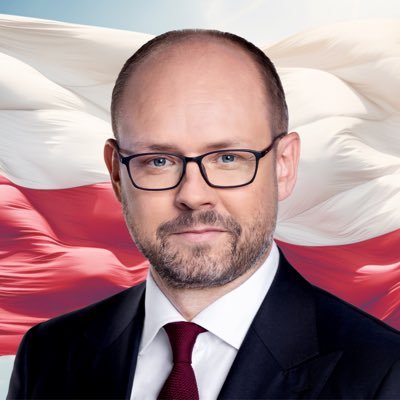
PM Tusk says about some of judges - my judges. That shows what is the current state of independent judiciary in Poland. #ruleoflaw #Poland #Judiciary #RuleOfLaw #PL
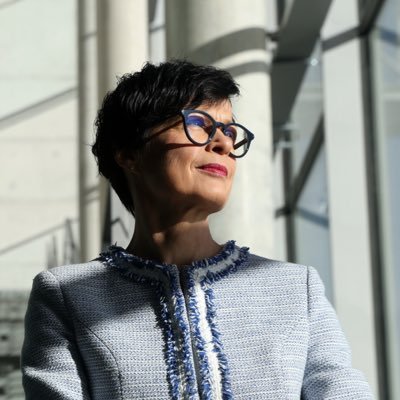
The Montenegrin Parliament voted with an overwhelming majority to strengthen the independence of the judiciary and the Central Bank in their constitution. This is another big step for Montenegro’s European path. It shows a broad consensus and is a major step towards closing the #Montenegro #Judiciary #EuropeanPath #ME

#AI is already entering our courts. The judiciary must be ready to scrutinize it, safeguard rights, and uphold public trust. Take the next step and enroll in @UNESCO and @UniofOxford's free course on AI, Justice and the Rule of Law. 👉https://t.co/JbRRENIZCR https://t.co/1AL2SlRwUe #AI #Justice #RuleOfLaw #Nospecificcountrycodesarementionedinthetweet.


A Crown Instead of the Barracks: An Idea From Outside the Box Could Egypt’s exiled opposition use constitutional monarchy to dismantle the legitimacy of the 1952 coup? By Adham Hasanin Egyptian journalist and political writer, based in the Netherlands To understand what follows, a reader unfamiliar with Egypt needs one basic fact: since 1952, Egypt has never been governed by anyone who did not first wear a military uniform. Gamal Abdel Nasser, Anwar Sadat, Hosni Mubarak, and today Abdel Fattah el-Sisi four men, four eras, one common origin. All rose through the armed forces. All inherited a state built by a coup that year, when a group of officers calling themselves the "Free Officers" overthrew King Farouk I and, within a year, abolished the monarchy altogether and declared a republic. For seventy-three years, the underlying equation has not changed: the army rules, power passes from one officer to the next, and legitimacy is drawn from the barrel of a gun rather than the ballot box. Every conceivable form of opposition has been tried legal parties and banned ones, Islamist movements, liberal and leftist coalitions, the 2011 popular uprising, and the 2013 elections whose result was overturned by force within a year. All of them hit the same wall: a military institution that reproduces itself under different names, while the core of the system remains untouched. So what if the problem, all along, has not simply been who rules, but the constitutional framework that makes military rule possible in the first place? And what if the answer lies not in swapping one president for another, but in dismantling the underlying equation itself, through a framework Egyptian opposition movements have never seriously tried: a purely ceremonial constitutional monarchy, on the model of Belgium, the Netherlands, or Spain where the head of state becomes a symbol above the political fray, while the army is permanently expelled from politics and returned to its barracks. This is not a call to revive a particular family, nor nostalgia for a golden age that never quite existed. It is a proposal for a political and strategic tool that has not yet been used in the intellectual arsenal of Egypt’s opposition in exile a tool that deserves serious discussion, regardless of whether it is ever literally realised or simply serves to expand the boundaries of what is politically thinkable. I. Why 1952, Not 2013 or 2011, Is the Root The strategic error made by most Egyptian opposition movements from the Muslim Brotherhood to the April 6 Youth Movement to the various civil opposition parties has been treating each political crisis as an isolated case: Mubarak was corrupt and had to be toppled; Sisi staged a coup that must be condemned; the interim military council was a transitional phase to be endured. This piecemeal approach treats the symptoms while leaving the original illness untouched. That original illness is the very structure of legitimacy established by the coup of 23 July 1952. The Egyptian republican system, from Nasser to today, has never built its legitimacy on a genuine democratic social contract. Instead, it has rested on a fixed trinity: the rhetoric of "revolution against feudalism and colonialism," charismatic individual leadership, and military protection of the regime framed as the guarantor of stability. This trinity has repeated itself from Nasser to Sadat to Mubarak to Sisi, with only cosmetic variations. Each new president was never a break from the system he was its continuation. When the opposition says "let us return to the constitutional framework that preceded the coup," it is not criticising a particular policy. It is declaring that the legal foundation of everything that came after 1952 was illegitimate from the start. Here lies the rhetorical power of "returning to the pre-1952 order": it does not merely demand swapping one ruler for another. It withdraws historical legitimacy from the entire republican military system including today’s regime, which draws its own declared legitimacy from that same "1952 legacy." II. Why a "Ceremonial Crown," Not "the Return of a Ruling Family" Here is the most important distinction anyone advocating this idea seriously must grasp: the project does not rest on restoring any particular individual from the Muhammad Ali dynasty, nor on nostalgia for King Farouk or his ancestors. The real power of the idea lies in the constitutional form, not in the person who happens to sit on the throne. Three successful European democracies illustrate the model clearly. Belgium, where King Philippe is a purely constitutional symbol with no real executive power, while the state is run through an elected parliament and a complex coalition government reflecting the country’s linguistic and political diversity. The Netherlands, where King Willem-Alexander formally opens the parliamentary year and signs laws, but where actual decision-making rests with the prime minister and the elected parliament. And Spain, where the king represents symbolic continuity of the state above party politics, while the military and security services answer entirely to civilian authority a transition achieved after the death of the dictator Francisco Franco in 1975, when King Juan Carlos I voluntarily relinquished the extensive executive powers he had inherited and backed free elections, most dramatically in February 1981, when he personally ordered the armed forces to remain loyal to the constitution during an attempted military coup, causing it to collapse within hours. The common thread across these three models is not "the presence of an ancient royal family." It is the principle of separating symbol from power. The monarch in these countries does not rule; he represents. He issues no political decisions; he provides the continuity and symbolic stability that allows party political competition to revolve beneath him, without every transfer of power becoming an existential crisis of legitimacy. This is precisely what Egypt’s military republican system lacks: a neutral mechanism for guaranteeing state continuity that does not depend on the person of the ruler or his security apparatus. When Egypt’s military-republican president is absent, it is always the army that fills the vacuum, because it is the only institution built to be the "guarantor of stability." Under a ceremonial monarchical model, by contrast, it is the king not the army who represents that symbolic guarantee, genuinely opening the door to removing the military institution from the political equation altogether. III. Egypt’s Standing Under the Monarchy: An Honest Reckoning, Not Blind Nostalgia For a Western reader with little prior knowledge of Egypt’s monarchical period (1922–1952), it helps to know this: Egypt was nominally independent under its own king from 1922, but Britain retained enormous informal control over the country’s foreign policy, military bases, and the Suez Canal throughout the period a reality that shaped everything that follows. Any honest invocation of "Egypt’s standing under the monarchy" must avoid the trap of mythologised nostalgia that many advocates of this idea fall into. Egypt in that era was no lost paradise, and any honest article must say so plainly. The Egyptian pound, for instance, often invoked as a symbol of "national currency strength" in that period, was not strong because of independent Egyptian monetary policy. It was pegged to the British pound sterling as part of Egypt’s complete colonial financial dependency until 1947, with Egypt exercising no independent oversight of its own currency whatsoever. The pound’s strength, in other words, was not a sovereign Egyptian achievement it was a reflection of British imperial power ruling Egypt from behind the throne. But this does not mean Egypt lacked a genuine regional standing worth studying. Cairo, in the 1930s and 1940s, was the undisputed cultural capital of the entire Arab world: the Egyptian film industry produced more than half of all Arabic-language cinema; its theatre scene, led by figures like Youssef Wahbi and Naguib al-Rihani, and its music, with Umm Kulthum and Mohammed Abdel Wahab, set the standard across the region; Cairo University was the first modern university in the Arab world; and the Egyptian press was the reference point for Arab public opinion from the Atlantic to the Gulf. Cairo was, quite simply, to the Arab world what Paris was to Francophone Europe: an unrivalled centre of cultural and intellectual gravity. This standing was not necessarily a product of monarchy itself, so much as a product of a relative space of political and press pluralism that allowed Egyptian civil society to flourish, despite all the flaws of the political system and the interference of both palace and occupier. The lesson here is not "bring back the king and the standing will return." It is: when even a limited margin of civic freedom exists, Egypt flourishes culturally and intellectually almost by its own nature. And that margin is precisely what has been entirely absent across the past seven decades of unchallenged military rule. IV. What Reform Would Actually Require Not Repeating the Old Mistakes Any serious advocacy of this model must include, even briefly, a clear vision for avoiding the flaws of the old monarchical system itself otherwise the proposal collapses into simply replacing one form of authoritarianism with another wearing a different crown. First, the armed forces would need to be placed fully under a civilian ministry of defence, with its budget subject to transparent parliamentary oversight the exact opposite of its current status as a state-within-a-state, and equally opposed to its role under the monarchy, when it often served as an instrument of British influence. Second, a judiciary fully independent of both palace and government alike, unlike the old model, which saw direct royal interference in political life as when King Fuad I dismissed the elected government of Prime Minister Saad Zaghloul’s successor, Mustafa al-Nahhas, in 1928, in one of the clearest "constitutional coups" in modern Egyptian history. Third, a parliament that genuinely represents the people rather than landowners and the aristocracy, as was the case before 1952, when membership in the Senate was effectively conditional on the ability to pay land taxes meaning political representation was, by law, restricted to the wealthy. Fourth, genuine economic sovereignty, with a truly independent national currency rather than one pegged to a foreign power’s currency, unlike the historical dependency of the Egyptian pound on sterling. These four principles are enough to clarify that the project on offer is not a literal "return to the past," but a borrowing of the constitutional form (symbolic monarchy) combined with an explicit rejection of its old substance (colonial dependency, palace interference, parliamentary feudalism). V. The Role of Egyptian Movements in Exile: Between Goal and Instrument This raises the most practical question of all: how might Egypt’s opposition abroad actually adopt this idea, and in what capacity? The honest answer is that the power of this proposal does not necessarily lie in its literal fulfilment, but in its dual strategic function. On one hand, it can be advanced as a genuine political goal adopted by broad coalitions of Egyptian movements coalitions that might include Islamists, liberals, leftists, and traditional monarchists, united around a single shared premise: rejecting the legitimacy of the 1952 order and everything that followed from it, even if they later disagree over the precise final shape of the state. On the other hand and this matters more in practice the idea can be deployed as a rhetorical instrument of pressure to widen a Egyptian political debate currently trapped between two false choices: "continued military rule" or "no alternative, chaos awaits." When the opposition puts forward a clearly defined third model a European-style constitutional monarchy it breaks this false binary and opens new intellectual space in Egyptian public discourse, even if the project is never realised in its literal form. This kind of "leverage idea" is common in the history of political movements worldwide: it is not necessarily proposed to be fulfilled immediately in full, but to redraw the boundaries of the politically possible, and to force the existing regime to defend its legitimacy rather than simply assume it. Conclusion: An Invitation to Debate, Not a Ready-Made Prescription This article does not claim that restoring a monarchical form would magically resolve Egypt’s chronic crisis of legitimacy, nor does it ignore the immense difficulties facing any transformative project under a military institution as economically and securitywise entrenched as Egypt’s is today. But it raises a question that deserves serious debate among Egypt’s opposition in exile, rather than automatic dismissal simply for being unfamiliar: Has the Egyptian opposition exhausted every available tool for dismantling the legitimacy of 1952, or has it remained trapped in the same old binary swapping one ruler for another while the framework that makes military rule possible remains untouched? The idea is on the table now, not as a finished solution, but as an overdue invitation to think outside the box.

I am going to put my foot down and say that if this is the result next Tuesday, MI Dems will lose a senate seat (and they should) and, probably, their chance of taking back the senate. Meaning (at the very least): two more years of Trump shaping the judiciary of the country. #MIDems #SenateSeat #Election2024 #US

A plenary session of the Venice Commission has just begun. On the agenda for a two-day debate: laws of Albania, Serbia, Moldova, Poland and other countries. Some of these laws - on crucial and sensitive matters, including the judiciary and political parties. The Commission's https://t.co/edkpnoH7Zc #VeniceCommission #Albania #Judiciary #AL #RS #MD #PL

🇲🇰🇪🇺 A stronger, fairer and more European North Macedonia is possible by 2029. 16 priorities for a modern European future: ✅ Equality for Albanians ✅ Bulgarian minority in Constitution ✅ Fight corruption ✅ Independent judiciary ✅ Higher salaries & investment ✅ Stop brain https://t.co/2T0KIVcPwz #NorthMacedonia #EuropeanFuture #Equality #MK #EU

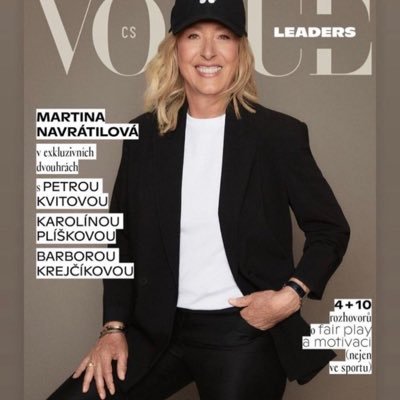
RT @HouseJudiciary: We just offered a subpoena to expose Trump’s illegal $1.8 billion taxpayer-funded slush fund. Will @JudiciaryGOP real… #Subpoena #Trump #TaxpayerFunds #Nospecificcountrycodesarementionedinthetweet.

Chief Justice Surya Kant of the Supreme Court sparked controversy during a hearing by criticizing the increasing "inappropriate attacks" on the judiciary from certain media, social media, and RTI activists, suggesting that these groups consist of "parasites" who attack the system out of frustration over their professional failures, which led to public outcry and calls for accountability regarding his remarks. #Judiciary #FreeSpeech #SocialMedia #IN
India's Chief Justice D.Y. Chandrachud garnered attention for his remarks during a hearing regarding the increasing "unwarranted attacks" on the judiciary by certain media, social media users, and RTI activists, characterizing some critics as "parasites" and "cockroaches," which sparked significant backlash and debates about the tone and appropriateness of his comments in a democratic context. #JusticeSystem #FreedomOfSpeech #Democracy #IN
Chief Justice D.Y. Chandrachud sparked controversy by criticizing perceived "parasite" behavior from certain journalists, social media users, and RTI activists during a Supreme Court hearing, emphasizing growing attacks on the judiciary, which led to significant backlash on social media regarding his choice of words. #Judiciary #FreeSpeech #LegalSystem #IN
Chief Justice Surya Kant of the Supreme Court of India has sparked controversy by criticizing perceived attacks on the judiciary during a hearing, claiming that certain "parasites" in society, including some media personnel and RTI activists, persistently criticize the legal system due to their own professional failures, which has led to significant backlash from legal and public figures alike. #Judiciary #FreeSpeech #LawyersRights #IN
Chief Justice Uday U. Lalit of the Supreme Court of India has sparked controversy after criticizing the increasing "unfair attacks" on the judiciary during a hearing, where he described certain media and RTI activists as "parasites" and "cockroaches" while expressing concerns over their negative influence on the legal system. #Judiciary #SocialMedia #Democracy #IN
Chief Justice Surya Kant of the Supreme Court has sparked controversy for his remarks during a hearing regarding increasing "unjust attacks" on the judiciary, where he criticized certain groups in the media, social media, and RTI activists for perpetually disparaging the justice system, comparing them to "parasites" and "cockroaches," which has led to significant backlash from various public figures expressing concern over his choice of words and implications for democratic discourse. #Judiciary #FreedomOfExpression #SocialMedia #IN
During a recent hearing, Chief Justice D.Y. Chandrachud of India's Supreme Court sparked controversy by criticizing what he termed "unwarranted attacks" on the judiciary from various societal groups, likening persistent critics, including journalists and RTI activists, to "parasites" and "cockroaches," which drew significant backlash for undermining democratic discourse. #Judiciary #SocialMedia #Democracy #IN





