BETA nonprofit public democratic european moderated

Search

#Readin

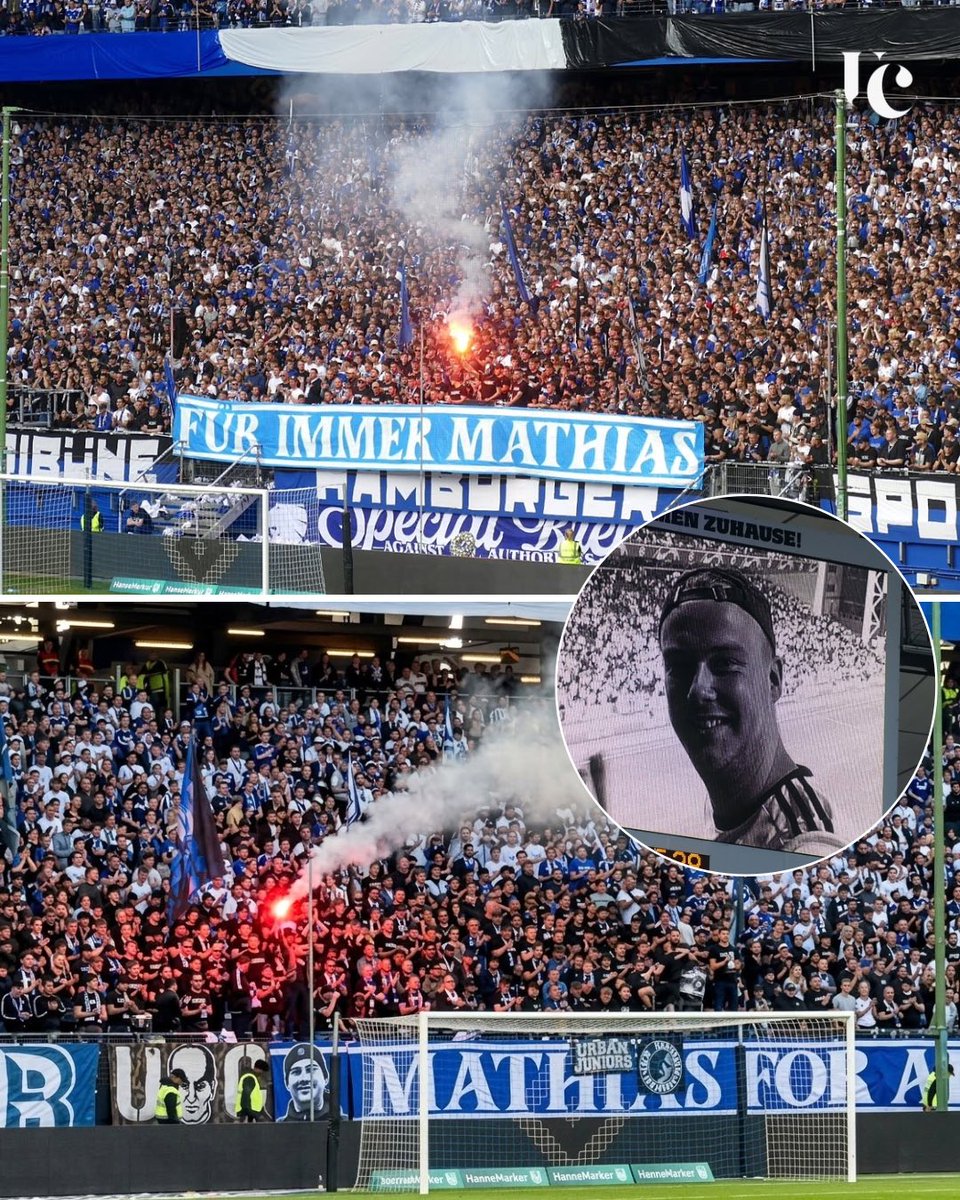
Ultras Clips reported that supporters of Hamburger SV and FC København paid tribute to 26-year-old FC København fan Mathias Blindbæk Schlüter during a friendly match. The author said Schlüter died in a traffic accident on September 22 and had helped foster a close friendship between the clubs’ fan groups. Supporters of both teams displayed banners honouring him, with messages in German and Danish that meant “Mathias forever,” Ultras Clips wrote. #Fodbold #SupporterKultur #Solidaritet (translated)
The author described the report as essential reading and said it presented therapists’ views on the dangers of the government’s draft bill to ban what it called “conversion practices”. They claimed the bill would cause untold harm to the vulnerable young people it was intended to protect and urged readers to read and share the report.

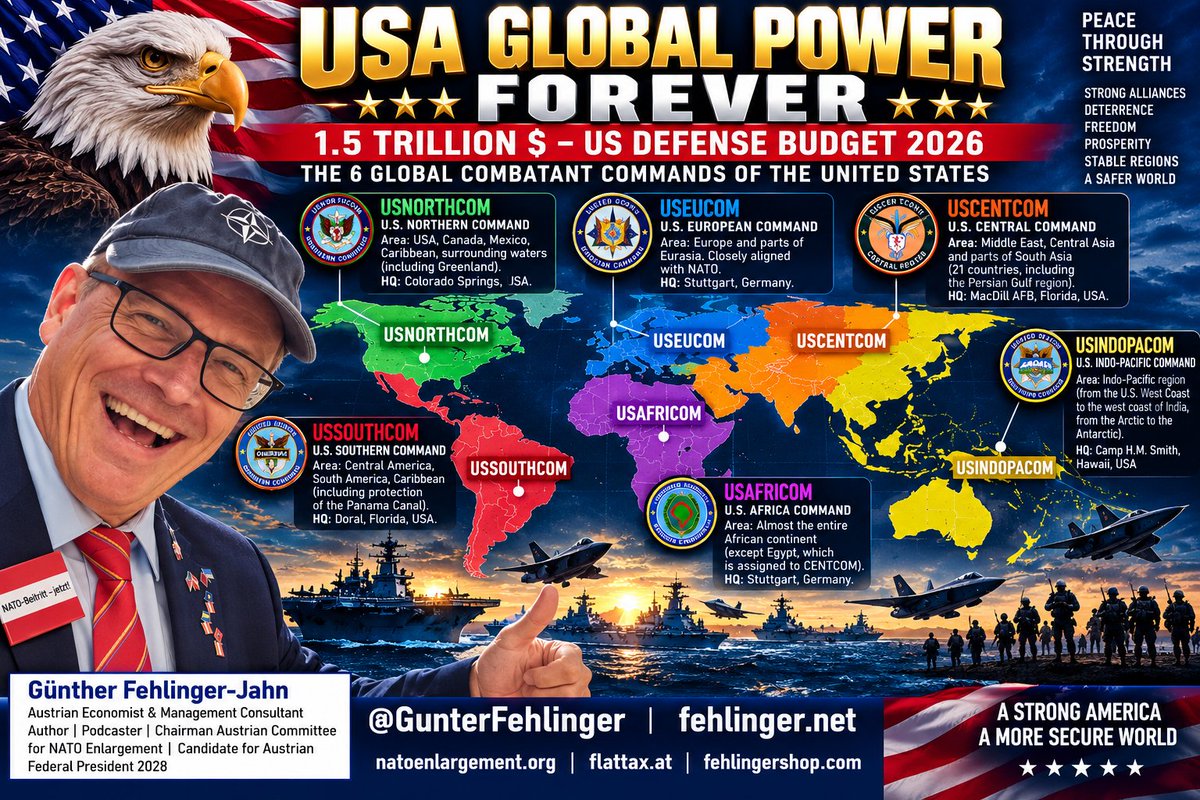
The author wrote that the United States’ military reach was global, citing NORTHCOM, SOUTHCOM, EUCOM, AFRICOM, CENTCOM and INDOPACOM as covering key strategic regions. They said strong alliances, credible deterrence, global readiness and US leadership remained essential. https://t.co/280UN4IV0N #USA #GlobalPower #MilitaryLeadership #US

The author said repeated violations of NATO airspace underscored the need for high readiness on the eastern flank. They wrote that Swedish Gripen aircraft would strengthen NATO’s ability to deter and defend while helping protect military and civilian support continuing to flow through Poland to Ukraine. #NATO #Ukraine #Defense #SE #PL #UA

H

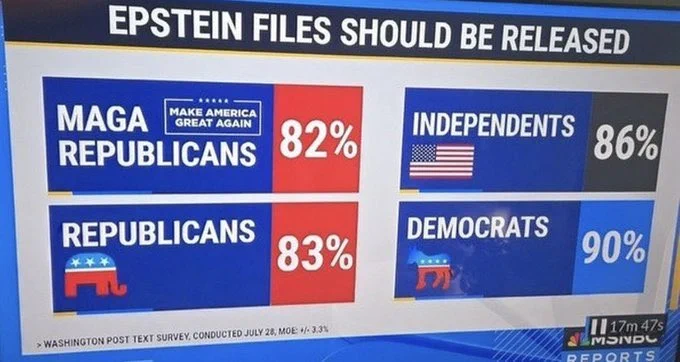
1/ 86% of Americans told the Washington Post they want every Epstein file released. Nearly 3.5 million pages already are. But the problem is that almost no one has read or thoroughly evaluated them. I’ve spent nine months reading them, with my team. Here is what’s in the public record, with the documents: 🧵👇 https://x.com/sayerjigmi/status/2104270871300915647

Sayer Ji (@sayerjigmi) on X

If we let basic cognitive skills erode, we don’t just lose math or reading. We lose resistance. We lose sovereignty. And we become an open field for behavioural manipulation by anyone with access to the models. #CognitiveSkills #Manipulation #Sovereignty #Thetweetdoesnotmentionanyspecificcountries.Therefore #therearenocountrycodestoreturn.

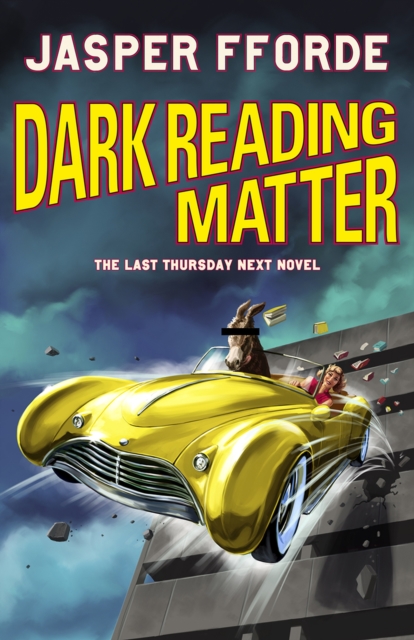
New! Out in October! Dark Reading Matter : The Last Thursday Next novel by Jasper Fforde The final novel in the highly acclaimed and beloved Thursday Next series. Will Thursday find her happy ending? Swindon-based Literary Detective Thursday Next is embarking on her eighth and final adventure: 'Dark Reading Matter' and she is well aware of the fact. The problem is, others are too. Old foes and new are plotting a terrible revenge: To disrupt the narrative and make Dark Reading Matter not just unreadable but unpublishable. Thursday can't let that happen and needs to use all her guile and narrative trickery to unmask the antagonists and guide the series to a satisfactory conclusion. It won't be easy. The Martians have broken out of their HG Wells novel and threaten both the real world and the Bookworld. Agents from a higher reality want unfettered access to the Dark Reading Matter, the realm where deleted books and unrealised literary ideas end up. A Gateway to Hell has opened up at Wantage's Shakesmania, the nation's second to worst Shakespeare theme park and the cosy world of Enid Blyton has been hi-jacked by Ultra Right Wing Nationalists. With Reality Field Distortion experiments going haywire, a partially redacted donkey, a Bookworld on the brink of losing its imaginative energy to Big Tech and a murderous stamp collector with Philaticide on their mind, Thursday has to navigate a tightrope of borderline unusable narrative devices to bring the series to a satisfactory conclusion. It's a tall order, but Thursday has a secret weapon: Her own adaptability, her husband Landen, a host of stalwart friends and ultimately the most loyal compatriots she can call upon: Her readers.

Reports of 8 US marines injured after Iran struck a ship. Reading the small print suggests that they were likely on an oil tanker. Is this really worth x% probability of releasing a few barrels of oil? 🇺🇸🇮🇷 https://t.co/i6cNgMnoot #USMarines #Iran #OilTanker #US #IR

The @IMFNews’s new annual report is worth reading carefully. Especially because if we ignore the warning and they turn out to be right, we may end up getting their shock therapy too. According to the IMF, the global economic environment has fundamentally changed in recent https://t.co/Ke0XxvmwLc #IMF #GlobalEconomy #EconomicWarning #Nospecificcountrycodesarementionedinthetweet.

P

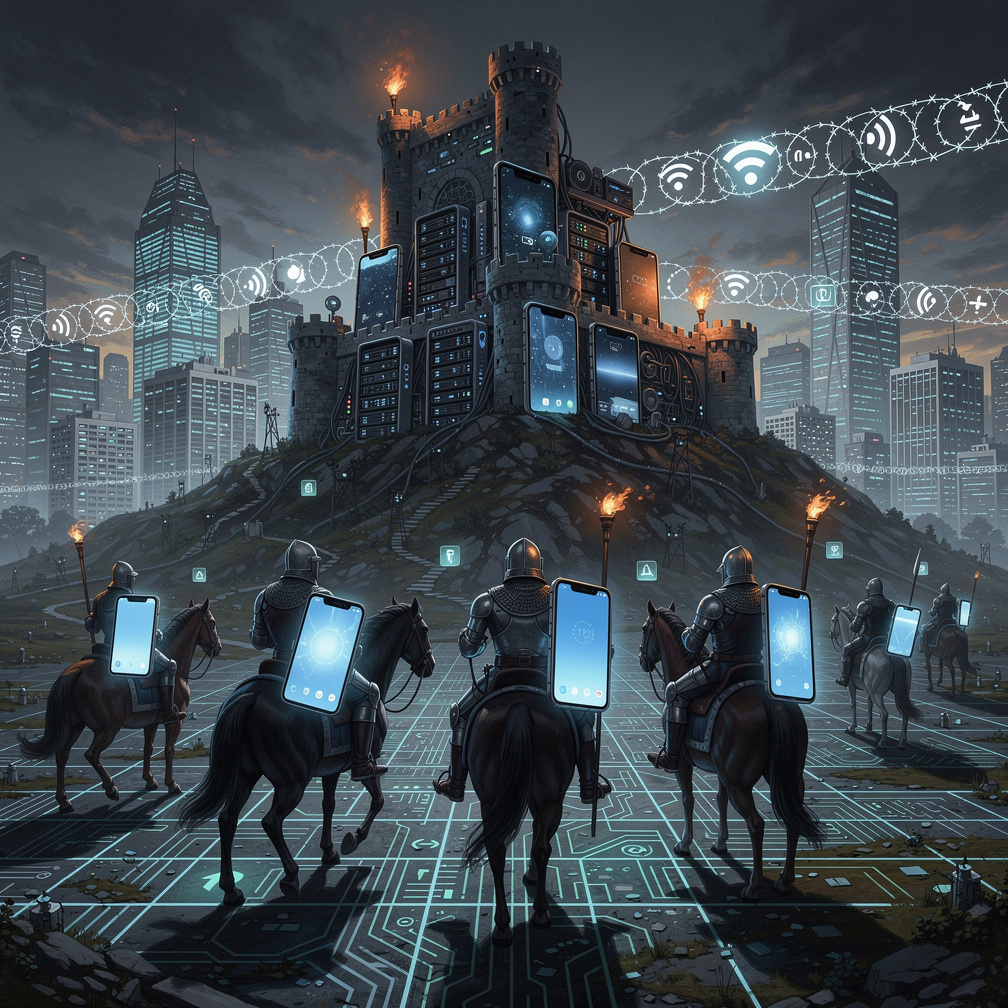
The Return to Feudalism in 21st Century Garb A simple observer's viewpoint, with no claim to hold any absolute truth. The Veneer Cracks There is something strangely archaic about the world unfolding before our eyes, despite its satellites, artificial intelligence, and promises of infinite progress. Here and there, we witness heads of state behaving like feudal lords of another age, patiently nibbling away at the neighboring territory, redrawing borders through force rather than law, as if governing a nation mattered less than expanding one's fiefdom. No names need be mentioned here: current events provide plenty of illustration, and each reader will recognize, according to their own geography and moment of reading, the faces that embody this observation. But this return to the archaic is not confined to grand geopolitical stages. It also permeates the most ordinary daily life—that of social media, where anyone can pour out venom against another without filter, without form, and often without the slightest argument. The verbal jousting of yesteryear, with its codes, its rhetoric, its tacit limits, has given way to raw invective, snap judgment, instant condemnation. We no longer debate: we execute, verbally—and sometimes it doesn't stop at words. The Vanished Inhibition What strikes one, in this dual observation—macro-political and micro-social—is the lifting of an inhibition we thought firmly anchored. Centuries of cultural construction, education, philosophy, sometimes religion, had patiently shaped mechanisms of restraint: politeness as social ritual, argumentation as a mode of resolving disagreement, respect for one's opponent as the very foundation of democratic debate. This civilizational veneer, however fragile it always was, seemed to hold. Today it is cracking, and the question—which for me remains a simple hypothesis, not a certainty—is why. A convenient explanation would blame social media: anonymity, the distance of the screen, the instantaneousness of publication would favor verbal acting-out without the usual mediation of reflection. This is probably true, but likely insufficient. For technology here is only an accelerant, an amplifier—not necessarily a root cause. A Poorly Formatted Neocortex? The more unsettling hypothesis—and I frame it explicitly as hypothesis, not scientifically established fact—is that of a failure in the formation of moral judgment and tolerance toward otherness. The human brain possesses the neural structures enabling empathy, the distancing of impulsive reaction, the acceptance of difference—but these capacities are not innate in their full exercise: they must be built, educated, cultivated, like a muscle that needs patient training from childhood onward. If this education in otherness, nuance, and tolerance of disagreement erodes—for multiple and undoubtedly complex reasons that are not mine to settle here—then older reflexes resurface: instinctive distrust of the stranger outside the clan, the law of the strongest, the logic of territorial or symbolic predation. The other ceases to be a possible interlocutor and becomes once again a potential threat, unless they belong to my tribe, my clan, my party, my digital bubble. Two Scales, One Logic What is striking, in this deliberately provocative reading, is the structural similarity between these two scales. The leader who invades a neighbor in the name of a rediscovered greatness or a reinvented historical right, and the anonymous internet user who insults a stranger in the name of an unnegotiable conviction, may obey the same underlying grammar: that of territory to defend, clan to protect, the other to subdue or exclude rather than understand. The form has changed—satellites instead of horses, tweets instead of heralds—but the substance, in this reading that remains mine alone and commits no one else, seems strangely identical to that of feudal rivalries: the absence of a recognized third party, of an accepted common rule, of a respected arbitrating authority. Everyone becomes judge and party, lord of their own digital or territorial fiefdom. A Civilization on a Knife's Edge Norbert Elias, in his Civilizing Process, showed how Western societies had historically built, with remarkable slowness, an increasing control over impulses and direct violence, in favor of more sublimated forms of social regulation. What we may be observing today—and I stress again the conditional—is a form of regression in this process, or at least a fragilization of the veneer it had patiently laid down. Should we see this as an effect of great technological accelerations, which shake up our cognitive rhythms without leaving education time to adapt? A deeper crisis of the institutions tasked with transmitting these values of tolerance—school, family, religion, the rule of law? Or simply a cyclical movement of human history, where phases of policed civilization alternate with darker backlashes? I have no certain answer, and I would be wary of anyone claiming to hold one. In Conclusion, a Shared Concern This text is only a viewpoint, necessarily partial and subjective, on a world that sometimes seems to replay ancient logics in new clothing. Perhaps I am wrong to perceive a continuity between the feudal lord and the contemporary dictator, between the anonymous online insult and the absence of education in nuance. Perhaps these phenomena are unrelated, or too complex to be thus summarized. But if this reading, even partially, hits the mark, then the question that arises is less one of technological regulation—though necessary—than the far more arduous question of how to rebuild, generation after generation, this capacity to accept the other in their difference, to debate without destroying, to coexist without necessarily dominating. This undertaking, if it exists, will not be resolved by an algorithm nor by an international treaty. It plays out, patiently, in the most elementary education—the one that teaches a child that the other is not a threat, but a possibility. Bibliography Elias, N. (1939). Über den Prozess der Zivilisation [The Civilizing Process]. Oxford: Blackwell (Eng. trans. 1978-1982). Lorenz, K. (1963). Das sogenannte Böse [On Aggression]. London: Methuen (Eng. trans. 1966). Arendt, H. (1970). On Violence. New York: Harcourt, Brace & World. Han, B.-C. (2013). Im Schwarm [In the Swarm: Digital Prospects]. Cambridge, MA: MIT Press (Eng. trans. 2017).

Excellent meeting with President @daniel_chapo24 at #UNGA. I reaffirmed the IMF's readiness to support Mozambique in addressing macroeconomic challenges, protecting the vulnerable & advancing reforms that promote stability & unlock the country's considerable economic potential. https://t.co/kg1XuTx2K6 #UNGA #IMF #Mozambique #MZ

Productive exchange with Acting President @delcyrodriguezv on earthquake recovery and reconstruction in Venezuela. We welcomed progress in renewed engagement and reaffirmed the IMF's readiness to support the country through capacity development and policy advice. https://t.co/2thEXY25Tm #Venezuela #EarthquakeRecovery #IMF #VE

Almost every culture has modernised editions of older authors, along with debates about spelling, vocabulary, editorial notes, and adaptation for contemporary readers. An antiquarian once told me that “the patina of time adds value” and can make the difference between an original and a cheap copy. I open Constantin Noica’s “Sunday Essays”, turn to the publisher’s preface in the 1992 Humanitas edition, and discover that “the spelling has been updated”. Reading Noica could have been a walk through the 1930s and 1940s. Instead, we are taking that walk wearing modern glasses, comfortably seated in an Uber, with no fear of getting lost — that is, of not understanding the words of the period, which could simply have been “translated” in footnotes. What if we took newspapers from the same period and “updated” them too? And perhaps we should rebrand their advertisements as well, so that our neurons do not have to work too hard, as if we were trapped in an escape room. Why stop there? We could update history textbooks too, and describe Archimedes of Syracuse as having been killed by a Roman soldier while doing math on his tablet. The basic idea remains, doesn’t it? Only the period disappears. And one more thing: why don’t mathematicians “update” Pythagoras? They can change the notation. They can explain the proof differently. They can even build the diagram online, through an animation unfolding before the students’ eyes. But the Pythagorean theorem remains the Pythagorean theorem. So when we read an older author, why not preserve the language of their time — and place modern explanations in the notes? And one final question for Humanitas and the people in university literature departments: if today’s schoolchildren “update” you a few decades from now with # and emoji, would you be happy with that? #Humanitas #ConstantinNoica #Noica #SundayEssays #Archimedes #Pythagoras #Hashtag #Emoji #MrStorywise #UpdatedSpelling #HistoryOfLanguage #20260920_1926 #English #Literature #History

This is a very thoughtful essay from somebody close to the actual frontier, seeing firsthand the growing problems we have in making AI safe. Very worth reading. Also, it might help outsiders understand that uncontrolled superintelligence is something insiders take seriously. #AI #Superintelligence #Safety #Therearenospecificcountriesmentionedinthetweet.Therefore #theresponseis:

With Russia intensifying its aggression against Ukraine, such readiness is vital for our region. Together with our Nato Allies, Lithuania will defend its airspace.

Denmark says Russian warship fired flares at military helicopter
www.bbc.co.uk

NATO acted swiftly and decisively after a drone entered Lithuanian airspace overnight, with NATO fighter jets detecting and shooting it down. This is a clear demonstration of Allied readiness to defend NATO territory and a reminder that Russia’s war against Ukraine directly #NATO #Lithuania #UkraineWar #LT #RU #UA

A drone that just entered our airspace was destroyed by NATO fighter jets. With Russia intensifying its aggression against Ukraine, such readiness is vital for our region. Together with our NATO Allies, we will defend our airspace.

Nato jets down drone that entered Lithuanian airspace
www.bbc.co.uk

Why the world is run in an insane way. The notion that power is inherently good while liberalism is bad is utterly perverse. Narcissists, megalomaniacs, windbags, pathological liars, adventurers, and individuals with criminal tendencies all crave tyranny, oligarchic fascism, and one-man dictatorships. They harbour but a single dream: absolute, unassailable power and boundless privilege. Any consolidation of power—regardless of how it is marketed—inevitably leads to economic contraction, a halt in development, and a deterioration in the quality of life for the majority. Worse still, it intensifies military confrontation and fosters a readiness to engage in protracted conflicts. A state of peace—hitherto a paramount priority—gives way to a state of war, claiming victims from all walks of life. The rigid, linear mindset and behavior characteristic of those in power are manifestations of stupidity. Life is inherently contradictory; it thrives on equilibrium and balance and does not submit to commands—save for in appearance or through folly. This severely limits the efficacy of resolving problems via coercion, which rapidly devolves into entropy and systemic collapse. Within the corridors of power, rational individuals are sidelined; perceived as indecisive and wavering—aware as they are of life’s inherent contradictions and the fact that problems are often intractable or insoluble—they lack the appeal that breeds popularity. Instead, the spotlight falls on narcissists, megalomaniacs, arrogant windbags, pathological liars, and figures from the criminal underworld—individuals who transform the exercise of power into a mafia-like enterprise. They always display determination and convey the impression that problems are easily solvable—and that they possess both the knowledge and the ability to resolve them; this is precisely what appeals most to people and generates popularity. Yet, such public popularity is highly deceptive. It is profoundly artificial, hypocritical, and detached—a theatrical role-play designed to maintain the image and ratings of a public star, manifesting nothing but boundless narcissism. There is no intelligence in this, only madness. These are madmen who believe they can do whatever they please. The character of all such politicians—who have lost all sense of proportion—bears a resemblance to that of Hitler. Защо светът се управлява по безумен начин. Идеята, че властта е нещо добро, а либералзма е нещо лошо е напълно извратена. Всички нарцисисти, грандомани, празнодумци, патологични лъжци, авантюристи, хора с криминални наклонности искат, тирания, олигархичен фашизъм, еднолична диктатура. Те имат само една мечта абсолютна несменяема власт и безгранични превилегии. Всяко усилване на властта, независимо как се представя ще води до свиване на икономиката и прекратяване на нейното развитие и до влошаване на живота на мнозинството от хората.Нещо по-лошо то ще усили военното противопоставяне и лесното прибягване до конфликти, които ще бъдат продължителни. Мирното време, което досега беше висш приоритет ще се замени с военно време, на което всички ще станат жертви.Праволинейното мислене и поведение, свойствено на властта, е проява на глупост. Животът е дълбоко противоречив. Той съществува чрез равновесие и баланс и не се подчинява на заповеди, освен привидно и по глупост. Това определя крайно ограничените възможности проблемите да се решават с принуждение. То бързо се превръща в ентропия, разрушаване на системата.В властта разумните хора се пренебрегват, защото те са нерешителни и колебаещи се, знаещи, че животът е дълбоко противоречив и проблемите се решават трудно или са въобще неразрешими и това не се харесва и не създава популярност . Издигат се нарцисисти, грандомани, самонадеяни празнодумци, патологични лъжци, хора от криминалния свят, които превръщат властта в мафия. Те винаги показват решителност, внушават че проблемите са лесно разрешими и те знаят и могат да ги разрешат и точно това най-много се харесва и създава популарност. Публичната популярност обаче е много измамна. Тя е дълбоко фалшива, лицемерна, отчуждена, игра на роля като в театъра, с която се поддържа имидж и рейтинг на публична звезда, изразяваща безгранична самовлюбенест и нищо повече. В това няма никаква интелигентност, а само безумие. Това са безумци, които си мислят, че всичко им е позволено. Характерът на всички самозабравили се политици е подобен на характера на Хитлер.

Reading tonight of the Irish who died at Ground Zero in 2001. Of the 3000 victims, a third were Irish, or of Irish heritage When a mother tried to locate her son by his Claddagh ring, the rescue team informed her that they had found “hundreds” of the Irish rings in the rubble https://t.co/AMQ0sa3spi #IrishHeritage #GroundZero #RememberingVictims #IE