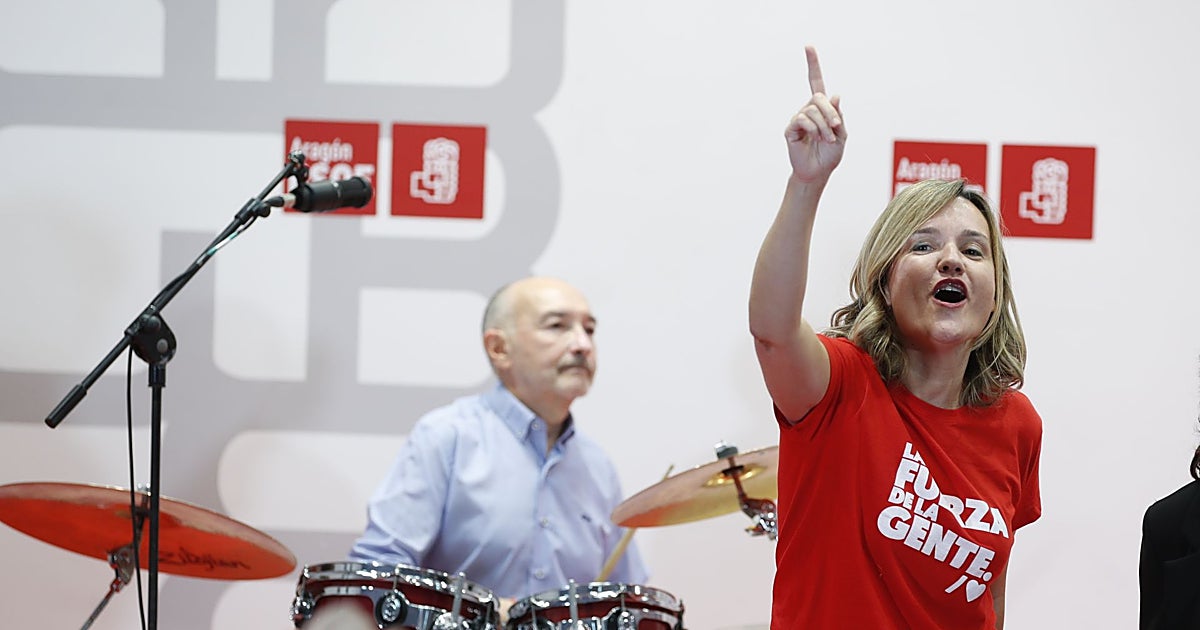
Sociologist David Pac warns that, although Aragón has consistently reflected the results of the general elections in Spain, that does not guarantee it will be repeated in the upcoming elections on November 29, especially due to the electoral strategy of Chunta Aragonesista. #Aragón #EleccionesGenerales #VotoÚtil (translated)

Coordinated solitude, author Claudio Aloisio Written by Pino Rotta, November 8, 2026 Claudio Aloisio is a communication and marketing professional, a field in which he has worked for many years. When his first essay "Coordinated Solitude" (Ed. Ideacoop Media Service, 2026) was released, sharing the same field of activity and interests (albeit with different directions and experiences), I found it interesting to read it, especially since we share the same city but have not met, which was already a good reason to find the essay interesting and its title stimulating. "Coordinated solitude" is an essay that analyzes, with a wealth of documentation and bibliography, the phenomena of the formation of convergences or exclusions among groups and individuals through the study of media languages and, in particular, those of the digital domain. A field that has already been widely investigated for several years. My first approach to these new linguistic proposals dates back, among other readings, to a 1994 essay "Collective Intelligence" by Pierre Levy. In that essay, Levy, at the dawn of the web era, launched the idea that the network, which collected the contributions of millions of users, contained them all without controlling their paths, interactions, or effects. Stimulating concepts that today help us understand how much conflict can arise between theory and its application considering time and technological development. However, Aloisio surprises the reader with suggestions from the very first pages of the essay. In fact, despite addressing the analysis of digital languages with an epistemological line rooted in Anglo-Saxon studies, particularly American ones, from the outset the author seems to suggest that this is not a “technical” essay but is entirely political in the higher sense of the term. The first reference is found in the citation of an author who was among the fathers of European sociology in the early years of the last century: Emile Durkheim, one of the first sociologists and philosophers who analyzed social phenomena with enormous meticulousness and rigor, linking religion with social structure. This opening will be found in the subsequent pages of "Coordinated Solitude," but it will not be the only surprise in Aloisio's analytical developments. In the essay, the author describes how people who may share spaces, interests, and common values, by finding them in the digital world, can at a certain point recognize themselves in different affiliations and even come to see in others a “us” that makes them akin to their own story or a “them” that indicates a distance, exclusion, and even a threat in relation to it. The causes of these dynamics are very well structured in the essay, as is the well-structured context in which individual stories are born, meet, and ultimately find different outcomes. Outcomes that can lead to reinforcing one's affiliations, which, however, are discovered at the end of the interaction process and that, throughout the journey, rarely reach a state of awareness. Outcomes that are influenced by pre-existing value structures that do not necessarily coincide with those of the members of the groups with which one identifies or clashes. This path is analyzed by Aloisio by considering the social dynamics of the West, examining and contrasting similar but not necessarily overlapping social realities, such as American and Italian society. In the identification processes that coexist in these social realities, the belonging to social class, religious group, ethnicity, sexual orientation, and sense of nation enters strongly. Everyone has their own experiences, but at the end of a journey of interaction, now almost exclusively digital, one finds oneself sharing a sense of belonging with other multitudes of people who have completely different experiences. And in this sense of belonging, fears of the future, frustrations of the past and present are downloaded, and one is enveloped by fears and anger that must find an enemy to blame. An enemy that is often suggested by the discovery of affinities among the groups that are created, much more often than not created, on digital platforms. Addressing the current nature of the algorithms governed by Artificial Intelligence, the author suggests the method through which these affiliations arise, which can be irrational but are entirely real and influence individual and social daily life. The individual in the digital dimension, which becomes the everyday reality of social action, is called to take responsibility for maintaining their conviction and belonging or risk feeling excluded, isolated, alone. The weight of a choice that often becomes distressing and paralyzing. But how is it possible to read and interpret these “Coordinated Solitudes”? Aloisio's essay provides a reading and suggests a methodology to identify the path that sometimes, but not always, leads to the awareness of how certain choices are made and what elements need to be questioned to verify if the reading of these languages withstands the law of contradiction and thus can be used to ascribe scientific value to it. But at the end of this journey of understanding languages, forms of aggregation, and the proof of the compatibility of individual choices, Aloisio presents us with another surprise that speaks volumes about his educational journey. The discourse of education and the reading of digital languages is ultimately a discourse on democracy, on social structure, and these factors cannot be disregarded without risking losing the ability to give meaning to one’s social action as well as one’s communicative action. It is my view that the surprise that is the coherence of the entire analysis of the essay comes with the reference that the author makes at the end to the work of Jürgen Habermas. The most important philosopher, sociologist of language, heir of the Frankfurt School who passed away at the age of 97 in March 2026, is the foremost interpreter of the theory of democracy and of the criticism of oppressive authority, which does not exclude conflict but determines its progressive outcome through the mediation of communicative action. Communicative action that questions institutions not to destroy them but to avoid remaining subjected to authoritarianism and, in the form of linguistic mediation, to be active subjects, not subdued by a system that, due to the nature of formal institutions, can always degenerate into authoritarianism. Coordinated solitudes thus find themselves with a positive perspective, with outcomes that are never guaranteed or predetermined, but feasible for reconstructing trust in the future realized through the recognition of the other as part of a common living and not as a threat to be feared, excluded, or even suppressed. Lastly, it should be noted that, although not explicitly considered, Aloisio does not prioritize simplification in the reading of contexts, evading complexity as a fundamental element of contemporary society's reality (perhaps it would have been useful to refer to Edgard Morin's theories), but it is evident that complexity must be confronted with different analytical methodologies and that the appeal to the work of Zygmunt Bauman leads us to presume this. https://www.heliosmag.it/?p=1659 (translated)

“Christianity and belief in God are maintained throughout the region, but what is observed now is the shift from Catholicism to [believing in] nothing, from evangelicalism to nothing,” explains Peruvian theologian and sociologist José Luis Pérez Guadalupe. #Catolicismo #Religión #Latinoamérica (translated)

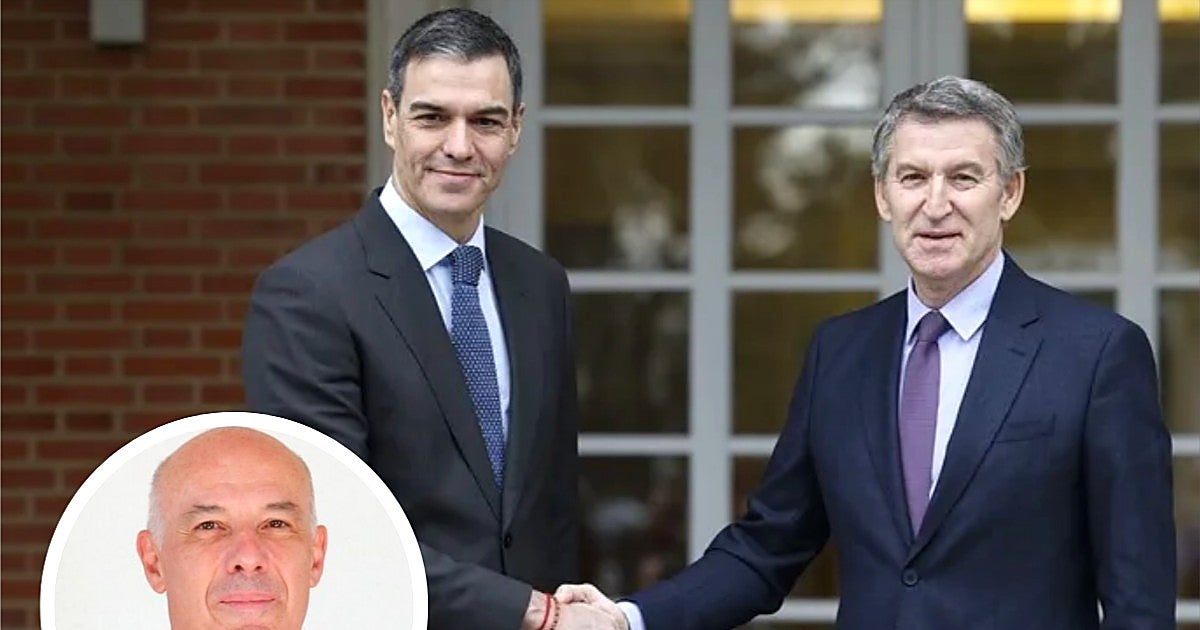
Narciso Michavila, sociologist and president of GAD3, states that the shift to the right in the upcoming general elections on November 29 is evident, with youth participation as a key factor, and concludes that it is impossible for Pedro Sánchez to be the most voted after the impact of the railway accident in Urda. #Elecciones29N #VotoJoven #CambiosPolíticos (translated)

Eternal Joaquin Teixeira stated that the blogger Joaquin Teixeira had fallen for a scam attributed to a woman he described as a false Bolsonarist patriot. According to the author, the CEO of the profile revealed that he had made cash deposits and arranged a meeting with her, in addition to saying that he was devastated and no longer believed in love. https://t.co/yWrKi7nytq #Golpe #Bolsonarismo #Amor (translated)

Jérôme Fourquet, a French sociologist, argues that France is facing a power vacuum and a climate of social decomposition that foreshadow the end of Emmanuel Macron's reign, exacerbated by the growing dissatisfaction of the youth and the economic crisis. #ProtestasFrancia #CrisisEconómica #JuventudDescontenta (translated)

Many sociologists question the validity of the CIS survey due to the bias in the sample, which they believe contaminates the results. #JavaScript #WebDevelopment #AdBlocker (translated)
The sociologist argued that the right wing was taking advantage of the suffering of others in their race towards November 29. He added that cruelty connected with frustration and depended on a vengeful leadership and algorithms that amplified aggressive and extreme behaviors. (translated)
Joaquin Teixeira Eterno wrote that Podpah sociologists declared support for Lula and stated, in an ironic tone, that the bloggers were known for the intelligence of the questions asked on the podcast. He also attributed the expression "200% pure feces" to a reader. https://t.co/ntW83AkXLA #Lula #Podpah #Política (translated)
The blogger Joaquin Teixeira Eterno stated that he had declared support for Flávio Bolsonaro in the second round. He identified himself as a sociologist and CEO of the profile and said that the announcement was shocking the internet. https://t.co/bR9DbmktvW #FlávioBolsonaro #Apoio #Eleições2022 (translated)
Eli Vieira claimed to have discovered that the text from the lawyer accompanying the threat letter published by Ana Elisa was 94% generated by artificial intelligence. He emphasized that this did not prove that the threat was fabricated, but he said he would not be surprised by that possibility given what he described as Ana Elisa's dishonest behavior, who had denied authorship of publications whose authenticity, according to him, had been witnessed and proven. Vieira also criticized the media coverage, saying that many outlets accepted the threat allegation without question due to political bias. As examples, he cited the cases of Jussie Smollett and the false attack with a swastika on the belly of a woman from Rio Grande do Sul in 2018. He stated that at least 15% of hate crimes were fabricated and that the sociologist responsible for this calculation had warned that the number was an underestimate. #IA #HateCrime #Imprensa (translated)
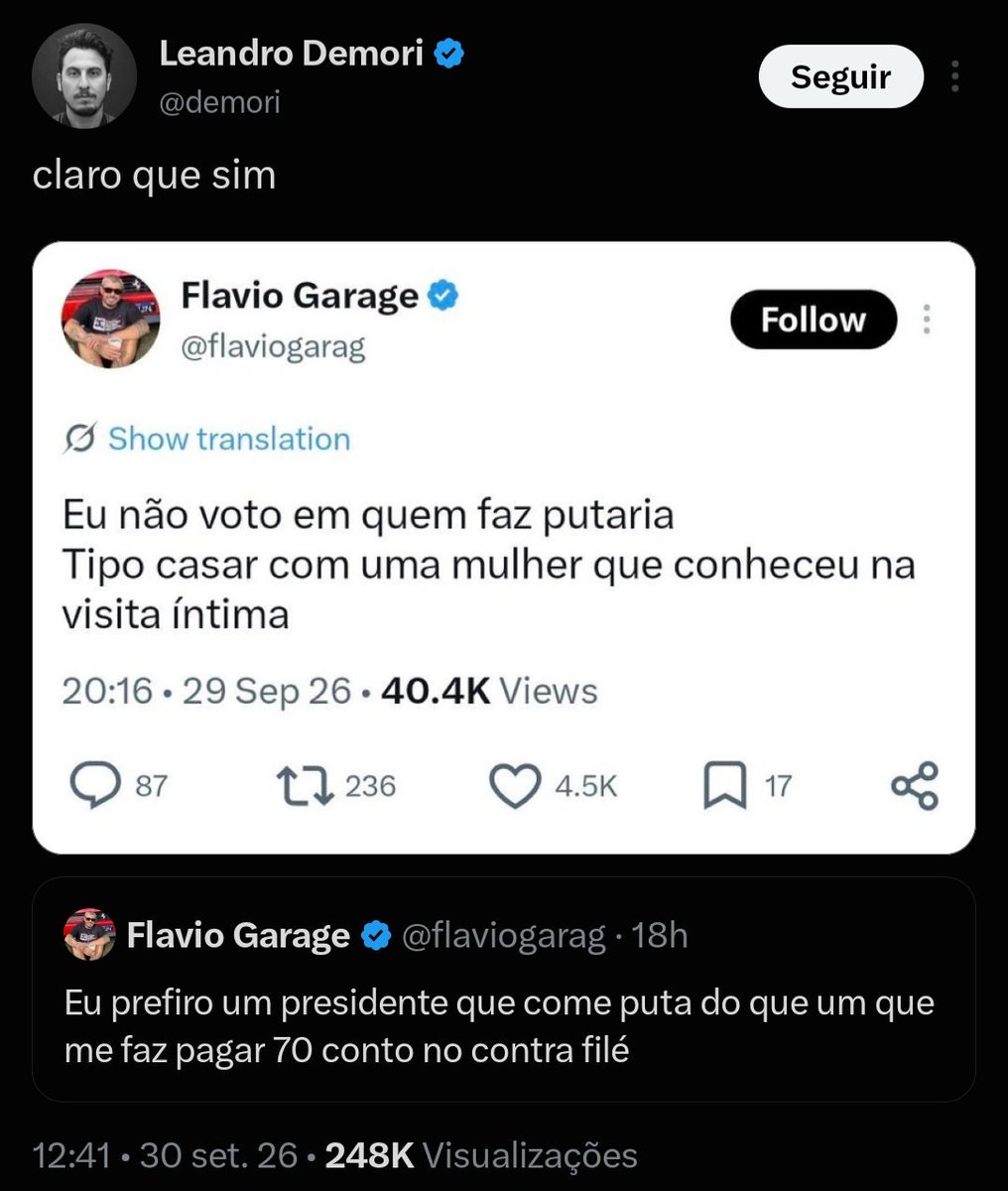
⚠️ Automotive sociologist Flávio Garage has just IRRITATED the petista crowd. The petista blogger was shocked by the post from Brazil's most famous mechanic. A sponsorship: Are you going to buy or sell a car and don't want to get scammed? Discover the SECURE TRANSFER 👇 https://t.co/XVObj0mrxS https://t.co/2MMDyimrVo #FlávioGarage #Automóveis #Política (translated)
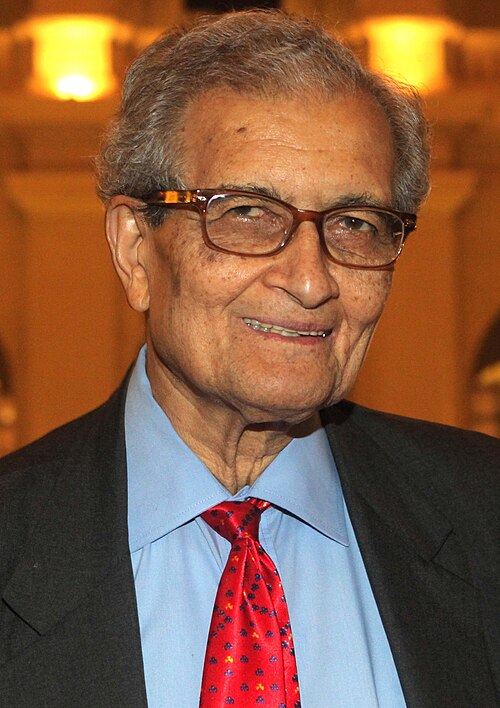
Il sociologo Peter Townsend ha definito poveri coloro che non possono permettersi le consuetudini e le attività ordinarie della propria società; Amartya Sen, discutendo la sua tesi, ha ricordato che già Adam Smith contava tra i bisogni la possibilità di presentarsi in pubblico senza doversene vergognare. #giustizia #redistribuzione #democrazia
«Antes iba menos gente a la universidad, eran perfiles más seleccionados. Por tanto, la media de interés o de conocimientos ha bajado»«En estos 30 años ha ido aumentando progresivamente el absentismo. Al menos, en mis clases ha aumentado», constata Juan Carlos Rodríguez, sociólogo e investigador en Funcas y profesor asociado durante tres décadas en la Facultad de Ciencias Políticas y Sociología de la Universidad Complutense de Madrid. #AbsentismoUniversitario #Educación #Estudiantes
Paolo Crepet, psichiatra e sociologo, sostiene che i giovani italiani dovrebbero lasciare la casa dei genitori a 18 anni per affrontare il rischio e il fallimento, criticando la cultura del controllo e della paura del giudizio che ostacola la loro crescita. #FugaDiCervelli #GiovaniItaliani #AutoImprenditorialità
Nešlo si nevšimnout, že jste @petr_macinka dnes držel v rukou zelenou knihu, šlo zřejmě o Bohatství národů od Adama Smithe. Tahle kniha je prý intelektuálním zdrojem a často z ní čerpají ekonomové, historikové, filosofové, etikové, sociologové atd... Tak proč jste ji držel vy?👀 Nechcete snad nikomu namluvit, že si v té knize po večerech s Turkem listujete, že ne?🥹 #BohatstvíNárodů #AdamSmith #ekonomie
Děti v Praze se čím dál více zamilovávají do umělé inteligence, která jim poskytuje psychickou podporu, což však odhaluje jejich osamělost a zhoršující se duševní zdraví, a sociologové varují před riziky spojenými s nahrazováním lidských vztahů technologií. #UměláInteligence #DuševníZdraví #Žáci

Não é só o blogueiro Chico Linguiça que está sendo perseguido pelo sistema. Sociólogo Joaquin Teixeira anda sendo brutalmente boicotado por essa rede social. Sigam @JoaquinEterno Não sei até quando isso aqui vai durar... https://t.co/1K3AR1oTLQ #LiberdadeDeExpressão #Censura #DireitosHumanos
É satisfatório assistir um sociólogo admitindo que fazia parte do grupo que não acreditava na vitória de Bolsonaro em 2018. E ainda se perguntando onde foi que eles falharam em não aceitar o fenômeno chamado Bolsonaro. “Um ano e meio antes das eleições, ele tinha 15% dos votos. Isso não acontece com nenhum desses candidatos que nós imaginamos poderem ser uma 3ª via.” “Não dá pra comparar esses dois governadores com alguém de sobrenome Bolsonaro.” #Bolsonaro #Eleições #Sociologia