BETA nonprofit public democratic european moderated

Search

#Stanford

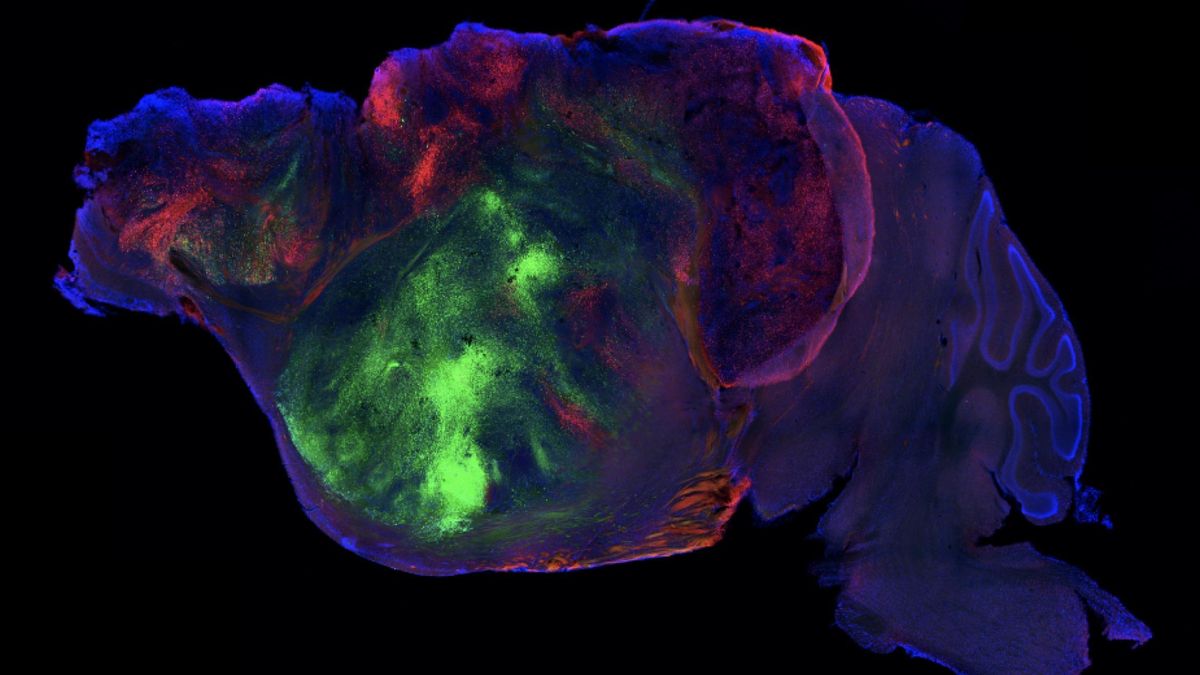
A team of researchers from Stanford University, led by Romanian Sergiu Pașca, has performed a human brain tissue transplant in the brains of mice, opening new perspectives for understanding and treating serious neurological diseases. (translated)

O echipă de cercetători de la Stanford, condusă de un român, a transplantat țesut cerebral uman la șoareci: „Deschide calea către vindecarea unor boli grave”

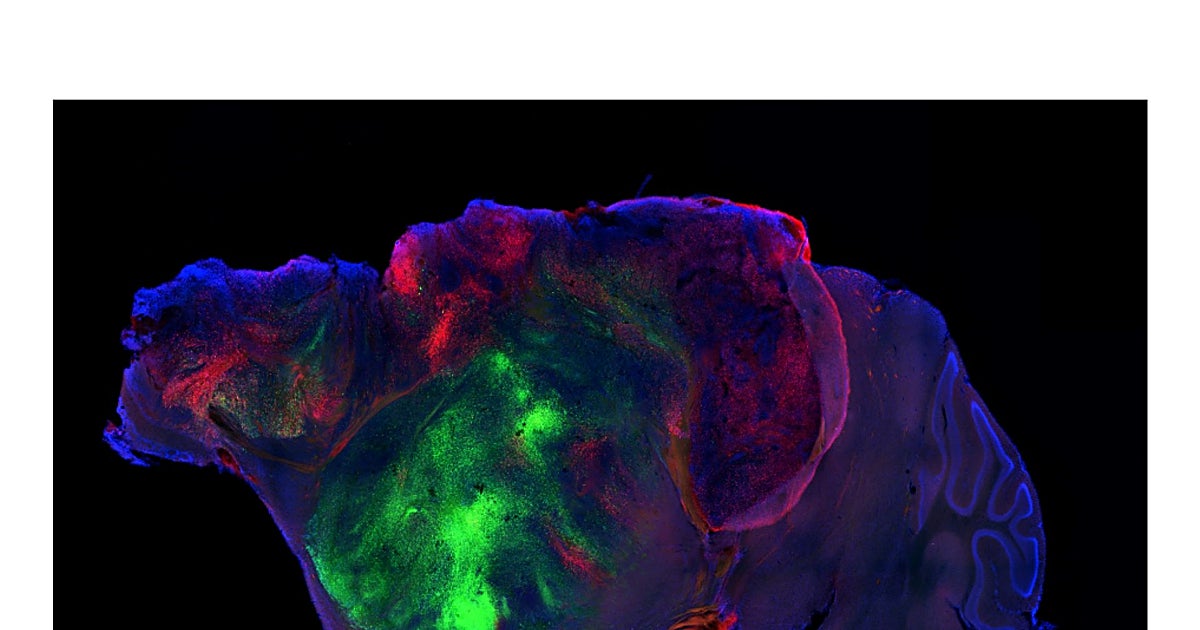
Stanford University scientists have implanted human cortical organoids into mice modified to lack a cerebral cortex, achieving not only the survival of human tissue but also the development of functional connections, which could open new avenues for understanding incurable neurological disorders such as schizophrenia and autism. (translated)

Científicos injertan neuronas humanas en ratones sin corteza cerebral y recuperan sus capacidades

A team of researchers from Stanford University has developed a mouse model with four million human neurons to advance the study of psychiatric diseases such as dementia and autism, overcoming the limitations of current organoids. (translated)

Un ratón con cuatro millones de neuronas humanas para desentrañar el origen de la demencia o el autismo

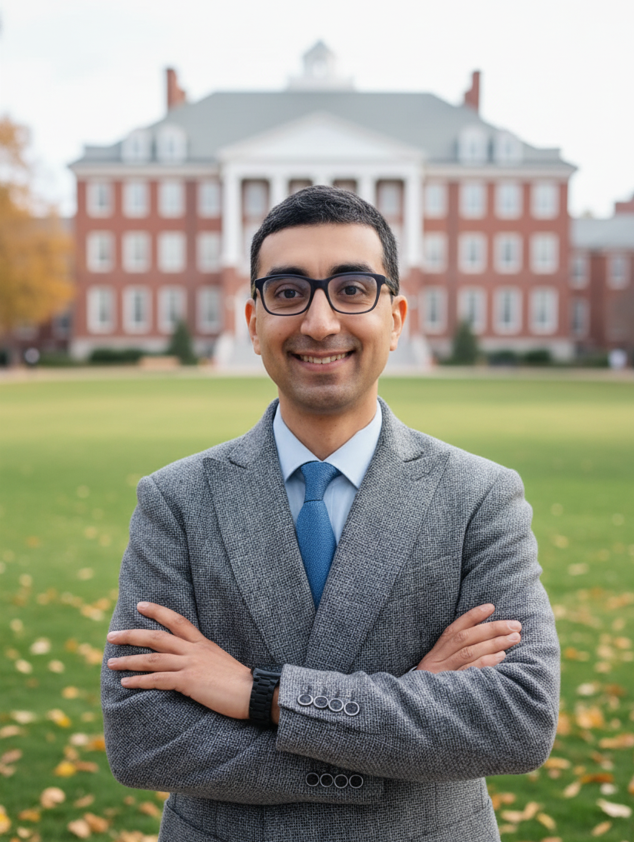
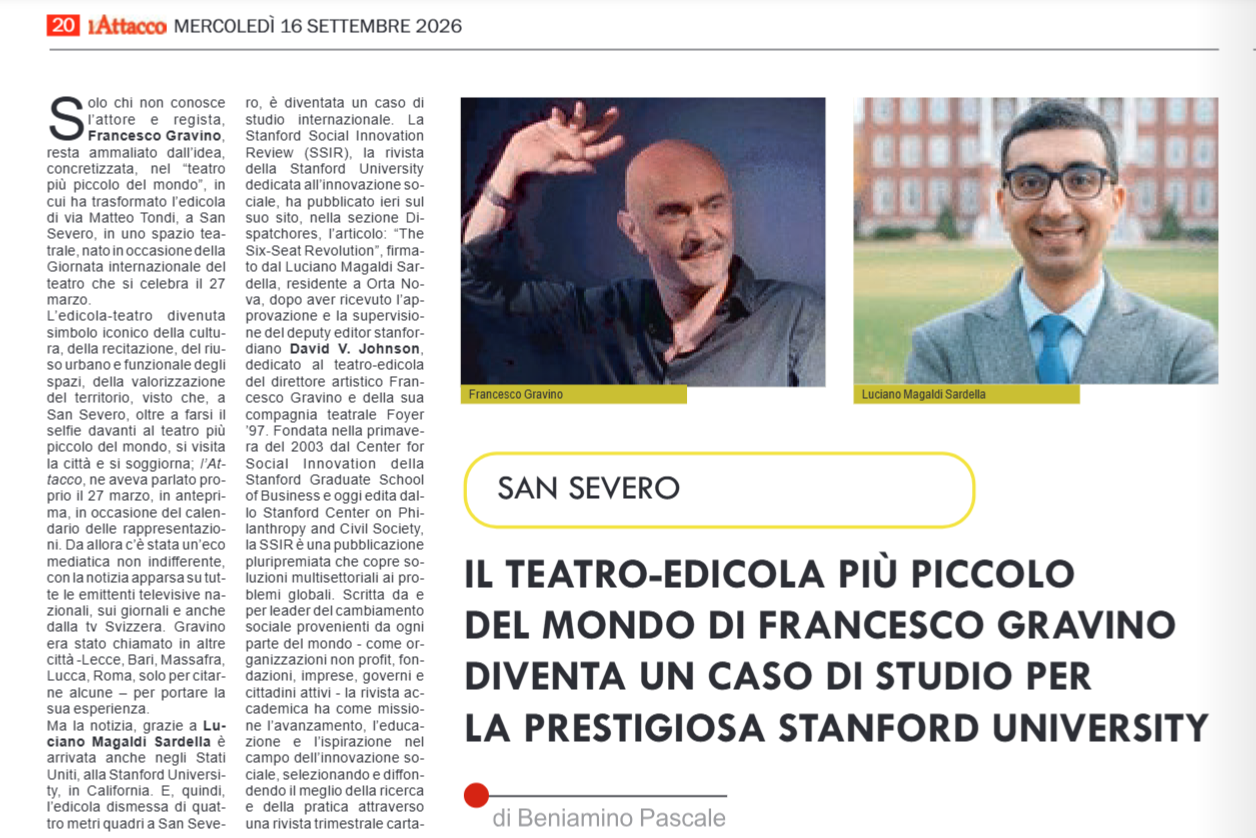
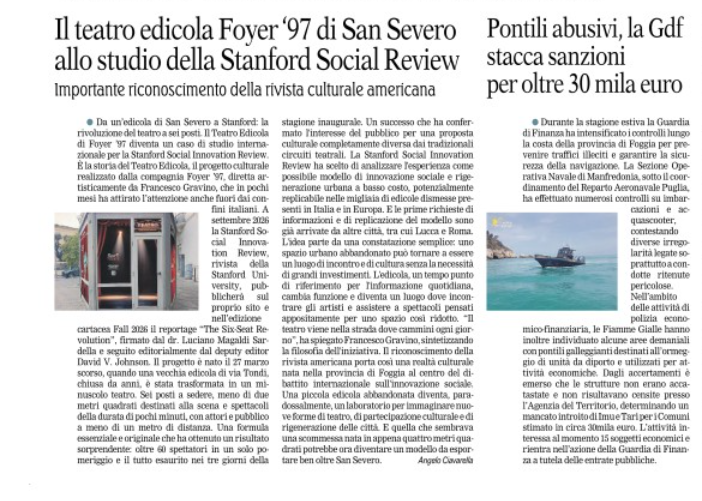
L'ATTACCO DI FOGGIA - IL TEATRO-EDICOLA PIU PICCOLO DEL MONDO DI FRANCESCO GRAVINA DIVENTA UN CASO STUDIO PER LA PRESTIGIOSA STANFORD UNIVERSITY Il Teatro-Edicola Foyer '97 diventa caso di studio internazionale per la Stanford Social Innovation Review SAN SEVERO, 16 settembre 2026 - Da un'edicola abbandonata di quattro metri quadrati in via Tondi a modello di innovazione sociale studiato dalla Stanford University. È la parabola del Teatro Edicola Foyer '97, il progetto culturale realizzato dalla compagnia Foyer '97 diretta artisticamente da Francesco Gravina, che in pochi mesi ha varcato i confini nazionali. La notizia, riportata oggi da La Gazzetta del Mezzogiorno, è che la prestigiosa Stanford Social Innovation Review, la rivista culturale della Stanford University dedicata all'innovazione sociale, pubblicherà a settembre sul proprio sito e nell'edizione cartacea Fall 2026 il reportage "The Six-Seat Revolution", firmato dal dr. Luciano Magaldi Sardella e seguito editorialmente dal deputy editor David V. Johnson. Il progetto è nato il 27 marzo scorso, in occasione della Giornata Mondiale del Teatro, quando una vecchia edicola chiusa da anni è stata trasformata in un minuscolo teatro: sei posti a sedere, meno di due metri quadrati di scena, spettacoli di pochi minuti con attori e pubblico a meno di un metro di distanza. Una formula essenziale e originale che ha sorpreso tutti: oltre 60 spettatori in un solo pomeriggio e tutto esaurito nei tre giorni della stagione inaugurale. Un successo che ha dimostrato l'interesse del pubblico per una proposta culturale fuori dai circuiti tradizionali. Per questo la SSIR ha scelto di analizzarla come possibile modello di rigenerazione urbana a basso costo, potenzialmente replicabile nelle migliaia di edicole dismesse in Italia e in Europa. Richieste di informazioni e di replica sono già arrivate da altre città, tra cui Lucca e Roma. Alla base, come spiega Gravina, un'idea semplice: "Il teatro viene nella strada dove cammini ogni giorno". L'edicola, un tempo punto di riferimento per l'informazione quotidiana, cambia funzione e diventa luogo di incontro con gli artisti. Un riconoscimento che porta una realtà nata nella provincia di Foggia al centro del dibattito internazionale sull'innovazione sociale. Quella che sembrava una scommessa di quattro metri quadrati, può ora diventare un modello da esportare ben oltre San Severo.

L' ATTACCO DI FOGGIA - FRANCESCO GRAVINA'S TEATRO-EDICOLA, THE WORLD'S SMALLEST THEATRE, BECOMES THE SUBJECT OF A CASE STUDY AT STANFORD UNIVERSITY The Teatro-Edicola Foyer '97 Becomes an International Case Study for the Stanford Social Innovation Review SAN SEVERO, 16 September 2026 - From a derelict newsstand of four square metres in Via Tondi to a paradigm of social innovation examined by Stanford University. Such is the trajectory of the Teatro Edicola Foyer '97, the cultural project realized by the Foyer '97 company under the artistic direction of Francesco Gravina, which in the space of a few months has transcended national boundaries. The news, reported today by La Gazzetta del Mezzogiorno, is that the prestigious "Stanford Social Innovation Review", the cultural journal of Stanford University dedicated to social innovation, will publish in September, both on its website and in its Fall 2026 print edition, the reportage "The Six-Seat Revolution", authored by Dr Luciano Magaldi Sardella and overseen editorially by Deputy Editor David V. Johnson. The project was inaugurated on 27 March last, on the occasion of World Theatre Day, when a former newsstand, shuttered for years, was transmuted into a diminutive theatre: six seats, a stage of fewer than two square metres, performances lasting but a few minutes, with actors and audience separated by less than a metre. A formula at once essential and original that has taken all by surprise: more than sixty spectators in a single afternoon and full houses throughout the three days of the inaugural season. A success that has evinced the public's appetite for a cultural proposition beyond the conventional circuits. It is for this reason that the SSIR has elected to analyse it as a potential model of low-cost urban regeneration, conceivably replicable across the thousands of disused newsstands throughout Italy and Europe. Enquiries regarding its replication have already been received from other cities, including Lucca and Rome. At its heart, as Gravina explains, lies a simple notion: "The theatre comes to the street where you walk every day". The newsstand, once a locus of daily information, changes its function and becomes a place of encounter with artists. An accolade that brings a reality born in the Province of Foggia to the centre of the international discourse on social innovation. What appeared to be a four-square-metre wager may now become a model to be exported far beyond San Severo.

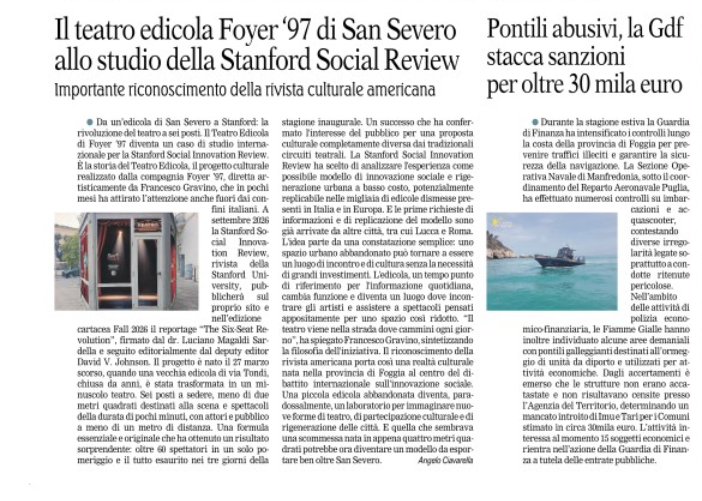
LA GAZZETTA DEL MEZZOGIORNO - IL TEATRO EDICOLA FOYER'97 DI SAN SEVERO ALLO STUDIO DELLA STANFORD SOCIAL I. REVIEW Il Teatro-Edicola Foyer '97 diventa caso di studio internazionale per la Stanford Social Innovation Review SAN SEVERO, 16 settembre 2026 - Da un'edicola abbandonata di quattro metri quadrati in via Tondi a modello di innovazione sociale studiato dalla Stanford University. È la parabola del Teatro Edicola Foyer '97, il progetto culturale realizzato dalla compagnia Foyer '97 diretta artisticamente da Francesco Gravina, che in pochi mesi ha varcato i confini nazionali. La notizia, riportata oggi da La Gazzetta del Mezzogiorno, è che la prestigiosa Stanford Social Innovation Review, la rivista culturale della Stanford University dedicata all'innovazione sociale, pubblicherà a settembre sul proprio sito e nell'edizione cartacea Fall 2026 il reportage "The Six-Seat Revolution", firmato dal dr. Luciano Magaldi Sardella e seguito editorialmente dal deputy editor David V. Johnson. Il progetto è nato il 27 marzo scorso, in occasione della Giornata Mondiale del Teatro, quando una vecchia edicola chiusa da anni è stata trasformata in un minuscolo teatro: sei posti a sedere, meno di due metri quadrati di scena, spettacoli di pochi minuti con attori e pubblico a meno di un metro di distanza. Una formula essenziale e originale che ha sorpreso tutti: oltre 60 spettatori in un solo pomeriggio e tutto esaurito nei tre giorni della stagione inaugurale. Un successo che ha dimostrato l'interesse del pubblico per una proposta culturale fuori dai circuiti tradizionali. Per questo la SSIR ha scelto di analizzarla come possibile modello di rigenerazione urbana a basso costo, potenzialmente replicabile nelle migliaia di edicole dismesse in Italia e in Europa. Richieste di informazioni e di replica sono già arrivate da altre città, tra cui Lucca e Roma. Alla base, come spiega Gravina, un'idea semplice: "Il teatro viene nella strada dove cammini ogni giorno". L'edicola, un tempo punto di riferimento per l'informazione quotidiana, cambia funzione e diventa luogo di incontro con gli artisti. Un riconoscimento che porta una realtà nata nella provincia di Foggia al centro del dibattito internazionale sull'innovazione sociale. Quella che sembrava una scommessa di quattro metri quadrati, può ora diventare un modello da esportare ben oltre San Severo.

LA GAZZETTA DEL MEZZOGIORNO - SAN SEVERO'S TEATRO EDICOLA FOYER '97 ON THE STANFORD SOCIAL INNOVATION REVIEW The Teatro-Edicola Foyer '97 Becomes an International Case Study for the Stanford Social Innovation Review SAN SEVERO, 16 September 2026 - From a derelict newsstand of four square metres in Via Tondi to a paradigm of social innovation examined by Stanford University. Such is the trajectory of the Teatro Edicola Foyer '97, the cultural project realized by the Foyer '97 company under the artistic direction of Francesco Gravina, which in the space of a few months has transcended national boundaries. The news, reported today by La Gazzetta del Mezzogiorno, is that the prestigious Stanford Social Innovation Review, the cultural journal of Stanford University dedicated to social innovation, will publish in September, both on its website and in its Fall 2026 print edition, the reportage "The Six-Seat Revolution", authored by Dr Luciano Magaldi Sardella and overseen editorially by Deputy Editor David V. Johnson. The project was inaugurated on 27 March last, on the occasion of World Theatre Day, when a former newsstand, shuttered for years, was transmuted into a diminutive theatre: six seats, a stage of fewer than two square metres, performances lasting but a few minutes, with actors and audience separated by less than a metre. A formula at once essential and original that has taken all by surprise: more than sixty spectators in a single afternoon and full houses throughout the three days of the inaugural season. A success that has evinced the public's appetite for a cultural proposition beyond the conventional circuits. It is for this reason that the SSIR has elected to analyse it as a potential model of low-cost urban regeneration, conceivably replicable across the thousands of disused newsstands throughout Italy and Europe. Enquiries regarding its replication have already been received from other cities, including Lucca and Rome. At its heart, as Gravina explains, lies a simple notion: "The theatre comes to the street where you walk every day". The newsstand, once a locus of daily information, changes its function and becomes a place of encounter with artists. An accolade that brings a reality born in the Province of Foggia to the centre of the international discourse on social innovation. What appeared to be a four-square-metre wager may now become a model to be exported far beyond San Severo.

Fefe 1d

📺 Netflix anunció un reality show basado en el infame experimento de la cárcel de Stanford: “30 participantes entran en una prisión real y se les asigna al azar el rol de guardias o prisioneros. Descubrirán si las personas comunes se ajustan a los roles que se les otorgan, o si pueden resistir las fuerzas que los empujan en la dirección opuesta” #Netflix #RealityShow #ExperimentoStanford

“TEATRO EDICOLA” OF SAN SEVERO BECOMES AN INTERNATIONAL CASE STUDY IN THE “STANFORD SOCIAL INNOVATION REVIEW (SSIR)” — STANFORD UNIVERSITY SOURCE: https://l1nq.com/rruntbb LA GAZZETTA DI SAN SEVERO SAN SEVERO (FG) — Six persons enter a news kiosk. Before them lie no newspapers, magazines, or tobacco, but a theatrical stage measuring less than two square metres. The actors stand but a few paces from the spectators, with scarce any separation betwixt those who perform and those who behold. It is in this manner that in San Severo a place abandoned for years hath begun to live anew. And today that diminutive theatrical experiment hath fallen beneath the glare of international attention. It is the story of the “Teatro Edicola”, the project realised by the company Foyer ’97, under the artistic direction of Francesco Gravino, which hath transformed an old news kiosk in Via Tondi into one of the smallest stages ever conceived. The project commenced on 27th March last, with a formula as simple as it is original: six seats, a stage of most exiguous dimensions, and performances lasting but a few minutes. A minimal distance betwixt public and performers that doth wholly alter the traditional relationship betwixt spectator and theatre. The wager, however, was forthwith rewarded by the public. More than 60 persons attended the performances in a single afternoon, and the three days of the inaugural season registered a complete sold-out. From a local experiment, the “Teatro Edicola” hath thus become a case capable of attracting attention far beyond the confines of the Province of Foggia. In September 2026, the Stanford Social Innovation Review (SSIR), the journal of Stanford University, shall publish upon its website and in its Fall 2026 print edition the reportage “The Six-Seat Revolution”, authored by Dr Luciano Magaldi Sardella and edited by Deputy Editor David V. Johnson. The interest of the American review concerneth not merely the originality of the theatrical proposition. The Teatro Edicola is, in fact, observed as a potential paradigm of social innovation and low-cost urban regeneration. Become a Medium member The idea is particularly compelling in a country such as Italy, wherein numerous news kiosks have ceased their activity and risk becoming vacant interstices within the urban fabric. The question, at bottom, is simple: can a place born to sell newspapers become once more a locus of encounter? In San Severo, the answer hath been entrusted to the theatre. The kiosk hath not been merely restored in a physical sense. It hath changed its function, transforming itself into a place where artists encounter the public directly and where the performance becometh part of the quotidian life of the street. “The theatre cometh into the street wherein thou walkest every day,” Francesco Gravino hath explained, thus synthesising the philosophy underpinning the project. And it is precisely this aspect that hath rendered the experience interesting also upon the plane of its potential replicability. Initial requests for information have already arrived from other cities, amongst them Lucca and Rome, interested in learning of the model and the modalities for its realisation. The strength of the Teatro Edicola resideth also in its apparent disproportion: a minimal investment and space to produce a cultural effect far greater. There is no need for a grand theatre, an auditorium of hundreds of seats, or complex structures. An unused space sufficeth, together with an idea and the will to restore it to the community. That old kiosk in Via Tondi, therefore, recounteth something that goeth beyond the theatre. It recounteth the possibility of rethinking the spaces of our cities, restoring a social function to places that seemed to have definitively lost it.

Encurtador de Link

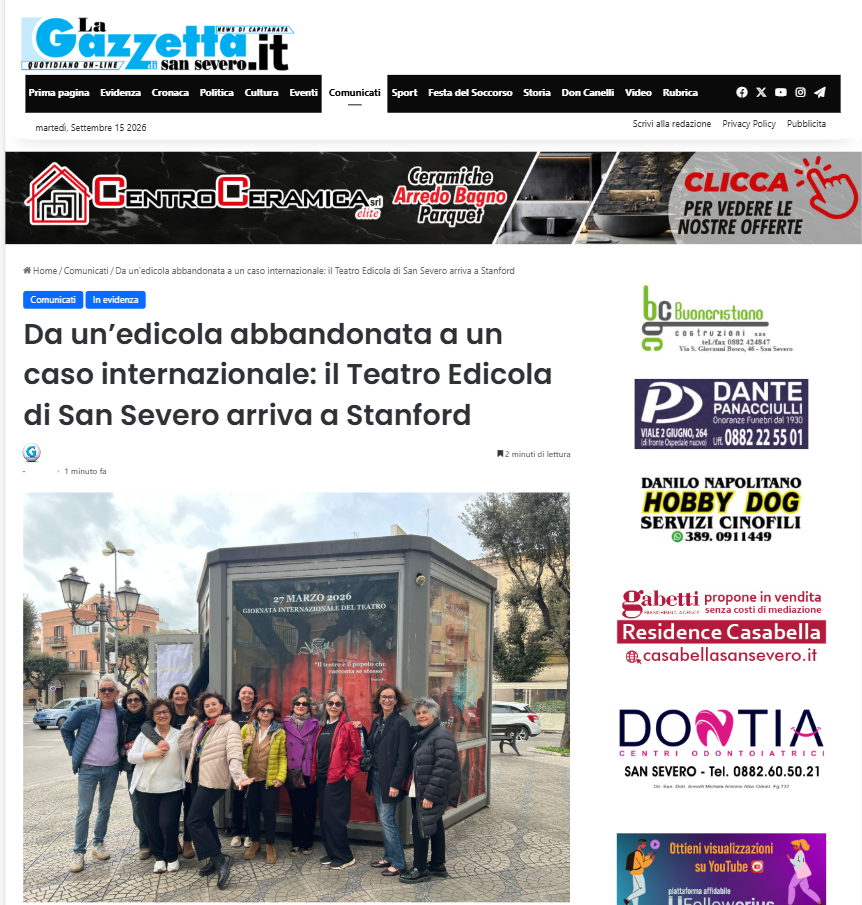
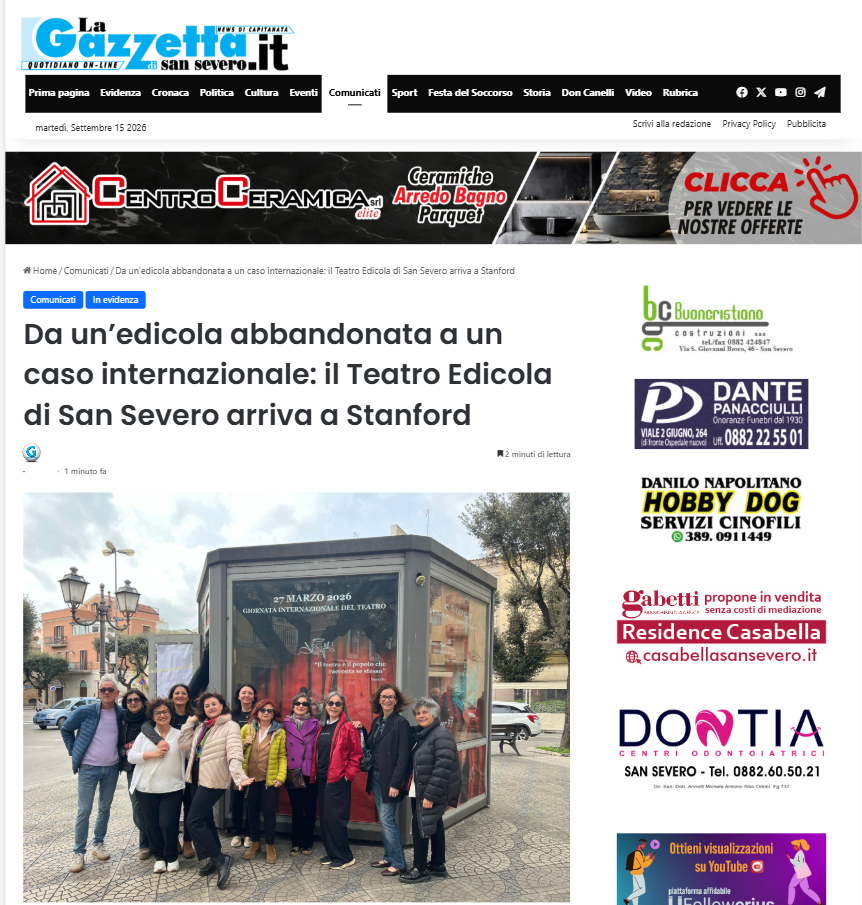
IL “TEATRO EDICOLA” di SAN SEVERO DIVENTA “CASO STUDIO” INTERNAZIONALE sulla “STANFORD SOCIAL INNOVATION REVIEW (SSIR) — STANFORD UNIVERSITY” SOURCE: https://l1nq.com/rruntbb “LA GAZZETTA DI SAN SEVERO” SAN SEVERO (FG) — Sei persone entrano in un’edicola. Davanti a loro non ci sono giornali, riviste o tabacchi, ma una scena teatrale di meno di due metri quadrati. Gli attori sono a pochi passi dagli spettatori, quasi senza separazione tra chi recita e chi guarda. È così che a San Severo un luogo abbandonato da anni ha ricominciato a vivere. E oggi quella piccola esperienza teatrale è finita sotto i riflettori internazionali. È la storia del “Teatro Edicola”, il progetto realizzato dalla compagnia Foyer ’97, diretta artisticamente da Francesco Gravino, che ha trasformato una vecchia edicola di via Tondi in uno dei palcoscenici più piccoli probabilmente mai immaginati. Il progetto è partito il 27 marzo scorso con una formula tanto semplice quanto originale: sei posti a sedere, uno spazio scenico ridottissimo e spettacoli della durata di pochi minuti. Una distanza minima tra pubblico e interpreti che modifica completamente il tradizionale rapporto tra spettatore e teatro. La scommessa, però, è stata subito premiata dal pubblico. Più di 60 persone hanno assistito agli spettacoli in un solo pomeriggio e le tre giornate della stagione inaugurale hanno fatto registrare il tutto esaurito. Da esperimento locale, il “Teatro Edicola” è diventato così un caso capace di attirare l’attenzione ben oltre i confini della provincia di Foggia. A settembre 2026 la “Stanford Social Innovation Review (SSIR)”, rivista della Stanford University, pubblicherà sul proprio sito e nell’edizione cartacea Fall 2026 il reportage “The Six-Seat Revolution”, firmato dal dr. Luciano Magaldi Sardella e seguito editorialmente dal deputy editor David V. Johnson. L’interesse della rivista americana non riguarda soltanto l’originalità della proposta teatrale. Il Teatro Edicola viene infatti osservato come possibile esperienza di innovazione sociale e rigenerazione urbana a basso costo. L’idea è particolarmente interessante in un Paese come l’Italia, dove sono numerose le edicole che hanno cessato la propria attività e che rischiano di diventare spazi vuoti nel tessuto delle città. Subscribe to the Medium newsletter La domanda, in fondo, è semplice: può un luogo nato per vendere giornali diventare nuovamente un punto di incontro? A San Severo la risposta è stata affidata al teatro. L’edicola non è stata semplicemente recuperata dal punto di vista fisico. Ha cambiato funzione, trasformandosi in un luogo dove gli artisti incontrano direttamente il pubblico e dove lo spettacolo diventa parte della vita quotidiana della strada. “Il teatro viene nella strada dove cammini ogni giorno”, ha spiegato Francesco Gravino, sintetizzando la filosofia alla base del progetto. Ed è proprio questo aspetto ad aver reso l’esperienza interessante anche sul piano della possibile replicabilità. Le prime richieste di informazioni sono già arrivate da altre città, tra cui Lucca e Roma, interessate a conoscere il modello e le modalità per realizzarlo. La forza del Teatro Edicola sta anche nella sua apparente sproporzione: un investimento e uno spazio minimi per produrre un effetto culturale molto più grande. Non servono un grande teatro, una platea da centinaia di posti o strutture complesse. Basta uno spazio inutilizzato, un’idea e la volontà di restituirlo alla comunità. Quella vecchia edicola di via Tondi, dunque, racconta qualcosa che va oltre il teatro. Racconta la possibilità di ripensare gli spazi delle città, restituendo una funzione sociale a luoghi che sembravano averla definitivamente perduta.

Encurtador de Link

Researchers from Stanford Medicine discovered that blocking the EP2 receptor on macrophages in old mice can slow down aging symptoms and improve their performance, restoring results comparable to those of young animals. (translated)

Stare myszy stały się szczupłe i zwinne. Naukowcy znaleźli sposób na odwrócenie starzenia

A study by Stanford University researchers shows that yellowish patches on the eyelids, known as xanthelasma, may indicate serious circulatory disorders and increase the risk of heart attack or stroke. (translated)

PANE TÄHELE ⟩ Üks infarkti ja insuldi eest hoiatav märk võib olla nähtav inimese näol
Bild 1w

Leading professors from Harvard and Stanford warn that Germany is poorly prepared for a potential landing by extraterrestrials, while the USA seeks to take a leadership role. (translated)

Außerirdisches Leben - „Wenn die Aliens kommen, ist niemand in Deutschland vorbereitet“

Luciano Magaldi Sardella, LSE Review of Books, “A currency in crisis — the euro’s structural fragility” SOURCE: https://medium.com/@ingnucllms/luciano-magaldi-sardella-lse-review-of-books-a-currency-in-crisis-the-euros-structural-7203469e2706 Source: https://lnkd.in/dBJpcU3n Ringraziando in anticipo: - Redattrice Ms Anna D’Anton, Managing Editor di LSE Review of Books, London School of Economics and Political Science(LSE). - Dr John H. Cochrane, Senior Fellow della Hoover Institution presso Stanford University e autore di opere fondamentali quali The Fiscal Theory of the Price Level e Asset Pricing (entrambe Princeton University Press). - Dr Luis Garicano, Professore di Politiche Pubbliche alla London School of Economics, già membro del Parlamento Europeo dal 2019 al 2022. - Dr Klaus Masuch, che ha accompagnato l’Euro dalla sua nascita, ricoprendo ruoli di primissimo piano alla Banca Centrale Europea per oltre vent’anni, dalla strategia di politica monetaria alla supervisione dei paesi dell’UE. Un onore che non dimenticherò facilmente: ho avuto il privilegio di continuare il mio ruolo come recensore di saggistica accademica per la londinese LSE, na delle più autorevoli pubblicazioni accademiche al mondo, il volume: “Crisis Cycle: Challenges, Evolution, and Future of the Euro”, pubblicato dalla “Princeton University Press” della Princeton University, Ivy League, USA. Questo capolavoro editoriale analizza l’evoluzione dell’Euro dal suo idealismo fondativo fino all’attuale fragilità istituzionalizzata, rivelando come l’unione monetaria si trovi intrappolata in un circolo vizioso di crisi e improvvisazione. Ringrazio di cuore i Professori Cochrane, Garicano e Masuch per aver scritto un’opera di tale profondità e lucidità. Recensire un lavoro simile è, prima ancora che un compito, un’opportunità intellettuale rara.

Luciano Magaldi Sardella, LSE Review of Books, “A currency in crisis — the euro’s structural fragility” SOURCE: https://medium.com/@ingnucllms/luciano-magaldi-sardella-lse-review-of-books-a-currency-in-crisis-the-euros-structural-1bb7a4c8b16a Source: https://lnkd.in/dBJpcU3n With my sincerest thanks in advance to: - Ms Anna D’Alton, Managing Editor of the LSE Review of Books, London School of Economics and Political Science. - Dr John H. Cochrane, Rose Marie and Jack Anderson Senior Fellow of the Hoover Institution at Stanford University, and author of such foundational works as The Fiscal Theory of the Price Level and Asset Pricing (both Princeton University Press). - Dr Luis Garicano, Professor of Public Policy at the London School of Economics and Political Science, and former Member of the European Parliament from 2019 to 2022. - Dr Klaus Masuch, who has accompanied the euro from its very inception, having held positions of the highest responsibility at the European Central Bank for over two decades — from the stewardship of monetary policy strategy to the oversight of EU member states. This is an honour I shall not readily forget. I have had the distinct privilege of continuing my role as academic reviewer for the LSE Review of Books — one of the most authoritative scholarly publications in the world — with the volume: “Crisis Cycle: Challenges, Evolution, and Future of the Euro,” published by Princeton University Press of Princeton University, Ivy League, USA. This quite remarkable work examines the evolution of the euro from its founding idealism to its present institutionalised fragility, laying bare how the monetary union has found itself ensnared in a self-reinforcing cycle of crisis and improvisation. It is a work of rare distinction, blending scholarly rigour with the hard-won wisdom of those who have shaped European economic policy at the very highest level. I extend my most heartfelt gratitude to Professors Cochrane, Garicano and Masuch for producing a volume of such depth, lucidity and intellectual courage. To review a work of this calibre is, before all else, an uncommon privilege.

H

Compassion as a Weapon Western civilization is increasingly trapped in a culture of entitlement, where victimhood can become a route to status, privilege, and power. Some elite universities report unusually high disability registrations—e.g., 20%+ at Brown and Harvard and around 40% at Stanford—far above community colleges. Whatever the causes, it raises a troubling question: when systems meant to protect the truly vulnerable become incentives, what happens to everyone else? Rob Henderson describes how accommodations can turn into “status games.” Extra time, special housing, and exemptions can make diagnosis feel like the logical choice, and the lesson travels outward: tomorrow’s leaders in journalism, HR, law, academia, and politics may learn that displaying weakness is rewarded. Research links habitual victimhood displays with traits associated with the Dark Triad (narcissism, Machiavellianism, psychopathy). That doesn’t mean genuine victims are manipulative—it means rewarding victimhood gives manipulators an incentive to enter. In the “virtue game,” grievance becomes currency. Pity can also function as covert power: the weak person gains leverage, while the giver gains moral superiority. When compassion is treated like a currency, it can become a mutually reinforcing racket. The danger isn’t helping the weak. It’s teaching that appearing weak is the surest way to gain power.

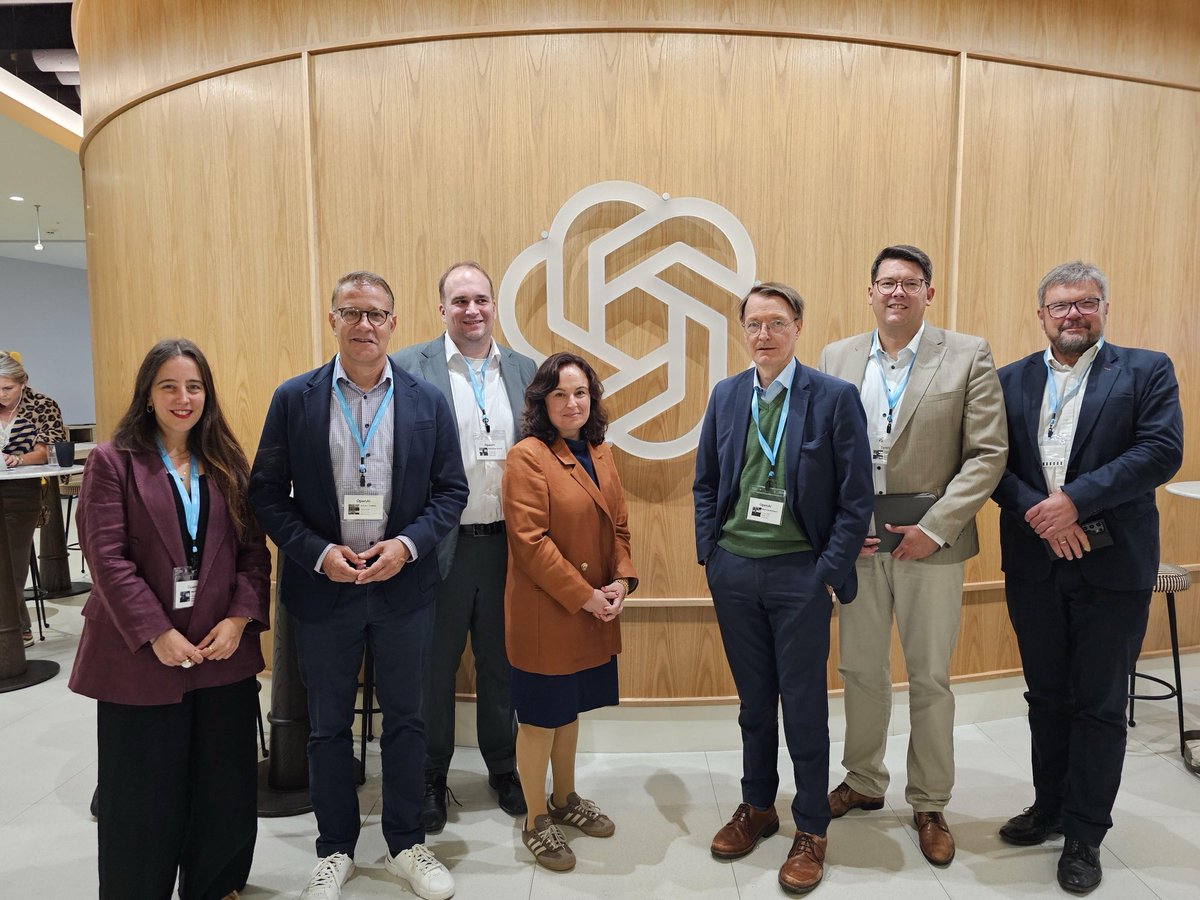
Even the Research Committee of the Bundestag is currently working on AI matters. We visited OpenAI in San Francisco today. Visiting Berkeley and Stanford and the leading AI companies. Germany must not fall into another new dependency. We need our own AI models. (translated)

The founder of Evergrande, Xu Jiayin, has been sentenced to life in prison for multiple offenses related to the company's collapse, joining the list of high-level executives imprisoned for their responsibility in financial crises, including Bernard Madoff and Allen Stanford, who were also severely punished for their frauds. (translated)

Del fundador de Evergrande a Madoff: grandes directivos en prisión por gestar crisis financieras y burbujas

A study from Stanford University published in Lancet Planetary Health warns that climate change will expose older people to dangerously higher temperatures than expected, due to rising levels of humid heat, with 22% of those over 60 potentially facing intolerable heat by 2100. (translated)

Le réchauffement, une menace pire qu'escompté pour les personnes âgées, selon une étude