BETA nonprofit public democratic european moderated

Search

#Struggle

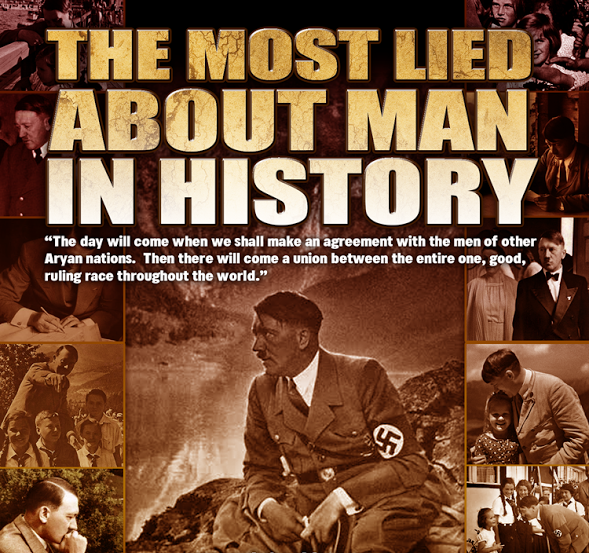
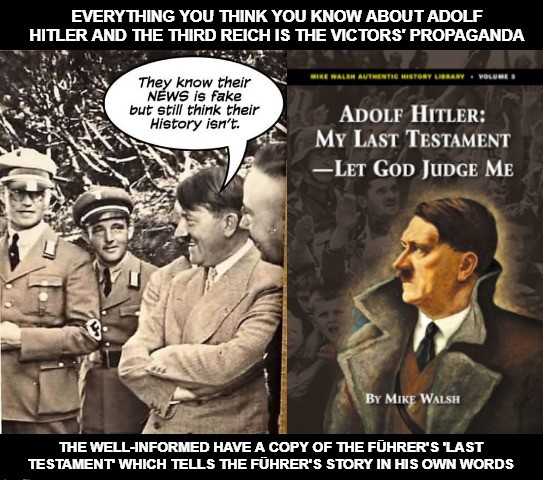
ADOLF HITLER: MY LAST TESTAMENT. LET GOD JUDGE ME. Mike Walsh. Forbidden History: This is the first time this bestseller has been published. Adolf Hitler, who took on Satan and his disciples, describes his struggle for victory over the Capitalist-Communist hydra. Adolf Hitler also explains his downfall. Illustrated. Softcover. 195 pages. https://barnesreview.org/product/adolf-hitler-my-last-testament-let-god-judge-me/
H

“Socialism Was Good in Theory” That sentence assumes the theory was never seriously challenged. It was. Long before the Soviet Union existed, before Lenin seized power, and before socialism had been tested on a national scale, major thinkers were already attacking its foundations—from very different directions. Five of them stand out. Tocqueville: Equality Can Become Servitude In 1848, Alexis de Tocqueville drew a sharp distinction between democracy and socialism. Both spoke about equality. But Tocqueville believed they pursued it in fundamentally different ways. Democracy, in his view, sought equality while preserving individual freedom. Socialism risked achieving equality by expanding the power of the state over the individual. His warning was essentially this: equality is not automatically liberty. A society can pursue equality so aggressively that it begins sacrificing the independence that makes political freedom meaningful. Bastiat: Follow Where Redistribution Leads Two years later, Frédéric Bastiat attacked socialism from a different direction. His question was deceptively simple: What happens when the state acquires the authority to take from some people and give to others in the name of justice? Bastiat called this “legal plunder.” His concern was not merely that redistribution might be expensive. It was that once government becomes the instrument through which competing groups obtain benefits from one another, politics can turn into a permanent struggle over who controls the machinery of redistribution. The problem, therefore, wasn’t simply how much the state redistributed. It was the principle that made redistribution legitimate in the first place. (bastiat.org⁠) Nietzsche: Equality Can Become Resentment Nietzsche approached socialism neither as an economist nor as a constitutional theorist. He attacked its psychology. He saw modern egalitarian movements as part of a much older moral impulse: resentment toward exceptional individuals and suspicion of strength, ambition and hierarchy. For Nietzsche, the danger was not simply that everyone might become economically equal. It was that a culture could begin treating excellence itself as something morally suspect. The goal would cease to be lifting people upward. It would become bringing the exceptional downward. Böhm-Bawerk: Challenge the Economics Then came Eugen von Böhm-Bawerk. In 1896, he turned his attention specifically toward Marx’s economic system. His criticism was not primarily moral or political. It was technical. Böhm-Bawerk argued that Marx’s theory of value did not adequately explain how the labor values developed in Capital could be reconciled with the actual prices Marx subsequently needed to explain. In other words, he attacked socialism where it claimed to possess a scientific economic foundation. The argument became one of the central criticisms of Marxian economics and helped launch a debate that would continue for generations. Mises: The Calculation Problem Then, in 1920, Ludwig von Mises attacked an even more fundamental question: Even if socialism is morally desirable, how would a socialist economy actually know what to produce? A functioning economy has millions of competing uses for scarce resources. Build a bridge or a hospital? Use steel here or there? Produce more machinery or more consumer goods? Under private ownership and markets, prices for capital goods provide information about relative scarcity and opportunity costs. Mises argued that abolishing private ownership of the means of production also removes the genuine market prices necessary for rational economic calculation. The problem wasn’t simply that socialist planners might make bad decisions. It was that the system deprived them of the very economic signals required to systematically compare those decisions. (Mises Institute⁠) And that was the sequence. Tocqueville challenged the political premise. Bastiat challenged the moral and legal mechanism of redistribution. Nietzsche challenged the psychology behind egalitarianism. Böhm-Bawerk challenged Marx’s economic theory. Mises challenged the possibility of rational central economic calculation. Five different thinkers. Five different objections. And all of them came before the Soviet Union had demonstrated what large-scale socialist government would actually look like. So “socialism was good in theory, but bad in practice” is not an argument. It is a historical claim that requires you to explain why these theoretical objections were wrong. The interesting question isn’t whether socialism had critics. It did. The interesting question is whether socialism ever adequately answered them” - ChatGPT

ADOLF HITLER: MY LAST TESTAMENT. LET GOD JUDGE ME. Mike Walsh. Forbidden History: This is the first time this bestseller has been published. Adolf Hitler, who took on Satan and his disciples, describes his struggle for victory over the Capitalist-Communist hydra. Adolf Hitler also explains his downfall. Illustrated. Softcover. 195 pages. https://barnesreview.org/product/adolf-hitler-my-last-testament-let-god-judge-me/

Republicans from across Ireland came together in Ballina today to remember & honour the hunger strikers. Their courage & sacrifice unlocked a new chapter in our national struggle & gave fresh momentum to the cause of Irish freedom. Today, Ireland is changing again. A new https://t.co/7mvskUerqS #IrishFreedom #HungerStrikers #Ballina #IE

H

The Age of Experts Is Over If the past two decades—COVID-19, the 2008 financial crisis, and the net-zero charade—have taught us anything, it is this: the age of unquestioned experts is over. Authority issued by corrupt, bloated institutions no longer commands automatic respect. We are entering an era in which trust must be earned, not assumed. Credentials matter less than results. Expertise can become conformity wrapped in a credential; status is no substitute for trustworthiness. The future belongs to those with proven track records, not merely letters after their names. Friedrich Nietzsche warned of this more than a century ago. He distrusted experts who served the spirit of their age—those who mistook consensus for courage and conformity for principle. To Nietzsche, many authorities were functionaries of the status quo: too timid to challenge the sacred assumptions of their time. University professors, state philosophers, and moral enforcers wore obedience as a badge of honor. They did not think; they repeated. They did not challenge; they conformed. They made the ordinary seem profound through jargon, complexity, and ambiguity. Nietzsche saw these not as signs of insight, but as camouflage—cowardice in disguise. He also distinguished knowledge from wisdom. Knowledge can be taught, measured, and tested. Wisdom must be earned through suffering, struggle, and brutal self-examination. Nietzsche admired those who forged their own paths rather than simply climbing institutional ladders. Even in science, he saw a danger. He respected its methods but feared their sanctification. Science, he argued, still required justification; materialists confused method with meaning and data with truth. Experts who presented science as the only path to knowledge were, in Nietzsche’s eyes, dogmatists in lab coats. So the question is no longer, “What are your qualifications?” It is: What have you done? What have you risked? What have you proved? We must recover the courage to think for ourselves—and place our confidence only in those who have earned it through action, not appointment.

ADOLF HITLER: MY LAST TESTAMENT. LET GOD JUDGE ME. Mike Walsh. Forbidden History: This is the first time this bestseller has been published. Adolf Hitler, who took on Satan and his disciples, describes his struggle for victory over the Capitalist-Communist hydra. Adolf Hitler also explains his downfall. Illustrated. Softcover. 195 pages. https://barnesreview.org/product/adolf-hitler-my-last-testament-let-god-judge-me/

H

The Pathology Behind Compassion Something sinister can lurk behind compassion. Caring for others is noble, but when institutions are rewarded not for reducing suffering—only for managing it—care can become pathological. Munchausen syndrome by proxy shows the logic: a caregiver fabricates or induces illness in someone dependent on them to gain sympathy and attention. The caregiver looks devoted; the “sickness” is manufactured. In that sense, devotion can hide control. I call this the Daycare Governance model: society splits into infants to be protected (oppressed), caregivers who provide protection (allies), and predators to be removed (dissenters). Caretakers gain prestige, funding, and moral authority by managing suffering. Many may believe sincerely, yet incentives can overpower intentions—if status and resources grow with the number of “vulnerable” people, the system has reason to expand the victim class. It does so via concept creep (“trauma” broadens until ordinary difficulty counts), and by creating the perpetual patient, where normal sadness becomes pathology and struggle is rebranded as dysfunction. Care institutions and “victims” then reinforce each other. Dependency costs competence. True care prepares people to stand alone; pathological care keeps them dependent. Endless expansion of victimhood risks producing more dependency. We call it compassion—but compassion without boundaries can become control.

H

The Three Roads to Evil We live in an age of unlimited access to information. Most of it is a gift, but it also gives us an unbroken view into horror—images on screens, the Epstein files, and constant stories once confined to nightmares. Some shut it off; others stare until it stares back, leaving them cynical. But it has always been this way. Long before Epstein, there was Caligula—years of sadism and cruelty on Capri. In every era, there have been people whose evil makes rationality struggle to explain it. I see three roads to evil: worshipping the wrong things, succumbing to ideology, and becoming so bitter you resent life itself. First: worshipping wrong values. Some make wealth, lust, power, or status their highest good. They lie, cheat, and steal to obtain it, then declare morality and law for the weak. Everyone else becomes an instrument. Second: ideology. When someone abandons a religious worldview, they may fill the vacuum with an ideology that claims to explain everything and promise a perfect world. Communists reduce history to class struggle; Nazis to racial struggle. The ideologue believes society can be remade by controlling causes and effects—people become cogs, sacrificed for utopia. Third: resentment. Those who see themselves as helpless victims can come to hate life itself. They treat hardship as injustice and life as something done to them. Their values invert: strength becomes evil, weakness virtue; love is attacked while lust is celebrated; wealth is theft—and criminals become victims while their victims are the privileged. These roads always exist, and always will. You can’t stop others from walking them. But it’s your responsibility not to.

H

The Fracture That Kills the Family The West’s deepest divide may not be left versus right, but whether young men and women still share a vision of the good life. The nuclear family is society’s foundation, yet households struggle to form when the sexes view each other as opponents. Many women see marriage as patriarchal; many men see women as manipulative or exploitative. Relationships shift from mutual union to zero-sum power struggles. Christianity framed marriage as union—two people becoming one. Nietzsche warned the death of God would remove a shared moral foundation, leaving society vulnerable to nihilism and fragmentation. We are living that fragmentation. Young men often retreat into pornography, gaming, and prolonged adolescence. Young women increasingly frame sexual liberation as empowerment. Both chase proximate pleasures while losing ultimate purposes: family, responsibility, continuity, and creating life. Dating data reflects the fracture: among unmarried Americans aged 22–35, only 26% of women and 36% of men are actively dating. Ideology filters matches too—Gen Z and young millennials cite political compatibility far more than Boomers. Research also finds a mismatch: only 0.6 single liberal men per single liberal woman, and only 0.5 single conservative women per conservative man. Cross-ideological pairing has risen from 6% in the 1970s to 22% today. The consequences extend beyond dating: fertility has fallen below replacement across much of the West, and 42% of American adults were unpartnered in 2023. Policy responses—tax incentives, parental leave, baby bonuses—miss the deeper cultural and spiritual problem: you can debate taxes, but it’s hard to build a family when you disagree on masculinity, whether marriage is oppressive, or whether family is worth sacrificing for. The values gap is the disease. The political divide is the symptom. The household is the casualty—and when it cracks, everything built above it loses stability. The question is whether a civilization can survive when the two people it most needs to unite can no longer agree why they should.

H

Why Psychopaths Rise to Power: What Hitler, Stalin & Mao Had in Common Polish psychiatrist Andrew Lobaczewski argued that in certain conditions, psychologically disordered people can rise through institutions and create “pathocracy,” where pathological personalities gain disproportionate power. He described “negative selection”: upheaval pushes aside those with conscience and competence while manipulative, ruthless figures thrive. At the core are psychopaths, who feel little guilt or empathy and use normal human weaknesses as tools. Around them are schizoids, ideological architects who turn abstractions into systems for managing people. Next are spellbinders, charismatic leaders who frame authoritarian ideas as moral duty. Together they produce “paramoralisms”—moral standards that invert reality: dissent becomes extremism, censorship becomes protection, coercion becomes compassion. Beneath them are true believers and conformists who follow out of conviction or career safety, echoing Milgram’s insight that the key question is who gives the orders. Finally come bystanders, a frightened majority that adapts to avoid trouble until self-policing replaces external coercion. Lobaczewski’s warning: pathological behavior becomes far more dangerous when society mistakes it for morality. The real struggle isn’t left vs. right—it’s whether institutions can preserve truth and resist normalization of destructive behavior.

H

Why Leftist Activists and Revolutionaries Can Never Declare Victory Leftist movements face a paradox: they use oppression narratives to gain institutional power, then keep claiming victimhood as that power grows. Instead of disappearing, activism “shapeshifts” inside bureaucracy, media, academia, corporations, and the arts. Even when DEI is challenged, its structures often remain under new names—diversity becomes “belonging” or “inclusive culture.” The logic is permanent revolution: influence depends on the struggle never ending. Goals shift, new categories of oppression are defined, and intersectionality divides people into ever finer oppressor/oppressed groups, creating an endless hierarchy of grievances. If activists declared victory, the justification for ongoing mobilization would collapse. The risk is social atomization: identities replace shared citizenship, and the state shifts from neutral protector to an instrument for redistributing power between designated victims and oppressors. Bureaucracy and propaganda can replace community and argument. History shows recurring purges—once the revolution’s machinery turns inward, yesterday’s enforcers become today’s targets. The result is also a ressentiment psychology: identity forms around an “enemy,” not one’s own strength. This dynamic helps sustain the consultancy model—identify the guilty, define the aggrieved, and perpetuate conflict. Equality with a finish line is manageable; equality of outcomes is not, so there is always another disparity, injustice, or enemy. The movement fears completion less than failure, because ending would make its power machinery unnecessary.

H

Why Good Times Make Weak People The pinnacle of tyranny is a society in which people are controlled without force because they love their servitude. Aldous Huxley’s Brave New World explored this idea. Unlike Orwell’s 1984, its citizens are controlled not through terror but pleasure. Soma provides instant relief from discomfort—a “holiday from the facts.” Huxley’s people are not prisoners but satisfied customers: the State produces children, promiscuity is normalized, and entertainment fills every empty moment. As Neil Postman observed, Orwell feared that truth would be hidden from us, while Huxley feared that we would become so distracted that we would no longer care about it. The Softening of Man Good times can make bad times possible. When safety and luxury become normal, people can lose sight of the struggles that created them. Andrew Lobaczewski argued that prosperity can weaken profound reflection. Pleasure becomes dominant, while uncomfortable truths are dismissed because thinking about them requires effort. Those who think critically may even be ridiculed. This creates a dangerous cycle: societies lose the capacity for psychological reasoning and moral criticism, allowing catastrophe to develop unnoticed. Sterilizing Genius Nietzsche understood that comfort, elevated above all else, can destroy the qualities that made civilization possible. Struggle, ambition, discipline, passion, and courage helped create prosperity—but prosperity can weaken the virtues that produced it. The Odyssey illustrates this. The Lotus-Eaters simply lose the desire to return home. Odysseus must drag his men back while they weep to remain. He rejects Calypso’s offer of immortality and endless comfort, choosing the difficult path home. We admire that choice because comfort without purpose is not a life worth admiring. Nietzsche imagined the endpoint in Thus Spoke Zarathustra: a society where safety and sameness become the highest ideals, producing “no shepherd, and one herd.” Anyone who seeks greatness becomes an aberration.

H

The Therapy State Western society has traded moral language for therapy-speak, losing moral grammar and replacing it with clinical categories that don’t work the same way. About 25% of American adults suspect they have ADHD, though prevalence is 6%; on TikTok, most top ADHD videos include unsupported claims. People misdiagnose themselves far more often than they correctly identify mental illness—and yet self-diagnosis persists because it serves a social function. Moral categories allow disagreement: you can argue about right and wrong, measure choices against standards, and debate what those standards require. Psychological categories pathologize disagreement: diagnosis becomes identity, and identity becomes a shield. When someone claims ADHD, anxiety, or trauma, they’re not just describing symptoms—they’re setting a boundary you’re not allowed to question. The shift from “what we should aim for” to “what we are” ends the conversation. Jung saw this displacement mechanism: modern gods and demons don’t vanish; they become neuroses, anxieties, addictions, and therapeutic labels. The question of conscience and choice becomes a fixed identity that must be accepted. Unlike religious frameworks that locate forces outside you and invite struggle, therapy culture internalizes the forces—so the label replaces agency. You don’t resist weakness; you *are* it. And because boundaries can’t be crossed, change becomes harder. When a civilization loses the ability to say “wrong,” it doesn’t become more tolerant—it becomes more rigid. The therapy state replaces moral authority, with disastrous results.

H

Why Weak Societies Choose Tyranny The pinnacle of tyranny would be a system that allows politicians, elites, and bureaucrats to control a population without force or coercion because the people love their servitude. Aldous Huxley wrote Brave New World, an eerily relatable dystopian novel, with this idea at the forefront. Unlike Orwell’s 1984, there is no overt oppression. The state does not have to stamp on human faces with its jackboots or erect an inescapable surveillance state. Rather, the people of Brave New World happily chain themselves with meaningless pleasure and distractions. The authorities do not rule through terror and rage, the central elements of 1984, but instead give the people everything they ever wanted. A pharmaceutical called Soma becomes the opiate of the masses. Mustapha Mond, the World Controller, likens it to Christianity without tears. While religion requires years of moral training, Soma allows citizens to achieve peace simply by swallowing tablets. It is the perfect escape from reality, a holiday from the facts. Lenina, the female counterpart to the protagonist Bernard, cannot comprehend why he refuses Soma, preferring discomfort to something that can remove it. When Bernard states, “I’d rather be myself, myself and nasty, not somebody else, however jolly,” Lenina sees this as a sort of pathology and repeatedly encourages him to take the wonder drug. Bernard explains, “I want to know what passion is.” He understands that there is more to life than merely being content, craving genuine experience, including suffering and intensity, rather than being emotionally regulated by the World State. Lenina’s bewilderment stems from her conditioning to regard unhappiness as a technical problem, encapsulated in the society’s common saying that “a gram is better than a damn.” The people of Brave New World are not captives but satisfied customers. Children are produced by the scientific state, relieving people of the responsibility of parenthood. This grants them the ability to engage in promiscuity, where everyone belongs to everyone else, while filling their free time with cheap entertainment and endless sporting events—what would be referred to as slop today. As Neil Postman observed, Orwell saw totalitarianism through the lens of fear, while Huxley saw it through pleasure. There was no need to ban a book in Brave New Worldbecause there was no one who wanted to read one. An abundance of low-quality information rendered censorship unnecessary because no one could hear the truth through all the noise. Huxley threw shade at civil libertarians who passionately opposed tyranny because they failed to take into account man’s almost infinite appetite for distractions. Humanity in its rawest form is portrayed by John the Savage, an outsider free from the World State’s conditioning. Upon coming face-to-face with this spiritually neutered society, he completely rejects it: “I don’t want comfort, I want God, I want poetry, I want real danger, I want freedom, I want goodness, I want sin.” Huxley’s dystopia is not imposed on an unwilling population but instead requested by a hollow one. Which leads us to the question: How do people become so weak that they get on their knees and beg for totalitarianism? Good times make bad times possible. Once a certain level of luxury and safety is achieved, people start to resemble the hobbits from the Shire. They are so far removed from evil that they forget it even exists and become defenseless in the face of it. Andrew Lobaczewski, who studied the psychology of totalitarianism from inside Poland’s communist takeover, wrote: “During good times, people progressively lose sight of the need for profound reflection. They lose the capacity to differentiate human nature, and emotion begins to dominate intellect. Once a critical mass starts operating on the pleasure principle, any excess mental effort seems like pointless labor.” Lobaczewski warned that it is not as simple as some people losing the ability to think rationally. It is worse, because those people then shame anyone capable of doing so. A clever, liberal, and merry individual is a good sport. A more far-sighted person predicting dire results becomes a wet blanket, a killjoy. The ability to have uncomfortable conversations without emotion taking over is, in Lobaczewski’s view, an indicator of whether a society’s future will be good or bad. It is easier to think about pleasant things. This leads people to eliminate any data or facts that cause them discomfort. That becomes a habit and eventually a custom accepted by society at large. Once the general populace accepts that inconvenient truths should be left unsaid, it becomes incapable of reaching correct conclusions. After all, how could you ever describe a picture that you refuse to look at? “Catastrophe waits in the wings of the communities that lose the capacity for psychological reason and moral criticism,” Lobaczewski wrote. “It is on the other side of this weakening of thought that the processes of the generation of evil are intensified at every social scale until they give rise to bad times.” It is precisely man’s dreams of happiness that can lead to chaos and suffering. This hedonistic view of happiness contains the seeds of misery, feeding the eternal cycle whereby good times give birth to bad times. Friedrich Nietzsche viewed socialism as demanding comfort for the greatest number of people possible. To question whether it is good for the masses to live in comfort has become a form of heresy. This reveals the spiritual atrophy that so many suffer from. Considering only the weak believe comfort to be a virtue, it is what Carl Jung would describe as the infantile dream state of mass dependency: the desire to gently slip back into the kingdom of childhood, into the paradise of parental care. Except this lack of friction has consequences. The perfect state destroys the soil in which great intellect grows. Genius, struggle, passion, strength, and wisdom are required to build a safe and abundant society. Yet once a certain level of comfort is achieved, it can destroy the very virtues required to obtain it. Nietzsche observed that it is the warmest heart that aims to alleviate suffering and hardship but fails to realize that it thereby wills the destruction of its own foundation. Comfort breeds mediocrity, which is then called good. Small people want one thing above all: that no one hurt them. We have taken this pathology to such a degree that we now obsess over hurt feelings and call this virtue. Pleasure, in its proper place, is a byproduct of meaningful goals, not a goal in itself. Aristotle saw that pleasure and comfort distort perception and proper judgment. While they do not cause us to misjudge something like geometry or mathematics, they can destroy our ability to decide what is worth pursuing and, therefore, what to do. Consider The Odyssey. Homer depicts Odysseus’ men on the island of the Lotus-Eaters, where they taste the fruit and lose all desire to go home. Much like Huxley’s Brave New World, they are not imprisoned. Rather, they simply stop wanting anything more. Odysseus has to drag his men back to the ships while they weep to stay. This is what comfort can do to men. It empties them of purpose. We intuitively understand this but fail to apply it to our own lives. We must make the same choice as Odysseus when he refuses Calypso’s offer of endless comfort and immortality. He knows she is more beautiful than his wife Penelope waiting at home. He knows that he and Penelope will grow old and die, a fate he could avoid by staying with Calypso. No one who reads these stories wishes he had stayed. We want him to choose the hard way home because if he took the offer, he would stop being admirable. Yet staying is exactly what our modern society asks of us. We are told that the island is the good life. But what happens to the man who caves to this temptation? In Thus Spoke Zarathustra, Nietzsche imagines a risk-averse society taken to its logical endpoint. The elimination of all struggle produces a man so diminished that he fails to possess even self-contempt or higher aspiration. Safety and sameness become the highest goals, creating “no shepherd in one herd.” Anyone who seeks to be anything more than normal becomes an aberration to be dealt with. Or, as Nietzsche puts it, they have “made the wolf a dog in man himself, man’s best domestic animal.”

H

The Evolution of Modern Leftism Left-wing and woke ideology often presents itself through noble ideas: compassion, justice, equality, and progress. But progress toward what? That question is rarely asked. To understand modern leftism, we must look back nearly 200 years. Ideas evolve like viruses: when society develops resistance to one form, academics modify it until it becomes more contagious, destructive, and difficult to recognize. Hegel proposed the dialectic: opposing ideas—a thesis and antithesis—collide to produce a synthesis. Marx applied this framework to economics through dialectical materialism. He viewed history as a struggle between the “haves” and “have-nots” and predicted that workers would overthrow capitalism and create a communist utopia. When Marx’s vision failed, Lenin reworked it. He argued that workers needed to be led by an elite revolutionary class. This produced the idea of perpetual revolution: after one oppressor is defeated, the next ruling class becomes the new enemy. The struggle never ends. The Frankfurt School later adapted Marxism for the West. It argued that capitalism’s material success had made workers less receptive to revolution, so the focus shifted to culture, education, media, religion, and the arts. The goal became a gradual “long march through the institutions.” Postmodernists expanded the theory further, arguing that power exists everywhere—not only between rich and poor, but also between men and women, racial groups, heterosexual and homosexual people, and colonizers and the colonized. The personal became political. Intersectionality then presented oppression as a matrix in which every identity adds another layer of victimhood and moral authority. At one extreme is the idealized figure of a poor, disabled, rural, transgender lesbian woman from a developing country. At the other is the supposed ultimate oppressor: a wealthy, educated, able-bodied, straight, white, cisgender, Christian, Western man living in a city. Modern progressivism, in this view, is essentially neo-Marxism in drag.

H

The End of Blind Authority If the past two decades—through COVID-19, the 2008 financial crisis, and the net-zero charade—have taught us anything, it is this: the age of unquestioned experts is over. Authority granted by corrupt, bloated institutions no longer commands automatic respect. We are entering an era in which trust must be earned, not assumed. Credentials alone are not enough. Results matter more. Expertise can become conformity wrapped in a credential. The age of trusting people solely because of their status is fading. What matters now is trustworthiness, not titles. The future belongs to those with proven track records, not simply to those with letters after their names. Friedrich Nietzsche warned about this more than a century ago. He distrusted experts who blindly served the spirit of their age—those who mistook consensus for courage and conformity for principle. To Nietzsche, many authorities were not pioneers of truth but functionaries of the status quo: people too timid to challenge the assumptions of their time. He mocked the bureaucrats of knowledge: professors, state philosophers, and moral enforcers. They wore intellectual obedience like a badge of honor. They did not think; they repeated. They did not challenge; they conformed. To Nietzsche, jargon, complexity, and ambiguity were not always signs of insight. They could also be camouflage—cowardice in disguise. He distinguished between knowledge, which can be measured, taught, and tested, and wisdom, which must be earned. Wisdom comes through suffering, struggle, and honest self-examination. Nietzsche admired those willing to rise above institutional thinking. Even in science, he saw a danger. He respected its methods but feared their sanctification. He believed materialists could confuse method with meaning and data with truth. Experts who presented science as the only path to knowledge were dogmatists in lab coats. The question is no longer, “What are your qualifications?” It is: What have you done? What have you risked? What have you proved? We must rediscover the courage to think for ourselves and trust those who have earned authority through action—not appointment.

Iran is the epicentre of the global anti-imperialist struggle and has done more for the Palestinian cause than anyone. So I'm always proud to be acknowledged by their creatives and activists. Especially as I'm barred from speaking at Palestine Solidarity Campiaign events in #Iran #PalestinianSolidarity #AntiImperialism #IR #PS

🇪🇺 EUROPE NEEDS A LABOUR MARKET REVOLUTION Europe is running out of workers, companies cannot find staff, families struggle to combine children and careers, and governments still punish work with some of the highest taxes in the world. The answer is not more bureaucracy. The https://t.co/VuVgLMSL1o #LabourMarket #Europe #WorkRevolution #EU

🇪🇺 EUROPE NEEDS A LABOUR MARKET REVOLUTION Europe is running out of workers, companies cannot find staff, families struggle to combine children and careers, and governments still punish work with some of the highest taxes in the world. The answer is not more bureaucracy. The https://t.co/4ddnUOTL2t #LabourMarket #Europe #WorkRevolution #EU

The Mainstream Media struggled to mention the War without calling it 'the unprovoked War in Ukraine' because they knew it was provoked by #NATO Expansion. Former NATO Boss Stoltenberg boasted at our Committee in EU Parliament that NATO provoked Russia... #NATO #UkraineWar #MediaBias #UA #NATO #RU #EU