BETA nonprofit public democratic european moderated

Search

#Vengeance

Rabaa: The Hour the World’s Conscience Stood Still On the anniversary of one of the largest single-day killings of protesters in modern history, one question remains unanswered: who will be held accountable? By Adham Hasanin Egyptian journalist and political writer, based in the Netherlands On 14 August, the anniversary returns of a day unlike any other in modern Egyptian history. Not simply because it was the bloodiest Egypt has known wars and massacres before and since ,but because it was the day a state chose to open fire on its own people in broad daylight, in front of the world’s cameras, and then let thirteen years pass without a single officer ever being held accountable. This article will not be a cold recitation of statistics, though the statistics exist, are documented, and are horrifying. It is an attempt to understand something deeper: how a square in the heart of Cairo, filled with tents, children, and worshippers, became the site of the largest mass killing the Arab world has witnessed in the past decade and why the echo of that day still reverberates in every Egyptian prison cell today. I. A Morning That Began Like Any Other For readers unfamiliar with the background: in July 2013, the Egyptian military, led by then-General Abdel Fattah el-Sisi, removed Mohamed Morsy Egypt’s first freely elected civilian president, a member of the Muslim Brotherhood who had taken office in 2012 following the 2011 uprising against Hosni Mubarak. In response, tens of thousands of Morsy’s supporters staged an open-ended sit-in demanding his reinstatement. By 14 August 2013, more than twenty thousand people had spent weeks camped out at two Cairo squares, Rab’a al-Adawiya and al-Nahda, in a peaceful sit-in. They were not an army, nor a uniform bloc; they were entire families men, women, and children, some affiliated with the Muslim Brotherhood, many simply ordinary citizens who saw the restoration of elected legitimacy as a cause worth the risk. There were tents for sleeping, communal kitchens feeding the demonstrators, speaking platforms, and a small field clinic that no one imagined would, within hours, become one of the most terrifying places in modern Egyptian history. In the early hours of that morning, Central Security Forces and army units, under the command of then-General Sisi, began what was officially described as a "dispersal" operation targeting both sit-ins simultaneously. It was not a dispersal in any ordinary sense of the word. According to a year-long investigation by Human Rights Watch, it was a pre-planned operation that anticipated, from the outset, thousands of deaths. II. The Numbers the Regime Refuses to Speak The Egyptian government, to this day, cites a death toll of "over 600" for that single day a figure that, even at its official lowest, is horrifying enough to warrant an independent international investigation. But the field investigation conducted by Human Rights Watch, drawing on field hospital records, survivor testimony, and analysis of video footage from dozens of angles, arrived at a far more disturbing figure: at least 817 people killed at Rab’a Square alone, with the true toll likely exceeding 1,000, plus another 87 killed at the nearby al-Nahda Square. When the deaths from the weeks surrounding 14 August are added from the dispersal of the Republican Guard sit-in on 8 July, through the Mansoura Street killings, to the dispersal of an October 6 march the combined total reaches at least 1,150 deaths in just six weeks, according to Human Rights Watch’s meticulous documentation. This figure led the organisation to use a term not deployed lightly in international law: crimes against humanity. Human Rights Watch described the Rab’a killings as "one of the world’s largest killings of demonstrators in a single day in recent history." Not in Egyptian history alone in modern history as a whole. What happened at Rab’a is cited in international reporting alongside China’s 1989 Tiananmen Square massacre. This is the true scale of what the Egyptian state has spent thirteen years trying to minimise, justify, and reduce to a mere "security incident" in a news bulletin. III. "All According to Plan" When Mass Killing Becomes Administration, Not Chaos The title Human Rights Watch chose for its detailed report on the massacre deserves lingering on: "All According to Plan." This is not an emotive headline; it is a precise legal conclusion built on field evidence. According to the investigation, what happened at Rab’a was not a dispersal operation that spiralled out of control amid chaos or panic, as the regime later tried to portray it. It was a carefully planned operation that assumed, in advance, massive casualties. Then-Interior Minister Mohamed Ibrahim admitted, in a televised interview broadcast on 31 August 2013 just weeks after the massacre that his ministry had anticipated losses of "10 percent of the people" present at the sit-in, acknowledging that the number of demonstrators exceeded twenty thousand. By simple arithmetic, this is an official admission that the state anticipated, in advance, the deaths of roughly two thousand people and proceeded with the operation regardless. This is the true horror at the heart of the Rab’a story: it was not a security operation that spun out of control, but a conscious administrative decision, made in an air-conditioned room, with advance calculations, by men who knew precisely how many human beings would die under their fire and who proceeded anyway, or perhaps because of it. According to Human Rights Watch’s analysis, the objective was to send an unambiguous message: whoever challenges the new state will pay an irreversible price. IV. Snipers, Women, and Children The Faces the Reports Do Not Tell Behind every number in the Human Rights Watch reports lies a full human story, deliberately omitted from the state’s official narrative. The investigation documented how security forces opened fire from multiple angles, and how snipers positioned themselves atop buildings surrounding the square, targeting according to survivor testimony and analysed video footage any movement in the square, regardless of whether it was an armed combatant or a nurse trying to reach a wounded person. According to documented testimony, entire families had their tents burn over their heads as fire swept through the sit-in. Doctors and paramedics were killed while trying to pull the wounded from the line of fire. Most damningly of all, the documentation shows deliberate targeting of ambulances and field medical points meaning that wounded people who survived the first bullet then faced death by bleeding out, because anyone attempting to save them was themselves a target. This detail the targeting of medics is what elevates the event from "excessive violent repression" to what human rights organisations have described as a systematic crime. When security forces target those trying to save the wounded, they are not merely dispersing a sit-in; they are preventing witnesses from surviving to tell what happened. V. Thirteen Years of Total Impunity The most painful part of the Rab’a story is not only what happened that day, but what has not happened in the years since. From 14 August 2013 to today, not a single officer, of any rank, has been held accountable for the deaths of hundreds, or thousands, of Egyptians. Quite the opposite: the state has moved to entrench impunity through the force of law itself. Egypt issued legislation granting senior military officers immunity from questioning over any violations that may have occurred following Morsy’s removal a law specifically designed to close the door on any future judicial accountability, regardless of how political circumstances might change. Even the fact-finding committee established by then-interim President Adly Mansour to investigate the June and July events concluded, in its report issued more than a year after the events, that the sit-in’s leaders bore responsibility for the deaths, on the grounds that they had allowed weapons into the square even as the same report admitted, in a glaring contradiction, that security forces had failed to target only armed individuals, meaning they had fired indiscriminately on everyone: armed and unarmed, man and woman, adult and child. This is the pattern that has repeated for over a decade: as each anniversary approaches, official statements re-narrate the events and shift blame onto the victims, while the actual perpetrators — those who planned the operation, gave the orders, and pulled the trigger — remain free. Some now occupy the highest offices of the state. VI. Why This Anniversary, Why Now? A reader might ask: why revisit this story after all these years? Has the world not moved on to newer crises? The answer lies in the very nature of impunity. When a state is never held accountable for the largest massacre of protesters in its modern history, it does not simply "forget" the crime it sets a precedent, telling every future ruler and every future security apparatus: mass killing is possible, politically profitable, and free of cost. This poisonous lesson does not remain confined within Egyptian borders; its echo reaches every Arab capital contemplating how to handle its own opposition. More dangerously, this system of impunity did not stop at Rab’a’s edges; it is the foundation on which Egypt’s entire subsequent decade of repression was built: thousands of political prisoners, grossly unfair mass trials that produced death sentences for dozens of defendants in cases linked directly to the Rab’a events themselves, laws criminalising peaceful protest, a muzzled press, and a civil society hollowed of substance. All of it traces back to the morning of 14 August 2013, when the state learned that overwhelming force succeeds, and that the world will condemn for a few days, then move on. VII. Delayed Justice Is Not Forgotten Justice Despite more than a decade of official silence and impunity, the Rab’a case remains alive in international legal memory. Human rights organisations, from Human Rights Watch to Amnesty International, continue to renew their annual calls for an independent international investigation, grounded in the legal principle that crimes against humanity are not subject to statutes of limitation: delayed justice is not forgotten justice. The victims who fell in that square were not numbers in a statistical report. They were fathers who left behind children too young, that day, to understand why their father would never return. They were mothers who, thirteen years later, are still searching for a clearly marked grave to which they can carry flowers, and young people who had decades of life ahead of them that they never got to live. Their memory does not fade with time; it grows with their children, who carry with them the same question their parents asked before they were killed: when will justice come? Conclusion: What Does This Anniversary Demand of Us? Every year, as the anniversary of 14 August returns, the same question resurfaces one the Egyptian state refuses to answer: who gave the order? Who planned the operation? Who decided that twenty thousand human beings deserved to be shot with live ammunition because they staged a peaceful sit-in? This anniversary is not a call for vengeance, nor an invocation of the past for its own sake. It is a reminder that justice, however delayed, remains a debt still owed. And that every instance of international silence over a massacre of this scale opens the door to the next one, elsewhere, under a different pretext, carrying the same lethal conviction: that the world will condemn for a week, then forget. We will not forget. And we will not stop asking the question that unsettles everyone who took part in that crime, regardless of the office they hold today: where is the accountability? Rab’a is no longer merely the name of a square in Cairo. In the conscience of everyone who believes in justice, it has become a test of the world’s conscience itself a test the world has not yet passed.

On va se venger de la dernière finale ! Rendez-vous à 17H sur la chaîne de Mel ! #M8WIN https://t.co/Mrh7413BQR #Finale #Vengeance #M8WIN

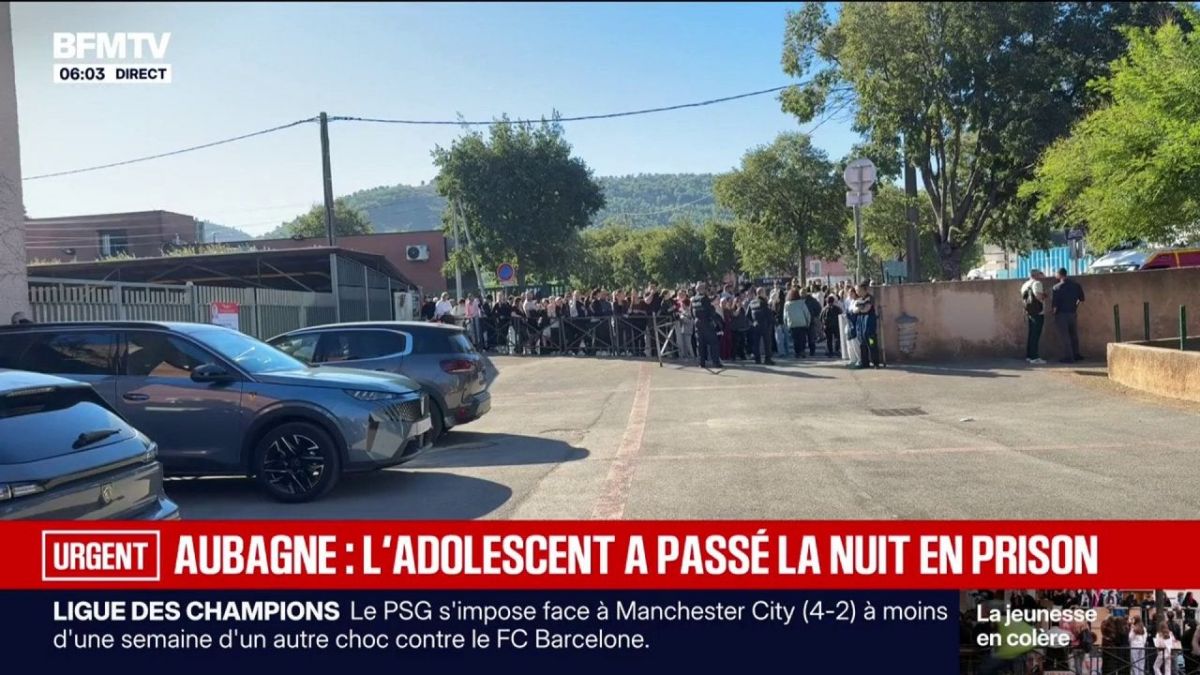
BFMTV 1w

At the trial of Duane Keffe D Davis, accused of orchestrating the murder of Tupac Shakur in revenge for humiliating his nephew, the prosecution speaks of visceral anger and highlights the complexity of a crime that remains unsolved three decades later. (translated)

"Une colère viscérale": au procès du meurtre de Tupac Shakur, l'accusation assure que Duane Davis a tué le rappeur "par vengeance"
L
Le Soir 1w

Duane "Keffe D" Davis, a former gang member, is being tried in Las Vegas for planning the murder of Tupac Shakur in 1996, an act that the prosecution describes as "revenge" after the rapper humiliated his nephew, while Davis pleads not guilty and contests the strength of the evidence presented against him. (translated)

Procès du meurtre de 2Pac : l’accusation dénonce un acte de « vengeance »

La vengeance est un plat qui se mange froid : Infantino avait tenté d'avoir la tête de Salman, le président de l'AFC, lors d'une entrevue avec le roi du Bahreïn en 2018 pour placer un Saoudien - le souverain avait refusé et huit ans plus tard, c'est l'inverse qui se produit avec l'aide de la CONCACAF et la FIFA Les trois confédérations ont commencé des discussions pour organiser potentiellement des compétitions entre elles (!) et annoncent clairement qu'Infantino doit démissionner maintenant (dans des termes polis) #Football #FIFA #Sport

Joblife 3w

On finit la semaine LFL par une belle vengeance ? Et en enchaine avec les VCT Play-ins ! https://t.co/cklOtrx8N2 https://t.co/cklOtrx8N2 #JOBLIFE #LFL #VCT #esports

À propos de François.e Alors alors, j’ai vu François.e, ce soir, le film apparemment polémique porté par Louis Morissette. Il y a, je crois, un quiproquo sur l’objet du film, et sur les raisons du peu d’enthousiasme du commun des mortels, qui ne le plébiscite pas. Le sujet : officiellement, il s’agit d’un film sur la transidentité, sur les trans, les personnes trans. C’est évidemment un peu le cas. Il nous est présenté de manière très militante, à la manière d’un film pédagogique destiné à une population retardataire, qu’il faut éduquer à cette réalité (ou rééduquer, c’est selon). On peut apprécier ou non les films à thèse, où certains passages sont en jaune fluo pour qu’on comprenne bien le message qu’on veut nous passer. Je ne dis pas que ce sujet ne mérite pas un film. C’est un sujet parmi d’autres, légitime en lui-même, et qui ne mérite pas d'hostilité en soi. On peut par ailleurs trouver que le sujet est très présent dans la vie culturelle et médiatique aujourd’hui. Le film tourne évidemment en ridicule toutes les questions qu’on peut avoir envers la théorie du genre (par exemple, suffit-il de se sentir femme pour être reconnu comme telle? Est-ce que l’identité est strictement subjective, sans ancrage dans une réalité biologique? Suffit-il qu’une personne se déclare d’un autre genre (et les identités de genre se multiplient) pour que l’ensemble de la société doive s’adapter, se transformer? Ces questions, lorsqu’elles sont posées dans le film, le sont par des personnages présentés comme des gros colons fermés d’esprit. On appréciera la subtilité du propos. Mais je l’ai dit, l’essentiel est ailleurs. Ce film a d’abord pour fonction de tourner en ridicule l’homme blanc, de l’humilier. C’est véritablement sa trame de fond. Point de départ : le personnage principal, François, joué par Louis Morissette, un homme blanc scénariste de cinquante ans, n’est plus capable de vivre de son métier parce que les autorités subventionnaires, les producteurs et les diffuseurs (autrement dit, ceux qui ont le pouvoir) ne veulent plus entendre parler des hommes blancs, ni même l’entendre parler lui-même. Autrement dit, il est discriminé en tant qu’homme, en tant que blanc, et en tant qu’homme blanc (et cela même s’il voulait proposer une comédie mettant en scène le malaise des hommes comme lui dans le monde qui est le nôtre). Cette réalité est connue, soit dit en passant. Elle l’est tellement qu’elle sert de point de départ au film. Cela pourrait faire un vrai sujet de film, ou de série : le mauvais sort réservé aux populations majoritaires occidentales. Mais le sujet n’est mentionné que comme prétexte «comique». Il n’a aucune légitimité. Mais dès lors que Louis Morissette coche la case trans sur le formulaire de subvention, magie, il obtient ce qu’il n’obtenait pas en tant qu’homme blanc. Il a sa subvention pour une série télé ! Les cordons de la bourse se délient désormais pour lui. Il y a donc une discrimination, ici. Selon votre genre, vous aurez ou non une subvention. Devenant trans, Morissette est soudainement valorisé par la société environnante. On le célèbre, on le chante, on lui reconnaît des vertus nouvelles. Sa fille, qui ne l’aimait pas vraiment, sauf lorsqu’il jouait le rôle de pourvoyeur capable de lui fournir un arsenal informatique digne de la NASA, se découvre soudainement une passion pour son père, qui devient trans. Elle veut même, avec sa petite amie, lancer une cagnotte pour l’amputer de ses parties intimes (oui oui, la grande opération). Sa femme, de qui il a divorcé, le redécouvre sous un jour favorable. Nous sommes à deux doigts de comprendre que s’il était devenu femme plus tôt, ils seraient restés ensemble. Plus il est trans, plus il est valorisé – même si on trouve des éléments réfractaires dans la culture (évidemment, quand en tan que femme trans, Françoise se fait battre dans la rue par trois brutes épaisses, la police refuse de prendre au sérieux son témoignage, et laisse croire qu’elle aurait mérité sa raclée). Quoi qu’il en soit, l’histoire se déploie. Un jour Françoise n’en peut plus et veut, pour différentes raisons, redevenir François. Il avoue qu’il n’est pas trans. Alors tout s’effondre, et il perd tout ce que lui avait donné sa nouvelle identité. Sa fille s’en détourne à nouveau. Sa femme est de nouveau déçue. Et il perd évidemment sa série télé – qui n’était intéressante que parce qu’il l’avait rédigé en collaboration avec une femme trans. Sans cette dernière, Louis Morissette était fini – on nous le dit d’ailleurs comme tel. À la fin, Louis Morrissette est simplement éjecté du domaine de la culture. Il n’y travaille plus. Il travaille dans une quincaillerie – c’est le sort qu’on réserve à l’homme blanc dans le monde qui vient, on veut, par esprit de vengeance, en faire un nouveau prolétaire. Il vent du bois, il parle du plywood. Mais voilà que la femme trans avec qui il avait écrit, et qui est désormais au cœur du système culturel comme auteure reconnue, se présente à lui, et lui propose un petit rôle dans la série 2 de sa saison. Quel rôle? Un rôle d’homme blanc mésadapté sans trop d’intérêt qui ne sera à l’écran qu’à la manière d’un quota. Un personnage qui meurt avant la fin de la saison 2. Et Louis Morissette, tenant à son sujet un propos hyper-dépréciatif, sur le mode de l’auto-critique haineuse, explique qu’il accepte. Élargissons le propos : c’est d’ailleurs le sort qu’on réserve à l’homme blanc dans l’utopie diversitaire : il ne sera plus qu’un quota ethnique ridicule, caricatural, le bois mort de l’humanité, qu’il faut encore représenter de temps en temps, mais seulement pour l’humilier. Et oui, à la fin, l’homme blanc doit mourir pour que le nouveau monde naisse. Louis Morissette, qui ne fait pas pitié dans la vie, et qui ne manque pas de talent, faut-il le rappeler, considère que l’échec relatif de son film s’explique par l’homophobie ou la transphobie supposée du public. Il est toutefois possible que cette vision du monde n’enthousiasme pas le public ordinaire, composé d’hommes et de femmes qui n’ont pas vraiment envie d’avoir un destin de détritus. Dès lors, ils boudent le film. Il y a des limites à se faire traiter comme un déchet. #Transidentité #Cinéma #Réflexion sociale

BFMTV Jul 21

Le 20 juillet, des frappes américaines ont été lancées en Iran, suscitant des tensions croissantes et évoquant une possible vengeance de l'ex-président Trump, tandis que la France a exprimé sa préoccupation face aux arrestations de ses diplomates en Iran. #Trump #Iran #BFMGrandSoir

Vengeance de Trump, frappes en cours en Iran - 20/07
Cerfia Jul 12

🇫🇷🇮🇷 FLASH | Emmanuel Macron figure sur une LISTE publiée par un quotidien iranien de 13 personnalités qui devraient, selon lui, « payer » pour la MORT d'Ali Khamenei. Donald Trump, Benyamin Netanyahou, Giorgia Meloni, Friedrich Merz, Keir Starmer et Marco Rubio y figurent également.Cette publication intervient après un message attribué au nouveau guide suprême, Mojtaba Khamenei, affirmant que la « vengeance » était « inévitable ». À ce stade, les autorités iraniennes n'ont pas officiellement repris à leur compte cette liste. #Macron #Iran #Khamenei

Regelegorila Jul 12

S'il vous plaît, arrêtez avec cette take. Je comprends l'envie primale de vengeance de l'atrocité mais c'est mal connaître le monde autour des agressions pédocriminelles. C'est plus complexe et les exécuter ne changerait rien, au contraire ça aurait un impact négatif sur l'ensemble de la société. #Justice #Réflexion #Société

Cette vengeance est la volonté de notre nation et elle doit être accomplie, inévitablement. Ces criminels, dont les noms figurent sur une liste, emporteront dans leur tombe le souhait d'une mort paisible dans leur lit

Guerre au Moyen-Orient: un journal iranien place Donald Trump, Emmanuel Macron et d'autres dirigeants sur une liste pour venger la mort de l'ayatollah Ali Khamenei
www.bfmtv.com
BFMTV Jul 12

Un journal iranien, Hamshahri, a publié une liste de dirigeants, incluant Donald Trump et Emmanuel Macron, désignés pour venger la mort de l'ayatollah Ali Khamenei, affirmant que cette vengeance est inévitable selon son fils Mojtaba Khamenei, dans un contexte de tensions croissantes entre l'Iran et les États-Unis. #Iran #MoyenOrient #Vengeance

Guerre au Moyen-Orient: un journal iranien place Donald Trump, Emmanuel Macron et d'autres dirigeants sur une liste pour venger la mort de l'ayatollah Ali Khamenei

Cette vengeance est la volonté de notre nation et elle doit être accomplie, inévitablement. Ces criminels, dont les noms figurent sur une liste, emporteront dans leur tombe le souhait d'une mort paisible dans leur lit.

Un quotidien publie une liste des personnes devant payer pour la mort Khamenei : voici les dirigeants qui y figurent
www.lalibre.be
La Libre.be Jul 12

Le journal iranien Hamshahri a publié une liste de personnalités, dont Donald Trump, Benjamin Netanyahu et Emmanuel Macron, désignant celles qui, selon les autorités iraniennes, doivent payer pour la mort de l'ayatollah Ali Khamenei, tué dans une attaque israélo-américaine. #Khamenei #MoyenOrient #vengeance

Un quotidien publie une liste des personnes devant payer pour la mort Khamenei : voici les dirigeants qui y figurent

Cette vengeance est la volonté de notre nation et elle doit être accomplie, inévitablement. Ces criminels, dont les noms figurent sur une liste, emporteront dans leur tombe le souhait d’une mort paisible dans leur lit

EN DIRECT Guerre au Moyen-Orient : Les Etats-Unis frappent 140 cibles iraniennes, l’Iran vise les pays du Golfe…
www.20minutes.fr

We pledge to avenge the blood of the martyred leader and all the martyrs of these two wars from the criminal and disgraced killers. Vengeance is the will of our nation and must inevitably be carried out. The matter depends neither on my personal existence nor on that of other officials. Whether we are present or not, it will come to pass. Those responsible will take the wish for a peaceful death in their beds to their graves.

Iran supreme leader calls for revenge after father's burial
www.bbc.co.uk
2
20minutes Jul 11

Le nouveau guide suprême iranien, Mojtaba Khamenei, a déclaré que la « vengeance » pour la mort de son père, tué lors des bombardements israélo-américains, est « inévitable », alors que les tensions entre l'Iran et les États-Unis restent vives, avec des frappes réciproques et des accusations de part et d'autre. #Iran #Vengeance #MojtabaKhamenei

Guerre en Iran : Pour le nouveau guide suprême iranien, la « vengeance » pour son père est « inévitable »

Je vengerai mon père; la vengeance est inévitable.

Le nouveau Guide suprême iranien menace les Etats-Unis et promet de venger son père
www.lesoir.be

Je jure de venger la mort de mon père : la vengeance doit s'accomplir inévitablement.

Le guide suprême iranien affirme que "la vengeance doit s'accomplir inévitablement" après la mort d'Ali Khamenei
www.franceinfo.fr
Franceinfo Jul 11

Le guide suprême iranien, Mojtaba Khamenei, a déclaré que la vengeance pour la mort de son père, Ali Khamenei, tué lors de frappes israélo-américaines, doit s'accomplir inévitablement, promettant de venger leur sang et accusant les assassins criminels tout en mentionnant une liste de cibles. #Iran #Vengeance #MoyenOrient

Le guide suprême iranien affirme que "la vengeance doit s'accomplir inévitablement" après la mort d'Ali Khamenei