BETA nonprofit public democratic european moderated

Search

#YE

I've just returned from a trip to Ukraine—Lviv and Kyiv. It was, as you can imagine, a harrowing yet immensely inspiring experience, one that will stay with me for a long time. I'll write more about it soon. Left: the infamous Bridge of Death in Irpin, a residential suburb of https://t.co/XJyFfJf3An #Ukraine #Lviv #Kyiv #UA


FLORENTIA 48m

Μου αρέσει που οι γείτονες ζητούν αποδείξεις για την Σφαγή στη Χίο... Οι πηγές (εκτός από δεκάδες πρωτογενείς, σύγχρονες πηγές της εποχής,οθωμανικές, ευρωπαϊκές και διπλωματικές, οι οποίες προκάλεσαν το τεράστιο κύμα του Φιλελληνισμού στην Ευρώπη), βρίσκονται στα ίδια τα λογιστικά βιβλία των προγόνων τους που μετρούσαν τις ψυχές των Χιωτών ως φορολογήσιμα εμπορεύματα και εξέδιδαν αποδείξεις για τις γυναίκες και τα παιδιά που πουλούσαν στα σκλαβοπάζαρα. Τα ίδια τα οθωμανικά αρχεία αποδεικνύουν ότι το κράτος αντιμετώπισε τη σφαγή και την υποδούλωση των Χιωτών ως μια εξαιρετικά κερδοφόρα εμπορική δραστηριότητα, φορολογώντας το σκλαβοπάζαρο κεφαλή προς κεφαλή! Στο οθωμανικό δίκαιο υπήρχε ο επίσημος φόρος Pencik (από το περσικό penc-yek, που σημαίνει το ένα πέμπτο). Για κάθε αιχμάλωτο που πιανόταν στη Χίο και μεταφερόταν στα σκλαβοπάζαρα (για παράδειγμα το Avret Pazarı, το παζάρι γυναικών της Κωνσταντινούπολης), ο έμπορος ή ο στρατιώτης έπρεπε να πληρώσει φόρο στο οθωμανικό θησαυροφυλάκιο.Ο έλεγχος γινόταν από τον κρατικό αξιωματούχο, τον Επόπτης των Σκλαβοπάζαρων δηλαδή. Μόλις πληρωνόταν ο φόρος ανά κεφαλή, το κράτος εξέδιδε ένα επίσημο πιστοποιητικό ιδιοκτησίας, το Tezkere (ένα είδος "απόδειξης" για τον σκλάβο). Σύμφωνα με τις αναφορές των ξένων διπλωματών, όπως του Άγγλου κληρικού Robert Walsh που βρισκόταν στην Κωνσταντινούπολη, μέχρι την 1η Μαΐου 1822 είχαν εκδοθεί 41.000 επίσημα teskeres μόνο για τους σκλάβους που προέρχονταν από τη Χίο! Το οθωμανικό κράτος εισέπραττε κανονικά το ποσοστό του (συνήθως το 1/40 της αξίας του σκλάβου για τοπικές αγοραπωλησίες ή το 20% για λάφυρα πολέμου), βγάζοντας τεράστια κέρδη από την καταστροφή του νησιού. Οι Χιώτισσες πουλιόνταν στους δρόμους για 100 γρόσια το κεφάλι, και το κράτος κρατούσε το μερίδιό του... Απόδειξη; Το Οθωμανικό Κατάστιχο D330, το οποίο φυλάσσεται σήμερα στην Εθνική Βιβλιοθήκη της Βουλγαρίας...και είναι απογραφή των περιουσιών που δημεύτηκαν από τους Χιώτες οι οποίοι συμμετείχαν ή θεωρήθηκε ότι συμμετείχαν στην εξέγερση του 1822. Συγκεκριμένα για κάθε ιδιοκτησία σημειώνει:την κατάσταση του ακινήτου (καμένο, γκρεμισμένο, ισοπεδωμένο ή άθικτο), το όνομα του ιδιοκτήτη, την τύχη του (με κόκκινη μελάνι: νεκρός, εκτελεσμένος, φυγάς, αιχμάλωτος, αγνοούμενος ή παρών). Το έγγραφο αποτυπώνει δηλαδή, με την ψυχρή γραφειοκρατική ματιά του κατακτητή, τις άμεσες συνέπειες της σφαγής: μαζική φυσική εξόντωση, φυγή, αιχμαλωσία, ολοκληρωτική καταστροφή του οικιστικού ιστού και δήμευση των περιουσιών που πέρασαν στο οθωμανικό δημόσιο. Αποτελεί μία από τις σημαντικότερες πρωτογενείς πηγές για το μέγεθος της καταστροφής στην πόλη και τα γύρω χωριά. Το πρωτότυπο εντοπίστηκε το 1981 από τον Αναστάσιο Ιορδάνογλου στη Εθνική Βιβλιοθήκη "Άγιοι Κύριλλος και Μεθόδιος" της Σόφιας και εκδόθηκε μεταφρασμένο και σχολιασμένο το 2025.Καταγράφηκαν 2.275 οικίες, από τις οποίες μόνο 72 παρέμειναν αβλαβείς (περίπου 3%). Καταγράφηκαν δεκάδες εκκλησίες (περί τις 66 στις συγκεκριμένες περιοχές), οι περισσότερες κατεστραμμένες ή καμένες. Στο σύνολο του νησιού διασώθηκαν μόλις 72 εκκλησίες από εκατοντάδες που υπήρχαν πριν. Καταγράφονται επίσης καταστήματα, φούρνοι, ανεμόμυλοι, χωράφια, αμπέλια, δέντρα και άλλα περιουσιακά στοιχεία, με την ίδια εικόνα εκτεταμένης λεηλασίας και πυρπόλησης.Από την τύχη των ιδιοκτητών που σημειώνεται στο κατάστιχο οι μελετητές συνάγουν ότι στις απογραφείσες περιοχές περίπου το 1% του πληθυσμού παρέμεινε εν ζωή, το 41% ήταν νεκροί και το 58% αγνοούμενοι (φυγάδες ή αιχμάλωτοι). Η σφαγή δεν έγινε στο κρυφό, έγινε με κρατική σφραγίδα και φορολογικές δηλώσεις! #ΣφαγήτηςΧίου #Ιστορία #ΟθωμανικήΙστορία

BFMTV 1h

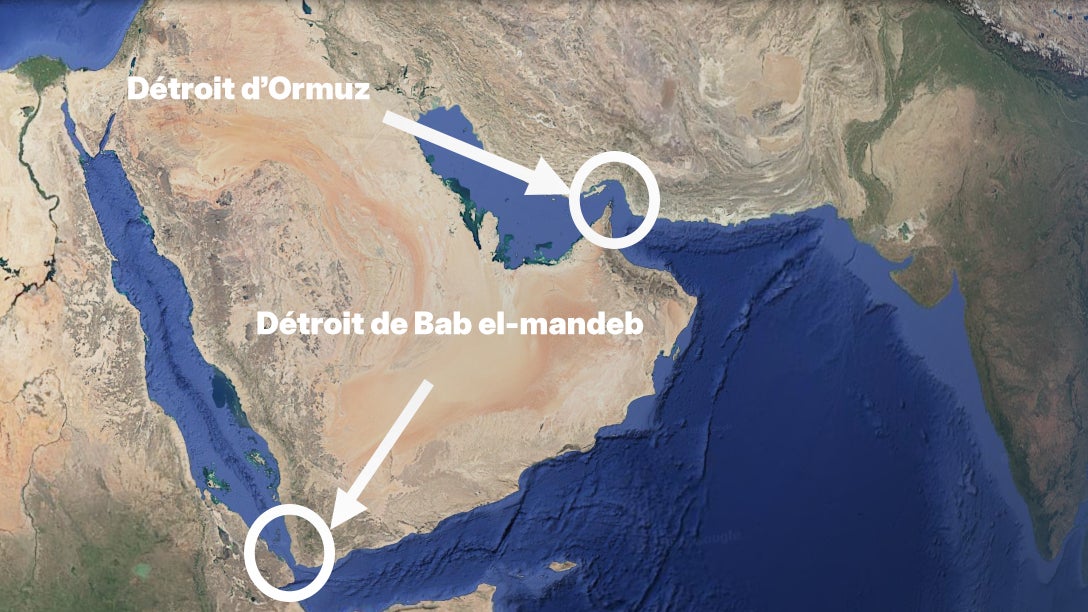
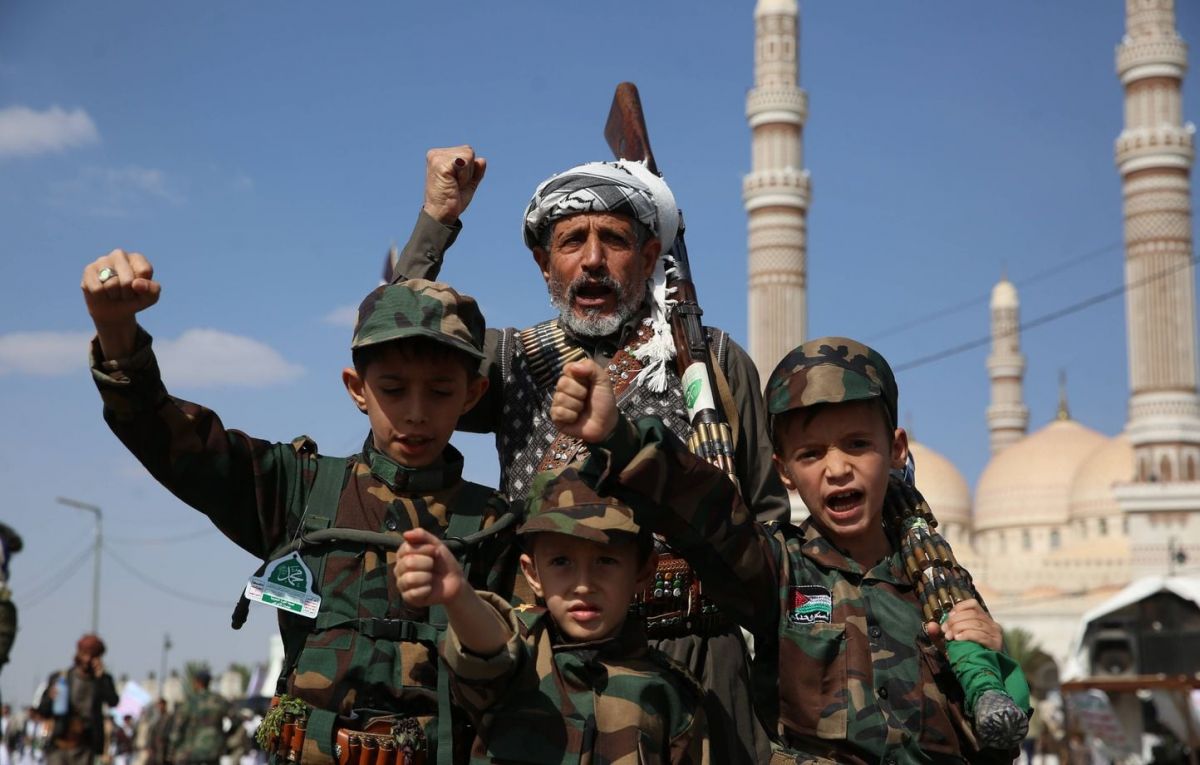
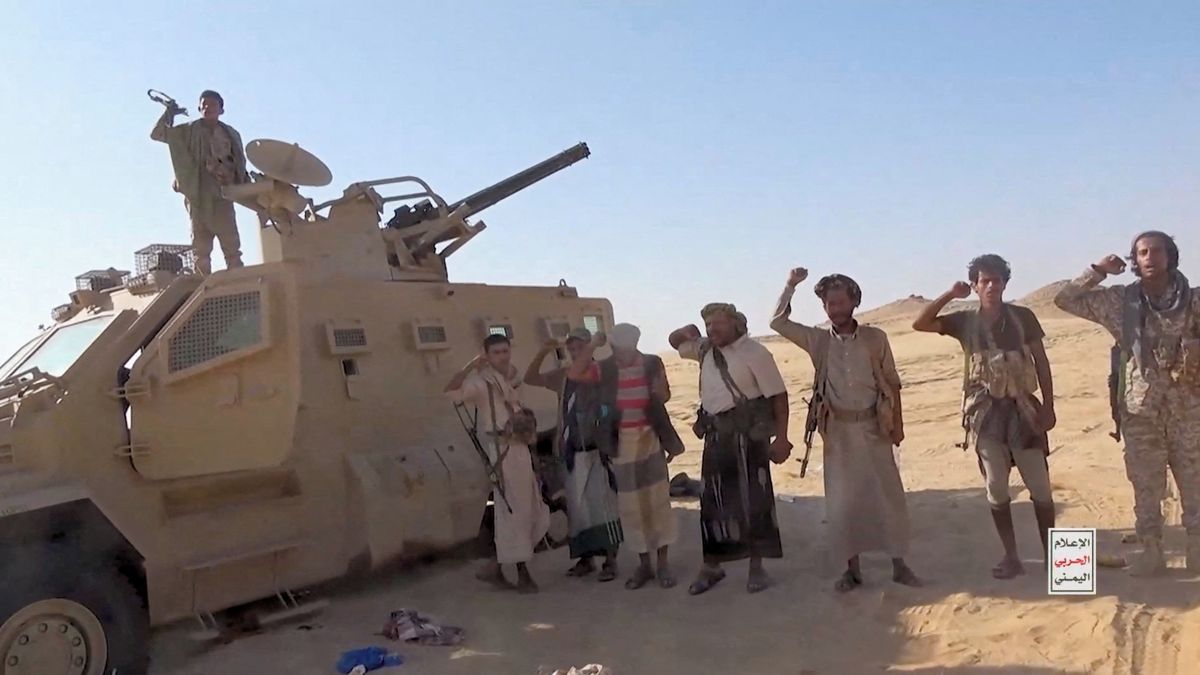
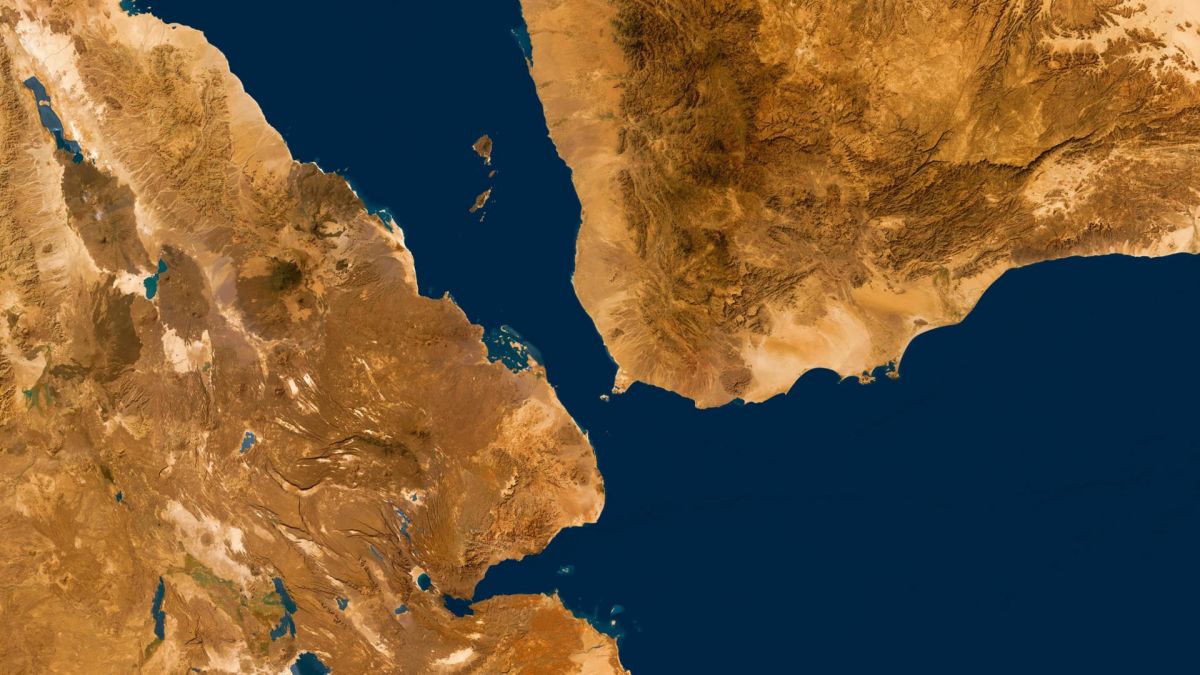
The resumption of hostilities in Yemen and the increased control of the Houthis over the Bab el-Mandeb Strait are significantly disrupting the traffic of Saudi oil tankers, with less than a third of the usual exports observed in recent days. (translated)

Moins d'un tiers du trafic habituel: la circulation des pétroliers saoudiens perturbée dans le détroit de Bab el-Mandeb, "l'autre porte" vers la péninsule arabique

Yesilgöz sluit begrotingsakkoord over links niet uit: ’In theorie kan het’ Zoals al vaker gememoreerd: de @VVD is een linkse partij, het heeft rechts opnieuw verraden en zal dat in de toekomst opnieuw doen. https://t.co/JoIkDTQu7B #politiek #VVD #begrotingsakkoord

"CIVICO 93": FROM SAN SEVERO TO STANFORD UNIVERSITY: THE 'SIX-SEAT REVOLUTION' OF TEATRO EDICOLA" SOURCE: https://www.civico93.it/da-san-severo-alla-stanford-university-la-rivoluzione-a-sei-posti-del-teatro-edicola/ SAN SEVERO (FG) - The scholarly reportage by Luciano Magaldi Sardella on the micro-theatre of Francesco Gravino has appeared in the most authoritative journal in the world in the field of social innovation: six chairs and four square metres that are transforming the manner in which we conceive theatre and the city. The "Stanford Social Innovation Review (SSIR)", the academic review published by the Stanford Center on Philanthropy and Civil Society of the prestigious Stanford University, ranked second in the world in the Shanghai Ranking of World Universities, constitutes the global point of reference for researchers, policy-makers and practitioners of innovative enterprise and philanthropy. It has published the reportage "The Six-Seat Revolution" on the Teatro Edicola of San Severo, the smallest theatre in the world by dimension and capacity, born from the intuition of Francesco Gravino, artistic director of the company Foyer '97. Its author is Luciano Magaldi Sardella, an independent researcher and international journalist, a native of Orta Nova with maternal roots in San Severo, already the author of studies published in international academic journals. The piece appeared in the autumnal edition [Fall 2026] of the academic review, within the section dedicated to Arts and Culture. A presence that projects San Severo, and more generally the Capitanata, into the international élite of research on cultural and urban innovation. The theatre originates from a disused newsstand It all began on 27th March 2026, World Theatre Day, in the Piazza Municipio in San Severo. A newsstand disused for years in Via Matteo Tondi raised its shutter to reveal, in place of newspapers and cigarettes, an actor upon the stage. Within: six chairs. Every fifteen minutes, a new audience takes its place. Taking inspiration from the televisual format of Edicola Fiore by the well-known Sicilian radio and television presenter, there was born the Teatro Edicola, a structure now recognised in the media as the smallest theatre in the world by dimension and capacity: four square metres in total, with a stage area of less than two metres. Gravino has led Foyer '97 for almost thirty years, constructing a rigorous artistic trajectory within a context, that of southern Italy, historically penalised from the standpoint of public funding for culture. And yet, when he beheld that empty newsstand, he chose the path of provocation: to transform the bare minimum into a manifesto on the very meaning of theatre. Gravino has led Foyer '97 for almost thirty years, constructing a rigorous artistic trajectory within a context, that of southern Italy, historically penalised from the standpoint of public funding for culture. And yet, when he beheld that empty newsstand, he chose the path of provocation: to transform the bare minimum into a manifesto on the very meaning of theatre. The model and its measurable effects The inaugural season lasted three days. All performances were sold out. In a single afternoon, more than sixty persons attended the representations. The cost of the entire pilot operation was less than three thousand dollars. The formula is radical in its constitutive elements: ● performances of five to twelve minutes' duration, conceived expressly for the space ● rotation of the audience every fifteen minutes ● direct and ineluctable visual contact between actor and spectator ● no architectural or psychological distance between stage and auditorium ● ticket offered at five euros per person, with a hybrid economic model providing for municipal support, local sponsors, and box-office receipts. According to the analysis published in the "Stanford Social Innovation Review", the Teatro Edicola represents a replicable model of urban regeneration at low cost and high impact, capable of reactivating abandoned commercial spaces [newsstands, tobacconists, telephone boxes] without the necessity for major infrastructural investment. The voice of him who built it all Francesco Gravino has no doubt as to the meaning of the undertaking: "One does not need grand theatres to change a fragment of a city. What is needed is a good idea and the courage to restore to the community a space that has lost its function." And on the import of the international recognition: "Teatro Edicola was born to demonstrate that a place of encounter and culture may come into being anywhere, even in two square metres. That today this work should be studied at an international level and that requests for information should arrive from cities such as Lucca and Rome is confirmation that we are upon the right path." The director has also explicated the symbolic choice of the site: the newsstand was the point at which each morning one would pause, catch up on news, recognise oneself as a community. Its disappearance lacerated a precise social fabric. To restore to it a cultural function is to mend that tissue at the very point where it was torn. The challenges: scalability, institutional recognition, rootedness The SSIR reportage does not confine itself to celebrating the project but analyses also the critical nodes. The first is sustainability over time: an activation of three days, however successful, does not yet constitute a stable programme, a veritable seasonal programme (at weekends from spring to autumn) with a rotating roster of local and regional companies. The second node concerns replicability without loss of identity: the Teatro Edicola functions also by virtue of the profound roots of Foyer '97 in the territory of San Severo. To transplant the model elsewhere requires not merely a physical kit, but an entire process of community building. The third obstacle is institutional: in a system of public funding that rewards organisations with consolidated premises and predictable output metrics, a project deliberately experimental, hyper-localist and by its very nature impermanent struggles to gain access to the ordinary channels of the National Fund for Live Performance (Fondo Nazionale per lo Spettacolo dal Vivo - FNSV) of the Ministry of Culture. A lesson that travels beyond Puglia In the Stanford Social Innovation Review the author concludes that the intuitions of the Teatro Edicola transcend the context of San Severo: in any community wherein cultural institutions struggle to reach youthful, diverse, or economically marginal publics, the principle of proximity proves disruptive: to meet people where they already are, in the spaces they inhabit daily. From the populous centre of Daunia to the pages of Stanford University: San Severo and its newsstand demonstrate that six chairs, four square metres, and a vision are sufficient to alter the way in which a city conceives itself. And to offer the world a model that costs less than one might suppose but is worth a great deal more than one might imagine.

DA SAN SEVERO ALLA STANFORD UNIVERSITY: LA “RIVOLUZIONE A SEI POSTI” DEL TEATRO EDICOLA - Civico93 | Be original

Информацияна, която съобщих на Си Зин Пин. Ключово значение за интелектуалността има УВ облъчването, което се усилва от север на юг. В Южна Европа то е 30% по-силно от в Северна Европа, а на екватора е 70% по силно. Ефектът върху хората е в синтезирането в кожата на витамин Д, който се трансформира в полови хормони. Те определят външния вид, емоционалността и интелектуалността. Северняците са интелектуални, южняците са емоционални. Емоционалността задушава разума. Всеки градус движение на север и на юг усилват южняшките и северняшките качества. В южните части на южното полукълбо се наблюдава дебилност, в Австралия и Южна Америка. Икономиката и цивилизацията са продукт на интелектуалността. Интелектуалността е в научно-откривателското мислене насочено към решаване на проблемите на живота. Ключово значение има оценката на важните факти, изхвърляне на маловажните факти и създаване на тяхна основа на нови хипотези и теории. Разбирането на важни открития на другите хора ги прави собствено притежание и това също е научно-откривателско мислене. Всичко друго не е интелектуалност. Ключово значение за развитието на икономиката имат иновациите и те стават все по важни. Това е внедряване на нови научни открития в практиката. Южняците нямат научно мислене, нямат наука и научни открития и абсолютно никакви иновации. Те всичко заимстват от Северните Европейци. Те имат тези качества и само те имат иновации. Лидираща роля имат европейските преселници в САЩ. Многобройността на интелектуалното население е много важно за проявленията на интелектуалността. Това е точно като критичната маса при атомния взрив. Руснаците са най-интелектуални, но те нямат механизма осъществяващ иновациите свободната пазарна икономика. Творческа икономика може да има само при ниски данъци и свобода от опеката на властта. Двигател са супер високите печалби. Нови открития се внедряват в практиката защото те са най-печеливши. Високото данъчно облагане което е в полза на властта, изземва парите на икономиката и на гражданите, което убива производството, потреблението и творческите иновации в икономиката, в следствие на възможността успешните, конкурентни фирми да имат свръх печалби. Именно свръх печалби, защото те са единствения мощен стимулатор за решаването на новаторските внедрявания, които са най-рискови и най-опасни от загуба и фалит. Точно това който не е разбрал нищо не разбира от модерна икономика. Интелектуалността е познаване на истината. Словото е красиво и убедително, когато съобщава истини. Слово не основано на истината е фалшиво маниерничене. В френките автори на афоризми Ларош Фуко, Лабруер, Блез Паскал, Маркиз Вовнарк има много голяма концентрация на истини за живота и те развиват вкус към истината е към лъжата. Големият немски философ Хегел твърди, че китайското мислене е митологично, ненаучно и само античното Гръцко и европейското мислене е научно. Here is the information I conveyed to Xi Jinping. UV radiation plays a key role in intellect, and its intensity increases from north to south. In Southern Europe, it is 30% stronger than in Northern Europe, while at the equator, it is 70% stronger. Its effect on humans involves the synthesis of Vitamin D in the skin, which is then transformed into sex hormones. These hormones determine physical appearance, emotionality, and intellect. Northerners are intellectual; Southerners are emotional. Emotionallity stifles reason. Every degree of movement northward or southward intensifies these respective "Southern" or "Northern" traits. Instances of intellectual deficiency are observed in the southern parts of the Southern Hemisphere—specifically in Australia and South America. Economy and civilisation are products of intellect. Intellect manifests as scientific, discovery-oriented thinking aimed at solving life's problems. Key factors include evaluating significant facts, discarding trivial ones, and formulating new hypotheses and theories based on the remaining information. Grasping the important discoveries made by others—thereby making them one's own—also constitutes scientific, discovery-oriented thinking. Anything else falls outside the realm of intellect. Innovation is crucial for economic development and is becoming increasingly important; it involves the practical application of new scientific discoveries. Southerners lack scientific thinking, science, and scientific discoveries, and they produce absolutely no innovations. They borrow everything from Northern Europeans. Northern Europeans possess these qualities and are the sole source of innovation. European settlers in the USA play a leading role in this regard. The size of the intellectual population is crucial for the manifestation of intellectuality; it is akin to the critical mass required for a nuclear explosion. Russians possess a high level of intellectuality, yet they lack the mechanism that drives innovation: the free-market economy. A creative economy can only flourish amidst low taxes and freedom from state control. Super-high profits serve as the driving force; new discoveries are put into practice precisely because they yield the greatest returns. High taxation—which benefits the state—drains capital from the economy and citizens alike, stifling production, consumption, and creative innovation. It eliminates the possibility for successful, competitive firms to generate "super-profits"—profits that are essential, as they provide the only powerful incentive to pursue innovative implementations, which carry the highest risks of loss and bankruptcy. Anyone who fails to grasp this point understands nothing about the modern economy. Intellectuality is the knowledge of truth. Speech is beautiful and persuasive only when it conveys truth; speech not grounded in truth is merely hollow affectation. The French aphorists—La Rochefoucauld, La Bruyère, Blaise Pascal, and the Marquis de Vauvenargues—offer a profound concentration of truths about life, cultivating a discerning taste for truth versus falsehood. The great German philosopher Hegel argued that Chinese thought is mythological and unscientific, asserting that only ancient Greek and European modes of thought are truly scientific.

H

No victims in any category below have been double-counted. Outside Peru, no war-related deaths or imprisonments have been included. Communism vs. Villagers 400,000 dead — Cambodian rural (1) 19.5 million dead — Chinese peasants (2) 250,000 dead — Ethiopian nomads (3) 5 million dead — Soviet peasants (4) 340,000 dead — Tibetan rural (5) Communism vs. Landowners 3 million dead — Chinese landowners (6) 100,000 dead — Vietnamese landowners (8) Note: Soviet kulaks are counted among the villagers. Communism vs. Religion 47,000 dead — Cambodian Buddhists (9) 13,000 imprisoned — Czech priests / religious (10) 7,000 imprisoned — Mozambican Jehovah’s Witnesses (11) 100,000 imprisoned — North Korean Christians (12) 2,100 imprisoned — Polish priests & Jehovah’s Witnesses (13) 200,000 dead — Soviet clergy (15) 2,000 dead — Tibetan monks & pilgrims (18) 400 dead — Romanian Christians (14) Moreover, Christians suffered the following in Romanian prison: In a “baptism of immersion,” inmates’ heads were plunged into buckets of urine and feces, while guards chanted baptismal rites. Near the point of drowning the Christian’s head was let up for air and then plunged back into the sewage (65). Communism vs. Cossacks 400,000 dead or deported ethnics (20) Photo: Bolshevik instructions on “the need to do away with the cossacks.” (21) “Order no.7: In the event of an unauthorized exit of a registered [Cossack] family, the family shall be shot.” “Order no. 8: This execution shall be carried out among every family member.” “Order no. 9: All property of the executed [Cossack] shall be confiscated and given to the poor.” Communism vs. Native Americans 6,000 dead — Ashaninka (Peru/luminoso-22) 5,000 imprisoned — Ashaninka (Peru/luminoso-22) 10,000 forcibly relocated — Ashaninka (Peru/luminoso-22) 35 destroyed — Ashaninka communities (Peru/luminoso-22) 35,000 imprisoned or forcibly relocated — Nicaraguan tribesmen (Sandinistas-23) Communism vs. Unclassified Dissidents* 5,000 dead — Albanian dissidents (24) 10,000 dead — Angolan dissidents (25) 29,000 dead — Bulgarian dissidents (26) 1 million dead — Cambodian dissidents (27) 43 million dead — Chinese dissidents (28) 16,000 dead — Cuban dissidents (29) Moreover, in Cuba’s concentration camps, inmates faced the following “punishments.” They were forced to “cut grass with their teeth,” endure “mock executions,” live in iron cages “1 meter wide, 1.8 meters high,” sit for hours in toilet ditches, withstand shock treatment, die by the hundreds from starvation and lack of medical attention (30). 44,000 dead — East German dissidents (31) 10,000 dead — Ethiopian dissidents (32) 50,000 dead — Hungarian dissidents (33) 3,000 dead — Nicaraguan dissidents (34) Moreover, 11,000 Nicaraguans were tortured at the hands of the Sandinistas. This included their being skinned alive & then executed; drawn & quartered; forced to watch wives and daughters sexually assaulted; caged in cubicles less than a square meter; “punished” via electric shock; deprived food and water (35). 1.6 million dead — North Korean dissidents (36) 21,857 dead — Polish dissidents (37) 120,000 dead — Romanian dissidents (38) 8 million dead — Soviet dissidents (39) 425,000 dead — Tibetan dissidents (40) Moreover, Tibetans suffered the following atrocities at the hands of the Chinese. They faced: crucifixion drowning beheading boiling alive burying alive mutilation (41) Communism vs. Gay Rights 25,000 imprisoned — Cuban gays and other “deviants” (42) 500 dead — Peruvian gays, bisexuals, and transgendered (43) 11,000 arrested — Polish gays (44) 100,000s imprisoned — Soviet gays in slave labor camps (45) Moreover, Chinese gays were targeted for persecution although numbers are impossible to quantify (46). Communism vs. Collective Laborers 160 dead — East German strikers (47) demonstrators killed after protesting a 10% increase in work quotas. 110 dead — Nicaraguan strikers executed by the Sandinistas after demanding back pay (48). 31 dead — Novocherkassk strikers (Kruschev) 24 killed on the spot; 7 later executed; over 100 workers arrested. (49) 51 dead — Peruvian union leaders (50) 106 dead — Polish strikers Poznan demonstrators killed after protesting working conditions & pay issues; others killed in later strikes; thousands attacked by military (51). 3,000 dead — Soviet strikers (Lenin / Trotsky) some shot / others, as N. Werth describes, “loaded onto barges and then thrown by the hundreds into the Volga with stones around their necks” (52). Moreover; Massive factory protests in China — strikers beaten back by 30,000 red soldiers after disputing wages (53). Striking outlawed in Cuba (54). Organizers sentenced to as many as 26 years in prison (55).

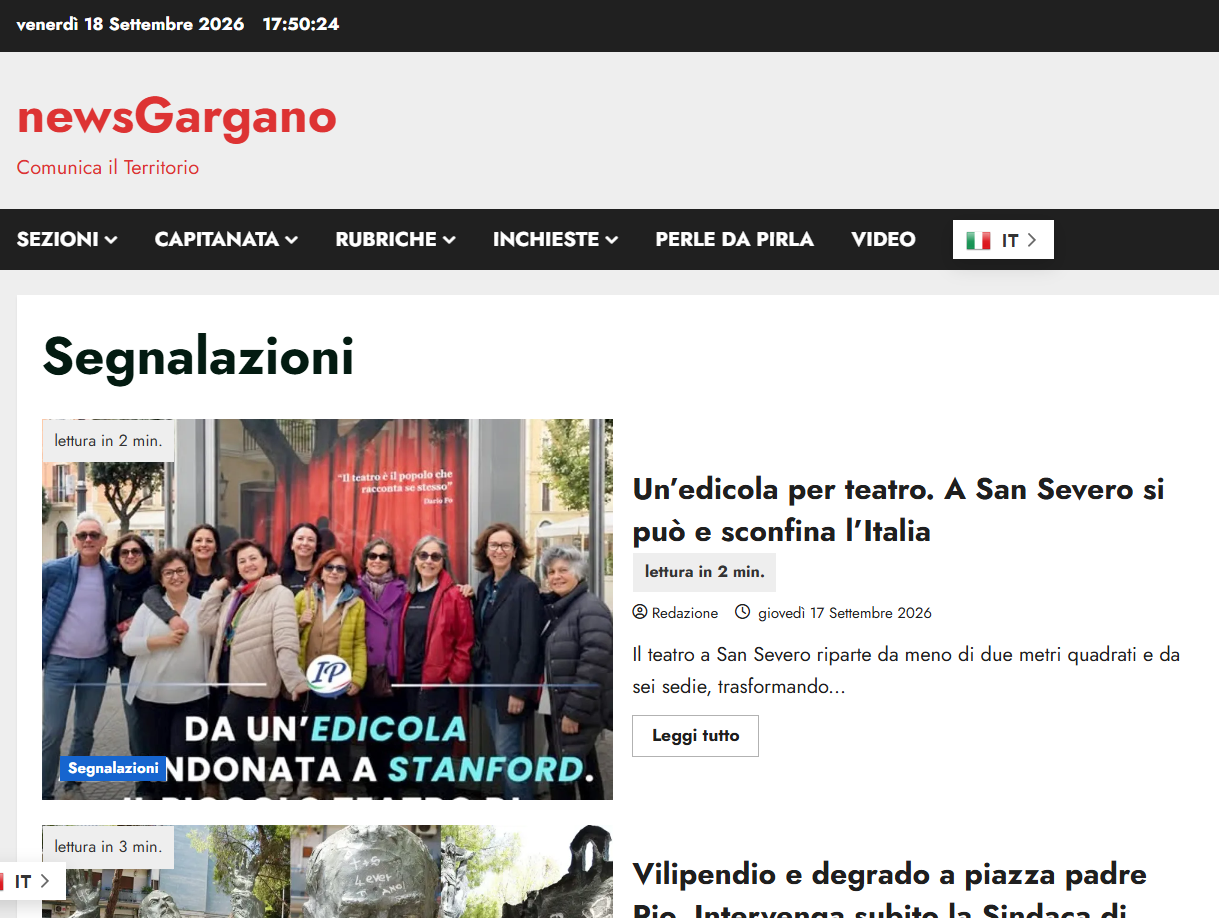
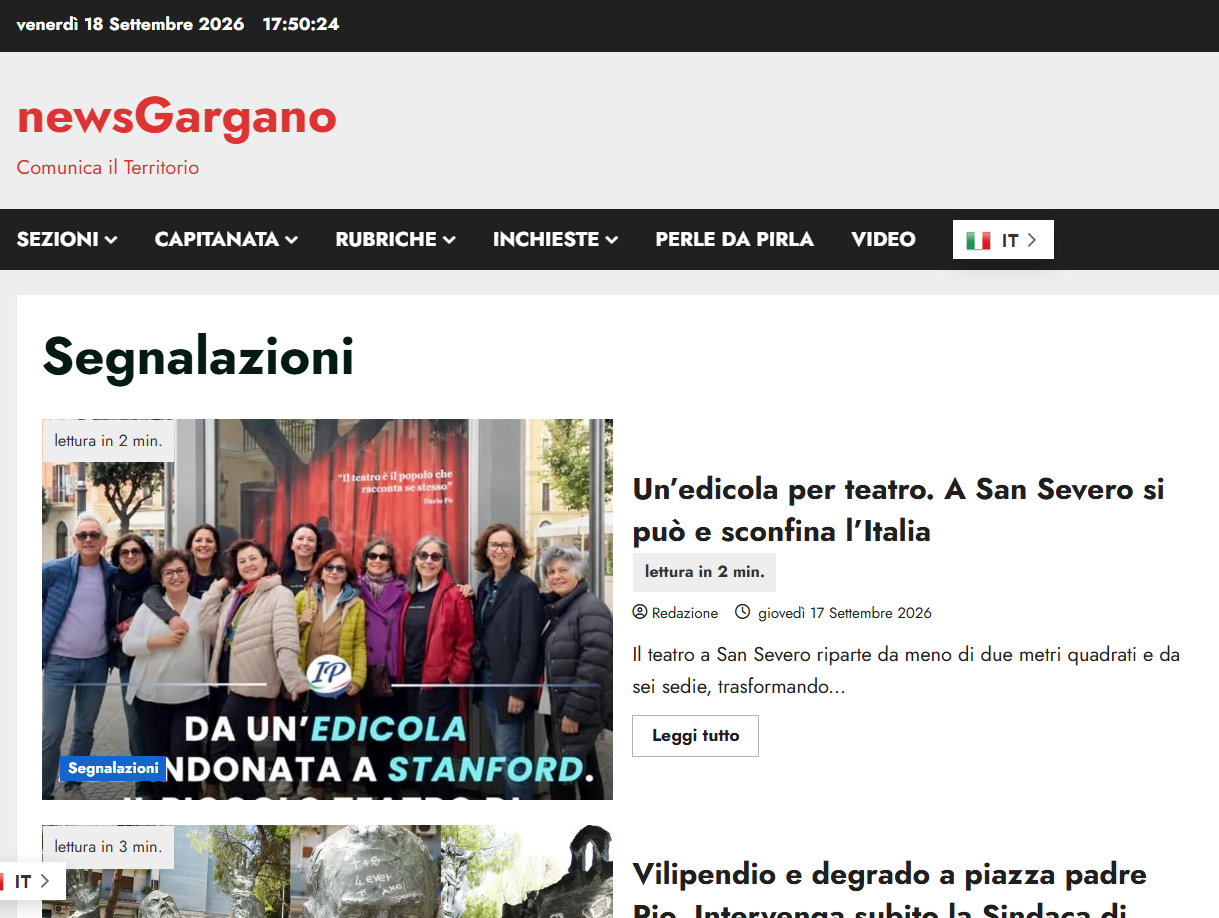
"NEWS GARGANO": A KIOSK FOR A THEATRE: IN SAN SEVERO IT CAN BE DONE, AND ITS ECHO EXTENDS BEYOND ITALY SOURCE: https://www.newsgargano.com/unedicola-per-teatro-a-san-severo-si-puo-e-sconfina-litalia/ SAN SEVERO (FG) - Theatre in San Severo is reborn from less than two square metres and six chairs, transmuting a symbol of urban blight into a small international cause célèbre. The virtuous enterprise has been revived by the company Foyer '97, under the artistic direction of Francesco Gravino, protagonist of a project of cultural regeneration that is now transcending the confines of the Province of Foggia. At the heart of the intervention lies the reclamation of an abandoned newsstand in Via Tondi, for years a disused space and now restored to the city in an unprecedented guise. Where once there was a lowered shutter, theatre is now made: but six spectators at a time, actors at but a few paces from their audience, and performances of brief duration, in a direct and radical commerce between stage and city. The experiment, inaugurated on 27th March, has yielded figures that bespeak a tangible cultural need. More than sixty persons attended the performances in a single afternoon, and the three days of the inaugural season were sold out, demonstrating that proximity and quality may yet generate community even in the most residual of spaces. Yet the story of San Severo has swiftly outgrown its local boundaries. In September 2026, the Stanford Social Innovation Review dedicates to the project the reportage "The Six-Seat Revolution", authored by Luciano Magaldi Sardella, researcher, academic and international journalist from Orta Nova of Sanseverese maternal lineage. The work is described by SSIR as: "A theater director transformed an abandoned newsstand into a radically new theatrical experience that is helping to revive the historic center of a Southern Italian town." The Apulian experience is observed not merely for its theatrical originality, but as a replicable paradigm of low-cost social innovation and urban regeneration, capable of activating cultural capital without recourse to grand structures or lavish investment. "One does not require grand theatres to transform a quarter of a city. What is required is a sound idea and the courage to restore to the collectivity a space that has lost its function," emphasised the artistic director Francesco Gravino. "Teatro Edicola was conceived to demonstrate that a locus of encounter and culture may arise anywhere, even within two square metres. That this endeavour should now be studied at an international level, and that enquiries should arrive from cities such as Lucca and Rome, is confirmation that we are upon the right path." The valorisation and preservation of the urban and cultural fabric must inevitably proceed through the creative reclamation of forsaken places. From a derelict newsstand with scarcely six seats to a project capable of commanding international attention: sometimes, to regenerate a city, one need not build, but re-inhabit.

Un'edicola per teatro. A San Severo si può e sconfina l'Italia
O

🚨3-6 ans : les 8 besoins que tout le monde devrait connaître par cœur 📒 Les clés de l’enfance 3-6 ans, un guide pour accompagner les parents dans les premières années de scolarité ✍️ Haut-commissariat à l'Enfance, en lien avec le Ministère de l'Éducation nationale (préfaces d'Édouard Geffray, ministre de l'Éducation nationale, et de Sarah El Haïry, Haute-commissaire à l'Enfance). Partenariat identifié pour la page sommeil : Institut National du Sommeil et de la Vigilance (INSV). Capsules Audio de Pratiques en Santé 🎙️🎥 https://www.youtube.com/watch?v=gH0osyG73fQ 🔍💡 Petite enfance 3-6 ans : un guide public qui transforme les besoins fondamentaux en gestes du quotidien — un support direct pour vos ateliers parents et entretiens. 🧩 Sommeil, langage, émotions, écrans, éducation sans violence : tout y est, sans culpabiliser. Analyse de Pratiques en Santé et lien vers la source ℹ️➕ https://www.pratiquesensante.com/blog/pratiques-15/les-cles-de-l-enfance-3-6-ans-un-guide-pour-accompagner-les-parents-dans-les-premieres-annees-de-scolarite-6202 📌 Ce guide est un support de médiation prêt à l'emploi pour tout intervenant en contact avec des familles de jeunes enfants. Sa force n'est pas scientifique mais pédagogique : il traduit les besoins fondamentaux du 3-6 ans en gestes concrets, avec un ton non culpabilisant (« aucun parent n'a à être parfait »). Il donne un langage commun pour aborder sommeil, langage, émotions, écrans ou violences éducatives sans jargon. Concrètement, il sert de base à un atelier parents, de trame d'entretien, ou de document à remettre après un échange pour prolonger le message. 🇬🇧: The keys to childhood 3-6 years, a guide to support parents in the early years of schooling - The keys to childhood 3-6 years, a guide to support parents in the early years of schooling

Clés de l enfance 3 6 ans
O

🚨3-6 ans : les 8 besoins que tout le monde devrait connaître par cœur 📒 Les clés de l’enfance 3-6 ans, un guide pour accompagner les parents dans les premières années de scolarité ✍️ Haut-commissariat à l'Enfance, en lien avec le Ministère de l'Éducation nationale (préfaces d'Édouard Geffray, ministre de l'Éducation nationale, et de Sarah El Haïry, Haute-commissaire à l'Enfance). Partenariat identifié pour la page sommeil : Institut National du Sommeil et de la Vigilance (INSV). Capsules Audio de Pratiques en Santé 🎙️🎥 https://www.youtube.com/watch?v=gH0osyG73fQ 🔍💡 Petite enfance 3-6 ans : un guide public qui transforme les besoins fondamentaux en gestes du quotidien — un support direct pour vos ateliers parents et entretiens. 🧩 Sommeil, langage, émotions, écrans, éducation sans violence : tout y est, sans culpabiliser. Analyse de Pratiques en Santé et lien vers la source ℹ️➕ https://www.pratiquesensante.com/blog/pratiques-15/les-cles-de-l-enfance-3-6-ans-un-guide-pour-accompagner-les-parents-dans-les-premieres-annees-de-scolarite-6202 📌 Ce guide est un support de médiation prêt à l'emploi pour tout intervenant en contact avec des familles de jeunes enfants. Sa force n'est pas scientifique mais pédagogique : il traduit les besoins fondamentaux du 3-6 ans en gestes concrets, avec un ton non culpabilisant (« aucun parent n'a à être parfait »). Il donne un langage commun pour aborder sommeil, langage, émotions, écrans ou violences éducatives sans jargon. Concrètement, il sert de base à un atelier parents, de trame d'entretien, ou de document à remettre après un échange pour prolonger le message. 🇬🇧: The keys to childhood 3-6 years, a guide to support parents in the early years of schooling - The keys to childhood 3-6 years, a guide to support parents in the early years of schooling

Clés de l enfance 3 6 ans

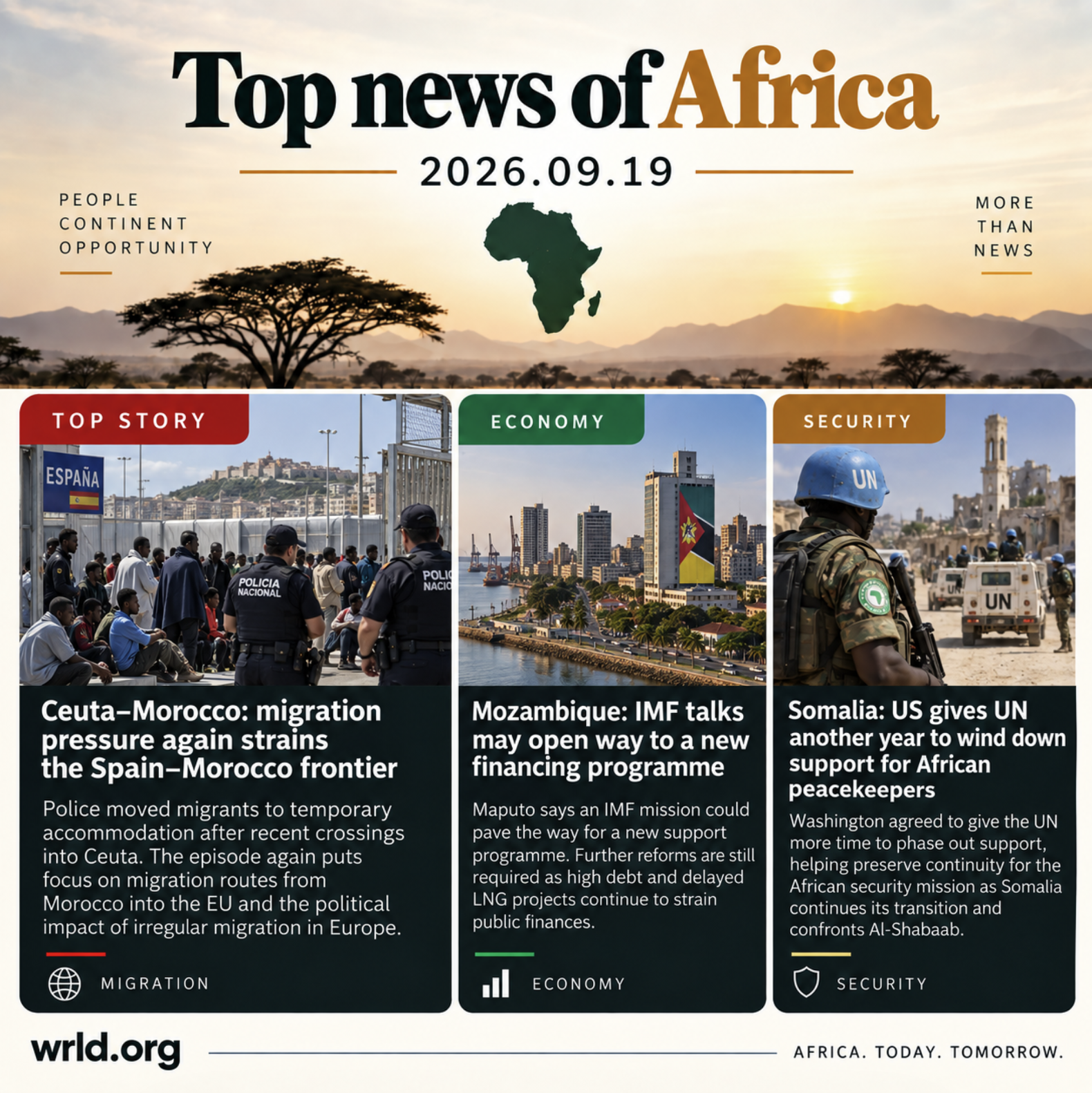
AFRICA DAILY REPORT — 19 SEPTEMBER 2026 Major developments reported during the previous 24 hours 1. NIGERIA — Deaths of 37 detained miners trigger protests and federal investigation Importance: 10/10 — Critical President Bola Tinubu ordered a thorough investigation after 37 suspected illegal miners died in NSCDC custody in Niger State. Protests in Minna were dispersed with tear gas, an overnight curfew was imposed, and senior civil-defence officials were suspended. Survivors and relatives have raised allegations about overcrowding and treatment in custody; the precise cause of death remains under investigation. Source (Reuters): https://www.reuters.com/world/africa/protests-erupt-nigeria-after-33-miners-die-custody-paramilitary-agency-2026-09-18/ Source (AP): https://apnews.com/article/222ac9d300c15c628ebcdacfea01f86a 2. DR CONGO — Ebola response continues as outbreak spreads Importance: 9.5/10 — Critical The Ebola outbreak remains a major regional health emergency. OCHA is supporting the response with rapid funding, while treatment centres are using CUBE transparent care units that allow medical staff to provide critical care with reduced exposure and enable patients to maintain contact with relatives. Source (Africanews): https://www.africanews.com/amp/2026/09/18/drc-ocha-helps-with-response-endeavours-amid-ebola-outbreak/ 3. SOMALIA — US gives UN another year to wind down support for African peacekeepers Importance: 9/10 — Very High The United States agreed to give the United Nations an additional year to phase out support for African peacekeepers in Somalia. The decision matters for the financing and operational continuity of the African security presence as Somalia continues to confront Al-Shabaab and manage the transition of international security support. Source (Reuters via The Straits Times): https://www.straitstimes.com/world/us-gives-un-more-time-to-end-support-for-somalia-peacekeepers 4. MOROCCO / ISRAEL — Agreement to open embassies Importance: 8.5/10 — Very High Israel and Morocco agreed to open embassies in each other's countries following talks involving their foreign ministers and the United States. The move represents a further institutionalisation of bilateral relations and could have broader diplomatic significance in North Africa and the Middle East. Source (Africanews): https://www.africanews.com/amp/2026/09/18/israel-morocco-agree-to-mutually-open-embassies-foreign-ministry/ 5. MOZAMBIQUE — IMF talks may open way to a new financing programme Importance: 8.5/10 — Very High Mozambique said an IMF mission completed on 18 September could pave the way for a new support programme. The IMF says further reforms are still required and discussions will continue. Mozambique remains burdened by high debt, while delayed LNG projects and the legacy of the hidden-debt scandal continue to constrain public finances. Source (Reuters): https://www.reuters.com/world/africa/mozambique-hopes-imf-visit-paves-way-new-loan-programme-2026-09-18/ 6. TUNISIA — Torrential rain floods Tunis and forces school closures Importance: 8/10 — High Severe thunderstorms and torrential rain flooded streets across Greater Tunis, disrupted traffic and prompted authorities to suspend classes at schools, universities and training institutions. Forecasts indicated 30–50 mm of rainfall over a short period, putting drainage infrastructure under heavy pressure after a summer of prolonged heat. Source (Africanews): https://www.africanews.com/2026/09/18/torrential-rain-and-flooding-slam-tunis-forcing-schools-to-close/ 7. CEUTA / MOROCCO — Migration pressure again strains the Spain–Morocco frontier Importance: 8/10 — High Tensions continued in Spain's North African enclave of Ceuta as police moved migrants to temporary accommodation following recent crossings. The episode has again focused attention on migration routes from Morocco into the EU and on the political consequences of irregular migration in Europe. Source (Africanews): https://www.africanews.com/amp/2026/09/18/ceuta-tense-scenes-as-police-move-migrants-to-temporary-camp/ Source (Reuters): https://wiky.com/2026/09/18/ceuta-border-crisis-fuels-eus-far-right-despite-fall-in-migrant-arrivals-commissioner-says/ 8. SOUTH AFRICA — Mpox cases rise Importance: 7.5/10 — High South Africa has recorded a rapid increase in mpox infections, with 18 confirmed cases and one reported death according to reporting published on 18 September. The development warrants close monitoring because of the potential for further transmission and pressure on public-health surveillance. Source (AllAfrica): https://allafrica.com/stories/202609180114.html 9. KENYA — Health sector feels growing impact of USAID cuts Importance: 7.5/10 — High Health workers in Kenya report increasing pressure following reductions in USAID-supported programmes. The effects are being felt in services and staffing, illustrating the broader vulnerability of African health systems to abrupt changes in external development financing. Source (Africanews): https://www.africanews.com/amp/2026/09/18/kenya-health-workers-increasingly-concerned-in-wake-of-usaid-cuts/ 10. ZIMBABWE / CHINA — Blueberry exporters seek capital to exploit new Chinese market access Importance: 6.5/10 — Significant Zimbabwean blueberry producers are seeking financing to expand after gaining access to China's market. The first shipment was dispatched in July following a phytosanitary agreement and China's removal of tariffs on imports from 53 African countries. Producers say the principal constraint is now the high upfront cost of expanding cultivation and irrigation. Source (AFP): https://www-pp.afp.com/en/zimbabwe-farmers-seek-funds-cash-china-blueberry-boom #Africa #AfricaNews #TopNewsOfAfrica #Ceuta #Morocco #Spain #Migration #MigrationCrisis #BorderSecurity #EU #EuropeanUnion #NorthAfrica #Mozambique #IMF #InternationalMonetaryFund #EconomicReforms #DebtCrisis #DevelopmentFinance #AfricanEconomy #Somalia #AfricanUnion #Peacekeeping #UN #UnitedNations #UnitedStates #AlShabaab #SomaliaSecurity #HornOfAfrica #RegionalStability #AfricanSecurity #Geopolitics #AfricaToday #wrldorg

Nieuw 'Briefje van Jan' - aan Dilan Yesilgöz “Beste Dilan, Al dat theater voor de verkiezingen en bij de formatie, dat de VVD niet in bed zou stappen met het inmiddels tot PRO hernoemde fusiegedrocht GroenLinks/PvdA? Met recht: theater…” https://t.co/Jg9kQ0yAJD https://t.co/yb7gGKAvKF #politiek #verkiezingen #VVD

2

The article explores the rise of the Houthis in Yemen, who have strengthened their control over the Bab el-Mandeb Strait during a military offensive, raising international concerns about the implications for global trade and highlighting the need to reconsider their status, often reduced to that of a mere rebel group. (translated)

Guerre au Moyen-Orient : Les Houthis ont-ils été sous-estimés ?

Mais franchement, vous croyez qu'on a besoin des Russes pour savoir que vous êtes une fanatique du néolibéralisme fascisant et belliciste ? Et que vous mettez au service de cette cause pourrie votre stupidité abyssale ? Désolé, pas besoin des moujiks, c'est une évidence qui crève les yeux. #néolibéralisme #politique #critique

🚨🔵🔴 Barcelona sign 16 year old talent Dany Freire, deal agreed and here we go! Portuguese attacking midfielder passed the trial and signs his Barcelona contract today. All set for formal steps. 🇵🇹 https://t.co/YeDP2yVv83 #Barcelona #DanyFreire #LaLiga #PT

Houthi rebels have taken control of the strategically important Bab al-Mandab strait, raising concerns about a potential economic crisis and highlighting the weaknesses of the internationally recognized Yemeni government, while major powers appear unwilling to intervene militarily. #Jemen #Houthis #geopolitika

5:59 v originále: Why is everyone afraid to go to war with Houthis in Yemen

Not that there are still many philosophers who deny that current or future AI systems represent minds, and they are technically not yet proven wrong by frontier models. However, their position has become much harder to defend. #AI #Philosophy #Mindness #Thetweetdoesnotmentionanyspecificcountries.Therefore #therearenocountrycodestoreturn.

2

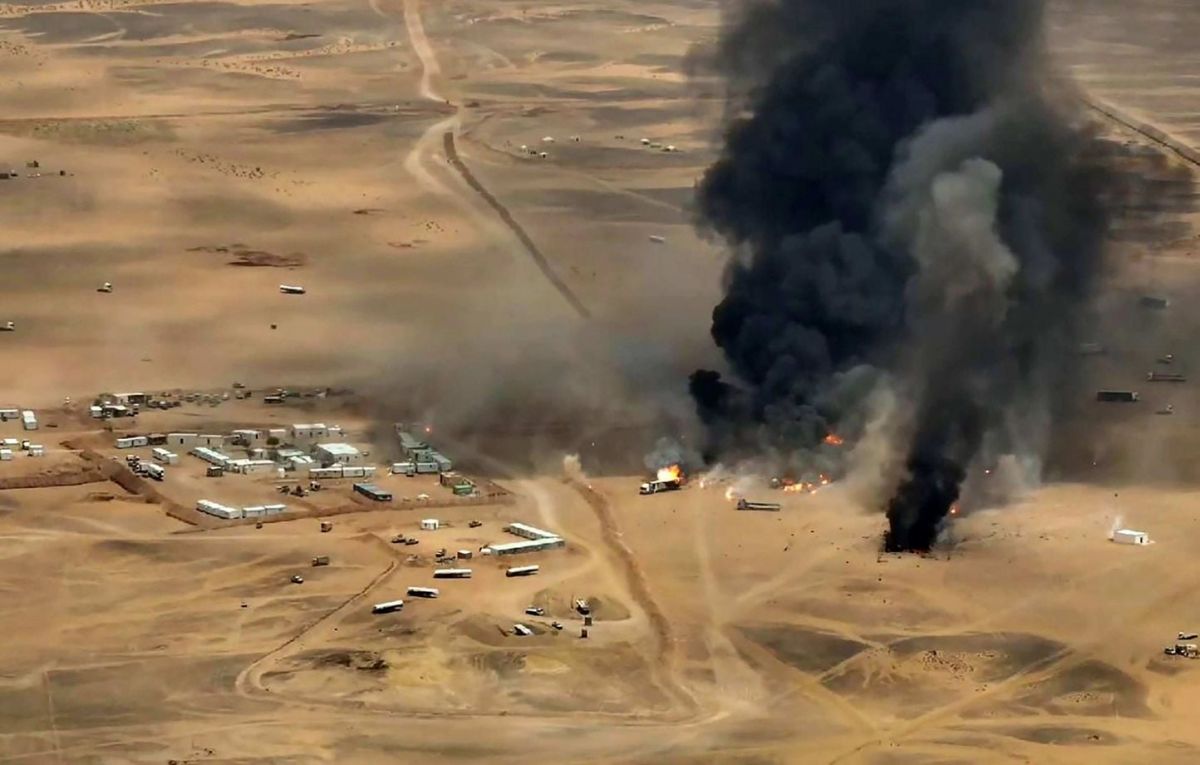
Saudi Arabia has carried out 26 airstrikes on the Taiz province in Yemen in 24 hours, according to the Houthis, marking an escalation of fighting following the breakdown of a fragile truce. (translated)

Guerre au Moyen-Orient : L’Arabie saoudite a mené 26 frappes sur le Yémen en 24 heures, selon les Houthis

Somando suas indicações do GRAMMYs e Latin GRAMMYs, Anitta possui nomeações em 3 das 4 categorias principais: • Best New Artist • Record of the Year • Album of the Year https://t.co/EvUKJnviET #Anitta #GRAMMYs #Música

L

Paul Nizan's essay, Aden Arabie, offers a prophetic perspective on the social and political issues of contemporary Yemen, reflecting on global tensions and colonial injustice through his experience in Aden. (translated)

Aden e lo stretto delle lacrime, sempre al centro delle tensioni globali