Marco Rubio: A "foreign actor" involved in the alleged plot at the base ... (translated)
Criză globală de motorină: De ce a interzis China exporturile și cum riscă Europa să rămână fără combustibil din SUA
stirileprotv.ro
Marco Rubio: A "foreign actor" involved in the alleged plot at the base ... (translated)
Among those camping in Sol was actor Daniel Guzmán, who was convicted two years ago for assaulting some guys who had squatted in a house he owned that remained empty, an example of social sensitivity that Urbagestión, the home company, should be inspired by. (translated)
“la mano de un actor extranjero está claramente involucrada”El secretario de Estado, Marco Rubio, ha insistido esta semana en que “la mano de un actor extranjero está claramente involucrada” en el incidente. #Fairford #Irán #terrorismo

Maxi Ghione, the actor from Casi Ángeles and La 1-5/18, was arrested for the deprivation of liberty of a prostitute. The police also found weapons on him. With that arsenal, it looked like he was going to go out with Arthur Morgan to rob the bank in Saint Denis. (translated)
Nicolas Cage says that the MCU has become a glorified version of the WWE: “When I see these actors over 50 years old —who are smart and extraordinarily talented— putting on those ridiculous costumes and preparing for the fight, I can't help but think that the MCU is becoming a well-funded and glorified version of the WWE.” (translated)

The foundation of any well-planned public policy cannot be based on the assumption that the actors affected by that regulation will act as one hopes. If the rental market is regulated knowing that this regulation will create uncertainty for property owners, there is a relatively clear expectation that the consequence will be that these owners decide to stop participating in the market and, therefore, a new problem will be created. Regulation must go hand in hand with horizontal planning. That is, if we know that the regulation will cause a shock to property owners, there must be compensation from somewhere; for example, from the state, which should provide that extra housing by building it. Otherwise, everything becomes unbalanced, and although it is possible to protect those who are already renting - which is good - it significantly hampers the ability of others to access housing. The problem we are seeing now is that of a legislative process hurried for electoral reasons, which should have started 8 years ago and should have developed in a staggered manner: regulating, building public housing, and creating incentives to avoid concentrating the population in a few cities. It does not matter what the model is, it must be coherent, and this one is not. There are great current examples, like that of Hong Kong, that have applied a planned and staggered public process. This is a botched job that, while it may at least provide some security to those who are already renting, will definitely not help make housing in the market more accessible. (translated)
Marco Rubio: Un „actor străin” implicat în presupusul complot de la baza ... #Iran #SUA #Confruntare
Marco Rubio: Un „actor străin” implicat în presupusul complot de la baza ... #complot #opozanți #Rusia

Harvard professor Stephen Walt argues that the war in Ukraine continues due to miscalculations by all involved parties, and the recovery of Crimea and most of Donbas by Ukraine becomes increasingly unlikely. (translated)
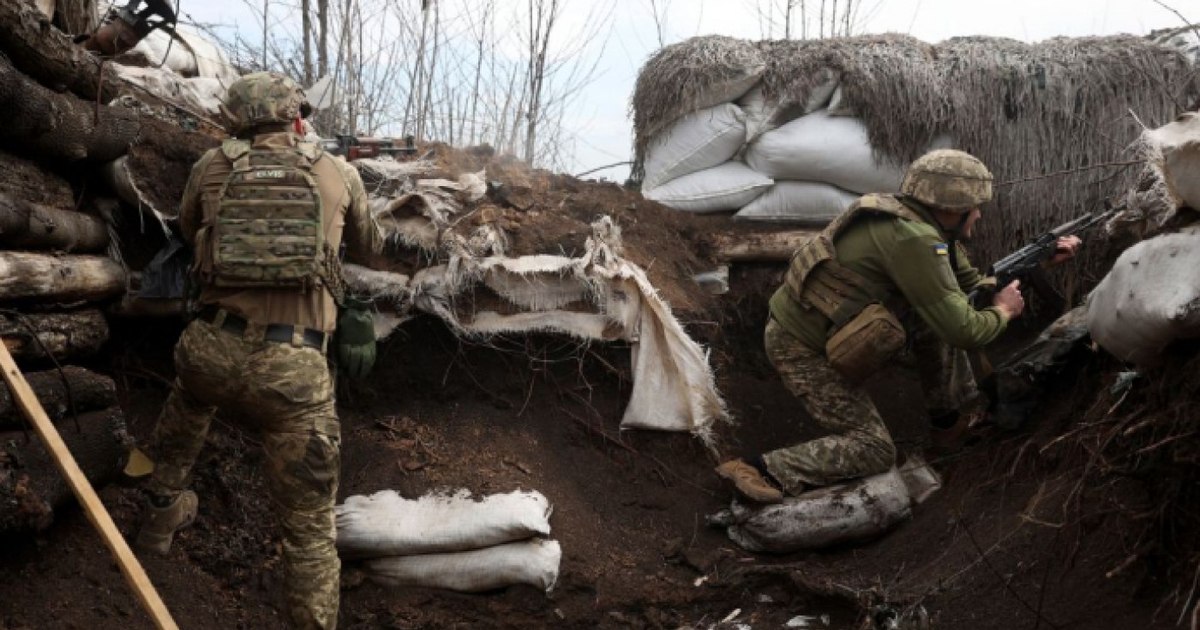
Christians in Nigeria are facing deadly violence, kidnappings, attacks on churches and entire communities. USCIRF says religious-freedom conditions remain severe and documents attacks by Boko Haram/JAS, ISWAP, Fulani militants and other armed actors; Muslims and traditional https://t.co/nNkPWtZGxd #Nigeria #ReligiousFreedom #HumanRights #NG

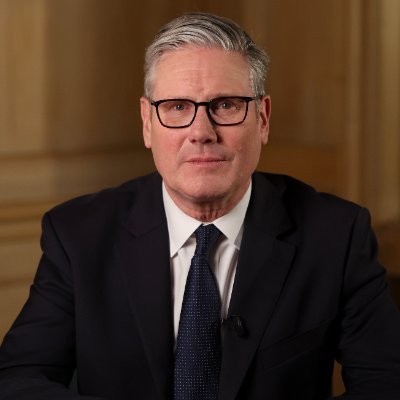
En marzo pasado, el entonces primer ministro británico, Keir Starmer, dio permiso a acciones "defensivas" por parte de EEUU usando instalaciones en Reino Unido. #Terrorismo #RAFairford #ActorExtranjero

La confusión persiste en torno al actor extranjero relacionado con un reciente incidente terrorista cerca de la base de la RAF Fairford en el Reino Unido, donde cinco hombres fueron detenidos en el contexto de una operación antiterrorista. #Terrorismo #RAFairford #ActorExtranjero
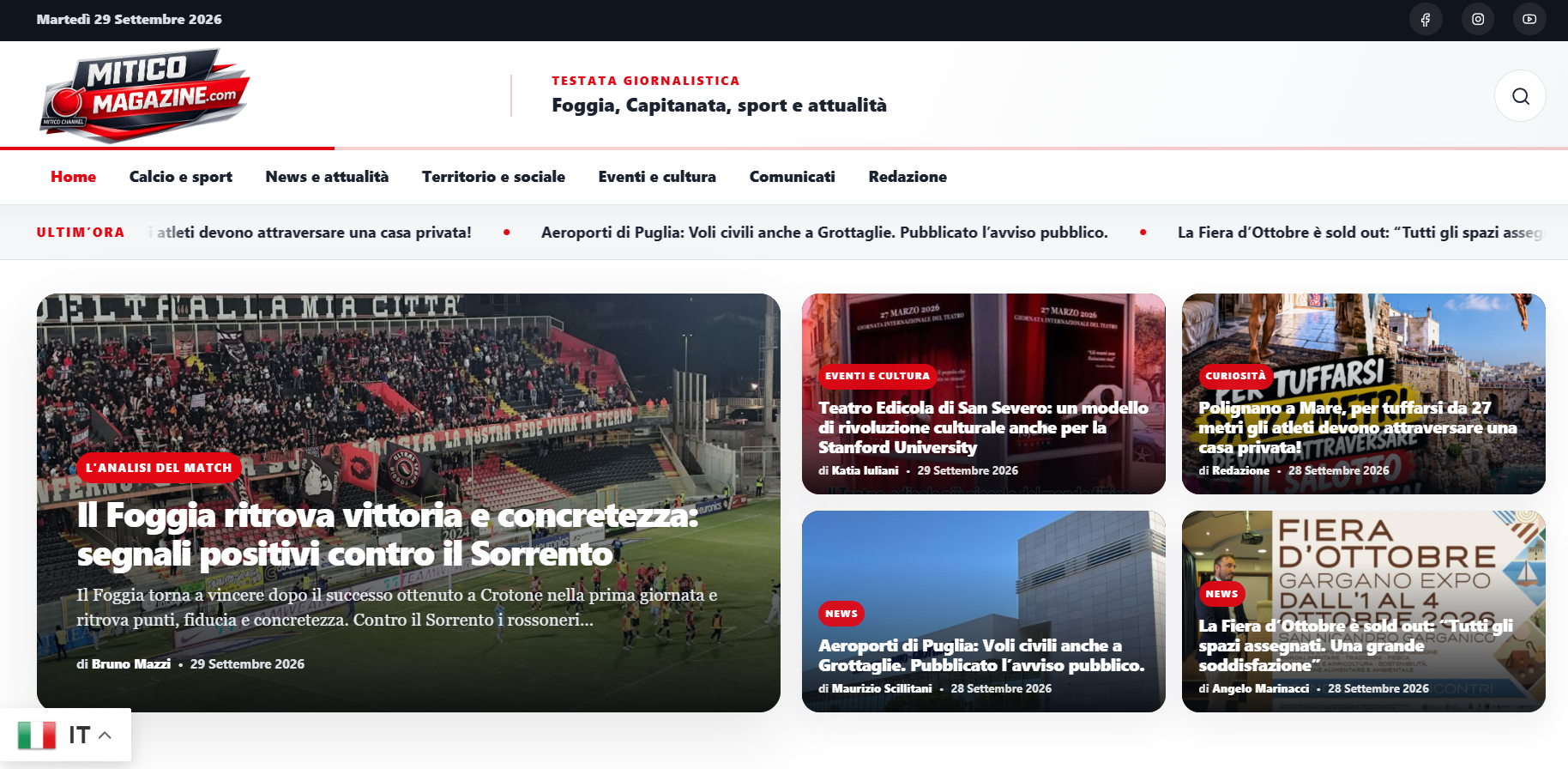
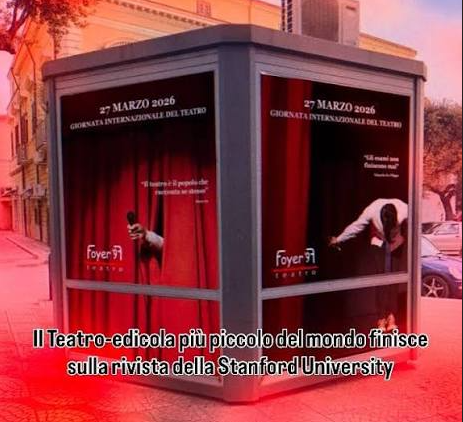
Mitico Magazine - The Teatro Edicola of San Severo: A Model of Cultural Revolution for Stanford University as Well Source: https://www.miticomagazine.com/territorio-e-sociale/teatro-edicola-di-san-severo-un-modello-di-rivoluzione-culturale-anche-per-la-stanford-university/ The Teatro Edicola in Via Tondi In San Severo, a singular metamorphosis has taken place: a newsstand abandoned for at least six years has found a new function and a new identity, transforming into one of the smallest and most unusual theatre stages in the world. An experiment born in the heart of the town which, in just a few months, has moved beyond local boundaries, attracting attention even overseas. It is called Teatro Edicola and it is a project conceived by the company Foyer '97, artistically directed by Francesco Gravino, which has brought the old newsstand in Via Tondi back to life through a formula that is both essential and surprising. Foyer '97 Foyer '97 APS was established as a formally constituted association active in the cultural sector in San Severo in 1997, born from the vocation of a group of actors, directors and theatre enthusiasts, with the aim of building a "living" and accessible theatre in the town. Over the years the company has developed a repertoire that includes texts from the classical tradition, contemporary dramaturgy, comedy and experimental projects, not limiting itself to the mere production of theatre shows, but also organising theatre courses and workshops and educational and cultural projects characterised by a strong inclusive ethos, particularly in schools. Foyer '97 does not always have a fixed artistic ensemble, but works with different performers and collaborators depending on the project; the only indispensable presence is that of Francesco Guido Gravino himself, actor, director and artistic director of the theatre company. The distinctive feature of Foyer '97 is certainly the value of social and cultural promotion attributed to theatre, the extremely close relationship with the audience and the search for a type of theatre outside conventional spaces, with cemeteries, trains, bell towers, and now a newsstand, as its backdrop. Six spectators, a few minutes and a minimal distance between stage and audience The project was launched on 27 March 2026, on the occasion of World Theatre Day, offering a theatrical experience built around a radical reduction of the conventional spaces and times of performance. The idea was born not only from the search for unconventional spaces, but also from "Edicola Fiore", the morning press review with a strongly ironic tone presented by Rosario Fiorello and Stefano Meloccaro, which was broadcast first only on Fiorello's social channels between 2011 and 2014, and then also on radio and television between 2016 and 2018. The review took its name from the diminutive of its founder, Fiore, and from the newsstand of a friend of Fiorello's in Via Flaminia Nuova in Rome, where the showman would meet early in the morning with a group of friends to read the newspapers. The San Severo newsstand was granted free of charge by its owner Pino Frau to the theatre group which, after obtaining temporary authorisation and institutional support from the Municipality of San Severo, refurbished it within two weeks at a cost of less than €3,000. Just six seats, a total surface area of 4 sq m, of which only 2 are for the stage area, less than a metre between actors and audience, a curtain, a lectern, two lights, performances lasting between 5 and 15 minutes, audience rotation every quarter of an hour: apparently minimal elements that end up subverting the usual relationship between stage and auditorium. Spectators, in fact, find themselves immersed in the stage action, in such proximity to the actors that every gesture, expression and word becomes immediately perceptible. In this way, theatre abandons its traditional spaces and insinuates itself into the everyday life of the street, becoming an intimate, concentrated and almost participatory experience. During the inaugural period admission was free with a subsequent voluntary donation from spectators; in the event of a more stable and longer-term concession, which could lead to seasonal theatre performances, the proposed ticket price would be €5. Audiences reward the experiment Foyer '97's gamble met with public interest right from the start: over 60 people attended the shows in a single afternoon, while the three days that inaugurated the season sold out. From a singular local experiment, the Teatro Edicola thus began to arouse curiosity even outside the province of Foggia, gradually transforming into a case of cultural and social interest, until it reached the American continent. From the province of Foggia to the "Stanford Social Innovation Review" The San Severo experience has now come under the international spotlight: in September 2026, the Stanford Social Innovation Review, an international journal and platform dedicated to social innovation published by the Stanford Center on Philanthropy and Civil Society at Stanford University in California, published on its website and in the Fall 2026 print edition the reportage "The Six-Seat Revolution", written by Dr Luciano Magaldi Sardella, independent journalist and researcher affiliated with the European Open University, and editorially supervised by deputy editor David V. Johnson. In the article, it is argued that the Teatro Edicola attracted attention overseas because the project concentrates cultural innovation, urban regeneration and proximity theatre into just a few square metres: starting from a real urban problem, it recovers an abandoned place with a modest investment, brings performance directly into public space and experiments with a much closer relationship between actors and spectators. From the point of view of theatrical representation, it also highlights how the format, based on micro-stories of five to twelve minutes, taken from great classics such as Goldoni, Chekhov, Ibsen, Euripides and Benni, and on audience rotation every fifteen minutes, transforms the physical limitations of the space into a precise dramaturgical choice, proving to be extremely innovative. All of this makes it possible to address some of the main critical issues in the sector: falling audience numbers, an exclusively elderly audience, reduced resources and distance from traditional cultural venues. The journal also highlights, however, the potential problems: economic sustainability, the need for stable institutional support and the difficulty of replicating the model, which is closely linked to the community and territory of San Severo. A model looking beyond San Severo Despite the difficulties, initial requests for information have already arrived from Lucca and Rome, where there is curiosity about the possibility of getting to know the model more closely and the steps needed to replicate it. The replicability formula, in fact, does not seem to require particularly costly infrastructure: an unused space, a targeted intervention, a cultural idea, in-depth knowledge of the surrounding area and a willingness to return that place to the community can be enough to trigger a new urban function. It is precisely in the disproportion between the modesty of the resources employed and the resonance generated by the initiative that perhaps the most original feature of the Teatro Edicola lies, certainly unique of its kind; there are, however, other examples in Italy of newsstands reused for other purposes: "Edicola 518", a twentieth-century kiosk abandoned in the centre of Perugia, now dedicated to independent publishing, art and cultural production; and in Rome itself, the abandoned newsstand in Piazza Testaccio used temporarily as a stage for a show by Fabio Morgan and the Erno newsstand in the Prati district, which almost every month offers a calendar of events, exhibitions, pop-ups and collaborations with artists and creative enterprises. Small revolutions, therefore, that tell stories of the reappropriation of urban spaces, of creativity and social innovation. And which, it is hoped, will take root in order to look ever further afield.
Mitico Magazine - The Teatro Edicola of San Severo: A Model of Cultural Revolution for Stanford University as Well Source: https://www.miticomagazine.com/territorio-e-sociale/teatro-edicola-di-san-severo-un-modello-di-rivoluzione-culturale-anche-per-la-stanford-university/ The Teatro Edicola in Via Tondi In San Severo, a singular metamorphosis has taken place: a newsstand abandoned for at least six years has found a new function and a new identity, transforming into one of the smallest and most unusual theatre stages in the world. An experiment born in the heart of the town which, in just a few months, has moved beyond local boundaries, attracting attention even overseas. It is called Teatro Edicola and it is a project conceived by the company Foyer '97, artistically directed by Francesco Gravino, which has brought the old newsstand in Via Tondi back to life through a formula that is both essential and surprising. Foyer '97 Foyer '97 APS was established as a formally constituted association active in the cultural sector in San Severo in 1997, born from the vocation of a group of actors, directors and theatre enthusiasts, with the aim of building a "living" and accessible theatre in the town. Over the years the company has developed a repertoire that includes texts from the classical tradition, contemporary dramaturgy, comedy and experimental projects, not limiting itself to the mere production of theatre shows, but also organising theatre courses and workshops and educational and cultural projects characterised by a strong inclusive ethos, particularly in schools. Foyer '97 does not always have a fixed artistic ensemble, but works with different performers and collaborators depending on the project; the only indispensable presence is that of Francesco Guido Gravino himself, actor, director and artistic director of the theatre company. The distinctive feature of Foyer '97 is certainly the value of social and cultural promotion attributed to theatre, the extremely close relationship with the audience and the search for a type of theatre outside conventional spaces, with cemeteries, trains, bell towers, and now a newsstand, as its backdrop. Six spectators, a few minutes and a minimal distance between stage and audience The project was launched on 27 March 2026, on the occasion of World Theatre Day, offering a theatrical experience built around a radical reduction of the conventional spaces and times of performance. The idea was born not only from the search for unconventional spaces, but also from "Edicola Fiore", the morning press review with a strongly ironic tone presented by Rosario Fiorello and Stefano Meloccaro, which was broadcast first only on Fiorello's social channels between 2011 and 2014, and then also on radio and television between 2016 and 2018. The review took its name from the diminutive of its founder, Fiore, and from the newsstand of a friend of Fiorello's in Via Flaminia Nuova in Rome, where the showman would meet early in the morning with a group of friends to read the newspapers. The San Severo newsstand was granted free of charge by its owner Pino Frau to the theatre group which, after obtaining temporary authorisation and institutional support from the Municipality of San Severo, refurbished it within two weeks at a cost of less than €3,000. Just six seats, a total surface area of 4 sq m, of which only 2 are for the stage area, less than a metre between actors and audience, a curtain, a lectern, two lights, performances lasting between 5 and 15 minutes, audience rotation every quarter of an hour: apparently minimal elements that end up subverting the usual relationship between stage and auditorium. Spectators, in fact, find themselves immersed in the stage action, in such proximity to the actors that every gesture, expression and word becomes immediately perceptible. In this way, theatre abandons its traditional spaces and insinuates itself into the everyday life of the street, becoming an intimate, concentrated and almost participatory experience. During the inaugural period admission was free with a subsequent voluntary donation from spectators; in the event of a more stable and longer-term concession, which could lead to seasonal theatre performances, the proposed ticket price would be €5. Audiences reward the experiment Foyer '97's gamble met with public interest right from the start: over 60 people attended the shows in a single afternoon, while the three days that inaugurated the season sold out. From a singular local experiment, the Teatro Edicola thus began to arouse curiosity even outside the province of Foggia, gradually transforming into a case of cultural and social interest, until it reached the American continent. From the province of Foggia to the "Stanford Social Innovation Review" The San Severo experience has now come under the international spotlight: in September 2026, the Stanford Social Innovation Review, an international journal and platform dedicated to social innovation published by the Stanford Center on Philanthropy and Civil Society at Stanford University in California, published on its website and in the Fall 2026 print edition the reportage "The Six-Seat Revolution", written by Dr Luciano Magaldi Sardella, independent journalist and researcher affiliated with the European Open University, and editorially supervised by deputy editor David V. Johnson. In the article, it is argued that the Teatro Edicola attracted attention overseas because the project concentrates cultural innovation, urban regeneration and proximity theatre into just a few square metres: starting from a real urban problem, it recovers an abandoned place with a modest investment, brings performance directly into public space and experiments with a much closer relationship between actors and spectators. From the point of view of theatrical representation, it also highlights how the format, based on micro-stories of five to twelve minutes, taken from great classics such as Goldoni, Chekhov, Ibsen, Euripides and Benni, and on audience rotation every fifteen minutes, transforms the physical limitations of the space into a precise dramaturgical choice, proving to be extremely innovative. All of this makes it possible to address some of the main critical issues in the sector: falling audience numbers, an exclusively elderly audience, reduced resources and distance from traditional cultural venues. The journal also highlights, however, the potential problems: economic sustainability, the need for stable institutional support and the difficulty of replicating the model, which is closely linked to the community and territory of San Severo. A model looking beyond San Severo Despite the difficulties, initial requests for information have already arrived from Lucca and Rome, where there is curiosity about the possibility of getting to know the model more closely and the steps needed to replicate it. The replicability formula, in fact, does not seem to require particularly costly infrastructure: an unused space, a targeted intervention, a cultural idea, in-depth knowledge of the surrounding area and a willingness to return that place to the community can be enough to trigger a new urban function. It is precisely in the disproportion between the modesty of the resources employed and the resonance generated by the initiative that perhaps the most original feature of the Teatro Edicola lies, certainly unique of its kind; there are, however, other examples in Italy of newsstands reused for other purposes: "Edicola 518", a twentieth-century kiosk abandoned in the centre of Perugia, now dedicated to independent publishing, art and cultural production; and in Rome itself, the abandoned newsstand in Piazza Testaccio used temporarily as a stage for a show by Fabio Morgan and the Erno newsstand in the Prati district, which almost every month offers a calendar of events, exhibitions, pop-ups and collaborations with artists and creative enterprises. Small revolutions, therefore, that tell stories of the reappropriation of urban spaces, of creativity and social innovation. And which, it is hoped, will take root in order to look ever further afield.
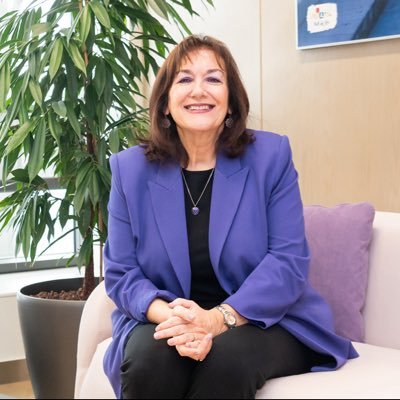
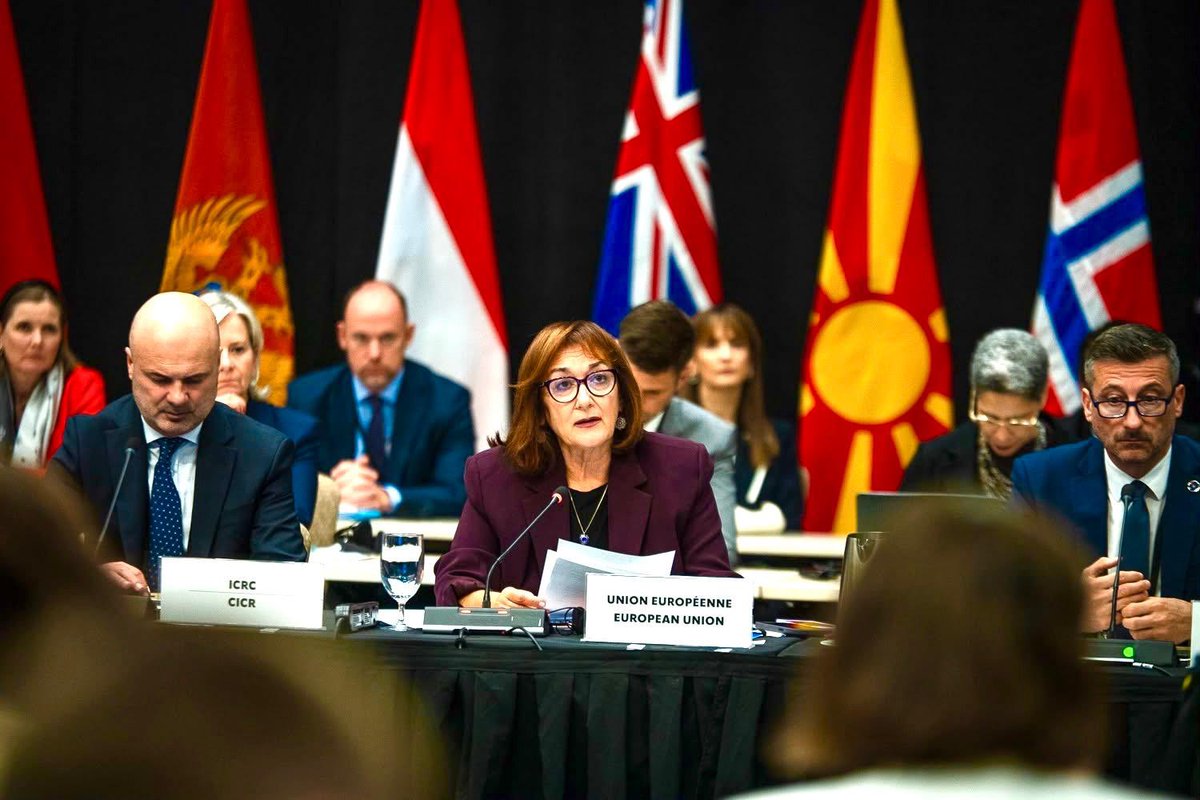
No child should grow up in detention, or separated from their family, identity or country. At the #PathwaysToPeace conference in Toronto, I reaffirmed that the EU stands firmly with Ukraine 🇺🇦: 🔹 New sanctions adopted today on 27 actors responsible for deporting, re-educating https://t.co/ZkKTCy0s6g #NoChildInDetention #StandWithUkraine #PathwaysToPeace #EU #UA
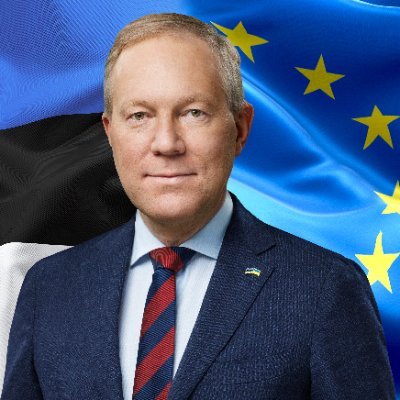
The list of potential foreign actors is very limited. Attribution is a must, and action should follow. #Attribution #ForeignPolicy #GlobalSecurity #Nospecificcountrycodesarementionedinthetweet.
Una sanción al Manchester City sería imposible si las grandes instituciones inglesas, incluido el gobierno y la propia Premier League, no estuviesen por la labor de que se haga justicia. En España ha sido lo contrario. Actores clave del proceso han saboteado deliberadamente la investigación del caso Negreira desde que salió a la luz porque los intereses económicos y políticos están muy por encima de la justicia. #ManchesterCity #Justicia #Fútbol
Le département des Bouches-du-Rhône a bloqué une subvention de 90 000 euros au festival Actoral de Marseille en raison des propos inacceptables tenus par l'écrivaine Louisa Yousfi sur les Blancs, ce qui a suscité des réactions de l'extrême droite. #Marseille #LibertéDExpression #Racisme

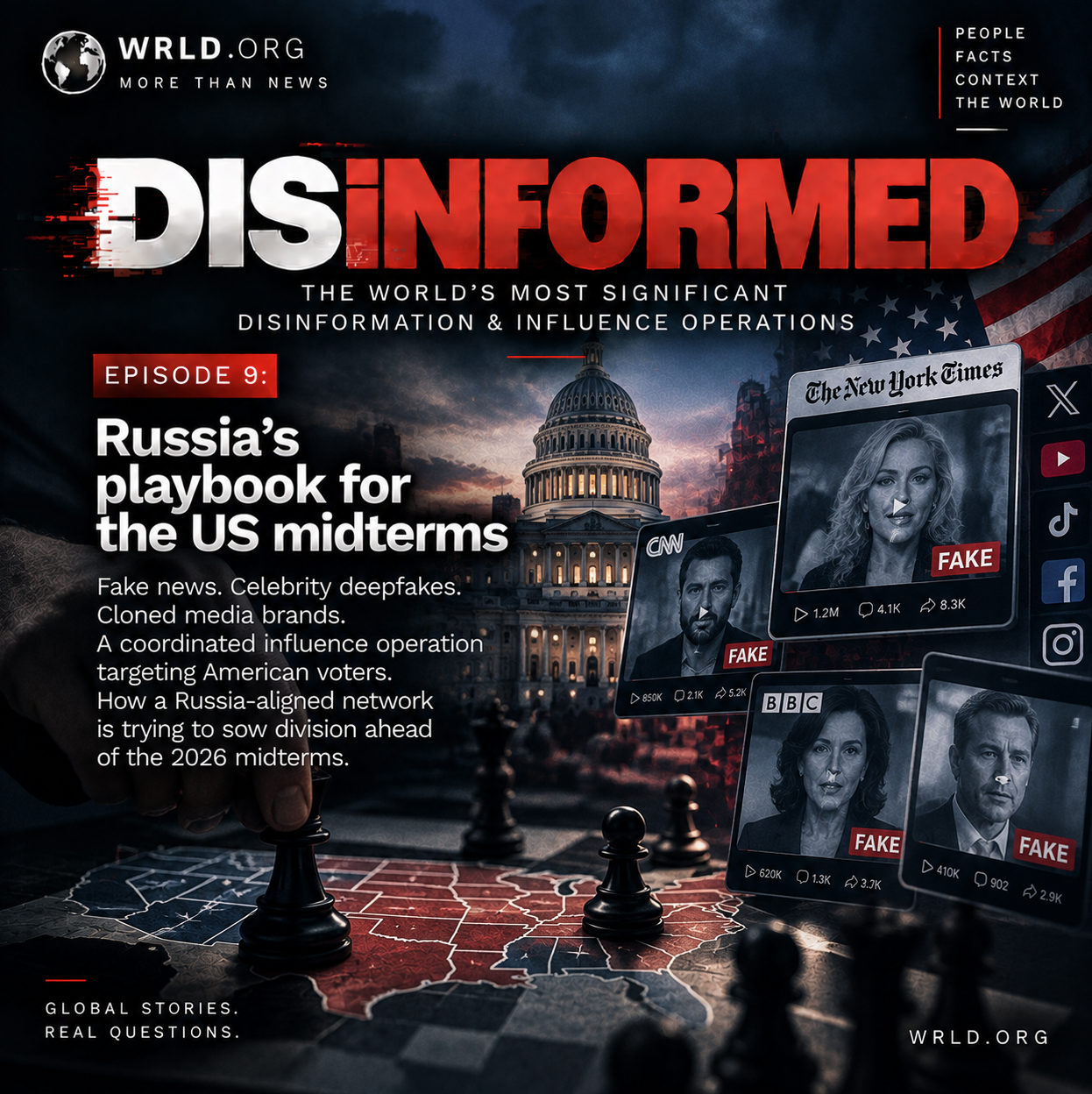
Russia’s influence operation arrives ahead of the US midterms With weeks remaining before America's November midterm elections, a familiar type of content has begun appearing online. Videos resembling reports from CNN, the BBC and The New York Times accuse candidates of corruption, antisemitism and misconduct. Hollywood actors appear to denounce Democrats. Other clips claim that warnings about Russian interference are themselves a Democratic disinformation campaign. The reports are fabricated. Graphika, which tracks online influence operations, says it has identified a coordinated campaign targeting candidates in competitive US Senate races. It assesses with high confidence that the material was produced by Operation Overload, also known as Matryoshka – a long-running Russia-aligned influence operation previously active against elections and political debates in Europe and the United States. The activity coincides with a broader warning from American intelligence officials. Classified assessments reported by The New York Times conclude that the Kremlin has authorised another digital influence campaign ahead of the 2026 midterms, aimed primarily at exploiting existing divisions and undermining confidence in American democracy. There is an important distinction. US officials have not reported evidence that Russia is attempting to manipulate voting machines or alter the counting of votes. The operation is about influencing the information environment surrounding the election. Fake scandals for competitive Senate races Graphika traced a concentrated wave of activity between 10 and 14 September. Likely inauthentic or repurposed accounts distributed videos accusing Democratic politicians of corruption, antisemitism and other misconduct. The targets included Senator Jon Ossoff in Georgia, Representative Chris Pappas in New Hampshire and Texas state representative James Talarico, as well as Senate candidates Sherrod Brown in Ohio, Roy Cooper in North Carolina, Mary Peltola in Alaska, Abdul El-Sayed in Michigan, Joshua Turek in Iowa and Troy Jackson in Maine. The selection was not random. These were politicians involved in Senate contests where the result could matter to control of the chamber. The campaign did not rely on a single political narrative. Instead, it attached different accusations to different candidates – corruption, social issues, antisemitism or personal misconduct – while maintaining a consistent production and distribution model. That model is characteristic of Matryoshka: create apparently independent pieces of evidence, disguise them as journalism and distribute them through networks of disposable accounts. Hollywood celebrities who never said what the videos claimed One of the campaign's more distinctive techniques involved genuine footage of American actors. Videos featuring celebrities including Sarah Jessica Parker and Julia Roberts were altered with captions and other material to suggest they were promoting the slogan #AllDemocratsAreCriminals. The technique continued in subsequent material. Fact-checkers identified fabricated New York Times-branded videos using footage of Alyssa Milano, Sean Astin, Rachael Harris, Leonardo DiCaprio, Eric Braeden, Annie Potts and Patrick Fabian. Some of the original footage came from Cameo, where actors record personalised video messages. Their authentic images were retained while fabricated audio, captions or surrounding material changed the meaning entirely. Lead Stories compared several of the clips with the originals and found that the supposed political statements did not appear in the genuine recordings. Eric Braeden's representative separately confirmed that the claim he had joined the anti-Democratic campaign was false. The advantage of the technique is straightforward. Generative AI does not need to create a convincing celebrity from nothing. The operator can begin with authentic footage of a recognisable person and manipulate only the elements necessary to manufacture a political statement. Stealing the authority of real newsrooms Celebrity impersonation was only one layer. The operation repeatedly borrowed the visual identity of established media organisations. Graphika identified material impersonating or falsely citing the BBC, CNN and Politico, alongside references to France's VIGINUM foreign-interference agency and journalist Brandy Zadrozny. Other material reproduced New York Times-style branding. Some fabricated reports made an unusual claim: that Democrats themselves were organising disinformation or “false-flag operations” and then blaming Russia. This creates a defensive layer around the influence operation. Instead of merely distributing false political allegations, the campaign also attempts to discredit future reporting about the manipulation itself. If successful, evidence exposing foreign interference can be reframed as part of the conspiracy. Graphika says it assesses with high confidence that Operation Overload produced these videos. The technique is well established. Earlier investigations by CheckFirst and Reset Tech documented hundreds of falsified pieces of content produced by Operation Overload, often impersonating journalists, institutions and major media brands. AI-generated or manipulated material has increasingly become part of that production system. What US intelligence says Russia is trying to achieve The broader strategic picture comes from American intelligence assessments reported on 18 September. According to US officials familiar with classified findings, the Kremlin has authorised a covert digital influence campaign aimed at Americans during the 2026 election season. Its apparent objective is to seed or amplify domestic divisions and weaken confidence in the political process. Some officials described the principal aim as creating disorder rather than helping a single political party. The publicly identified Matryoshka material examined so far, however, has targeted Democratic candidates. Those two findings should not be treated as contradictory. An operation can exploit partisan divisions while serving the broader objective of making the electoral system appear corrupt, chaotic or illegitimate. US officials also reportedly assess the current Russian campaign as less extensive or coordinated than some previous election operations. Moscow is considered less focused on congressional elections than presidential contests and remains heavily occupied by its war against Ukraine. Russia has denied previous US accusations of election interference. An operation with limited reach – so far There is another reason for caution: producing large quantities of disinformation is not the same as successfully influencing voters. Matryoshka has repeatedly demonstrated an ability to manufacture content at industrial speed, but much of its material receives little genuine engagement. Researchers monitoring the network have previously warned against confusing automated distribution and platform view counts with authentic audience penetration. There are exceptions. A fabricated New York Times-style video featuring Jamie Lee Curtis had accumulated nearly 200,000 views on X by the end of 17 September, according to reporting by The New York Times. Other pieces attracted considerably less attention. There is currently no public evidence demonstrating that the campaign has changed voting intentions or will affect election results. What the September activity demonstrates is something narrower but important: a Russia-aligned influence infrastructure previously used against European elections has now turned significant attention towards the American midterms. The basic method has changed little – impersonate trusted media, manufacture scandals and use networks of inauthentic accounts to distribute them. What has changed is the production technology. Authentic celebrity footage, synthetic voices, manipulated video and rapidly generated fake journalism allow the same operation to produce more tailored material for more candidates at lower cost. The objective does not require Americans to believe every fabrication. Creating uncertainty over which videos, news reports and public statements are authentic can itself degrade trust in the information environment surrounding an election. Sources - Graphika — Russia-Aligned Influence Operation Targets US Midterm Candidates, German State Elections https://www.graphika.com/insights/russia-aligned-influence-operation-targets-us-midterm-candidates-german-state-elections - The New York Times — Russia Aims to Inject Chaos Into Elections, U.S. Intelligence Finds https://www.nytimes.com/2026/09/18/us/politics/russia-election-disinformation-us-intelligence.html - Kathimerini / The New York Times — Russia Aims to Inject Chaos Into Elections https://www.ekathimerini.com/nytimes/1315792/russia-aims-to-inject-chaos-into-elections-us-intelligence-finds/ - CheckFirst — Operation Overload: An AI-fuelled escalation of the Kremlin-linked propaganda effort https://checkfirst.network/operation-overload-an-ai-fuelled-escalation-of-the-kremlin-linked-propaganda-effort/ - CheckFirst — Operation Overload targeting the US election https://checkfirst.network/operation-overload-a-growing-disinformation-threat-now-targeting-the-u-s-presidential-election/ - Lead Stories — Fake NYT videos: Alyssa Milano, Rachael Harris and Sean Astin https://leadstories.com/hoax-alert/2026/09/fact-check-fake-new-york-times-videos-of-alyssa-milano-rachael-harris-sean-astin-falsely-claim-they-support-all-democrats-are-criminals.html - Lead Stories — Fake NYT videos: Leonardo DiCaprio, Eric Braeden and other celebrities https://leadstories.com/hoax-alert/2026/09/fact-check-fake-new-york-times-videos-of-leonardo-dicaprio-eric-braeden-other-celebs-falsely-claim-they-support-all-democrats-are-criminals.html - Brennan Center for Justice — AI Is Changing Foreign Election Influence https://www.brennancenter.org/our-work/analysis-opinion/ai-changing-foreign-election-influence - ODNI — previous US intelligence assessment of foreign election information operations https://www.dni.gov/files/ODNI/documents/assessments/NICM-Declassified-Foreign-Threats-to-US-Elections-After-Voting-Ends-in-2024.pdf - FBI / ODNI / CISA — previous joint assessment of Russian election influence operations https://www.fbi.gov/news/press-releases/joint-odni-fbi-and-cisa-statement-110424 #DISINFORMED #Episode9 #Russia #UnitedStates #USMidterms #Midterms2026 #USElections #ElectionInterference #ForeignInterference #RussianInfluence #RussianDisinformation #OperationOverload #Matryoshka #Disinformation #InformationWarfare #InfluenceOperations #FIMI #ArtificialIntelligence #AI #AIPropaganda #Deepfakes #SyntheticMedia #MediaImpersonation #FakeMedia #FakeNews #PoliticalDisinformation #CelebrityDeepfakes #SocialMediaManipulation #DigitalInfluence #ElectionSecurity #CognitiveWarfare #Graphika #OSINT #Democracy #WRLD

AFRICA DAILY REPORT — 26 SEPTEMBER 2026 Major developments reported during the previous 24 hours. 1. DR CONGO — Ebola outbreak expands to two additional health zones Importance: 10/10 (Critical) WHO reported that the Bundibugyo Ebola outbreak has expanded to Bulu in Sud Ubangi and Dungu in Haut-Uélé, bringing the total to 63 affected health zones across seven provinces. As of 23 September, DRC had reported 7,890 confirmed cases and 3,799 deaths; the geographic expansion increases cross-border transmission risk. Source: https://www.who.int/emergencies/disease-outbreak-news/item/2026-DON618 2. ETHIOPIA — Heavy fighting continues in the north Fighting involving federal and Tigrayan forces has intensified, disrupting communications and raising concerns that the renewed conflict could spread beyond Tigray. Ethiopia's president has also accused unspecified external actors of interference as the 2022 peace framework comes under severe strain. Source: https://www.africanews.com/2026/09/25/ethiopian-president-warns-of-interference-amid-renewed-tigray-fighting/ 3. SUDAN–CHAD — Sudanese refugee arrivals accelerate sharply Importance: 9/10 (Very High) UNHCR says more than 55,000 Sudanese refugees have fled to eastern Chad this year, with arrivals through Adré and Tiné recently rising to more than 400 people per day — around 20 times the rate seen during previous months. Funding remains far below requirements, increasing pressure on shelter, water and protection services. Source: https://www.unhcr.ca/news/unhcr-in-its-fourth-year-sudan-conflict-drives-new-displacement-into-chad-as-funding-falls-short/ 4. DR CONGO — At least 41 killed in Lake Tanganyika boat disaster Importance: 8.5/10 (Very High) At least 41 people died after a vessel carrying roughly 100 passengers and cargo capsized on Lake Tanganyika while travelling from Kigoma, Tanzania, toward Kalemie in DRC. Forty-nine people were reported rescued while search operations continued. Source: https://www.aljazeera.com/news/2026/9/25/at-least-41-die-as-boat-capsizes-in-drcs-lake-tanganyika 5. ZIMBABWE–UNITED STATES — U.S. health funding set to end after talks collapse Importance: 8.5/10 (Very High) The United States is set to end health-programme funding for Zimbabwe at the end of September after negotiations over a new agreement failed, including disagreement over provisions concerning health data and biological samples. The change could affect HIV, tuberculosis and malaria programmes. Source: https://www.latimes.com/world-nation/story/2026-09-25/data-sharing-clause-derailed-u-s-zimbabwe-health-talks-now-all-funding-ends-this-month 6. SOUTH SUDAN — Kiir opens political dialogue ahead of December elections President Salva Kiir opened an inter-party dialogue in Juba after dissolving the transitional unity government. Elections are scheduled for 22 December and would be South Sudan's first national vote since independence, while opposition groups have raised concerns over the process, security and political conditions. Source: https://www.africanews.com/2026/09/25/south-sudan-kiir-opens-political-dialogue-ahead-of-december-elections/ 7. SENEGAL — First criminal charges filed over 2021–2024 political unrest Four people have become the first defendants charged in connection with violence during Senegal's political unrest between 2021 and 2024. The proceedings concern alleged unlawful confinement, abduction, torture and violence; the accused contest the allegations. Source: https://www.africanews.com/2026/09/25/senegal-lays-first-criminal-charges-over-political-unrest-between-2021-and-2024/ 8. ETHIOPIA–DJIBOUTI — $660 million petroleum pipeline announced Importance: 7.5/10 (High) Ethiopia, Djibouti and Dangote interests are backing a planned $660 million refined-petroleum pipeline. The 120-kilometre link between Damerjog port and Dewele is intended to lower logistics costs and strengthen fuel supply for landlocked Ethiopia. Source: https://www.africanews.com/2026/09/25/ethiopia-djibouti-and-dangote-to-build-660m-petroleum-pipeline/ 9. UGANDA–SOUTH SUDAN — New 400 kV cross-border electricity connection Importance: 7.5/10 (High) A planned Uganda–South Sudan power interconnection will establish roughly 299 kilometres of 400-kV double-circuit transmission infrastructure. The project is intended to connect South Sudan to the Eastern Africa Power Pool and create an export market for Uganda's surplus electricity. Source: https://www.ugandaradionetwork.net/story/new-400kv-cross-border-electricity-connection-to-serve-uganda-and-south-sudan 10. MOZAMBIQUE — Drug use rises as trafficking routes increasingly feed domestic consumption Importance: 7/10 (High) Mozambican officials say the country is increasingly becoming a consumer market as well as a transit route for illicit drugs. Government figures show drug-related hospital admissions rose 38% last year to more than 32,280, while authorities report growing concern about methamphetamine, cocaine and fentanyl flows. Source: https://www.africanews.com/2026/09/25/mozambique-faces-rising-drug-use-as-trafficking-routes-fuel-local-addiction/ #Africa #AfricaNews #TopNewsOfAfrica #DRCongo #Ebola #EbolaOutbreak #BundibugyoEbola #PublicHealth #HealthEmergency #WHO #CentralAfrica #Ethiopia #Djibouti #EthiopiaDjibouti #PetroleumPipeline #EnergyInfrastructure #FuelSecurity #Logistics #RegionalTrade #AfricanEconomy #Dangote #Tigray #NorthernEthiopia #EthiopiaConflict #ArmedConflict #SecurityCrisis #HornOfAfrica #RegionalSecurity #AfricanSecurity #Geopolitics #CrossBorderTrade #EnergySecurity #AfricaToday #wrldorg