BETA nonprofit public democratic european moderated

Search

#café

Kristina (Café Eule) lügt und lügt und lügt. Diese „rassistischen Beleidigungen“ hat es wohl nie gegeben. Denn als sie dieses Video veröffentlicht hat, hat sie nichts davon erwähnt. Wir wissen alle, wäre das tatsächlich so passiert, hätte sie diese Geschichte längst erzählt. Es ist ganz einfach. Sie ist davon ausgegangen, dass sie für diesen antidemokratischen Move gelobt und gefeiert wird. Das Gegenteil ist passiert. Es ist ein massiver Shitstorm ausgebrochen. Jetzt muss schnell eine Lügengeschichte her, um sich aus der Affäre zu ziehen. Das klappt nur nicht. #Lügen #Shitstorm #Rassismus

| JULY 2026 | The Guard State How the largest Arab nation became a security contractor at the gates of its own people By Adham Hasanin Egyptian journalist and political writer, based in the Netherlands In June 2025, hundreds of activists from forty countries landed at Cairo airport. Doctors from France, lawyers from Australia, students from the United States, pensioners from the Netherlands. They carried no weapons and no banned slogans; they carried backpacks, walking shoes, and a single intention: to march from Arish to the Rafah crossing — entirely on Egyptian soil — to demand that food be allowed through to a people starving behind the gate. Not one of them reached Rafah. More than two hundred were detained before the march could begin. Around five hundred foreign nationals were deported from airports, hotels, and checkpoints. Passports were confiscated, activists were pulled out of downtown Cairo cafés, and the Global March to Gaza was cancelled on 16 June without taking its first step. And the world watched. This was no secret operation in a dark basement; it happened in the open, documented by the deportees’ own phone cameras, carried by every international news agency. The world watched an Arab state arrest Europeans, Americans, and Africans for wanting to walk towards Palestine. A state guarding the gate of a siege — from the side that was supposed to be the side of rescue. Hold that image, because it is the key to everything that follows. This was not an aberration in Egyptian policy, nor an isolated security decision. It is the function — the complete function around which the Egyptian state has been redefined over the past decade, and which it is time to call by its proper name: the Guard State. I. The Name — What Do We Mean by the Guard State? Political economy has long described states that live off the rent of their location rather than the production of their people. But what has crystallised in Egypt over the past decade goes beyond traditional geographic rent — the Suez Canal, say — into something far graver: the conversion of sovereignty itself into a commodity for hire. The Guard State does not sell its location; it sells its function. It collects its wages not for what it produces, but for what it prevents: it prevents the refugee from reaching Europe, the activist from reaching Gaza, its own people from reaching politics, and the resistance’s weapons from reaching their destination. Four gates, guarded by a single machine, whose wages are paid in loans, deposits, and perpetually renewed rescue packages. This is not a rhetorical metaphor; it is an economic structure with numbers attached. When the Egyptian economy collapsed in 2024, it was rescued not by productive reform but by a single deal whose subject was location: Ras el-Hekma — thirty-five billion dollars for a stretch of coastline. And whenever negotiations with the IMF stall, the tranches are unlocked by explicit European pressure whose subject is migration: nine billion euros from the European Union in the 2024 “Strategic Partnership,” whose own documents place “migration management” at its core. Europe does not pay Egypt to prosper. It pays Egypt to guard. Thus the model is complete: income in exchange for prevention, external legitimacy in exchange for guarding, and international silence about domestic tyranny in exchange for keeping the gates controlled. To see how the model works on the ground, consider the bloodiest gate of all: the gate of Gaza. II. The Gaza Gate — The Guard Who Is Himself Searched The first paradox must be nailed down with facts: Egypt is not a sovereign guard of its own crossing; it is a searched guard. Egyptian relief trucks — ninety-two thousand food parcels in a single convoy this month — are subject to Israeli inspection before entering the Strip: from Egyptian soil, through a crossing that bears an Egyptian name. The state that guards the gate does not hold its key. It owns the threshold, but not the door. Then the October 2025 truce added a new layer to the function. Under the fifteen-point roadmap sponsored by the international envoy together with the “guarantor states” — Egypt foremost among them — Cairo is to train the civilian police force that will replace Hamas in administering the Strip, under the slogan of “one authority, one law, one weapon.” Let us call things by their names: the state that could not — or would not — deliver a loaf of bread without Israeli permission is now qualifying to graduate the security apparatus that will oversee the disarming of the resistance. From guarding the siege to administering what comes after the siege — a promotion within the same project. And meanwhile, what is happening behind the guarded gate? Since the truce, more than one thousand one hundred Palestinians have been killed by Israeli fire — the latest, just two days ago, a ten-year-old boy named Motaz Abu Shaar, carried to his grave in Khan Younis by his mother, Warda. A United Nations commission of inquiry has concluded that Israel is “deliberately targeting children in an ongoing genocide.” This is what the guarantors’ official language calls a “ceasefire.” What meaning is left in the word “guarantor”? A guarantor that the gate stays firmly shut — however high the dead pile up behind it. III. The Mediterranean Gate — The Guard Europe Pays For The second gate faces north. Since 2016, Cairo has boasted — through its officials at every European forum — that “not a single irregular migration boat has departed from Egyptian shores.” This is very nearly true. But the forbidden question is: at what political price has this “efficiency” become an instrument of mutual blackmail? Europe — which condemns Egypt’s human rights record in its parliamentary resolutions — is the same Europe that signed the nine-billion-euro partnership, and the same Europe that stays silent about sixty thousand political prisoners because the alternative, in its calculations, is boats that never stop. And Cairo understands the game and has mastered it: whenever human rights pressure intensifies, the official discourse turns up the volume on “Egypt hosts millions of refugees” and “the last line of defence.” The result is a perfect structure of mutual blackmail: Europe buys its conscience’s silence, the regime sells its location, and the people — Egyptian and refugee alike — are the commodity in the transaction. The democracies that lecture on values are financing the guard who keeps the victims from knocking on their doors. This is not passing hypocrisy; it is a structural partnership in the Guard State model — one that makes Brussels and Berlin shareholders in everything this state produces, from domestic repression to external siege. IV. The Interior Gate — Guarding the People Against Politics But the most dangerous gate is not on any border; it is inside. The Guard State cannot perform its external function unless it first guards an internal gate: the people’s gate to politics. The function requires a people that does not ask: why are we guarding the siege of our brothers? Why are our trucks searched on our own soil? Why are guests deported for coming to walk in peace? To guarantee the question is never asked, the largest silencing machine in the country’s history was built: sixty thousand prisoners of opinion, a press ranked 166th out of 180 worldwide, and a state security case number waiting for anyone who writes. I write these lines from experience, not from reading reports. When I continued writing from my Dutch exile, the machine reached me across continents: accounts shut down by coordinated mass-reporting campaigns, documented threats, a family harassed inside Egypt as leverage — and my name entered into Case 1282 of 2024, not for any act I committed, but for opinions written from free European soil. This is not a personal complaint; it is a job description: the Guard State guards even beyond its borders, because the free word — wherever it is written — threatens the entire contract of guardianship. The logic is perfectly self-consistent: a regime that sells “stability” abroad cannot tolerate a voice revealing that the stability on offer is the stillness of graveyards. This is why the arrest of the foreign activists in June 2025 was inevitable, not incidental: a peaceful march reaching Rafah would have revealed, before the world’s cameras, that the gate opens when it is wanted open — and that the one keeping it shut is a partner, not a mediator. V. What Has Egypt Lost? — The Guard’s Bill An apologist might argue: what is the harm? A state monetising its location as Norway monetises its oil. The answer lies in the essential difference: Norway sells a resource; Egypt leases its will. And the difference between the two is the difference between trade and bondage. Let us tally what Egypt has paid for this model, in bare facts. It lost its water sovereignty: the Renaissance Dam was completed and filled without the state — owner of “the largest defence headquarters in the world” — daring anything beyond statements of concern; for the guard does not make trouble for the international order that employs him. It lost its regional standing: in the Iran–America war halted just weeks ago, Cairo was neither party nor mediator nor even consultant — Pakistan brokered the deal, while Egypt absorbed the economic shrapnel of Hormuz’s closure like a bystander caught in a battle whose parties it does not know. It lost its place in the conscience of its nation: the state that liberated its land in 1973 and led the Arab world for a century has become, in the eyes of the Arab street from the Atlantic to the Gulf, the gatekeeper of the siege. This loss, specifically, no loan or deposit can repay — because it is the only capital that cannot be printed. And it lost — here is the crux — the very national security in whose name the guarding is justified. The model proved its fragility at the moment of testing: when Israel feared an Iranian response last year, it cut off Egypt’s gas by unilateral decision within hours. The guard who believed himself a partner discovered he was merely a hireling whose wages stop the moment danger arrives. VI. The Alternative Is Not a Slogan — It Is the Recovery of the Original Function I will not close with an essay on “the solution lies in Arab unity”; worn-out words kill more surely than silence. The alternative is specific, and it begins with redefining the function. The state is not a guard; the state is the agent of its people’s will. Every foreign policy not derived from that will is — by definition — functional servitude, however it is wrapped in the language of wisdom and moderation. And the Egyptian will is known and needs no referendum: no people in this region accepts that its country serve as warden of the siege of Gaza, or as Europe’s border post. Practically, the recovery begins with three measurable steps. Open the Rafah crossing fully and sovereignly, by purely Egyptian decision — that alone would overturn the equation of the siege. Break the negotiating bondage by linking any cooperation on migration to concrete European positions on Palestine, not statements of concern. And open the interior gate — release the prisoners and lift the hand from the written word — because a state that fears an article will never dare face an occupier. I know the current regime will do none of this; guarding is its founding contract and its financial artery. But this article is not written for the regime. It is written for memory, and for the generation that will inherit the gates — so that it knows that what is presented to it today as “the fate of geography” is no fate at all. It is an employment contract, signed by a regime without a mandate from its people. And contracts, however long they run, end when one of their parties does. And the world — I return to where I began — is a witness that requires no further proof. It watched the deportees at Cairo airport; it watched the searched trucks; it watched Warda Abu Shaar carry her son to his grave behind a firmly guarded gate. The question is no longer: what is happening? The only question left is: who dares to name it? This article is a naming. Adham Hasanin is an Egyptian journalist and political writer based in the Netherlands, covering Arab and European political affairs.

E
EL MUNDO 10h

Un estudio publicado en la revista 'Circulation' revela que la cafeína del café y del té, consumida en cantidades de hasta cinco tazas al día, no perjudica la salud cardiovascular, mientras que las dosis elevadas presentes en las bebidas energéticas pueden tener efectos nocivos para el corazón. #Cafeína #SaludCardiovascular #BebidasEnergéticas

La cafeína del café (hasta cinco tazas al día) y el té no dañan al corazón, pero ojo con la de las bebidas energéticas

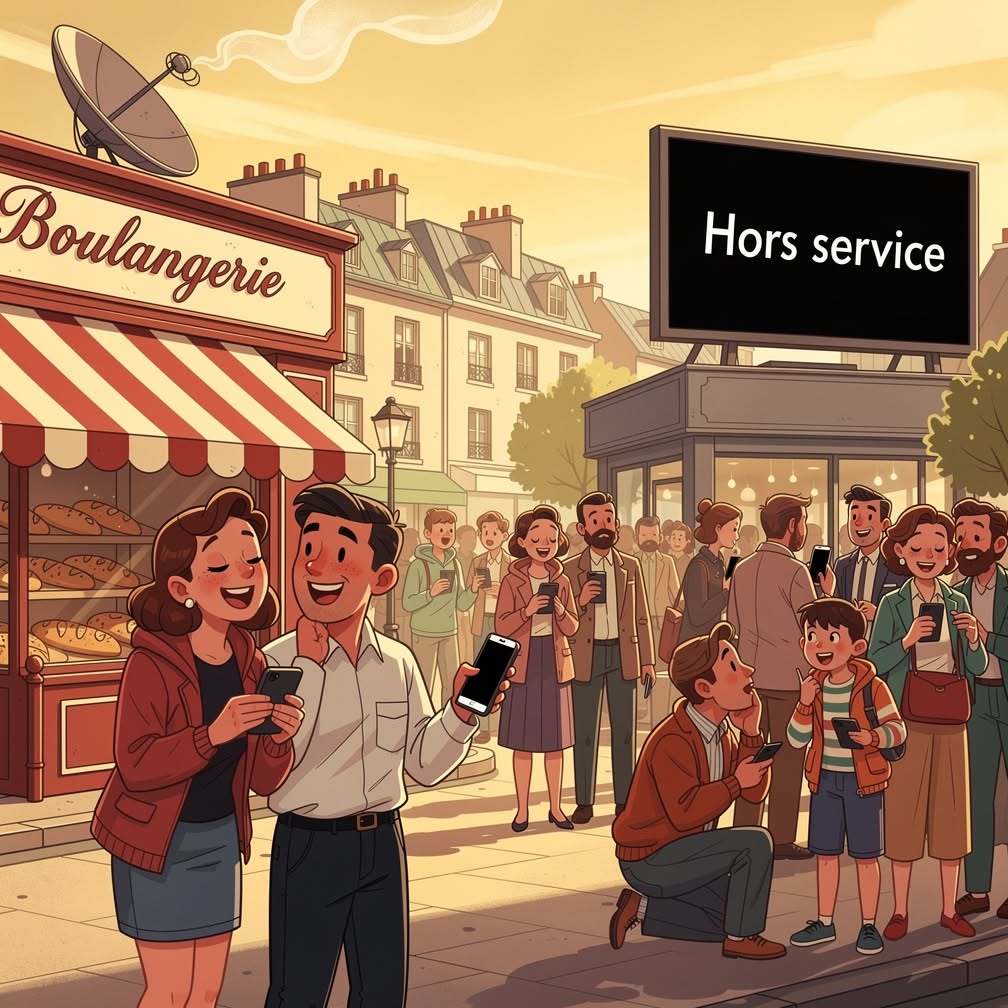
*Royaume Franco-Bogmoulien, 2059.* - Servante!? apportez moi un café. - Oui Sosa ça ser- ah att.. https://t.co/hrCR3Kq9Bu #Futurisme #SciFi #Culture

Rеvеn 14h

La salida de Cucu con el Duki para mofarse de Argentina es café para cafeteros https://t.co/cO6O33f5oB #Argentina #Cultura #Música

Sie lügt. Und dazu noch schlecht. Ganz stolz verkündete sie zunächst, dass AfDler bei ihr keinen Kaffee bekommen. Schließlich seien das alles Nazis. Und er ein „AfD-Schmock“. Dann kam der Shitstorm und plötzlich soll der AfDler angeblich eine Schwarze beleidigt haben. Läuft gerade nicht gut für Kristina vom Café Eule. Ich denke, das hatte sie sich ganz anders vorgestellt. #Politik #Shitstorm #CaféEule

Según un estudio de la Asociación Estadounidense del Corazón, consumir hasta cinco tazas de café al día se considera seguro y puede estar relacionado con un menor riesgo cardiovascular, aunque es importante tener en cuenta que los beneficios pueden variar según la forma de preparación y la adición de ingredientes como azúcares y lácteos. #CaféSaludable #Cafeína #RiesgoCardiovascular

La pregunta del millón podría tener respuesta: ¿Cuánto café es saludable?

Bezüglich der Inhaberin Kristiana Elig vom Café Eule in Berlin: Roy Jeschhorn, stabiler AfD-Wähler, bringt es mit wenigen Worten auf den Punkt. Der Typ ist einfach genial. https://t.co/5kQBAF31st #Berlin #CaféEule #AfD

Die Betreiberin des Café Eule in Berlin hat jetzt ein Schild angebracht, dass sie keine „AfD-Vollschmocks“ bedienen will. Ach ja…und sie findet sich hübsch. https://t.co/wXNU1ekv81 #Berlin #Café #Politik

Ik kon nadien niet meer slapen dus heb ik naar oude Eminem-liedjes geluisterd en koffies gemaakt met te veel cafeïne. Ik heb elke dag controle door gele trui. Na alle mediaverplichtingen ga ik naar de controle, en soms komen ze ook ‘random’ in de ochtend. ‘I feel sorry’ voor de controleurs. Het is niet hun fout. Zij doen gewoon hun werk.

‘Schandalig’: ophef nadat Pogacar en Vingegaard ‘s nachts van bed worden gelicht voor dopingcontrole
www.ad.nl

Ik kon nadien niet meer slapen dus heb ik naar oude Eminem-liedjes geluisterd en koffies gemaakt met te veel cafeïne. Ik heb elke dag controle door gele trui. Na alle mediaverplichtingen ga ik naar de controle, en soms komen ze ook ‘random’ in de ochtend. ‘I feel sorry’ voor de controleurs. Het is niet hun fout. Zij doen gewoon hun werk.

‘Schandalig’: ophef in Tour nadat Pogacar en Vingegaard ‘s nachts van bed worden gelicht voor dopingcontrole
www.ad.nl

Ausgrenzung von Andersdenkenden! Woher kennen wir das nur?! 🙄 Ein halbes Jahr später wird wieder rumgejammert, weil das Café schließen musste, da die Kunden ausbleiben! Die lernen einfach nicht dazu! https://t.co/a4kx94ypp2 #Gesellschaft #Diskriminierung #Toleranz

Insanity: The Eule café in the west of Berlin is being flooded with negative reviews after the operator refused to sell coffee to an AfD man! Now she is complaining in the media about the shitstorm. Well... how about simply not serving AfD politicians like (translated)

“Onze lijn is: ook journalisten zijn burgers, en socials zijn niet de krant.” Sorry? Natuurlijk zijn journalisten ook burgers. Maar een burger heeft geen 50.000+ volgers juist vanwege een journalistieke functie, geen toegang tot een groot mediaplatform als de @volkskrant en geen professioneel gezag dat aan zijn publicaties wordt ontleend. Op X discussieert u niet als een anonieme burger in het café, @mkeulemans. U doet dat als wetenschapsjournalist van de @Volkskrant. Dat geeft u meer invloed, maar brengt ook extra verantwoordelijkheid mee. Daarom vind ik het onderscheid tussen vrijheid van meningsuiting en journalistieke normen belangrijk (los van de klacht van @mauricedehond). Vrijheid van meningsuiting gaat over wat u mág zeggen. Journalistieke normen gaan over hoe zorgvuldig u behoort te handelen wanneer u informatie verspreidt, mensen beoordeelt of het publieke debat beïnvloedt. Als sociale media volledig buiten journalistieke verantwoordelijkheid vallen, waarom bestaan er dan journalistieke codes, richtlijnen voor sociale media en een Raad voor de Journalistiek? Dan zou iedere journalist op X naar believen kunnen beschuldigen, framen of kwalificeren onder het mom van 'ik spreek hier als burger'. Dat lijkt mij niet de bedoeling. Als die normen ophouden te bestaan zodra een journalist op sociale media actief wordt, verliest het begrip journalistieke verantwoordelijkheid veel van zijn betekenis. #Journalistiek #VrijheidVanMeningsuiting #SocialeMedia

Ich möchte das „Cafe Eule im Park am Gleisdreieck“ in Berlin bekannt machen. Dort wird gewissen Menschen stolz der Kaffee verweigert. Mal sehen, wie lange noch dieser Trulla schlechte Bewertungen „scheissegal“ sind. https://t.co/dgj48PPdaF #Berlin #Café #Kaffee

Argentina se prepara con fervor y superstición para la final del Mundial contra España, reuniéndose en cafés, bares y en el emblemático Obelisco, mientras los seguidores rinden homenaje a Diego Maradona en busca de una cuarta estrella, todo en un ambiente de euforia y devoción futbolística. #MundialDeFútbol #Argentina #Maradona

San Maradona y los sortilegios argentinos
Blondie 3d

Fraîcheur du matin (j’ai même eu des petits frissons !). B’jour ! Un café, breuvage des guerriers, indispensable ! Bonne journée ! #SaturdayMotivation https://t.co/TrMWxIStev #MorningVibes #CoffeeLovers #GoodMorning

La commune de Brasschaat a décidé de fermer provisoirement la ferme pédagogique Mikerf et son café suite à une épidémie de la bactérie STEC, qui a gravement affecté cinq enfants, probablement contaminés sur le site, pendant que l'enquête épidémiologique est en cours. #Brasschaat #STEC #SécuritéAlimentaire

Epidémie de la bactérie STEC: la commune de Brasschaat ferme provisoirement une ferme pédagogique, cinq enfants gravement touchés
tronk 4d

Sol y Cinzia haciendo campaña contra EMANUEL AL 9009 Sol: "En una guerra representa al general que está en su oficina y que manda a los soldados a que se maten solos y le chupa un huevo que mueran, mientras él está tranquilo tomándose un café" Cinzia: "Además con lo de los shippeos, estuviste hace 15 años, no puede ser que tu patada de ahogado y tu estrategia de juego sea un shippeo con una mujer del repechaje que está casada" Sol: "Eso me parece lo más grave, que sea con una persona casada y no es la primera, la participante que se fue (Daniela) también estaba casada. Eso hace un caballero? Eso hace un tipo de barrio con códigos? Es un juego válido el de Emanuel pero es un juego de cobarde y cagón" #Política #Campaña #Ética

It always moves me to think of the eve of a tragedy. Today, on the Friday 90 years ago when some neighbors, somewhere, were talking peacefully in a café without knowing that the next day they would be killed, kill each other, or die because of the decision of some barbaric coup plotters. (translated)