
"I am not aware of it. No, no proposal has been made in this regard. Certainly, it has not been discussed," said presidential spokesman Dmitry Peskov, responding to a related question, as cited by Tass. #Ucraina #Russia #Diplomazia (translated)
"I am not aware of it. No, no proposal has been made in this regard. Certainly, it has not been discussed," said presidential spokesman Dmitry Peskov, responding to a related question, as cited by Tass. #Ucraina #Russia #Diplomazia (translated)
Referring to the Tass agency, Peskov cut short by assuring that he was not aware of such requests and specifying that, during the meetings in the Emirates, such an option was never a subject of discussion. #Ucraina #Finlandia #Moldavia (translated)
"I am not aware of it. No, no proposal has been put forward in that regard. Certainly, it has not been discussed," said Kremlin spokesman Dmitry Peskov, responding to a question on the matter. #Russia #Finlandia #Ucraina (translated)
But the Kremlin denies this account. "I am not aware of it. No, no proposal has been made in this regard. Certainly, it has not been discussed," said presidential spokesperson Dmitry Peskov, responding to a question on the matter, as quoted by Tass. #Ucraina #Russia #Geopolitica (translated)

The author recalled a phrase by Primo Levi stating that when understanding is impossible, knowing remains necessary. He added that this need also pertained to the present and that, before judging what appears different, one must make the effort to know it. (translated)

The article explores the origin and threats to human intelligence, highlighting the risk of becoming like cows, who suffer the consequences of complex systems they do not understand, while Massimo Polidoro discusses the importance of understanding how such systems work to preserve our evolutionary advantage. #intelligenza #conoscenza #evoluzione (translated)


An investigation has been launched by the Santa Barbara police after 27 participants in a half marathon were hospitalized with unusual symptoms, including hallucinations and loss of consciousness, following exceptionally warm weather for the time of year. #MezzaMaratona #SantaBarbara #Sport (translated)


The author wrote that a papyrus could still reveal words so far unreadable and that an artifact could provide new details about its history. He added that artificial intelligence and new technologies allowed for further deepening of knowledge. (translated)


Coordinated solitude, author Claudio Aloisio Written by Pino Rotta, November 8, 2026 Claudio Aloisio is a communication and marketing professional, a field in which he has worked for many years. When his first essay "Coordinated Solitude" (Ed. Ideacoop Media Service, 2026) was released, sharing the same field of activity and interests (albeit with different directions and experiences), I found it interesting to read it, especially since we share the same city but have not met, which was already a good reason to find the essay interesting and its title stimulating. "Coordinated solitude" is an essay that analyzes, with a wealth of documentation and bibliography, the phenomena of the formation of convergences or exclusions among groups and individuals through the study of media languages and, in particular, those of the digital domain. A field that has already been widely investigated for several years. My first approach to these new linguistic proposals dates back, among other readings, to a 1994 essay "Collective Intelligence" by Pierre Levy. In that essay, Levy, at the dawn of the web era, launched the idea that the network, which collected the contributions of millions of users, contained them all without controlling their paths, interactions, or effects. Stimulating concepts that today help us understand how much conflict can arise between theory and its application considering time and technological development. However, Aloisio surprises the reader with suggestions from the very first pages of the essay. In fact, despite addressing the analysis of digital languages with an epistemological line rooted in Anglo-Saxon studies, particularly American ones, from the outset the author seems to suggest that this is not a “technical” essay but is entirely political in the higher sense of the term. The first reference is found in the citation of an author who was among the fathers of European sociology in the early years of the last century: Emile Durkheim, one of the first sociologists and philosophers who analyzed social phenomena with enormous meticulousness and rigor, linking religion with social structure. This opening will be found in the subsequent pages of "Coordinated Solitude," but it will not be the only surprise in Aloisio's analytical developments. In the essay, the author describes how people who may share spaces, interests, and common values, by finding them in the digital world, can at a certain point recognize themselves in different affiliations and even come to see in others a “us” that makes them akin to their own story or a “them” that indicates a distance, exclusion, and even a threat in relation to it. The causes of these dynamics are very well structured in the essay, as is the well-structured context in which individual stories are born, meet, and ultimately find different outcomes. Outcomes that can lead to reinforcing one's affiliations, which, however, are discovered at the end of the interaction process and that, throughout the journey, rarely reach a state of awareness. Outcomes that are influenced by pre-existing value structures that do not necessarily coincide with those of the members of the groups with which one identifies or clashes. This path is analyzed by Aloisio by considering the social dynamics of the West, examining and contrasting similar but not necessarily overlapping social realities, such as American and Italian society. In the identification processes that coexist in these social realities, the belonging to social class, religious group, ethnicity, sexual orientation, and sense of nation enters strongly. Everyone has their own experiences, but at the end of a journey of interaction, now almost exclusively digital, one finds oneself sharing a sense of belonging with other multitudes of people who have completely different experiences. And in this sense of belonging, fears of the future, frustrations of the past and present are downloaded, and one is enveloped by fears and anger that must find an enemy to blame. An enemy that is often suggested by the discovery of affinities among the groups that are created, much more often than not created, on digital platforms. Addressing the current nature of the algorithms governed by Artificial Intelligence, the author suggests the method through which these affiliations arise, which can be irrational but are entirely real and influence individual and social daily life. The individual in the digital dimension, which becomes the everyday reality of social action, is called to take responsibility for maintaining their conviction and belonging or risk feeling excluded, isolated, alone. The weight of a choice that often becomes distressing and paralyzing. But how is it possible to read and interpret these “Coordinated Solitudes”? Aloisio's essay provides a reading and suggests a methodology to identify the path that sometimes, but not always, leads to the awareness of how certain choices are made and what elements need to be questioned to verify if the reading of these languages withstands the law of contradiction and thus can be used to ascribe scientific value to it. But at the end of this journey of understanding languages, forms of aggregation, and the proof of the compatibility of individual choices, Aloisio presents us with another surprise that speaks volumes about his educational journey. The discourse of education and the reading of digital languages is ultimately a discourse on democracy, on social structure, and these factors cannot be disregarded without risking losing the ability to give meaning to one’s social action as well as one’s communicative action. It is my view that the surprise that is the coherence of the entire analysis of the essay comes with the reference that the author makes at the end to the work of Jürgen Habermas. The most important philosopher, sociologist of language, heir of the Frankfurt School who passed away at the age of 97 in March 2026, is the foremost interpreter of the theory of democracy and of the criticism of oppressive authority, which does not exclude conflict but determines its progressive outcome through the mediation of communicative action. Communicative action that questions institutions not to destroy them but to avoid remaining subjected to authoritarianism and, in the form of linguistic mediation, to be active subjects, not subdued by a system that, due to the nature of formal institutions, can always degenerate into authoritarianism. Coordinated solitudes thus find themselves with a positive perspective, with outcomes that are never guaranteed or predetermined, but feasible for reconstructing trust in the future realized through the recognition of the other as part of a common living and not as a threat to be feared, excluded, or even suppressed. Lastly, it should be noted that, although not explicitly considered, Aloisio does not prioritize simplification in the reading of contexts, evading complexity as a fundamental element of contemporary society's reality (perhaps it would have been useful to refer to Edgard Morin's theories), but it is evident that complexity must be confronted with different analytical methodologies and that the appeal to the work of Zygmunt Bauman leads us to presume this. https://www.heliosmag.it/?p=1659 (translated)

Antonio Carcaterra, the new rector of La Sapienza, aims to strengthen excellence in classical studies through technological innovation and collaborations with the healthcare system and international agencies, aiming to make the university a global hub of knowledge and development. #Sapienza #Innovazione #Roma (translated)
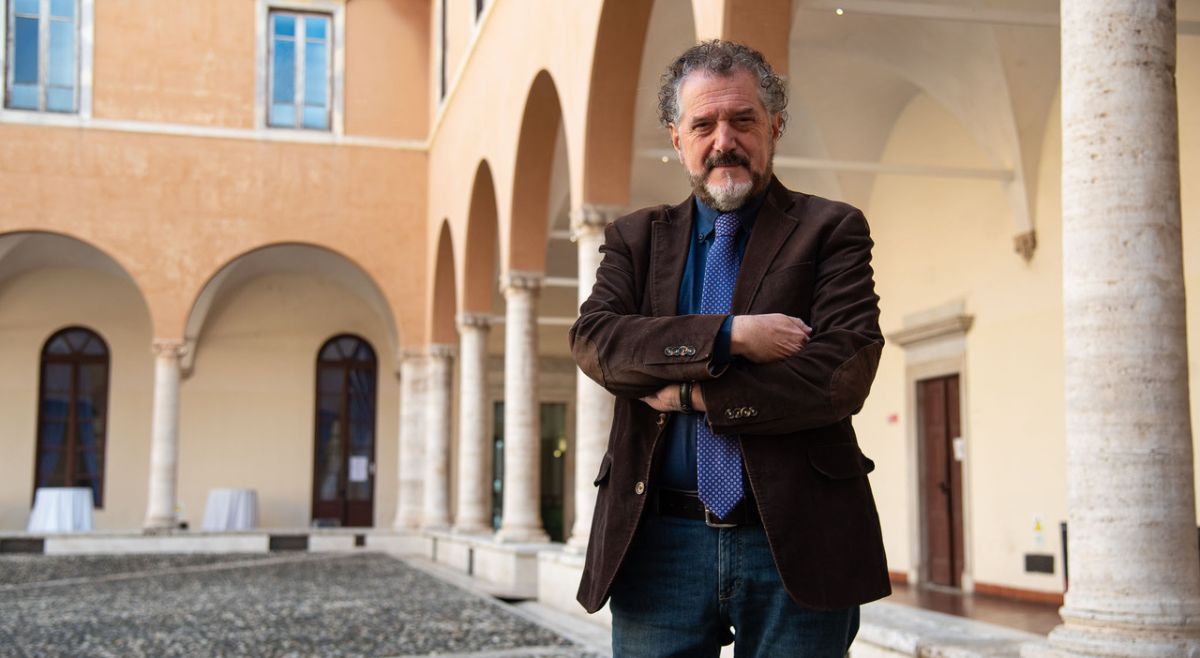

De Cos has been described by Spanish Minister of Economy Carlos Cuerpo as the union of extraordinary knowledge of economic, fiscal, and monetary policy and extensive expertise in the international banking sector and financial stability. #BCE #Lagarde #PoliticaMonetaria (translated)

The author of the post wrote that, during Roberto Speranza's hearing before the Covid Commission, offensive and particularly insulting expressions had been directed at him. He argued that the episode confirmed, in his view, that the right considered inquiry commissions as tools of opposition rather than of knowledge. #Covid19 #Commissione #Politica #IT (translated)
We are aware of the letter addressed by Prime Minister Meloni to President Costa and all members of the European Council – she added – President Ursula von der Leyen has also received it. #Ucraina #GiorgiaMeloni #Nato (translated)
The author wrote that the miners of the Sos Enattos mine, after extracting a lot from the mountain, wanted to give something back to the territory, offering a new opportunity, a perspective for development, and a contribution to knowledge. He added that, after digging deep, they were helping to look beyond. https://t.co/frgaRF7y61 #miniera #Sardegna #sviluppo #IT (translated)

Profumo emphasizes the need for a national knowledge plan in Italy, similar to the former Ina-Casa Plan, to address demographic challenges and promote development through the alliance between the state, businesses, and workers. #EducazionePermanente #PianoItalia #InnovazioneEconomica (translated)


Daniele Mari wrote that Inter had put in a convincing performance away against Feyenoord, where, according to him, Como had fallen. He pointed out Barella, Dimarco, and Akanji, whom he defined as among the most criticized, as some of the best on the field, and said he did not consider their performance to be coincidental. He added that Carlos Augusto had neutralized Moussa and that Djed Spence had been the protagonist of all the dangerous actions, with a remarkable performance. #Inter #Feyenoord #Calcio (translated)

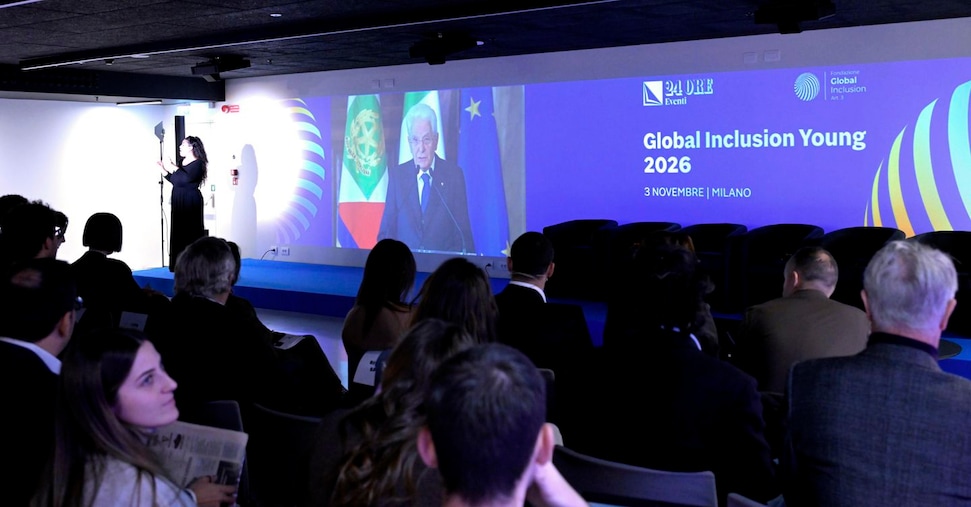
The Global Inclusion 2026, held in Milan, brought together companies, universities, and the third sector to discuss the challenges and opportunities of future work, highlighting the importance of a new social pact and responsibility in knowledge in an era of rapid technological and social changes. #GlobalInclusion2026 #Giovani #IntelligenzaArtificiale (translated)

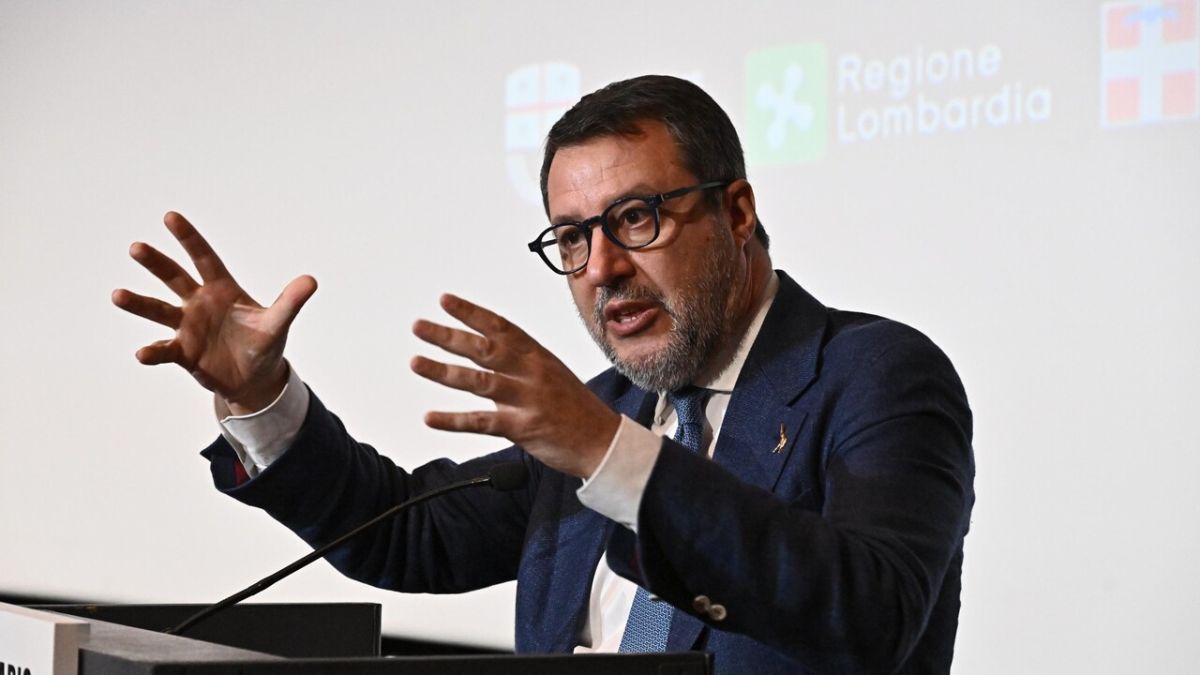
Matteo Salvini stated that he is not aware of the cuts to education and promised that the League will present proposals to address the situation. #Scuola #Tagli #Politica (translated)
On December 4, six million Italians living abroad are called to vote for the Comites elections, but most are unaware of this event due to insufficient information and the procedural difficulties related to registration and voting. #Comites #ItalianiAllEstero #Elezioni2026 (translated)


mar🪐 ⁹⁸🏒 wrote that she couldn't believe it had emerged that the two people spent Halloween together, adding that it felt like being on the eve of New Year's 2025. https://t.co/U0p5PQplqI #Halloween #NewYearsEve #Feste (translated)






