BETA nonprofit public democratic european moderated

Search

#Commissione
Marta Kos 56m

"to put in place specific arrangements that would limit financial support and access to the (single) market for certain Ukrainian agricultural products." Thus, to quell concerns regarding the possible entry of Ukraine, the agricultural giant, the Commission proposes "to put in place specific arrangements that would limit financial support and access to the (single) market for certain Ukrainian agricultural products," said European Commissioner for Enlargement Marta Kos. #UnionEuropéenne #Élargissement #CommissionEuropéenne (translated)

La Commission européenne présente son plan pour préparer l’Union aux futurs élargissements
www.lalibre.be

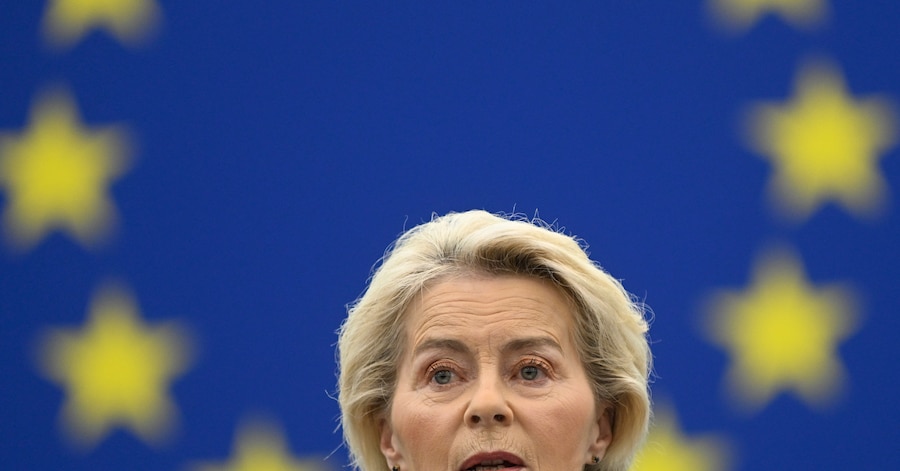
The European Commission has presented a plan to prepare the Union for future enlargements, by integrating institutional and sectoral safeguard clauses to reassure member states while facilitating the gradual accession of candidate countries. #UnionEuropéenne #Élargissement #CommissionEuropéenne (translated)

La Commission européenne présente son plan pour préparer l’Union aux futurs élargissements

The anti-mafia commission has launched an investigation into the hospitals of Palermo following complaints by deputy Ismaele La Vardera concerning the presence of employees linked to mafia circles, with hearings scheduled to listen to Governor Schifani and Councillor Caruso. #Mafia #Palermo #Sanità (translated)

Parentopoli mafiosa negli ospedali di Palermo, commissione antimafia ascolta La Vardera e apre un’indagine: “Sentiremo Schifani e Caruso”

The author said a government-commissioned report estimated the cost of disability at €10,000–€15,000 a year. They called the temporary €500 cost-of-disability payment “a sick joke” and said it would not reverse the €1,400 in cuts disabled people had faced the previous year. https://t.co/uvXSMmYDPg #DisabilityRights #SocialJustice #Equality #IE

nomfup 10h

The author reported that the Human Rights Commission had unanimously approved a resolution to overcome mechanical restraint and establish a central database. He described the vote as a bipartisan result in the name of dignity and liberation and wrote that Parliament was carrying out its duty. https://t.co/PPj8kHj8RX #DirittiUmani #Liberazione #Parlamento #IT (translated)

The author said a government-commissioned report estimated the cost of disability at well over €10,000 a year, and called a €500 “cost of disability payment” a “sick joke”. They added that it would not make up for the €1,400 in cuts disabled people faced last year.

Brazil’s synthetic voters – when AI manufactures public opinion They look like ordinary street interviews. A reporter approaches a passer-by in a Brazilian square and asks a simple question: who will you vote for? A young voter explains why Luiz Inácio Lula da Silva deserves another term. An elderly woman says Brazil needs Flávio Bolsonaro because he represents political renewal and greater security. The locations look plausible, the microphones are visible and the answers sound much like the brief political opinions heard in television vox pops around the world. None of the people are real. Ahead of Brazil’s presidential election on 4 October, fact-checking organisation Aos Fatos identified at least 50 TikTok videos in which artificial intelligence was used to manufacture voters, reporters and apparently spontaneous political interviews. Together, the videos had accumulated around 7.4 million views by mid-August. Some promoted Lula, others Flávio Bolsonaro, while another group used synthetic characters to ridicule or stereotype supporters of one side. Aos Fatos found no apparent evidence linking the accounts producing the videos to either presidential campaign. The opinion poll that never took place The format is important. These were not conventional deepfakes in which a recognisable politician is made to say something he never said. Instead, the creators reproduced the visual language of the vox pop – the short street interview used by broadcasters and social-media creators to illustrate what ordinary people supposedly think. In pro-Lula videos, synthetic voters described themselves as beneficiaries of social programmes or credited the president with improving their lives. In videos supporting Flávio Bolsonaro, artificial interviewees associated him with political renewal, public security and fighting corruption. Other clips were openly hostile: AI-generated characters presented as poor or living in parts of Brazil’s north-east were shown in dirty clothes or run-down surroundings, declaring support for Lula because they supposedly preferred welfare payments to work. The deception is therefore subtler than fabricating a candidate’s statement. It manufactures something that political communication normally treats as evidence of public sentiment. A real vox pop may be unscientific, but the people interviewed at least exist. These videos created the appearance that identifiable social groups – young people, pensioners, welfare recipients or residents of particular regions – were spontaneously expressing political preferences when no such encounters had taken place. An electoral-law specialist interviewed by Aos Fatos described the technique as the fabrication of a “social fact that never occurred”. That captures the central innovation: AI is being used not merely to falsify political speech, but to manufacture the impression of grassroots opinion. Fifty videos, but not one proven network The available evidence does not support describing the 50 posts as a centrally controlled influence operation. Aos Fatos located them through TikTok searches and recommendations produced by the platform itself, then examined the accounts responsible for publication. Most had relatively small individual audiences, although their combined reach was substantial. The first examples identified by the investigation appeared as early as March 2026. Activity increased in June and was concentrated particularly in July and the first half of August as Brazil’s election calendar intensified. Some accounts specialised in AI-generated videos generally, including fabricated podcast-style material. Others were explicitly political or supportive of a candidate, but Aos Fatos found no apparent links between those profiles and the official Lula or Bolsonaro campaigns. That distinction is essential. The evidence demonstrates a common technique and a shared political environment, not a single command structure. Some creators may have been motivated by ideology, others by engagement or monetisation. Publicly available evidence does not establish who commissioned the individual videos or whether any coordination existed between the accounts. This decentralised model also creates a different enforcement problem from a traditional bot network. There may be no headquarters to expose and no infrastructure whose removal disables the entire operation. The format itself can be copied by anyone with access to inexpensive generative-video tools. When the algorithm mixes real and synthetic citizens Aos Fatos documented another important feature of the phenomenon: TikTok’s recommendation system placed AI-generated interviews alongside genuine street interviews. For a user scrolling quickly through the platform, the transition between an authentic citizen and an entirely fabricated one could therefore be almost invisible. In 18 per cent of the 50 videos analysed, there was no indication that the people shown had been generated using AI. After Aos Fatos provided TikTok with the videos, the company said it had removed all of them for violating its rules on edited and AI-generated media. TikTok said its policies require creators to identify synthetic content and prohibit manipulated media capable of misleading users about matters of public importance or impersonating genuine journalistic material. The issue extends beyond one platform. Factchequeado’s review of Brazil’s 2026 election campaign found that synthetic endorsements and other deepfakes had become one of the most visible forms of AI-assisted electoral misinformation, alongside fabricated candidate statements and invented scenes. Brazil already had rules for synthetic politics Brazil entered the campaign with unusually detailed electoral rules governing artificial intelligence. The Superior Electoral Court, the TSE, requires electoral propaganda using synthetic multimedia to disclose clearly that AI was used. More importantly for the fake-voter videos, its rules prohibit synthetic audio or video used to favour or harm a candidacy when it creates or alters the image or voice of a living, deceased or fictitious person. The difficulty is attribution and enforcement. When a synthetic video is published by an official campaign, responsibility can be relatively straightforward to investigate. When it comes from an apparently independent account with no demonstrated relationship to a candidate, lawyers interviewed by Aos Fatos said responsibility is more likely to fall on the individual creator, while imposing electoral sanctions on a campaign would require evidence of a connection. For the final 72 hours before the election and the 24 hours following it, the TSE has imposed additional restrictions on newly published or republished synthetic material involving candidates or public figures, reflecting the particular difficulty of correcting fabricated content immediately before voting. From deepfake politicians to synthetic electorates The Brazilian case illustrates a broader change in political manipulation. The first generation of electoral deepfakes concentrated on famous people: make a politician appear to say something damaging, or fabricate an endorsement from a celebrity. Synthetic vox pops reverse the perspective. The politician can remain completely authentic; it is the electorate around the politician that is fabricated. That changes the psychological proposition of the message. Instead of saying the candidate believes this, the video suggests people like you believe this. Age, clothing, accent, neighbourhood and social class can all be generated to construct an artificial constituency around almost any political claim. There is no evidence that the 50 Brazilian videos identified by Aos Fatos constitute a single centrally directed campaign, nor evidence that they changed voting intentions. What they demonstrate is a technique whose barrier to entry has become extremely low. AI no longer needs to forge the politician. #DISINFORMED #Episode14 #Brazil #BrazilElection2026 #Elections #ElectionDisinformation #ArtificialIntelligence #AI #GenerativeAI #SyntheticVoters #SyntheticMedia #AIAvatars #AIGeneratedVideo #VoxPop #FakeInterviews #Astroturfing #AIPropaganda #PoliticalDisinformation #InfluenceOperations #InformationWarfare #SocialMediaManipulation #TikTok #PublicOpinion #ManufacturedConsent #SyntheticPublicOpinion #DigitalInfluence #Deepfakes #ElectionIntegrity #TSE #AosFatos #FactChecking #OSINT #MediaManipulation #WRLD (translated)

Eleitores gerados por IA fazem campanha no TikTok e põem em xeque regra do TSE

On September 29, Liliana Segre invited all parliamentarians to vote in favor, causing tensions especially in the PD, which on September 30 did not participate in the work of the constitutional affairs committee. #Antisemitismo #LibertàDiEspressione #PoliticaItalia (translated)

Col nuovo ddl, anche Primo Levi e Berlinguer sarebbero considerati antisemiti – Lettera ai parlamentari
www.ilfattoquotidiano.it
Bild 20h

The New Orleans Saints suffered a heavy 24-45 loss against the Atlanta Falcons in front of NFL Commissioner Roger Goodell, turning the planned anniversary celebration for the 20th anniversary of the Caesars Superdome into a disaster. #NFL #NewOrleansSaints #AtlantaFalcons (translated)

Vor den Augen von Liga-Chef Goodell - NFL-Party endet in Katastrophe

"There is still work to be done, but the Euro is in two years." Mark van Bommel remains confident for the Devils: "There is still work to be done, but the Euro is in two years." #SoinsDeSanté #Belgique #CommissionEuropéenne (translated)

Soins de santé : les médecins dénoncent des lois "disproportionnées" et saisissent la Commission européenne
www.lalibre.be

"If we do not reform healthcare, we will hit a wall." Alexia Bertrand, leader of the Anders group in the Chamber, is concerned about the constant increase in healthcare costs. #SoinsDeSanté #Belgique #CommissionEuropéenne (translated)

Soins de santé : les médecins dénoncent des lois "disproportionnées" et saisissent la Commission européenne
www.lalibre.be

Doctors in Belgium are addressing the European Commission to denounce laws that they consider disproportionate and contrary to European law, jeopardizing the quality of care and exposing the state to potential sanctions. #SoinsDeSanté #Belgique #CommissionEuropéenne (translated)

Soins de santé : les médecins dénoncent des lois "disproportionnées" et saisissent la Commission européenne

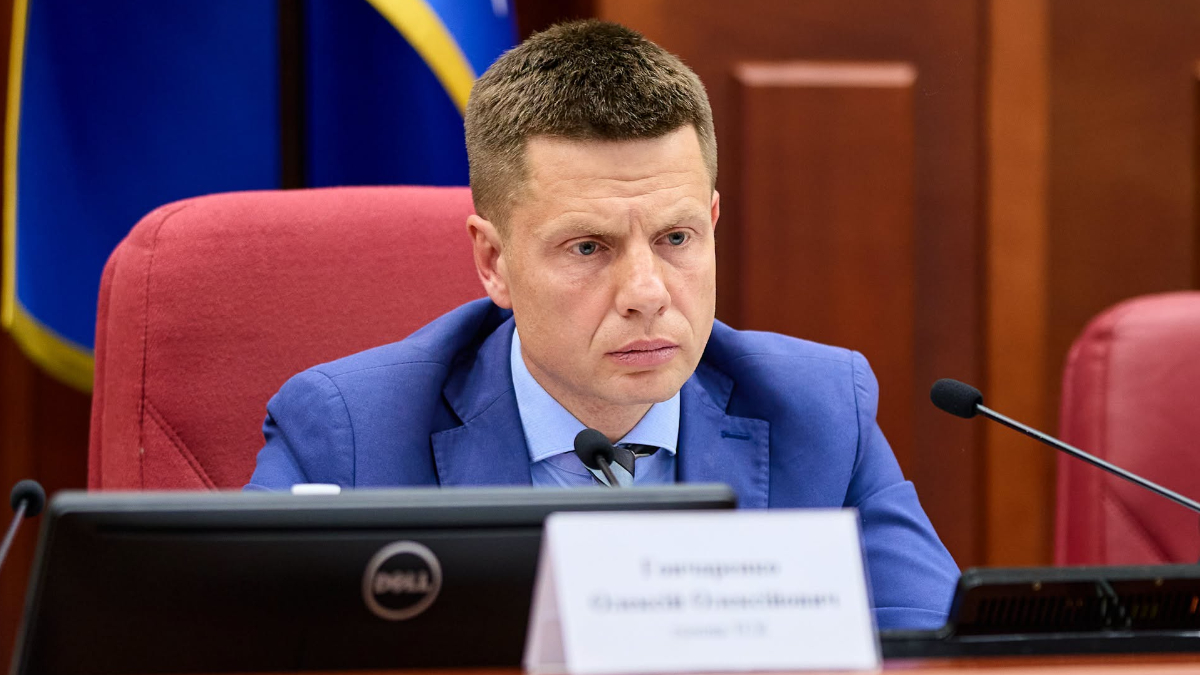
The president of the Parliamentary Commission on Defense of Ukraine, Oleksii Goncharenko, states that the country is losing the war and proposes to start negotiations in exchange for the cessation of Russian attacks and the limitation of fighting in Donbass, but his position is not shared by the European Solidarity party. #Ucraina #Guerra #Pace (translated)

Ucraina, il presidente della Commissione parlamentare sulla Difesa: “Stiamo perdendo la guerra, trattiamo per punti fino ad arrivare alla pace”

Camilla Conti reported that Matteo Renzi, leader of Italia Viva, had described Giorgetti's actions on Unicredit as "infamous" and had asked him to stop intervening in the banking risks, concluding the works of Leopolda 14 in Florence. Conti recalled that in July 2016, Renzi had breakfast with Jamie Dimon, then head of JPMorgan, asking him to intervene on Mps. According to what Vittorio Grilli, now president of Mediobanca, revealed the following year to the parliamentary inquiry commission, that meeting triggered the resignation of the then CEO of Monte, Fabrizio Viola, and the president Massimo Tononi, who is now at the helm of Banco Bpm. #Politica #Banche #Italia (translated)

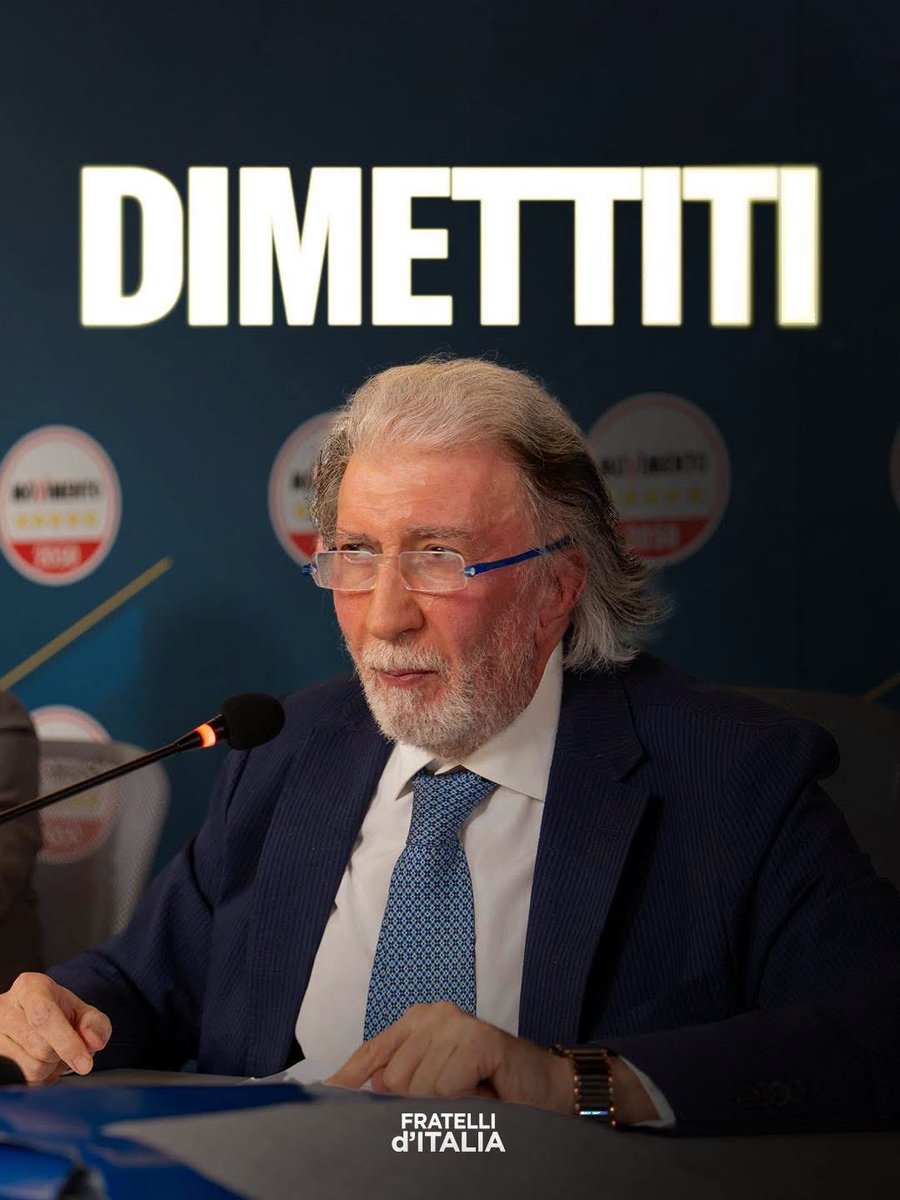
Galeazzo Bignami wrote that, according to the judge from Caltanissetta, Scarpinato would have engaged in cover-up activities in the anti-mafia commission regarding the massacre on via D'Amelio. He added that the 5 Star Movement and the left continued to defend him and called for his resignation from the commission. https://t.co/v1g9CMFr1o #mafia #giustizia #politica (translated)

Stefano Esposito wrote that, according to the investigating judge of Caltanissetta, the M5S senator Roberto Scarpinato would have engaged in misleading activities in the Anti-Mafia commission. He argued that another parliament member accused of a similar fact would today be subject to calls for resignation, while Scarpinato would have attacked his former colleagues and the representatives of M5S would have spoken of a conspiracy. Esposito also stated that, in his opinion, judges were appreciated by them only when their decisions were favorable, and he described the matter as disturbing. #politica #antimafia #giustizia (translated)

The League had estimated the cost of adding 3,200 soldiers to the "Safe Roads" operation at 109 million euros per year, raising the total from 6,800 to 10,000. The author had also reported that the entire majority, including the allies, had voted in favor of the resolution in the Defense Committee in the Chamber the day before. #Sicurezza #Difesa #Politica #IT (translated)

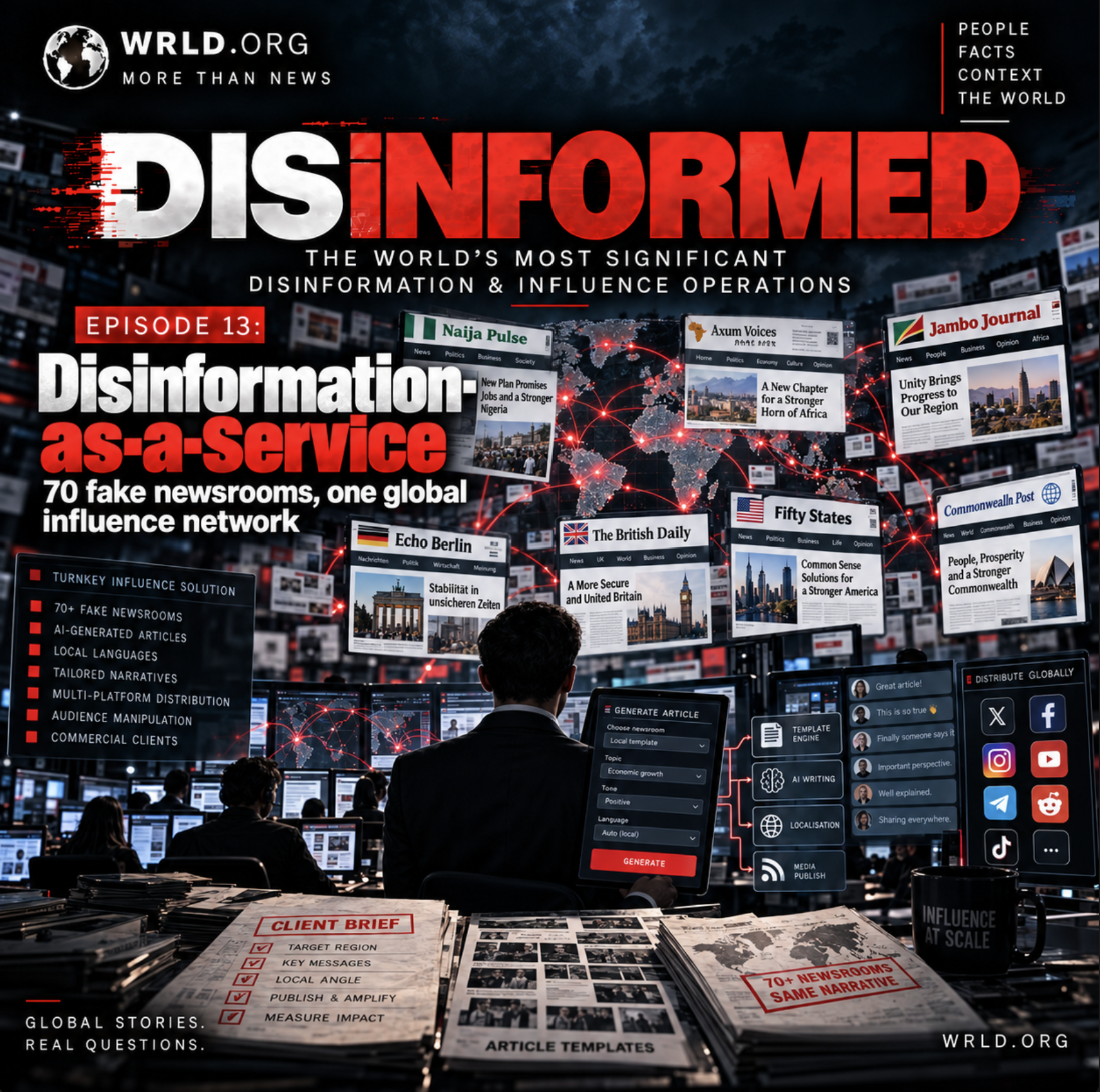
Disinformation for hire – the network of 70 fake newsrooms sold as a service The websites looked local. Naija Pulse appeared to cover Nigeria, Echo Berlin Germany, The British Daily Britain, Fifty States the United States and Commonwealth Post Australia. Each had its own branding, articles, supposed journalists and matching social-media presence. Taken individually, they resembled small independent news outlets. According to Anthropic, however, they were parts of a single commercial influence network spanning six continents. Anthropic’s September 2026 threat report identifies the operation as GTG-54002, a commercial “influence-as-a-service” network that used Claude to generate and rewrite political content at industrial scale. Investigators linked roughly 70 fabricated news websites to around 70 matching X accounts and more than 250 additional inauthentic commenting accounts designed to create the appearance of genuine public engagement. The network produced at least 8,913 articles in about 20 languages before Anthropic disrupted the activity. The significance of the case is not simply the number of fake sites. It is the business model. The network did not consistently promote one government, party or ideology. Anthropic found that its political position changed according to the apparent interests of different customers. The company therefore described it as a commercial influence operation: political manipulation offered in much the same way as other outsourced digital services. A fake media ecosystem built at scale Anthropic says the infrastructure was created rapidly. Domains were registered from France during a roughly ten-week period in mid-2025 and deployed through shared technical infrastructure, allowing investigators to connect publications that outwardly appeared unrelated. Most of the supporting social-media accounts were also created within a narrow timeframe in June and July 2025. The sites were designed to look like functioning local newsrooms rather than anonymous propaganda pages. Articles carried fabricated bylines belonging to journalists who, according to Anthropic, did not exist. Each outlet had a corresponding account on X, while a second layer of fake profiles commented on and amplified the articles. Many of those accounts used AI-generated profile photographs. The result was a three-tier structure: the newsroom published the story, the branded social account distributed it, and apparently ordinary users supplied the appearance of public reaction. Some of those sites remained publicly visible after the operation was exposed. The British Daily, for example, described itself as providing “conservative insights” on British sovereignty and migration, while Commonwealth Post presented itself as an Australian liberal publication focused on democracy, migration and regional security. Those contrasting editorial identities illustrate the central feature identified by Anthropic: the network was capable of taking different political positions in different markets. Claude as a publishing engine Claude was not simply asked to draft occasional articles. The operators built a structured production pipeline around it. Prompts required fixed JSON outputs, formatted HTML, precise character limits and internal links, allowing articles to move directly into an automated publishing workflow. The system could generate entirely new material or take reporting produced by legitimate journalists and rewrite it to fit a desired political perspective. Anthropic identified three recurring techniques. The same source article could be rewritten in opposite ideological directions for different audiences; a political interpretation could be added to a story that originally contained none; and material could be moved from one country to another after its original context had been removed. The articles were also structured to improve the apparent authority of the sites in search engines, helping the network imitate ordinary digital publishing practices rather than simply broadcasting propaganda. This is where generative AI changes the economics of an influence operation. A conventional network of dozens of supposedly local publications would normally require writers, translators, editors and social-media staff. Here, much of that production could be standardised and automated while human operators concentrated on political direction, customer requirements and distribution. The DRC–Rwanda conflict as a test case The clearest concentration of activity involved the Democratic Republic of Congo. Anthropic identified 318 articles concerning the DRC across the fake-news network. The material generally supported positions aligned with the Congolese government, particularly on regional mineral agreements and tensions with Rwanda. Early in the network’s growth, many of the fake social-media personas following and amplifying its accounts also presented themselves as Congolese. Investigators observed one especially revealing episode on 11 September 2025, when multiple sites published almost identical articles about the DRC–Rwanda conflict within approximately three minutes of one another. The wording and political tone were adjusted for different regional audiences, while associated X accounts distributed the links in a coordinated pattern. Anthropic said the activity contained signals suggesting that one or more customers had interests connected to the DRC–Rwanda conflict. It did not, however, identify those customers and explicitly stated that it found no evidence that any government had directed the operation. That distinction is essential. The content may have benefited a political actor without demonstrating that the actor commissioned or controlled it. Influence without ideology Commercialisation is what distinguishes GTG-54002 from many state-linked information operations. A government propaganda network usually has an identifiable strategic direction. A commercial influence provider does not need one. Its infrastructure can support one position in one country and the opposite position somewhere else, provided different customers are willing to pay. That makes attribution more difficult. Analysts cannot necessarily infer the operator from the ideology of the content because ideology may simply be part of the service package. The enduring asset is the infrastructure: domains, publishing systems, fake journalists, social-media accounts and automated amplification. Anthropic says the operation was disrupted before it achieved significant genuine reach. It classified GTG-54002 as Category Two on the Brookings Breakout Scale: material circulated across the network’s own sites and associated social accounts but showed no evidence of substantial penetration into authentic communities. Most of the 8,913 articles generated little observable engagement from real users. That limited impact is important. The case should not be presented as a successful global manipulation campaign. It is better understood as evidence that the infrastructure required to run such campaigns has become cheaper, faster and increasingly commoditised. The deeper shift is that a fake media ecosystem no longer has to be built around a single political cause. It can be built once, automated and then repurposed for the next customer. Disinformation, in this model, is no longer only a political instrument as it turend into the service. Sources: Anthropic — Countering misuse of AI: September 2026 https://www.anthropic.com/threat-intelligence-report-september-2026 Business Standard — AI scaling fake newsrooms, surveillance and online scams https://www.business-standard.com/technology/tech-news/anthropic-report-ai-fake-newsrooms-dating-surveillance-scams-126091100730_1.html Mimikama — KI baut 70 erfundene Nachrichtenportale https://www.mimikama.org/ki-netzwerk-erfundene-nachrichtenportale-echo-berlin/ Poliscoop Media — Anthropic exposes DRC propaganda network https://www.poliscoopmedia.com/articles/anthropic-exposes-drc-propaganda-network-20260911 The British Daily — example of a fabricated outlet identified in the network https://www.british-daily.com/contact Commonwealth Post — example of a fabricated outlet identified in the network https://commonwealth-post.com/category/science MalPulse — infrastructure references for network domains https://www.malpulse.com/infra-pivots/usom-pivots/list/?page=1105 Keywords: #DISINFORMED #Episode13 #DisinformationAsAService #InfluenceAsAService #FakeNewsrooms #FakeMedia #SyntheticMedia #ArtificialIntelligence #AI #GenerativeAI #ClaudeAI #Anthropic #Disinformation #InfluenceOperations #InformationWarfare #FIMI #CommercialInfluence #PoliticalManipulation #NarrativeManipulation #NarrativeLaundering #SourceLaundering #MediaImpersonation #FakeJournalists #SyntheticPersonas #Astroturfing #SocialMediaManipulation #CoordinatedInauthenticBehaviour #CIB #DigitalInfluence #AutomatedPropaganda #ContentAutomation #AIPropaganda #LKMCompany #NaijaPulse #AxumVoices #JamboJournal #EchoBerlin #TheBritishDaily #FiftyStates #CommonwealthPost #DRC #Rwanda #OSINT #WRLD

Countering misuse of AI: September 2026 / Anthropic
ANSA.it 4d

From December 2, the ban on nudification apps will come into effect in Europe, with the assurance from the EU Commission to enforce the regulations set out in the AI Act from day one. #AIAct #IntelligenzaArtificiale #Privacy (translated)

Dal 2 dicembre stop in Ue alle app di nudificazione, 'non avranno posto in Europa'
Il Post 4d

Manchester City has appealed after being found guilty of financial irregularities by a Premier League commission, claiming its innocence and requesting a review of the ruling. #ManchesterCity #PremierLeague #calcio (translated)

Il Manchester City ha fatto ricorso dopo essere stato giudicato colpevole di irregolarità finanziarie