BETA nonprofit public democratic european moderated

Search

#editor

Hoje tá um dia cheio de editoriais do globo, estadão e folha batendo no STF. Todos com um tom apocalíptico exatamente como no período da lava jato e batendo no governo de forma vergonhosa. Parece um remake de dez anos atrás #STF #jornalismo #LavaJato


URGENT - La France insoumise annonce accepter de revenir sur tous les plateaux de BFM TV "à l‘exception de l’émission 100% Mabrouk en raison de sa ligne éditoriale d’extrême droite" #soniamabrouk #bfmtv #lafranceinsoumise https://t.co/APPSq5e72k #bfmtv #lafranceinsoumise #soniamabrouk

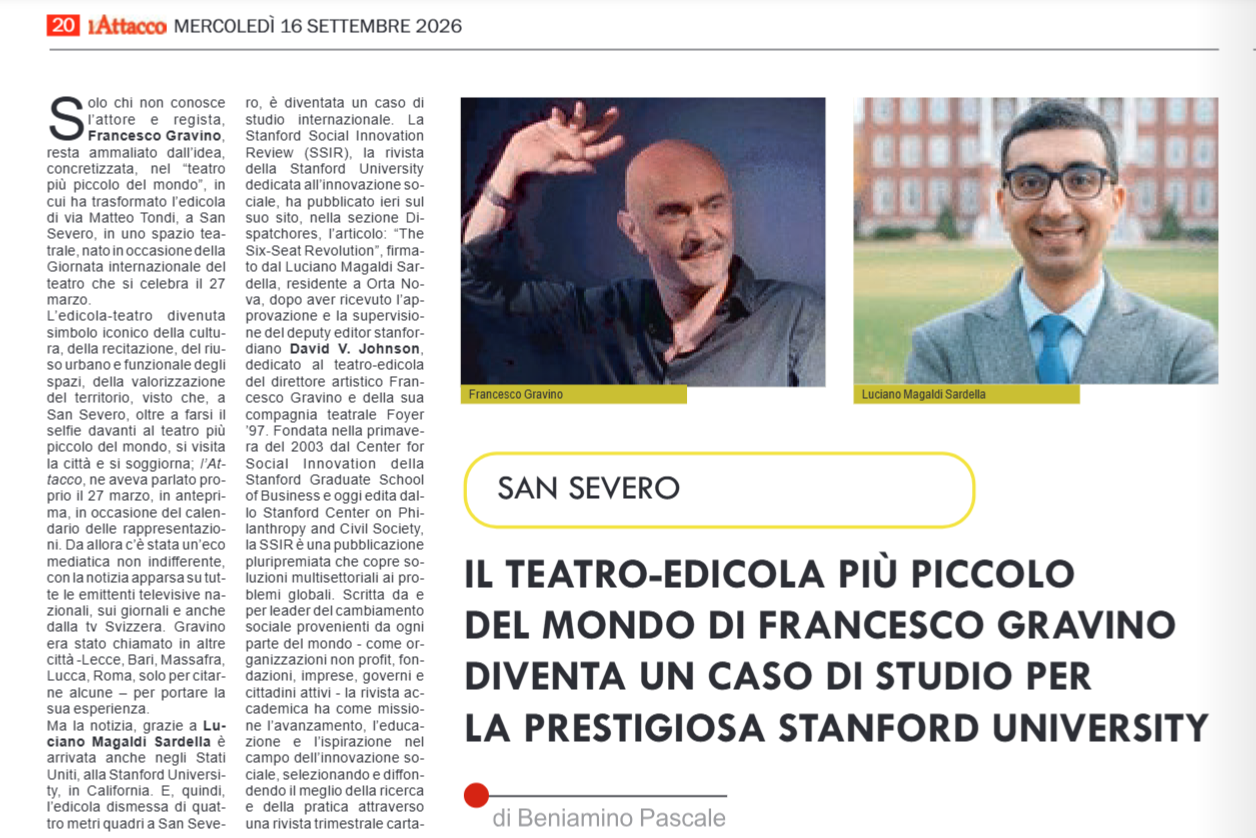
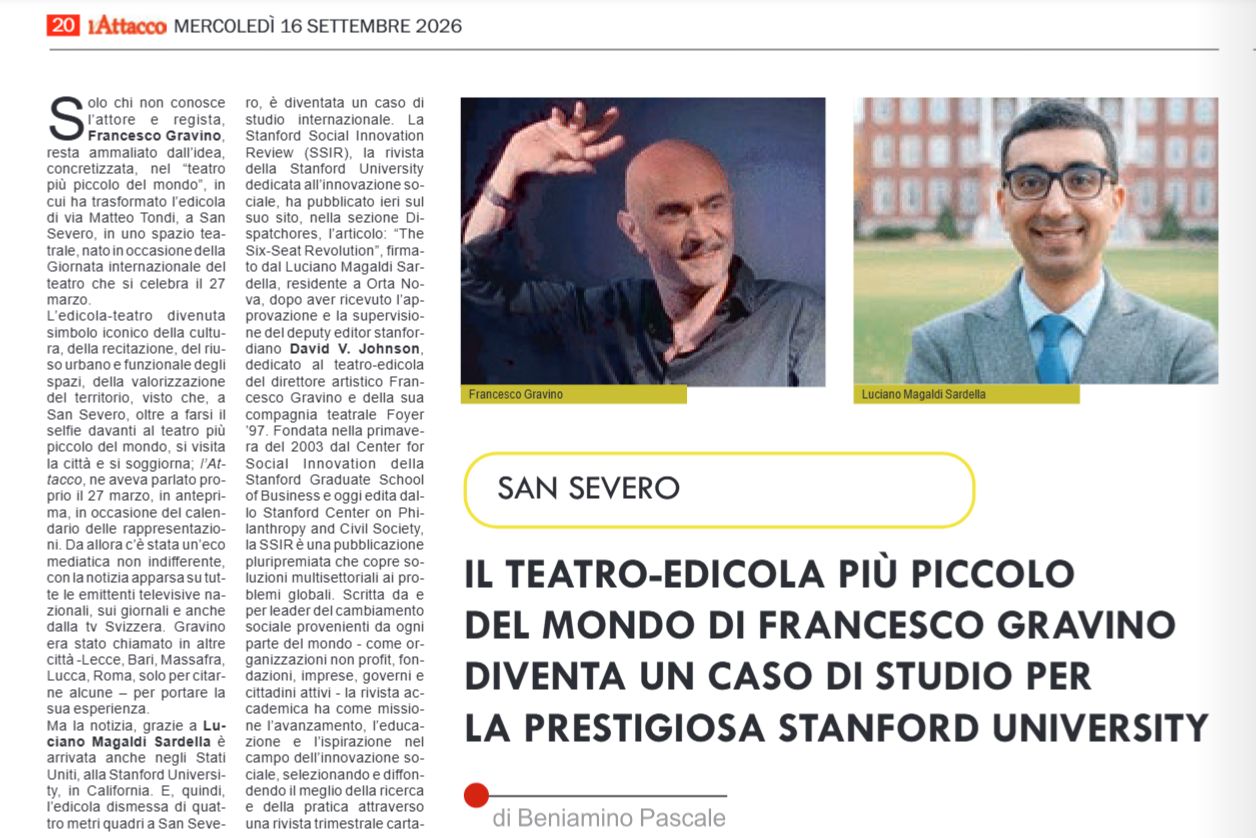
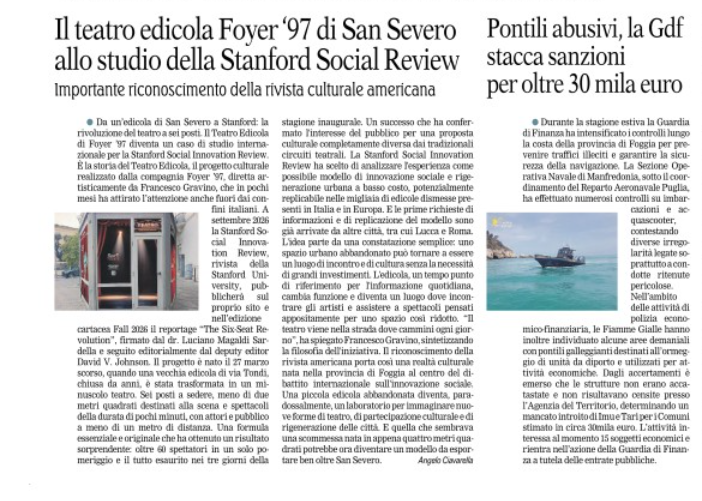
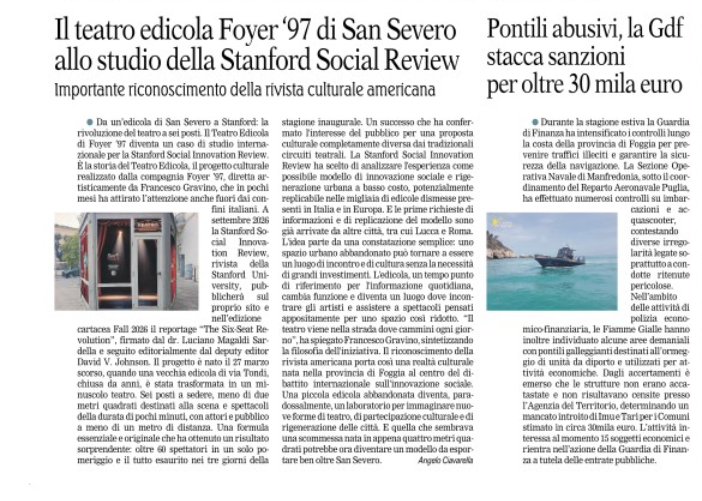
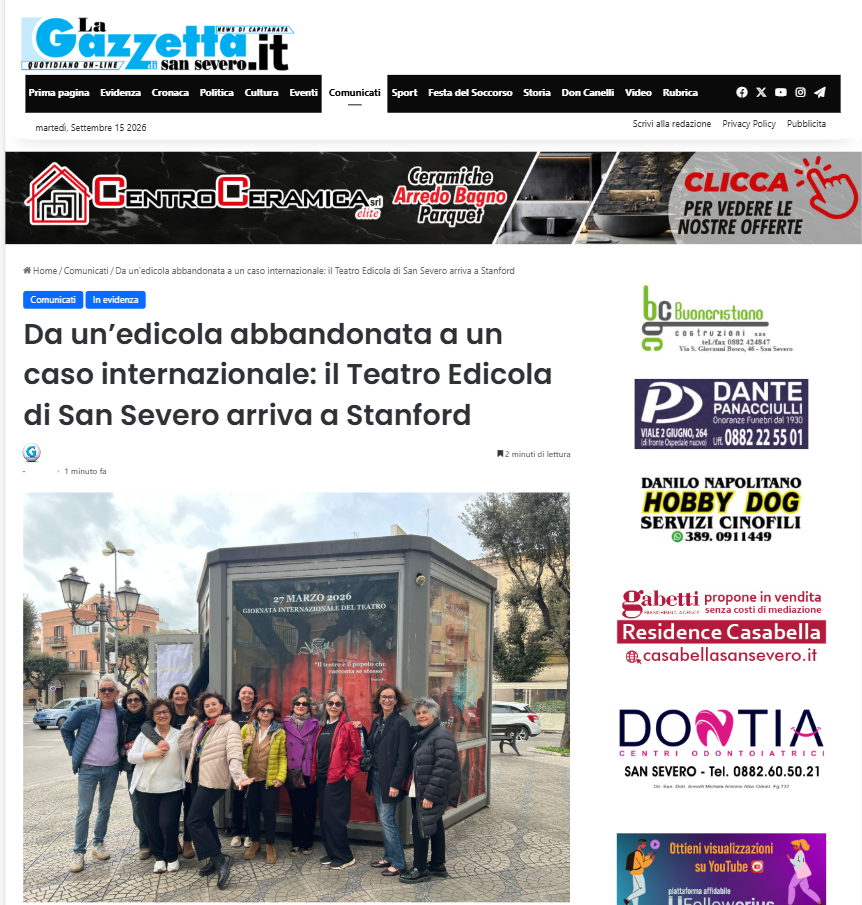
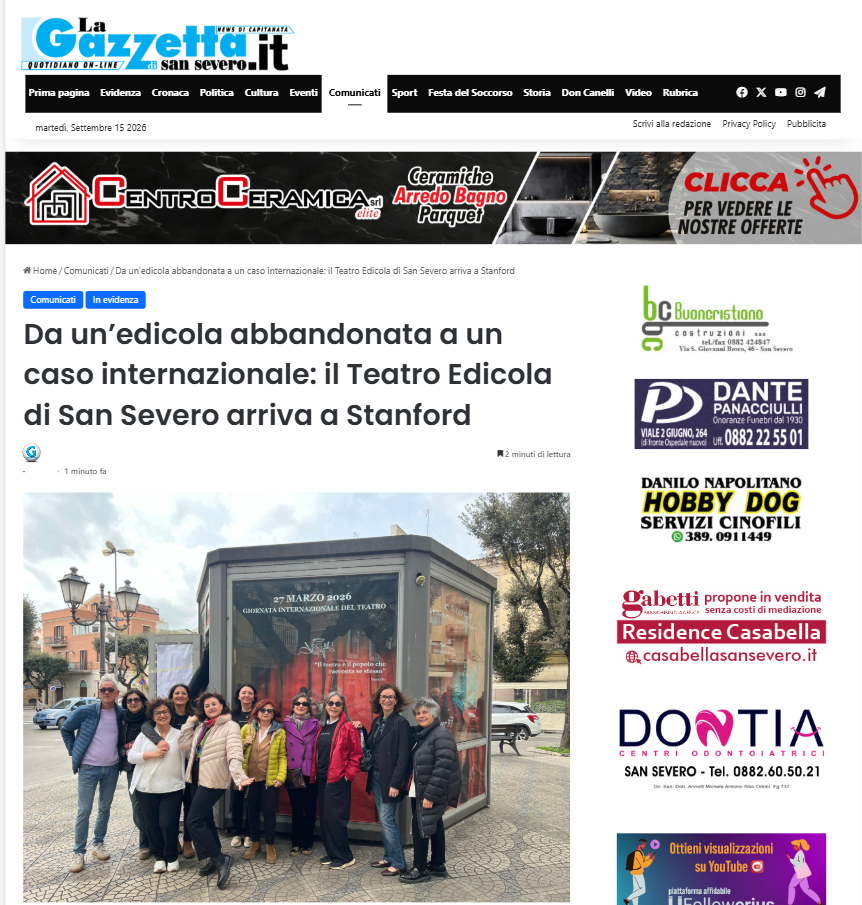
L'ATTACCO DI FOGGIA - IL TEATRO-EDICOLA PIU PICCOLO DEL MONDO DI FRANCESCO GRAVINA DIVENTA UN CASO STUDIO PER LA PRESTIGIOSA STANFORD UNIVERSITY Il Teatro-Edicola Foyer '97 diventa caso di studio internazionale per la Stanford Social Innovation Review SAN SEVERO, 16 settembre 2026 - Da un'edicola abbandonata di quattro metri quadrati in via Tondi a modello di innovazione sociale studiato dalla Stanford University. È la parabola del Teatro Edicola Foyer '97, il progetto culturale realizzato dalla compagnia Foyer '97 diretta artisticamente da Francesco Gravina, che in pochi mesi ha varcato i confini nazionali. La notizia, riportata oggi da La Gazzetta del Mezzogiorno, è che la prestigiosa Stanford Social Innovation Review, la rivista culturale della Stanford University dedicata all'innovazione sociale, pubblicherà a settembre sul proprio sito e nell'edizione cartacea Fall 2026 il reportage "The Six-Seat Revolution", firmato dal dr. Luciano Magaldi Sardella e seguito editorialmente dal deputy editor David V. Johnson. Il progetto è nato il 27 marzo scorso, in occasione della Giornata Mondiale del Teatro, quando una vecchia edicola chiusa da anni è stata trasformata in un minuscolo teatro: sei posti a sedere, meno di due metri quadrati di scena, spettacoli di pochi minuti con attori e pubblico a meno di un metro di distanza. Una formula essenziale e originale che ha sorpreso tutti: oltre 60 spettatori in un solo pomeriggio e tutto esaurito nei tre giorni della stagione inaugurale. Un successo che ha dimostrato l'interesse del pubblico per una proposta culturale fuori dai circuiti tradizionali. Per questo la SSIR ha scelto di analizzarla come possibile modello di rigenerazione urbana a basso costo, potenzialmente replicabile nelle migliaia di edicole dismesse in Italia e in Europa. Richieste di informazioni e di replica sono già arrivate da altre città, tra cui Lucca e Roma. Alla base, come spiega Gravina, un'idea semplice: "Il teatro viene nella strada dove cammini ogni giorno". L'edicola, un tempo punto di riferimento per l'informazione quotidiana, cambia funzione e diventa luogo di incontro con gli artisti. Un riconoscimento che porta una realtà nata nella provincia di Foggia al centro del dibattito internazionale sull'innovazione sociale. Quella che sembrava una scommessa di quattro metri quadrati, può ora diventare un modello da esportare ben oltre San Severo.

L' ATTACCO DI FOGGIA - FRANCESCO GRAVINA'S TEATRO-EDICOLA, THE WORLD'S SMALLEST THEATRE, BECOMES THE SUBJECT OF A CASE STUDY AT STANFORD UNIVERSITY The Teatro-Edicola Foyer '97 Becomes an International Case Study for the Stanford Social Innovation Review SAN SEVERO, 16 September 2026 - From a derelict newsstand of four square metres in Via Tondi to a paradigm of social innovation examined by Stanford University. Such is the trajectory of the Teatro Edicola Foyer '97, the cultural project realized by the Foyer '97 company under the artistic direction of Francesco Gravina, which in the space of a few months has transcended national boundaries. The news, reported today by La Gazzetta del Mezzogiorno, is that the prestigious "Stanford Social Innovation Review", the cultural journal of Stanford University dedicated to social innovation, will publish in September, both on its website and in its Fall 2026 print edition, the reportage "The Six-Seat Revolution", authored by Dr Luciano Magaldi Sardella and overseen editorially by Deputy Editor David V. Johnson. The project was inaugurated on 27 March last, on the occasion of World Theatre Day, when a former newsstand, shuttered for years, was transmuted into a diminutive theatre: six seats, a stage of fewer than two square metres, performances lasting but a few minutes, with actors and audience separated by less than a metre. A formula at once essential and original that has taken all by surprise: more than sixty spectators in a single afternoon and full houses throughout the three days of the inaugural season. A success that has evinced the public's appetite for a cultural proposition beyond the conventional circuits. It is for this reason that the SSIR has elected to analyse it as a potential model of low-cost urban regeneration, conceivably replicable across the thousands of disused newsstands throughout Italy and Europe. Enquiries regarding its replication have already been received from other cities, including Lucca and Rome. At its heart, as Gravina explains, lies a simple notion: "The theatre comes to the street where you walk every day". The newsstand, once a locus of daily information, changes its function and becomes a place of encounter with artists. An accolade that brings a reality born in the Province of Foggia to the centre of the international discourse on social innovation. What appeared to be a four-square-metre wager may now become a model to be exported far beyond San Severo.

LA GAZZETTA DEL MEZZOGIORNO - IL TEATRO EDICOLA FOYER'97 DI SAN SEVERO ALLO STUDIO DELLA STANFORD SOCIAL I. REVIEW Il Teatro-Edicola Foyer '97 diventa caso di studio internazionale per la Stanford Social Innovation Review SAN SEVERO, 16 settembre 2026 - Da un'edicola abbandonata di quattro metri quadrati in via Tondi a modello di innovazione sociale studiato dalla Stanford University. È la parabola del Teatro Edicola Foyer '97, il progetto culturale realizzato dalla compagnia Foyer '97 diretta artisticamente da Francesco Gravina, che in pochi mesi ha varcato i confini nazionali. La notizia, riportata oggi da La Gazzetta del Mezzogiorno, è che la prestigiosa Stanford Social Innovation Review, la rivista culturale della Stanford University dedicata all'innovazione sociale, pubblicherà a settembre sul proprio sito e nell'edizione cartacea Fall 2026 il reportage "The Six-Seat Revolution", firmato dal dr. Luciano Magaldi Sardella e seguito editorialmente dal deputy editor David V. Johnson. Il progetto è nato il 27 marzo scorso, in occasione della Giornata Mondiale del Teatro, quando una vecchia edicola chiusa da anni è stata trasformata in un minuscolo teatro: sei posti a sedere, meno di due metri quadrati di scena, spettacoli di pochi minuti con attori e pubblico a meno di un metro di distanza. Una formula essenziale e originale che ha sorpreso tutti: oltre 60 spettatori in un solo pomeriggio e tutto esaurito nei tre giorni della stagione inaugurale. Un successo che ha dimostrato l'interesse del pubblico per una proposta culturale fuori dai circuiti tradizionali. Per questo la SSIR ha scelto di analizzarla come possibile modello di rigenerazione urbana a basso costo, potenzialmente replicabile nelle migliaia di edicole dismesse in Italia e in Europa. Richieste di informazioni e di replica sono già arrivate da altre città, tra cui Lucca e Roma. Alla base, come spiega Gravina, un'idea semplice: "Il teatro viene nella strada dove cammini ogni giorno". L'edicola, un tempo punto di riferimento per l'informazione quotidiana, cambia funzione e diventa luogo di incontro con gli artisti. Un riconoscimento che porta una realtà nata nella provincia di Foggia al centro del dibattito internazionale sull'innovazione sociale. Quella che sembrava una scommessa di quattro metri quadrati, può ora diventare un modello da esportare ben oltre San Severo.

LA GAZZETTA DEL MEZZOGIORNO - SAN SEVERO'S TEATRO EDICOLA FOYER '97 ON THE STANFORD SOCIAL INNOVATION REVIEW The Teatro-Edicola Foyer '97 Becomes an International Case Study for the Stanford Social Innovation Review SAN SEVERO, 16 September 2026 - From a derelict newsstand of four square metres in Via Tondi to a paradigm of social innovation examined by Stanford University. Such is the trajectory of the Teatro Edicola Foyer '97, the cultural project realized by the Foyer '97 company under the artistic direction of Francesco Gravina, which in the space of a few months has transcended national boundaries. The news, reported today by La Gazzetta del Mezzogiorno, is that the prestigious Stanford Social Innovation Review, the cultural journal of Stanford University dedicated to social innovation, will publish in September, both on its website and in its Fall 2026 print edition, the reportage "The Six-Seat Revolution", authored by Dr Luciano Magaldi Sardella and overseen editorially by Deputy Editor David V. Johnson. The project was inaugurated on 27 March last, on the occasion of World Theatre Day, when a former newsstand, shuttered for years, was transmuted into a diminutive theatre: six seats, a stage of fewer than two square metres, performances lasting but a few minutes, with actors and audience separated by less than a metre. A formula at once essential and original that has taken all by surprise: more than sixty spectators in a single afternoon and full houses throughout the three days of the inaugural season. A success that has evinced the public's appetite for a cultural proposition beyond the conventional circuits. It is for this reason that the SSIR has elected to analyse it as a potential model of low-cost urban regeneration, conceivably replicable across the thousands of disused newsstands throughout Italy and Europe. Enquiries regarding its replication have already been received from other cities, including Lucca and Rome. At its heart, as Gravina explains, lies a simple notion: "The theatre comes to the street where you walk every day". The newsstand, once a locus of daily information, changes its function and becomes a place of encounter with artists. An accolade that brings a reality born in the Province of Foggia to the centre of the international discourse on social innovation. What appeared to be a four-square-metre wager may now become a model to be exported far beyond San Severo.

O Estadão descobrindo o que toda tia do Zap "bolsonarista" já sabe há pelo menos uns sete anos. Por escrever na mesma linha desse editorial, muita gente já sofreu busca e apreensão e foi perseguida, sob aplausos do Estadão. #LiberdadeDeExpressão #Jornalismo #PolíticaBrasileira

Perquisito Luigi Bisignani indagato per aggiotaggio. L'editorialista del Tempo avrebbe usato il giornale di @Capezzone con articoli falsi per spingere Lotito a vendere la Lazio. E adesso parlaci di Ranucci cucciolo https://t.co/QOCcw3njsG #Lazio #giustizia #giornalismo

BobbyD 1d

Doi ciobani, un cojoc, o bucată de pită, una de slănină, un steag și ditamai zidul de jandarmi în spate. România într-o singură fotografie. Poza am făcut-o astăzi, la protestul din București. Băieții au venit cu ce aveau: cojocul, steagul și nervii. Statul a venit și el cu ce știe: căști, scuturi, armuri și efectiv complet. Și partea care-mi place cel mai mult: doi ciobani stau liniștiți pe asfalt, iar în spatele lor parcă începe ultimul nivel dintr-un joc video. Uneori nu-ți trebuie editorial de 2.000 de cuvinte să arăți ce ruptă și dezbinată este țara noastră. #protest #România #fotografie

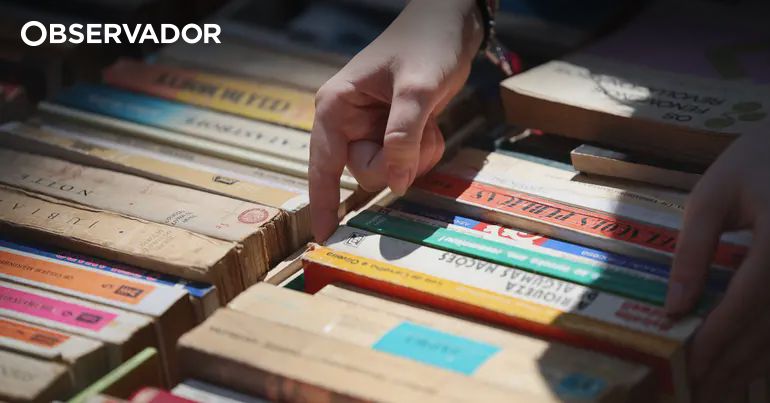
A survey by the Portuguese Association of Publishers and Booksellers (APEL) reveals that reading for leisure in Portugal is surpassed by the use of social networks and highlights that 78% of respondents claim to have read at least one book in 2025, although the obstacles to reading continue to be a lack of interest and time. (translated)

Inquérito: leitura por lazer atrás do uso das redes socias

“TEATRO EDICOLA” OF SAN SEVERO BECOMES AN INTERNATIONAL CASE STUDY IN THE “STANFORD SOCIAL INNOVATION REVIEW (SSIR)” — STANFORD UNIVERSITY SOURCE: https://l1nq.com/rruntbb LA GAZZETTA DI SAN SEVERO SAN SEVERO (FG) — Six persons enter a news kiosk. Before them lie no newspapers, magazines, or tobacco, but a theatrical stage measuring less than two square metres. The actors stand but a few paces from the spectators, with scarce any separation betwixt those who perform and those who behold. It is in this manner that in San Severo a place abandoned for years hath begun to live anew. And today that diminutive theatrical experiment hath fallen beneath the glare of international attention. It is the story of the “Teatro Edicola”, the project realised by the company Foyer ’97, under the artistic direction of Francesco Gravino, which hath transformed an old news kiosk in Via Tondi into one of the smallest stages ever conceived. The project commenced on 27th March last, with a formula as simple as it is original: six seats, a stage of most exiguous dimensions, and performances lasting but a few minutes. A minimal distance betwixt public and performers that doth wholly alter the traditional relationship betwixt spectator and theatre. The wager, however, was forthwith rewarded by the public. More than 60 persons attended the performances in a single afternoon, and the three days of the inaugural season registered a complete sold-out. From a local experiment, the “Teatro Edicola” hath thus become a case capable of attracting attention far beyond the confines of the Province of Foggia. In September 2026, the Stanford Social Innovation Review (SSIR), the journal of Stanford University, shall publish upon its website and in its Fall 2026 print edition the reportage “The Six-Seat Revolution”, authored by Dr Luciano Magaldi Sardella and edited by Deputy Editor David V. Johnson. The interest of the American review concerneth not merely the originality of the theatrical proposition. The Teatro Edicola is, in fact, observed as a potential paradigm of social innovation and low-cost urban regeneration. Become a Medium member The idea is particularly compelling in a country such as Italy, wherein numerous news kiosks have ceased their activity and risk becoming vacant interstices within the urban fabric. The question, at bottom, is simple: can a place born to sell newspapers become once more a locus of encounter? In San Severo, the answer hath been entrusted to the theatre. The kiosk hath not been merely restored in a physical sense. It hath changed its function, transforming itself into a place where artists encounter the public directly and where the performance becometh part of the quotidian life of the street. “The theatre cometh into the street wherein thou walkest every day,” Francesco Gravino hath explained, thus synthesising the philosophy underpinning the project. And it is precisely this aspect that hath rendered the experience interesting also upon the plane of its potential replicability. Initial requests for information have already arrived from other cities, amongst them Lucca and Rome, interested in learning of the model and the modalities for its realisation. The strength of the Teatro Edicola resideth also in its apparent disproportion: a minimal investment and space to produce a cultural effect far greater. There is no need for a grand theatre, an auditorium of hundreds of seats, or complex structures. An unused space sufficeth, together with an idea and the will to restore it to the community. That old kiosk in Via Tondi, therefore, recounteth something that goeth beyond the theatre. It recounteth the possibility of rethinking the spaces of our cities, restoring a social function to places that seemed to have definitively lost it.

Encurtador de Link

IL “TEATRO EDICOLA” di SAN SEVERO DIVENTA “CASO STUDIO” INTERNAZIONALE sulla “STANFORD SOCIAL INNOVATION REVIEW (SSIR) — STANFORD UNIVERSITY” SOURCE: https://l1nq.com/rruntbb “LA GAZZETTA DI SAN SEVERO” SAN SEVERO (FG) — Sei persone entrano in un’edicola. Davanti a loro non ci sono giornali, riviste o tabacchi, ma una scena teatrale di meno di due metri quadrati. Gli attori sono a pochi passi dagli spettatori, quasi senza separazione tra chi recita e chi guarda. È così che a San Severo un luogo abbandonato da anni ha ricominciato a vivere. E oggi quella piccola esperienza teatrale è finita sotto i riflettori internazionali. È la storia del “Teatro Edicola”, il progetto realizzato dalla compagnia Foyer ’97, diretta artisticamente da Francesco Gravino, che ha trasformato una vecchia edicola di via Tondi in uno dei palcoscenici più piccoli probabilmente mai immaginati. Il progetto è partito il 27 marzo scorso con una formula tanto semplice quanto originale: sei posti a sedere, uno spazio scenico ridottissimo e spettacoli della durata di pochi minuti. Una distanza minima tra pubblico e interpreti che modifica completamente il tradizionale rapporto tra spettatore e teatro. La scommessa, però, è stata subito premiata dal pubblico. Più di 60 persone hanno assistito agli spettacoli in un solo pomeriggio e le tre giornate della stagione inaugurale hanno fatto registrare il tutto esaurito. Da esperimento locale, il “Teatro Edicola” è diventato così un caso capace di attirare l’attenzione ben oltre i confini della provincia di Foggia. A settembre 2026 la “Stanford Social Innovation Review (SSIR)”, rivista della Stanford University, pubblicherà sul proprio sito e nell’edizione cartacea Fall 2026 il reportage “The Six-Seat Revolution”, firmato dal dr. Luciano Magaldi Sardella e seguito editorialmente dal deputy editor David V. Johnson. L’interesse della rivista americana non riguarda soltanto l’originalità della proposta teatrale. Il Teatro Edicola viene infatti osservato come possibile esperienza di innovazione sociale e rigenerazione urbana a basso costo. L’idea è particolarmente interessante in un Paese come l’Italia, dove sono numerose le edicole che hanno cessato la propria attività e che rischiano di diventare spazi vuoti nel tessuto delle città. Subscribe to the Medium newsletter La domanda, in fondo, è semplice: può un luogo nato per vendere giornali diventare nuovamente un punto di incontro? A San Severo la risposta è stata affidata al teatro. L’edicola non è stata semplicemente recuperata dal punto di vista fisico. Ha cambiato funzione, trasformandosi in un luogo dove gli artisti incontrano direttamente il pubblico e dove lo spettacolo diventa parte della vita quotidiana della strada. “Il teatro viene nella strada dove cammini ogni giorno”, ha spiegato Francesco Gravino, sintetizzando la filosofia alla base del progetto. Ed è proprio questo aspetto ad aver reso l’esperienza interessante anche sul piano della possibile replicabilità. Le prime richieste di informazioni sono già arrivate da altre città, tra cui Lucca e Roma, interessate a conoscere il modello e le modalità per realizzarlo. La forza del Teatro Edicola sta anche nella sua apparente sproporzione: un investimento e uno spazio minimi per produrre un effetto culturale molto più grande. Non servono un grande teatro, una platea da centinaia di posti o strutture complesse. Basta uno spazio inutilizzato, un’idea e la volontà di restituirlo alla comunità. Quella vecchia edicola di via Tondi, dunque, racconta qualcosa che va oltre il teatro. Racconta la possibilità di ripensare gli spazi delle città, restituendo una funzione sociale a luoghi che sembravano averla definitivamente perduta.

Encurtador de Link

E o EDITORIAL do Globo termina assim: “Impedir a investigação levará o país à certeza de que nem todos são iguais entre iguais. Na frase sempre mencionada de Ruy Barbosa, dentre todos os Poderes da República, o Supremo é aquele que pode errar por último. Hoje, não mais.” A última frase dá o tom do posicionamento do grupo que precisará ter certeza, apenas hoje, de que nem todos são iguais. #Justiça #Imparcialidade #PoderesDaRepública

A pergunta que fica é: se for investigado, quem vai investigar⁉️Será o diretor da polícia ou o procurador, participantes do clube Macallan⁉️ O editor afirma que, diante de suspeitas que atingem diretamente a honra do tribunal, não há espaço para blindagem: ministros devem responder a investigações como qualquer autoridade pública. A menção do contrato reforça a necessidade de apurar vínculos que, segundo o editorial, levantam dúvidas sobre integridade e transparência. #Corrupção #Transparência #Investigação

⛽️🇫🇷 Les prix du carburant devraient CONTINUER À GRIMPER : "tout est réuni" pour que la hausse se poursuive, selon Laure Closier, éditorialiste économie à BFMTV. https://t.co/mQs4Mehk6A #Carburant #Prix #Économie

Lui, on lui met sous le nez une vidéo qui prouve qu’il ment, il répond « vous employez bien légèrement le mot de mensonge ». Ils sont impayables, nos éditorialistes télé 😂😂😂 #humour #télé #éditorialistes

Il Post 2d

The McClatchy publishing company announced significant layoffs, including 30 staff cuts at the Miami Herald, while its Spanish-language publication, El Nuevo Herald, is at risk of being almost completely shut down. (translated)

Miami, 2027

He is not in good shape. Today, the Hungarian prime minister voted in Parliament holding a teddy bear. TV Maci, the iconic children’s character from Hungary’s public television, whose editor-in-chief was fired after the prime minister himself called for his dismissal in a https://t.co/YSvP82OUxc #Hungary #PrimeMinister #TeddyBear #HU

Enquanto escrevo, ninguém sabe qual será o rito da sessão de amanhã do STF, que Edson Fachin insiste em manter — e André Mendonça estará obviamente impedido de votar se votação houver. Vou explicar no @Metropoles . Parece que o presidente do STF está disposto a responder a editoriais sedentos. Como perguntaram os Titãs: “Você tem sede de quê?” https://t.co/zDQY7KAt73 #STF #Política #Justiça

O editorial expõe que o tribunal está diante de um teste de integridade‼️ A investigação envolvendo Moraes e Vorcaro, não pode virar manobra para travar apurações, e qualquer tentativa de transformar o tribunal em palco de chicana mina a credibilidade institucional. Transparência, responsabilização e respeito ao devido processo são o mínimo esperado de quem ocupa o topo do Judiciário. O país não tolera mais jogos de bastidor disfarçados de legalidade‼️ #Justiça #Transparência #Responsabilidade