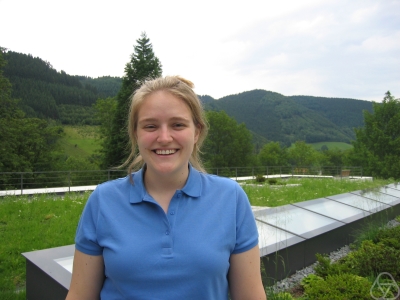
"It seems that this is the beginning of all sorts of wonderful things," evaluated Harvard University mathematician Melanie Wood. #Tekoäly #RiemanninHypoteesi #Mathematics (translated)
A study from Harvard and MIT shows that AI language models systematically recommend lower salary demands for women than for men with the same qualifications, indicating discriminatory biases. #GenderBias #KünstlicheIntelligenz #Gehaltsteilung (translated)
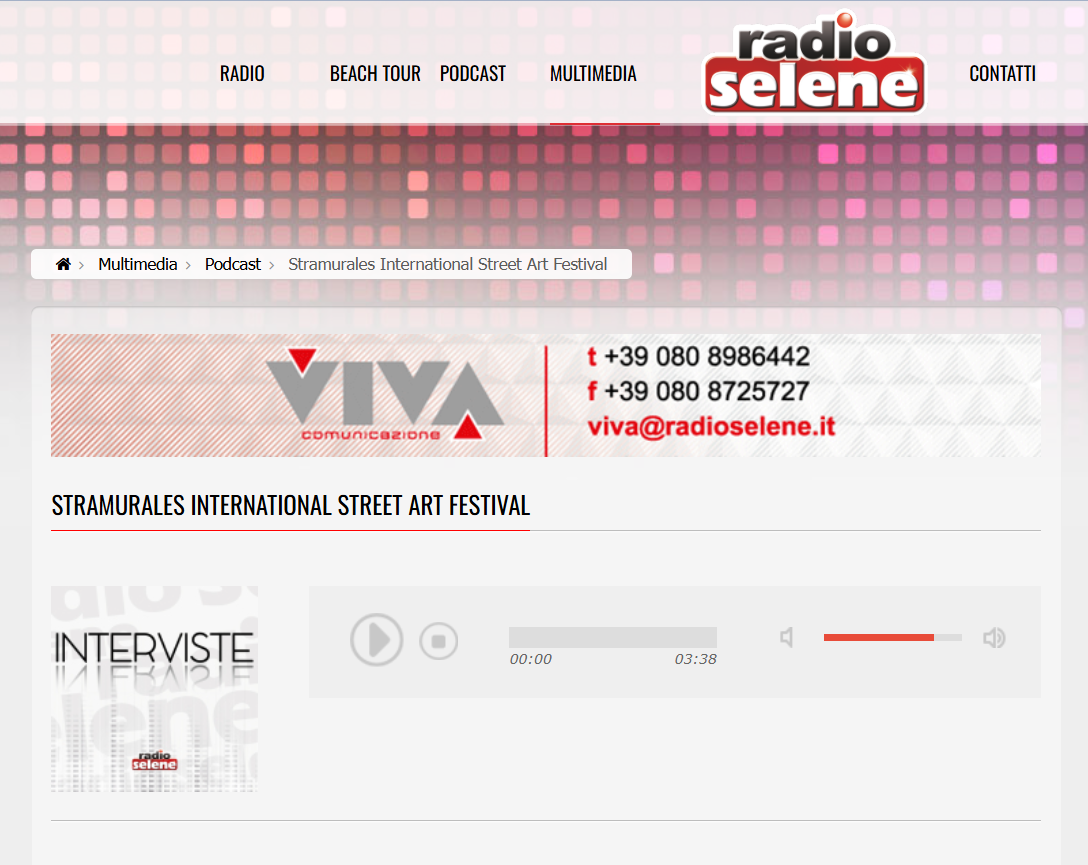
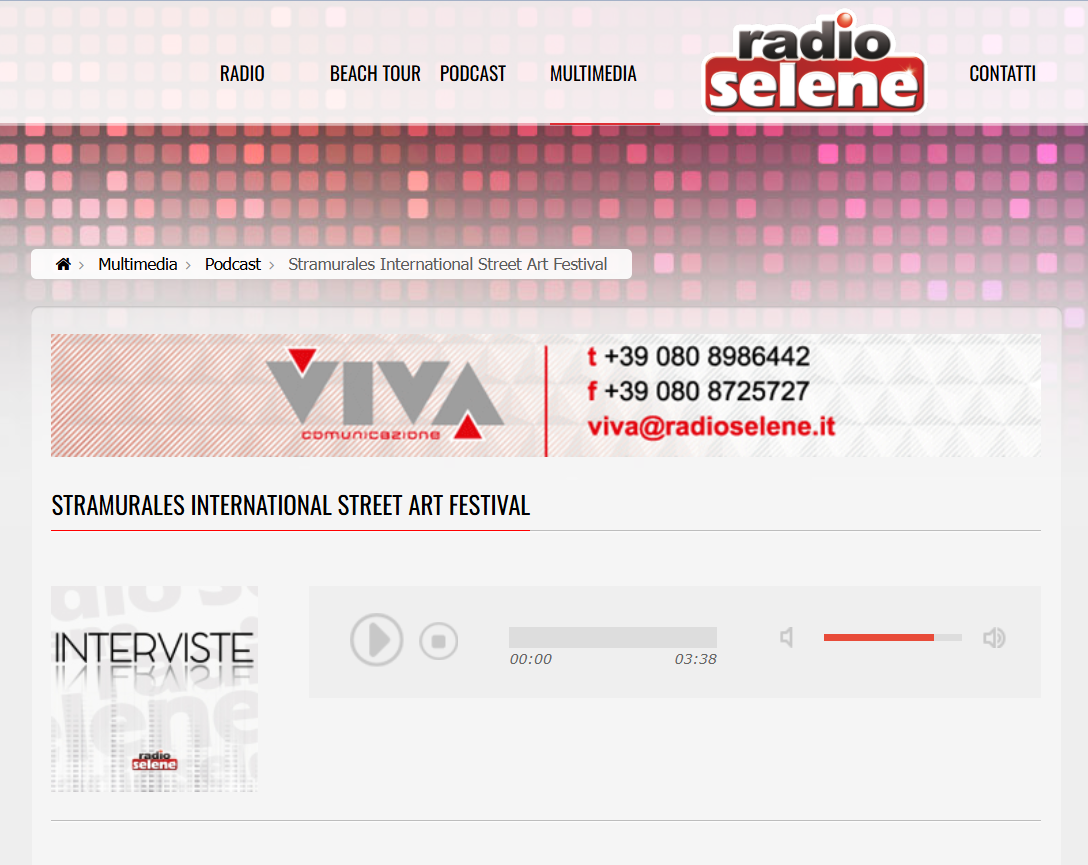
THE “STRAMURALES” ON THE MICROPHONES OF “RADIO SELENE” (24 NOVEMBER 2026) SOURCE: https://lnkd.in/erQ_nzKR Thanks from the heart to the wonderful team of Radio Selene of Corato for this pleasant and informal telephone chat on the “Stramurales International Street Art Festival” of the President-Founder Lino Lombardi of Stornara LIFE APS for his recent and remarkable international recognitions, including the mythical “Banda dei Fischietti (Whistling Gang)”: - Lino Lombardi; - Giancarla De Marco; - Luigi Filannino; - Silvana Sabetta; - Michele Baldari, and many others… In the interview: Have you ever seen a village become an open-air museum? In Stornara, an agricultural village of about 6,000 inhabitants in the province of Foggia, it really happened. From a village that risked dying out, it has become an open-air museum with over 173 murals, signed by artists arrived from all over the world. Every wall tells a story, every alley is a surprise, every corner deserves a photo. All thanks to the “Stramurales” born in 2017–18 from the passion of Lino Lombardi, Stornara Life APS and the Banda dei Fischietti. And now there is a very beautiful piece of news: Stornara is the only international festival of urban art become a case study in the Haravrd Human and Health Rights Journal” of the harvard University: https://lnkd.in/eNEcfA-6 and it has also entered the “Global Top 20” of the “WORLD INTELLECTUAL PROPERTY ORGANIZATION (WIPO)”, the specialized agency of the United Nations of Europe of Geneva, among the twenty most important cities in the world as a pole of attractiveness of international mural talents: https://lnkd.in/eVaVrYb6 A village of 6,000 inhabitants that reaches the global metropolises of street art. Is it not wonderful?
The "STRAMURALES" at the "RADIO SELENE" microphones (November 24, 2026) Thank you from the bottom of my heart to the wonderful Radio Selene team from Corato for this pleasant and informal phone chat about the “Stramurales International Street Art Festival” of President-Founder Lino Lombardi from Stornara LIFE APS for his recent and significant international recognitions, including the legendary “Banda dei Fischietti”: - Lino Lombardi; - Giancarla De Marco; - Luigi Filannino; - Silvana Sabetta; - Michele Baldari, and many others… In the interview: Have you ever seen a town become an open-air museum? In Stornara, an agricultural village of about 6,000 inhabitants in the province of Foggia, it really happened. From a town at risk of dying out, it has become an open-air museum with over 173 murals, signed by artists from all over the world. Every wall tells a story, every alley is a surprise, every corner deserves a photo. All thanks to the “Stramurales” born in 2017–18 from the passion of Lino Lombardi, from Stornara Life APS and the Banda dei Fischietti. And now there is a wonderful piece of news: Stornara is the only international urban art festival that has become a case study in the “Harvard Human and Health Rights Journal” of Harvard University: and it has also entered the “Global Top 20” of the “WORLD INTELLECTUAL PROPERTY ORGANIZATION (WIPO)”, the specialized agency of the United Nations in Geneva, among the twenty most important cities in the world as a hub of international muralist talent: A village of 6,000 inhabitants that reaches the global metropolises of street art. Isn't it wonderful? (translated)
“TGNORBA”, “CLEAN AIR”, “BOSS STREET”: THE “STRAMURALES” OF STORNARA IN THE WIPO/UN “GLOBALTOP20” BUT THE PUGLIA REGION NO LONGER FUNDS IT STORNARA (FG) — About six thousand inhabitants, over 173 murals and the only Italian name in street art now coexists alongside Berlin, New York, Los Angeles, Paris, Lisbon, London, Miami, Madrid, Barcelona, Brussels, Melbourne and many others. A year ago, recognition came from the “Harvard Health and Human Rights Journal,” with the case study “Street Art as Public Health Infrastructure” authored by Dr. Luciano Magaldi Sardella from Orta Nova and Prof. Matteo Mantuano from Lucera, which indicated street art as a public health infrastructure capable of impacting the psychosocial well-being of the community. Now the seal of the “World Intellectual Property Organization (WIPO)” has also arrived, the UN specialized agency for intellectual property headquartered in Geneva. It has placed Stornara among the 20 major world capitals of street art that most attract international street art talents. The credit goes to the whole team of volunteer organizers from Stornara, the “Banda dei Fischietti” led by Pres. Lino Lombardi, who since 2017-18 have organized the renowned “Stramurales International Street Art Festival,” born from the desire of the “Stornara Life APS” association to transform the narrative of decline in a southern and peripheral territory into rebirth. Since then, the southern Foggiano town has accumulated over 173 murals, about fifty of which are signed by high-level international artists. In proportion to its inhabitants, an artistic density of mural cultural assets that no metropolis can match: art does not disperse; it deposits itself in every street, on every facade, in the daily lives of those who live there. Celebrated abroad but snubbed at home. It’s the paradox of “Stramurales.” For some time now, the Puglia Region has not funded the event that brought Stornara onto the global maps of urban art. In the report, the television and web services on the recent and yet another success of Lino Lombardi, President and Artistic Director of the “Stornara Life” association, and Dr. Roberto Nigro, Mayor of Stornara. How much longer must the “Stornara Model,” which the world is beginning to study and appreciate, wait to be recognized even at home? (translated)

“STRAMURALES” OF STORNARA IN THE WIPO/ UN “GLOBAL TOP20” BUT PUGLIA REGION DOES NOT FUND THEM STORNARA (FG): About six thousand inhabitants, over 173 murals and a name that now stands beside Berlin, New York, Los Angeles, Paris, Lisbon, London, Miami, Madrid, Barcelona, Brussels, Melbourne and many others. A year ago came the recognition of the “Harvard Health and Human Rights Journal”, with the case study “Street Art as Public Health Infrastructure” signed by Dr Luciano Magaldi Sardella of Orta Nova and Prof. Matteo Mantuano of Lucera, which indicated in street art a public health infrastructure, capable of affecting the psychophysical well-being of the community. Now comes also the seal of the “World Intellectual Property Organization (WIPO)”, the specialized UN agency for Intellectual Property with headquarters in Geneva. It has inserted Stornara among the 20 greatest world capitals of street art that most attract the international talents of street art. The merit goes to all the team of the organization of Stornarese volunteers, the “Banda dei Fischietti” with band leader Pres. Lino Lombardi, who since 2017–18 organize the celebrated “Stramurales International Street Art Festival”, born from the will of the association “Stornara Life APS” to transform the narrative of decline of a southern and peripheral territory into a rebirth. Since then, the town of the southern Foggia area has accumulated over 173 murals, about fifty of which signed by high-level international artists. In proportion to the inhabitants, a concentration of mural cultural assets that no metropolis can approach: art does not disperse, it is deposited in every street, on every facade, in the daily life of those who live there. Celebrated abroad but snubbed at home. It is the paradox of the “Stramurales”. For some time, in fact, the Puglia Region no longer finances the event that brought Stornara onto the global maps of urban art. In the report, the television and web reports on the recent and umpteenth success of Lino Lombardi, President and Artistic Director of the association “Stornara Life”, and of Dr Roberto Nigro, mayor of Stornara. How much longer must the “Stornara Model” which the world is beginning to study and appreciate wait, to be recognized also at home. (translated)

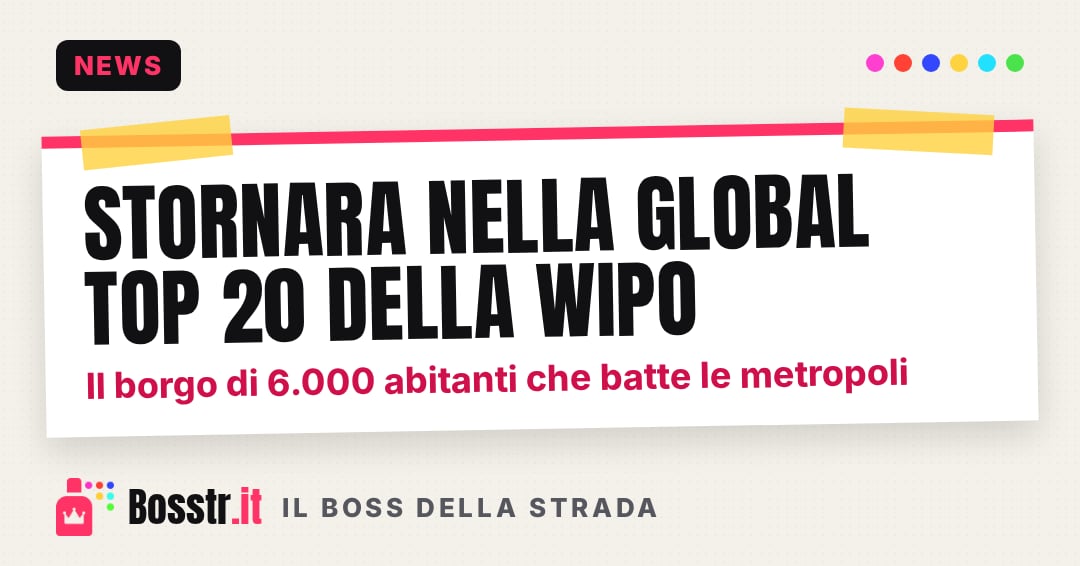
"BOSS STREET ART — THE BOSS OF THE STREET": STORNARA IN THE “GLOBAL TOP 20” OF WIPO: THE VILLAGE OF 6,000 INHABITANTS THAT BEATS METROPOLISES STORNARA (FG) — The report from the “World Intellectual Property Organization (WIPO)” mentions Stornara (Foggia) alongside New York and Berlin. Credit goes to Stramurales: 173 murals, 50 international, and an unmatched density of foreign art compared to megalopolises. Stornara enters the history of global street art. The Gazzetta di San Severo reports that the small municipality in the province of Foggia has been included in the “Global Top 20” of WIPO's report, the United Nations agency based in Geneva. This recognition places it alongside New York, Los Angeles, Berlin, Paris, London, and Melbourne: the world capitals of urban art. What happened The report is titled “From Local Scenes to Global Recognition: Talent Mobility in Street Art” and was published at the end of May 2026 in the series “Creative Industries Insights.” The authors, economists Egbert Amoncio, Alexander Cuntz, and Alessio Muscarnera, analyzed about 74,000 geolocated works on the “Street Art Cities” platform to map the migratory flows of global muralist talents. The questions were simple: Where does street art originate? Who are the artists traveling to paint? Which cities manage to attract creatives from abroad? The answers were surprising. The research dismantles a common belief: street art is a deeply local phenomenon. Only one in five artists works outside national borders. However, among those who cross borders, almost 40% builds an international artistic brand while maintaining ties to their local territory: cases like Banksy, Os Gemeos, and Invader. The authors define this phenomenon as “glocal”: rooted in the local territory but capable of generating global talent circuits. In this scenario dominated by metropolises and capitals, Stornara stands out as an Italian exception, a town in Puglia, in Foggia. An agricultural village of about 6,000 inhabitants that has become a destination for international muralist talents since 2018. The work and the artist: Stramurales The credit goes to the annual “Stramurales International Street Art Festival,” born in 2017 from the initiative of the social promotion association “Stornara Life APS,” founded by Lino Lombardi and the local “Banda dei Fischietti.” The goal was to combat the urban and socio-economic decline of the town. In just a few years, Stornara has accumulated over 173 murals. About fifty are works by high-level foreign artists. “Google Trends” data since 2017 shows a remarkable interest in the destination: the festival has captured national and international attention. The project has also attracted global scientific interest. It has become the first monographic academic case study on a street art festival: the study “Street Art as Public Health Infrastructure,” authored by Puglian researchers Luciano Magaldi Sardella and Matteo Mantuano, was published in the Harvard Health and Human Rights Journal of Harvard University. Where to see it: the secret of density Stornara can be reached in the province of Foggia, in Capitanata. The town, once not used to visitors, now welcomes international tourists, groups, and school classes who come to see the murals. The fact that has ignited local pride is this: it's not about absolute volume; it's about proportion. The organizers propose a simple indicator: the works by foreign artists divided by the inhabitants, multiplied by 100,000. With over 50 international murals and a population of a few thousand residents, Stornara reaches several hundred foreign works for every 100,000 inhabitants. This is a value that metropolises, with millions of residents, cannot approach. No one claims that Stornara has more foreign murals than New York. The point is that, relative to its size, few places in the world concentrate as much international art per capita. The impact does not disperse in a megalopolis; it settles in every street, on every facade, in the daily life of its inhabitants. The global model The WIPO report emphasizes that the value of street art extends far beyond the painted surfaces. Cities like Stornara demonstrate how urban art attracts tourism, generates media coverage, and stimulates local business activities, strengthening the sense of community and restoring psychosocial well-being. But the authors add a valuable caution: success depends on careful implementation and involvement of artistic communities. Top-down initiatives risk being perceived as “predatory” by artists who care about the credibility of street art. Stramurales seems to have avoided this pitfall. The model is based on walls spontaneously donated by residents, artist residencies, and open dialogue on social themes. A bottom-up lesson that WIPO recognizes as a concrete response to the depopulation of the internal areas of Southern Italy. (translated)

BOSS STREET ART — THE BOSS OF THE STREET": STORNARA IN THE WIPO "GLOBAL TOP 20": THE VILLAGE OF 6,000 INHABITANTS THAT BEATS THE METROPOLISES SOURCE: https://www.bosstr.it/blog/stornara-nella-global-top-20-della-wipo-il-borgo-di-6000-abitanti-che-batte-le-metropoli -------------------------------------------------------------------- STORNARA (FG) — The report of the "World Organisation for Intellectual Property (WIPO)" cites Stornara (Foggia) alongside New York and Berlin. Merit of Stramurales: 173 murals, 50 international, and a density of foreign art unreachable for the megalopolises. Stornara enters the history of world street art. La Gazzetta di San Severo reports that the small municipality in the province of Foggia has been included in the "Global Top 20" of the WIPO report (World Organisation for Intellectual Property), the United Nations agency headquartered in Geneva. A recognition that places it alongside New York, Los Angeles, Berlin, Paris, London and Melbourne: the world capitals of urban art. -------------------------------------------------------------------- What happened The report is entitled "From Local Scenes to Global Recognition: Talent Mobility in Street Art" and was published at the end of May 2026 in the Creative Industries Insights series. The authors, the economists Egbert Amoncio, Alexander Cuntz and Alessio Muscarnera, analysed about 74,000 geolocalised works on the "Street Art Cities" platform to map the migratory flows of global mural talents. The questions were simple: where is street art born? Who are the artists who travel to paint? Which cities manage to attract creatives from abroad? The answers surprised. The research dismantles a commonplace: street art is a profoundly local phenomenon. Only one artist in five works outside national borders. But among those who cross borders, almost 40% build an international artistic brand while keeping their roots in the territory: the cases of Banksy, Os Gemeos and Invader. The authors define this phenomenon as "glocal": rooted in the territory but capable of generating global circuits of talent. In this scenario dominated by metropolises and capitals, Stornara emerges as an Italian, Puglian, Foggian exception. An agricultural village of about 6,000 inhabitants which since 2018 has become a destination for international mural talents. -------------------------------------------------------------------- The work and the artist: Stramurales The merit is of the annual festival "Stramurales International Street Art Festival", born in 2017 from the will of the social promotion association "Stornara Life APS", founded by Lino Lombardi and by the local "Banda dei Fischietti (=The Whistling Gang"). The objective was to combat the urban and socio-economic decline of the town. In a few years, Stornara has accumulated over 173 murals. About fifty are works by high-level foreign artists. "Google Trends" data from 2017 show a remarkable interest in the destination: the festival has captured national and international attention. The project has also attracted the world scientific community. It has become the first monographic academic case study on a street art festival: the study "Street Art as Public Health Infrastructure," signed by the Puglian researchers Luciano Magaldi Sardella and Matteo Mantuano, was published in the Harvard Health and Human Rights Journal of Harvard University. -------------------------------------------------------------------- Where to see it: the secret of density Stornara is reached in the province of Foggia, in Capitanata. The town, once little accustomed to visitors, today welcomes international tourists, groups and school parties come to see the murals. The figure that has ignited local pride is this: the absolute volume does not count, the proportion counts. The organisers propose a simple indicator: the works by foreign artists divided by the inhabitants, multiplied by 100,000. With over 50 international murals and a population of a few thousand residents, Stornara reaches several hundred foreign works per 100,000 inhabitants. It is a value that the metropolises, with millions of residents, cannot approach. Nobody maintains that Stornara has more foreign murals than New York. The point is that, in relation to scale, few places in the world concentrate so much international art per inhabitant. The impact does not disperse in a megalopolis: it settles in every street, on every facade, in the everyday life of those who live there. -------------------------------------------------------------------- The global model The WIPO report underlines that the value of street art extends well beyond the painted surfaces. Cities like Stornara demonstrate how urban art attracts tourism, generates media coverage and stimulates local commercial activities, strengthening the sense of community and restoring psychosocial well-being. But the authors add a precious warning: success depends on careful implementation and on the involvement of the artistic communities. Initiatives imposed from above risk being perceived as "predatory" by artists who have street credibility at heart. Stramurales seems to have avoided the pitfall. The model is based on walls donated spontaneously by residents, artist residencies and open dialogue on social themes. A lesson from below which WIPO recognises as a concrete response to the depopulation of the inland areas of the Mezzogiorno. (translated)

"We are not straying from the goal of controlling CO2 emissions," said Francesca Dominici, a professor of biostatistics at Harvard, to the Associated Press (AP). #CentreDeDate #EmisiiCO2 (translated)
It is true that political scientist Erica Chenoweth from Harvard University concluded after analyzing 323 protests around the world from 1900 to 2006 that all those in which at least 3.5 percent of the population participated at the moment of greatest surge were successful. Political scientist Chenoweth noted that the number of dissatisfied people is important, but so are perseverance, representation of various civic groups, good organization, and formulation of demands. #protesty #demokracie #společenskázměna (translated)
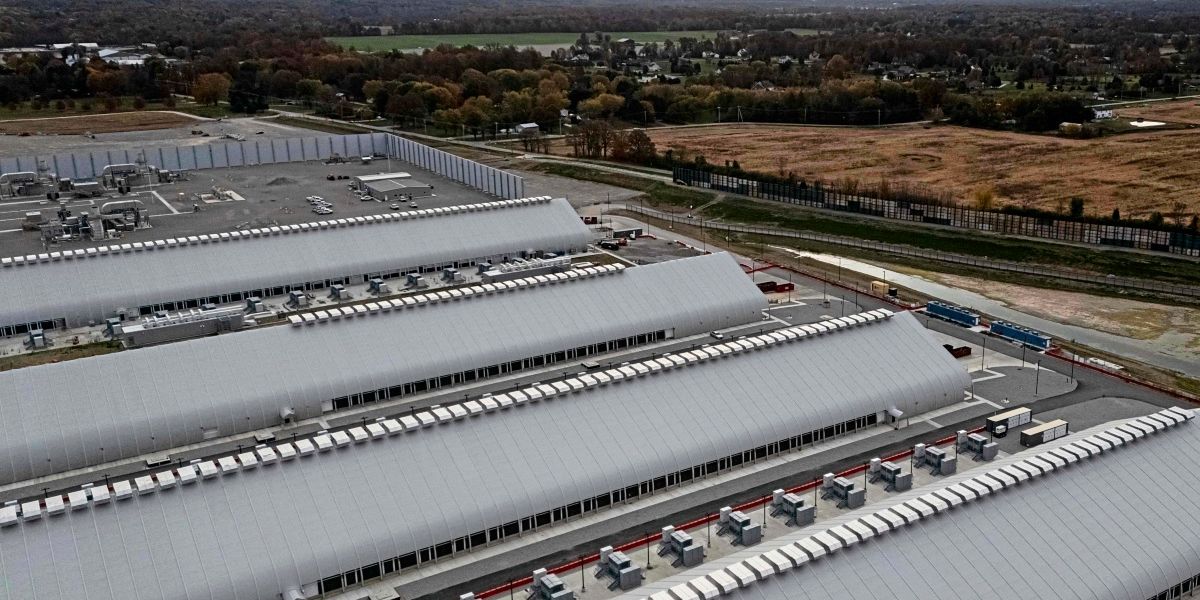
The 403 hyperscale data centers currently operating around the US emit as much greenhouse gas emissions as the country of Denmark annually, according to a new peer-reviewed study released on Monday. The report by Harvard University researchers published in the journal Nature Sustainability found
The results of this study are, in fact, a "low estimate," according to one of the authors, Francesca Dominici, a professor of biostatistics at Harvard University. #Climat #DataCenters #EmissionsCO2 (translated)
The 400 largest data centres in the #US put more heat-trapping gases into the atmosphere in one year than the entire nation of Denmark did, and that was before the artificial intelligence boom really got going, according to a Harvard University study published Monday. www.cbc.ca/news/climate...
The study established that the data on emissions is two to three times higher than what previous research has shown, according to Francesca Dominici, professor of biostatistics at Harvard and the lead author of the study. #adatközpontok #üvegházhatásúgázok #fenntarthatóság (translated)
"Data centers are growing incredibly fast primarily due to AI. Right now, decisions are being made about where they should be built and how they should be powered," says Gianluca Guidi from the Harvard T.H. Chan School of Public Health and lead author of the study. #KIBoom #Rechenzentren #Energieverbrauch (translated)
A study from Harvard University reveals that the 400 largest data centers in the United States emitted over 25.7 million tons of CO2 in a year, surpassing the emissions of the entire Denmark and accounting for 1.8% of the nation's electricity consumption. #DataCenter #EmissioniCO2 #ImpattoAmbientale (translated)

According to Francesca Dominici, the Harvard biostatistics professor who led the study, the calculated amount of emitted pollutants is two or three times higher than previously stated in earlier studies. #KlimatoKaita #DirbtinisIntelektas #DuomenųCentrai (translated)
A new study from Harvard shows that large data centers in the US consume almost as much electricity as entire states and generate nearly half of Austria's CO₂ emissions. #Energiehunger #Rechenzentren #KI (translated)