WRLD

Search

#locations
Krzysztof Graj 3d

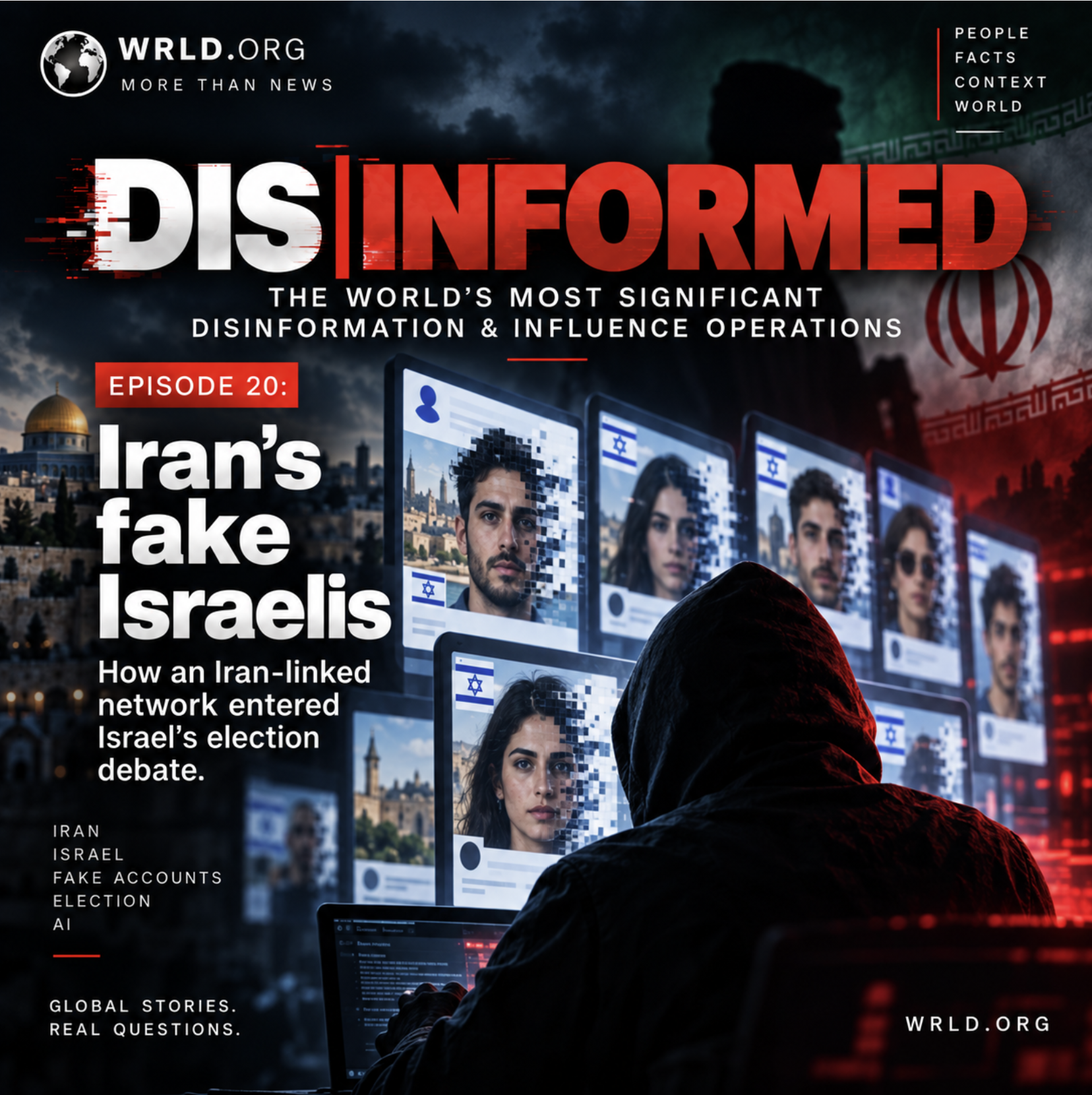
𝗜𝗿𝗮𝗻’𝘀 𝗳𝗮𝗸𝗲 𝗜𝘀𝗿𝗮𝗲𝗹𝗶𝘀 – 𝗵𝗼𝘄 𝗮 𝗳𝗼𝗿𝗲𝗶𝗴𝗻 𝗶𝗻𝗳𝗹𝘂𝗲𝗻𝗰𝗲 𝗻𝗲𝘁𝘄𝗼𝗿𝗸 𝗲𝗻𝘁𝗲𝗿𝗲𝗱 𝗜𝘀𝗿𝗮𝗲𝗹’𝘀 𝗲𝗹𝗲𝗰𝘁𝗶𝗼𝗻 𝗱𝗲𝗯𝗮𝘁𝗲 Ahead of Israel’s 27 October election, hundreds of social-media accounts have been presenting themselves as ordinary Israelis while injecting political messages into genuine domestic conversations. They appear as women, reservists, secular voters, religious activists and frustrated citizens. Some attack Benjamin Netanyahu, others have previously promoted narratives associated with the Israeli right, while many focus less on parties than on a broader message: Israel is divided, its institutions cannot be trusted and its political system is approaching crisis. A detailed investigation by the OSINT company Golden Owl has mapped this activity as a substantial Iran-linked influence network. Its October analysis identified at least 694 accounts, with 445 attributed at high or medium-high confidence to the operation. Between 11 August and 11 October, the network generated at least 4.7 million views and more than 160,000 interactions. The researchers found no evidence that these accounts were simply a group of independent Iranian commentators expressing political opinions. Their assessment rests instead on coordinated behaviour, false identities, account histories, copied content, language patterns and platform metadata linking significant parts of the infrastructure to Iran. 𝗙𝗿𝗼𝗺 𝟯𝟱 𝗽𝗲𝗿𝘀𝗼𝗻𝗮𝘀 𝘁𝗼 𝗵𝘂𝗻𝗱𝗿𝗲𝗱𝘀 𝗼𝗳 𝗳𝗮𝗸𝗲 𝗮𝗰𝗰𝗼𝘂𝗻𝘁𝘀 The investigation developed in two stages. Golden Owl’s first report, published in September, identified an operational core of 35 accounts: 32 personas presenting themselves as Israelis and three Hebrew-language media-style channels. During the 30-day period measured in that study, active accounts generated 947,322 impressions and more than 9,000 interactions. The October investigation expanded the dataset dramatically. Researchers analysed more than 560,000 data points, including tens of thousands of accounts, relationships between them and more than a quarter of a million posts. The wider network showed repeated patterns of identical texts, synchronised activity and accounts created in batches. The numbers therefore describe not a sudden explosion from 35 to hundreds of accounts, but the gradual exposure of a much larger infrastructure surrounding the original core. 𝗧𝗵𝗲 𝗳𝗮𝗸𝗲 𝗜𝘀𝗿𝗮𝗲𝗹𝗶𝘀 Some of the strongest evidence comes from the histories of individual personas. One account had spent years posting exclusively in Persian under the handle “mardeankabooti” before reappearing in August 2026 as an apparently Israeli user called “Alon Strauss”, complete with an Israeli flag and Hebrew political messaging. Other personas presented themselves as Israeli professionals, activists or ordinary citizens while X transparency information showed connections through the Iranian version of the Android application or locations inconsistent with their claimed identities. The account “Yaara Shalev” presented itself as an Israeli woman concerned with democracy and peace. Investigators found that photographs used to construct the identity were inconsistent, including borrowed and apparently AI-generated imagery. A small Hebrew-language channel called KigVoice, previously identified in Israeli government reporting as part of an Iranian influence environment, repeatedly published material that later appeared on the much more visible Yaara account. In one sample, 14 of 40 KigVoice posts subsequently resurfaced as captions or opening lines in Yaara’s content. Another persona, “Miriam Kozak”, had built an audience of more than 18,000 followers and had already been exposed as fictitious by Israeli researchers in 2024. Its political messaging changed substantially over time, moving between narratives associated with different sides of Israeli politics. That inconsistency is important: the apparent purpose was not necessarily to build a stable ideological following, but to enter whichever political argument offered the greatest opportunity to intensify division. 𝗔𝗜, 𝗰𝗼𝗽𝗶𝗲𝗱 𝗺𝗲𝘀𝘀𝗮𝗴𝗲𝘀 𝗮𝗻𝗱 𝗜𝗿𝗮𝗻𝗶𝗮𝗻 𝗳𝗶𝗻𝗴𝗲𝗿𝗽𝗿𝗶𝗻𝘁𝘀 The Iran attribution is based on more than political content. Researchers identified accounts using the Iranian version of the X Android application, repeated connections to previously identified Iranian influence assets, copied posts appearing across supposedly independent personas within minutes, and Hebrew containing unusual grammatical errors or Persian and Arabic keyboard artefacts. Generative AI also appears to have become part of the production process. Some accounts inadvertently published fragments resembling chatbot instructions, while other posts displayed patterns consistent with machine-generated Hebrew. AI-generated videos and synthetic profile imagery further reduced the cost of maintaining large numbers of apparently distinct personalities. However, none of these indicators was treated as proof on its own. Golden Owl explicitly excluded accounts where the evidence was insufficient and notes that VPNs, travel and platform location labels can create misleading signals. The attribution rests on multiple independent indicators converging across the network. 𝗧𝗵𝗲 𝗴𝗼𝗮𝗹 𝗶𝘀 𝗻𝗼𝘁 𝗻𝗲𝗰𝗲𝘀𝘀𝗮𝗿𝗶𝗹𝘆 𝘁𝗼 𝗲𝗹𝗲𝗰𝘁 𝗼𝗻𝗲 𝗽𝗮𝗿𝘁𝘆 The network repeatedly exploited issues that genuinely divide Israeli society: responsibility for the 7 October attacks, the war, the hostages, ultra-Orthodox military exemptions, economic pressure, emigration and confidence in state institutions. It also circulated misleading information about the election itself, including false voting dates, claims that voting had been postponed and posts suggesting online voting mechanisms that do not exist in Israel’s parliamentary election system. The pattern suggests a strategy broader than conventional electoral campaigning. Rather than consistently promoting one political faction, the network appears designed to weaken confidence in the government, military, democratic institutions and the electoral process itself. An influence operation does not need to persuade Israelis to support a particular candidate if it can convince different groups that defeat would prove fraud, betrayal or systemic failure. 𝗥𝗲𝗮𝗹 𝗜𝘀𝗿𝗮𝗲𝗹𝗶𝘀 𝗮𝘀 𝘂𝗻𝘄𝗶𝘁𝘁𝗶𝗻𝗴 𝗮𝗺𝗽𝗹𝗶𝗳𝗶𝗲𝗿𝘀 One of the network’s most effective characteristics is that it does not depend solely on its own followers. Fake personas enter comment sections and political discussions involving real Israeli journalists, politicians and ordinary users. Authentic Israelis then repost or interact with the material, sometimes carrying it far beyond the original account. Golden Owl does not classify those genuine users as participants in the operation. In most cases they appear to be unwitting amplifiers. But once a message passes from a fabricated Iranian-operated persona to an authentic Israeli account, its foreign origin becomes much harder for the next person to recognise. 𝗧𝗵𝗲 𝟰𝟬,𝟬𝟬𝟬-𝗯𝗼𝘁 𝗳𝗶𝗴𝘂𝗿𝗲 𝗯𝗲𝗹𝗼𝗻𝗴𝘀 𝘁𝗼 𝗮 𝗱𝗶𝗳𝗳𝗲𝗿𝗲𝗻𝘁 𝗽𝗲𝗿𝗶𝗼𝗱 A much larger figure has also appeared in recent reporting. In the first two days after the October 2023 Hamas attack, social-media intelligence company Cyabra identified more than 40,000 fake profiles participating in online discussions across major platforms. Their content generated hundreds of thousands of interactions and had a potential reach estimated at 531 million profiles. Those numbers are important historical context, but they should not be merged with the current Golden Owl investigation. There is no public evidence demonstrating that all of those 2023 accounts and the 2026 Iran-linked election network belonged to one continuous command structure. The 531 million figure is also an estimate of potential exposure, not proof that 531 million people saw or believed the content. 𝗪𝗵𝗼 𝗶𝘀 𝗮𝗰𝘁𝘂𝗮𝗹𝗹𝘆 𝗯𝗲𝗵𝗶𝗻𝗱 𝘁𝗵𝗲 𝗼𝗽𝗲𝗿𝗮𝘁𝗶𝗼𝗻? No confirmed individual operators have been publicly identified. Names such as Yaara Shalev, Miriam Kozak and Alon Strauss are personas, not verified identities of the people controlling the accounts. Golden Owl says its evidence supports an association with the Islamic Republic of Iran and with previously documented Iranian influence infrastructure, but it does not establish which Iranian institution, intelligence service, military organisation or contractor directs the network. That distinction is essential. Public OSINT supports attribution at the Iran-linked operational level. It does not currently justify naming individual Iranian officials as the people commanding this specific campaign. 𝗧𝗵𝗲 𝗱𝗲𝗲𝗽𝗳𝗮𝗸𝗲 𝗶𝘀 𝗻𝗼 𝗹𝗼𝗻𝗴𝗲𝗿 𝗼𝗻𝗹𝘆 𝘁𝗵𝗲 𝘃𝗶𝗱𝗲𝗼 The Israeli case illustrates a broader change in influence operations. The synthetic asset does not have to be a spectacular deepfake of a politician. It can be an apparently ordinary citizen who comments on politics, argues with neighbours, describes personal experiences and gradually becomes part of an authentic community. That can be more difficult to recognise because the propaganda does not arrive looking foreign. It arrives looking local. And when hundreds of fabricated citizens enter the same national conversation, they can manufacture the impression that political anger, despair or distrust is more spontaneous and more widely shared than it really is. 𝗦𝗼𝘂𝗿𝗰𝗲𝘀 Golden Owl — Exposing the Iranian Regime’s Influence Machinery Against Israeli Society https://web-dev-production-7a35.up.railway.app/resources/research/Exposing-the-Iranian-Regime-Influence-Machinery-Against-Israeli-Society Golden Owl Golden Owl — The Other Face of War: Iranian Regime–Linked Manipulation of Israel’s 2026 Election Debate https://web-dev-production-7a35.up.railway.app/resources/research/Iranian-Regime-Linked-Manipulation-of-Israel-2026-Election-Debate Golden Owl The Jerusalem Post — Iran-linked social-media accounts posing as Israelis to target election https://www.jpost.com/israel-election-2026/article-909863 The Jerusalem Post Ynet — Fake Israelis, real influence: Iran-linked network infiltrates Israel’s election debate https://www.ynetnews.com/tech-and-digital/article/syp119nqqzg ynetglobal Calcalist — Iranian influence network exposed ahead of Israel’s election https://www.calcalist.co.il/calcalistech/article/s1q0ifijzl calcalist Vesty / Ynet — Iranian fake-account network and October update https://www.vesty.co.il/main/article/rkwokjssgg vesty Israel Ministry for Diaspora Affairs — Iran’s active Hebrew-language influence campaign https://www.gov.il/BlobFolder/reports/israel-and-us-strikes-in-iran-daily-status_2_3_26/en/mashlat_Roaring_Lion_israel-and-us-strikes-in-iran-daily-status_2_3_26.pdf Government of Israel Israel Central Elections Committee — official 2026 election timetable https://www.gov.il/en/pages/time--table-26 Government of Israel Channel NewsAsia — historical Cyabra analysis of more than 40,000 fake profiles after 7 October 2023 https://www.channelnewsasia.com/singapore/how-fake-news-israel-hamas-stokes-outrage-hatred-and-potential-violence-southeast-asian-tiktok-5603221 𝗞𝗲𝘆𝘄𝗼𝗿𝗱𝘀 #DISINFORMED #Episode20 #Iran #Israel #IsraelElection2026 #IranianInfluence #IranianDisinformation #ElectionInterference #ForeignInterference #FIMI #Disinformation #InformationWarfare #InfluenceOperations #FakeAccounts #FakePersonas #SyntheticIdentity #ArtificialIntelligence #AI #AIPropaganda #SocialMediaManipulation #Astroturfing #NarrativeManipulation #PoliticalDisinformation #ElectionDisinformation #X #Twitter #Bots #BotNetwork #KigVoice #YaaraShalev #MiriamKozak #DigitalInfluence #InformationManipulation #ElectionIntegrity #GoldenOwl #OSINT #MediaManipulation #WRLD

web-dev-production-7a35.up.railway.app
Exposing the Iranian Regime’s Influence Machinery Against Israeli Society
334
Kate from Kharkiv 5d

Kharkiv after last night's Russian attack ‼️ The strike caused severe damage, sparked multiple fires, and killed at least 4 people in a different locations. There is no military purpose to these attacks whatsoever, they are pure terrorism.

3388
Le Parisien 2w

The article warns against renting fake apartments, especially with the approach of the winter holidays, according to alerts from Booking. #vacances #locations #booking (translated)

www.leparisien.fr
Locations de faux appartements : l’alerte de Booking pour les vacances d’hiver
1602
Le Parisien 2w

The massive hiring projects in Cotentin are causing saturation of hotels and a strong demand for rentals, thus creating a real housing crisis. #Hôtellerie #Cotentin #CriseDuLogement (translated)

www.leparisien.fr
Hôtels saturés, locations prises d’assaut… dans le Cotentin, les plans d’embauche massifs provoquent la crise du lit !
1375
Krzysztof Graj 2w

Brazil’s synthetic voters – when AI manufactures public opinion They look like ordinary street interviews. A reporter approaches a passer-by in a Brazilian square and asks a simple question: who will you vote for? A young voter explains why Luiz Inácio Lula da Silva deserves another term. An elderly woman says Brazil needs Flávio Bolsonaro because he represents political renewal and greater security. The locations look plausible, the microphones are visible and the answers sound much like the brief political opinions heard in television vox pops around the world. None of the people are real. Ahead of Brazil’s presidential election on 4 October, fact-checking organisation Aos Fatos identified at least 50 TikTok videos in which artificial intelligence was used to manufacture voters, reporters and apparently spontaneous political interviews. Together, the videos had accumulated around 7.4 million views by mid-August. Some promoted Lula, others Flávio Bolsonaro, while another group used synthetic characters to ridicule or stereotype supporters of one side. Aos Fatos found no apparent evidence linking the accounts producing the videos to either presidential campaign. The opinion poll that never took place The format is important. These were not conventional deepfakes in which a recognisable politician is made to say something he never said. Instead, the creators reproduced the visual language of the vox pop – the short street interview used by broadcasters and social-media creators to illustrate what ordinary people supposedly think. In pro-Lula videos, synthetic voters described themselves as beneficiaries of social programmes or credited the president with improving their lives. In videos supporting Flávio Bolsonaro, artificial interviewees associated him with political renewal, public security and fighting corruption. Other clips were openly hostile: AI-generated characters presented as poor or living in parts of Brazil’s north-east were shown in dirty clothes or run-down surroundings, declaring support for Lula because they supposedly preferred welfare payments to work. The deception is therefore subtler than fabricating a candidate’s statement. It manufactures something that political communication normally treats as evidence of public sentiment. A real vox pop may be unscientific, but the people interviewed at least exist. These videos created the appearance that identifiable social groups – young people, pensioners, welfare recipients or residents of particular regions – were spontaneously expressing political preferences when no such encounters had taken place. An electoral-law specialist interviewed by Aos Fatos described the technique as the fabrication of a “social fact that never occurred”. That captures the central innovation: AI is being used not merely to falsify political speech, but to manufacture the impression of grassroots opinion. Fifty videos, but not one proven network The available evidence does not support describing the 50 posts as a centrally controlled influence operation. Aos Fatos located them through TikTok searches and recommendations produced by the platform itself, then examined the accounts responsible for publication. Most had relatively small individual audiences, although their combined reach was substantial. The first examples identified by the investigation appeared as early as March 2026. Activity increased in June and was concentrated particularly in July and the first half of August as Brazil’s election calendar intensified. Some accounts specialised in AI-generated videos generally, including fabricated podcast-style material. Others were explicitly political or supportive of a candidate, but Aos Fatos found no apparent links between those profiles and the official Lula or Bolsonaro campaigns. That distinction is essential. The evidence demonstrates a common technique and a shared political environment, not a single command structure. Some creators may have been motivated by ideology, others by engagement or monetisation. Publicly available evidence does not establish who commissioned the individual videos or whether any coordination existed between the accounts. This decentralised model also creates a different enforcement problem from a traditional bot network. There may be no headquarters to expose and no infrastructure whose removal disables the entire operation. The format itself can be copied by anyone with access to inexpensive generative-video tools. When the algorithm mixes real and synthetic citizens Aos Fatos documented another important feature of the phenomenon: TikTok’s recommendation system placed AI-generated interviews alongside genuine street interviews. For a user scrolling quickly through the platform, the transition between an authentic citizen and an entirely fabricated one could therefore be almost invisible. In 18 per cent of the 50 videos analysed, there was no indication that the people shown had been generated using AI. After Aos Fatos provided TikTok with the videos, the company said it had removed all of them for violating its rules on edited and AI-generated media. TikTok said its policies require creators to identify synthetic content and prohibit manipulated media capable of misleading users about matters of public importance or impersonating genuine journalistic material. The issue extends beyond one platform. Factchequeado’s review of Brazil’s 2026 election campaign found that synthetic endorsements and other deepfakes had become one of the most visible forms of AI-assisted electoral misinformation, alongside fabricated candidate statements and invented scenes. Brazil already had rules for synthetic politics Brazil entered the campaign with unusually detailed electoral rules governing artificial intelligence. The Superior Electoral Court, the TSE, requires electoral propaganda using synthetic multimedia to disclose clearly that AI was used. More importantly for the fake-voter videos, its rules prohibit synthetic audio or video used to favour or harm a candidacy when it creates or alters the image or voice of a living, deceased or fictitious person. The difficulty is attribution and enforcement. When a synthetic video is published by an official campaign, responsibility can be relatively straightforward to investigate. When it comes from an apparently independent account with no demonstrated relationship to a candidate, lawyers interviewed by Aos Fatos said responsibility is more likely to fall on the individual creator, while imposing electoral sanctions on a campaign would require evidence of a connection. For the final 72 hours before the election and the 24 hours following it, the TSE has imposed additional restrictions on newly published or republished synthetic material involving candidates or public figures, reflecting the particular difficulty of correcting fabricated content immediately before voting. From deepfake politicians to synthetic electorates The Brazilian case illustrates a broader change in political manipulation. The first generation of electoral deepfakes concentrated on famous people: make a politician appear to say something damaging, or fabricate an endorsement from a celebrity. Synthetic vox pops reverse the perspective. The politician can remain completely authentic; it is the electorate around the politician that is fabricated. That changes the psychological proposition of the message. Instead of saying the candidate believes this, the video suggests people like you believe this. Age, clothing, accent, neighbourhood and social class can all be generated to construct an artificial constituency around almost any political claim. There is no evidence that the 50 Brazilian videos identified by Aos Fatos constitute a single centrally directed campaign, nor evidence that they changed voting intentions. What they demonstrate is a technique whose barrier to entry has become extremely low. AI no longer needs to forge the politician. #DISINFORMED #Episode14 #Brazil #BrazilElection2026 #Elections #ElectionDisinformation #ArtificialIntelligence #AI #GenerativeAI #SyntheticVoters #SyntheticMedia #AIAvatars #AIGeneratedVideo #VoxPop #FakeInterviews #Astroturfing #AIPropaganda #PoliticalDisinformation #InfluenceOperations #InformationWarfare #SocialMediaManipulation #TikTok #PublicOpinion #ManufacturedConsent #SyntheticPublicOpinion #DigitalInfluence #Deepfakes #ElectionIntegrity #TSE #AosFatos #FactChecking #OSINT #MediaManipulation #WRLD (translated)
www.aosfatos.org
Eleitores gerados por IA fazem campanha no TikTok e põem em xeque regra do TSE
688
Krzysztof Graj 2w

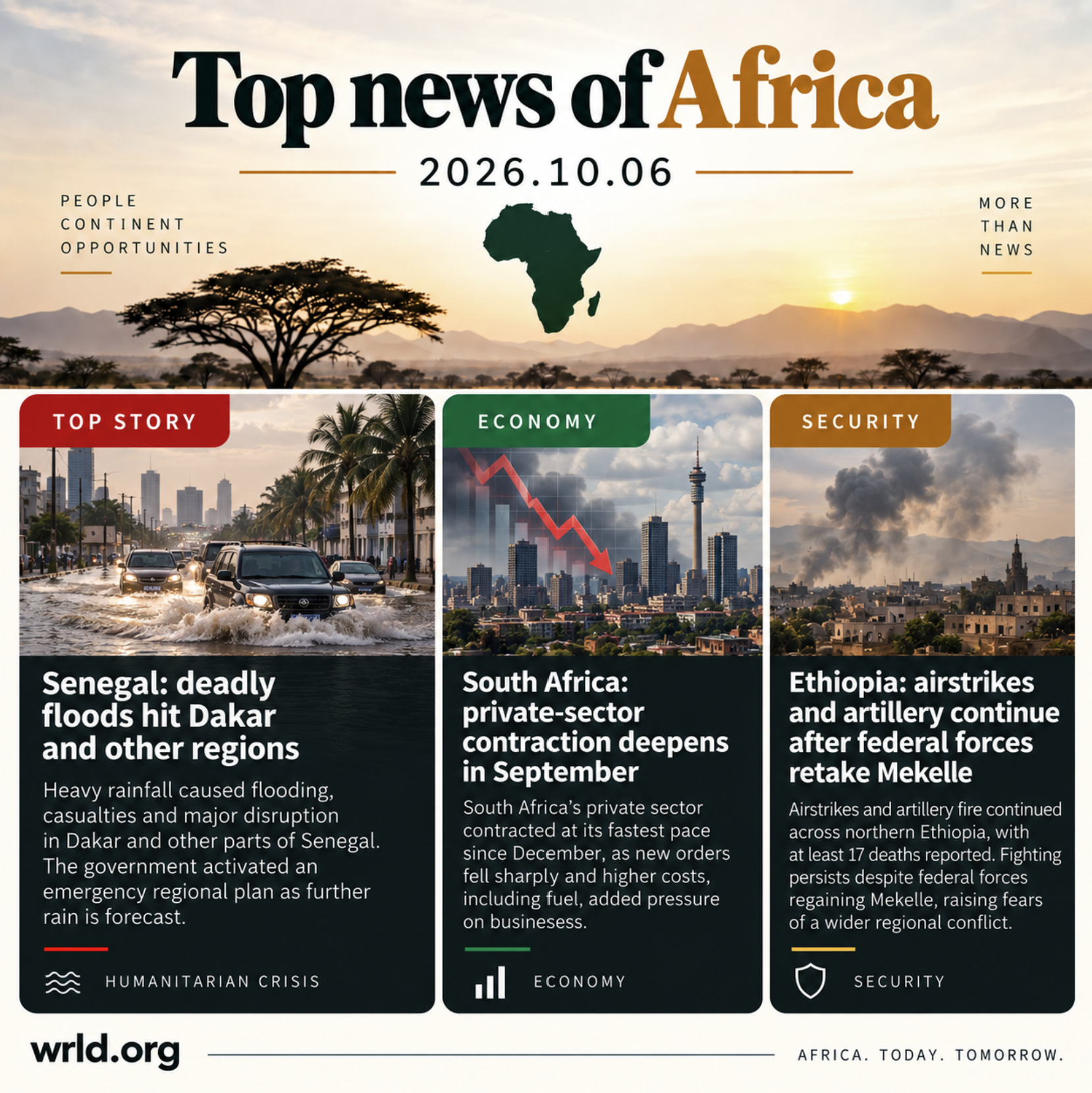
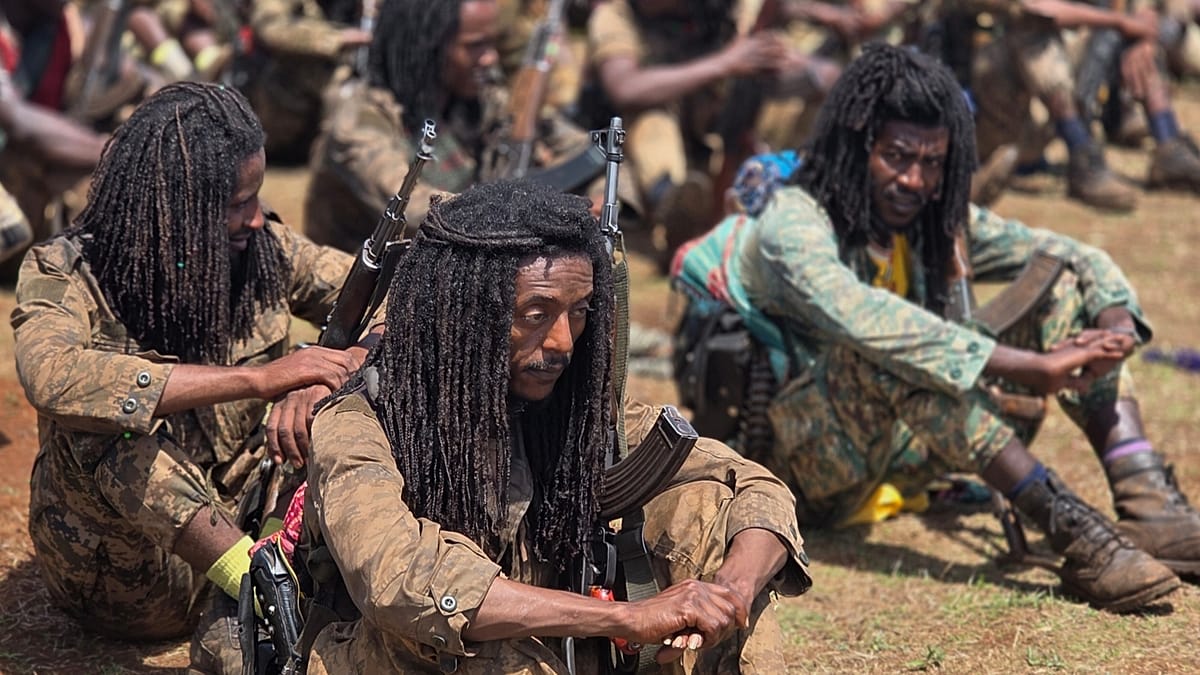
Africa Daily Report — 6 October 2026 Major developments reported during the previous 24 hours. 1. Ethiopia — Airstrikes and artillery continue after federal forces retake Mekelle Airstrikes and artillery fire continued across northern Ethiopia after federal forces regained Mekelle. Reuters reported at least 17 deaths northwest of the Tigrayan capital, with additional casualties reported in Adwa and Sheraro. The renewed fighting is the sharpest escalation since the 2020–2022 war. Ethiopia accuses Eritrea, Sudan and Egypt of supporting the Tigrayan-led rebel alliance; all three deny involvement. Source: https://www.reuters.com/world/africa/airstrikes-artillery-hit-north-ethiopia-after-tigray-capitals-fall-aid-sources-2026-10-05/ 2. Nigeria — Military ATR-42 crashes in Ondo State, killing all 32 aboard Importance: 10/10 — Critical A Nigerian Air Force ATR-42 flying from Benin City toward Lagos crashed near Igbokoda in Ondo State. Reuters reported that all 32 people aboard — 25 passengers and seven crew — were killed. President Bola Tinubu ordered the Air Force to investigate the cause. Source: https://www.reuters.com/world/africa/nigerian-military-helicopter-carrying-32-passengers-crew-members-crashes-2026-10-05/ 3. Senegal — Deadly floods hit Dakar and other regions Importance: 9/10 — Very High Heavy rainfall exceeding 100 mm in several locations caused flooding, casualties, injuries and major disruption in Dakar and other parts of Senegal. Reuters reported deaths and infrastructure damage; Senegal's Interior Ministry confirmed fatalities and injuries, while the government activated an emergency regional plan for Dakar. Further rain was forecast. Source: https://www.reuters.com/business/environment/heavy-rains-lead-to-senegal-floods-government-reports-several-deaths-2026-10-05/ 4. Ethiopia / Red Sea — Abiy reiterates demand for negotiated sea access Prime Minister Abiy Ahmed again said landlocked Ethiopia requires access to the Red Sea and argued that a negotiated, mutually beneficial arrangement is necessary. The statement comes amid deteriorating relations with Eritrea and renewed fighting in Tigray. Eritrea, Egypt, Sudan and Somalia have meanwhile stressed the sovereign role of Red Sea littoral states. Source: https://apnews.com/article/bad74909a59297de524fdf377f0605c2 5. Sudan — US envoy meets army chief Abdel Fattah al-Burhan in Egypt US Senior Advisor for Arab and African Affairs Massad Boulos met Sudanese army chief Abdel Fattah al-Burhan in Egypt. Boulos said Washington would continue working with Egypt and other partners toward a political solution to Sudan's war. The meeting came amid continuing US-backed diplomatic efforts to secure a ceasefire. Source: https://www.aol.com/articles/us-envoy-meets-sudanese-army-224042000.html 6. South Africa — Private-sector contraction deepens in September Importance: 8/10 — High South Africa's private sector contracted at its fastest pace since December, according to September PMI data reported by Reuters. New orders fell sharply while supply-chain disruption and higher costs, particularly fuel costs, added pressure on businesses. Source: https://www.reuters.com/world/africa/south-africa-private-sector-contracts-fastest-pace-since-december-pmi-shows-2026-10-05/ 7. Somalia — IMF cuts 2026 growth forecast to 2.3% Importance: 8/10 — High The IMF expects Somalia's economy to grow by only 2.3% in 2026, citing sharp reductions in foreign aid, recurrent climate shocks, spillovers from the Middle East conflict and domestic uncertainty. Inflation is projected at 6.5%, while growth is expected to recover gradually in 2027 and over the medium term. Source: https://www.channelafrica.co.za/channelafrica/news/imf-cuts-somalias-2026-growth-forecast-to-2-3/ 8. Guinea — Opposition leader Aliou Bah released following presidential pardon Opposition leader Aliou Bah, head of the Liberal Democratic Movement, was released after receiving a presidential pardon. He had been detained since December 2024 and was serving a two-year sentence for offences linked to remarks about President Mamadi Doumbouya. His case had also reached the ECOWAS Court of Justice, which had sought his release. Source: https://www.africanews.com/2026/10/05/guinea-opposition-leader-aliou-bah-freed-after-presidential-pardon/ 9. Uganda / African security — Kampala hosts conference on emerging security threats Importance: 7/10 — High Uganda opened a four-day Conference on Military Operations Other Than War, bringing together defence and security representatives from African states and regional organizations. The agenda covers cybersecurity, AI, unmanned systems, terrorism, disaster response, climate security, maritime and border security, critical infrastructure and pandemics. Source: https://ubc.go.ug/2026/10/05/uganda-hosts-inaugural-conference-on-military-operations-other-than-war/ 10. West Africa — BCEAO authorises 175 institutions for interoperable instant payments Importance: 8/10 — High The Central Bank of West African States has authorised 175 institutions to participate in the region's interoperable instant-payment ecosystem. Participants include banks, electronic-money institutions, fintech companies and microfinance institutions, broadening the infrastructure for cross-provider digital payments across the West African Monetary Union. Source: https://techafricanews.com/2026/10/05/bceao-authorises-175-institutions-interoperable-instant-payments/ #Africa #AfricaNews #TopNewsOfAfrica #Senegal #Dakar #SenegalFloods #Floods #HeavyRain #ExtremeWeather #ClimateRisk #HumanitarianCrisis #SouthAfrica #SouthAfricaEconomy #PMI #PrivateSector #EconomicContraction #AfricanEconomy #Business #Ethiopia #Tigray #Mekelle #EthiopiaConflict #Airstrikes #Artillery #FederalForces #RegionalSecurity #HornOfAfrica #AfricanSecurity #Geopolitics #wrldorg

803
Euronews English 3w

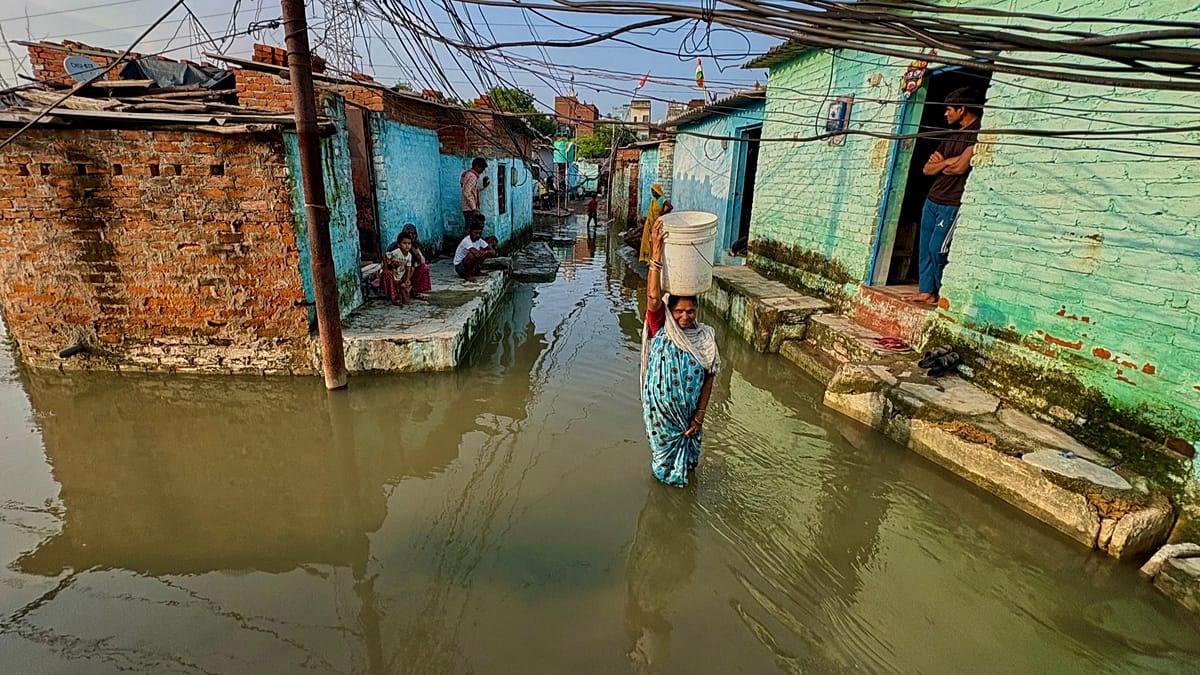
Schools were closed in parts of the state on Monday, including the capital Lucknow, while rescue teams moved people from flooded areas to safer locations. #Floods #India #NaturalDisaster

www.euronews.com
At least 62 killed after heavy rain and flooding in northern India, officials say
1966
Chrissie Brandkamp 3w

I've got Data Centres on my mind... I get it, that many communities do not want these in their backyard. Mostly they do seem to be a nuisance, using up sorely needed resources, making excessive noise (surely that can be mitigated?) and generally upsetting people, who often don't even have all the facts. But I think that is a rather selfish and hypocritical stance! I bet those same people also use the online services and advantages that require more and more data centres... and they would be quite happy plonking them in someone else's backyard! So banning them totally from the state (as in the USA) or country, county, province... whatever you have... makes absolutely no sense. They're not going away, and the need will just continue growing as we move to the next level of computing and AI. The answer clearly lies with the companies building these behemoths, and the authorities granting them the permission to do so in their jurisdiction. They have to negotiate the terms properly, so that these things don't become a nuisance, but a benefit to the community. And there will be some job creation. Because even computers need humans to program, repair, clean, organise, and generally look after everything! The locations must be chosen carefully. They should be as unobtrusive as possible. They must generate their own electricity and supply surrounding areas with any excess. They must not be built in areas with water shortages. I think the best options are near the coast, where water could be desalinated, and electricity be generated, at least partially, with wind turbines. One could even make it a tourist destination, with tours, educating the public on what data centres do, and showing the benefits, as well as the deficits, of this new future. Like I said, they won't be going away... no matter how much the people protest. They will just be built in someone else's backyard! So don't be the hypocrite; rather, be the one who helps to find sustainable solutions.

811
Donald J. Trump 4w

we will immediately begin the process of developing a large military presence in the appropriate locations We going to have a tremendous relationship, a secure relationship, #MilitaryBases #Greenland #USDenmarkDeal

US to build two military bases in Greenland under new deal with Denmark
www.bbc.co.uk
1973
Euronews English 4w

TPLF forces took control of Mekelle airport and fought federal troops at two locations in the Afar region, while Ethiopian Airlines suspended flights to three Tigray airports in an apparent collapse of the Pretoria Agreement that ended the 2020-2022 war in the country. #EthiopiaConflict #Tigray #TPLF

www.euronews.com
Tigray rebels seize airport and clash with federal forces as fighting in Ethiopia reignites
2090
Krzysztof Graj 4w

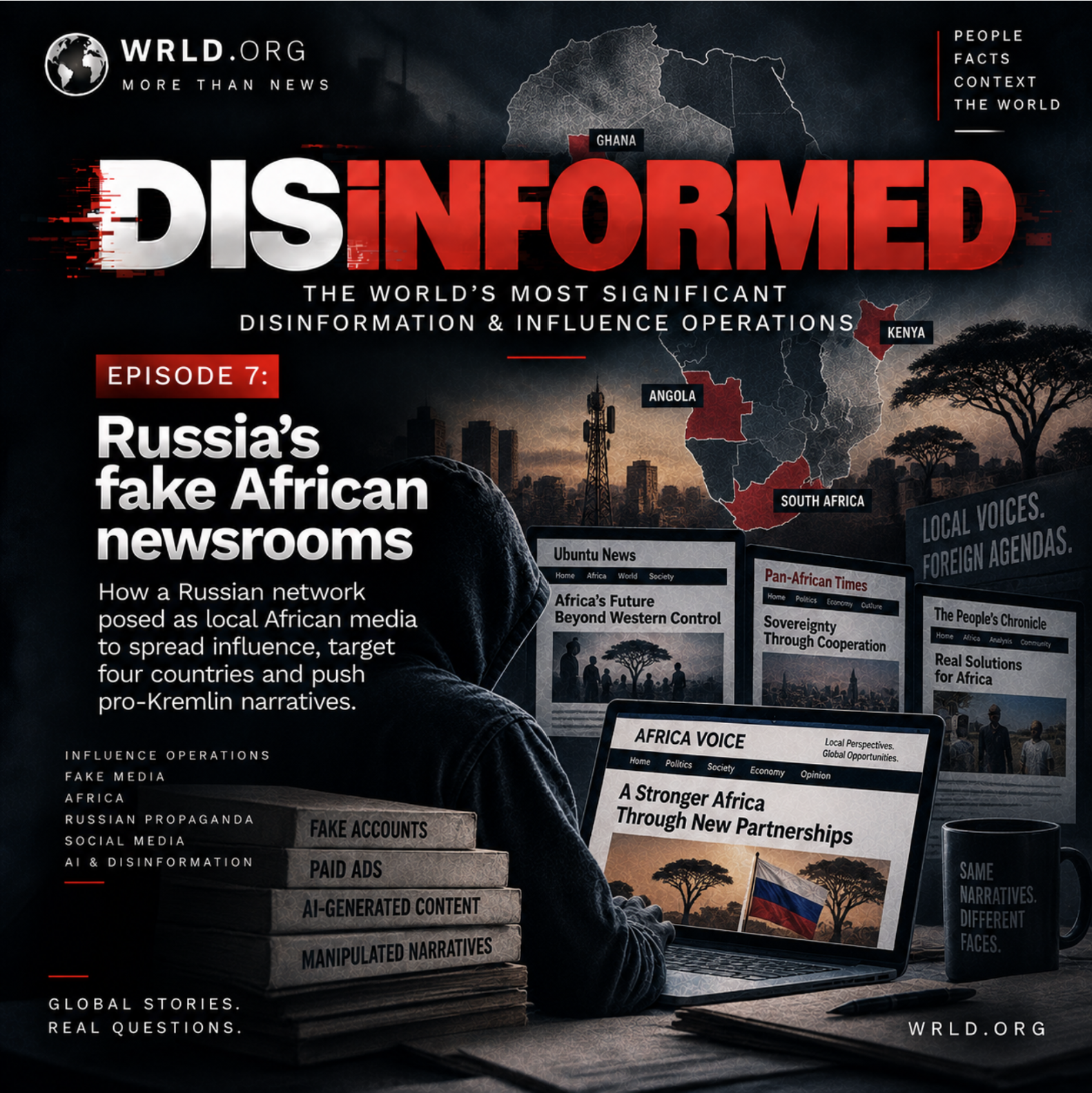
Russia’s fake African newsrooms – propaganda designed to look local A Facebook user in Nairobi, Accra, Johannesburg or Luanda encounters what appears to be a local news page. It publishes stories about African politics, Western influence and relations with Russia. The language is tailored to an African audience and the page presents itself not as a foreign broadcaster, but as part of the local information landscape. Behind some of these outlets, however, Meta found operators based in Russia. In its 2026 threat research, the company disclosed a Coordinated Inauthentic Behaviour network targeting audiences in Angola, Ghana, Kenya and South Africa. Meta removed 37 Facebook accounts and 29 Pages connected to the operation. Around 30,000 users followed at least one of the Pages, while the operators spent approximately $7,000 on Facebook and Instagram advertising, mostly in euros and US dollars. The numbers are relatively modest. The method is considerably more important. Rather than openly distributing Russian state messaging, the network posed as local African news sources and grassroots organisations, promoting narratives about Western colonialism and political interference while presenting Russia as a credible economic and political alternative. It was an old geopolitical message delivered through a much more effective identity: not Moscow speaking to Africa, but Africans apparently speaking to one another. A news outlet that was actually an influence operation Meta's investigation found that the network attempted to conceal its Russian origin while creating media brands that appeared indigenous to the countries they targeted. Its content amplified historical grievances against former colonial powers, criticised Western involvement in Africa and promoted closer relations with Russia. One example helps illustrate how the infrastructure was assembled. A Facebook Page targeting Kenya was called Kenya Watchtower. According to OpenAI's subsequent investigation, Facebook transparency records showed that the Page had previously been named “Farmtown5”. It appears to have been acquired or repurposed rather than built from scratch as a Kenyan news organisation. Some Pages also exposed administrator locations in Russia and Ukraine. Other elements of the network had previously targeted audiences in Zambia and Namibia. This use of apparently local identities is particularly important in the African information environment. A story published by RT or another identifiable Russian outlet arrives with an obvious geopolitical provenance. The same narrative presented by something resembling an independent Kenyan, Ghanaian or South African newsroom carries a different kind of credibility. The source appears closer to the reader, and the geopolitical interest behind the message becomes less visible. Then investigators found Dr Manuel Godsin The Facebook operation was only one part of a broader information ecosystem. OpenAI investigated related activity after receiving information from Meta and subsequently banned a ChatGPT account it assessed as likely originating in Russia. OpenAI called the campaign Operation No Bell. The account was being used to generate long-form articles and social-media posts about African geopolitics. Prompts were primarily written in English, but OpenAI also observed Russian-language instructions that the user described as coming from a manager. The operator sometimes explicitly asked the model to make the material appear less AI-generated – including requests to avoid stylistic features associated with machine-generated text and to write more like a human journalist. Many articles appeared under the name “Dr Manuel Godsin”, presented as an academic with a PhD from the University of Bergen and an affiliation with an organisation called the International Centre for Political and Strategic Studies. OpenAI could find no credible evidence that Godsin existed. Searches of Norway's National Research Information Repository and the University of Bergen library produced no record of him. Investigators subsequently discovered that a photograph used to represent Godsin had appeared years earlier on a Russian professional networking site and apparently belonged to a law student in St Petersburg. The fabricated academic identity was nevertheless remarkably productive. OpenAI identified 53 online articles carrying the Godsin byline. The fiction had moved beyond fake social-media pages and into the real media ecosystem. When propaganda enters genuine newsrooms This is the most consequential aspect of the operation. The articles were not confined to websites controlled by the influence network. Some were published by genuine African news organisations, including established South African outlets. The content mixed local political issues with broader geopolitical narratives. Some pieces criticised the United States and Britain or defended Russia's role in Africa. One accused the British NGO Crisis Action of fomenting protests in South Africa. Another praised Russia's presence in the Central African Republic. Other material addressed Kenya, Angola and relations between African governments and Washington. The mechanism represents a significant evolution from the classic troll-farm model. Instead of building an audience entirely on its own platforms, an influence operator can manufacture an apparently credible expert, generate articles in his name and persuade genuine news organisations to publish them. Once this happens, the propaganda acquires something a fake Facebook Page cannot provide: the institutional credibility of a real newsroom. OpenAI assessed No Bell's social-media impact as limited. One Facebook Page had around 3,000 followers before Meta removed it, while several others had very small audiences. But the operation was more successful in placing material in established media. In OpenAI's impact framework, it approached the level at which an influence operation breaks into mainstream media. For information operators, a single article published by a recognised outlet can potentially be more valuable than thousands of impressions generated by an obviously artificial account. A much larger network of ghost journalists Subsequent research suggests that Manuel Godsin was not an isolated experiment. In August 2026, Graphika, working with Code for Africa and with support from Meta, published a much broader investigation into Russian ghostwriting operations across African media. Researchers identified 44 ghost writers and fake experts, 38 of them assessed as high-confidence fabricated personas, operating between 2021 and 2026. Their material appeared or was quoted across 138 websites and was subsequently republished through at least 113 Facebook accounts and Pages, including authentic users, coordinated inauthentic networks and official Russian communication channels. The narratives were strikingly consistent. They included criticism of France, Ukraine and the United States; attacks on organisations such as ECOWAS and the International Criminal Court; positive portrayals of Russian involvement in Africa; praise for Russian paramilitary forces; and support for sovereignty-oriented political projects such as the Alliance of Sahel States. The operation therefore extends beyond creating fake news websites. It attempts to insert Russian-aligned narratives into the legitimate African media ecosystem using identities that appear African, independent or academically authoritative. This also explains why measuring reach through the original Facebook network alone is misleading. A fabricated article may begin with an influence operator, appear in a genuine African publication, be republished elsewhere and eventually circulate without any visible connection to Russia. At that point, the provenance of the narrative has effectively been laundered. An old Russian strategy with increasingly local faces Russia's use of local intermediaries in Africa is not new. Meta documented Russian networks using African nationals as early as 2019. In 2020 it dismantled another operation involving people in Ghana and Nigeria working on behalf of individuals in Russia, with links to previous activity associated with the Internet Research Agency. More recent Meta investigations suggest that this model has continued to evolve. Networks have increasingly relied on local freelancers, social-media managers and authentic media outlets rather than exclusively operating armies of obviously fake Russian-controlled accounts. This decentralisation offers several advantages. Local operators understand language, political sensitivities and cultural references. Authentic accounts are harder to identify than newly created synthetic personas. Local media brands can also deliver narratives without immediately triggering the scepticism associated with Russian state outlets. There is no evidence that every African journalist, freelancer or publication carrying such material knowingly participates in Russian influence activity. Meta explicitly notes in its investigations that some local contractors may not know who ultimately commissioned their work. That distinction is essential. The operation's effectiveness partly depends on precisely this ambiguity between deliberate participation, commercial content placement and unwitting amplification. The objective is to make Russian narratives look African The significance of this network is therefore not its 30,000 Facebook followers or its $7,000 advertising budget. Those figures are small compared with the audiences of major African media organisations. What matters is the distribution model. Traditional foreign propaganda asks an audience to trust a foreign source. These operations attempt to remove the foreign source from the equation altogether. A Russian geopolitical narrative can be generated with AI, attributed to an expert who does not exist, published by a media organisation that does, amplified through a Facebook Page presenting itself as local, and then rediscovered elsewhere as apparently independent African analysis. By the time the reader encounters it, Moscow may have disappeared completely from the chain of attribution. The resulting information operation is therefore less about making Russian propaganda more persuasive than about making it look as though it is no longer Russian propaganda at all. In an increasingly fragmented African media environment, that may be the more important evolution to watch. SOURCES: Meta Threat Research https://threatresearch-team.github.io/indicators/meta-h1-2026-russia-based-cib-network-1/ OpenAI — Operation “No Bell” https://openai.com/index/disrupting-malicious-uses-of-ai-no-bell/ Graphika — Umbrae Ex Machina https://www.graphika.com/reports/umbrae-ex-machina News24 https://www.news24.com/southafrica/news/ai-expert-exposed-fake-kremlin-linked-analyst-planted-stories-in-african-media-20260318-0560 Vanguard https://www.vanguardngr.com/2026/03/ai-expert-exposed-fake-kremlin-linked-analyst-planted-stories-in-african-media/ Meta — Russian Coordinated Inauthentic Behaviour, 2019 https://about.fb.com/news/2019/10/removing-more-coordinated-inauthentic-behavior-from-russia/ Meta — Russian Coordinated Inauthentic Behaviour, 2020 https://about.fb.com/news/2020/03/removing-coordinated-inauthentic-behavior-from-russia/ Meta Threat Research — Russian Use of Authentic Operators in Sub-Saharan Africa https://threatresearch-team.github.io/indicators/meta-h2-2025-russia-based-cib-network-2/ KEYWORDS: #DISINFORMED #Episode7 #Russia #Africa #RussianDisinformation #RussianInfluence #Disinformation #InformationWarfare #InfluenceOperations #ForeignInterference #FIMI #CoordinatedInauthenticBehaviour #CIB #FakeNews #FakeMedia #FakeNewsrooms #MediaImpersonation #GrassrootsManipulation #Astroturfing #ArtificialIntelligence #AI #AIPropaganda #SyntheticMedia #FakeInfluencers #SocialMediaManipulation #Facebook #Meta #OperationNoBell #AfricanMedia #MediaManipulation #Propaganda #DigitalInfluence #Angola #Ghana #Kenya #SouthAfrica #OSINT #WRLD

threatresearch-team.github.io
Russia-Based Influence Operation Network Targeting Sub-Saharan Africa
1046
Jean Marc Morandini Sep 14

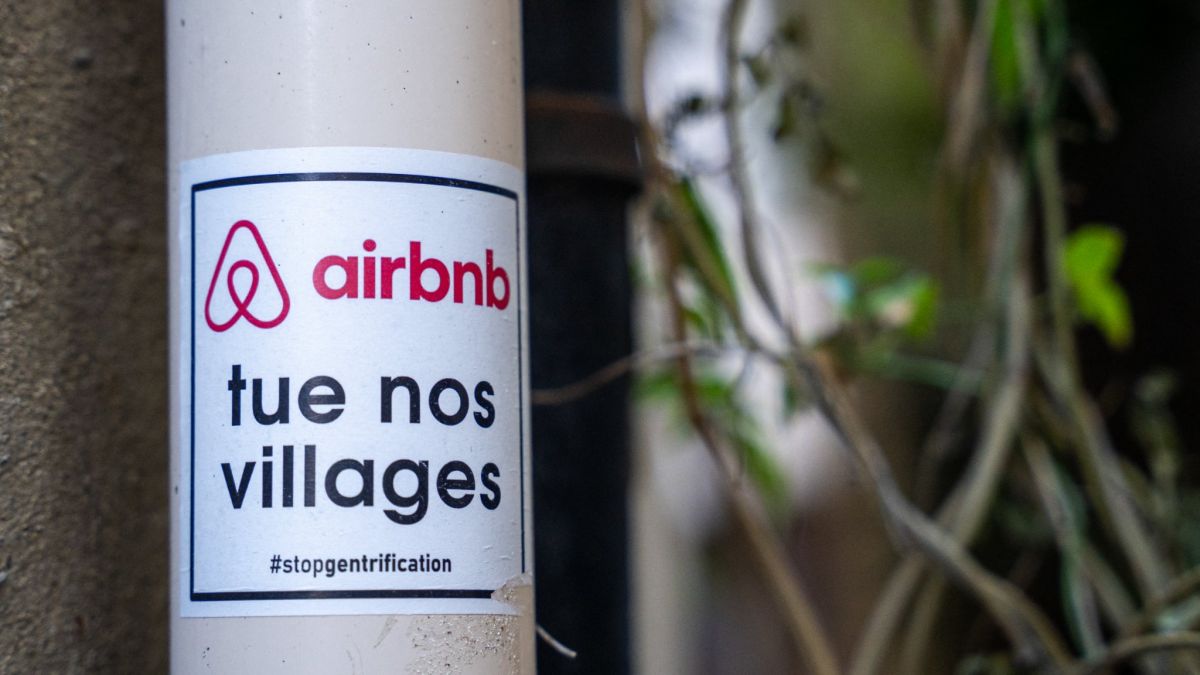
Face à la multiplication des plaintes des habitants, Tokyo va interdire plus de la moitié des locations Airbnb dans un quartier très touristique https://t.co/9TYUigbdXt #Tokyo #Airbnb #Tourisme #JP

117
Gunther Fehlinger-Jahn Sep 12

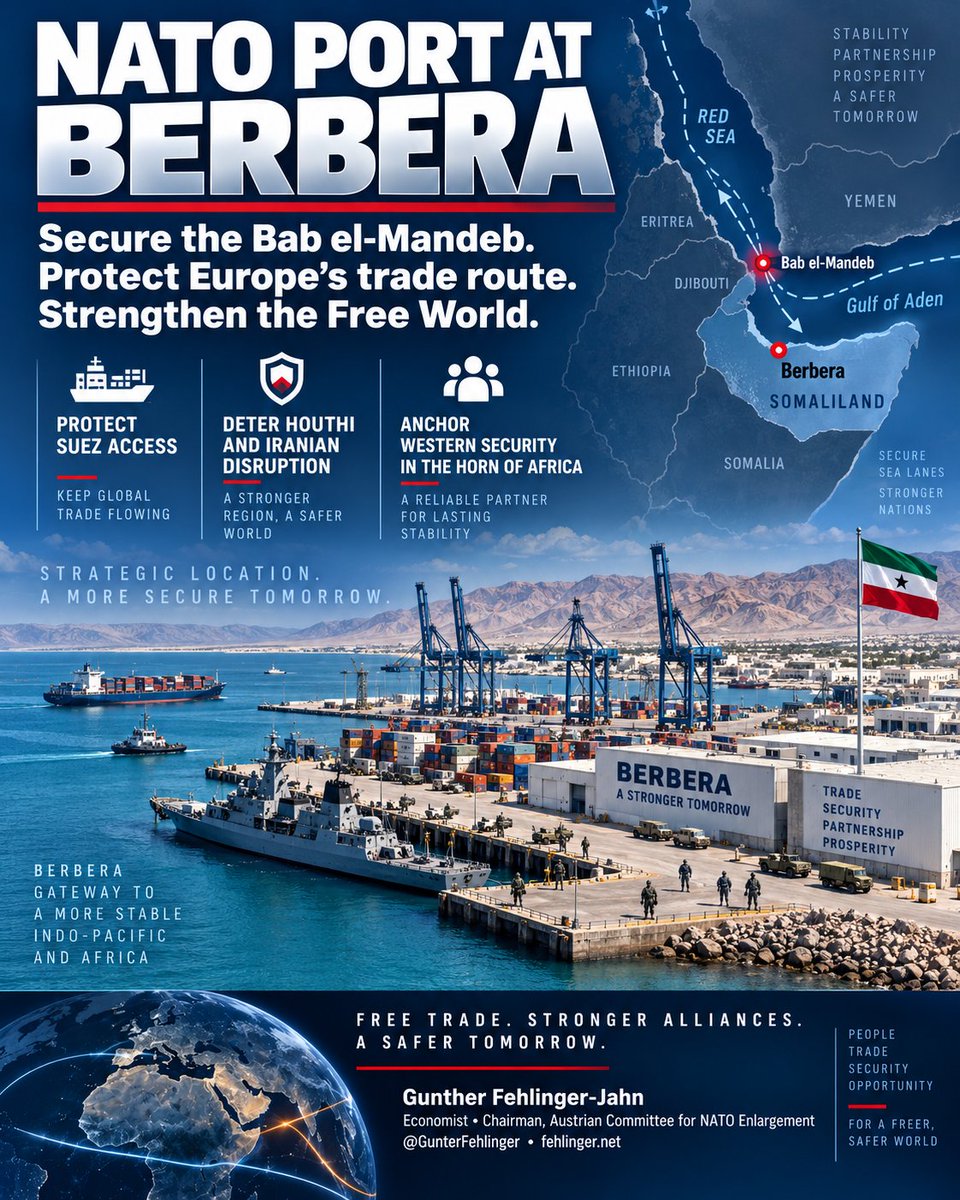
I WANT A NATO PORT AT BERBERA. 🇸🇴⚓️🌍 Berbera is one of the most strategically valuable locations on the Gulf of Aden. From Somaliland, the Free World can help secure the Bab el-Mandeb, protect access to the Suez Canal, defend European–Asian trade routes and deter Houthi and https://t.co/QxjwPnW8ZD #NATOPort #Berbera #GulfofAden #SO

234
BFMTV Sep 9

Bruxelles a présenté un plan visant à permettre aux villes européennes de limiter les locations de courte durée, comme celles proposées par Airbnb, tout en clarifiant les conditions légales pour éviter les poursuites devant les tribunaux. #LocationCourtSéjour #UnionEuropéenne #CriseDuLogement

www.bfmtv.com
Bruxelles dévoile son plan "anti-Airbnb": l'UE veut permettre aux villes de limiter les locations de courte durée sans risquer de finir devant les tribunaux
15789
BFMTV Sep 5

Bruxelles s'apprête à proposer de nouvelles règles pour faciliter les restrictions sur les locations de courte durée, telles que celles d'Airbnb, dans les zones touristiques touchées par la crise du logement en Europe. #Airbnb #CriseDuLogement #UnionEuropéenne

www.bfmtv.com
Vers davantage d’interdictions pour les Airbnb? Face à la crise du logement en Europe, Bruxelles veut faciliter les mesures contre les locations de courte durée dans les zones touristiques
15816
Rus.Postimees.ee Sep 2

Kuressaare's water utility advises boiling tap water citywide due to bacteria found in samples from various locations, prompting further testing to assess the overall quality of drinking water. #Курессаар #питьеваявода #качествоводы

pmo.ee
В эстонском городе рекомендуют кипятить водопроводную воду: бактерии обнаружены в пробах, взятых в разных районах
17006
Heinreyᵣₑᵢₙ𝒹ₑₑᵣ🦌 Aug 26

When they said #TheRemarriedEmpress had a big budget, they weren’t kidding. Filming locations for The Remarried Empress 📍 Květná zahrada, Czech Republic 📍 Schleissheim Palace, Germany 📍 Hrádek u Nechanic Castle, Czech Republic #ShinMinah #LeeJongSuk #JuJihoon #LeeSeyoung https://t.co/vAXburr23z #TheRemarriedEmpress #FilmingLocations #KDrama

12228
Razvan Paraschiv Aug 19

In 2020, the NFL asks them to sell at the Super Bowl — the first Brazilian brand to ever do it. Today, Oakberry has over 1,100 locations across 50 countries, $300 million in annual revenue, and a new store opening every two days. #SuperBowl #Oakberry #BrazilianBrand #BR

Marsha Collier Aug 11

Let's hope the Feds enforce the "Preventing Animal Cruelty and Torture Act that covers serious bodily injury to animals. Los Angeles animals 🐕🦮🐾😿🐈need protection! You can help with evidence by taking photos, giving dates, times and locations along with a description of the #AnimalRights #EndAnimalCruelty #ProtectAnimals #US