WRLD

Search

#patrioti
Roland Tichy Wrld summary 16h
German journalist

The author wrote that the Federal Audit Office criticized the Klingbeil/Merz government and described their statements regarding support for Ukraine as unreliable, incomplete, and opaque. He then provocatively asked whether the Audit Office would now also be derogatorily referred to as Putin's loyalist or whether it was patriotic to insist on the correct use of tax funds. #Bundesregierung #Ukraine #Steuermittel #DE #UA #RU (translated)
2411
Assemblée nationale du Sénégal Wrld summary 1d

The National Assembly of Senegal indicated that its president, Ousmane Sonko, participated on Thursday, November 19, in the 25th edition of the National Day of the Armed Forces, at Camp Dial Diop, under the presidency of the head of state, Bassirou Diomaye Faye. The institution added that, in the morning, Mr. Sonko paid tribute to the armed forces in a Facebook post, acknowledging their courage, commitment, and dedication. He also recalled their motto, "They kill us, they do not dishonor us," and highlighted the values of honor, patriotism, and sacrifice. #ForcesArmées #Patriotisme #Honneur (translated)

2814
D
der Standard 1d

In Ukraine, a patriotic online scam is thriving, in which perpetrators use identity theft and fraudulent call centers to take revenge on Russians by causing them financial harm through fake Instagram profiles and offers for free photo shoots. #OnlineBetrug #Identitätsklau #Ukraina (translated)

www.derstandard.at
"Patriotischer" Online-Betrug in der Ukraine floriert
2010
Cerfia Wrld summary 2d

Cerfia reported that Jean-Luc Mélenchon's meeting with leaders of LVMH, Total, Carrefour, and Engie had raised concerns among employers regarding his program, particularly the new taxes planned. According to the media, Mélenchon would have urged business leaders to show patriotism by continuing their investments in France. The dinner reportedly remained cordial despite disagreements, and one business leader would have praised his handling of the discussions. #Politique #Économie #France (translated)

2821
H
Hakeem Jeffries Wrld summary 2d
American politician (born 1970)

Empty string. #HakeemJeffries #TrumpCorruption #USPolitics (translated)

New leader of US Democrats pledges to target Trump corruption
timesofmalta.com
3070
Matteo Brandi Wrld summary 3d

Matteo Brandi cited the law against anti-Semitism, the one on femicide, the numerous flow decrees, and support for Kiev and Brussels. He questioned whether the government could define itself as composed of "patriots" and insulted those who supported that definition, insinuating that they did so for economic interest. #politica #diritti #femminismo (translated)

2903
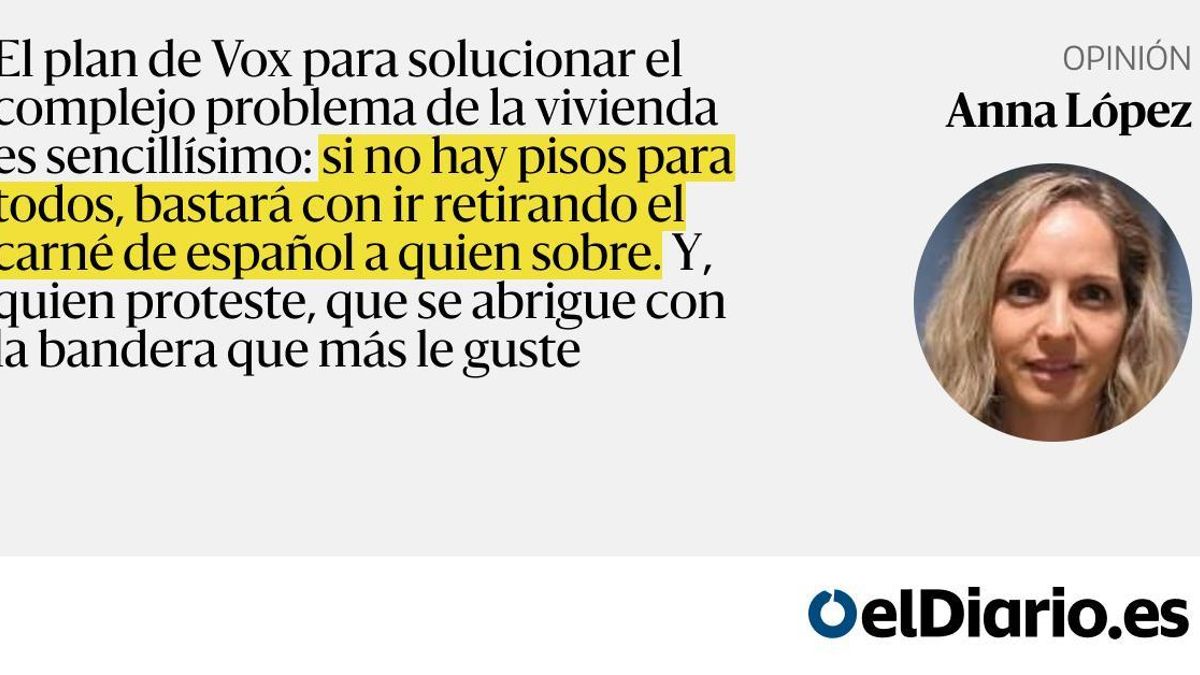
eldiario.es 3d

The article criticizes the stance of the leader of Vox, Santiago Abascal, who adopts a selective patriotism and uses the Spanish flag as an exclusive symbol and private property, while proposing simplistic solutions to complex problems like housing. #Vox #Patriotismo #Inmigración (translated)

www.eldiario.es
Abascal, abanderado de España. Patriotas de pulsera, soluciones de humo
2573
edyrosen edyrosen 3d

With grace around the neck Political scientist Vladimir Tismaneanu has recently pinpointed one of the most subtle wounds of the unconscious, inflicted by communist totalitarianism; parasitic neuro-affective imprinting. Mental leveling through psychological conditioning techniques based on suggestion and neurolinguistic programming, through hymns, wooden language, and anchor symbols. The wound lies in the fact that, after decades of carrying it, the mask of a False Self has become entrenched in the flesh and can no longer be torn away without suffering. We are talking about a diversion of attachment, through post-hypnotic graft — a subtle trauma in which the very vitality and biological candor of the child have been turned against themselves, becoming the adhesive of their own captivity. In the terms of Richard Bandler and Robert Dilts, when an emotional anchor (the love for the Dictator, the Party, ideology) is installed at a time of maximum neuroplasticity, amidst a spike of cortisol and dopamine, it is no longer a simple reflex, but an identity imprint. The external symbol fuses with the chemistry of the joy of existence. Gregory Bateson (the mentor from whom R. Bandler and the studies on M. Erickson departed) explains why this wound hurts in adulthood: the conscious mind of the adult understands the ideological falsehood, but the body retains the post-hypnotic suggestion implanted through song and ritual. Reason sees the prison, but the limbic system still flinches warmly at the sound of the horn. It is a somatic double bind, favored by source amnesia. This is the classic hypnotic phenomenon in which the subject retains the emotion or conviction implanted during trance, but forgets it was induced from outside. This explains why many adults today sincerely defend their conditioned reflexes from communism, believing they are defending their own "happy childhood." If Aldous Huxley had had the curiosity — at least as a political entomology exercise — to visit a schoolyard in Romania in the 1980s, on a chilly autumn morning with fuzzy loudspeakers, he would likely have experienced a mixed feeling of authorial pride and slight humiliation. The pride of seeing his fiction in "Brave New World" confirmed on an industrial scale; the humiliation of realizing that his British imagination had, in fact, been too dull, erring on the side of politeness! For where Huxley imagined sterile laboratories of hypnopaedia, in which the axioms of social conformity were dripped beneath children's pillows during REM sleep, totalitarian pedagogy had succeeded in inducing the same hypnotic sleep in broad daylight, with eyes wide open, using only a triangular piece of red acetate, a transparent plastic ring, and a horn. If we look at things a little detached and without rosy nostalgia, we are faced with an astonishing early confiscation engineering. Totalitarianism quickly understood a truth that theology has known for millennia, and neuroscience has only recently begun to measure: whoever reaches the child’s synaptic architecture first no longer needs too many guards later on. The phenomenon did not arise from nothing, nor even from Lenin's imagination. Its historically documented archetype dates back to the 7th century B.C., in the Spartan Agoge — the first state system that decreed that a child does not belong to the family but to the city, taking them away at the age of seven to dissolve their private loyalty into a collective military pack reflex. However, modernity added a tragic irony to this ancient brutality. In 1907, British Lord Robert Baden-Powell invented scouting — a pedagogical system designed to cultivate autonomy, individual honor, and resourcefulness in nature. But the totalitarian regimes of the 20th century looked at the uniform, the badge, the salute, and the scout oath and had an instrumental revelation: the form was brilliant, it just needed to be emptied of freedom and filled with ideology. Thus, through reverse engineering, the Bolshevik Komsomol (1918) emerged, and in 1922, the Pioneer Organization in the USSR, designed by Nadezhda Krupskaia and Soviet ideologists — explicitly built on the confiscated skeleton of scouting. Mussolini immediately adopted the recipe in 1926 through Opera Nazionale Balilla, which even enlisted six-year-old children in Figli della Lupa — Sons of the She-Wolf… followed by the Nazi Hitlerjugend, where the mystique of the campfire was converted into an SS nursery. When the regime in Bucharest established the Pioneers in 1949, it unified the youth in UTC and, ultimately, through Nicolae Ceaușescu's decree in 1976, created the Falcons of the Fatherland for preschoolers aged four to seven, the assembly line had become airtight. The state no longer waited for the young person to gain discernment to convince them; it occupied their imagination before they even knew how to tie their shoelaces. Richard Bandler best explains how an anchor is established in the nervous system. In neurolinguistic programming (NLP), the ideological mystery evaporates and a disarmingly simple technical recipe remains. Today Bandler would tell us directly, without mincing words: "Stop asking why children believed in those nonsense. They didn’t believe in ideas; they responded to conditioned anchors!” How does emotional anchoring work in NLP? You take an intense physiological state — it doesn't matter if it's artificially produced — and, right at its peak, when the child's brain is swimming in dopamine, adrenaline, and cortisol, you attach a unique visual, auditory, and kinesthetic stimulus to it. Let’s remember how "the initiation into the Pioneers" was done. Not the whole class received the scarf at once. There was a learned economy of prestigious scarcity: the "first batch" was reserved for the top students, taken to a monumental setting — at the Mausoleum, at the museum, on a sunlit platform — while the rest remained in their seats, consumed by mimetic anxiety. For a seven or eight-year-old child, the horror of being excluded from the tribe and the euphoria of being chosen among "the good" represent a neurochemical tsunami. Right at the crest of this emotional wave, when the nervous system is wide open, the ritual intervenes: the adult's hand ties the red scarf around their neck (kinesthetic anchor at the larynx and plexus), the trumpet splits the air (auditory anchor), the hand rises to the forehead at a precise angle with three fingers fused (proprioceptive anchor), and the mouth utters the motto: “For the glory of the people and the flourishing of socialist Romania, forward!” From that moment, Bandler explains, the Pavlovian circuit is myelinated. The child's nervous system has fused the biological need for love and validation with the symbols of the Party. You no longer need to explain dialectical materialism; it is enough to show them the emblem or sound the horn, and their body will automatically deliver the thrill of solemn submission. Ideology did not enter through the front door of the intellect, but through the back window of the conditioned reflex. Milton Erickson explains what is up with "wooden language" hypnosis. Why did the texts of pioneers and youth organizations sound like a wooden incantation, filled with gerunds and abstract nouns? Wooden language was not a mere stylistic incompetence of the activists but an induction device for trance. Erickson demonstrated that the conscious mind can be bypassed through a few precise linguistic techniques: nominalization (turning active verbs into frozen nouns), presupposition, and cognitive oversaturation. When a student would utter phrases such as "full commitment to the construction of multi-laterally developed socialist society" or "unequivocal fulfillment of outlined tasks" during a UTC meeting, their brain would futilely attempt to sensorily represent what "unequivocal construction" meant. Failing to find a concrete reference in the real world, the analytical cortex would enter a micro-trance of semantic fatigue. Moreover, the mottos worked through what Erickson and linguists call presupposition frames. When the Falcon of the Fatherland said, "I am preparing to become a pioneer," and the pioneer swore to be ready for UTC, the fundamental question — "Do I want to be part of this machinery?" — was already grammatically abolished. The future was conjugated in the indicative mood, as a completed fact. Furthermore, wooden language practiced a systematic erasure of the human agent: things “were built,” the homeland “flourished,” history “advanced.” The individual was no longer the author of their own actions but a mere verb in the passive voice, in the phrase spoken by the Party and the tireless Leader. The acoustic Trojan horse; why does sung suggestion disable critical spirit? Why was there so much singing in communism? Why was every level — from kindergarten to artistic brigades in universities and to mammoth literary circles — soaked in marches, hymns, and bright refrains ("We in the year 2000, when we will no longer be children," "Three colors," "E-he-hei, dear comrade")? The answer lies in a structural vulnerability of the human brain. If you tell a person a lie in prose — for example, that they live in the happiest of worlds while waiting in line for chicken wings — their critical apparatus (housed in the dorsolateral prefrontal cortex, the seat of doubt and reality checking) immediately wakes up and formulates an internal counter-argument. But if you put the exact same lie to a major melody, in a 4/4 march or in an uplifting choral harmony, and have them sing it themselves, the critical sentinel is disarmed. The mechanism is double: neurologically and physiologically. Neurologically, melody and rhythm are massively processed in the right hemisphere and in the limbic system, the seat of pure emotion, while the ideological text travels clandestinely, like a stowaway, hidden in the hold of aesthetic emotion. The brain cannot reject the verse without also rejecting the pleasure of musical harmony; and since the human being longs for consonance, they accept the whole package. Physiologically, singing in chorus is an ancient technique of vagal synchronization: two hundred children singing the same refrain are forced to inhale at the same second, exhale in the same rhythm, and align their heartbeats. And when your diaphragm works in unison with that of the platoon to hold the high note on the word "Party," your critical ego has already dissolved into the acoustics of the mass. You cannot polemicize with a phrase that your own vocal cords are transforming into harmonic vibration. However, if we rise from Bandler's Pavlovian mechanics to the metaphysical diagnosis, the picture takes on the contours of an anthropological tragedy that Søren Kierkegaard prophesied as early as the mid-19th century, before the first pioneer was born. For Kierkegaard, the entire stake of human life is the passage from the aesthetic stage (of immediate sensation and squandering) to the ethical and, finally, to the religious, through the birth of the singular Individual (Den Enkelte) — the man who stands alone before their own conscience and before God. Therefore, Kierkegaard's warning falls like lightning over any collectivist utopia: "The crowd is the untruth" (Mængden er Usandheden). The crowd, says the Danish philosopher, is the place where responsibility evaporates through fraction: no one is guilty because everyone sings at the same time; no one chooses because the detachment has already voted unanimously. Communist youth organizations were, in Kierkegaardian terms, a gigantic prophylactic machine against anxiety and fertile solitude. They served to prevent the young person from ever being alone with themselves. They offered a simulacrum of the ethical stage — "duty" to the collective, "honor" of being a member — precisely to atrophy the organ of genuine conscience. Sin was no longer a moral fall before the Truth, but the stridency of not being in line, of singing off-key in the angelic chorus of the brigade. In the extension of Kierkegaard, Karl Jaspers — who in The Spiritual Situation of Our Time (1931) and in his famous essay on German guilt x-rayed the anatomy of totalitarian regimes — offers us the key to understanding this training. Jaspers makes the vital distinction between simple empirical being, framed in apparatus (Dasein), and Authentic Existence (Existenz), which awakens only in limit situations (Grenzsituationen): suffering, struggle, guilt, death, radical doubt. What did the Falcons of the Fatherland, the Pioneers, and the UTC do? They confiscated the biological thresholds of transition — the exit from childhood, puberty, adolescence — and replaced them with bureaucratic limit situations: receiving the scarf, exclusion in front of the square, self-criticism in meetings. Instead of allowing adolescents to discover transcendence through inner turmoil, the regime delivered them a cardboard, horizontal transcendence, where the Absolute had the retouched face of the General Secretary. More seriously, as Jaspers would observe, this pedagogy produced an early ontological complicity: by having the five-year-old recite homage poems and the fourteen-year-old raise their hand in meetings of denouncement, the system sickened them with a diffuse "moral guilt" before they had even reached the age of discernment. When you have applauded and sung since kindergarten, later rebellion demands not only civic courage but a painful amputation of your own affective memory. An epilogue for the "recent man"... Here, the circle closes between Aldous Huxley and our former youth with a red scarf. The drama is not that we were lied to; raw lies leave the spirit intact and provoke resistance. The drama is that the training used the noblest resources of childhood against the child itself: the need for beauty, the joy of singing together, the desire to be good, the thirst for ritual and meaning. And if today we no longer wear commander's cords over our shoulders, it doesn't mean that Huxley's hypnopaedia has gone dormant. It has simply been privatized. The pioneer horn has shifted to the algorithmic notification of the phone, the school square has become the instant validation flow of social networks, and the song that lulls the critical instance is no longer a patriotic march but an infinite loop of visual dopamine. The technique, however, remains unchanged from Sparta to the present: whoever succeeds in linking your need for belonging to an external symbol and putting your thinking to a pleasant melody no longer needs to lock you up in any prison — you will carry your own grace around your neck, convinced it is an ornament... Psychotherapy and psychoeducation, as well as the strengthening of political culture, are viable solutions for deconditioning and healing. Eduard Rosentzveig (translated)

448
Torsten Heinrich Wrld summary 4d
German military historian, web video producer and former politician

Torsten Heinrich wrote that reports of a strike on the Crimea Bridge had put Russia's patriots in despair for a moment. Almost 100 attack weapons had reportedly reached and successfully hit the bridge. The exact number was secondary, Heinrich explained: the pillars of the highway bridge were completely destroyed and collapsed. This also represented a collapse of the Russian faith in indestructible fortresses, inviolable borders, and the unstoppable nature of their own weapons. #KrimBrücke #Russland #Patriotismus (translated)

2917
20 minutos 5d

Pedro Sánchez revisited his role as a candidate for the PSOE during an event in Alcorcón, where he advocated for civic patriotism and the national flag, recalling his announcement as a candidate for the presidency of the government in 2015, with the presence of his wife Begoña Gómez. #PedroSánchez #PSOE #Elecciones2015 (translated)

www.20minutos.es
Sánchez se reinventa en el 'Sánchez candidato' de 2015: así fue el acto de hace once años con Begoña y una bandera gigante de España
2592
Helmut Brandstätter MdEP Wrld summary 5d
Austrian journalist and politician

The author wrote that the FPÖ had concluded a contract with Vladimir Putin's party, in which numerous forms of cooperation were described. He particularly criticized the intention to educate the youth of both countries in the spirit of patriotism. This meant that Putin sends his youth to war, he wrote, and marked Susanne Fürst. #FPOE #Putin #Patriotismus #AT #RU (translated)
3158
P
Pedro Sánchez 5d

Sánchez has proclaimed that the red and yellow is "the one of the Constitution, the one of democracy and the flag of the strength of the people." #PedroSánchez #Patriotismo #PSOE (translated)

2709
Julian Röpcke🇺🇦 Wrld summary 6d
German journalist

The author wrote that true patriotism is independent of religion. The Muslim volunteer Rajana died in eastern Ukraine in the fight against Russian troops, which he referred to disparagingly. Rajana was born in Chechnya and joined the Ukrainian army to defend the country against Putin's aggression. In conclusion, he commemorated her. https://t.co/mYiFKkYNBQ #Patriotismus #Ukraine #Freiwillige #UA #RU #CHE (translated)

3395
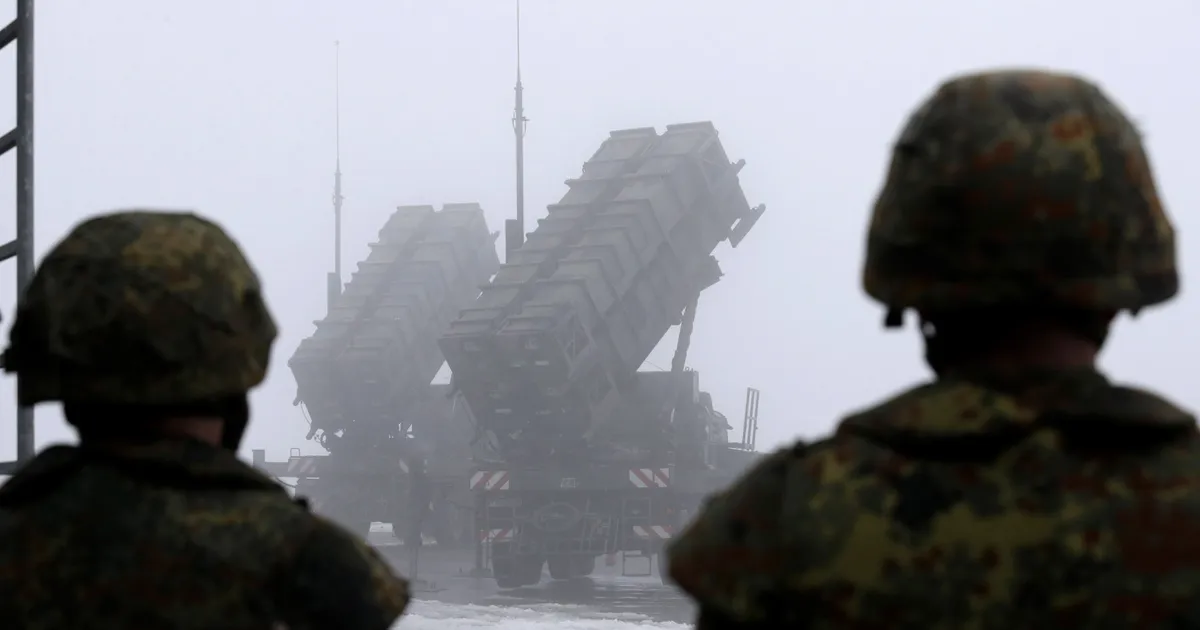
Postimees 7d

The Pentagon has suspended the permitted license for the production of Patriot missiles due to the ongoing war in Ukraine, which has lasted 1725 days. #Ukraina #VenemaaSõda #PatriotRakettid (translated)

pmo.ee
BLOGI ⟩ 1725. sõjapäev Ukrainas: lubatud litsents Patrioti rakettide tootmiseks on Pentagonis takerdunud
2612
Santiago Abascal 🇪🇸 Wrld summary 7d
Spanish politician (born 1976)

"We have a corrupt mafia in front of us." #Vox #Elecciones29N #Patriotismo (translated)

3181
Marine Le Pen Wrld summary 1w
French politician (born 1968)

The author stated that the European Union prohibits economic patriotism and indicated that he would use territorial priority criteria to direct investments towards national companies, in order to protect the economy and jobs. https://t.co/CdWQSG3p5y #Patriotisme #Économie #Investissement #EU (translated)

2955
Marine Le Pen Wrld summary 1w
French politician (born 1968)

The author wrote that the French wanted to prioritize domestic products, but often could not tell if a product was made in France. He indicated that he and his colleagues had been fighting for 15 years in the European Parliament for precise labeling of origin, and assured that they would continue to pursue this goal. https://t.co/AsaDzW94hF #MadeInFrance #PatriotismeÉconomique #OrigineProduits (translated)

2501
Balázs Orbán Wrld summary 1w
Hungarian politician, deputy minister and secretary of state (born 1986)

The author wrote that Europe’s right had reached a historic turning point, arguing that conservative, sovereignist and patriotic forces, despite their differences, had found a shared political goal: reversing the centralisation of power in Brussels and restoring national sovereignty. https://t.co/SMm78jljyn #Energie #Souveränität #EuropäischePolitik #EU #BR #FR #DE #IT

2957
Florian Philippot Wrld summary 1w
French politician and official

The author described a demonstration in Warsaw as impressive, presenting it as a show of force in favor of patriotism and against the EU. He mentioned a large crowd carrying Polish flags and relayed the slogans "Polexit" and "Frexit." He also mentioned a national march in France calling for Macron's resignation. https://t.co/88TEx3jjbb #Pologne #Patriotisme #Manif #PL #FR (translated)

2963
Hermann Tertsch Wrld summary 1w
Spanish journalist and television presenter

The author wrote that he felt great satisfaction in accompanying Venezuelan patriots on their return from exile. He added that he considered it even more important to convey a message of encouragement to the millions of Venezuelans living in different parts of the world and that the time had come to return to Venezuela. #Venezuela #Patriotismo #Retorno #VE (translated)

2964