WRLD

Search

#scelte

Piercamillo Falasca reported having read that, according to Dario Nardella, Kaja Kallas would not have been a suitable choice as the EU negotiator with Russia, because her Baltic origins would provoke Putin. Falasca recalled that Kallas was born a Soviet citizen in 1977 and acquired Estonian citizenship after the country's independence, a circumstance that, in his opinion, would annoy the Russian president because he would have to negotiate with a former subject. He argued that, as Vice-President of the European Commission and High Representative for Foreign Affairs, Kallas was the most institutionally suitable person to represent the EU. Falasca added that allowing Putin's historical-psychological obsessions to guide European choices would mean legitimizing them, and he defined this as the mistake made for years by the Italian left regarding Russia, regardless of Nardella's good faith. #UE #Russia #Politica (translated)

3168
Alessandro Zan 2d
Italian politician

For the MEP and head of Rights of the Democratic Party, Alessandro Zan, this is "a tragedy that forces us to face reality. In Italy, transgender people are increasingly exposed to stigma and discrimination. A climate of hatred is also the result of political choices: for the current Children's Ombudsman, transgender minors do not exist, the Minister for Equal Opportunities has publicly denied the legitimacy of transgender people's identities, and the Minister of Education places limits on discussing gender in schools." #bullismo #salutementale #diversità (translated)

2227
Alessandro Zan 2d
Italian politician

"A tragedy that forces us to face reality. In Italy, transgender people are increasingly exposed to stigma and discrimination," said Alessandro Zan, MEP and head of Rights for the Democratic Party, who speaks of a "climate of hate also resulting from political choices." #Bullismo #Transgender #Depressione (translated)

2450
ANSA.it 2d

The President of the Senate Ignazio La Russa stated that, although the will of the people may be imperfect and has led to fascism, it is essential to accept it as the supreme value of democracy without judging it, since only history can determine whether popular choices were right or wrong. #VolontàPopolare #Democrazia #Politica (translated)
www.ansa.it
La Russa agli studenti: 'La volontà del popolo può essere imperfetta, ha voluto il fascismo'
2673
ANSA.it 3d

The Black Friday on November 27th is evolving, with artificial intelligence becoming an ally for shoppers, providing support in purchasing decisions, while Italians are increasingly interested in shopping during this period of offers. #BlackFriday #ShoppingIntelligente #AcquistiOnline (translated)

www.ansa.it
Black Friday, tra sirene di sconto e il nuovo alleato: l'intelligenza artificiale
2567
Il Fatto Quotidiano 3d

The article analyzes how the Italian decision-making system, characterized by an excessive decentralization of responsibilities, makes it difficult for mayors and public officials to address emergency situations such as bomb threats, often leading to conservative choices that can be harmful to the community. #AllarmeBomba #Cybersicurezza #GestioneEmergenze (translated)

www.ilfattoquotidiano.it
Allarmi bomba: lo Stato non può aver paura di decidere
2690
Il Fatto Quotidiano 4d

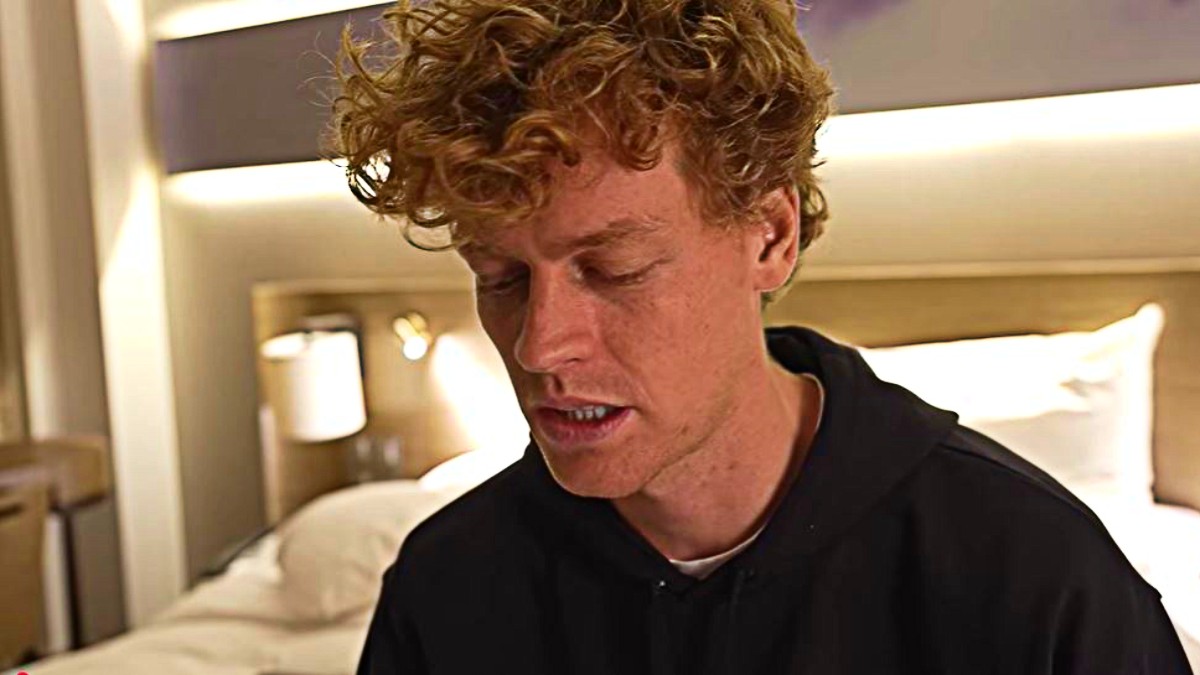
Jannik Sinner talks in the third episode of his YouTube series Jannik Sinner Unfiltered about his tonsil surgery and the subsequent weight loss, expressing hope that his choices will help him come back stronger after a long injury. #JannikSinner #Tennis #RecuperoSportivo (translated)

www.ilfattoquotidiano.it
“Mi sono operato alle tonsille e ho perso molto peso. Ho fatto tutto per tornare più forte, speriamo sia stata la decisione giusta”: Sinner senza filtri
2693
Il Fatto Quotidiano 4d

Italy is at war without the knowledge of its citizens, in violation of the Constitution, and the price to pay could be immense due to the wrong political and institutional choices that expose the country to concrete dangers. #Guerra #Ucraina #Costituzione (translated)

www.ilfattoquotidiano.it
L’Italia è in guerra all’insaputa dei cittadini: il prezzo da pagare rischia di essere enorme
2360
Il Sole 24 ORE 5d

Markets can finance the ecological transition, but they cannot be left to lead it autonomously, as strategic choices must come from public decisions and not solely from financial interests. #Sostenibilità #FinanzaSostenibile #TransizioneEcologica (translated)

www.ilsole24ore.com
I mercati possono finanziare la transizione ecologica. Ma non guidarla da soli
2932
Il Sole 24 ORE 5d

The interest of Italians in finance is growing significantly, leading to the need for timely and reliable guidance to face complex economic choices, influenced by emotions and technology. #EducazioneFinanziaria #Investimenti #AnsiaFinanziaria (translated)

www.ilsole24ore.com
Italiani e finanza: l’interesse cresce ma serve una guida per fare le giuste scelte
2820
Giorgia Meloni 6d
Prime Minister of Italy since 2022

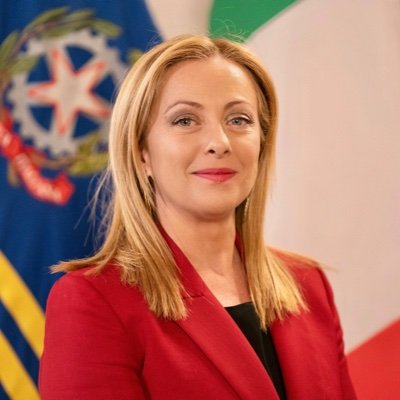
Prime Minister Giorgia Meloni explained that the decree law intervenes on the "mechanism that drives up the price of electricity due to the cost of gas," with "three precise choices": "a cap on the gas used to produce electricity" at 58.9 euros per megawatt hour; "to pass on to bills the benefits of energy produced at lower costs," preventing producers from withholding production capacity to drive up prices; "to protect the savings allocated to consumers," preventing electric companies from passing on higher costs to customer bills. #DecretoBollette #CaroEnergia #RiduzioneTariffe (translated)

3853
Pino Rotta 1w

Coordinated solitude, author Claudio Aloisio Written by Pino Rotta, November 8, 2026 Claudio Aloisio is a communication and marketing professional, a field in which he has worked for many years. When his first essay "Coordinated Solitude" (Ed. Ideacoop Media Service, 2026) was released, sharing the same field of activity and interests (albeit with different directions and experiences), I found it interesting to read it, especially since we share the same city but have not met, which was already a good reason to find the essay interesting and its title stimulating. "Coordinated solitude" is an essay that analyzes, with a wealth of documentation and bibliography, the phenomena of the formation of convergences or exclusions among groups and individuals through the study of media languages and, in particular, those of the digital domain. A field that has already been widely investigated for several years. My first approach to these new linguistic proposals dates back, among other readings, to a 1994 essay "Collective Intelligence" by Pierre Levy. In that essay, Levy, at the dawn of the web era, launched the idea that the network, which collected the contributions of millions of users, contained them all without controlling their paths, interactions, or effects. Stimulating concepts that today help us understand how much conflict can arise between theory and its application considering time and technological development. However, Aloisio surprises the reader with suggestions from the very first pages of the essay. In fact, despite addressing the analysis of digital languages with an epistemological line rooted in Anglo-Saxon studies, particularly American ones, from the outset the author seems to suggest that this is not a “technical” essay but is entirely political in the higher sense of the term. The first reference is found in the citation of an author who was among the fathers of European sociology in the early years of the last century: Emile Durkheim, one of the first sociologists and philosophers who analyzed social phenomena with enormous meticulousness and rigor, linking religion with social structure. This opening will be found in the subsequent pages of "Coordinated Solitude," but it will not be the only surprise in Aloisio's analytical developments. In the essay, the author describes how people who may share spaces, interests, and common values, by finding them in the digital world, can at a certain point recognize themselves in different affiliations and even come to see in others a “us” that makes them akin to their own story or a “them” that indicates a distance, exclusion, and even a threat in relation to it. The causes of these dynamics are very well structured in the essay, as is the well-structured context in which individual stories are born, meet, and ultimately find different outcomes. Outcomes that can lead to reinforcing one's affiliations, which, however, are discovered at the end of the interaction process and that, throughout the journey, rarely reach a state of awareness. Outcomes that are influenced by pre-existing value structures that do not necessarily coincide with those of the members of the groups with which one identifies or clashes. This path is analyzed by Aloisio by considering the social dynamics of the West, examining and contrasting similar but not necessarily overlapping social realities, such as American and Italian society. In the identification processes that coexist in these social realities, the belonging to social class, religious group, ethnicity, sexual orientation, and sense of nation enters strongly. Everyone has their own experiences, but at the end of a journey of interaction, now almost exclusively digital, one finds oneself sharing a sense of belonging with other multitudes of people who have completely different experiences. And in this sense of belonging, fears of the future, frustrations of the past and present are downloaded, and one is enveloped by fears and anger that must find an enemy to blame. An enemy that is often suggested by the discovery of affinities among the groups that are created, much more often than not created, on digital platforms. Addressing the current nature of the algorithms governed by Artificial Intelligence, the author suggests the method through which these affiliations arise, which can be irrational but are entirely real and influence individual and social daily life. The individual in the digital dimension, which becomes the everyday reality of social action, is called to take responsibility for maintaining their conviction and belonging or risk feeling excluded, isolated, alone. The weight of a choice that often becomes distressing and paralyzing. But how is it possible to read and interpret these “Coordinated Solitudes”? Aloisio's essay provides a reading and suggests a methodology to identify the path that sometimes, but not always, leads to the awareness of how certain choices are made and what elements need to be questioned to verify if the reading of these languages withstands the law of contradiction and thus can be used to ascribe scientific value to it. But at the end of this journey of understanding languages, forms of aggregation, and the proof of the compatibility of individual choices, Aloisio presents us with another surprise that speaks volumes about his educational journey. The discourse of education and the reading of digital languages is ultimately a discourse on democracy, on social structure, and these factors cannot be disregarded without risking losing the ability to give meaning to one’s social action as well as one’s communicative action. It is my view that the surprise that is the coherence of the entire analysis of the essay comes with the reference that the author makes at the end to the work of Jürgen Habermas. The most important philosopher, sociologist of language, heir of the Frankfurt School who passed away at the age of 97 in March 2026, is the foremost interpreter of the theory of democracy and of the criticism of oppressive authority, which does not exclude conflict but determines its progressive outcome through the mediation of communicative action. Communicative action that questions institutions not to destroy them but to avoid remaining subjected to authoritarianism and, in the form of linguistic mediation, to be active subjects, not subdued by a system that, due to the nature of formal institutions, can always degenerate into authoritarianism. Coordinated solitudes thus find themselves with a positive perspective, with outcomes that are never guaranteed or predetermined, but feasible for reconstructing trust in the future realized through the recognition of the other as part of a common living and not as a threat to be feared, excluded, or even suppressed. Lastly, it should be noted that, although not explicitly considered, Aloisio does not prioritize simplification in the reading of contexts, evading complexity as a fundamental element of contemporary society's reality (perhaps it would have been useful to refer to Edgard Morin's theories), but it is evident that complexity must be confronted with different analytical methodologies and that the appeal to the work of Zygmunt Bauman leads us to presume this. https://www.heliosmag.it/?p=1659 (translated)

796
Fabrizio Romano 1w
Italian football journalist

Fabrizio Romano responded to Matteo Sorrenti, who confirmed the news 100%, saying that Darwin could confirm that he had given his consent to Napoli and had been willing to go there. He added that later the club had made other choices. #Napoli #Calcio #Darwin (translated)

2733
Il Fatto Quotidiano 1w

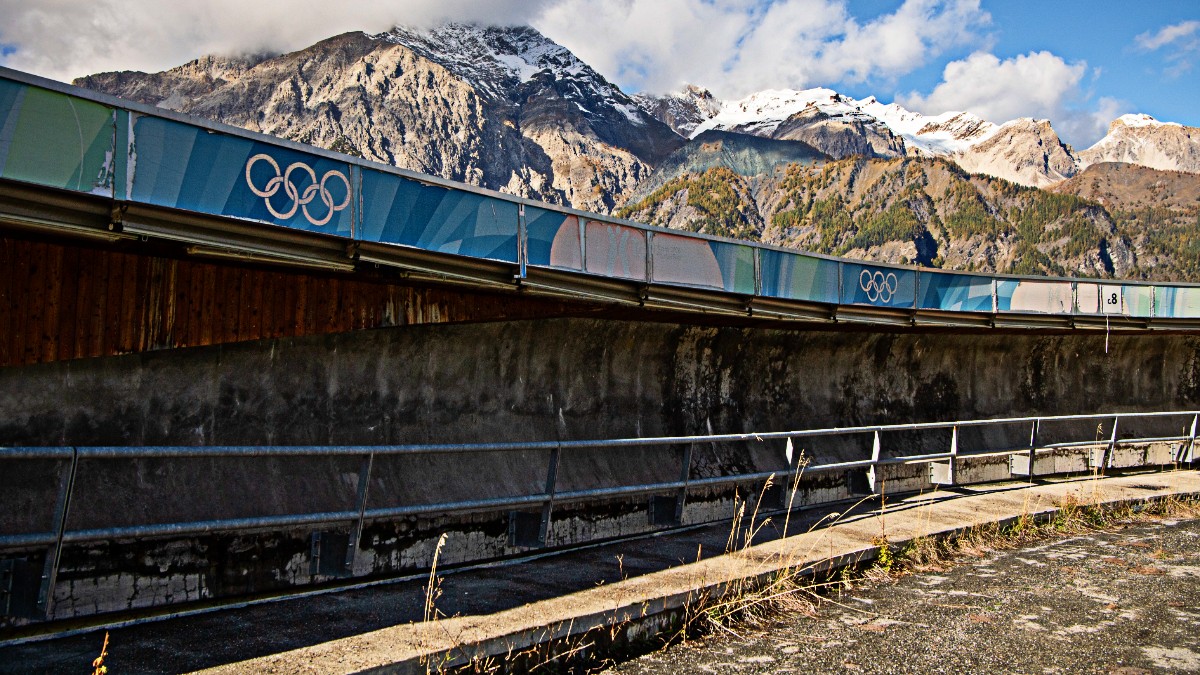
The bob track in Cesana Pariol, which cost 110 million euros and closed after only five years, now requires another 7.6 million to be dismantled, a symbol of an Olympic failure and controversial political choices for the future Olympics in Milan-Cortina 2026. #Olimpiadi2026 #CesanaPariol #FallimentoOlympico (translated)

www.ilfattoquotidiano.it
Cesana Pariol, la fine della pista da bob simbolo del fallimento olimpico: costata 110 milioni, ora ne richiede altri 7,6 per essere smantellata
2849
ANSA.it 1w

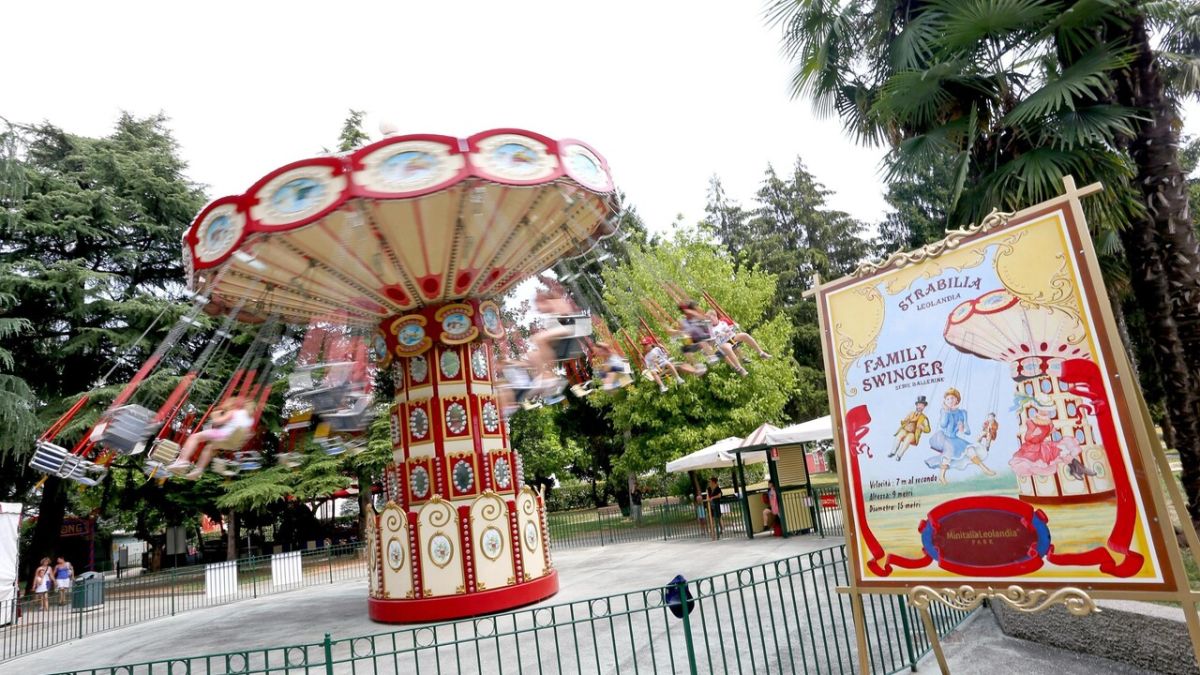
In 2025, amusement parks in Italy recorded over 21 million visitors and 306 million euros in revenue, highlighting an economic sector that generates an indirect impact of 8 billion and involves 60 thousand workers, with a growing importance in leisure consumption choices. #ParchiDivertimento #Turismo #EsperienzeItalia (translated)

www.ansa.it
Nel 2025 oltre 21 milioni di visitatori in parchi divertimento
2850
Giuseppe Conte 1w
Prime Minister of Italy from 2018 to 2021

The author criticized the government's choices, claiming that, after so many slogans, middle-class retirees would lose 400-500 euros a year, according to Il Sole 24 Ore. He also mentioned the heavy cuts to schools and the reports from governors, including those from the center-right, regarding the risks to hospitals and waiting lists related to the Maneuver. The post ended with an incomplete reference to "And now also." #Pensioni #Scuola #Governo #IT (translated)

3423
Giuseppe Busia 1w

The same can be said for the outgoing president of Anac, namely Giuseppe Busia, a serious and respected jurist, who has always provided his timely and reasoned criticism of the government’s choices that dismantled the anchors of legality within the Public Administration (from the repeal of abuse of office to the liberalization in the management of contracts and subcontracts). #politica #democrazia #separazionepoteri (translated)

2854
Timostene 1w

Timostene criticized the government's decision to appoint Nuccio Altieri as the president of ANAC and argued that the appointment could be challenged in court. He recalled that, according to ANAC, 95% of public procurement was now conducted through direct assignments and attributed to a reform of the procurement code enacted by Matteo Salvini in 2023 the ability to award contracts up to 150,000 euros without a tender, and, beyond that threshold and up to more than five million, to invite selected companies without a public notice. In the post, Timostene described ANAC as the authority that oversees contracts and claimed that its independence was essential. He noted that the agency had been led by magistrate Raffaele Cantone and legal expert Giuseppe Busia, to whom he attributed criticism of the procurement code, the procedures for the Bridge over the Strait, and the extensions of highway concessions. Timostene referred to Altieri as a former deputy and party leader in the League close to Salvini, who had already been appointed to the presidency of Invimit and on the board of Leonardo. He stated that the law prohibited appointing someone who had held party positions in the three preceding years to lead ANAC, and that Altieri had only recently been responsible for Defense within the League. He then accused Salvini of weakening both procurement rules and the body responsible for enforcing them. The appointment, he clarified, was not yet definitive: it had to go through parliamentary committees, where two-thirds of the votes were needed, and then to the signature of the President of the Republic. Timostene wrote that there was still time to stop it. #ANAC #Corruzione #Appalti_pubblici (translated)

3997
Claudio Borghi A. 1w

Claudio Borghi A. wrote that Ukraine could defend itself as much as it wanted, but that if it chose to continue until the last Ukrainian, in his opinion the Ukrainians would run out before the Russians. He said he wanted to stop sending arms, even scraps, and money through the EU. #Ucraina #pace #armi (translated)

2741
Il Fatto Quotidiano 2w

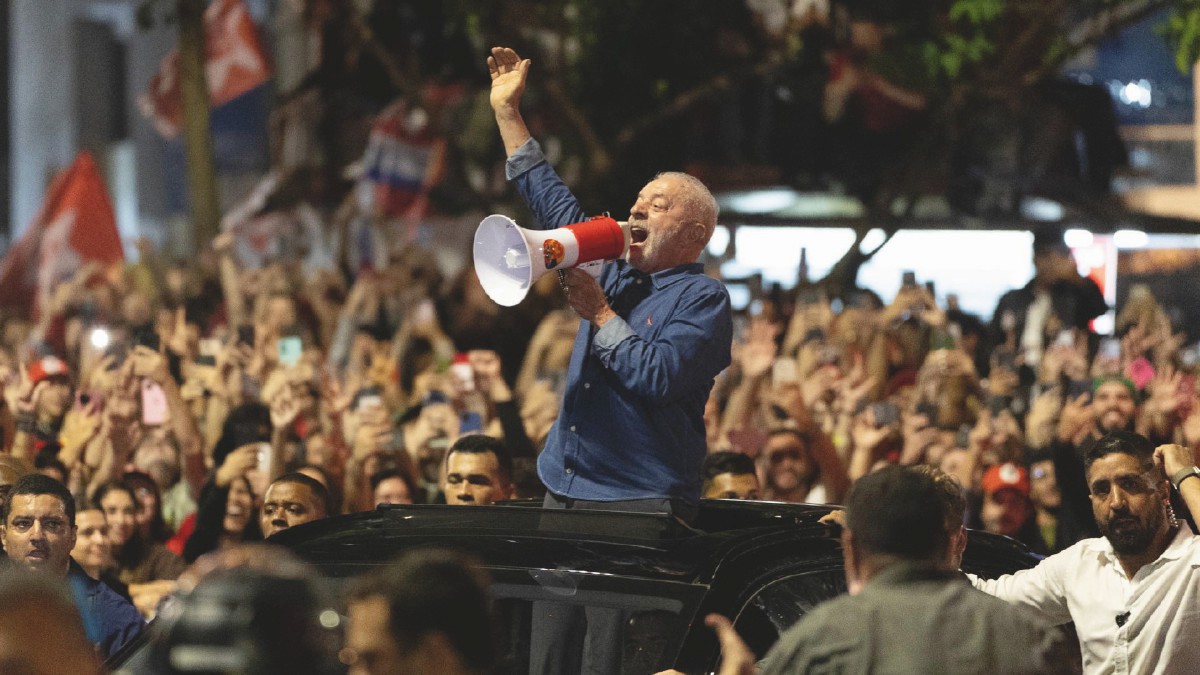
Barbara Nappini's article argues that global crises are not inevitable but the result of poor choices, and highlights how the recent protest movements in various countries, including Brazil and India, are initiating a necessary change to address issues such as deforestation and the climate crisis. #CambiamentiClimatici #Deforestazione #AttivismoAmbientale (translated)

www.ilfattoquotidiano.it
Dalle piazze d’Europa agli alberi di Lula: l’alternativa c’è (capito signora Thatcher?) – La rubrica di Slow Food
3203