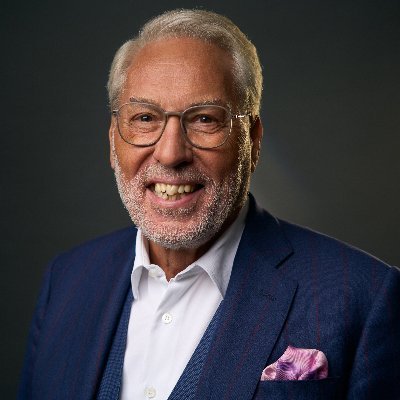
Vahrenholt said in a conversation with Max Mannhart on "Vahrenholt" that the failure of the world climate conference was the best news of the past days. According to his assessment, the world is turning away from climate policy and fearmongering, which political system-changers have exploited. The federal governments under Merkel, Scholz, and Merz have invested around 48 billion euros of taxpayers' money in international climate projects over the past ten years, the benefits of which are often questionable, Vahrenholt wrote. He cited bike paths in Lima and a subsidized chicken coop in China as examples. According to him, Germany accounts for 1.4 percent of global emissions. Only the EU and countries like Australia and Canada, which together are responsible for 12 percent of global CO₂ emissions, have committed to becoming climate-neutral by 2050; for Germany, this deadline is 2045. Vahrenholt also referred to the recent IPCC scenarios, which predict an additional warming of 1.3 degrees by 2100 compared to the already achieved 1.5 degrees. Björn Lomborg calculated that Germany's zero-emission path would only reduce the global temperature by 0.006 degrees by 2100. According to Vahrenholt, the costs of Germany's unilateral move are enormous: Prognos estimates the transformation at six trillion euros. COP31 marks a turning point, he wrote. However, Merz and Schneider want to remain model students. For 2029, Vahrenholt expects not a climate election campaign, but an energy election campaign about how Germany can return to affordable and reliable energy as the foundation of prosperity. #Klimawandel #Energiewende #Klimaschutz (translated)


