BETA nonprofit public democratic european moderated

Search

#Ölpreise

Antje Erhard from HR explains in a video the effects of the Iran war on oil prices. (translated)

Antje Erhard, HR, zu den Auswirkungen des Iran-Kriegs auf die Ölpreise

The USA and Iran continue their conflict over control of the Strait of Hormuz with mutual military attacks, leading to rising oil prices and increasing tensions in the region. (translated)

Die Lage im Überblick: USA und Iran kämpfen um Kontrolle über Straße von Hormus

Oil prices are rising after renewed military attacks between the USA and Iran, and there are concerns about rising inflation and continued uncertain outlooks on the situation in the Middle East. (translated)

Ölpreise steigen nach neuen Gefechten im Nahen Osten

In the podcast episode Trump's America, Juan Moreno and Claus Hecking discuss how the Iran war influences oil prices while simultaneously promoting a boom in solar energy in many countries, as US President Trump remains skeptical of renewable energies. (translated)

Donald Trump: Sorgt der Iran-Krieg für einen Boom der Solarenergie? - Podcast
Kurier 2d

The oil prices have continued to rise due to the escalating conflicts between the USA and Iran, as well as the war in Ukraine, and are currently about 91.16 US dollars per barrel. (translated)

Tanken bleibt teuer: Ölpreis steigt weiter

Oil prices are rising again due to new attacks in the Persian Gulf, while a potential exit from OPEC by Venezuela offers hope for long-term relief in the market. (translated)

Marktbericht: Ölpreise klettern wieder

The German inflation rate rose to 2.9 percent in August 2026, primarily due to higher oil prices and the low water levels in the Rhine, which further fueled consumer prices. (translated)

Deutsche Inflationsrate steigt auch im August - auf 2,9 Prozent
Bild 6d

Foreign Minister Johann Wadephul is traveling to a crisis summit in Istanbul on Sunday to develop strategies with the E3 partners and representatives of the Mecca Pact to resolve tensions in the Strait of Hormuz and combat rising fuel prices in Germany. (translated)

Gegen Teuer-Sprit - Wadephul auf Öl-Mission in Istanbul

According to the International Monetary Fund (IMF), the global economy has weathered the energy shock caused by the Iran war better than expected, although IMF chief Kristalina Georgieva points to the concerning budget situation of some countries and the possibility of rising oil prices that could further fuel inflation. (translated)

IWF: Weltwirtschaft verkraftet Energie-Schock besser als erwartet

According to an analysis by the International Monetary Fund (IMF), the global economy has coped better than expected with the energy shock caused by the Iran war, as the effects of the closure of the Strait of Hormuz were mitigated by the release of oil reserves and the expansion of renewable energy. However, there are still concerns about the deteriorating fiscal situation in some countries and potential inflation due to rising oil prices. (translated)

Irankrieg: Weltwirtschaft verkraftet Energie-Schock besser als befürchtet

Rather unnoticed by the media, the US Navy is reopening the Strait of Hormuz. So far, it's only 20% of the previous oil quantity - but it is flowing. More and more. Additionally, the newly opened bypass routes are added. (translated)

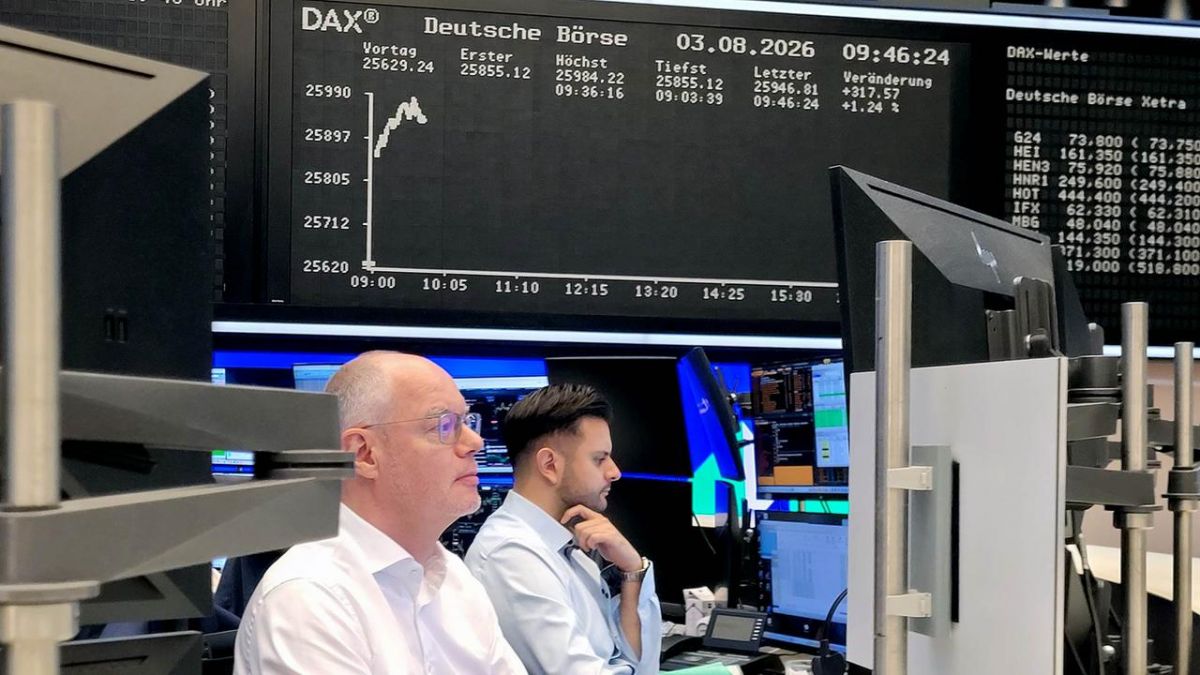
The DAX fell by 0.42 percent to 25,983 points on the fourth consecutive loss day, marking the lowest level since the beginning of the month, while rising oil prices and nervous markets due to the escalation in Iran are weighing on sentiment. (translated)

Börsenindex: Dax fällt am vierten Verlusttag in Folge unter 26.000 Punkte

The intervention of the US Treasury Department to stabilize the bond market has proven ineffective, as Wall Street reacts with losses to rising oil prices and increasing yields on government bonds, which raises concerns about rising government spending and high US debt. (translated)

US-Intervention bei Staatsanleihen verpufft
Kurier 2w

U.S. officials claim that a secret U.S. operation allows the passage of up to 20 ships each night through the blocked Strait of Hormuz, which is questionable given the rising oil prices and lack of evidence for these claims. (translated)

Lassen die USA heimlich nachts Schiffe durch die Straße von Hormus fahren?

Due to the unproductive expiration of the ceasefire agreement between the USA and Iran and the associated concern about rising oil prices and the world economy, institutional investors worldwide have massively sold long-term government bonds, leading to higher interest rates and an increased burden on the budget costs for affected countries. (translated)

Iran und Öl: Globaler Abverkauf von Staatsanleihen

U.S. President Donald Trump announced his intention to declare the Strait of Hormuz U.S. territory after the end of the Iran war, which is causing a stir due to rising oil prices and geopolitical tensions between Washington and Tehran. (translated)

Trump: Straße von Hormus zu US-Territorium machen

US Vice President JD Vance stated that the main goal in the Iran war is to keep oil and gas prices low for Americans, while the government had previously justified the conflict mainly with the Iranian nuclear program. (translated)

Vance nennt niedrige Öl- und Gaspreise als wichtigstes Kriegsziel in Iran
Kurier 3w

Oil prices are expected to fall only next year due to the unstable situation in the Persian Gulf and a reduced supply in 2026, while the current price for a barrel of oil is around 90 dollars, and the demand for crude oil is expected to decline by about 1.6 million barrels per day this year. (translated)

Ölpreise werden sich erst nächstes Jahr entspannen

The fuel prices in Germany are currently rising significantly, especially for diesel, due to increasing oil prices and logistical difficulties caused by the drought, with the average price for a liter of diesel rising to 2.200 euros and for E10 to 2.125 euros. (translated)

Mobilitätskosten: Spritpreise ziehen kräftig an

US President Donald Trump claims that the Strait of Hormuz is under US control, while oil prices continue to rise due to strong disruptions in supply routes and ongoing military conflicts in the Middle East. (translated)

Trump behauptet, die Straße von Hormus sei unter US-Kontrolle – Ölpreis steigt