WRLD

Search

#Ακρόπολη

Nikos Boyiopoulos linked the anniversary of the liberation of Athens on October 12, 1944, with a conference and archaeological exhibition scheduled for October 15-17. He wrote that EAM, ELAS, and EPON liberated Athens from Nazi occupation at that time. Boyiopoulos argued that the titles and themes of the presentations downplayed the German occupation. He also criticized the event's poster, stating that it depicted a large Wehrmacht flag over the Acropolis, where, as he noted, Manolis Glezos and Lakis Santas had lowered the Nazi flag. He specifically referred to a presentation by a German historian, whose title linked the desire to be present when the flag was raised at the Acropolis with the horizons of imagination and the reality of the German occupation in Greece from 1941-1944/45. Boyiopoulos interpreted the title as an insinuation that aspects of the Nazi atrocities could be a product of imagination and connected his criticism to revisionist approaches regarding the 200 from Kaisariani. He characterized the event as a disgrace and emphasized that it was held under the auspices of the Greek Ministry of Culture. As he mentioned, the conference was organized by the German Archaeological Institute of Athens (DAI), the Italian School of Archaeology, and the Institute of Historical Research/National Hellenic Research Foundation. #ΓερμανικήΚατοχή #Αθήνα #Ιστορία (translated)

Open on X
3294
Vassilis Kikilias 7d

The author wrote that on October 12, 1944, Athens was liberated, after 3.5 years of occupation, famine, sacrifices, and resistance of the people. He mentioned that the blue and white flag waved again at the Acropolis and characterized the liberation as one of the most significant moments in the struggle to shake off the occupation. https://t.co/gpMwKVnmxk #Αθήνα #Ιστορία #Απελευθέρωση #GR (translated)

Open on X
3863
Haris Doukas 7d

Charis Doukas stated that, 82 years after the Liberation of Athens, the ceremony honored those who fought against the Nazi occupation. He characterized it as an act of democratic vigilance and said that from the Acropolis, the message was sent that democracy needs citizens who defend it every day. He added that each generation has this responsibility towards those who fought, to future generations, and to democracy. #Απελευθέρωση #Δημοκρατία #Μνήμη (translated)

Open on X
3522
Karagioros Gerasimos 7d

Karagioros Gerasimos wrote that it was beautiful to see the Greek flag waving again at the Acropolis and the people celebrating. He described the image as full of symbolism, history, and national pride, on the occasion of the 82nd anniversary of the Liberation of Athens. https://t.co/f9aBAQU4NF #Ελλάδα #Ακρόπολη #ΕθνικήΥπερηφάνεια (translated)

Open on X
3182
Nikos Appelaios II 1w

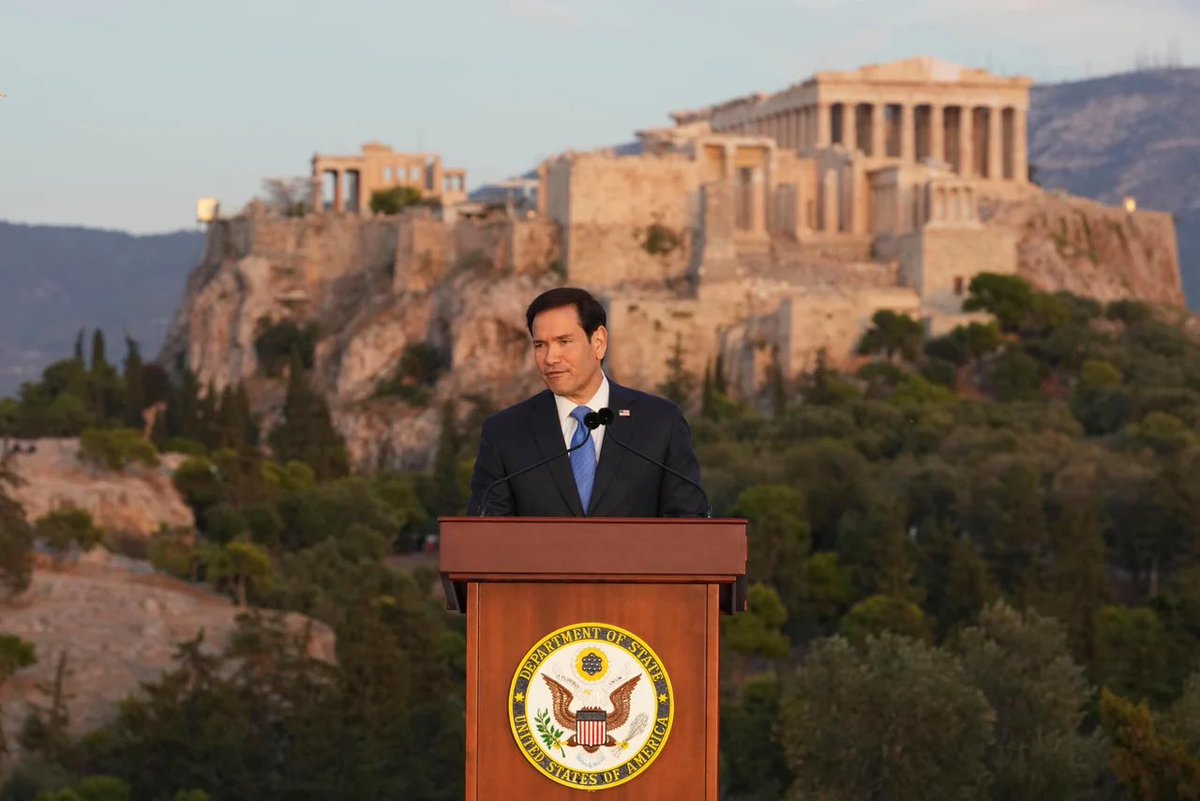
Nikolas Apelaios II wrote that he was enraged by the criticisms surrounding a photo of Rubio in front of the Acropolis and a video from the State Department. He mentioned that one commentator had wondered why there was no Greek flag in the photo, while another had asked where Mitsotakis was in the video. According to him, the Acropolis alone was a symbol of Greece, and it mattered little whether the Prime Minister appeared, as the video promoted the country internationally. He characterized this obsession as worthy of psychiatric evaluation and added that, as he argued, the Turks had not written similarly petty and vulgar comments. #Ελλάδα #Ακρόπολη #πολιτική (translated)

Open on X
2743

Adonis Georgiadis wrote that, according to the narrative he provided, Sulla responded to the Athenians who invoked their history by showing them his sword. The Athenians did not surrender and, as he mentioned, were slaughtered. Georgiadis linked the story to the attitude of the Athenians towards the Melians in 416 BC, stating that they too had argued that the right of the strong passes from one strong person to the next. He added that Marco Rubio had referred to the same notion the previous day and summarized the message as a warning that weakness could lead to destruction. #ιστορία #Δίκαιον #ΑρχαίαΕλλάδα (translated)

Open on X
2747
Yannis Karamitsios 2w

Yiannis Karamitzios wrote that Rubio presented, against the backdrop of the Acropolis, a MAGA agenda that, according to him, absolved nationalism. He noted that Rubio praised ancient Greece while treating the modern country as a client and pawn. Karamitzios described the concession of Pnyx as unacceptable and the hosts as powerless. #Ελλάδα #Εθνικισμός #Ακρόπολη (translated)

Open on X
2977

Adonis Georgiadis wrote that left-wing officials were upset because the government allowed Mr. Rubio to speak at Pnyx, against the backdrop of the Acropolis. According to him, they referred to the desecration of the monument, while he added that they listened to him "very attentively." https://t.co/LaBJ67PCZI #Πολιτική #Αριστερά #Ελλάδα (translated)

Open on X
3206
Mikronous 2w

Mikronous stated that, after the Acropolis, the streets of Dionysiou Areopagitou and Apostolou Pavlou were illuminated. He wrote that the project was designed by Eleftheria Dekou, with the support of the Onassis Foundation. https://t.co/afjCfyFK5o #Αθήνα #Ακρόπολη #Φωτισμός (translated)

Open on X
3208
StrategicWarCrafted 2w

StrategicWarCrafted wrote that, after the speech of American Secretary of State Marco Rubio at the Pnyx, the President of the Republic Konstantinos Tasoulas offered him the English edition of "Pericles' Funeral Oration" from the Parliament Foundation, with a handwritten dedication. The author noted that, according to Thucydides, the Funeral Oration was delivered in the winter of 431/430 BC, at the end of the first year of the Peloponnesian War, during the burial of the Athenians who were killed in battle. He added that the ceremony took place at the public cemetery of Kerameikos and not at the Pnyx. According to StrategicWarCrafted, the text linked the idea of the ideal city-state with democracy, freedom, courage, and public ethics. He also wrote that Rubio presented Athens as the birthplace of characteristics that shaped the West and called on the West to regain its confidence. Referring to Thucydides' "Histories," Book II, Chapter 43, the author attributed to Pericles the message that the dead should be a model and that happiness was linked with freedom and freedom with courage, while the dangers of war should not be avoided. He called on the country's political leadership to take this exhortation into account and wrote that it was not a time for bribes, but for the salvation of the Nation. He concluded with the phrase "Judges will judge us, the unborn, the dead." #Δημοκρατία #Ιστορία #Πολιτική (translated)

Open on X
3552
Chaca-Khan 🦋 2w

Chaca-Khan wrote that the Acropolis was used as a backdrop for the presentation of the nationalist narrative of MAGA, albeit with a more moderate wording. She added that in the same frame as the Parthenon appeared the American shield and described the image as "the definition of a colony." https://t.co/yCPJH3ThnC #Ακρόπολη #εθνικισμός #πολιτική (translated)

Open on X
3552

Adonis Georgiadis said that he closely watched the speech of U.S. Secretary of State Marco Rubio at Pnyx, in front of the Acropolis, and described it as the most important political speech he had ever heard. According to him, Rubio spoke not only as the head of American diplomacy but also as a political representative of the people of the West, and his speech had historical significance. Georgiadis stated that he fully agreed with what Rubio said and that he felt proud of Rubio's admiration for Greek ancestors, as well as for the public recognition of Greece's credibility and success. He added that Greece, Rome, and Christianity represented, in his view, the foundations of Western civilization and argued that its decline needed to end so that the West could rediscover its roots, values, and spirit. Finally, he expressed his congratulations and gratitude to Rubio. #Πολιτική #ΔυτικόςΠολιτισμός #Ελλάδα (translated)

Open on X
3782
EvangeliaAdamopoulou 2w

Evangelia Adamopoulou agreed with Rena Dourou and ironically wrote that the Acropolis and Pnyx were intended for the hanging of banners and the demonstrations of the far left, using an offensive term for the protesters. #Ακρόπολη #Διαμαρτυρία #Πολιτική (translated)

Open on X
2980
Marco Rubio 2w

Marco Rubio will speak against the backdrop of the Acropolis about the "rebirth of the Western spirit." #ΣτρατηγικόςΔιάλογος #ΜάρκοΡούμπιο #ΔυτικόςΠολιτισμός (translated)

Στην Αθήνα βρίσκεται ο Μάρκο Ρούμπιο - Η ατζέντα της ημέρας
www.sigmalive.com
1950

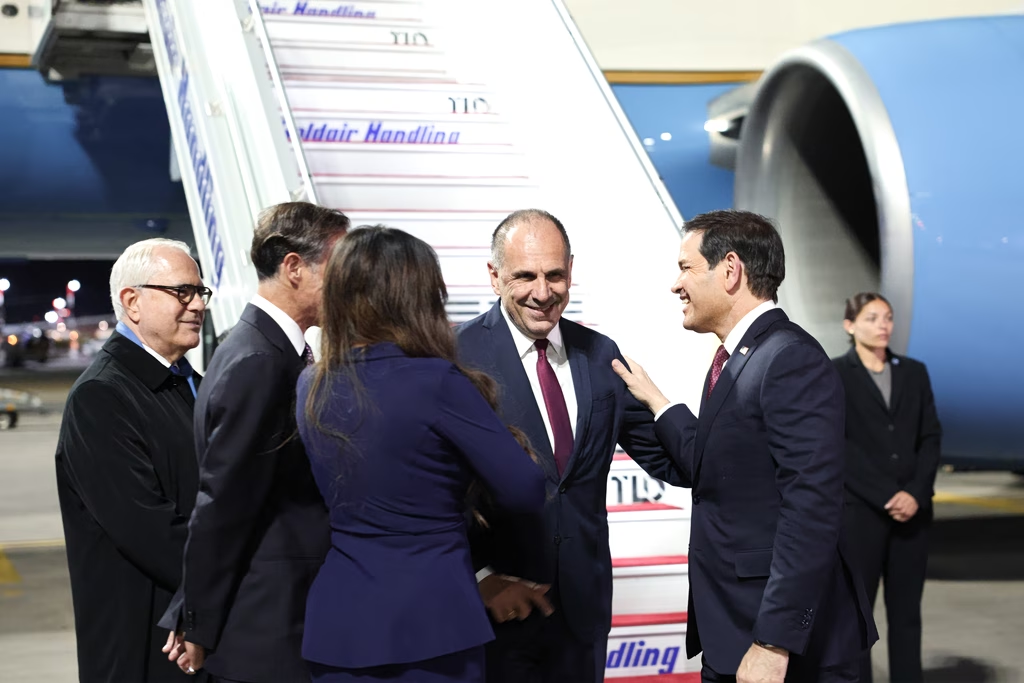
U.S. Secretary of State Marco Rubio arrived in Athens with a large motorcade for the 6th Strategic Dialogue between Greece and the United States and is expected to deliver a speech under the Acropolis, calling for a revival of Western civilization. #Διπλωματία #ΗΠΑ #Ελλάδα (translated)

www.tovima.gr
Ο Μάρκο Ρούμπιο στην Αθήνα – Η μεγάλη αυτοκινητοπομπή και η είσοδος στο ξενοδοχείο
2065
Lina Mendoni 2w

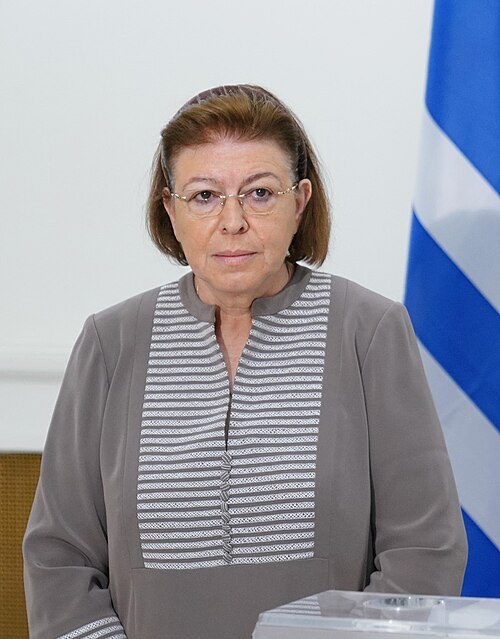
"Our strategy is not only about managing the past. It is about redefining the relationship of the past with the present and the future. It concerns Athens and Attica as a single and at the same time multi-centered cultural landscape." The new cultural geography of Athens and Attica, from the National Archaeological Museum and Tatoi to the Acropolis and Eleusis, was presented by Lina Mendoni during her speech at the "Vima" conference "Dialogues for Athens." #Πολιτισμός #Αθήνα #Πολυκεντρικότητα (translated)

Συνέδριο του «Β» – Λίνα Μενδώνη: «Η Αθήνα και η Αττική ως ένα ενιαίο και πολυκεντρικό πολιτιστικό τοπίο»
www.tovima.gr
1722
Haris Doukas 2w

Charis Doukas stated that the walk around the Acropolis, along Dionysiou Areopagitou and Apostolou Paulou streets, has acquired new lighting which, he said, highlights and respects the area. According to him, the project was designed by Eleftheria Dekou and implemented with the support of the Onassis Foundation and its president, Antonis S. Papadimitriou. Doukas welcomed the project and stated that they will take responsibility for its care, maintenance, and protection. #Αθήνα #Ακρόπολη #Ιστορία (translated)

Open on X
3444

Leonidas Palaiodimos wrote that the sale agreements for 27 of the country's largest archaeological sites and museums, including the Acropolis, were granted for 50,600 euros per month and a 2% share of the revenues. He compared the price to the rent of a large store in Kolonaki and mentioned that around 5 million people visited the Acropolis in 2025, while the list also included Knossos, Mycenae, Olympia, and Delphi, along with another 22 sites. Palaiodimos also noted that the gross profit margins on souvenirs ranged from 50% to 60% and that only one bid was submitted in the competition. According to him, there was no substantial competition that could influence the price. #Αρχαιολογία #ΕλληνικήΚληρονομιά #Πολιτισμός (translated)

Open on X
3330
Άκης Γαβριήλ 2w

Akis Gabriel mentioned that the images showed the welcome by the Bulgarians of the bones of Tsar Samuel, which, as he wrote, returned to Bulgaria after more than 1,000 years and following negotiations with Greece. He argued that the decision benefited Greece geopolitically both in the Balkans and in its relations with countries that, according to him, refused to return Greek national treasures, such as the Marbles belonging to the Acropolis. He characterized the government decision as positive and the criticism it received as irrational. #Βουλγαρία #Ελλάδα #Βαλκάνια (translated)

Open on X
12543
Spyros 2w

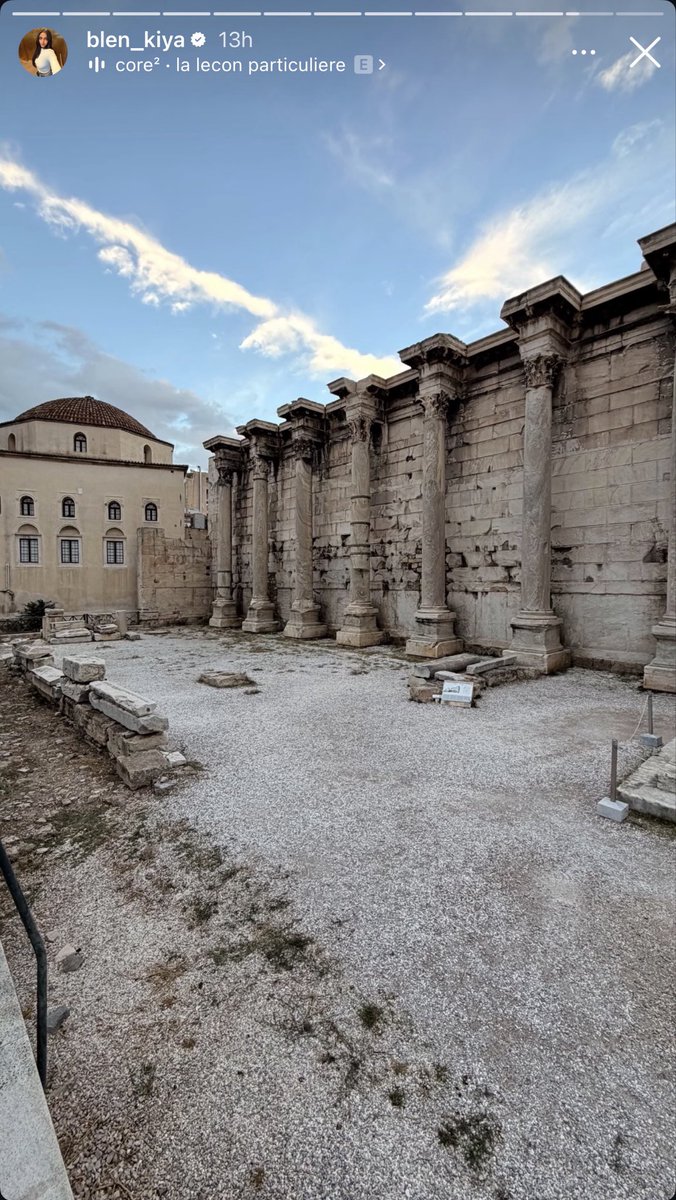
Spyros wrote that Kendrick Nunn had aimed to deeply understand Greek history and culture, beyond his successes with Panathinaikos. He mentioned that Nunn was studying ancient Athens, Pericles' democracy, and Socrates' philosophy with his family while visiting places like the Agora and the Acropolis. He added that if Nunn continued at this pace, he might need help from the passport office. #Παναθηναϊκός #ΕλληνικήΙστορία #Πολιτισμός (translated)

Open on X
11971