BETA nonprofit public democratic european moderated

Search

#81

The Hungarian government has just published its new foreign-policy guidelines for the 81st UN General Assembly. Comparing them with the Orbán government’s guidelines from only a year ago reveals a significant shift. The overall direction is clear: Hungarian foreign policy is #Hungary #ForeignPolicy #UNGA81 #HU

O

🚨 Une loi pour protéger les jeunes des réseaux : beaucoup d’annonces, que reste-t-il ? 📒 Loi n° 2026-813 du 24 août 2026 visant à protéger les mineurs des risques auxquels les expose l’utilisation des réseaux sociaux ✍️ Journal officiel de la République française n° 0197 du 25 août 2026, texte 1 sur 71 — NOR : ECOX2602236L. Capsules Audio de Pratiques en Santé 🎙️🎥 https://www.youtube.com/watch?v=b6N8nnRMP0E 🔍💡 Loi réseaux sociaux & mineurs : la mesure phare (interdiction avant 15 ans) a été censurée. Ce qui entre en vigueur à la rentrée 2026 : volet numérique obligatoire dans le projet d’établissement + téléphone interdit au lycée. À intégrer dès maintenant dans vos actions. Analyse de Pratiques en Santé et lien vers la source ℹ️➕ https://www.pratiquesensante.com/blog/pratiques-15/loi-n-2026-813-du-24-aout-2026-visant-a-proteger-les-mineurs-des-risques-auxquels-les-expose-l-utilisation-des-reseaux-sociaux-6145 📌 Ce texte redéfinit une partie du cadre légal dans lequel s’inscrivent les actions de prévention auprès des jeunes : il rend obligatoire un volet numérique et de sensibilisation dans le projet de chaque école et établissement, et étend au lycée l’interdiction du téléphone portable, effective dès la rentrée 2026-2027. Comprendre ce que la loi impose réellement — et ce qu’elle ne contient plus, après la censure de sa mesure centrale — évite de surestimer sa portée et permet de situer précisément où l’accompagnement de terrain reste à porter. Utile pour ajuster un projet, préparer un règlement intérieur ou cadrer un atelier auprès des parents et des élèves. #️⃣ #pratiquesensante #PréventionJeunesse #SantéMentaleDesJeunes #ÉducationAuNumérique #LittératieNumérique #ÉcransEtSanté #ProtectionDeLenfance #PolitiqueDeSanté

Loi du 24 août 2026 - pour protéger les jeunes des réseaux : beaucoup d’annonces, que reste-t-il ?

🚨🚨 ACCORD DE PRINCIPE TROUVÉ ENTRE ARSENAL ET AL HILAL 🇸🇦 POUR GABRIEL MARTINELLI 🇧🇷 !!!! 💙🤍 Les Gunners essayent de convaincre l’attaquant brésilien d’accepter la proposition du club saoudien. Négociations en cours avec le joueur. 🗞️ @Santi_J_FM https://t.co/812rJ9zVCZ #Arsenal #GabrielMartinelli #Football

Dnevnik 6d

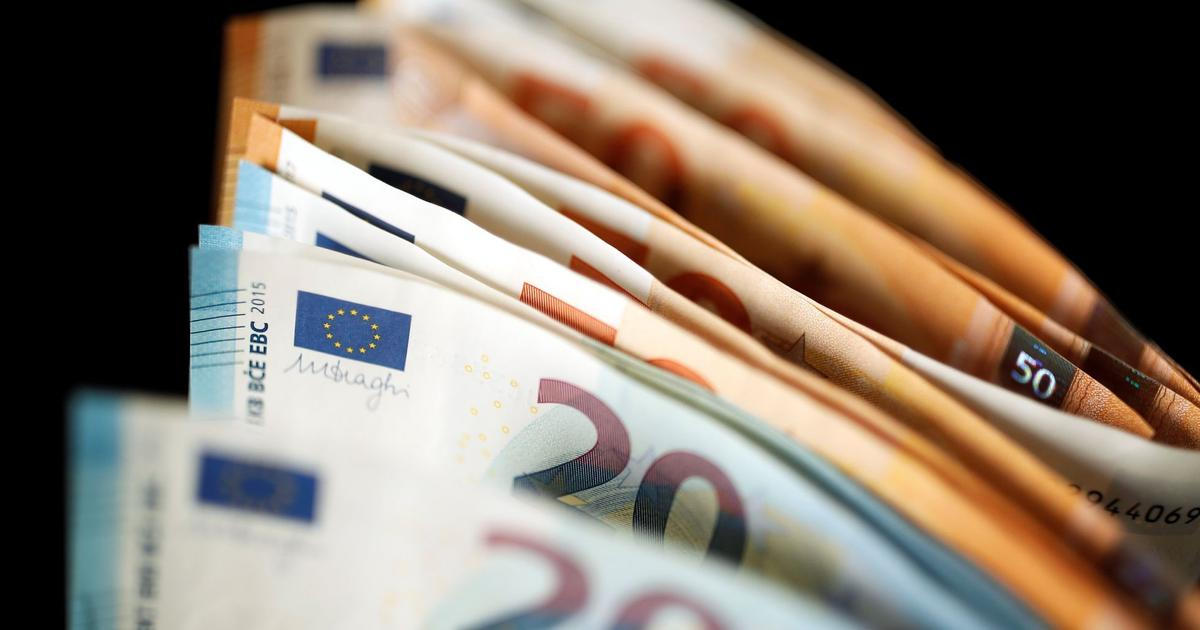
The state has reimbursed Komenda more than 814,000 euros in costs due to the merciless storm, which local residents described as an apocalypse the likes of which the oldest among them do not remember. (translated)

Država bo Komendi povrnila več kot 814.000 evrov stroškov po neurju

Aryna Sabalenka pozostanie liderką rankingu WTA po turnieju w Cincinnati, ale wciąż mocno wisi nad nią widmo spadku z pierwszego miejsca w ciągu najbliższych tygodni. W grze o pozycję numer jeden w kobiecym zestawieniu po US Open pozostają na ten moment cztery tenisistki: Aryna Sabalenka, Jelena Rybakina, Jessica Pegula i Coco Gauff (Coco pod warunkiem, że awansuje co najmniej do finału w Cincinnati). Sabalenka musi obronić tytuł w Nowym Jorku, by zachować jakiekolwiek szanse na utrzymanie pozycji liderki (nawet jeśli odpukać kontuzja Rybakiny okaże się zbyt poważna i Jelena nie wystąpiłaby w US Open). Jelena Rybakina zostanie liderką rankingu WTA po Nowym Jorku niezależnie od innych wyników, jeśli: 🔹 Aryna nie obroni tytułu w US Open 🔹 Jessica nie zdobędzie tytułu w US Open albo nie wykona planu tytuł w Cincinnati + finał/tytuł w US Open 🔹 Coco nie wykona planu finał/tytuł w Cincinnati + tytuł w US Open Możliwe punkty Aryny Sabalenki po US Open: Brak startu - 6575 pkt R1 - 6585 pkt R2 - 6645 pkt R3 - 6705 pkt R4 - 6815 pkt QF - 7005 pkt SF - 7355 pkt F - 7875 pkt W - 8575 pkt Możliwe punkty Jeleny Rybakiny po US Open: Brak startu - 7901 pkt R1 - 7911 pkt R2 - 7971 pkt R3 - 8031 pkt R4 - 8141 pkt QF - 8331 pkt SF - 8681 pkt F - 9201 pkt W - 9901 pkt Możliwe punkty Jessiki Peguli po US Open: Brak startu - 6225 | 6485 | 6835 pkt R1 - 6235 | 6495 | 6845 pkt R2 - 6295 | 6555 | 6905 pkt R3 - 6355 | 6615 | 6965 pkt R4 - 6465 | 6725 | 7075 pkt QF - 6655 | 6915 | 7265 pkt SF - 7005 | 7265 | 7615 pkt F - 7525 | 7785 | 8135 pkt W - 8225 | 8485 | 8835 pkt Możliwe punkty Coco Gauff po US Open: Brak startu - 5679 | 5854 | 6114 | 6464 pkt R1 - 5689 | 5864 | 6124 | 6474 pkt R2 - 5749 | 5924 | 6184 | 6534 pkt R3 - 5809 | 5984 | 6244 | 6594 pkt R4 - 5919 | 6094 | 6354 | 6704 pkt QF - 6109 | 6284 | 6544 | 6894 pkt SF - 6459 | 6634 | 6894 | 7244 pkt F - 6979 | 7154 | 7414 | 7764 pkt W - 7679 | 7854 | 8114 | 8464 pkt Mimo kreczu i kontuzji Jeleny Rybakiny, wciąż istnieje bardzo duże prawdopodobieństwo, że reprezentantka Kazachstanu obejmie prowadzenie w rankingu WTA po US Open. 📸 WTA & ATP Tour | #CincyTennis | #USOpen | #zkortu #WTA #Tennis #USOpen

🏟️ | Corinthians registra maior público da temporada em classificação na Libertadores. A classificação do Corinthians para as quartas de final da Libertadores também marcou um recorde nas arquibancadas. A vitória por 1 a 0 sobre o Rosario Central, levou 46.552 torcedores à Casa do Povo, o maior público alvinegro na temporada. O número coloca o duelo pela Libertadores no topo do ranking de públicos do Corinthians em 2026: 1º — Rosario Central: 46.552 2º — Palmeiras, Brasileirão: 46.263 3º — Palmeiras, Paulistão: 45.209 4º — Internacional, Copa do Brasil: 44.777 5º — São Paulo, Paulistão: 44.405 Além do maior público, o confronto também teve uma das maiores arrecadações do clube na temporada. Foram R$ 3.818.916,00, a segunda maior bilheteria do ano. 📸 Wanderson Oliveira / Meu Timão #Libertadores #Corinthians #Futebol

Aryna Sabalenka odpadła z Cincinnati i sytuacja dla Jeleny Rybakiny stała się bardzo prosta. 📊 Sytuacja w rankingu LIVE: 1. Aryna Sabalenka - 8575 punktów 2. Jelena Rybakina - 8141 punktów Reprezentantka Kazachstanu ma wszystko w swoich rękach - musi wygrać dwa najbliższe mecze, by tuż przed US Open po raz pierwszy w karierze objąć prowadzenie w kobiecym rankingu. Dwa najbliższe mecze Jeleny: Ćwierćfinał z Igą Świątek Półfinał z Jessicą Pegulą lub Amandą Anisimovą Do zrobienia? 🤔 #zkortu | #CincyTennis | 📸 BNP Paribas Open #Tennis #WTA #USOpen

#BarragesLDC ⭐️ : Le Slovan Bratislava de Yaya Touré 🇨🇮 accroché à domicile par Celje ! 😮‍💨 Les Slovaques devront aller chercher leur qualification à l’extérieur. 🔥⚽ https://t.co/81QnkAt7fw #Football #SlovanBratislava #LDC

Rabaa: The Hour the World’s Conscience Stood Still On the anniversary of one of the largest single-day killings of protesters in modern history, one question remains unanswered: who will be held accountable? By Adham Hasanin Egyptian journalist and political writer, based in the Netherlands On 14 August, the anniversary returns of a day unlike any other in modern Egyptian history. Not simply because it was the bloodiest Egypt has known wars and massacres before and since ,but because it was the day a state chose to open fire on its own people in broad daylight, in front of the world’s cameras, and then let thirteen years pass without a single officer ever being held accountable. This article will not be a cold recitation of statistics, though the statistics exist, are documented, and are horrifying. It is an attempt to understand something deeper: how a square in the heart of Cairo, filled with tents, children, and worshippers, became the site of the largest mass killing the Arab world has witnessed in the past decade and why the echo of that day still reverberates in every Egyptian prison cell today. I. A Morning That Began Like Any Other For readers unfamiliar with the background: in July 2013, the Egyptian military, led by then-General Abdel Fattah el-Sisi, removed Mohamed Morsy Egypt’s first freely elected civilian president, a member of the Muslim Brotherhood who had taken office in 2012 following the 2011 uprising against Hosni Mubarak. In response, tens of thousands of Morsy’s supporters staged an open-ended sit-in demanding his reinstatement. By 14 August 2013, more than twenty thousand people had spent weeks camped out at two Cairo squares, Rab’a al-Adawiya and al-Nahda, in a peaceful sit-in. They were not an army, nor a uniform bloc; they were entire families men, women, and children, some affiliated with the Muslim Brotherhood, many simply ordinary citizens who saw the restoration of elected legitimacy as a cause worth the risk. There were tents for sleeping, communal kitchens feeding the demonstrators, speaking platforms, and a small field clinic that no one imagined would, within hours, become one of the most terrifying places in modern Egyptian history. In the early hours of that morning, Central Security Forces and army units, under the command of then-General Sisi, began what was officially described as a "dispersal" operation targeting both sit-ins simultaneously. It was not a dispersal in any ordinary sense of the word. According to a year-long investigation by Human Rights Watch, it was a pre-planned operation that anticipated, from the outset, thousands of deaths. II. The Numbers the Regime Refuses to Speak The Egyptian government, to this day, cites a death toll of "over 600" for that single day a figure that, even at its official lowest, is horrifying enough to warrant an independent international investigation. But the field investigation conducted by Human Rights Watch, drawing on field hospital records, survivor testimony, and analysis of video footage from dozens of angles, arrived at a far more disturbing figure: at least 817 people killed at Rab’a Square alone, with the true toll likely exceeding 1,000, plus another 87 killed at the nearby al-Nahda Square. When the deaths from the weeks surrounding 14 August are added from the dispersal of the Republican Guard sit-in on 8 July, through the Mansoura Street killings, to the dispersal of an October 6 march the combined total reaches at least 1,150 deaths in just six weeks, according to Human Rights Watch’s meticulous documentation. This figure led the organisation to use a term not deployed lightly in international law: crimes against humanity. Human Rights Watch described the Rab’a killings as "one of the world’s largest killings of demonstrators in a single day in recent history." Not in Egyptian history alone in modern history as a whole. What happened at Rab’a is cited in international reporting alongside China’s 1989 Tiananmen Square massacre. This is the true scale of what the Egyptian state has spent thirteen years trying to minimise, justify, and reduce to a mere "security incident" in a news bulletin. III. "All According to Plan" When Mass Killing Becomes Administration, Not Chaos The title Human Rights Watch chose for its detailed report on the massacre deserves lingering on: "All According to Plan." This is not an emotive headline; it is a precise legal conclusion built on field evidence. According to the investigation, what happened at Rab’a was not a dispersal operation that spiralled out of control amid chaos or panic, as the regime later tried to portray it. It was a carefully planned operation that assumed, in advance, massive casualties. Then-Interior Minister Mohamed Ibrahim admitted, in a televised interview broadcast on 31 August 2013 just weeks after the massacre that his ministry had anticipated losses of "10 percent of the people" present at the sit-in, acknowledging that the number of demonstrators exceeded twenty thousand. By simple arithmetic, this is an official admission that the state anticipated, in advance, the deaths of roughly two thousand people and proceeded with the operation regardless. This is the true horror at the heart of the Rab’a story: it was not a security operation that spun out of control, but a conscious administrative decision, made in an air-conditioned room, with advance calculations, by men who knew precisely how many human beings would die under their fire and who proceeded anyway, or perhaps because of it. According to Human Rights Watch’s analysis, the objective was to send an unambiguous message: whoever challenges the new state will pay an irreversible price. IV. Snipers, Women, and Children The Faces the Reports Do Not Tell Behind every number in the Human Rights Watch reports lies a full human story, deliberately omitted from the state’s official narrative. The investigation documented how security forces opened fire from multiple angles, and how snipers positioned themselves atop buildings surrounding the square, targeting according to survivor testimony and analysed video footage any movement in the square, regardless of whether it was an armed combatant or a nurse trying to reach a wounded person. According to documented testimony, entire families had their tents burn over their heads as fire swept through the sit-in. Doctors and paramedics were killed while trying to pull the wounded from the line of fire. Most damningly of all, the documentation shows deliberate targeting of ambulances and field medical points meaning that wounded people who survived the first bullet then faced death by bleeding out, because anyone attempting to save them was themselves a target. This detail the targeting of medics is what elevates the event from "excessive violent repression" to what human rights organisations have described as a systematic crime. When security forces target those trying to save the wounded, they are not merely dispersing a sit-in; they are preventing witnesses from surviving to tell what happened. V. Thirteen Years of Total Impunity The most painful part of the Rab’a story is not only what happened that day, but what has not happened in the years since. From 14 August 2013 to today, not a single officer, of any rank, has been held accountable for the deaths of hundreds, or thousands, of Egyptians. Quite the opposite: the state has moved to entrench impunity through the force of law itself. Egypt issued legislation granting senior military officers immunity from questioning over any violations that may have occurred following Morsy’s removal a law specifically designed to close the door on any future judicial accountability, regardless of how political circumstances might change. Even the fact-finding committee established by then-interim President Adly Mansour to investigate the June and July events concluded, in its report issued more than a year after the events, that the sit-in’s leaders bore responsibility for the deaths, on the grounds that they had allowed weapons into the square even as the same report admitted, in a glaring contradiction, that security forces had failed to target only armed individuals, meaning they had fired indiscriminately on everyone: armed and unarmed, man and woman, adult and child. This is the pattern that has repeated for over a decade: as each anniversary approaches, official statements re-narrate the events and shift blame onto the victims, while the actual perpetrators — those who planned the operation, gave the orders, and pulled the trigger — remain free. Some now occupy the highest offices of the state. VI. Why This Anniversary, Why Now? A reader might ask: why revisit this story after all these years? Has the world not moved on to newer crises? The answer lies in the very nature of impunity. When a state is never held accountable for the largest massacre of protesters in its modern history, it does not simply "forget" the crime it sets a precedent, telling every future ruler and every future security apparatus: mass killing is possible, politically profitable, and free of cost. This poisonous lesson does not remain confined within Egyptian borders; its echo reaches every Arab capital contemplating how to handle its own opposition. More dangerously, this system of impunity did not stop at Rab’a’s edges; it is the foundation on which Egypt’s entire subsequent decade of repression was built: thousands of political prisoners, grossly unfair mass trials that produced death sentences for dozens of defendants in cases linked directly to the Rab’a events themselves, laws criminalising peaceful protest, a muzzled press, and a civil society hollowed of substance. All of it traces back to the morning of 14 August 2013, when the state learned that overwhelming force succeeds, and that the world will condemn for a few days, then move on. VII. Delayed Justice Is Not Forgotten Justice Despite more than a decade of official silence and impunity, the Rab’a case remains alive in international legal memory. Human rights organisations, from Human Rights Watch to Amnesty International, continue to renew their annual calls for an independent international investigation, grounded in the legal principle that crimes against humanity are not subject to statutes of limitation: delayed justice is not forgotten justice. The victims who fell in that square were not numbers in a statistical report. They were fathers who left behind children too young, that day, to understand why their father would never return. They were mothers who, thirteen years later, are still searching for a clearly marked grave to which they can carry flowers, and young people who had decades of life ahead of them that they never got to live. Their memory does not fade with time; it grows with their children, who carry with them the same question their parents asked before they were killed: when will justice come? Conclusion: What Does This Anniversary Demand of Us? Every year, as the anniversary of 14 August returns, the same question resurfaces one the Egyptian state refuses to answer: who gave the order? Who planned the operation? Who decided that twenty thousand human beings deserved to be shot with live ammunition because they staged a peaceful sit-in? This anniversary is not a call for vengeance, nor an invocation of the past for its own sake. It is a reminder that justice, however delayed, remains a debt still owed. And that every instance of international silence over a massacre of this scale opens the door to the next one, elsewhere, under a different pretext, carrying the same lethal conviction: that the world will condemn for a week, then forget. We will not forget. And we will not stop asking the question that unsettles everyone who took part in that crime, regardless of the office they hold today: where is the accountability? Rab’a is no longer merely the name of a square in Cairo. In the conscience of everyone who believes in justice, it has become a test of the world’s conscience itself a test the world has not yet passed.

A court trial has started in Koblenz against an 81-year-old man who admitted to murdering American student Amy Lopez in 1994, and his defense lawyer expects a conviction for murder. (translated)

Koblenz: Angeklagter gesteht Mord an US-Studentin Amy Lopez

Poland will establish the largest army in Europe by 2035. 🇵🇱 Defense spending 4% of GDP 🇵🇱 300,000 soldiers 🇵🇱 6,000 tanks 🇵🇱 F35 jets 🇵🇱 APACHE helicopters 🇵🇱 HIMARS rocket systems 🇵🇱 700 miles "East Shield" (defense line at the eastern border) (translated)
Aquí la tenéis. Nuestra alineación para la 81ª edición de 🇪🇸 @lavuelta. 👊 Del 22 de agosto al 13 de septiembre, lo daremos todo por las carreteras de Mónaco, Francia, Andorra y España. #RodamosJuntos | @movistar_es | #LaVuelta26 https://t.co/NImYHRLGQP #LaVuelta #Ciclismo #Deporte

More than half of all boat migrants in Italy came with German NGOs. (translated)
In the last two years, since a full customs control regime was introduced at the eastern border of Estonia, more than 1.05 million inspections have been conducted and 8,143 violations have been detected, with the most common attempts at illegal export to Russia being cash in euros and various consumer goods, particularly electronics, luxury items, and tools. (translated)

Миллион проверок и 8000 нарушений: что чаще всего пытаются вывезти из Эстонии в Россию

Professor Jason Arday from Cambridge was found dead in his apartment. He had received racist harassment following accusations of plagiarism. They attacked him with up to 250 articles in 20 days in British media in a brutal campaign of discrediting. Today his students have said goodbye to him. (translated)

The article describes how the fear of losing money initially led Fox to doubt hiring Will Smith for Independence Day, arguing that casting a black actor could hurt international box office, but ultimately the support of director Roland Emmerich and the argument that the film, centered on aliens, would do well outside the United States led to his inclusion, resulting in a huge success with a box office of 817 million dollars. (translated)

El miedo a perder dinero casi deja a Will Smith fuera de uno de los grandes éxitos de la ciencia ficción: "Fichas a un actor negro y te cargas la taquilla"

"Apple’s answer is unified memory — one giant pool of fast RAM shared by CPU and GPU, at 819GB/s of bandwidth on the M3 Ultra.": https://limitededitionjonathan.substack.com/p/apple-is-the-king-of-ai-and-nobody?triedRedirect=true&utm_source=substack&utm_medium=email ???

Apple Is the King of AI and Nobody Knows It

ARGENTO SPLENDIDO MA SFORTUNATO 🥈😢 La 4x100 misti femminile con Curtis, Pilato, Gastaldi e Menicucci incanta ma perde l’oro per un soffio 🔥 https://t.co/81QjG3JtWk #Atletica #Olimpiadi #Sport

🚨 URGENTE! Helicóptero do presidente Lula sobrevoa o Vila Euclides e público vai à loucura. Palco histórico das greves do ABC na ditadura, helicópteros do exército intimidavam trabalhadores no estádio há 40 anos onde tudo começou. A democracia VENCEU! 🇧🇷✊🏽 https://t.co/81Yo8Ay4Ms #Democracia #Brasil #História