BETA nonprofit public democratic european moderated

Search

#Aris

A car drove into pedestrians in front of the Caen train station on Wednesday evening, resulting in two deaths and nine injuries, which led Mayor Aristide Olivier to describe the event as an absolute tragedy, while an investigation has been opened into the incident, the circumstances of which remain to be determined. (translated)

Une voiture fonce sur des piétons à Caen : "Un drame absolu", réagit le maire Aristide Olivier

The ancient Greeks, especially Aristarchus of Samos, used lunar eclipses to calculate distances in the universe, laying the groundwork for a heliocentric system, a method that, despite inaccuracies in their calculations, was fundamental to the development of astronomy. (translated)

Los griegos usaron un eclipse parcial de Luna como el que se verá este viernes para medir el universo

🏀💣 𝗕𝗢𝗢𝗢𝗢𝗢𝗠! 𝝢𝝚𝝖 𝝚𝝥𝝞𝝟𝝜 𝝡𝝥𝝖𝝨𝝟𝝚𝝩𝝞𝝟𝝜 𝝚𝝟𝝥𝝤𝝡𝝥𝝜 𝝚𝝦𝝬𝝚𝝩𝝖𝝞 𝝨𝝩𝝤𝝪𝝨 𝗕𝗘𝗧𝗔𝗥𝗔𝗗𝗘𝗦! 🤩 Οι «Floor Generals» @TheShot71 , @tsibos10 και @mstef80 θα φέρνουν στο προσκήνιο όλα όσα συμβαίνουν στον κόσμο του μπάσκετ! 📺 Κάθε Δευτέρα 21:00–23:00, αλλά και μετά από κάθε αγωνιστική της EuroLeague, με εξαίρεση τις Παρασκευές. 🔥 Πρεμιέρα: 28/8 στις 21:00! Μείνετε συντονισμένοι… #olympiacosBC #panathinaikosbc #aekbc #paokbc #arisbc #euroleague #eurocup #euroleague #basketball #sports

Novinky 3d

Dorothea von Lieven, a Baltic-German aristocrat and influential hostess of diplomatic salons, became famous for her skills in diplomacy and her affairs with prominent European politicians, thereby influencing political and public opinion during the era of the anti-Napoleonic coalitions. (translated)

Mocní muži jí naslouchali. Dorothea von Lieven řídila diplomacii ze svého salonu

🚨V aplikaci @Air_Bank pro vás máme nová ETF🚨 Ode dneška si můžete v naší mobilní aplikaci koupit tato nová ETF👇 ✅iShares Nasdaq-100 UCITS ETF (USD) - SXRV ✅Vanguard FTSE All-World UCITS ETF (USD) - VWCE ✅iShares MSCI India UCITS ETF (USD) - QDV5 ✅iShares STOXX Global Select Dividend 100 UCITS ETF (DE) - ISPA ✅State Street SPDR S&P Global Dividend Aristocrats UCITS ETF (Dist) - ZPRG ✅Xtrackers MSCI World Health Care UCITS ETF - XDWH ✅Xtrackers MSCI World Utilities UCITS ETF - XDWU ✅Xtrackers MSCI World Energy UCITS ETF - XDW0 ✅Xtrackers MSCI World Communication Services UCITS ETF - XWTS ✅Xtrackers MSCI World Quality UCITS ETF - XDEQ Všechny ETF nabízí i frakce, takže je můžete nakupovat dle libosti. Tak ať vám slouží 💪 P.S. Už teď pracujeme na další dávce přírůstků. Dáme včas vědět. #JsmeAirBank #ETF #Investice #FinančníGrupa

Οὐδὲν κακὸν ἀμιγὲς καλοῦ. Η διαφωνία μου με τον @st_stavropoulos για την @ManolidouE και τις εκπομπές στο ραδιόφωνο του @skaigr με τον @ArisPortosalte για την «Ελληνική Μυθολογία» κατέληξε σε έναν γόνιμο δημόσια διάλογο. Τα Αρχαία Ελληνικά τελικά πώς πρέπει να τα αντιμετωπίζουμε, ως μία νεκρή Γλώσσα άξια πλέον σήμερα μόνον για μελέτη σε ένα εργαστήριο ή σε μια βιβλιοθήκη ή για απαγγελία ή ως μία ζωντανή Γλώσσα όπως όλες οι άλλες. Από την απάντηση που θα δώσει κάποιος σε αυτό το ερώτημα θα εξαρτηθεί και ο τρόπος της διδασκαλίας τους και το εάν πχ βίντεο στα οποία κάποιος πχ η Ευγενία, μιλάει Αρχαία Ελληνικά κάνουν καλό ή κακό. Είναι γραφικά ή χρήσιμα. Για να απαντήσω σε όλο αυτό έγραψα στην σελίδα μου στο facebook ένα πιστεύω ενδιαφέρον κείμενο. Ολόκληρο εδώ: https://t.co/ALDzjEMeSK Τελικά κύριε Σταυρόπουλε, έστω και λόγω της κακία σας φανήκατε χρήσιμος και σας ευχαριστώ. #ΑρχαίαΕλληνικά #ΔημόσιοςΔιάλογος #Γλώσσα

🟢 El Betis continúa con su hoja de ruta por Dani Ceballos. Su regreso aún tiene muchas aristas, dado que a 13 de agosto el club no tiene margen suficiente para hacerle hueco, habida cuenta de que la prioridad pasa antes por firmar a un delantero. Y aunque el club sigue manteniendo la cautela, incidiendo en la dificultad que engloba toda la operación, sí que se trabaja con la esperanza de poder llegar a un entendimiento antes del final de mercado, con el compromiso verbal de hacer todo lo posible para que eso ocurra. ⌛️ En una de las reuniones producidas durante el mes de julio el Betis solicitó al futbolista algo de tiempo para poder concretar nuevas ventas y ganar algo de límite salarial, para lo que el utrerano también debería poner de su parte. 🤔 La venta frustrada de Deossa y la negativa de Gio Lo Celso a salir trastocaron los planes del club, que ahora busca fórmulas alternativas para poder hacer ese encaje necesario. Incluso con la esperanza de que pueda salir algún centrocampista para descongestionar esa posición. 🤝 El club tiene su compromiso de hacer todos los esfuerzos posibles para darle encaje dentro de la plantilla, con un salario a la altura. Mientras tanto, y a expensas de que se produzca ese entendimiento, Dani Ceballos sigue frenando otros frentes. 🍀 La realidad es la que es. El regreso de Dani Ceballos no es una asignatura fácil, con el límite salarial como principal obstáculo, pero sí que existe el compromiso de al menos intentarlo hasta el final. Con el Betis trabajando para hacerle hueco y el futbolista frenando otras ofertas a la espera de poder materializar el tan ansiado regreso. Primero, el delantero, y a partir de ahí, con el remanente sobrante, recalcular los escenarios para poder hacerle hueco. Hay esperanza. https://t.co/svmqpepnoS #RealBetis #DaniCeballos #Futbol

Stasera l’ultimo test match prima dell’inizio della stagione. Scopri come guardare Napoli v Aris 👉 https://t.co/AqOQH4jzJ3 https://t.co/tabQKQktNO #TestMatch #Napoli #Calcio

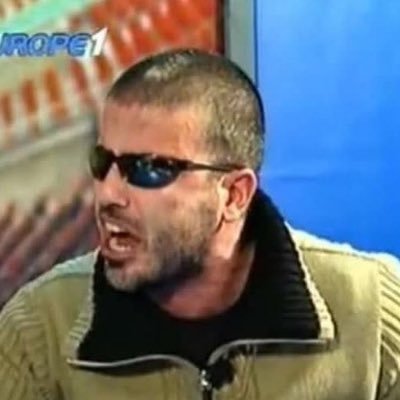
12 Αυγούστου 2010 - Ο Αριστοτέλης Γκούμας πέθανε μιλώντας Ελληνικά στη Χειμάρρα, γι'αυτό, οι τουρκαλβανοί τον δολοφόνησαν εν ψυχρώ. Δεν Ξεχνάμε! Βόρειος Ήπειρος γη Ελληνική! #AristotelisGoumas #Goumas #NorthernEpirus #Epirus #Greek #Orthodox #Heimarra #Greece #Hellas #Hellenism https://t.co/FDssmOHgGk #Greek #NorthernEpirus #Hellenism

Charles Courtenay, XIX Earl of Devon, denounces the injustice of succession rules that prevent women from inheriting noble titles, advocating for his eldest daughter, Lady Joscelyn, to have the same rights as his son Jack, as he believes that the current regulations are inappropriate in the 21st century. (translated)

Un aristócrata británico planta cara a la tradición: «Es injusto e inapropiado» que las mujeres no puedan heredar sus títulos

If Turkey is a NATO member in good standing, why does it need another military alliance? And if a conflict arises, which alliance will Turkey prioritize? Questions that probably should be asked by NATO member states. #Turkey #NATO #militaryalliances #TR

The son of José Ignacio Wert, the noisy minister to whom the PP ended up giving a flat and a position in Paris, believes that civil servants and pensioners are the new aristocracy living like gods, or like him and his family all their lives thanks to the public treasury. (translated)

With needs still enormous, the EU continues its efforts to alleviate the suffering in Gaza. Another Humanitarian Air Bridge flight landed in Al-Arish today, with a cargo of health and education supplies, to be delivered to Gaza via our humanitarian partners. https://t.co/zXL7Ts7Pft #Gaza #HumanitarianAid #EUSupport #PS #EU #PS

A Crown Instead of the Barracks: An Idea From Outside the Box Could Egypt’s exiled opposition use constitutional monarchy to dismantle the legitimacy of the 1952 coup? By Adham Hasanin Egyptian journalist and political writer, based in the Netherlands To understand what follows, a reader unfamiliar with Egypt needs one basic fact: since 1952, Egypt has never been governed by anyone who did not first wear a military uniform. Gamal Abdel Nasser, Anwar Sadat, Hosni Mubarak, and today Abdel Fattah el-Sisi four men, four eras, one common origin. All rose through the armed forces. All inherited a state built by a coup that year, when a group of officers calling themselves the "Free Officers" overthrew King Farouk I and, within a year, abolished the monarchy altogether and declared a republic. For seventy-three years, the underlying equation has not changed: the army rules, power passes from one officer to the next, and legitimacy is drawn from the barrel of a gun rather than the ballot box. Every conceivable form of opposition has been tried legal parties and banned ones, Islamist movements, liberal and leftist coalitions, the 2011 popular uprising, and the 2013 elections whose result was overturned by force within a year. All of them hit the same wall: a military institution that reproduces itself under different names, while the core of the system remains untouched. So what if the problem, all along, has not simply been who rules, but the constitutional framework that makes military rule possible in the first place? And what if the answer lies not in swapping one president for another, but in dismantling the underlying equation itself, through a framework Egyptian opposition movements have never seriously tried: a purely ceremonial constitutional monarchy, on the model of Belgium, the Netherlands, or Spain where the head of state becomes a symbol above the political fray, while the army is permanently expelled from politics and returned to its barracks. This is not a call to revive a particular family, nor nostalgia for a golden age that never quite existed. It is a proposal for a political and strategic tool that has not yet been used in the intellectual arsenal of Egypt’s opposition in exile a tool that deserves serious discussion, regardless of whether it is ever literally realised or simply serves to expand the boundaries of what is politically thinkable. I. Why 1952, Not 2013 or 2011, Is the Root The strategic error made by most Egyptian opposition movements from the Muslim Brotherhood to the April 6 Youth Movement to the various civil opposition parties has been treating each political crisis as an isolated case: Mubarak was corrupt and had to be toppled; Sisi staged a coup that must be condemned; the interim military council was a transitional phase to be endured. This piecemeal approach treats the symptoms while leaving the original illness untouched. That original illness is the very structure of legitimacy established by the coup of 23 July 1952. The Egyptian republican system, from Nasser to today, has never built its legitimacy on a genuine democratic social contract. Instead, it has rested on a fixed trinity: the rhetoric of "revolution against feudalism and colonialism," charismatic individual leadership, and military protection of the regime framed as the guarantor of stability. This trinity has repeated itself from Nasser to Sadat to Mubarak to Sisi, with only cosmetic variations. Each new president was never a break from the system he was its continuation. When the opposition says "let us return to the constitutional framework that preceded the coup," it is not criticising a particular policy. It is declaring that the legal foundation of everything that came after 1952 was illegitimate from the start. Here lies the rhetorical power of "returning to the pre-1952 order": it does not merely demand swapping one ruler for another. It withdraws historical legitimacy from the entire republican military system including today’s regime, which draws its own declared legitimacy from that same "1952 legacy." II. Why a "Ceremonial Crown," Not "the Return of a Ruling Family" Here is the most important distinction anyone advocating this idea seriously must grasp: the project does not rest on restoring any particular individual from the Muhammad Ali dynasty, nor on nostalgia for King Farouk or his ancestors. The real power of the idea lies in the constitutional form, not in the person who happens to sit on the throne. Three successful European democracies illustrate the model clearly. Belgium, where King Philippe is a purely constitutional symbol with no real executive power, while the state is run through an elected parliament and a complex coalition government reflecting the country’s linguistic and political diversity. The Netherlands, where King Willem-Alexander formally opens the parliamentary year and signs laws, but where actual decision-making rests with the prime minister and the elected parliament. And Spain, where the king represents symbolic continuity of the state above party politics, while the military and security services answer entirely to civilian authority a transition achieved after the death of the dictator Francisco Franco in 1975, when King Juan Carlos I voluntarily relinquished the extensive executive powers he had inherited and backed free elections, most dramatically in February 1981, when he personally ordered the armed forces to remain loyal to the constitution during an attempted military coup, causing it to collapse within hours. The common thread across these three models is not "the presence of an ancient royal family." It is the principle of separating symbol from power. The monarch in these countries does not rule; he represents. He issues no political decisions; he provides the continuity and symbolic stability that allows party political competition to revolve beneath him, without every transfer of power becoming an existential crisis of legitimacy. This is precisely what Egypt’s military republican system lacks: a neutral mechanism for guaranteeing state continuity that does not depend on the person of the ruler or his security apparatus. When Egypt’s military-republican president is absent, it is always the army that fills the vacuum, because it is the only institution built to be the "guarantor of stability." Under a ceremonial monarchical model, by contrast, it is the king not the army who represents that symbolic guarantee, genuinely opening the door to removing the military institution from the political equation altogether. III. Egypt’s Standing Under the Monarchy: An Honest Reckoning, Not Blind Nostalgia For a Western reader with little prior knowledge of Egypt’s monarchical period (1922–1952), it helps to know this: Egypt was nominally independent under its own king from 1922, but Britain retained enormous informal control over the country’s foreign policy, military bases, and the Suez Canal throughout the period a reality that shaped everything that follows. Any honest invocation of "Egypt’s standing under the monarchy" must avoid the trap of mythologised nostalgia that many advocates of this idea fall into. Egypt in that era was no lost paradise, and any honest article must say so plainly. The Egyptian pound, for instance, often invoked as a symbol of "national currency strength" in that period, was not strong because of independent Egyptian monetary policy. It was pegged to the British pound sterling as part of Egypt’s complete colonial financial dependency until 1947, with Egypt exercising no independent oversight of its own currency whatsoever. The pound’s strength, in other words, was not a sovereign Egyptian achievement it was a reflection of British imperial power ruling Egypt from behind the throne. But this does not mean Egypt lacked a genuine regional standing worth studying. Cairo, in the 1930s and 1940s, was the undisputed cultural capital of the entire Arab world: the Egyptian film industry produced more than half of all Arabic-language cinema; its theatre scene, led by figures like Youssef Wahbi and Naguib al-Rihani, and its music, with Umm Kulthum and Mohammed Abdel Wahab, set the standard across the region; Cairo University was the first modern university in the Arab world; and the Egyptian press was the reference point for Arab public opinion from the Atlantic to the Gulf. Cairo was, quite simply, to the Arab world what Paris was to Francophone Europe: an unrivalled centre of cultural and intellectual gravity. This standing was not necessarily a product of monarchy itself, so much as a product of a relative space of political and press pluralism that allowed Egyptian civil society to flourish, despite all the flaws of the political system and the interference of both palace and occupier. The lesson here is not "bring back the king and the standing will return." It is: when even a limited margin of civic freedom exists, Egypt flourishes culturally and intellectually almost by its own nature. And that margin is precisely what has been entirely absent across the past seven decades of unchallenged military rule. IV. What Reform Would Actually Require Not Repeating the Old Mistakes Any serious advocacy of this model must include, even briefly, a clear vision for avoiding the flaws of the old monarchical system itself otherwise the proposal collapses into simply replacing one form of authoritarianism with another wearing a different crown. First, the armed forces would need to be placed fully under a civilian ministry of defence, with its budget subject to transparent parliamentary oversight the exact opposite of its current status as a state-within-a-state, and equally opposed to its role under the monarchy, when it often served as an instrument of British influence. Second, a judiciary fully independent of both palace and government alike, unlike the old model, which saw direct royal interference in political life as when King Fuad I dismissed the elected government of Prime Minister Saad Zaghloul’s successor, Mustafa al-Nahhas, in 1928, in one of the clearest "constitutional coups" in modern Egyptian history. Third, a parliament that genuinely represents the people rather than landowners and the aristocracy, as was the case before 1952, when membership in the Senate was effectively conditional on the ability to pay land taxes meaning political representation was, by law, restricted to the wealthy. Fourth, genuine economic sovereignty, with a truly independent national currency rather than one pegged to a foreign power’s currency, unlike the historical dependency of the Egyptian pound on sterling. These four principles are enough to clarify that the project on offer is not a literal "return to the past," but a borrowing of the constitutional form (symbolic monarchy) combined with an explicit rejection of its old substance (colonial dependency, palace interference, parliamentary feudalism). V. The Role of Egyptian Movements in Exile: Between Goal and Instrument This raises the most practical question of all: how might Egypt’s opposition abroad actually adopt this idea, and in what capacity? The honest answer is that the power of this proposal does not necessarily lie in its literal fulfilment, but in its dual strategic function. On one hand, it can be advanced as a genuine political goal adopted by broad coalitions of Egyptian movements coalitions that might include Islamists, liberals, leftists, and traditional monarchists, united around a single shared premise: rejecting the legitimacy of the 1952 order and everything that followed from it, even if they later disagree over the precise final shape of the state. On the other hand and this matters more in practice the idea can be deployed as a rhetorical instrument of pressure to widen a Egyptian political debate currently trapped between two false choices: "continued military rule" or "no alternative, chaos awaits." When the opposition puts forward a clearly defined third model a European-style constitutional monarchy it breaks this false binary and opens new intellectual space in Egyptian public discourse, even if the project is never realised in its literal form. This kind of "leverage idea" is common in the history of political movements worldwide: it is not necessarily proposed to be fulfilled immediately in full, but to redraw the boundaries of the politically possible, and to force the existing regime to defend its legitimacy rather than simply assume it. Conclusion: An Invitation to Debate, Not a Ready-Made Prescription This article does not claim that restoring a monarchical form would magically resolve Egypt’s chronic crisis of legitimacy, nor does it ignore the immense difficulties facing any transformative project under a military institution as economically and securitywise entrenched as Egypt’s is today. But it raises a question that deserves serious debate among Egypt’s opposition in exile, rather than automatic dismissal simply for being unfamiliar: Has the Egyptian opposition exhausted every available tool for dismantling the legitimacy of 1952, or has it remained trapped in the same old binary swapping one ruler for another while the framework that makes military rule possible remains untouched? The idea is on the table now, not as a finished solution, but as an overdue invitation to think outside the box.

The son of former minister Wert calls officials and pensioners "aristocrats." His father was appointed ambassador as a golden retirement in a small palace in Paris with a salary of €130,000 to work with his former Secretary of State, with whom he had married weeks earlier. (translated)

Novinky 3w

Alexandra Kollontai, born into an aristocratic family, became a significant revolutionary and feminist who advocated for women's rights and social reforms, despite conflicts with Lenin and the political environment of the Soviet Union, where she left an indelible mark. (translated)

Revolucionářka, feministka, diplomatka Alexandra Kollontajová, která svými názory dráždila Lenina

Aquele momento que o WAGNER MOURA quer explicar para o povão os ensinamentos de PLATÃO e ARISTÓTELES usando os argumentos de KARL MARX, LENIN, STALIN e MAO TSE. O Bial e os produtores do programa acham mesmo que o brasileiro é macaco e iletrado. Só uma dica, pessoal de Globo: qualquer IA gratuita refuta essas baboseiras. Abs #Filosofia #Cultura #Educação

Είδηση-ανάρτηση που δεν χρειάζεται κάποιο σχόλιο. Μόνο μία τεράστια ❤️ #paofc #aekfc #olympiacosfc #paokfc #arisfc https://t.co/nA5z7MxsUN #football #Greece #sports

Police spokesperson argues that the evaluation of wearing symbols like the swastika or the five-point star cannot be based solely on the act of wearing them, as discussions arise over the legal implications of a case involving a man wearing a cap resembling a Wehrmacht emblem at a commemorative event in Sinimäe. #символикавражды #свастика #полиция

ИНТЕРВЬЮ ⟩ Сотрудник полиции: ношение свастики или пятиконечной звезды нельзя оценивать лишь по тому, что человек ее «просто носит»

Trust determines the strength of a currency. With a single-county-currency, this arises from trust in the economy and the government. With a reserve currency, from the military and financial empire supporting it. Lose either, lose all. Do not go assuming that losing the #Currency #Trust #Economy #Thetweetdoesnotmentionanyspecificcountriesbynameorreferencethemindirectly.Therefore #therearenocountrycodestoreturn.