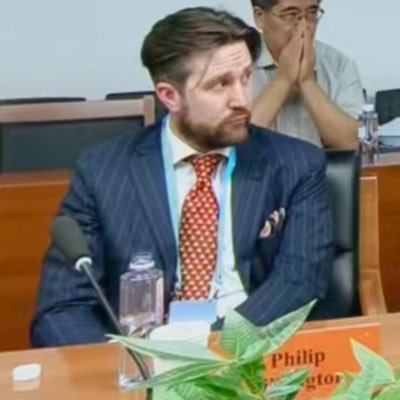
The author described a company spending weeks preparing a project before the government announced its cancellation, portraying the company as unreactive. The post tagged public procurement, bureaucracy and public-sector accountability.
The author described a company spending weeks preparing a project before the government announced its cancellation, portraying the company as unreactive. The post tagged public procurement, bureaucracy and public-sector accountability.

The author argued that the energy crisis was caused by scarcity and said EU-led demand aggregation would not increase gas supplies or the number of LNG carriers. They said it would instead add bureaucracy to an already complex market and that taking no action would be preferable to taking the wrong action. #EnergyCrisis #EU #GasMarket #EU
The author portrayed an affordable housing project as stalled by public procurement, writing that a year after the project asked when work could begin, the response remained that it was an excellent question.

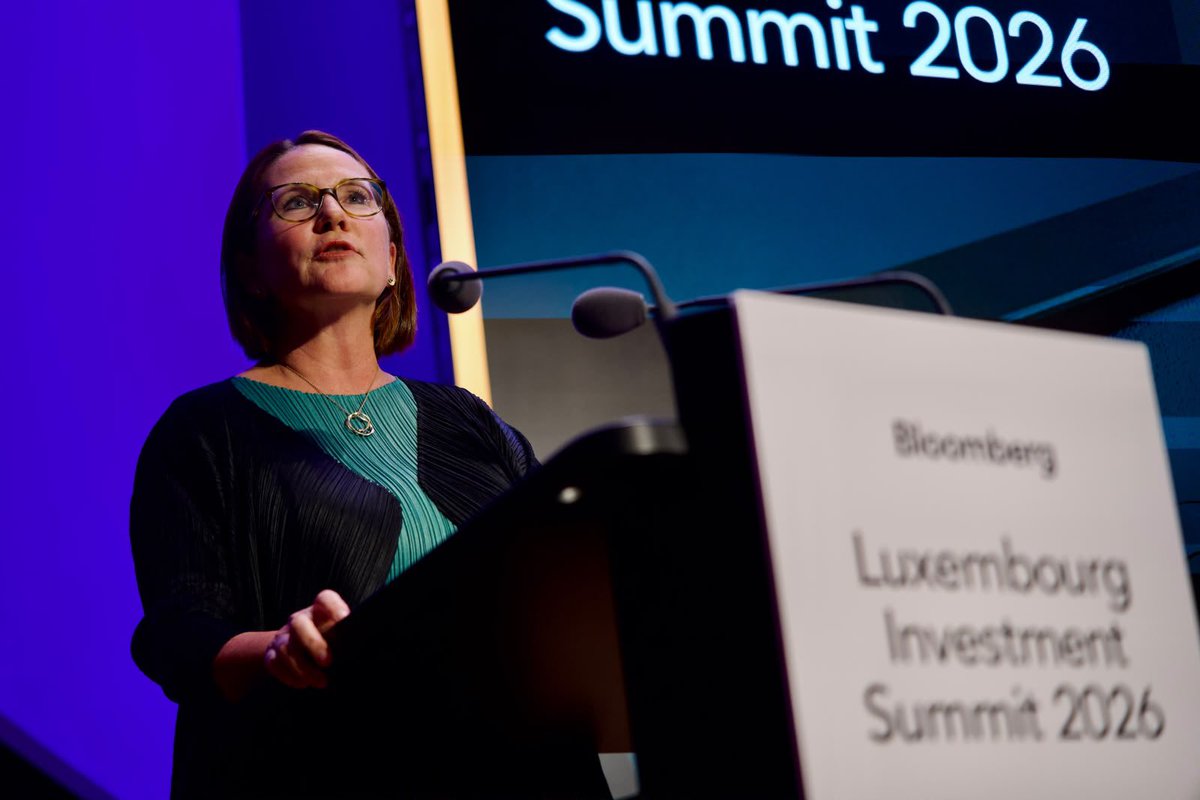
The author said they had spoken at the Bloomberg Luxembourg Investment Summit 2026 about the growing need to invest in defence and the defence industrial and technological base. They wrote that the war in Ukraine showed warfare was evolving faster than bureaucracy and said adaptation was needed. https://t.co/02aNX8f3O0 #Defence #Investment #Warfare #LU #UA

The European Security Council will achieve nothing unless political will changes in the capitals. Institutions are nothing more than hollow bureaucracies without the will to fight - and to win. #EuropeanSecurity #PoliticalWill #Bureaucracy #EU

Austria has spent decades saying: “We’ll think about it.” 🇦🇹🔥 With President Fehlinger, the thinking period is over. OUR FIRE WILL RISE. Neutrality retires. Europe gets bigger. Bureaucracy gets smaller. And Vienna finally gets some main-character energy. 😎 #Fehlinger2028 https://t.co/MWCR9MVS4i #Austria #Fehlinger2028 #EuropeRising #AT

€800 Billion of Central Planning Europe’s defence problem illustrates a lesson politicians repeatedly refuse to learn: You cannot spend your way out of a supply problem. Ursula von der Leyen’s Commission has announced an €800 billion rearmament programme with the confidence of a central planner who has discovered that shortages can be eliminated by increasing the budget. The European Court of Auditors appears considerably less impressed. Its warning is devastating: insufficient coordination, fragmented funding, bottlenecks in materials and critical components, shortages of skilled personnel and serious difficulties in achieving readiness by 2030. Notice what is missing from the solution: more bureaucracy. The fundamental error is confusing financial resources with real resources. Governments can create euros with a stroke of a pen. They cannot create factories, engineers, semiconductors, explosives, machine tools, rare materials or production capacity by decree. Worse, the EU is attempting to coordinate what politicians cannot possibly know well enough to coordinate from Brussels: which technologies should be developed, which weapons should be produced, where capacity should be expanded, and how scarce resources should be allocated. That is precisely the information problem identified by Friedrich Hayek. Knowledge is dispersed throughout millions of individual decisions. Prices communicate that knowledge. Central planners replace those signals with political priorities, committees and funding programmes. The result is predictable: fragmentation, duplication, lobbying, distorted incentives and expensive procurement. Europe does need to rearm. But that does not prove that Europe needs an €800 billion bureaucratic spending programme. In fact, the opposite may be true. If defence is genuinely urgent, Europe should remove the obstacles preventing private capital, competition and production from responding to demand. Let companies compete. Let governments buy what actually works. Let prices reveal scarcity. Let inefficient producers fail. The question is not whether Europe can spend €800 billion. Of course it can. The question is whether Brussels can transform €800 billion of political spending into €800 billion of actual military capability. The Court of Auditors has just reminded us that money is not knowledge, bureaucracy is not coordination, and spending is not production. And history has never been kind to economies that confuse the three.

AfD will make Germany great again: Wirtschaftswunder 2.0 with low energy prices, low taxes, and little bureaucracy. #AfD #Wirtschaftswunder #Německo #DE
The 7 Types of People Who Create Evil Societies Andrew Łobaczewski, a psychiatrist who lived under Nazism and Communism in Poland, proposed political ponerology: pathological personalities and social dynamics can generate totalitarian systems. He describes seven recurring types: 1) **Psychopaths**: power seekers who gain control via coercion, intimidation, and violence. 2) **Schizoids**: ideological engineers who craft abstract systems and utopian theories; if reality conflicts, they rationalize more rather than revise. 3) **Spellbinders**: propagandists who convert ideology into slogans, moral stories, and emotional appeals that sort “good/evil” and define the in‑group. 4) **The Spellbound**: true believers who absorb the message and enforce it socially, driven by moral certainty; they often recruit through institutions and peer networks. 5) **Adapted Conformists**: quiet enablers who comply from fear and self‑preservation, often within bureaucracy (“I’m just doing my job”). 6) **Resistors**: a moral minority who refuse cooperation and prioritize conscience, often paying costs like isolation or punishment. 7) **Bystanders**: a passive majority who stay silent through fear, confusion, and disengagement. Together: psychopaths hold power; schizoids supply ideology; spellbinders publicize it; the spellbound enforce it; conformists administer; bystanders tolerate; resistors challenge. Crucially, totalitarianism doesn’t require everyone to be fanatical—enforcers and ideologues can pressure the wider population to comply. It can arise under many systems (communist, fascist, theocratic, etc.), not just left vs right.
Daycare Governance and the Tyranny of Compassion Something sinister can hide behind compassion. Caring is virtuous, but it becomes pathological when institutions gain power by expanding the number of people who need care. Munchausen syndrome by proxy shows how: a caregiver fabricates or induces illness in a dependent person, then gains sympathy by performing devotion. The sickness is manufactured, but the care is real. The claim: modern society can scale this into governance. Call it the daycare governance model: (1) victims to protect, (2) caregivers to provide protection, (3) dissenters to remove. Health, therapy, NGOs, academia, media, and bureaucracy gain prestige, funding, and moral authority by managing ever-expanding categories of suffering. It unfolds in two stages. First, the victim class expands: “trauma” drifts from specific, severe harms to everyday experiences, lowering the threshold for suffering until demand is nearly limitless. Second, the perpetual patient forms: ordinary difficulties are medicalized—strength as toxicity, sadness as disorder, restlessness as pathology—creating a cycle where caretakers and victims gain status or protection. This drives a crisis of competence. Victimhood can shield accountability, and institutions are rewarded for treating problems rather than eliminating the need for themselves. Plato warned against doing for people what they can do for themselves: removing every burden removes the reason to grow stronger. True care aims to make itself unnecessary. That’s the difference between a good mother and a poisoning one: one allows appropriate hardship to build independence; the other denies it. Failing to distinguish these forms of care makes the pathology hard to recognize—and easy to applaud.
Why Leftist Activists and Revolutionaries Can Never Declare Victory Leftist movements face a paradox: they use oppression narratives to gain institutional power, then keep claiming victimhood as that power grows. Instead of disappearing, activism “shapeshifts” inside bureaucracy, media, academia, corporations, and the arts. Even when DEI is challenged, its structures often remain under new names—diversity becomes “belonging” or “inclusive culture.” The logic is permanent revolution: influence depends on the struggle never ending. Goals shift, new categories of oppression are defined, and intersectionality divides people into ever finer oppressor/oppressed groups, creating an endless hierarchy of grievances. If activists declared victory, the justification for ongoing mobilization would collapse. The risk is social atomization: identities replace shared citizenship, and the state shifts from neutral protector to an instrument for redistributing power between designated victims and oppressors. Bureaucracy and propaganda can replace community and argument. History shows recurring purges—once the revolution’s machinery turns inward, yesterday’s enforcers become today’s targets. The result is also a ressentiment psychology: identity forms around an “enemy,” not one’s own strength. This dynamic helps sustain the consultancy model—identify the guilty, define the aggrieved, and perpetuate conflict. Equality with a finish line is manageable; equality of outcomes is not, so there is always another disparity, injustice, or enemy. The movement fears completion less than failure, because ending would make its power machinery unnecessary.
Who Gets Promoted in a Broken Society? In Harry Potter, J.K. Rowling created a villain: Dolores Umbridge. She gains power not through competence, but conformity, loyalty, and bureaucracy. Evil rarely looks like Voldemort. Umbridge resembles Hannah Arendt’s “banality of evil”: ordinary people pursuing advancement by playing the institutional game. She enforces ideology through bureaucracy. Loyalists replace competent people, dissenters are labelled extremists, and punishment becomes a tool of conformity. The goal is not truth, but compliance. Political Ponerology Polish psychologist Andrew Lobaczewski studied how institutions can be captured by pathological individuals. He called the resulting system pathocracy, and the transformation of normal institutions into ones serving pathological interests ponerization. The danger begins when institutions lose the ability to distinguish competence from manipulation. Those willing to conform can rise precisely because others will not. Ideologues create doctrines, propagandists spread them, and ruthless operators capture institutions. The lesson: totalitarianism does not require one tyrant. It emerges when institutions lose the ability to distinguish the pathological from the honest. The Case of Mao Mao’s China offers a striking example. During the Cultural Revolution, Zhang Tiesheng became famous for submitting a blank exam paper while denouncing intellectuals. Political loyalty mattered more than academic ability. Mao elevated being politically “red” over being technically “expert.” Specialists were displaced by ideologically reliable outsiders. Officials who honestly reported collapsing harvests were purged, while those telling Mao what he wanted to hear advanced. False information helped sustain the Great Leap Forward, whose famine killed tens of millions. China abolished university entrance exams in 1966; they were not restored until 1977. A system that selects against competence eventually loses the ability to see reality. Mediocrity protects power; moral compromise enforces it. Capture education, and you shape a generation unable to challenge the system.
The Never-Ending Movement One of the deepest paradoxes of the social justice movement is that it uses narratives of oppression to gain institutional power, then claims victimhood as that power grows. It is no longer at the gates. It is inside the bureaucracy, media, academia, arts, and corporations it once opposed. Many think “woke” has run out of steam. I think it has solidified. DEI has not disappeared; it has often been renamed. “Diversity and inclusion” becomes “belonging,” while the offices, staff, and mandates remain. The letterhead changes; the apparatus survives. The movement cannot declare victory because victory would mean surrendering its institutional power. A political party wants to govern; a movement must keep moving. Once it stops, it loses its purpose. Intersectionality makes perpetual subdivision possible. People are classified into ever-smaller groups of oppressors and oppressed. Equality before the law has a measurable endpoint. Equality of outcome does not. Every remaining disparity can therefore become evidence that more intervention is needed. Revolutions also tend to consume their own. The Jacobins eventually turned on their fellow revolutionaries. The Bolsheviks purged their own. Mao mobilized the Red Guards before suppressing them. The pattern is simple: stop, and you are a traitor; continue, and eventually you become the target. Nietzsche identified a psychological engine beneath this dynamic: ressentiment. Goodness is defined through opposition to an alleged oppressor, making the enemy a source of moral identity. Remove the enemy and the movement loses its purpose. That is why new grievances and villains must continually be produced. A conventional reform program can declare victory and disappear. Ressentiment cannot, because victory removes the enemy that gives it meaning. The movement therefore may fear completion more than failure. They do not fear that they will fail. They fear that they might finish.
🇺🇦🇪🇺 RECOGNISE UKRAINIAN QUALIFICATIONS NOW! Europe needs skilled workers. Ukraine has skilled workers. Yet thousands of Ukrainian doctors, nurses, engineers, teachers, technicians, electricians, IT specialists and other professionals are still blocked by bureaucracy and forced https://t.co/NaruDGsIOI #RecognizeUkrainianQualifications #SkilledWorkers #SupportUkraine #UA #EU

7 LOST YEARS OF STAGNATION. ENOUGH IS ENOUGH. 🇩🇪🇦🇹🇪🇺 Germany and Austria should be the industrial growth engines of Europe. Instead, we have spent years managing stagnation: too much tax, too much bureaucracy, expensive energy, slow construction, weak investment and a political https://t.co/lj1sNVyguk #Stagnation #IndustrialGrowth #Europe #DE #AT #EU

🇪🇺 EUROPE NEEDS A LABOUR MARKET REVOLUTION Europe is running out of workers, companies cannot find staff, families struggle to combine children and careers, and governments still punish work with some of the highest taxes in the world. The answer is not more bureaucracy. The https://t.co/VuVgLMSL1o #LabourMarket #Europe #WorkRevolution #EU

🇪🇺 EUROPE NEEDS A LABOUR MARKET REVOLUTION Europe is running out of workers, companies cannot find staff, families struggle to combine children and careers, and governments still punish work with some of the highest taxes in the world. The answer is not more bureaucracy. The https://t.co/4ddnUOTL2t #LabourMarket #Europe #WorkRevolution #EU

It is astonishing that instead of trying to solve the problem, you are trying to silence those who report on it - and proudly announcing it. Do you ever wonder why people have such a negative view of the Brussels bureaucracy? If not, you should. #BrusselsBureaucracy #Accountability #FreedomOfSpeech #BE
🇩🇪 GERMANY 2030: €7 TRILLION GDP Germany can lead Europe again. Not through more bureaucracy. Not through higher taxes. But through growth. The Fehlinger Plan: ✅ 15% Flat Tax ⚛️ Nuclear Relaunch ⚡ Affordable Energy 🏗️ €1 Trillion Investment Programme 🤖 AI & Industrial https://t.co/9semtW0ziU #Germany2030 #EconomicGrowth #FlatTax #DE