BETA nonprofit public democratic european moderated

Search

#Clash

Julian Alvarez pas à l’entrainement. D’apres l’Atleti il est indisposé. On verra dans les prochains jours s’il s’agit d’un clash ou non #JulianAlvarez #Football #InjuryNews

Trump's approach to the world, always contingent and improvisational, has lost its last shred of coherence. He knows not the goals of the Iran war, much less how to achieve them, clashing with long-standing allies and publicly at odds with army commanders https://t.co/Iakx5ct0Ik #Trump #IranWar #ForeignPolicy #IR

Joblife 2w

𝐂𝐋𝐀𝐒𝐇 𝐑𝐎𝐘𝐀𝐋𝐄 𝐋𝐄𝐀𝐆𝐔𝐄 | 𝐃𝐀𝐘 𝟐 🐍 Le groupe de la mort pour une qualif aux Worlds 🌍 🕓 16h00 (7 BO3) 📺 ttv/JLTomy #JOBLIFE https://t.co/lf9gWc71bR #CLASHROYAL #Worlds #Gaming

🔴🔵 EXCL Details supplémentaires : Alors que le PSG avait déjà tout ficelé allant jusqu'à envoyer le jet privé (accord total depuis mardi), le clan du joueur a totalement renversé la table dans les dernières 24h. Le clan Suzuki exigeait subitement : - 5M€ de commissions d'agents - Un statut de n°1 garanti dès 2027 - Un prêt exclusivement dans un club disputant la LDC Face à ces exigences de dernière minute, les discussions ont viré au clash aujourd’hui lors d’un déjeuner. Le PSG a immédiatement fermé la porte, refusant de céder à ce genre de méthodes. #PSG #Mercato #Football

🚨EXCLUSIVA: Inmediatamente después de que Fabrizio diera el HERE WE GO de Ferran al PSG, Gavi lo echó del clan de Clash Royale que tiene el equipo https://t.co/Yr0c86NUSc #Futbol #PSG #ClashRoyale

"Minister, this is a Clash of Civilizations." (translated)

CLASH entre Lawisse et Noah « T’es le premier à te plaindre Noah, tu prends un trottoir, tu tombes c’est la faute de la prod » 😭 https://t.co/AviD7IYazo #CLASH #Drama #Débat

Tolu Arokodare voorafgaand aan de clash met Shelbourne! 🇮🇪 ⚔️ Shelbourne - Ajax ⏰ Donderdag, vanaf 20:25 uur 🍿 Ziggo Sport 1 #ZiggoSport #UECL #SHEAJA https://t.co/czkwbkTIuF #UECL #Ajax #Football

Ferran Torres va signer au PSG ! Les infos sur le probable transfert de Rodri au Barça. AFFAIRE JULIAN ALVAREZ qui veut aller "au CLASH"! 👉https://t.co/88tzzMYiBr https://t.co/wFvgXJzxyx #PSG #Barça #transfert

🚨💣 JULIAN ÁLVAREZ 🇦🇷 EST PRÊT À ALLER AU CLASH AVEC L’ATLETICO MADRID POUR SIGNER À BARCELONE !!!! 😤 L’Argentin voulait rencontrer Diego Simeone aujourd’hui pour lui demander de l’aider à QUITTER LE CLUB et rejoindre le Barça. 👋 Mais… le Cholo était ABSENT, parti à Ibiza pour deux jours de repos. Très énervé, l’Argentin aurait prévenu : « NE COMPTEZ PAS SUR MOI ! ». Il affirme également disposer d’une PROMESSE de l’Atlético, faite en février, pour être transféré cet été. 🗞️ @mundodeportivo #JulianAlvarez #Barcelona #TransferNews

Booba continue son clash après la vidéo. Les personnes qui envoient des photos de moi bébé, j’espère que vous achetez aussi les t-shirts : https://t.co/r76QDQakWm Si vous voulez des t-shirts, shorts ou mugs avec ce design, faites moi signe. https://t.co/3YZxPPjQ63 #Booba #merchandise #clash

They don't even let them mourn their dead. Not in the heat of some clash. Not under the influence of adrenalin. No, they deny families the right to bury their dead, in their village, in cold blood. Calculatingly. As part of a clinically devised plan for erasing them, grabbing #HumanRights #JusticeForVictims #GriefDenied #Thetweetdoesnotmentionanyspecificcountries.Therefore #theresponseis:

A
AD 3w

Alistair Overeem, who tried to make his comeback in kickboxing with a fight against Rico Verhoeven, now states that he wants to use the boxing world for an all-or-nothing attempt to fight Verhoeven, despite the lack of interest from Verhoeven's team and the situation surrounding their previously canceled clash. (translated)

Alistair Overeem (46) verklaart alles-of-niets-poging voor clash met Verhoeven: ‘Niemand wil écht tegen hem vechten’

Metaphysics of the Solitary Absolute: Philosophical and Legal Analysis of the Thesis of Solitary Amorality ​The Thesis of Solitary Amorality, formulated by Tom Nesky under the banner of the Axiom of Relationality of Law and Being, constitutes a radical challenge to classical and contemporary normative theories. Its central premise—stating that law, morality, and the category of crime are not inherent properties of reality, but artificial products of social relations—requires a rigorous deconstruction at the intersection of legal positivism, phenomenological existentialism, ontological anarchism, and monistic metaphysics. This paper attempts a systematic analysis of the intellectual pillars of this thesis, examining its internal coherence, genealogical roots, and consequences for the understanding of freedom and human subjectivity. ​The Systemic Construction of Crime vs. Pure Theory of Law ​The first pillar of the Thesis of Solitary Amorality, designated as Nullum Crimen Sine Systema, posits that law does not discover pre-legal categories of evil, but brings them into existence through the very act of establishing a boundary of permissibility. This assertion exhibits a profound convergence with 20th-century legal positivism, particularly with Hans Kelsen's Pure Theory of Law (Reine Rechtslehre). Kelsen advocated for a methodological purification of legal science from ethical, sociological, and political elements, defining law as a normative system founded upon a hypothetical basic norm (Grundnorm). ​In the Kelsenian view, the legal system functions as a coercive apparatus devoid of inherent moral value. A crucial point of intersection with Nesky's thesis is the elimination of the traditional dualism between acts that are inherently evil (mala in se) and acts prohibited merely by law (mala prohibita). Kelsen argued that an act becomes unlawful solely when a legal norm attaches state-enforced coercion to it. Unlawfulness is not an ontological property of the act, but the result of a relationship of normative imputation. This implies that the law does not penalize an act because it is intrinsically evil; rather, an act is considered evil solely because it has been subjected to systemic penalization. ​This clash became prominent during the debates surrounding the Nuremberg trials, where positions based on natural law and legal positivism collided. While prosecutors such as Robert Jackson invoked universal moral norms (mala in se) as the basis for punishing criminals despite the previously binding positive law of the Third Reich, Kelsen pointed out the theoretical inconsistency of such an approach. He argued that judging on the basis of retroactive law (ex post facto) constitutes a breach in the systemic coherence of positivism, even if it might be justified by political and historical necessity. ​Nesky's project imparts an existential dimension of oppression to this structure, bringing it close to the critique of the state formulated by Friedrich Nietzsche. Nietzsche famously described the state as "the coldest of all cold monsters," which devours the individual's singularity and imposes herd morality upon them. The gaze of the state, mediated through the Other, paralyzes the sovereignty of the individual and forces them to navigate within arbitrarily designated normative boundaries. Every stroke drawn across the chaos of reality establishes a boundary, and every boundary instantly creates the concept of its transgression. ​The Paradox of the Systemic Cage and the Limits of Ontological Anarchism ​The second pillar of the thesis—The Paradox of the Systemic Cage—points to the impossibility of escaping the system through rules alone. Every attempt to negate the existing order, from establishing anarchist structures to escaping into geographical isolation, immediately transforms into a new system whose primary imperative becomes the defense and maintenance of that very absence of rules. This process of structural looping finds its reflection in the current of ontological anarchism formulated by Hakim Bey (pseudonym of Peter Lamborn Wilson). ​Bey, drawing on a synthesis of Nietzscheanism, Situationist theory of the spectacle, and chaos esotericism, recognized that classical revolutions striving to overthrow the state inevitably reproduce structures of domination, becoming new forms of confinement. As an alternative, he proposed the concept of the Temporary Autonomous Zone (TAZ). TAZ is a tactic for creating temporary, non-hierarchical spaces that deliberately evade formal structures of state control. The key element of TAZ is its ephemerality: before the system can map, define, and absorb the autonomous zone, it must dissolve itself and relocate to another point in space-time. ​Attempts to transform TAZ into Permanent Autonomous Zones (PAZ) immediately encounter the paradox noted by Nesky. The need to defend and codify freedom within a lasting community gives rise to internal rules, mechanisms of exclusion, and hierarchy. For this reason, Murray Bookchin criticized ontological anarchism (calling it "lifestyle anarchism" or "bourgeois anarchism") for its lack of political realism and its flight from systemic struggle against capital and state in favor of aesthetic rebellion. The convergence of these perspectives demonstrates that freedom defined as reactive resistance to a system remains structurally determined by it. ​The Dissolution of the Relational Mirror: The Existential Gaze and the Collapse of Morality ​The third pillar of the thesis, designated as The Dissolution of the Mirror (L'Autre), posits that good and evil require the presence of an external witness and judge. This assertion represents a direct application of Jean-Paul Sartre's existential phenomenology, particularly his analysis of the Gaze (le look / le regard) and the relation to the Other (l'Autre) presented in Being and Nothingness. ​Sartre illustrates the constitutive role of the Other through an analysis of the voyeur's situation. At the moment of complete absorption in the act of peeping through a keyhole, the subject's consciousness is pre-reflective—the voyeur does not reflect on himself; his consciousness completely merges with the act being performed. Only the sudden sound of footsteps in the hallway shatters this unity. The voyeur realizes that he himself is seen, and is instantly paralyzed by shame. ​For Sartre, shame is not a purely internal emotion; it is shame of oneself before the Other. The Gaze of the Other objectifies the free subject (being-for-itself—pour-soi), freezing them into a specific role and moral evaluation (being-for-others—pour-autrui). As Ellie Anderson points out, Descartes' formula "I think, therefore I am" is replaced in Sartre by "I feel shame, therefore Others exist." The Gaze of the Other marks the birth of social morality, wherein the individual learns to view themselves from a third-person perspective. ​This existential dynamic corresponds to the Nietzschean genealogy of "bad conscience." Nietzsche demonstrates that morality and guilt are products of the forced internalization of human instincts that could no longer be discharged outwardly due to social barriers. Forced into the constraints of society, man turns against himself, creating an internal judge (conscience) modeled on the external tyrant. ​This vision also resonates with the classical theory of Thomas Hobbes. In Leviathan, Hobbes explicitly declares that in the state of nature, where there is no common power, there is no law, and where there is no law, no notion of injustice exists. Concepts of good, evil, justice, and property are attributes of man living in society, not in solitude. Removing the social fabric reverts the individual to a state in which theft and injury lose their raison d'être due to the absence of relational reference to the Other. #philosophy # metaphysics # thesis # morality

Europe encourages its neighbours to practise migration blackmail — The surge in Ceuta is over, but the clash it triggered and EU’s panic leaves scars https://t.co/hZZleASLzC #Migration #EU #Ceuta #ES #EU

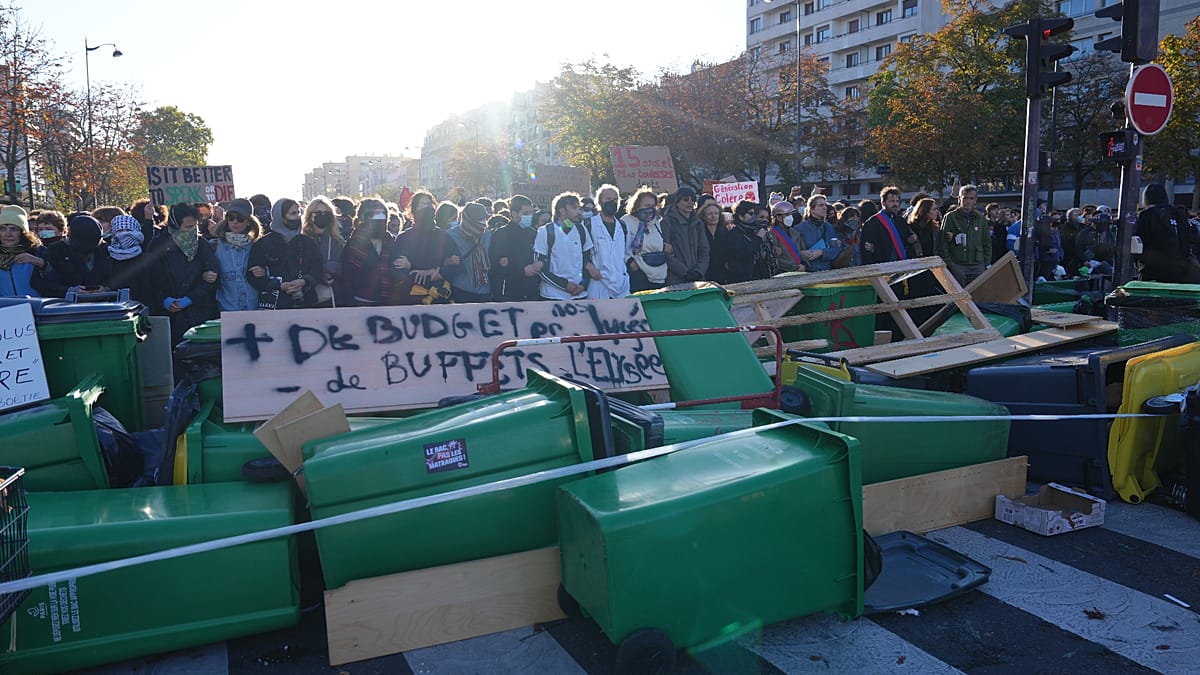
La fine della piazza? Perché il potere ha paura della nostra voce collettiva Provate a chiudere gli occhi e ad ascoltare il battito dei nostri centri urbani. Un tempo, il suono di una piazza era un caos vitale: l’odore acre del mercato, il riverbero dei passi sul selciato, il brusio incessante che diventava boato durante le assemblee spontanee. Oggi, quel suono è stato sostituito da un silenzio igienizzato. Le piazze sono diventate "zone di transito", spazi regolamentati dove la vitalità è concessa solo se programmata. Abbiamo trasformato l’agorà in un museo a cielo aperto, privandola della sua funzione ancestrale: essere il luogo dell’assembramento, la sede fisica della volontà collettiva. Ma cosa succede a una società quando la sua voce non trova più un’eco tra le pietre della città? La Piazza come specchio dell’identità e del potere La piazza non è mai stata un vuoto urbanistico, ma un palcoscenico di tensioni necessarie. È lo spazio del "clash", dove i monumenti e i palazzi dell’opulenza — con le loro facciate solenni e distaccate — sono costretti ad affacciarsi sulla vitalità quotidiana del popolo. Questa convivenza tra la fredda stabilità del potere e il calore transitorio dello scambio commerciale e umano è ciò che chiamiamo identità.È in questo attrito che nasce la democrazia visibile. La piazza permette al cittadino di esistere fisicamente davanti ai simboli dell'autorità, ricordando a chi sta nei palazzi che il potere non è un’entità astratta, ma un mandato che deve rispondere a corpi in carne e ossa. Quando questa dualità svanisce, la piazza smette di essere il cuore della comunità e diventa una semplice scenografia per il controllo. L’illusione dell’ordine: quando le regole proteggono il potere Oggi ci viene venduta una narrazione rassicurante: quella del decoro e della sicurezza. Eppure, grattando la superficie, emerge una distinzione inquietante tra il "rispetto delle regole civili" e la mera difesa del potere acquisito. Il contenimento della libera espressione non è quasi mai un atto di civiltà, ma una strategia di autoconservazione.Questo accade con forza brutale quando chi governa si ritrova sprovvisto dell’investitura della maggior parte del popolo . In assenza di una reale legittimazione democratica, il potere diventa fragile e, per sopravvivere, deve erigere argini. L'ordine imposto non serve a proteggere il cittadino, ma a proteggere il palazzo dalla piazza. La regolamentazione ossessiva dello spazio pubblico è il sintomo di un'autorità che, non potendo più convincere, sceglie di recintare. Il fattore paura: l’imprevedibilità della folla Perché la piazza spaventa chi siede ai vertici? Perché è l'unico luogo in cui avviene quella che possiamo definire la "forza che somma" . Nell'isolamento digitale, siamo atomi manipolabili; ma nella vicinanza fisica, la realtà riprende il sopravvento sulla narrazione mediata. La piazza è un "reality check" collettivo: guardando gli altri negli occhi, ci si rende conto che il dissenso non è un'anomalia marginale, ma un sentimento condiviso.In questo spazio, la manipolazione della realtà operata dall'alto crolla improvvisamente. La folla è imprevedibile, non risponde a uno script, non può essere "disattivata" con un clic."La piazza spaventa — perché la voce che vi si raccoglie non si può controllare."Questa incontrollabilità è, paradossalmente, la forma più pura di libertà. È il momento in cui la voce cessa di essere un dato statistico e diventa una forza fisica, un'energia che il potere non può filtrare né mediare Conclusione: quale spazio per la libertà domani? Mentre le piazze fisiche vengono svuotate e recintate, ci viene detto che la nuova agorà è il web. Ma possiamo davvero fidarci? La tecnologia agisce spesso come un mediatore invisibile, un algoritmo progettato per contenere la nostra voce in camere dell'eco dove il boato si riduce a un sussurro solitario. La forza fisica di una piazza gremita non ha equivalenti digitali: l'asfalto non mente, lo schermo sì.La sfida del nostro tempo non è solo politica, ma esistenziale. Dobbiamo chiederci se siamo disposti a barattare il calore e il rischio della presenza fisica con la comodità di un dissenso mediato e contenuto.Siamo pronti a reclamare il nostro spazio nelle piazze, o accetteremo di scambiare il ruggito della folla con l'eco solitaria di uno schermo, lasciando che la nostra voce venga arginata per sempre?

Drako 4w

3XA a donné son point de vue de l'histoire en live, voici un condensé avec le moins de biais possible : - Grosse frustration suite à la non-montée en LEC après KCB 25 - Problèmes d'adaptation à l'environnement FF (notamment à l'honnêteté de Targamas & Adam) -> Grosse démotivation sur l'esport et la carrière de joueur pro en général - Problèmes aux neurotransmetteurs C6/C7/C8 provoquant des douleurs majeures au poignet, notamment en scrim, depuis début 2026. D'après lui, il a peut-être négligé ces douleurs en début de saison (a commencé à aller voir un kiné la semaine dernière) - A son arrivée, il avait compris que Ragner ET 113 devaient signer dans l'équipe, ce qui l'a poussé à rejoindre JL. - La méta actuelle n'est vraiment pas adaptée à lui, il se sent incapable de carry dans cette équipe - D'après lui, Shift sera un excellent jungler d'ERL d'ici 1 à 2 ans, mais au vu d'à quel point le jeu tourne actuellement autour du duo jungle/supp, ce n'était pas du tout assez à ce moment-là - Avant le split, il estimait déjà que le projet serait difficile. Après SK, il s'était promis de ne plus garder ses frustrations pour lui, mais estime avoir été toxique dans sa manière de les exprimer avec JL. - Sur le plan humain, son passage chez JL était génial, les gars de la structure l'ont mis dans de très bonnes conditions, et il a apprécié tous ses teammates, particulièrement Mersa, malgré leurs différends IG - Après la défaite contre Skillcamp, il dit à son coach : "après ce que j'ai vu, je ne peux pas jouer dans ces conditions, je ne peux pas être ADC dans cette équipe et devoir call, sortir de mon rôle, juste pour gagner des games. On joue trop mal et je n'y crois plus", ce qui a amené à un clash avec son head coach, mais aucune embrouille avec aucun des joueurs du roster, qu'il a prévenu en privé avant de prendre sa décision - Il préfère s'arrêter ici, aussi bien pour régler ses soucis physiques et mentaux, que pour éviter de se retrouver dans une position où il "paycheck steal" sans vraiment se donner à fond, plutôt que de rester dans un projet auquel il ne croit plus - Il admet totalement que sa décision est égoïste, et baise en quelque sorte la saison de JL et ses supporters, mais il ne se voyait vraiment pas continuer sur le long terme. Pour lui, c'était soit "je joue et je suis l'ombre de moi-même", soit JL peut créer une nouvelle dynamique avec un joueur à 100% - La suite le concernant est assez floue. Il ne sait pas s'il a encore la flamme d'être joueur pro et de reprendre le grind à un niveau qu'il a déjà dominé plusieurs fois par le passé J'imagine que Tomy donnera aussi sa version de l'histoire en stream ce soir, en tout cas évitez d'aller harceler 3XA directement, peu importe si vous considérez sa décision légitime ou non, il risque d'en prendre plein la gueule, et sans doute plus que de raison, ça vaut pas le coup d'en rajouter #Esport #LeagueOfLegends #3XA