
Booommm 💥💥💥💥💥💥💥 Fiiiiiiiirrreeee 🔥🔥🔥🔥🔥🔥🔥 Enjoy your weekend coffee: ☕️ ☕️ ☕️ ☕️ Russian Nizhnekamskneftekhim petrochemical complex in Tatarstan following overnight Ukrainian drone strikes.
Booommm 💥💥💥💥💥💥💥 Fiiiiiiiirrreeee 🔥🔥🔥🔥🔥🔥🔥 Enjoy your weekend coffee: ☕️ ☕️ ☕️ ☕️ Russian Nizhnekamskneftekhim petrochemical complex in Tatarstan following overnight Ukrainian drone strikes.
Booommm 💥💥💥💥💥💥💥 Fiiiiiiiirrreeee 🔥🔥🔥🔥🔥🔥🔥 Enjoy your weekend coffee: ☕️ ☕️ ☕️ ☕️ Russian Nizhnekamskneftekhim petrochemical complex in Tatarstan following overnight Ukrainian drone strikes.

The research team used a small electronic capsule that participants swallowed to monitor changes as it passed through the digestive system. #CoffeeHealth #GutMicrobiome #DigestiveHealth

The author wrote that Tiny owned 30 businesses, including Letterboxd and AeroPress, and said the unnamed owner did not run them himself but chose their CEOs. The author added that one company had cost him more than $100 million, despite him having spoken to its CEO only once.
Excited to start my first day as Nvidia's Head of Government Affairs. I'm excited to help the US government see we have the judgement necessary to independently steward this critical technology despite its national security implications. Now to take a big sip of coffee and open my e-ma...

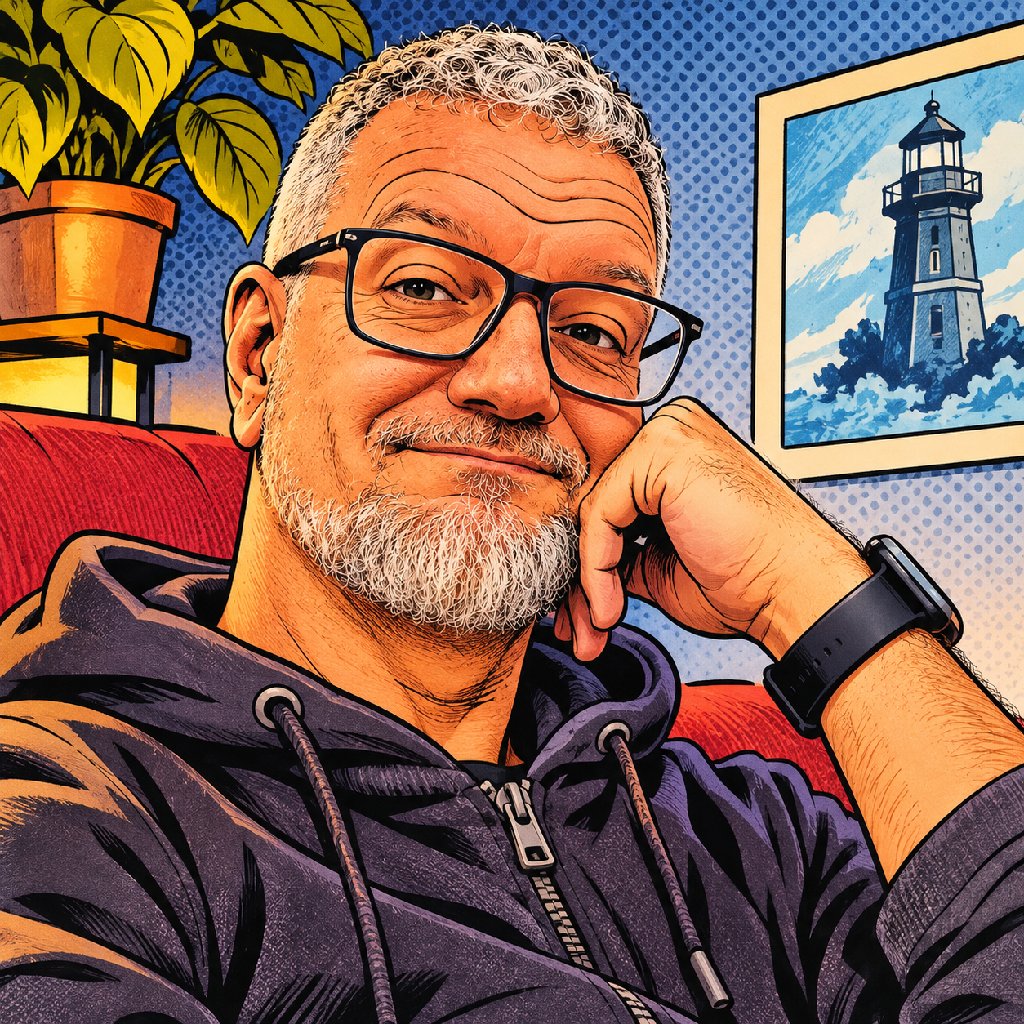
[1/4] Not every angel needs a runway. Some of us need coffee before we can save the day. #NotEveryAngel #AngelOfMyDreams
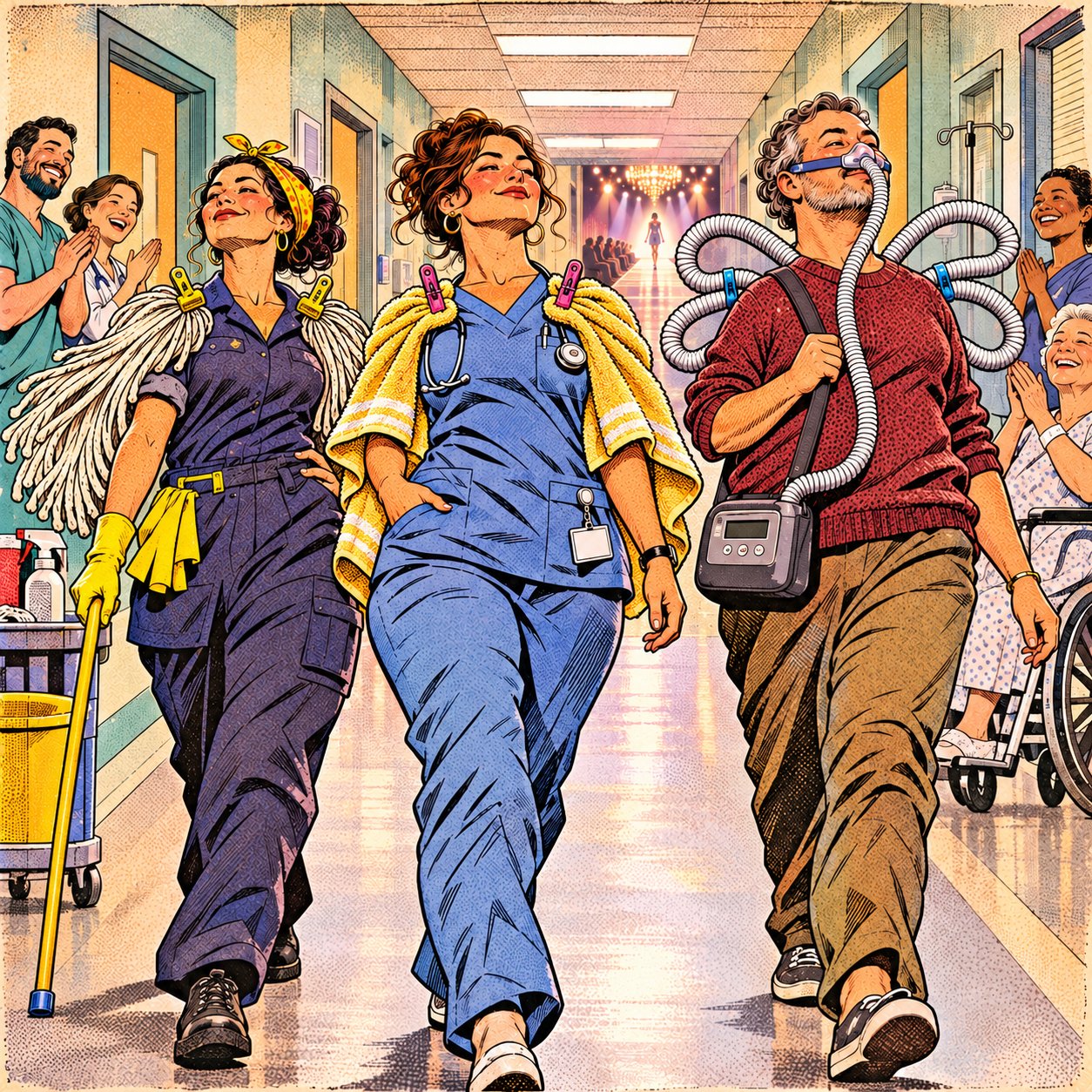
Booommm 💥💥💥💥💥💥💥 Fiiiiiiiirrreeee 🔥🔥🔥🔥🔥🔥🔥 Enjoy your weekend coffee ☕️ ☕️ ☕️ ☕️ ☕️ 🇺🇦Ukrainian drones launched a large-scale overnight attack on Russia’s Saratov oil refinery. This is from their morning view.


The gaming company Coffee Stain reports an increased cash EBIT of 75 million kronor for the second quarter of 2026/2027. #CoffeeStain #Spelbranschen #Ekonomi (translated)
Starbucks plant to use AI to recognize customers when they enter the stores and make personalized offers to keep pace with the competitive pressure from Luckin Coffee. #KünstlicheIntelligenz #Starbucks #TechnologischeModernisierung (translated)

I like morning coffee the same way I like morning skies over Russian refineries: inky black. This beautiful morning scenery is brought to you by drone sanctions on the Nobokuybyshevsk refinery in Samara oblast. ☕


We are starting the 244th week of Russia's all out war. Putin's "second army of the world" is more than 1,700 days behind schedule in reaching Kyiv. Ukraine stands proud, stays free on Day 1706 of the Kremlin's full scale invsion. Here's my daily🧵- gifts of coffee welcome!

The Food Safety Authority of Ireland has urgently recalled specific batches of Bialetti Perfetto Moka Caramello ground coffee due to elevated levels of the carcinogenic toxin Ochratoxin A. #BialettiRecall #OchratoxinA #FoodSafety
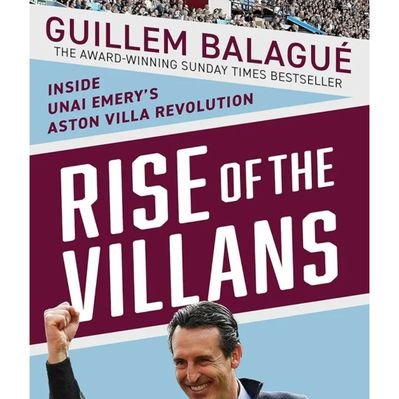
The author said his post highlighted five things to watch in the Champions League clash between PSG and Barcelona, which he described as the two best teams around. #CoffeeWithGuillem https://t.co/jV4DjJm3f1 #UCL #PSG #Barcelona #FR #ES
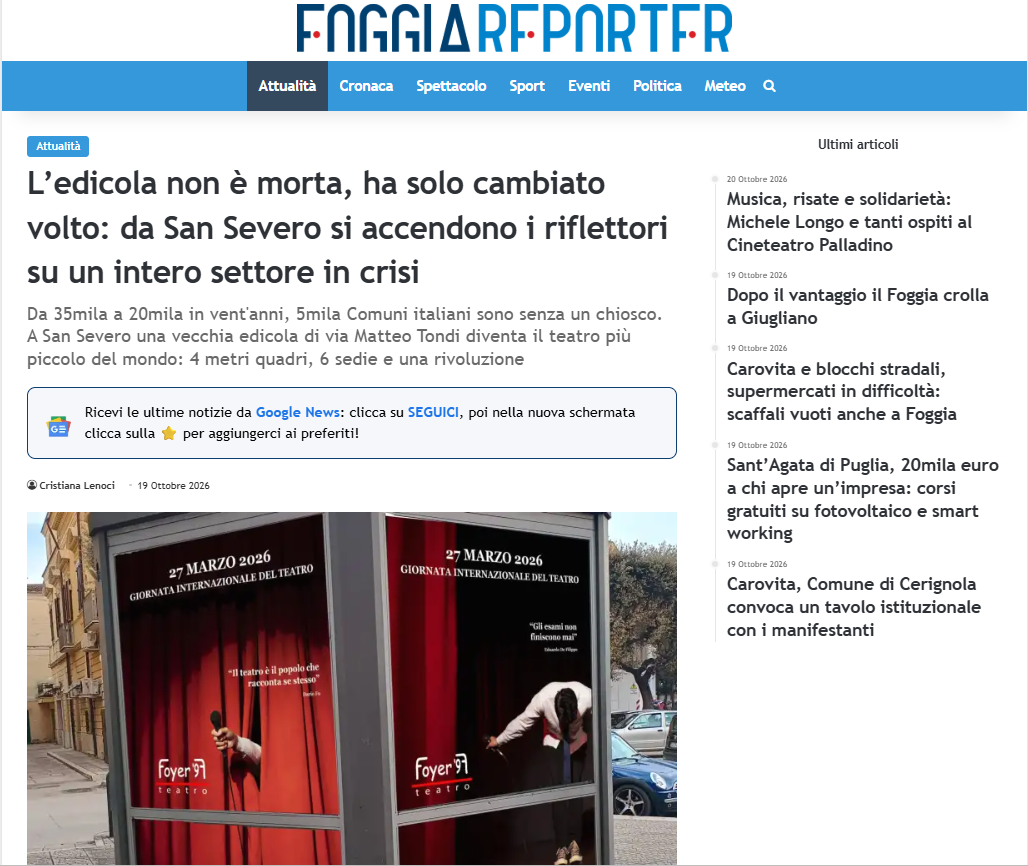
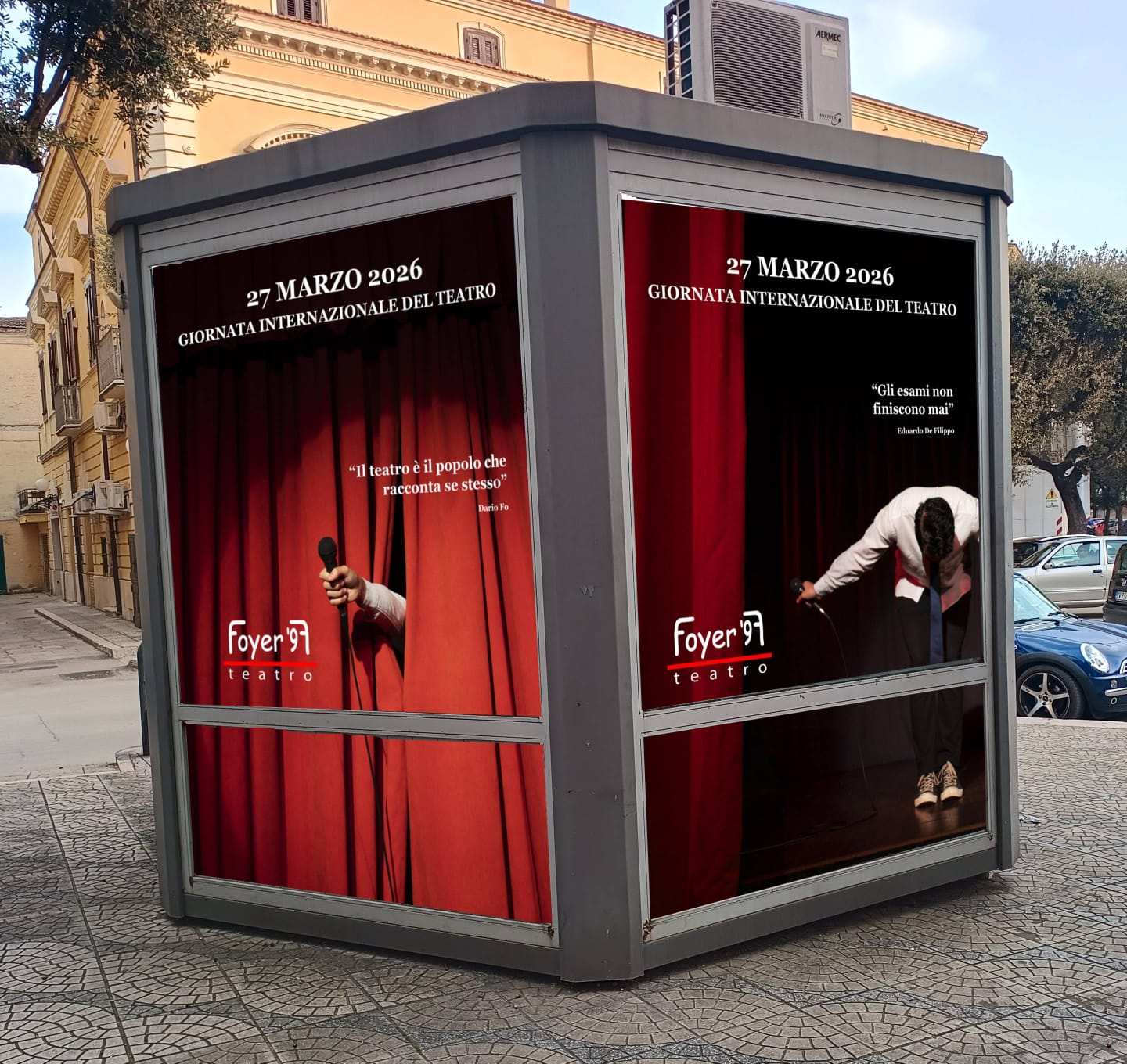
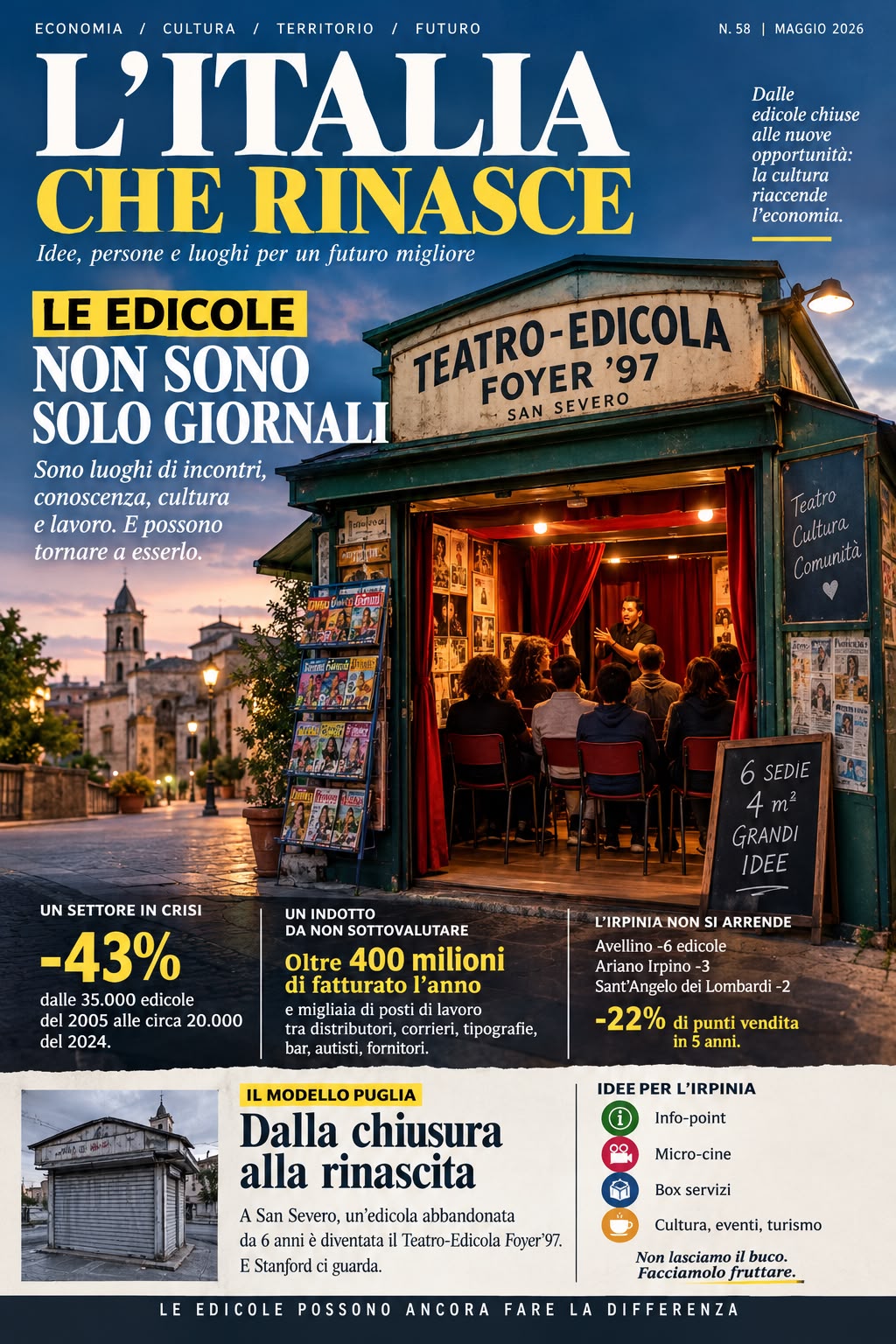
FOGGIA REPORTER: “THE NEWSSTAND IS NOT DEAD, IT HAS ONLY CHANGED ITS FACE: FROM SAN SEVERO, THE SPOTLIGHT IS TURNED ON AN ENTIRE SECTOR IN CRISIS” by CRISTIANA LENOCI SOURCE: https://www.foggiareporter.it/ledicola-non-e-morta-ha-solo-cambiato-volto-da-san-severo-si-accendono-i-riflettori-su-un-intero-settore-in-crisi.html SAN SEVERO (FG) — From 35,000 to 20,000 in twenty years, 5,000 Italian municipalities are without a kiosk. In San Severo an old newsstand in Via Matteo Tondi is becoming the smallest theatre in the world: 4 square metres, 6 chairs and a revolution. For sixty years it was the place where you went to collect the newspaper, to ask for the football score, to leave your keys with a neighbour. Then the shutter down, the opaque glass, the faded sign. That is how newsstands in Italy end today. But that, sometimes, is how they are reborn. In San Severo, in Via Matteo Tondi, a newsstand abandoned for six years became, on 27 March 2026, World Theatre Day, the Teatro Edicola Foyer ’97. Four square metres, six chairs, fifteen-minute performances. An idea by director and artistic director Francesco Gravino and his company Foyer ‘97. They have called it “the smallest theatre in the world” and the news has gone round the international agencies, until it became a case study for the Stanford Social Innovation Review with the report “The Six-Seat Revolution”. An old newsstand that is returning to being what it has always been: a place of knowledge, culture and work. Only instead of newspapers, it distributes stories. A sector at risk of disappearing The story of San Severo sheds light on a silent haemorrhage. There were 35,000 newsstands in 2005, there are about 20,000 in 2024: -43%. According to FENAGI data released in 2026, there were about 19,500 sales points in 2025, but only 6,000 were exclusive traditional newsstands. The most painful figure is geographical: almost 5,000 Italian municipalities no longer have a newsstand. In two out of three municipalities there is no longer a sales point for newspapers and magazines. Other counts, those of Sinagi, speak of a collapse from 38,000 exclusive newsstands to about 11,000 still active. In the last four years, from 2019 to 2023, almost 2,700 newsstands have disappeared, of which 2,327 were sole traders. Rome has lost 303, Turin 138, Milan 129. Isernia has lost over a third of its newsstands in four years. Why? Falling paper sales, digital subscriptions, rising operating costs, reduced margins. In economics it is called a “sector in demand decline”. On the street it is simply called the end of a habit. Not just newspapers And yet the newsstand has never been just newspapers. In the past it was an information outpost, a point of reference, the guardian of a neighbourhood. It was self-employment, often family-run, made of early starts at 4 a.m. to be ready when the city wakes up. Today those who hold out reinvent themselves: neighbourhood bookshop, service point, parcel collection, ticket office, coffee corner. Those who cannot manage it, close. The example of Foyer 97 in San Severo tells us a simple and uncomfortable truth: we cannot save all newsstands as newsstands. But we can save their purpose. A 4-square-metre kiosk in Puglia that becomes a theatre reminds us that those few square metres are worth more than the rent they no longer pay. They matter because they are already where people pass. They are already recognized as a public place. They are already culture, even when they no longer sell culture on paper. If newsstands stop selling newspapers, they do not necessarily have to stop selling knowledge.
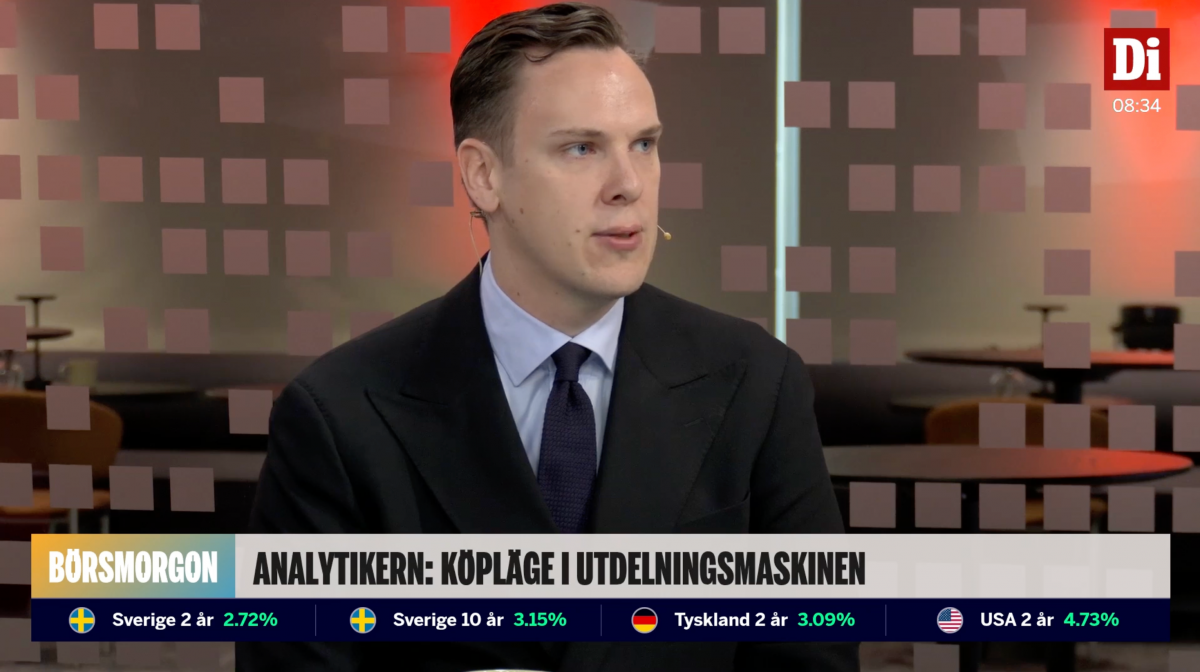
The analyst Johan Wendel assesses that a strong surge is imminent for the undervalued game studio Coffee Stain. #aktier #spelindustri #Börs (translated)
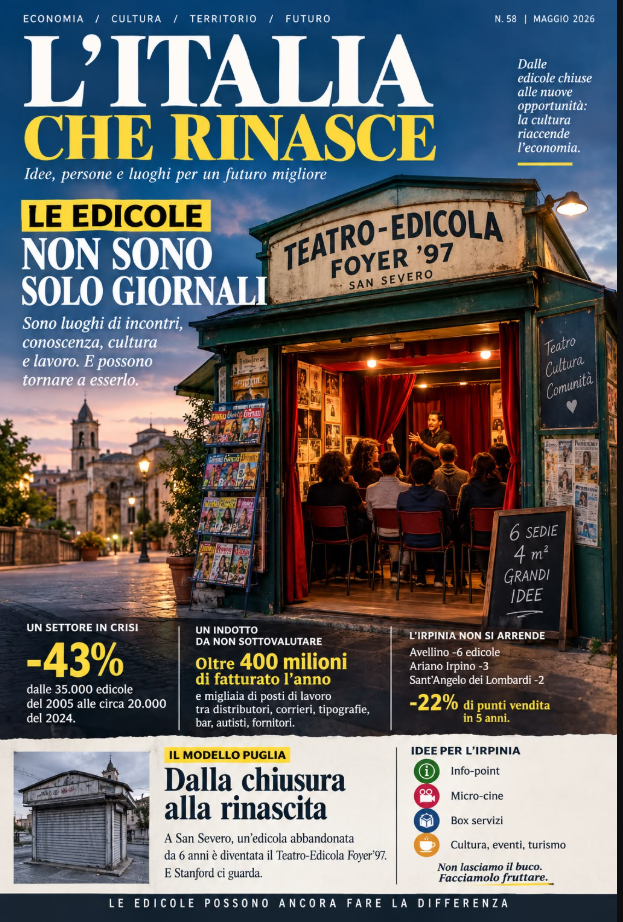
RADIO ARC 101:“NEWSSTANDS, ‘ENDANGERED SPECIES’ LIKE CAFÉS: MONEY LOST AND HOPES FROM STANFORD” by NANDO SILVESTRI SOURCE: https://radioarc.it/edicole-razze-in-estinzione-come-i-bar-soldi-persi-e-speranze-da-stanford/ Newsstands are another repository of humanity and knowledge, in many respects similar to cafés, at least as far as the unfortunate fate that has befallen many of them is concerned. The smell of printed paper, coloured card, variegated covers, surprise packets and cellophane was an olfactory molasses that once intoxicated young and old alike and represented, at the same time, a sought-after destination for daily walks and pauses. Stopping by the newsstand meant drawing upon knowledge, entertainment, culture, imagination and creativity. All prerogatives lost on account of the shapeless and amorphous surrogates disseminated by the web. This is the principal reason for the cumulative and recurring closure of a great many Italian newsstands: in economics, one speaks of a sector in demand collapse. But it is not merely a newsstand that closes; a piece of the local and national economy closes with it. From 35,000 newsstands in 2005 to about 20,000 in 2024: -43%. With them goes direct turnover of over €400 million per year, but the real hole is the indirect economy that is never calculated. Each average newsstand in a small town generated distribution worth €15,000 per year in margins for local distributors, couriers, and printers. Moreover, the customer who bought the newspaper would have a coffee, buy a bus ticket, place a bet. Download the Medium App One must consider that without a newsstand, the village cinema loses its only physical promotional outlet, not to mention the losses in terms of advertising. When it closes, it is not only the newsagent who loses. The café loses, the driver loses, the printer loses. In Irpinia, over the last five years, Avellino has lost six newsstands, Ariano Irpino three, Sant’Angelo dei Lombardi two. The total loss in Irpinia amounts to about 22% of outlets. All this means that many of the closures mentioned above have deprived Irpinian cafés of several dozen customers, harming workers, distributors and suppliers. These are jobs that do not make the news, but they exist. Another hard blow inflicted upon the local and national economy in the name of a false progress that almost always favours the business of fixers and the usual suspects. However, what is happening in Puglia, a few kilometres from Irpinia, opens up scenarios of renewal based precisely upon the reconversion of disused newsstands. These are prospects so unique and innovative as to have aroused interest worldwide, especially at Stanford University. This is news of enormous significance that few news programmes have disseminated, in the name of a perennial pre-emption by technologies contemptuous of common sense, tradition and art. In San Severo, 40 km from Upper Irpinia, a newsstand abandoned for six years in Via Matteo Tondi became, on 27 March 2026, the Teatro-Edicola Foyer’97: six chairs, four square metres, an idea by Francesco Gavino. The well-received 10- to 15-minute shows have piqued the curiosity of Stanford University. Its academic journal, the Stanford Social Innovation Review [SSIR], has chosen the Teatro Edicola in San Severo as an international case study with the reportage “The Six-Seat Revolution”. Why is Stanford watching us? Because it has realised that those four square metres can once again generate indirect economic activity. Indeed, 60 spectators in an afternoon can become 60 coffees at the neighbouring café. With a symbolic ticket price of €5, we are talking about a cultural micro-economy. Not to mention the indirect income from tourists and journalists who arrive and frequent B&Bs and restaurants. It is the model Irpinia needs: not to leave the void, but to reconvert it virtuously. Every closed newsstand can become an information point, a micro-cinema, a service hub. Otherwise we shall continue to count only the lowered shutters, without counting the money that no longer circulates.
Booommm 💥💥💥💥💥💥💥 Fiiiiiiiirrreeee 🔥🔥🔥🔥🔥🔥🔥 🇷🇺Grab your coffee and enjoy the show. St. Petersburg is burning.
The outcome should be to "retain more value at origin," stated Andrea De Marco, Act Coffee Programme Manager of Unido, echoing the gap between overall production volumes and their impact on African economies. #Caffè #Cooperazione #Etiopia (translated)

Public sector workers are striking for the first time in 17 years, garnering support from the community with coffee, cakes, and car horns. #WebSecurity #AccessDenied #Cloudflare
Daniel Schatz wrote that he hated communism and did not sympathize with the Left Party, but believed that the Social Democrats' treatment of the party resembled a destructive relationship. According to him, the Social Democrats took the support of the Left Party for granted and responded to demands for political influence or ministerial positions with rejection and aggression. Schatz argued that the Social Democrats needed to get used to being a party with 25 percent of voter support, rather than a governing power party that could dictate the terms for others. #politik #demokrati #Sverige (translated)





