BETA nonprofit public democratic european moderated

Search

#EAC

“Anything everything could be a lie; you might be arguing with, confiding in, or falling in love with a machine. All of these AI-enabled disorientations, each dizzying in their own right, are adding up to something bigger This is how things are” https://t.co/2VQCkMHE36 #AI #LoveInTheDigitalAge #Disorientation #Nospecificcountrycodesarementionedinthetweet.
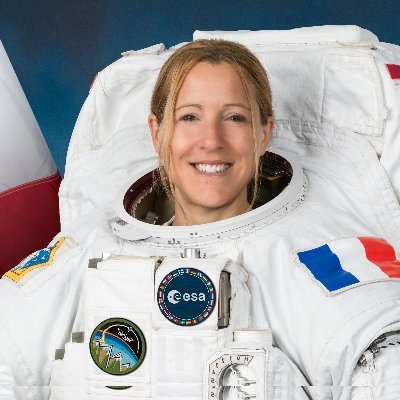
Jour 201, orbite 3115 – Une vidéo qui me tient à cœur pour fêter 200 jours dans l’espace ! 🎉 Ma formidable équipe de soutien au Centre européen des astronautes (EAC) a lancé un défi sportif après le décollage : faire une pompe 💪 de plus chaque jour de la mission εpsilon. D’autres sites de l’ESA à travers l’Europe ont depuis rejoint le défi, et cela me touche beaucoup ! Et avant que mes entraîneurs et médecins de vol ne commencent à s’inquiéter : cette vidéo a été filmée avant le début du marathon de sorties extravéhiculaires... 😉 Merci à toutes et à tous! On me dit que vous avez effectué plus de 150 000 pompes ! Wouhou ! Votre énergie me porte et j’ai beaucoup de chance d’être entourée d’une telle équipe 🫶. 🎥 @esa / @NASA #εpsilon • @esaspaceflight • @Space_Station • @NASAJohnson • @ESA_fr • @CNES #Espace #Astronautes #DéfiSportif

Europe is under attack. The attacks are not the point. And, yes, it is existential threat. Drones over airports. Cables cut at sea. Fires at logistics hubs. Each incident gets investigated as a crime, explained as a technical failure, or filed as an isolated provocation. That https://t.co/xc4eE3PcUq #EuropeUnderAttack #ExistentialThreat #CyberSecurity #EU

DOMANI SERA A CARTABIANCA. Dopo che tutti hanno parlato a sproposito della prima e seconda parte del programma di Futuro Nazionale forse domani sera ne parlerò io. E non è finita qua, perchè la terza parte del programma deve ancora uscire. https://t.co/EAcF3cQB6K #FuturoNazionale #Cartabianca #Politica

H

The Downward Spiral of Gender Polarization The growing divide between men and women resembles less a debate than a divorce involving millions. Both sides escalate, talk past each other, and blame the other gender amid a mental-health crisis. Depression among Americans under thirty has doubled in eight years, while anxiety continues to rise. Each gender has failure modes and one successful path. Carl Jung called it individuation; a simpler term is integration. The integrated are not leading the conversation. The disordered are. Every man carries an inner feminine—the part that feels, intuits, and creates meaning. Jung called it the anima. Cut off from it, he becomes cold and contemptuous; overwhelmed by it, passive and moody. Every woman carries an inner masculine—the part that decides, asserts, and holds the line. Jung called it the animus. Cut off from it, she defers to stronger people; possessed by it, argumentative and rigid. I believe the four failure modes pair off. The cold, contemptuous man finds a timid woman who cannot challenge him; the red-pill industry calls this manhood. The passive man finds a domineering woman who can run his life; the feminist industry calls this liberation. A 2025 Nature Human Behaviour study of 14.8 million people in Taiwan, Denmark, and Sweden found that disordered individuals consistently marry one another across cultures and generations dating back to the 1930s. My theory is that integrated people increasingly date within a pool dominated by the disordered. They try, fail, and get hurt, then drift toward the same patterns. The pool corrupts those who might have healed it, creating a feedback loop. We are in a downward spiral: integrated people encounter disordered partners and become disordered themselves, while the already disordered grow worse. Reversal requires enough people to reject cynicism. When every encounter feels like proof that the other gender is broken, our own drift toward disorder begins to feel justified.

H

The Pathology Behind Compassion Something sinister can lurk behind compassion. Caring for others is noble, but when institutions are rewarded not for reducing suffering—only for managing it—care can become pathological. Munchausen syndrome by proxy shows the logic: a caregiver fabricates or induces illness in someone dependent on them to gain sympathy and attention. The caregiver looks devoted; the “sickness” is manufactured. In that sense, devotion can hide control. I call this the Daycare Governance model: society splits into infants to be protected (oppressed), caregivers who provide protection (allies), and predators to be removed (dissenters). Caretakers gain prestige, funding, and moral authority by managing suffering. Many may believe sincerely, yet incentives can overpower intentions—if status and resources grow with the number of “vulnerable” people, the system has reason to expand the victim class. It does so via concept creep (“trauma” broadens until ordinary difficulty counts), and by creating the perpetual patient, where normal sadness becomes pathology and struggle is rebranded as dysfunction. Care institutions and “victims” then reinforce each other. Dependency costs competence. True care prepares people to stand alone; pathological care keeps them dependent. Endless expansion of victimhood risks producing more dependency. We call it compassion—but compassion without boundaries can become control.

H

The Fracture That Kills the Family The West’s deepest divide may not be left versus right, but whether young men and women still share a vision of the good life. The nuclear family is society’s foundation, yet households struggle to form when the sexes view each other as opponents. Many women see marriage as patriarchal; many men see women as manipulative or exploitative. Relationships shift from mutual union to zero-sum power struggles. Christianity framed marriage as union—two people becoming one. Nietzsche warned the death of God would remove a shared moral foundation, leaving society vulnerable to nihilism and fragmentation. We are living that fragmentation. Young men often retreat into pornography, gaming, and prolonged adolescence. Young women increasingly frame sexual liberation as empowerment. Both chase proximate pleasures while losing ultimate purposes: family, responsibility, continuity, and creating life. Dating data reflects the fracture: among unmarried Americans aged 22–35, only 26% of women and 36% of men are actively dating. Ideology filters matches too—Gen Z and young millennials cite political compatibility far more than Boomers. Research also finds a mismatch: only 0.6 single liberal men per single liberal woman, and only 0.5 single conservative women per conservative man. Cross-ideological pairing has risen from 6% in the 1970s to 22% today. The consequences extend beyond dating: fertility has fallen below replacement across much of the West, and 42% of American adults were unpartnered in 2023. Policy responses—tax incentives, parental leave, baby bonuses—miss the deeper cultural and spiritual problem: you can debate taxes, but it’s hard to build a family when you disagree on masculinity, whether marriage is oppressive, or whether family is worth sacrificing for. The values gap is the disease. The political divide is the symptom. The household is the casualty—and when it cracks, everything built above it loses stability. The question is whether a civilization can survive when the two people it most needs to unite can no longer agree why they should.

H

The Noble Enemy: Why You Must Respect the Man You Fight Respect your enemies—and even be thankful. It isn’t weakness; it’s discipline and a mental edge that makes victory possible. Hatred costs you home-field advantage: it hijacks your attention, clarity, and preparation. Anger also misfires. It directs you, exhausting yourself to entertain others. It exposes you, making destruction your only goal so you forget what to preserve—and what the enemy is doing. Lastly, contempt blinds you: if you think you’re superior, you stop training, studying, and preparing, deciding the fight is won before it starts. In Heat, the cop and thief recognize they’re two sides of the same danger. They don’t become less dangerous; they see each other clearly—making the final confrontation tragic. In The Dark Knight, the Joker’s “You complete me” reflects a deeper truth: each gives the other purpose. The hero is defined partly by the villain he must face; the villain by the hero who provides something worthy to oppose. As Nietzsche suggests, be proud of your foes—not to concede, but to commit to discipline. Disrespect makes you stop training; contempt makes you stop scouting; hatred makes you stop listening. The worthier the foe, the worthier the man required to meet him. What you don’t understand, you can’t defeat.

H

The Pathology of Masculinity and Femininity Without Cultural Restraint Both sexes have evolutionary roles: men developed strength for protection, provision, and competition; women developed beauty and selectiveness for pair-bonding and survival. Culture channels these drives—family structure, dating norms, fatherhood, shame, religion—guiding strength toward building and beauty toward commitment. Remove the norms and the drives seek new avenues. For men, the open channel becomes force: aggression and risk can detach from responsibility, yielding robbery, assault, gang violence, and predation. The shadow side of masculinity is strength used to take rather than protect. For women, the channel shifts to extraction through simulated intimacy: monetized desire via platforms and influencer economies can turn closeness into leverage, often without the pair-bonding or family life it was built to support. The masculine ideal is protector and disciplined provider; its pathology is thug or criminal. The feminine ideal is nurturer and guardian of commitment; its pathology is the seller of simulated intimacy and extractor of attention. Both are corruptions of genuine virtues. Three accelerants intensified these patterns: stigma’s collapse, technology’s scalability of desire, and weakened communities and absent fathers. The root cause is the breakdown of family norms. Men are less destructive when bonded and mentored; women are less exploitative when raised to value enduring commitment. Consequences mirror each other: unchecked male pathology produces violence; unchecked female pathology produces mistrust, loneliness, and demographic decline. Both arise when culture denies that masculine and feminine virtues must be shaped and channeled rather than suppressed.

H

The Three Words Democracy Borrows Democracy is often praised as inherently good, but Aristotle, Plato, and Socrates saw serious flaws. A better view: rule by one, few, or many each has tradeoffs. A healthy society ideally combines a strong leader, a competent elite, and a virtuous citizenry—because, as Thomas Sowell said, “there are no solutions, only tradeoffs.” Democracy promises three virtues it can’t guarantee: freedom, wisdom, and consent. **Freedom:** Nozick’s thought experiment shows how slavery can be disguised by changing vocabulary—when power gradually shifts from overt domination to rules voted on by others, at what point is it “freedom”? A society can talk endlessly about freedom while restricting rights through taxes, regulations, and suspensions. **Wisdom:** Socrates doubted democracy produces wisdom. If a voyage were dangerous, you wouldn’t let every passenger vote equally on navigation. Yet political voting gives equal weight regardless of knowledge, inviting manipulation by those skilled in fear, emotion, and flattery. **Consent:** “Government of the people, by the people, for the people” can be an illusion. If the state is treated as “us,” coercion can be reframed as self-government. But representatives don’t truly follow your instructions the way a genuine agent must. Freedom, wisdom, and consent are real virtues—democracy just borrows their language, and the biggest risk is believing that choosing rulers collectively makes the ruled free, wise, and consenting.

H

Mass Migration as a Path to Expanding State Power Western governments have incentives for mass migration. Increasingly staffed by progressives, the state wants to expand its authority over social relations and the economy. Wealth redistribution and equitable representation are easier to claim once the state controls the levers. Many see rising living costs as a failure; for those harmed, it makes sense. From the state’s perspective, however, faster arrivals than can be housed, schooled, or treated strain the system. The state then responds with more spending in those areas, exerting economic control. A state failure becomes the pretext for expanding the state. Higher population also enables misleading “per-capita” narratives. If five people live together making $50,000 each, GDP is $250,000. Add five more and cut everyone to $45,000: GDP becomes $450,000—nearly double—despite lower individual income. Competition for rooms, food, and yard space raises prices while people earn less, producing fewer earnings and higher costs. Rob Henderson calls these “luxury consequences.” Mark Wiseman, co-founder of the Century Initiative, backed a goal of 100 million people in Canada by 2100 (~800,000 per year). What happened in 2022–2024 exceeded targets. After disaster, Wiseman “failed upwards,” later joining Prime Minister Mark Carney’s advisory council. If the state directs social and economic life, it must also prevent revolts when planning fails. Fragmenting society into factions and encouraging their differences weakens cooperation—divide and conquer. The state’s interest was never a thriving citizenry, only a growing one.

H

The Belyaev Fox Experiment: Selective Breeding, Tameness, and Domestication In 1959, Soviet geneticist Dmitry Belyaev began a long-term experiment at the Institute of Cytology and Genetics in Novosibirsk to investigate how wild animals might undergo domestication. Working with silver foxes (*Vulpes vulpes*) from fur farms, he selected approximately the tamest 10% in each generation as breeding parents. Selection focused mainly on behaviour—reduced fear and aggression and greater willingness to interact with humans—rather than on physical traits. The results were rapid and striking. Within about six generations, some foxes licked researchers’ hands, accepted physical contact, wagged their tails, and actively sought human attention (Dugatkin, 2018). Over time, selection for tameness was accompanied by changes in coat pigmentation, ear and tail shape, reproductive patterns, physiology, and behaviour (Trut et al., 2009). These traits resembled features found in domestic dogs and other domesticated mammals and became associated with the “domestication syndrome,” which includes reduced aggression, increased social tolerance, juvenile behaviours, pigmentation changes, and altered craniofacial development. Belyaev proposed that selection for reduced fear and aggression could affect wider developmental and physiological systems. Later research suggested that changes involving neural crest cells might help explain how behavioural selection could produce multiple physical traits (Wilkins et al., 2014). The experiment also offered a model for dog domestication. Early wolves that were less fearful and aggressive may have remained near human settlements, where they experienced a new selective environment. Over generations, increasing tolerance of humans could have led to further behavioural, physiological, and morphological changes. Belyaev’s experiment remains important because it shows how behavioural selection can rapidly influence development, genetics, and evolution, while also highlighting the need for caution when applying the concept of a universal domestication syndrome. **References:** Belyaev (1979); Dugatkin (2018); Lord et al. (2020); Trut et al. (2009); Wilkins et al. (2014).

H

Marxism as a Secular Religion A traditionally religious person accepts that they inhabit a world of scarcity and suffering, finding peace through belief in salvation from God. The affluent atheist, encountering hardship and personal responsibility for the first time, may instead become overwhelmed by anxiety. Marxism, disguised as economic theory, promises to relieve individuals of responsibility by transferring it to the system. It offers the religious concepts of a fallen world, a chosen people, certainty, and moral status, while removing Christianity’s most difficult demands: repentance and forgiveness. Rather than locating sin within each individual, Marxism assigns it to a class: the bourgeoisie. Salvation is no longer a process of personal transformation but something achieved by acting against others. The individual is not asked to examine himself, because guilt is always assigned to another class. This helps explain why Marxist revolutions so often end in mass graves. If evil is viewed as a property of a class, then eliminating that class becomes an act of purification. Mass murder is not treated as a betrayal of the doctrine but as its ultimate fulfillment. Marxism elevates resentment to a virtue. It portrays inequality as a cosmic injustice and suggests that hatred of those who possess more is morally justified. Ironically, although it rejects God, it borrows religious language. In a purely material world of atoms colliding randomly, no arrangement of matter can be inherently unjust. Class origin becomes a crime inherited from one’s ancestors, and forgiveness has no meaningful place. When salvation is promised through the violent removal of an entire class, the result is tragically predictable. Marxism is not merely an economic theory; it is a secular religion of resentment and destruction.

H

The Gender War and the Downward Social Spiral The growing polarization between men and women resembles less a public debate than a divorce involving millions. Both sides talk past each other, escalate tensions, and blame the other gender—all amid a severe mental health crisis. The gender war is a cultural debate among a psychologically struggling population. The people lashing out most intensely may fit recognizable psychological patterns. Each gender has two major failure modes and one healthy alternative: integration. Carl Jung called this individuation. Every man carries an inner feminine—the part that feels, intuits, and finds meaning. Jung called it the anima. Cut off from it, he becomes cold and contemptuous; overwhelmed by it, he becomes passive and moody. Every woman carries an inner masculine—the part that decides, asserts, and holds the line. Jung called it the animus. Cut off from it, she defers to stronger people; possessed by it, she becomes argumentative and rigid. These failures often pair off. The cold, contemptuous man finds a timid woman who cannot challenge him, while the passive man finds a domineering woman who can run his life. Each ideology may then rebrand these unhealthy dynamics as either manhood or liberation. A 2025 *Nature Human Behaviour* study of 14.8 million people across Taiwan, Denmark, and Sweden found that disordered people consistently marry other disordered people across cultures and generations. Balanced people, by contrast, do not need to dominate or be dominated. Yet they are trying to date within a pool increasingly shaped by dysfunction. They get hurt, become cynical, and begin drifting toward the very patterns they once rejected. The disordered worsen, while the healthy become corrupted—a positive feedback loop. Well-integrated people meet a growing pool of disordered partners and drift toward disorder themselves. Reversal may require a critical mass of people to reject cynicism.

Lily and I looked at each other and we had goosebumps. And we knew, this is not just a movie song, this is an anthem.

Heart, hope and a steely determination: Dolly Parton's musical legacy
www.bbc.co.uk

Sven Schulze echauf­fie­rt sich über den harmlosen Begriff „Flachzange“. Niemals vergessen: Lars Klingbeil hat Alice Weidel als „Nazi“ bezeichnet. https://t.co/eac8eyoXwh #Politik #Debatte #Meinung

Lily and I looked at each other and we had goosebumps. And we knew, this is not just a movie song, this is an anthem.

The heart, hope and steely determination behind a musical legacy
www.bbc.co.uk

On August 24th 1991 Ukraine declared independence from the Soviet Union. Shortly after, Ukraine 🇺🇦 and Slovenia 🇸🇮 recognized each other as independent states. 3 months later, the Ukrainian people voted on its independence in a referendum. 92.25% voted for, 7.75% voted against. #UkraineIndependence #1991Referendum #UkrainianHistory #UA #SI

N

In the developing trade war between USA and Canada it is clear that the USA is proving an unreliable trading partner. In order to ensure a well regulated world trade it becomes clearer each day that Europe should develop closer ties with Canada and reduce it's dependence on trade with the USA which, with a $40trillion debt could see a plunging dollar and eventual default on debt.