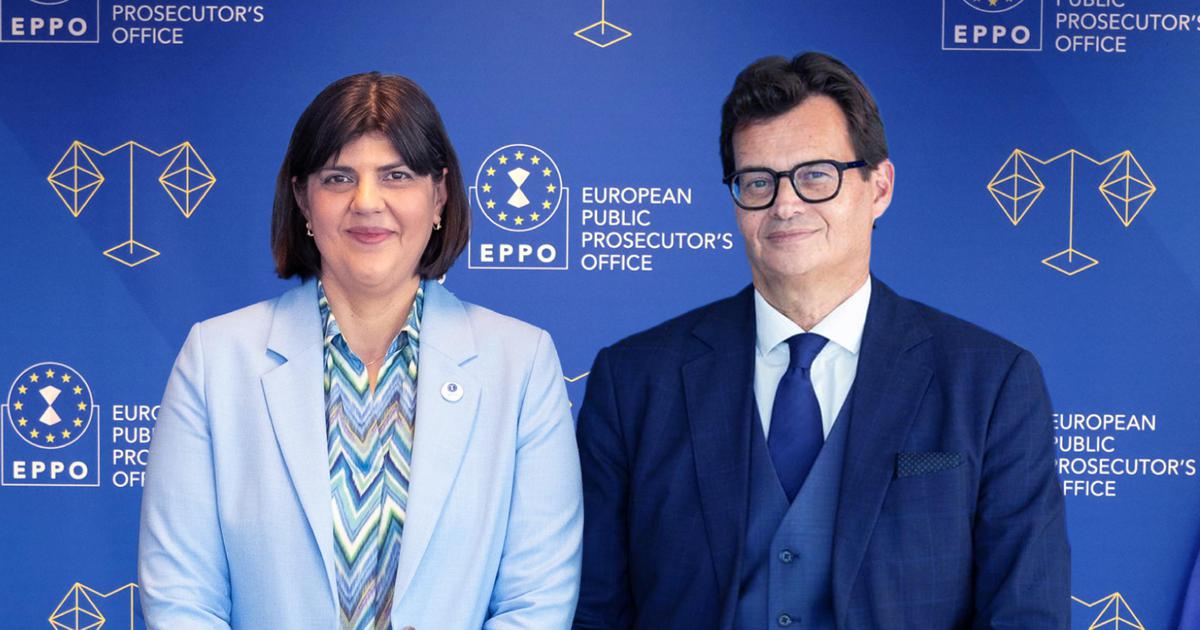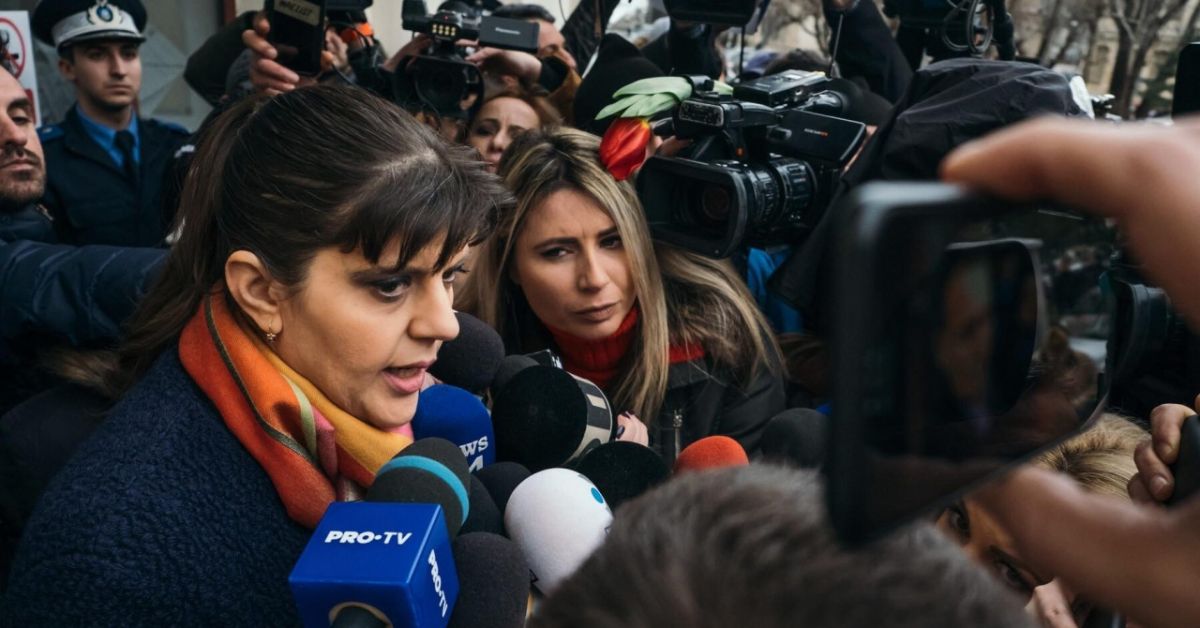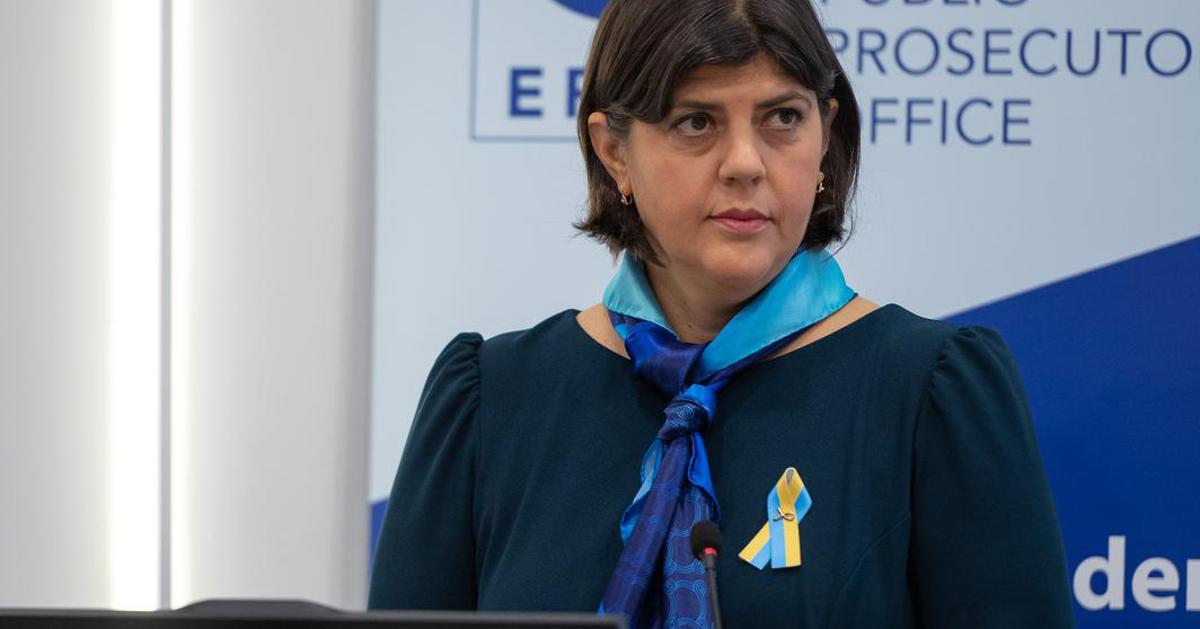
Laura Kövesi is leaving her position as the chief European prosecutor, and Andrés Ritter, an expert in economic crime, is taking her place, while the institution continues with numerous open investigations. (translated)
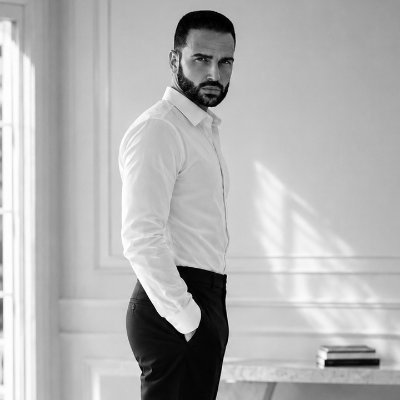
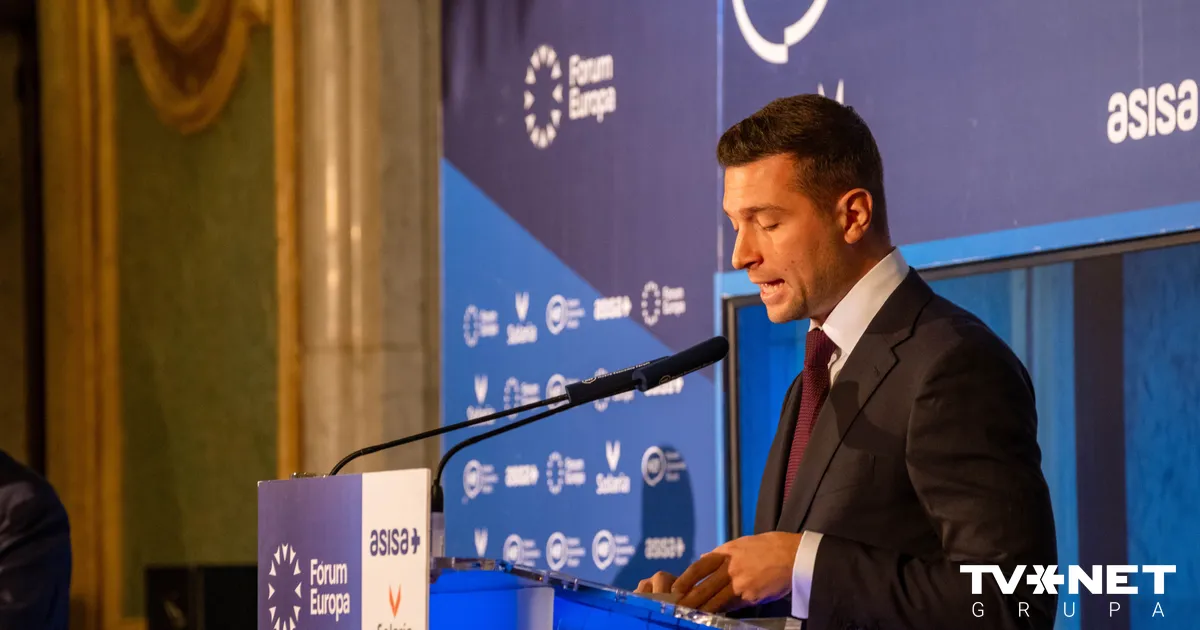
Andrés Ritter, born in Chile and with more than three decades of experience in the judiciary, will take office as the European Chief Prosecutor on November 1st, becoming the first German in this position and succeeding Laura Kövesi, with an emphasis on fighting organized VAT and customs fraud. #EPPO #AndrésRitter #prijevara (translated)

The mandate of Laura Kövesi, the first European Public Prosecutor, is expiring, while experienced German Andres Ritter takes over the leadership of the EPPO, amid a series of conflicts with member states, including Croatia. #Korupcija #EPPO #LauraKovesi (translated)

Laura Kövesi, the first European Public Prosecutor, is finishing her term after facing numerous conflicts with member states, including Croatia, during her leadership of the EPPO, and her successor will be the German lawyer Andres Ritter. #EPPO #korupcija #EU (translated)

Laura Kövesi, the first European public prosecutor, today completes her seven-year term, and her successor will be the current deputy, Andres Ritter. #LauraKövesi #EPPO #korupcija (translated)
Today Laura Kövesi, the first European Chief Prosecutor, is leaving, whose seven-year mandate was highlighted amid conflicts with member states, including Croatia and Greece. According to her, the future of the EPPO depends on preserving its independence and credibility. #LauraKövesi #EPPO #korupcija (translated)
Laura Codruța Kovesi is concluding her mandate today as the head of the European Public Prosecutor's Office, expressing her concern that the independence and efficiency of the institution are threatened by underfunding and bureaucratic obstacles, while she will be replaced by the German prosecutor Andrés Ritter. #EPPO #LauraKovesi #Justiție (translated)

Laura Codruța Kövesi is ending her mandate at the European Public Prosecutor's Office today with a warning: the institution can be gradually destroyed without any vote. It has funding for 180 prosecutors out of the 230 planned, and the revision of the regulations has been postponed since 2021. Romania has 535 EPPO investigations and an estimated damage of 6.05 billion euros, ranking second in the EU after Italy. The scenario is well known in Bucharest. https://aequus.news/articles/kovesi-eppo-ucis-fara-sa-tragi.html (translated)

In an operation by USKOK and EPPO in Slavonia and Zagreb County, several persons have been arrested on suspicion of corruption offenses. #korupcija #USKOK #uhićenja (translated)

Laura Kövesi, the head of the European Public Prosecutor's Office (EPPO), warned about the systematic undermining of the EPPO's work by politicians, especially in the context of the investigation into Pfizergate, which involves the President of the European Commission, Ursula von der Leyen, over allegations of corruption and obstruction of public functions. #EPPO #vonDerLeyen #korupcija (translated)
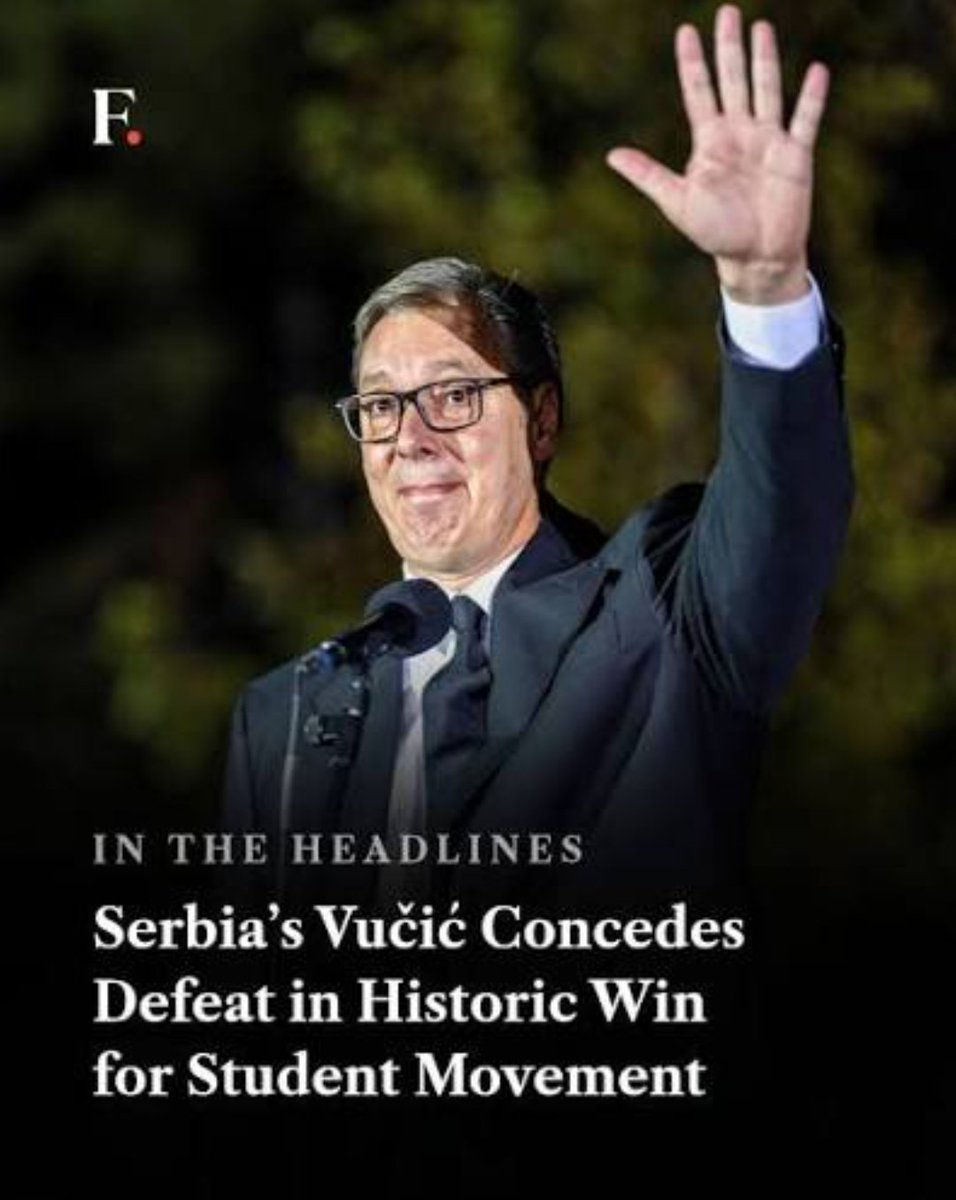
The author described Vučić’s defeat as a victory for Europe and a blow to Moscow, saying the Kremlin had lost one of its key allies in the region. They said Serbian voters had demanded change and that the new leadership should restore the rule of law and rebuild independent institutions. The post tagged EU Enlargement and the EPP Group. https://t.co/ri8uIiRQz3 #Vučić #Evropa #Kreml #RS #EU #RU
Matteo Di Gangi observed that a coach had achieved five wins and three draws in the first eight Serie A matches, but was treated as if he were in the relegation zone. Regarding Milan, he wrote that the Rossoneri had won an important match despite being without half of the team and that injuries happened to all teams engaged every three days. He added that Milan still had several aspects to improve and should extend the squad in January, but urged to maintain balance in judgments. #SerieA #Milan #calcio (translated)
The author asked European Parliament President Roberta Metsola whether she stood with the European Students of Serbia or with what they called Serbia’s tyrant. They accused Manfred Weber of allowing the EPP to be tainted by the blood of Vučić’s victims. #Serbia #EuropeanStudents #HumanRights #RS
The author wrote that the night marked the end of Yugoslavia and said Aleksandar Vučić, Aleksandar Vulin and Ivica Dačić had lost while European students had won. The author said history was being made and held Manfred Weber responsible for any bloodshed by Vučić that night in the name of the EPP. The author also criticised the European Parliament president for remaining silent about what they called Serbia’s tyrant. https://t.co/Ot4s9sy34G #Yugoslavia #History #Serbia #RS #EU
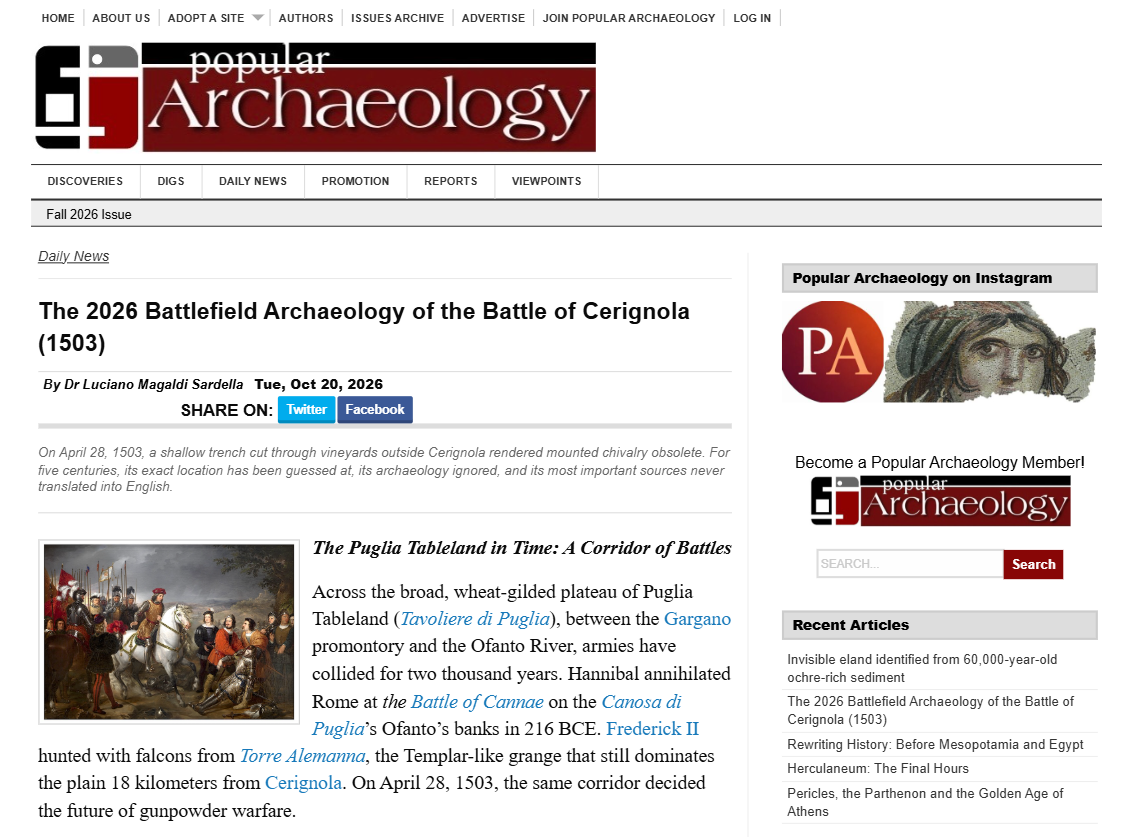
THE "BATTLE OF CERIGNOLA (1503)" ON "POPULAR ARCHAEOLOGY USA" (by LUCIANO MAGALDI SARDELLA) SOURCE 1: https://popular-archaeology.com/author/sardella/ SOURCE 2: https://popular-archaeology.com/article/the-2026-battlefield-archaeology-of-the-battle-of-cerignola-1503/ -------------------------------------------------------------------- CERIGNOLA (FG) — On April 28, 1503, at sunset, a shallow trench cut between the vineyards outside Cerignola rendered heavy cavalry obsolete. For five centuries, its exact location has only been conjectured, its archaeology ignored, its most important sources never translated into English. We are on the Tavoliere of Puglia, a corridor of battles for two thousand years: from Cannae in 216 BC to the falcon hunt of Frederick II from Torre Alemanna. Cerignola, at that time, was not a city but a rural village of 350 families at 120 meters above sea level, custodian of the Mena della Dogana delle Pecore, the great pastoral system of transhumance that financed the Kingdom of Naples. Its possession was fiercely contested. Facing each other were two worlds. Louis d’Armagnac, Duke of Nemours, Viceroy of Naples for Louis XII, in his thirties, splendidly armored, confident of victory. On the other side was Gonzalo Fernández de Córdoba, the Gran Capitán, who on April 27-28 marched from Barletta with about 9,000 exhausted men and decided to settle on a low ridge. He deepened what was already there: not an invention, but an agricultural ditch. The French gendarmes, the last heirs of the medieval knight, lowered their lances and never reached the line. From behind a parapet reinforced with vine stakes, over 1,000 Spanish arquebusiers opened fire. Nemours fell, almost certainly the first European army commander to die from a portable firearm. With him, the charge of cavalry as a dominant tactic died. And here is the scandal denounced by the article: no cartographer of the 17th-18th centuries ever mapped the battlefield. No monument commemorates it. It is not protected as a cultural landscape under the Code of Cultural Heritage. Every deep plowing of the Tavoliere, standard practice since the Bourbon reforms, destroys an archaeology never recorded. Yet the perimeter can be reconstructed. By cross-referencing the 16th-century descriptions of "vine-covered slopes fifteen miles north of the Ofanto" with the Via Traiana, the engagement area is a rectangle of 3-4 square kilometers northeast of the current settlement. With the 1m LiDAR DTM from ISPRA, it could reveal anomalous linear depressions, and the lower filling of a ditch 2-3 meters deep, under the plowed layer, is still readable with magnetometry and ground radar. Why did we arrive late? Not for lack of sources, but for lack of translation. The Municipality of Cerignola and the Torre Alemanna Research and Study Center of Prof. Matteo Stuppiello, who in 1978 obtained the first monumental protection for Torre Alemanna, have digitized a corpus that has never entered Anglophone historiography. Here are the 3 pillars: 1. The letter that still smells of gunpowder. The “Letter from Consalvo de Córdoba to the Spanish royals dated April 29, 1503,” edited by Stuppiello in 2003 and updated to 2025 on comune.cerignola.fg.it/biblioteche-digitali. A handwritten page written in Cerignola the day after the battle, “rich in flashes, twilight lights, and gunfire.” Not a polished chronicle like that of Giovio, but a field dispatch: the fatigue of the night march, the decision to entrench upon arrival, the recovery and honorable burial of Nemours, the intact capture of the French artillery. 2. The graffiti, a monument inside the monument. In the 14th-century church of Santa Maria delle Grazie, known as the Incoronatella, on the Via Trinitapoli Vecchia, where tradition holds that the body of Nemours was brought. On the triumphal arch, a 1503 graffiti gives, in almost notarized form, the date, sixth indiction, Friday at the hour XXIII-XXIIII. It was indeed Friday, as confirmed by the perpetual calendar of Cappelli. Decoded in 1995 by Prof. Francesco Magistrale, Latin paleographer at the University of Bari, in *The Battle of Cerignola (1993)* and in the municipal monograph *S.M. delle Grazie (1999)*. Today it is fading due to humidity and neglect. 3. The land registry that explains the ditch. The Survey of 1672 preserved at the State Archive of Naples, Pignatelli Aragona Cortes fund, Scanzia 63, fasc.1: “At the time of the battle, thick vineyards covered the hill reaching to the plain, and were distinctly separated from the rest of the countryside by a not very deep ditch.” Córdoba did not improvise; he adapted. This is confirmed by the catasti of the Giustiniani: 277 households in 1532, 699 in 1595. The landscape of 1503 was intensely horticultural, not the deeply plowed monoculture of today. In addition to these, there is the first monograph by Vincenzo Buonassisi, *The Battle of Cerignola* (1908, died in Via Fanfulla 10 on June 27, 1928), and the first modern military analysis by Piero Pieri, “Consalvo de Córdoba and the Battle of Cerignola,” Archivio Storico Pugliese 1952, which 30 years before the Anglophone rediscovery of the “pike-and-shot” defined Cerignola as an engineered killing ground. While Cerignola forgot, others remembered. The “Regimiento de Infantería Cerinola n.42”, later “Fuerteventura n.56”, carried the name of Cerignola until the 20th century. The coat of arms, described in *Heraldica e Historiales del Ejercito, Tomo V” (Madrid, 1981): silver field, dying white swan entangled in a hedge, golden wall crown, with the scroll “Cerignola.” Dossier officially transmitted on April 30, 1986, prot. 4565/509, from the Servicio Histórico Militar of Madrid to the Torre Alemanna Center thanks to Col. Alessio Antonutti and Gen. José Cifuentes. And in Amsterdam, at the Rijksmuseum, the anonymous bronze commemorative medal: Hercules with lion skin and club and Janus with the keys next to an eagle-armed coat of arms, legend “Consalvus Agidarius… Janum clausit,” on the reverse a battle scene “Consalvi Agidari Victoria de Gallis ad Cannas,” an artist's mistake that confuses Cerignola with Cannae. It belonged to Mrs. J.M. van Gelder-Nijhoff, donated in 1885. The author's conclusion is clear: Gonzalo's ditch is the most consequential earthwork in European military history. It inaugurates the infantry armed with firearm and conditions the Mediterranean for 160 years. It may still be there, filled, plowed, invisible to the naked eye but accessible to a magnetometer. It is not a matter of medieval archaeology but of the will to protect. (translated)
The author called for Manfred Weber to resign, accusing him of damaging the EPP by supporting Serbian President Aleksandar Vučić, whom the author described as a tyrant and a Russian asset with blood on his hands. The author also addressed Roberta Metsola, Donald Tusk, Ursula von der Leyen and German Chancellor Olaf Scholz. https://t.co/nssC5uvwgT #EPP #Resignation #Serbia #RS #RU
Marco M.M. dedicated his post mainly to the very young, asserting that today more importance is placed on the image one projects than on who one actually is. He wrote that happiness seems to require visible proofs, such as photographs, travels, and milestones to show off, and that this mentality has fueled competition even in conversations and personal relationships. According to Marco M.M., the desire to appear better can make it more difficult to listen, change one’s mind, apologize, and acknowledge others' merits. He observed that ambition and the desire for self-improvement are not a problem, but they become one when there is a need for others to fall behind or for constant validation of one’s worth. He urged people to ask themselves whether the goals they pursue are truly desired or are simply a way to avoid feeling inferior, and he indicated that listening, humility, and respect for others are more important qualities than exhibited success. #autenticità #crescita #relazioni (translated)
The European Prosecutor's Office is conducting a search in the faction Patriots of Europe in connection with the possible illegal appropriation of EU funds related to the previously active group Identity and Democracy. #PatriotiEiropai #EPPO #IdentitāteDemokrātija (translated)

The author said that Estonian MEPs and MPs had, at their initiative, urged the Estonian president to revoke Gerhard Schröder’s state decoration. They said Schröder had repeatedly sided with the Kremlin, citing Nord Stream and his celebration of Vladimir Putin’s birthday, and argued that state honours should uphold values shared with the EU. https://t.co/rKTTVk3Vbv #Estonia #EU #Kremlin #EE #EU