BETA nonprofit public democratic european moderated

Search

#Egypti

🚨 Selon une théorie rapportée par plusieurs médias anglais, Manchester City aurait trouvé un montage financier dingue pour les transferts d'Omar Marmoush et Savinho. 😳🇪🇬🇧🇷 Francfort disposait d'une clause lui permettant de récupérer 15% de la plus-value réalisée par City sur l’Égyptien. Dans les opérations avec Tottenham, une partie de la valeur de Marmoush aurait été reportée sur Savinho, valorisé plus cher, tandis que l'Égyptien aurait été vendu pour un montant proche de la somme déboursée pour le recruter. Résultat : moins de plus-value sur Marmoush, donc beaucoup moins d'argent à reverser à Francfort. 💰👀 #ManchesterCity #Football #Transferts

🚨💣 BREAKING : Omar Marmoush est proche de rejoindre Tottenham. L’attaquant égyptien a déjà trouvé un accord sur le plan personnel avec les Spurs. Tottenham est désormais confiant quant à la possibilité de boucler rapidement son transfert avec #ManCity. [via @FabrizioRomano] https://t.co/siwc8TZfBS #Tottenham #TransferNews #Football

I ACCUSE SOVIET RUSSIA — SUEZ 1956 On 26 July 1956, Egyptian President Gamal Abdel Nasser nationalized the Suez Canal Company. I accuse Soviet Russia of helping create the political and military conditions that encouraged Egypt to confront Britain, France and the Western order in https://t.co/6zG1XcfIUb #SuezCrisis #Egypt #ColdWar #RU #EG #GB #FR

22 MAY 1967 — WHO PUSHED EGYPT TO CLOSE THE STRAITS OF TIRAN? On 22 May 1967, Egyptian President Gamal Abdel Nasser closed the Straits of Tiran to Israeli shipping. That decision was one of the decisive steps that transformed the Middle East crisis into the Six-Day War, which https://t.co/VTQXR68mRX #SixDayWar #StraitsOfTiran #MiddleEastCrisis #EG #IL

🚨 HAMZA ABDELKARIM EST ENCORE BUTEUR AVEC LE FC BARCELONE ! 💙❤️🤩 L’égyptien a marqué son quatrième but en pré-saison. Il ne célèbre pas par respect pour Al-Ahly, son club formateur. 🙏🇪🇬 🎥 @FCBarcelona https://t.co/kOtmywLLca #FCBarcelona #Football #PréSaison

Rabaa: The Hour the World’s Conscience Stood Still On the anniversary of one of the largest single-day killings of protesters in modern history, one question remains unanswered: who will be held accountable? By Adham Hasanin Egyptian journalist and political writer, based in the Netherlands On 14 August, the anniversary returns of a day unlike any other in modern Egyptian history. Not simply because it was the bloodiest Egypt has known wars and massacres before and since ,but because it was the day a state chose to open fire on its own people in broad daylight, in front of the world’s cameras, and then let thirteen years pass without a single officer ever being held accountable. This article will not be a cold recitation of statistics, though the statistics exist, are documented, and are horrifying. It is an attempt to understand something deeper: how a square in the heart of Cairo, filled with tents, children, and worshippers, became the site of the largest mass killing the Arab world has witnessed in the past decade and why the echo of that day still reverberates in every Egyptian prison cell today. I. A Morning That Began Like Any Other For readers unfamiliar with the background: in July 2013, the Egyptian military, led by then-General Abdel Fattah el-Sisi, removed Mohamed Morsy Egypt’s first freely elected civilian president, a member of the Muslim Brotherhood who had taken office in 2012 following the 2011 uprising against Hosni Mubarak. In response, tens of thousands of Morsy’s supporters staged an open-ended sit-in demanding his reinstatement. By 14 August 2013, more than twenty thousand people had spent weeks camped out at two Cairo squares, Rab’a al-Adawiya and al-Nahda, in a peaceful sit-in. They were not an army, nor a uniform bloc; they were entire families men, women, and children, some affiliated with the Muslim Brotherhood, many simply ordinary citizens who saw the restoration of elected legitimacy as a cause worth the risk. There were tents for sleeping, communal kitchens feeding the demonstrators, speaking platforms, and a small field clinic that no one imagined would, within hours, become one of the most terrifying places in modern Egyptian history. In the early hours of that morning, Central Security Forces and army units, under the command of then-General Sisi, began what was officially described as a "dispersal" operation targeting both sit-ins simultaneously. It was not a dispersal in any ordinary sense of the word. According to a year-long investigation by Human Rights Watch, it was a pre-planned operation that anticipated, from the outset, thousands of deaths. II. The Numbers the Regime Refuses to Speak The Egyptian government, to this day, cites a death toll of "over 600" for that single day a figure that, even at its official lowest, is horrifying enough to warrant an independent international investigation. But the field investigation conducted by Human Rights Watch, drawing on field hospital records, survivor testimony, and analysis of video footage from dozens of angles, arrived at a far more disturbing figure: at least 817 people killed at Rab’a Square alone, with the true toll likely exceeding 1,000, plus another 87 killed at the nearby al-Nahda Square. When the deaths from the weeks surrounding 14 August are added from the dispersal of the Republican Guard sit-in on 8 July, through the Mansoura Street killings, to the dispersal of an October 6 march the combined total reaches at least 1,150 deaths in just six weeks, according to Human Rights Watch’s meticulous documentation. This figure led the organisation to use a term not deployed lightly in international law: crimes against humanity. Human Rights Watch described the Rab’a killings as "one of the world’s largest killings of demonstrators in a single day in recent history." Not in Egyptian history alone in modern history as a whole. What happened at Rab’a is cited in international reporting alongside China’s 1989 Tiananmen Square massacre. This is the true scale of what the Egyptian state has spent thirteen years trying to minimise, justify, and reduce to a mere "security incident" in a news bulletin. III. "All According to Plan" When Mass Killing Becomes Administration, Not Chaos The title Human Rights Watch chose for its detailed report on the massacre deserves lingering on: "All According to Plan." This is not an emotive headline; it is a precise legal conclusion built on field evidence. According to the investigation, what happened at Rab’a was not a dispersal operation that spiralled out of control amid chaos or panic, as the regime later tried to portray it. It was a carefully planned operation that assumed, in advance, massive casualties. Then-Interior Minister Mohamed Ibrahim admitted, in a televised interview broadcast on 31 August 2013 just weeks after the massacre that his ministry had anticipated losses of "10 percent of the people" present at the sit-in, acknowledging that the number of demonstrators exceeded twenty thousand. By simple arithmetic, this is an official admission that the state anticipated, in advance, the deaths of roughly two thousand people and proceeded with the operation regardless. This is the true horror at the heart of the Rab’a story: it was not a security operation that spun out of control, but a conscious administrative decision, made in an air-conditioned room, with advance calculations, by men who knew precisely how many human beings would die under their fire and who proceeded anyway, or perhaps because of it. According to Human Rights Watch’s analysis, the objective was to send an unambiguous message: whoever challenges the new state will pay an irreversible price. IV. Snipers, Women, and Children The Faces the Reports Do Not Tell Behind every number in the Human Rights Watch reports lies a full human story, deliberately omitted from the state’s official narrative. The investigation documented how security forces opened fire from multiple angles, and how snipers positioned themselves atop buildings surrounding the square, targeting according to survivor testimony and analysed video footage any movement in the square, regardless of whether it was an armed combatant or a nurse trying to reach a wounded person. According to documented testimony, entire families had their tents burn over their heads as fire swept through the sit-in. Doctors and paramedics were killed while trying to pull the wounded from the line of fire. Most damningly of all, the documentation shows deliberate targeting of ambulances and field medical points meaning that wounded people who survived the first bullet then faced death by bleeding out, because anyone attempting to save them was themselves a target. This detail the targeting of medics is what elevates the event from "excessive violent repression" to what human rights organisations have described as a systematic crime. When security forces target those trying to save the wounded, they are not merely dispersing a sit-in; they are preventing witnesses from surviving to tell what happened. V. Thirteen Years of Total Impunity The most painful part of the Rab’a story is not only what happened that day, but what has not happened in the years since. From 14 August 2013 to today, not a single officer, of any rank, has been held accountable for the deaths of hundreds, or thousands, of Egyptians. Quite the opposite: the state has moved to entrench impunity through the force of law itself. Egypt issued legislation granting senior military officers immunity from questioning over any violations that may have occurred following Morsy’s removal a law specifically designed to close the door on any future judicial accountability, regardless of how political circumstances might change. Even the fact-finding committee established by then-interim President Adly Mansour to investigate the June and July events concluded, in its report issued more than a year after the events, that the sit-in’s leaders bore responsibility for the deaths, on the grounds that they had allowed weapons into the square even as the same report admitted, in a glaring contradiction, that security forces had failed to target only armed individuals, meaning they had fired indiscriminately on everyone: armed and unarmed, man and woman, adult and child. This is the pattern that has repeated for over a decade: as each anniversary approaches, official statements re-narrate the events and shift blame onto the victims, while the actual perpetrators — those who planned the operation, gave the orders, and pulled the trigger — remain free. Some now occupy the highest offices of the state. VI. Why This Anniversary, Why Now? A reader might ask: why revisit this story after all these years? Has the world not moved on to newer crises? The answer lies in the very nature of impunity. When a state is never held accountable for the largest massacre of protesters in its modern history, it does not simply "forget" the crime it sets a precedent, telling every future ruler and every future security apparatus: mass killing is possible, politically profitable, and free of cost. This poisonous lesson does not remain confined within Egyptian borders; its echo reaches every Arab capital contemplating how to handle its own opposition. More dangerously, this system of impunity did not stop at Rab’a’s edges; it is the foundation on which Egypt’s entire subsequent decade of repression was built: thousands of political prisoners, grossly unfair mass trials that produced death sentences for dozens of defendants in cases linked directly to the Rab’a events themselves, laws criminalising peaceful protest, a muzzled press, and a civil society hollowed of substance. All of it traces back to the morning of 14 August 2013, when the state learned that overwhelming force succeeds, and that the world will condemn for a few days, then move on. VII. Delayed Justice Is Not Forgotten Justice Despite more than a decade of official silence and impunity, the Rab’a case remains alive in international legal memory. Human rights organisations, from Human Rights Watch to Amnesty International, continue to renew their annual calls for an independent international investigation, grounded in the legal principle that crimes against humanity are not subject to statutes of limitation: delayed justice is not forgotten justice. The victims who fell in that square were not numbers in a statistical report. They were fathers who left behind children too young, that day, to understand why their father would never return. They were mothers who, thirteen years later, are still searching for a clearly marked grave to which they can carry flowers, and young people who had decades of life ahead of them that they never got to live. Their memory does not fade with time; it grows with their children, who carry with them the same question their parents asked before they were killed: when will justice come? Conclusion: What Does This Anniversary Demand of Us? Every year, as the anniversary of 14 August returns, the same question resurfaces one the Egyptian state refuses to answer: who gave the order? Who planned the operation? Who decided that twenty thousand human beings deserved to be shot with live ammunition because they staged a peaceful sit-in? This anniversary is not a call for vengeance, nor an invocation of the past for its own sake. It is a reminder that justice, however delayed, remains a debt still owed. And that every instance of international silence over a massacre of this scale opens the door to the next one, elsewhere, under a different pretext, carrying the same lethal conviction: that the world will condemn for a week, then forget. We will not forget. And we will not stop asking the question that unsettles everyone who took part in that crime, regardless of the office they hold today: where is the accountability? Rab’a is no longer merely the name of a square in Cairo. In the conscience of everyone who believes in justice, it has become a test of the world’s conscience itself a test the world has not yet passed.

The head of Hamas, Khalil al-Hayya, met with the director of Egyptian intelligence, Hassan Rachad, in Egypt to discuss the implementation of the American peace plan for Gaza, while reaffirming the movement's commitment to this process despite the rejection of the text by Israeli Prime Minister Benjamin Netanyahu. (translated)

Le chef du Hamas rencontre le n°1 du renseignement égyptien sur le plan pour Gaza

A Crown Instead of the Barracks: An Idea From Outside the Box Could Egypt’s exiled opposition use constitutional monarchy to dismantle the legitimacy of the 1952 coup? By Adham Hasanin Egyptian journalist and political writer, based in the Netherlands To understand what follows, a reader unfamiliar with Egypt needs one basic fact: since 1952, Egypt has never been governed by anyone who did not first wear a military uniform. Gamal Abdel Nasser, Anwar Sadat, Hosni Mubarak, and today Abdel Fattah el-Sisi four men, four eras, one common origin. All rose through the armed forces. All inherited a state built by a coup that year, when a group of officers calling themselves the "Free Officers" overthrew King Farouk I and, within a year, abolished the monarchy altogether and declared a republic. For seventy-three years, the underlying equation has not changed: the army rules, power passes from one officer to the next, and legitimacy is drawn from the barrel of a gun rather than the ballot box. Every conceivable form of opposition has been tried legal parties and banned ones, Islamist movements, liberal and leftist coalitions, the 2011 popular uprising, and the 2013 elections whose result was overturned by force within a year. All of them hit the same wall: a military institution that reproduces itself under different names, while the core of the system remains untouched. So what if the problem, all along, has not simply been who rules, but the constitutional framework that makes military rule possible in the first place? And what if the answer lies not in swapping one president for another, but in dismantling the underlying equation itself, through a framework Egyptian opposition movements have never seriously tried: a purely ceremonial constitutional monarchy, on the model of Belgium, the Netherlands, or Spain where the head of state becomes a symbol above the political fray, while the army is permanently expelled from politics and returned to its barracks. This is not a call to revive a particular family, nor nostalgia for a golden age that never quite existed. It is a proposal for a political and strategic tool that has not yet been used in the intellectual arsenal of Egypt’s opposition in exile a tool that deserves serious discussion, regardless of whether it is ever literally realised or simply serves to expand the boundaries of what is politically thinkable. I. Why 1952, Not 2013 or 2011, Is the Root The strategic error made by most Egyptian opposition movements from the Muslim Brotherhood to the April 6 Youth Movement to the various civil opposition parties has been treating each political crisis as an isolated case: Mubarak was corrupt and had to be toppled; Sisi staged a coup that must be condemned; the interim military council was a transitional phase to be endured. This piecemeal approach treats the symptoms while leaving the original illness untouched. That original illness is the very structure of legitimacy established by the coup of 23 July 1952. The Egyptian republican system, from Nasser to today, has never built its legitimacy on a genuine democratic social contract. Instead, it has rested on a fixed trinity: the rhetoric of "revolution against feudalism and colonialism," charismatic individual leadership, and military protection of the regime framed as the guarantor of stability. This trinity has repeated itself from Nasser to Sadat to Mubarak to Sisi, with only cosmetic variations. Each new president was never a break from the system he was its continuation. When the opposition says "let us return to the constitutional framework that preceded the coup," it is not criticising a particular policy. It is declaring that the legal foundation of everything that came after 1952 was illegitimate from the start. Here lies the rhetorical power of "returning to the pre-1952 order": it does not merely demand swapping one ruler for another. It withdraws historical legitimacy from the entire republican military system including today’s regime, which draws its own declared legitimacy from that same "1952 legacy." II. Why a "Ceremonial Crown," Not "the Return of a Ruling Family" Here is the most important distinction anyone advocating this idea seriously must grasp: the project does not rest on restoring any particular individual from the Muhammad Ali dynasty, nor on nostalgia for King Farouk or his ancestors. The real power of the idea lies in the constitutional form, not in the person who happens to sit on the throne. Three successful European democracies illustrate the model clearly. Belgium, where King Philippe is a purely constitutional symbol with no real executive power, while the state is run through an elected parliament and a complex coalition government reflecting the country’s linguistic and political diversity. The Netherlands, where King Willem-Alexander formally opens the parliamentary year and signs laws, but where actual decision-making rests with the prime minister and the elected parliament. And Spain, where the king represents symbolic continuity of the state above party politics, while the military and security services answer entirely to civilian authority a transition achieved after the death of the dictator Francisco Franco in 1975, when King Juan Carlos I voluntarily relinquished the extensive executive powers he had inherited and backed free elections, most dramatically in February 1981, when he personally ordered the armed forces to remain loyal to the constitution during an attempted military coup, causing it to collapse within hours. The common thread across these three models is not "the presence of an ancient royal family." It is the principle of separating symbol from power. The monarch in these countries does not rule; he represents. He issues no political decisions; he provides the continuity and symbolic stability that allows party political competition to revolve beneath him, without every transfer of power becoming an existential crisis of legitimacy. This is precisely what Egypt’s military republican system lacks: a neutral mechanism for guaranteeing state continuity that does not depend on the person of the ruler or his security apparatus. When Egypt’s military-republican president is absent, it is always the army that fills the vacuum, because it is the only institution built to be the "guarantor of stability." Under a ceremonial monarchical model, by contrast, it is the king not the army who represents that symbolic guarantee, genuinely opening the door to removing the military institution from the political equation altogether. III. Egypt’s Standing Under the Monarchy: An Honest Reckoning, Not Blind Nostalgia For a Western reader with little prior knowledge of Egypt’s monarchical period (1922–1952), it helps to know this: Egypt was nominally independent under its own king from 1922, but Britain retained enormous informal control over the country’s foreign policy, military bases, and the Suez Canal throughout the period a reality that shaped everything that follows. Any honest invocation of "Egypt’s standing under the monarchy" must avoid the trap of mythologised nostalgia that many advocates of this idea fall into. Egypt in that era was no lost paradise, and any honest article must say so plainly. The Egyptian pound, for instance, often invoked as a symbol of "national currency strength" in that period, was not strong because of independent Egyptian monetary policy. It was pegged to the British pound sterling as part of Egypt’s complete colonial financial dependency until 1947, with Egypt exercising no independent oversight of its own currency whatsoever. The pound’s strength, in other words, was not a sovereign Egyptian achievement it was a reflection of British imperial power ruling Egypt from behind the throne. But this does not mean Egypt lacked a genuine regional standing worth studying. Cairo, in the 1930s and 1940s, was the undisputed cultural capital of the entire Arab world: the Egyptian film industry produced more than half of all Arabic-language cinema; its theatre scene, led by figures like Youssef Wahbi and Naguib al-Rihani, and its music, with Umm Kulthum and Mohammed Abdel Wahab, set the standard across the region; Cairo University was the first modern university in the Arab world; and the Egyptian press was the reference point for Arab public opinion from the Atlantic to the Gulf. Cairo was, quite simply, to the Arab world what Paris was to Francophone Europe: an unrivalled centre of cultural and intellectual gravity. This standing was not necessarily a product of monarchy itself, so much as a product of a relative space of political and press pluralism that allowed Egyptian civil society to flourish, despite all the flaws of the political system and the interference of both palace and occupier. The lesson here is not "bring back the king and the standing will return." It is: when even a limited margin of civic freedom exists, Egypt flourishes culturally and intellectually almost by its own nature. And that margin is precisely what has been entirely absent across the past seven decades of unchallenged military rule. IV. What Reform Would Actually Require Not Repeating the Old Mistakes Any serious advocacy of this model must include, even briefly, a clear vision for avoiding the flaws of the old monarchical system itself otherwise the proposal collapses into simply replacing one form of authoritarianism with another wearing a different crown. First, the armed forces would need to be placed fully under a civilian ministry of defence, with its budget subject to transparent parliamentary oversight the exact opposite of its current status as a state-within-a-state, and equally opposed to its role under the monarchy, when it often served as an instrument of British influence. Second, a judiciary fully independent of both palace and government alike, unlike the old model, which saw direct royal interference in political life as when King Fuad I dismissed the elected government of Prime Minister Saad Zaghloul’s successor, Mustafa al-Nahhas, in 1928, in one of the clearest "constitutional coups" in modern Egyptian history. Third, a parliament that genuinely represents the people rather than landowners and the aristocracy, as was the case before 1952, when membership in the Senate was effectively conditional on the ability to pay land taxes meaning political representation was, by law, restricted to the wealthy. Fourth, genuine economic sovereignty, with a truly independent national currency rather than one pegged to a foreign power’s currency, unlike the historical dependency of the Egyptian pound on sterling. These four principles are enough to clarify that the project on offer is not a literal "return to the past," but a borrowing of the constitutional form (symbolic monarchy) combined with an explicit rejection of its old substance (colonial dependency, palace interference, parliamentary feudalism). V. The Role of Egyptian Movements in Exile: Between Goal and Instrument This raises the most practical question of all: how might Egypt’s opposition abroad actually adopt this idea, and in what capacity? The honest answer is that the power of this proposal does not necessarily lie in its literal fulfilment, but in its dual strategic function. On one hand, it can be advanced as a genuine political goal adopted by broad coalitions of Egyptian movements coalitions that might include Islamists, liberals, leftists, and traditional monarchists, united around a single shared premise: rejecting the legitimacy of the 1952 order and everything that followed from it, even if they later disagree over the precise final shape of the state. On the other hand and this matters more in practice the idea can be deployed as a rhetorical instrument of pressure to widen a Egyptian political debate currently trapped between two false choices: "continued military rule" or "no alternative, chaos awaits." When the opposition puts forward a clearly defined third model a European-style constitutional monarchy it breaks this false binary and opens new intellectual space in Egyptian public discourse, even if the project is never realised in its literal form. This kind of "leverage idea" is common in the history of political movements worldwide: it is not necessarily proposed to be fulfilled immediately in full, but to redraw the boundaries of the politically possible, and to force the existing regime to defend its legitimacy rather than simply assume it. Conclusion: An Invitation to Debate, Not a Ready-Made Prescription This article does not claim that restoring a monarchical form would magically resolve Egypt’s chronic crisis of legitimacy, nor does it ignore the immense difficulties facing any transformative project under a military institution as economically and securitywise entrenched as Egypt’s is today. But it raises a question that deserves serious debate among Egypt’s opposition in exile, rather than automatic dismissal simply for being unfamiliar: Has the Egyptian opposition exhausted every available tool for dismantling the legitimacy of 1952, or has it remained trapped in the same old binary swapping one ruler for another while the framework that makes military rule possible remains untouched? The idea is on the table now, not as a finished solution, but as an overdue invitation to think outside the box.

YKn alainen Unicef julkaissut raportin, jonka mukaan Gazassa ei koskaan ollut nälänhätää. Muistutan, kuinka vuoden tieteentekijä @TimoStewart kirjoittajat useaan otteeseen nälänhädästä Gazassa. Esim: 14.4.2024 Stewart kirjoitti, että Gazassa oli alueita jätetty “kaaoksen ja nälän armoille”, ja totesi suoraan, että “siviilien joukkokuolemat, nälänhätä ja kaiken järjestyksen romahtaminen Gazassa” eivät edistä poliittista ratkaisua. https://t.co/4qbHKId3Y0 Kesällä 2025 Stewart kommentoi myös Gazan ruoka-avun järjestelyjä STT:lle. Hänen mukaansa Israelin käyttöön ottama Gaza Humanitarian Foundation -järjestely ei ensisijaisesti palvellut siviilien auttamista, ja hän korosti, että perinteisiä humanitaarisen avun kanavia pitkin Gazaan pääsi tuolloin vain minimaalinen määrä ruokaa. Samassa jutussa myös Hannu Juusola arvosteli järjestelmää ja sanoi, että avustusten jakamisesta oli tehty osa politiikkaa ja sodankäyntiä. https://t.co/PMsNaiLWiH Linkki rapsaan tässä artikkelissa: https://t.co/sXXML4L0b0 ”Vallitsevasta kertomuksesta poiketen tutkimuksessa havaittiin, että WHZ-mittarilla mitattu akuutti aliravitsemus vaihteli Gazan eri alueilla vain 0,2–0,8 prosentin välillä. Vertailun vuoksi Gazan sotaa edeltävä taso oli 0,8 prosenttia – jo valmiiksi suhteellisen matala taso, joka on verrattavissa kehittyneissä maissa havaittuihin tasoihin ja selvästi alempi kuin läheisissä maissa, kuten Egyptissä (2,9 prosenttia) tai Jordaniassa (2,0 prosenttia), raportoidut tasot.” #Gazaa #nälänhätä #humanitaarinenapu

🚨🚨 Après Argentine 🇦🇷-🇪🇬 Égypte, FRANÇOIS LETEXIER 🇫🇷 A REÇU PLUS DE 6000 MENACES SUR WHATSAPP. 😳 Son arbitre vidéo, Willy Delajod, a lui reçu des menaces de mort de la part de supporters égyptiens en colère. 🗞️ The Sun https://t.co/LgIRxOjLZY #Arbitrage #Sécurité #Football

BFMTV 3w

An Egyptian man was sentenced to one year in prison for piloting a boat that caught fire during an attempt to make an illegal crossing of the English Channel, endangering the lives of 173 people on board, most of whom had to jump into the water. (translated)

Traversée de la Manche: un homme condamné à un an de prison après le naufrage d'un canot qui transportait 173 personnes

Dozens of civilians were injured in an attack carried out by Houthis in Saudi Arabia, which took place in the Najran region in the southern part of the country near the Yemeni border, and among the injured are both Saudi Arabian and citizens of Egypt, Yemen, and Pakistan. (translated)

Toistakymmentä siviiliä haavoittui huthien iskussa Saudi-Arabiaan

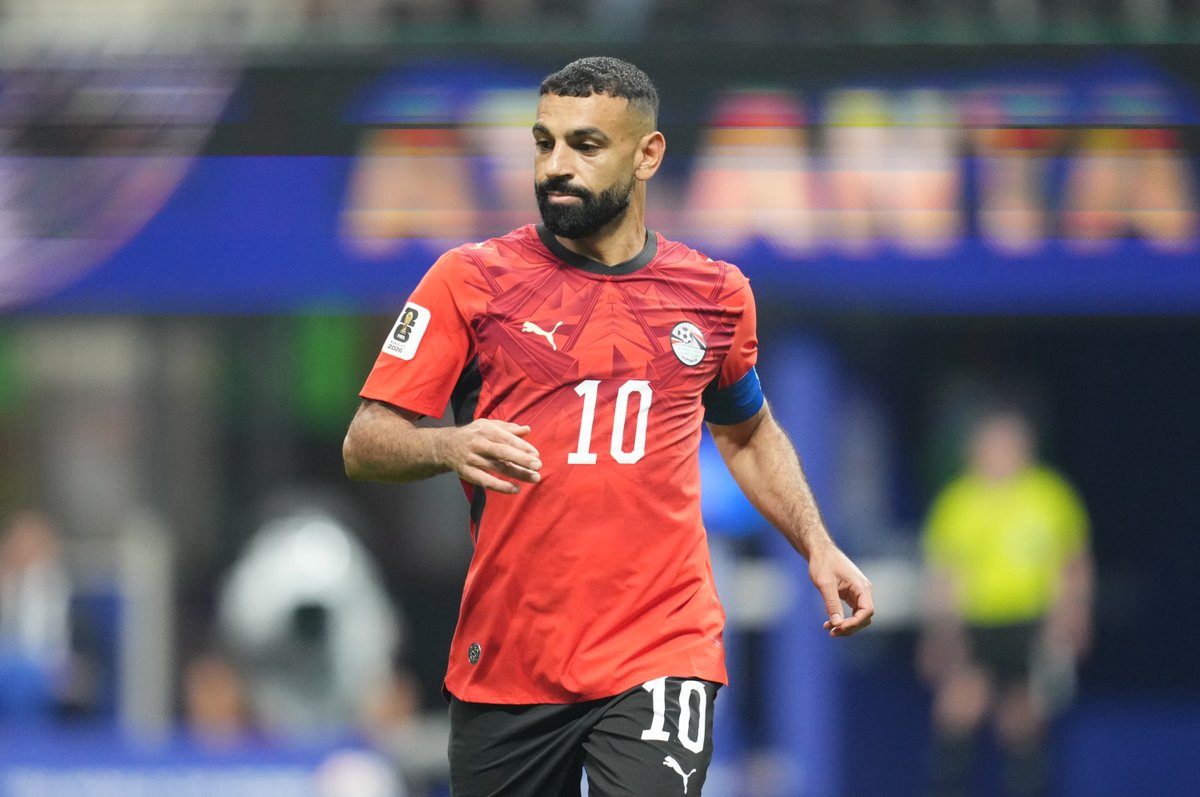
Egyptian football star Mohamed Salah officially ended his successful tenure at Liverpool and joined Turkish Super Lig club Trabzonspor on a two-year deal worth approximately €17 million annually, marking a significant move for both the player and the club in their aspirations for domestic and European success. #Салах #Трабзонспор #Ливерпуль

Легенда «Ливерпуля» Мохамед Салах продолжит карьеру в Турции

🚨ℹ️ Haissem Hassan (Real Oviedo) a refusé les offres de certains clubs et privilégie l’OM. L’international égyptien et le club marseillais sont tombés d’accord après quelques semaines de discussions. En cas de ventes de joueurs côté OM, le dossier se débloquerait. #MercatOM #HaissemHassan #OM #Mercato

OULA, ça surprend de voir Mohamed Salah 🇪🇬 avec un autre maillot que celui de Liverpool 😅 Direction Trabzonspor pour la légende égyptienne 🛬🇹🇷 https://t.co/Po9zSHegdA #MohamedSalah #Football #TransferNews

🚨🚨💣 HERE WE GOOOO !!!! MOHAMED SALAH SIGNE À TRABZONSPOR ! 🇪🇬 🤯 L'attaquant égyptien arrive libre et s'engage pour deux saisons. ✍️ ( 🗞️@FabrizioRomano ) https://t.co/VpjFnIhCer #MohamedSalah #TransferNews #Trabzonspor

🚨💣 BREAKING: Mo Salah to Trabzonspor, here we go! Club confirms agreement in place for the Egyptian striker. Salah joins on two year deal as free agent after leaving Liverpool. https://t.co/JhILAobRvE #MoSalah #Trabzonspor #TransferNews #EG #TR #GB

A Generation That Forgot the Shape of the Square On memory left to die alone By Adham Hasanin Egyptian journalist and political writer, based in the Netherlands In a house near mine, there is a boy of thirteen. Born in 2013 just a few months younger than the July coup itself, younger than the new republic under whose shadow we now live. I asked him once, with no preamble, no test, out of nothing more than passing curiosity: do you know what January was? He answered simply, without hesitation, without any sense that he was missing something: "An old revolution, against Mubarak, right?" Not entirely wrong. But it is everything he knows. The name Tahrir Square means nothing specific to him. The sound of the crowd chanting has no echo in his mind. He does not know that his own family whom he sees every day saying "thank God for stability," who warn him against "chaos" whenever a political headline crosses the screen once, at a moment two years before he was born, went down into the street, betting their entire lives on the possibility that something might change. This article is not about politics. It is about memory, and about who decides what gets told and what is left to die in silence. I. Who Erases the Picture? The first question that comes to mind is the easiest and most deceptive one: who erases this memory? And where do we begin holding them accountable? But the truth is too complex to reduce to a single actor. No one actually erases memory, in the literal sense of the act. There is no ministry called the "Ministry of Forgetting," no presidential decree ordering January struck from the collective consciousness. What happens is simpler than that, and more dangerous at once: the subject is simply never told. School says nothing. The textbook leaps from one period to another without pausing on January for more than two faded lines, composed with deliberate neutrality, devoid of any detail that might make the event feel alive to its young reader. Television no longer has any reason to return to it; the programmes that once hosted witnesses and activists stopped years ago, replaced by an official discourse that mentions January only in passing, as an unfortunate prelude to the "stability" that supposedly followed. And the home the most dangerous link of all has become afraid of the subject. Speech now carries a price, and many families, whether consciously or by sheer survival instinct, have decided that silence is safer than the story. The father who marched fears passing on to his son a curiosity that might one day lead him into trouble the family cannot afford. The mother who lost a friend in the events prefers not to reopen the wound before a child who does not yet grasp the weight of loss. And so, generation after generation, the circle of those who know shrinks, and the circle of those who do not even ask because they do not know there is anything worth asking widens. No one decided to erase the memory through an explicit decision. The memory was simply left to die alone, with no one tending it. And it is precisely this decentralised absence of responsibility that makes this kind of erasure more dangerous than any direct official ban: there is no single decision to challenge, no single body to hold accountable. Responsibility is distributed across thousands of small decisions made by thousands of individuals, each within their own context, each seeming reasonable when viewed in isolation. II. Why This Is More Dangerous Than Direct Repression An objection might be raised: is direct repression arrest, imprisonment, publishing bans not far more lethal than mere gradual forgetting? The answer is complex, and deserves calm unpacking. Direct repression can be seen. It can be documented, and the victim can know they are a victim, can tell their story, and their pain can become a testimony added to the collective memory, even if it never reaches justice. The political prisoner knows he is a political prisoner. The journalist banned from writing knows he is banned, and can tell the world he is banned. Direct repression, for all its cruelty, leaves a trace that can be followed. But a generation that has forgotten something happened at all does not even have a starting point from which to ask. This thirteen-year-old boy will never ask "why were we repressed?" because he does not know there is anything deserving that question in the first place. He feels no absence, because he does not know there is anything absent. He simply lives in a version of reality stripped of an entire chapter of his country’s history, and never for a moment suspects that this void is a void at all. Here lies the essence of the danger: direct repression creates victims who know they are victims. Erasure of memory, when it succeeds, creates a generation that does not even know it has been deprived of anything. And deprivation that is not felt cannot be resisted, because resistance always begins with an awareness of loss. The regime that came after 2013 does not need to convince the new generation that January was a mistake. That would be an arduous, costly task, requiring sustained propaganda and continuous effort to persuade each individual one by one. It is far easier, and strategically far more efficient, simply to ensure they never know it was anything at all. The void requires no defence; it requires only silence, and silence is free and always available. III. The Four Mechanisms of Erasure Four complementary mechanisms can be identified working together to produce this collective void not as an organised conspiracy, but as a system of incentives that pushes each party, consciously or not, to contribute to the same process. The first mechanism: formal education. The curriculum, as currently designed, treats January as a passing footnote rather than a founding event deserving detail and analysis. The student memorises two dates the start of the revolution and its presumed end without understanding why people took to the streets, what they were demanding, or how they felt in that pivotal moment. The second mechanism: broadcast media. The channels that once hosted live discussions on January, featuring varied perspectives, have gradually disappeared, or transformed their discourse entirely. Today’s televised image either ignores the anniversary altogether, or invokes it only to frame it as a prelude to chaos that must be avoided. The third mechanism: the silence of homes. This is the most dangerous of all, precisely because it is the most human and understandable. Parents who lived through the experience protect it with silence, not out of aversion to the story, but out of fear of its price. This silence, however legitimate its motives, achieves exactly the same effect as official censorship: it blocks the transmission of knowledge from one generation to the next. The fourth mechanism: the absence of alternative spaces. Even those among the new generation who wish to know cannot easily find places to look. Archives are scattered, trustworthy websites are blocked or require effort to reach, and personal testimonies are dispersed across corners of the internet that an ordinary student at an ordinary school will never stumble upon. These four mechanisms require no central coordination to work together. Each naturally serves the others, and all converge on a single result: a growing void in the consciousness of every new generation. IV. Memory as an Act of Resistance If erasure operates without a centre, then resisting it must also be decentralised. No one waits for a government decision to restore January to the curriculum, nor for a television programme to revive the testimonies. Resistance here is necessarily individual, happening in small details, in passing conversations, in the simple decision to tell rather than to stay silent. This is exactly what I try to do, without any claim to heroism, without any grand mission. I try, whenever I can, to tell the thirteen-year-old boy and others like him details that are never written in official reports or in schoolbooks: what the voices in the square sounded like, how someone felt the first time they realised change was possible, what that moment of hope was like before everything changed. The goal is not to bring back the past; the past cannot be brought back. The goal is that this boy, when he grows older and asks again and he will ask, because the questions always return at some point finds someone to tell him the full story, not two faded lines in a schoolbook. That he knows the stability he is told is the fruit of "wisdom" has a prior history, that this history carried other possibilities, and that real people bet their lives on those possibilities. V. Why This Matters Now Talking about the memory of a generation not yet aware might seem an intellectual luxury next to more urgent matters: arrests, a collapsing economy, regional wars. But the truth is that this issue is the foundation on which every other issue is built. A people who do not know they once rose up will not understand why they should ever think of rising again. A generation raised to believe "stability" is the only natural state possible will never ask itself what drove its own parents, shortly before it was born, to risk everything for an alternative that was never guaranteed. Memory is not a luxury; it is the reference point by which every generation measures its present, and through which it determines what is possible and what is not. And whoever understands this understands why erasing memory, not direct repression alone, is among the most important tools of any regime seeking to guarantee its permanence: because a people who have forgotten they were once free will not even know they are missing freedom. Memory, like the word, needs someone to tell it in order to survive. And when the tellers stop, memory does not die suddenly; it withers slowly, generation after generation, until the day comes when a boy asks an innocent question, and finds no one to answer him but two faded lines in a schoolbook.

Derrière cette posture, il y a aussi une forme de suprémacisme : "Regardez comme je suis généreux, je vous autorise à partager mes origines." Comme si ne pas descendre des Celtes constituait une humiliation et comme si descendre des Celtes était intrinsèquement plus enviable que descendre des Perses, des Berbères, des Han, des Mayas, des anciens Égyptiens ou des peuples bantous. C’est précisément en cela que notre conception est plus respectueuse de l’autre cat elle admet que chaque peuple possède une histoire, des ancêtres et une identité propres. Respecter l’autre, ce n’est pas prétendre devenir ce qu’il est, ni lui expliquer que son identité appartient à tout le monde. C’est reconnaître la différence et accepter qu’elle demeure. #Identité #Diversité #Respect