BETA nonprofit public democratic european moderated

Search

#Francophone

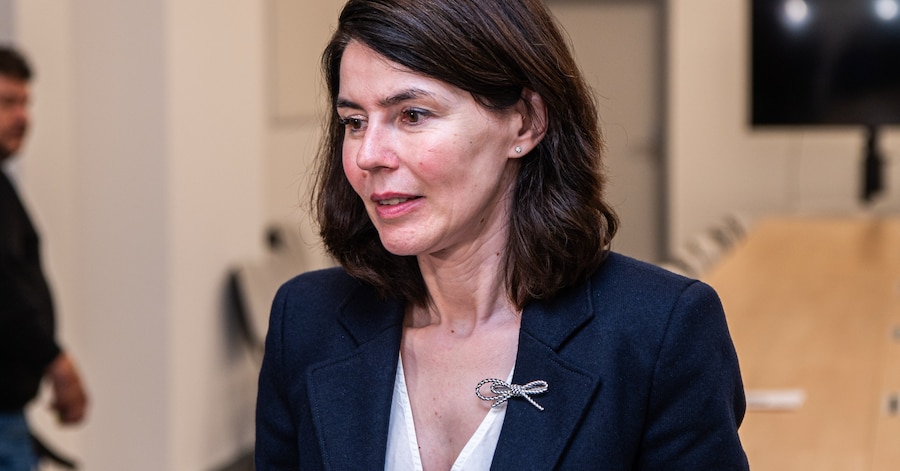
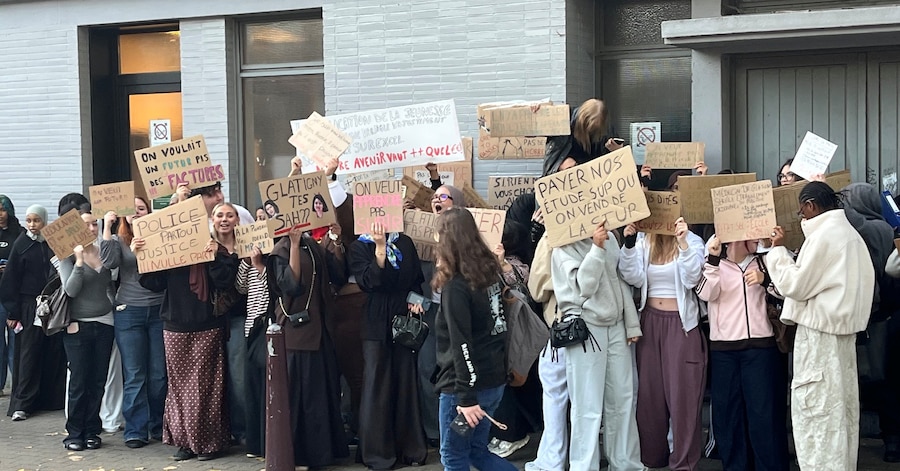
The Minister of Education, Valérie Glatigny, expressed her concern regarding the poor performance of French-speaking Belgian education in the PISA 2025 survey, pointing out that it is unacceptable to settle for being the least bad and calling for reforms to sustainably improve the education system. (translated)

Pisa 2025 : "Nous ne pouvons pas nous satisfaire d'être les 'moins mauvais'"

Nos francophones sont prêts pour demain 🇫🇷🇩🇿🇸🇳🇲🇦💪 https://t.co/K90fBBt9IM #Francophonie #Culture #Solidarité

🚨DES NOUVELLES DE @BenjDaSilva ! 🤩🗣️ Le commentateur est toujours présent chez @beinsports_FR et commente toujours LaLiga mais pour les antennes francophones de beIN MENA. https://t.co/6pyZ2Tr4dt #LaLiga #beINsports #commentateur

The massacre continues in Gaza and Lebanon. Congo, the largest French-speaking country in the world, is the victim of a dreadful epidemic. Our cousins in Quebec are threatened by Trump. And what is France doing? Nothing! (translated)

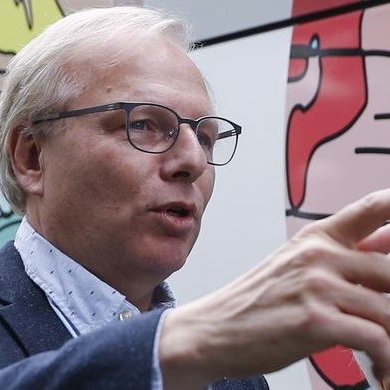
Aujourd’hui, je serai en point de presse à 13 h pour présenter l’équipe économique du Parti Québécois. Une équipe expérimentée et compétente, prête à transformer notre modèle économique et à gérer avec intelligence et calme la situation tarifaire que nous connaissons. Ce sera également l’occasion de réagir aux récentes négociations et aux révélations journalistiques du New York Times, qui révèlent que, contrairement à ce que nous a affirmé Christine Fréchette au cours des derniers jours, les États-Unis ne faisaient pas du retrait de l’étiquetage en français un point d'achoppement lors des négociations. Par contre, et beaucoup plus significatif, on apprend que selon des sources de premier niveau, les États-Unis avaient exigé un recul de la protection du contenu culturel canadien, incluant les contenus francophones, et que le Canada avait consenti à ce recul dans la version finale de l’entente. Deux révélations journalistiques importantes. À tout à l’heure ! #Économie #PartiQuébécois #Culture

BFMTV 2w

Canada accuses the United States of threatening the Francophone culture of Quebec in the context of trade negotiations, a claim that Donald Trump denies, stating that he loves French Canadians, while Canadian Prime Minister Mark Carney refuses to yield to American demands regarding cultural subsidies and Francophone media. (translated)

Le français au cœur de la brouille commerciale entre Ottawa et Washington? Le Canada accuse son voisin de vouloir remettre en cause la culture francophone du Québec, Trump dément et assure "adorer les Canadiens français"

The report on Trump's "negotiations" with Canada proves the USA's de facto annexation desire and their special hostility towards our French-speaking cousins in Quebec. Let us prepare to support them against their rude and violent neighbor. (translated)

Kultur 3w

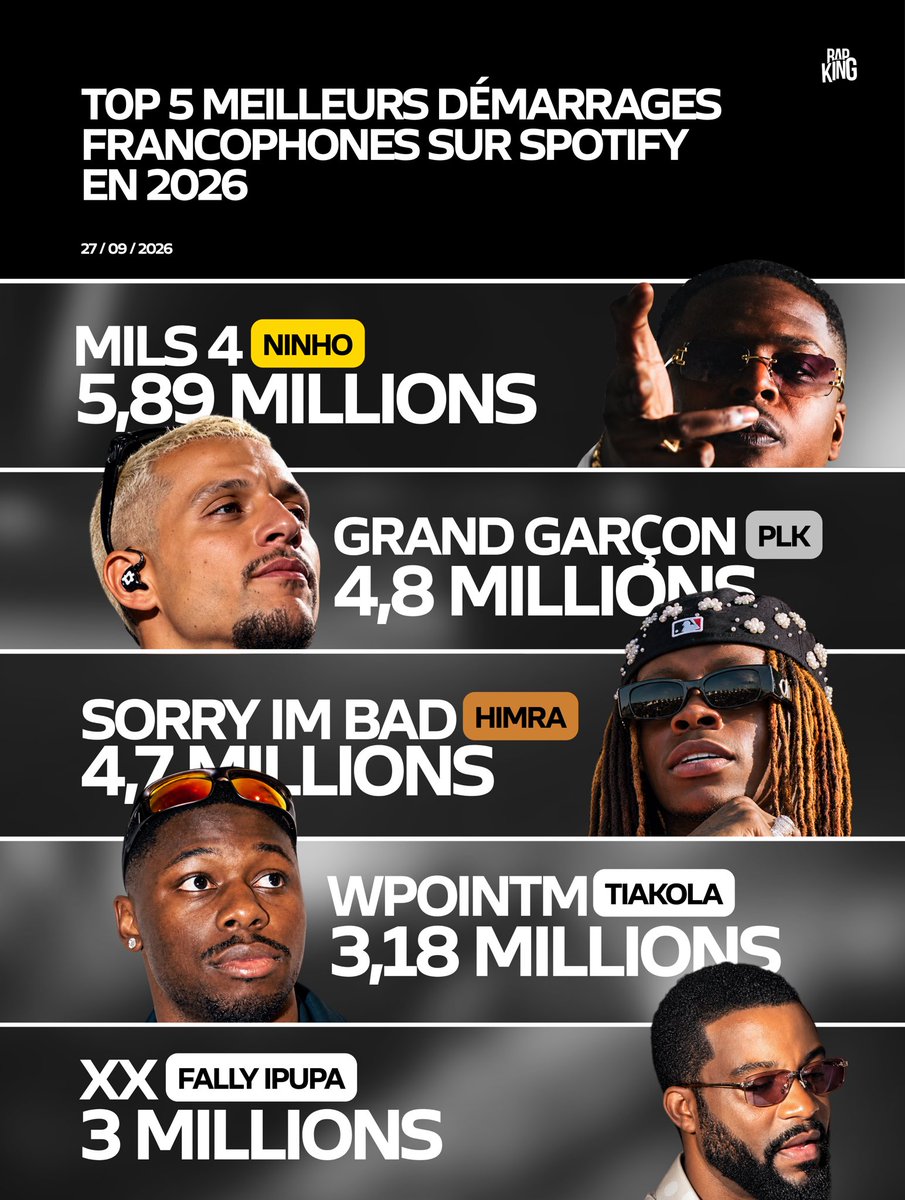
🚨 HISTORIQUE Le morceau « ALORS ON DANSE » de STROMAE devient le deuxième morceau francophone de l’histoire à dépasser le MILLIARD de streams sur SPOTIFY !! Alors on danse 🕺 https://t.co/52XrOtaDIy #Stromae #AlorsOnDanse #Spotify

Geneviève Pettersen sera candidate caquiste ! On la présente comme une candidate de prestige ! Chose certaine, elle a des idées, et il n’est pas inutile d’y revenir. On parle bien de la Geneviève Pettersen qui, le 26 juin 2020, au lendemain de la Fête nationale, dans son texte du Journal de Montréal Repenser l’indépendance, affirmait, en parlant de la société québécoise, que : « Lentement, l’opprimé est devenu l’oppresseur, le colonisé est devenu le colonisateur. On fait la promotion d’une unicité blanche et francophone et on balaie du revers de la main tout ce qui ne correspond pas à cette version fantasmée d’un Québec libre. Mais libre de quoi ? ». Considère-t-elle que le gouvernement caquiste, qui était au pouvoir, en 2020, faisait la promotion de « l’unicité blanche et francophone » ? Dans le même texte, elle ajoutait « Nous ne sommes pas en train de perdre notre identité à force de plier les genoux. Mais nous glissons lentement vers une « dictature » identitaire qui n’amènera rien de bon. ». Considère-t-elle que la CAQ avait contribué à la mise en place d’une dictature identitaire? Et qu’en pense-t-elle 6 ans plus tard? Est-ce que la loi 21 relevait selon elle de la dictature identitaire? Et que pense Christine Fréchette des propos de cette candidate ? Considère-t-elle que le Québec bascule vers une « dictature identitaire de l’unicité blanche » ? Quelques semaines plus tôt, le 5 juin 2020, dans son texte Sommes-nous racistes? Elle affirmait qu’il y avait du racisme systémique au Québec, et que le Québec vivait sous le signe du privilège blanc. Est-ce que Geneviève Pettersen le pense encore? Et doit-on comprendre que Christine Fréchette est favorable à la reconnaissance des concepts de « racisme systémique » et de « privilège blanc » ? Est-ce que les citoyens de sa circonscription, en Mauricie, profitent du privilège blanc? Chose certaine, le 1er avril 2022, dans sa chronique du Journal de Montréal, toujours, elle se montrait favorable à l’exclusion par principe des hommes blancs pour un appel de candidature pour un poste à l’Université Laval. « Plusieurs ont été choqués de voir cet appel de candidatures pour une chaire de recherche en biologie à l’Université Laval. On y privilégie les candidatures des femmes, des minorités visibles, des Autochtones et des personnes en situation de handicap. Si vous êtes un homme blanc, ne postulez pas. C’est écrit. Et si on réfléchissait au lieu de réagir ? » Elle ajoutait : « C’est certain que c’est pas facile de partager le crachoir qu’on tient tout seul depuis 2000 ans avec d’autres. Mais si le boy’s club avait fait de la place aux minorités, on n’aurait pas besoin de quotas, de règles de parité et de discrimination positive pour en arriver à une meilleure représentation de la société dans nos institutions ». Considère-t-elle encore qu’il est légitime d’exclure l’homme blanc de certains postes par principe, au nom de la diversité? Qu’en pense Christine Fréchette? Geneviève Pettersen s’est aussi exprimée sur le terrorisme islamiste, au moment de l’attentat contre Samuel Paty. Dans son texte Un terroriste près de chez vous, le 30 octobre, après l’attentat contre Samuel Paty, elle écrivait : « Ceux qui pensent que Justin Trudeau a manqué de courage en ne voulant pas faire d’amalgames trop rapides entre l’islam et cette attaque passent à côté du problème. Ce n’est vraiment pas le temps de jeter de l’huile sur le feu. Demandons-nous plutôt pourquoi ces horreurs arrivent. (…) Les jeunes qui embrassent l’islam radical sont souvent issus de milieux pauvres où les perspectives d’avenir sont sombres. Prenons le cas de la France, où les tensions raciales et la montée de la droite créent un terreau parfait pour qu’une partie de la population ne se sente pas bienvenue. Ajoutez à cela une pandémie, un taux de chômage élevé et un passé colonialiste... et vous aurez la recette parfaite pour que ça explose. Je ne cherche pas à justifier le terrorisme. Mais il faut s’attarder à sa genèse si on veut comprendre pourquoi un humain en vient à en attaquer un autre avec un hachoir en scandant Allah akbar. » Considère-t-elle encore que la montée de la droite explique un attentat comme celui ayant entrainé la décapitation de Samuel Paty? Je serais curieux de savoir comment les grandes figures de la CAQ accueille une candidate avec de telles déclarations? #Québec #Politique #Diversité

Kultur 3w

🗣️ VICTOR WEMBANYAMA a récemment révélé son album de rap français préféré : « Si je devais garder qu’un seul album de rap francophone ? Batterie Faible de Damso. J’hésitais avec Ouest Side de Booba.. Pour moi c’était un prime inoubliable ! C’était mon rappeur préféré à l’époque. » #VictorWembanyama #RapFrançais #Damso

This success also reminds us that culture gains its strength when shared. In the French-speaking world, let’s circulate our films, books, and music more, to open new imaginations and allow our creators to meet new audiences. (translated)

L
Le Soir 4w

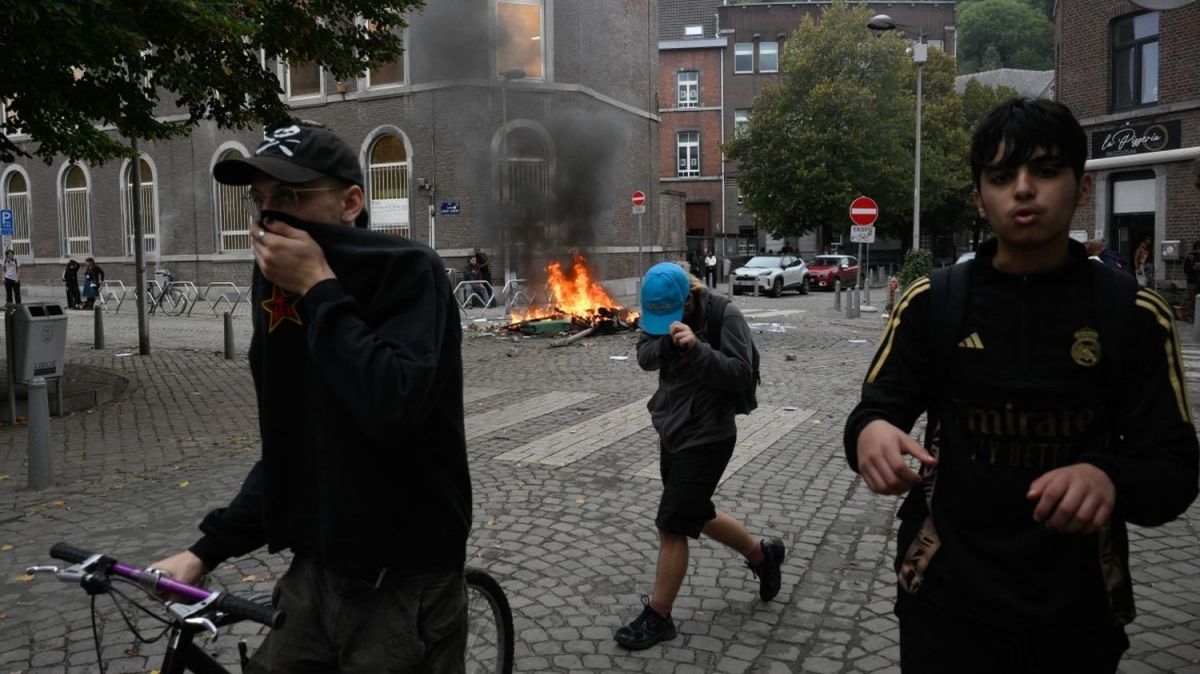
The French-speaking Belgian press is looking into the fire ravaging the Fagnes and questioning the effectiveness of political responses to the climate crisis, highlighting the urgency of reforms to improve disaster preparedness and prevention. (translated)

« Gouverner, c’est anticiper » : la presse belge s’interroge sur la réponse politique face à l’incendie dans les Fagnes

The presidents of the francophone parties of Belgium express their emotion at the fire devastating the Fagne plateau, calling for climate action and denouncing political inaction, while thanking the rescue teams for their efforts. (translated)

Les partis francophones entre émotion, appels à l'action et demandes de sanctions avec l'incendie dans les Fagnes : "Inaction politique"

A Crown Instead of the Barracks: An Idea From Outside the Box Could Egypt’s exiled opposition use constitutional monarchy to dismantle the legitimacy of the 1952 coup? By Adham Hasanin Egyptian journalist and political writer, based in the Netherlands To understand what follows, a reader unfamiliar with Egypt needs one basic fact: since 1952, Egypt has never been governed by anyone who did not first wear a military uniform. Gamal Abdel Nasser, Anwar Sadat, Hosni Mubarak, and today Abdel Fattah el-Sisi four men, four eras, one common origin. All rose through the armed forces. All inherited a state built by a coup that year, when a group of officers calling themselves the "Free Officers" overthrew King Farouk I and, within a year, abolished the monarchy altogether and declared a republic. For seventy-three years, the underlying equation has not changed: the army rules, power passes from one officer to the next, and legitimacy is drawn from the barrel of a gun rather than the ballot box. Every conceivable form of opposition has been tried legal parties and banned ones, Islamist movements, liberal and leftist coalitions, the 2011 popular uprising, and the 2013 elections whose result was overturned by force within a year. All of them hit the same wall: a military institution that reproduces itself under different names, while the core of the system remains untouched. So what if the problem, all along, has not simply been who rules, but the constitutional framework that makes military rule possible in the first place? And what if the answer lies not in swapping one president for another, but in dismantling the underlying equation itself, through a framework Egyptian opposition movements have never seriously tried: a purely ceremonial constitutional monarchy, on the model of Belgium, the Netherlands, or Spain where the head of state becomes a symbol above the political fray, while the army is permanently expelled from politics and returned to its barracks. This is not a call to revive a particular family, nor nostalgia for a golden age that never quite existed. It is a proposal for a political and strategic tool that has not yet been used in the intellectual arsenal of Egypt’s opposition in exile a tool that deserves serious discussion, regardless of whether it is ever literally realised or simply serves to expand the boundaries of what is politically thinkable. I. Why 1952, Not 2013 or 2011, Is the Root The strategic error made by most Egyptian opposition movements from the Muslim Brotherhood to the April 6 Youth Movement to the various civil opposition parties has been treating each political crisis as an isolated case: Mubarak was corrupt and had to be toppled; Sisi staged a coup that must be condemned; the interim military council was a transitional phase to be endured. This piecemeal approach treats the symptoms while leaving the original illness untouched. That original illness is the very structure of legitimacy established by the coup of 23 July 1952. The Egyptian republican system, from Nasser to today, has never built its legitimacy on a genuine democratic social contract. Instead, it has rested on a fixed trinity: the rhetoric of "revolution against feudalism and colonialism," charismatic individual leadership, and military protection of the regime framed as the guarantor of stability. This trinity has repeated itself from Nasser to Sadat to Mubarak to Sisi, with only cosmetic variations. Each new president was never a break from the system he was its continuation. When the opposition says "let us return to the constitutional framework that preceded the coup," it is not criticising a particular policy. It is declaring that the legal foundation of everything that came after 1952 was illegitimate from the start. Here lies the rhetorical power of "returning to the pre-1952 order": it does not merely demand swapping one ruler for another. It withdraws historical legitimacy from the entire republican military system including today’s regime, which draws its own declared legitimacy from that same "1952 legacy." II. Why a "Ceremonial Crown," Not "the Return of a Ruling Family" Here is the most important distinction anyone advocating this idea seriously must grasp: the project does not rest on restoring any particular individual from the Muhammad Ali dynasty, nor on nostalgia for King Farouk or his ancestors. The real power of the idea lies in the constitutional form, not in the person who happens to sit on the throne. Three successful European democracies illustrate the model clearly. Belgium, where King Philippe is a purely constitutional symbol with no real executive power, while the state is run through an elected parliament and a complex coalition government reflecting the country’s linguistic and political diversity. The Netherlands, where King Willem-Alexander formally opens the parliamentary year and signs laws, but where actual decision-making rests with the prime minister and the elected parliament. And Spain, where the king represents symbolic continuity of the state above party politics, while the military and security services answer entirely to civilian authority a transition achieved after the death of the dictator Francisco Franco in 1975, when King Juan Carlos I voluntarily relinquished the extensive executive powers he had inherited and backed free elections, most dramatically in February 1981, when he personally ordered the armed forces to remain loyal to the constitution during an attempted military coup, causing it to collapse within hours. The common thread across these three models is not "the presence of an ancient royal family." It is the principle of separating symbol from power. The monarch in these countries does not rule; he represents. He issues no political decisions; he provides the continuity and symbolic stability that allows party political competition to revolve beneath him, without every transfer of power becoming an existential crisis of legitimacy. This is precisely what Egypt’s military republican system lacks: a neutral mechanism for guaranteeing state continuity that does not depend on the person of the ruler or his security apparatus. When Egypt’s military-republican president is absent, it is always the army that fills the vacuum, because it is the only institution built to be the "guarantor of stability." Under a ceremonial monarchical model, by contrast, it is the king not the army who represents that symbolic guarantee, genuinely opening the door to removing the military institution from the political equation altogether. III. Egypt’s Standing Under the Monarchy: An Honest Reckoning, Not Blind Nostalgia For a Western reader with little prior knowledge of Egypt’s monarchical period (1922–1952), it helps to know this: Egypt was nominally independent under its own king from 1922, but Britain retained enormous informal control over the country’s foreign policy, military bases, and the Suez Canal throughout the period a reality that shaped everything that follows. Any honest invocation of "Egypt’s standing under the monarchy" must avoid the trap of mythologised nostalgia that many advocates of this idea fall into. Egypt in that era was no lost paradise, and any honest article must say so plainly. The Egyptian pound, for instance, often invoked as a symbol of "national currency strength" in that period, was not strong because of independent Egyptian monetary policy. It was pegged to the British pound sterling as part of Egypt’s complete colonial financial dependency until 1947, with Egypt exercising no independent oversight of its own currency whatsoever. The pound’s strength, in other words, was not a sovereign Egyptian achievement it was a reflection of British imperial power ruling Egypt from behind the throne. But this does not mean Egypt lacked a genuine regional standing worth studying. Cairo, in the 1930s and 1940s, was the undisputed cultural capital of the entire Arab world: the Egyptian film industry produced more than half of all Arabic-language cinema; its theatre scene, led by figures like Youssef Wahbi and Naguib al-Rihani, and its music, with Umm Kulthum and Mohammed Abdel Wahab, set the standard across the region; Cairo University was the first modern university in the Arab world; and the Egyptian press was the reference point for Arab public opinion from the Atlantic to the Gulf. Cairo was, quite simply, to the Arab world what Paris was to Francophone Europe: an unrivalled centre of cultural and intellectual gravity. This standing was not necessarily a product of monarchy itself, so much as a product of a relative space of political and press pluralism that allowed Egyptian civil society to flourish, despite all the flaws of the political system and the interference of both palace and occupier. The lesson here is not "bring back the king and the standing will return." It is: when even a limited margin of civic freedom exists, Egypt flourishes culturally and intellectually almost by its own nature. And that margin is precisely what has been entirely absent across the past seven decades of unchallenged military rule. IV. What Reform Would Actually Require Not Repeating the Old Mistakes Any serious advocacy of this model must include, even briefly, a clear vision for avoiding the flaws of the old monarchical system itself otherwise the proposal collapses into simply replacing one form of authoritarianism with another wearing a different crown. First, the armed forces would need to be placed fully under a civilian ministry of defence, with its budget subject to transparent parliamentary oversight the exact opposite of its current status as a state-within-a-state, and equally opposed to its role under the monarchy, when it often served as an instrument of British influence. Second, a judiciary fully independent of both palace and government alike, unlike the old model, which saw direct royal interference in political life as when King Fuad I dismissed the elected government of Prime Minister Saad Zaghloul’s successor, Mustafa al-Nahhas, in 1928, in one of the clearest "constitutional coups" in modern Egyptian history. Third, a parliament that genuinely represents the people rather than landowners and the aristocracy, as was the case before 1952, when membership in the Senate was effectively conditional on the ability to pay land taxes meaning political representation was, by law, restricted to the wealthy. Fourth, genuine economic sovereignty, with a truly independent national currency rather than one pegged to a foreign power’s currency, unlike the historical dependency of the Egyptian pound on sterling. These four principles are enough to clarify that the project on offer is not a literal "return to the past," but a borrowing of the constitutional form (symbolic monarchy) combined with an explicit rejection of its old substance (colonial dependency, palace interference, parliamentary feudalism). V. The Role of Egyptian Movements in Exile: Between Goal and Instrument This raises the most practical question of all: how might Egypt’s opposition abroad actually adopt this idea, and in what capacity? The honest answer is that the power of this proposal does not necessarily lie in its literal fulfilment, but in its dual strategic function. On one hand, it can be advanced as a genuine political goal adopted by broad coalitions of Egyptian movements coalitions that might include Islamists, liberals, leftists, and traditional monarchists, united around a single shared premise: rejecting the legitimacy of the 1952 order and everything that followed from it, even if they later disagree over the precise final shape of the state. On the other hand and this matters more in practice the idea can be deployed as a rhetorical instrument of pressure to widen a Egyptian political debate currently trapped between two false choices: "continued military rule" or "no alternative, chaos awaits." When the opposition puts forward a clearly defined third model a European-style constitutional monarchy it breaks this false binary and opens new intellectual space in Egyptian public discourse, even if the project is never realised in its literal form. This kind of "leverage idea" is common in the history of political movements worldwide: it is not necessarily proposed to be fulfilled immediately in full, but to redraw the boundaries of the politically possible, and to force the existing regime to defend its legitimacy rather than simply assume it. Conclusion: An Invitation to Debate, Not a Ready-Made Prescription This article does not claim that restoring a monarchical form would magically resolve Egypt’s chronic crisis of legitimacy, nor does it ignore the immense difficulties facing any transformative project under a military institution as economically and securitywise entrenched as Egypt’s is today. But it raises a question that deserves serious debate among Egypt’s opposition in exile, rather than automatic dismissal simply for being unfamiliar: Has the Egyptian opposition exhausted every available tool for dismantling the legitimacy of 1952, or has it remained trapped in the same old binary swapping one ruler for another while the framework that makes military rule possible remains untouched? The idea is on the table now, not as a finished solution, but as an overdue invitation to think outside the box.

Leo 🦉 Aug 7

Mes prédictions pour des potentiels trios francophones en 2027 (au cas où il y aurait de la trio) 🇫🇷🔥 Je pense vraiment qu'il y a des trios là-dedans qui peuvent littéralement être des top trios EU 😈 Donnez-moi en commentaire des compositions qui seraient insane pour vous 👇 https://t.co/t4IbBWC9n2 #Trio #Musique #2027

Être ivoirien ne nous a jamais arrêté! Aujourd’hui, la langue même n’est plus une barrière! Aspire & inspire! Lead the new generation 🌍🚀 First Urban Francophone Headline in Lagos! At the legendary Fela Kuti new Africa shrine! Let’s make history! November 8th 🌎🚀 https://t.co/mO4MkWMFYA #CôteDIvoire #Francophonie #Inspiration

Kilzyou Jul 30

Je pense qu’il était temps de sortir l’artillerie lourde C’est ma première avec des joueurs non francophones en plus d’être des amis, ça va être fun ! #ArtillerieLourde #Amis #Fun

NOTRE PREMIER DUO FRANCOPHONE QUALIFIÉ POUR LA GRANDE FINALE FNCS DU MAJOR 2 ! 🏆 @PodaSaiFN 🇫🇷 & @SeyytoFN 🇫🇷 https://t.co/0THqWd8FsI #FNCS #Esports #Fortnite

La Libre.be Jul 11

Le Collège de médecine générale de Belgique francophone a élaboré un plan pour anticiper les vagues de chaleur futures en identifiant les patients à risque, en établissant des suivis téléphoniques, et en surveillant les signes de déshydratation pour améliorer la réponse médicale face à des épisodes de canicule, notamment après une surmortalité record durant l'été 2026. #Canicule #Santé #MédecineGénérale

Ce que comptent faire les médecins généralistes pour anticiper les prochaines vagues de chaleur
Leo 🦉 Jul 10

Félicitations aux 16 francophones qualifiés pour la finale de demain, en compagnie de tous les pros FR, avec 5 000 $ de cashprize à se départager ! 😇🇫🇷 La finale se déroulera à 15 h, et les informations concernant la répartition du cashprize ainsi que le déroulement de la finale seront communiquées avant le début de la compétition ! 💰 RENDEZ-VOUS DEMAIN À 14H SUR MA CHAINE TWITCH : https://t.co/1fmBfbj3e0 ! 😈 #Finale #Cashprize #Twitch