BETA nonprofit public democratic european moderated

Search

#Idéologies
SHADES 5d

🚨 Adèle Exarchopoulos prend clairement position CONTRE le Rassemblement National. 👉 Dans une interview accordée au Parisien, l’actrice affirme vouloir "tout faire pour faire barrage au RN" 🗣️ "C’est un parti dont les idéologies sont la division et la haine, et qui met en danger nos droits." #AdèleExarchopoulos #RassemblementNational #EngagementCitoyen


Kultur 5d

🚨ADÈLE EXARCHOPOULOS prend position contre le RASSEMBLEMENT NATIONAL : « Je ferai tout pour faire barrage au RN parce que c'est un parti dont les idéologies sont la division et la haine et qui met en danger nos droits. J'avoue que ça fait peur,faut pas avoir honte de le dire. » #politique #France #engagement

🚨 ALERTE ! L’actrice française Adèle Exarchopoulos prend officiellement position CONTRE l’extrême droite pour la présidentielle 2027 🇫🇷 "Je ferai tout dans ma vie pour faire barrage au RN parce que c'est un parti dont les idéologies sont la DIVISION et la HAINE et qui met en danger nos propres droits." #AdèleExarchopoulos #Élections2027 #LutteContreLExtremeDroite

La paix est une valeur suprême dans notre religion islamique comme dans notre monde humain. La paix préventive constitue le concept le plus important dans toute démarche qui vise à œuvrer en faveur de la paix. La paix préventive consiste en une vigilance précoce destinée à protéger les États et les peuples avant que les guerres n’éclatent et n’engendrent une dangereuse idéologie qui, au fil du temps, finit par devenir une culture dominante prompte à s’embraser. Au premier rang de ces dérives figurent toutes les formes et expressions de la haine, ainsi que la promotion de la théorie présentant comme inéluctables le conflit et le choc entre les civilisations. La conséquence la plus grave à cet égard est celle qui résulte de l’affrontement frontal entre les adeptes des religions, notamment lorsqu’il est alimenté par des idéologies antagonistes et des ambitions qui ne représentent en rien l’essence originelle de la religion, mais traduisent plutôt des dérives sectaires et des objectifs expansionnistes. Celles-ci finiront par découvrir, trop tard, leur grave erreur lorsqu’elles se heurteront, au terme de leur parcours, à la vérité et à la raison. À la lumière de la lecture de l’histoire de l’humanité, ces illusions, aussi dangereuses soient-elles, comptent parmi les principales causes de nombreuses guerres injustes. Elles trouvent leur origine soit dans une conviction religieuse extrémiste dont le récit, nourri de ses propres illusions, s’est transformé en une idéologie dangereuse, soit dans l’intervention de cette idéologie en soutien à des conflits politiques, alors qu’elle aurait dû y jouer le rôle d’un médiateur bienveillant au service de la paix, plutôt que d’attiser les guerres et d’exacerber les relations entre les nations et les peuples. Journée internationale de la paix #Paix #PaixPréventive #Unité

Impact 5d

🇫🇷 FLASH L’ACTRICE ADÈLE EXARCHOPOULOS PREND POSITION CONTRE LE RN : "Je ferai tout pour faire barrage au RN parce que c'est un parti dont les idéologies sont la division et la haine et qui met en danger nos droits. J'avoue que ça fait peur... Faut pas avoir honte de le dire !" (Le Parisien) #politique #France #solidarité

Les gauchistes se demandent souvent où se cachent les gens qui votent à droite et pensent ne jamais n'en côtoyer. On vous explique comment ça marche: - vous, les gauchistes, êtes absolument incapables de ne pas faire référence à la politique plus de 5 minutes dans une conversation. Nous savons tous qu'il suffit de quelques minutes de discussion pour savoir si on a à faire à un insupportable gauchiste. Les mots clés feront référence au racisme, au colonialisme, à la mysoginie, à l'homophobie, au climat, aux riches, aux inégalités.... Quand quelqu'un semble incapable de tenir une discussion de quelques minutes sans la politisier, n'importe quelle personne de droite sait instinctivement qu'elle a à faire à un zozo gauchiste - Vous parlez comme si il était évident et convenu que nous sommes 100% d'accord avec vous sur tous les sujets. Tout désaccord vous paraît inconcevable. - En cas de micro contradiction, le gauchiste lance un fort regard de réprobation et indique son malaise implicitement ou explicitement. Commence alors une suite de questions type inquisition car le gauchiste se doit de dénicher les traîtres à l'humanité. - Si la personne de droite ose contredire ouvertement un gauchiste, serait-ce même sur un détail, le gauchiste devient alors hyper agressif. Il se sent alors le droit et même le devoir de vous expliquer la vie, pourquoi votre position est honteuse et vous met au banc de l'humanité. Discuter avec des ayatollah est particulièrement désagréable. On sait qu'on ne vous fera pas changer d'avis et qu'on passera juste un mauvais moment. Sans parler du risque que vous lanciez une fatwa contre nous dans notre entreprise, groupe ou école pour "mauvaise pensée". Alors que faisons-nous? Nous vous fuyons. Si nous n'avons pas le choix, souvent, nous nous taisons. Et vous finissez par vivre dans un monde imaginaire où tout le monde pense comme vous. Ensuite, quand la droite dure finit par monter partout, vous tombez de votre chaise. Qui sont ces sauvages qui osent voter extrême-droite? D'où émergent-ils? Où sont-ils? Si vous étiez capables de tenir des discussions civilisées, vous seriez au courant depuis plusieurs années, voire décennies. #Politique #Idéologies #Discussion

I will propose to the French a referendum aimed at fighting against Islamist ideologies. Islamist fundamentalism is not only a threat to our security but also to our culture and our rights. (translated)

H

Consensus Is Not an Argument “Historians agree that Nazism was right-wing” is not an argument. It is intellectual outsourcing: replacing evidence with the number of authorities who repeat the same conclusion. Ideologies require criteria. You cannot cherry-pick political characteristics, notice that they fit your preferred category, and then pretend the classification has been demonstrated—especially when virtually every item on the list exists on both sides. Nationalism? Both. Militarism? Both. Protectionism? Both. State intervention? Both. Economic planning? Both. Collectivism? Both. Welfare policy? Both. Authoritarianism? Neither side has a monopoly. So what actually makes Nazism “right-wing”? The economic argument collapses even faster. Nazi Germany heavily directed its economy. So did the United States and Britain during the same period of war preparation and total war. If state direction proves socialism, then your criterion suddenly makes the Allies socialist too. If it doesn’t, stop using it selectively to classify Nazism. You cannot rig the test and then celebrate the result. And here is the inconvenient part: if economic policy cannot independently resolve the question, then the Nazis’ own ideological claims cannot simply be dismissed because they are inconvenient. Their party was literally called the National Socialist German Workers’ Party, and they repeatedly described their movement as socialist. No, self-description does not automatically make them socialist. Political movements can lie. But rejecting their description requires an actual criterion demonstrating why it was false. “Because historians say so” is not a criterion. It is an evasion. The deeper problem is that modern political taxonomy often works backwards: decide the label first, then curate the evidence until the label looks inevitable. That is not historical analysis. It is circular reasoning wearing an academic costume. So ask the question that actually matters: was Nazism committed to individual liberty—or to subordinating the individual to the collective, the state, and the nation? If Nazism is right-wing, prove it from coherent ideological principles

H

The Erosion of Western Civilization’s Social Fabric It is hard to fathom how much of Western civilization’s social fabric has eroded in just a single decade. No healthy society debates whether “the system” is to blame for a child murderer’s crimes and then expresses support for the monster. Such a society certainly does not celebrate the assassinations of moderate and respectable political figures, nor does it allow repeat violent offenders back onto the streets to terrorize the general public. The best explanation I have heard for this phenomenon of macrosocial insanity is *Political Ponerology* by Andrew Lobaczewski—the study of how pathological personalities infiltrate and transform social institutions. This process does not require an entire population of psychopaths. In fact, it is often only a small minority that forms the core of the pathological movement. A relatively small party or group is led by psychopaths, who are natural experts at manipulation, deception, intimidation, and ruthlessness. The ideologues are the ones who design the system. They create abstract ideologies, often criticizing reality for falling short of their arbitrary expectations. Human beings become nothing more than nodes in a network, to be organized and managed by supposedly more intelligent minds. Then there are the spellbinders, who serve as the movement’s salespeople. They package tyranny as safety, envy as justice, and coercion as compassion. Their primary tool of persuasion is emotional alignment rather than truth or logic. These three types rely on three other groups to normalize their totalitarian system: the spellbound, adapted conformists, and bystanders. The spellbound are true believers who experience participation in the movement as a kind of moral crusade. Adapted conformists support the system because of the security, status, or comfort it provides—or because they fear ostracism. Bystanders are generally aloof and avoid conflict at all costs, believing that ignorance and cowardice will spare them.

The Netherlands is about to revoke the license of a far-right television channel because racist ideologies are not opinions but crimes. An example that @Arcom_fr should reflect on. (translated)

H

The Erosion of Western Civilization’s Social Fabric It is hard to fathom how much of Western civilization’s social fabric has eroded in just a single decade. No healthy society debates whether “the system” is to blame for a child murderer’s crimes and then expresses support for the monster. Such a society certainly does not celebrate the assassinations of moderate and respectable political figures, nor does it allow repeat violent offenders back onto the streets to terrorize the general public. The best explanation I have heard for this phenomenon of macrosocial insanity is *Political Ponerology* by Andrew Lobaczewski—the study of how pathological personalities infiltrate and transform social institutions. This process does not require an entire population of psychopaths. In fact, it is often only a small minority that forms the core of the pathological movement. A relatively small party or group is led by psychopaths, who are natural experts at manipulation, deception, intimidation, and ruthlessness. The ideologues are the ones who design the system. They create abstract ideologies, often criticizing reality for falling short of their arbitrary expectations. Human beings become nothing more than nodes in a network, to be organized and managed by supposedly more intelligent minds. Then there are the spellbinders, who serve as the movement’s salespeople. They package tyranny as safety, envy as justice, and coercion as compassion. Their primary tool of persuasion is emotional alignment rather than truth or logic. These three types rely on three other groups to normalize their totalitarian system: the spellbound, adapted conformists, and bystanders. The spellbound are true believers who experience participation in the movement as a kind of moral crusade. Adapted conformists support the system because of the security, status, or comfort it provides—or because they fear ostracism. Bystanders are generally aloof and avoid conflict at all costs, believing that ignorance and cowardice will spare them.

H

“Consensus Is Not an Argument “Historians agree that Nazism was right-wing” is not an argument. It is intellectual outsourcing: replacing evidence with the number of authorities who repeat the same conclusion. Ideologies require criteria. You cannot cherry-pick political characteristics, notice that they fit your preferred category, and then pretend the classification has been demonstrated—especially when virtually every item on the list exists on both sides. Nationalism? Both. Militarism? Both. Protectionism? Both. State intervention? Both. Economic planning? Both. Collectivism? Both. Welfare policy? Both. Authoritarianism? Neither side has a monopoly. So what actually makes Nazism “right-wing”? The economic argument collapses even faster. Nazi Germany heavily directed its economy. So did the United States and Britain during the same period of war preparation and total war. If state direction proves socialism, then your criterion suddenly makes the Allies socialist too. If it doesn’t, stop using it selectively to classify Nazism. You cannot rig the test and then celebrate the result. And here is the inconvenient part: if economic policy cannot independently resolve the question, then the Nazis’ own ideological claims cannot simply be dismissed because they are inconvenient. Their party was literally called the National Socialist German Workers’ Party, and they repeatedly described their movement as socialist. No, self-description does not automatically make them socialist. Political movements can lie. But rejecting their description requires an actual criterion demonstrating why it was false. “Because historians say so” is not a criterion. It is an evasion. The deeper problem is that modern political taxonomy often works backwards: decide the label first, then curate the evidence until the label looks inevitable. That is not historical analysis. It is circular reasoning wearing an academic costume. So ask the question that actually matters: was Nazism committed to individual liberty—or to subordinating the individual to the collective, the state, and the nation? If Nazism is right-wing, prove it from coherent ideological principles” - ChatGPT

Paul Celan's "no" resonates strongly in a time shaken by the return of hate ideologies. Born in 1920 in Czernowitz to a German-speaking Jewish family, he lost his parents after their deportation and carried with him the fracture of writing in the language throughout his life. (translated)

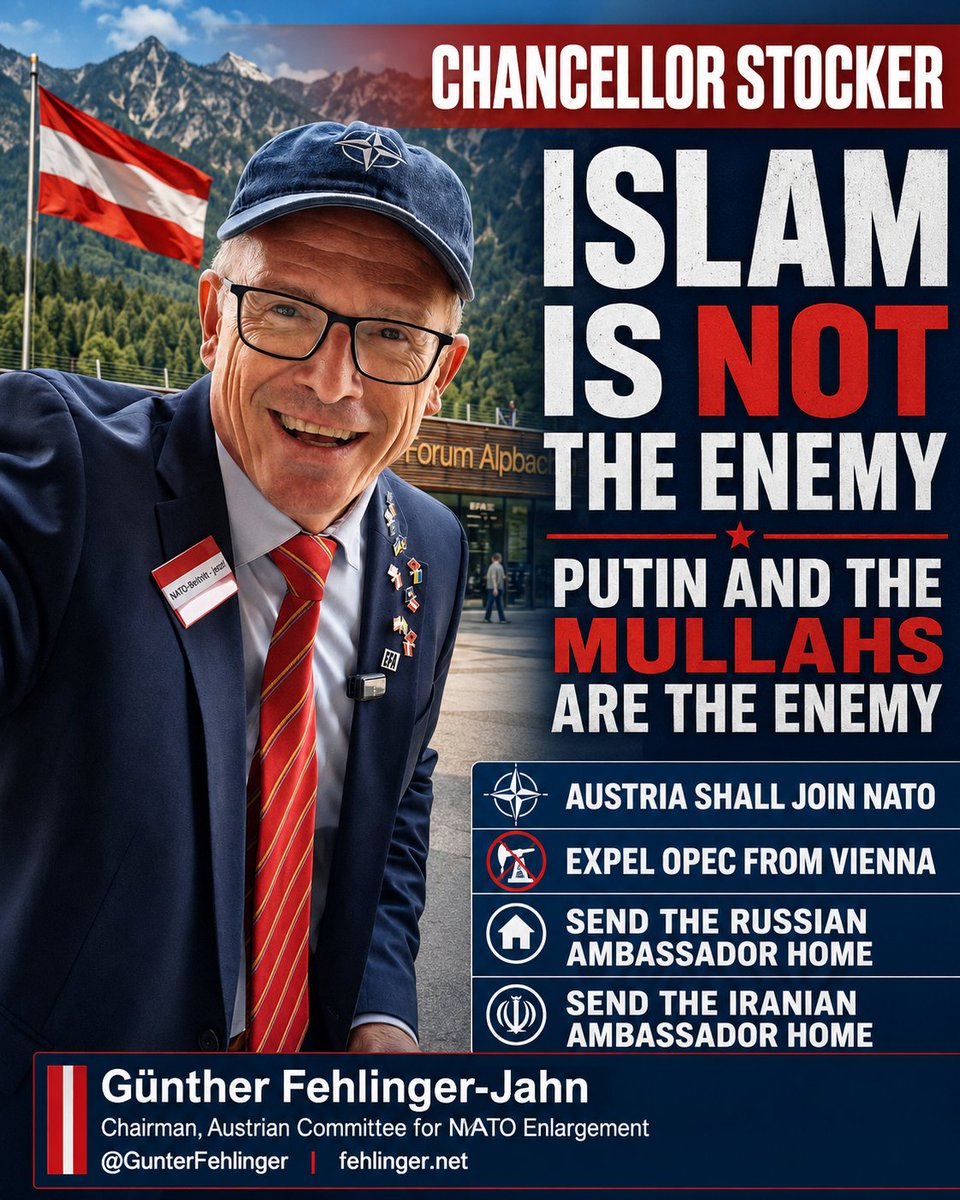
CHANCELLOR STOCKER: ISLAM IS NOT THE ENEMY. PUTIN AND THE MULLAHS ARE THE ENEMY. @_CStocker Austria must finally distinguish between millions of peaceful Muslims and the authoritarian regimes and ideologies that threaten Europe. My position is clear: 🇦🇹 Austria shall join NATO. https://t.co/a3R523mTMG #Austria #NATO #Islam #AT #RU

"Je soumettrai aux Français par référendum une grande loi de lutte contre les idéologies islamistes avec de nombreuses mesures puissantes, y compris la pénalisation du voile islamiste dans l’espace public"

Présidentielle 2027: Marine Le Pen confirme vouloir soumettre au référendum "la pénalisation du voile islamiste dans l’espace public"
www.bfmtv.com

Je découvre cette séquence ignoble. Ces attaques indignes d’Ameziane sur le physique et cette animalisation sont des méthodes dignes des pires idéologies haineuses sans aucune trace d’humour. Je déplore qu’aucun membre du « service public » de @franceinter ne soit intervenu -ils ont au contraire ricané. J’espère que la direction de @radiofrance aura une réaction digne. Merci à tous pour vos messages de soutien 🫶🏼 #Haine #Intolérance #Soutien

H

From Powerlessness to Collective Madness The world has gone crazy, but there is a pattern behind it. More people seem to be losing their grip on reality, swept up in ideological movements that demand conformity and punish dissent. This progression begins with powerlessness, continues with possession, and ends in resentment disguised as justice. The first stage is the breakdown of what can be called the power process. Human beings need to set goals, work toward them, and achieve them in order to feel whole. Once, daily life revolved around hunting, farming, building, and creating. Today, survival and progress are often managed by vast systems and institutions. As a result, many people feel alienated and powerless. They turn to movements for a sense of purpose, drawing progress not from their personal lives, but from the causes they embrace. Carl Jung described what happens next. Inside a movement, individuals can become possessed by collective identities. Those who refuse the difficult task of becoming themselves may dissolve into the group mind. This is why ideologies such as communism, nationalism, feminism, socialism, and environmentalism can exert such power: they offer ready-made identities and moral clarity. Individuals gradually stop thinking for themselves and become mouthpieces for the collective identity that has seized them. Nietzsche revealed the final stage: resentment. In *Thus Spoke Zarathustra*, he described the “tarantulas”—moral preachers who spin ideological webs in the name of justice. They claim to champion the weak, but their motivation may be envy and revenge, cloaked in noble language. Their goal is not always to uplift, but to tear down the strong. When the world seems to have gone mad, the pattern is clear: people lose the power process in their own lives, surrender themselves to ideologies, and then act out their resentment as justice. The cure is not another movement, but the difficult task of reclaiming individuality in an age of collective madness.

H

The Great Feminization, Measured Seventy-two percent of men under thirty hold a positive view of women; among women under thirty, 50% (a 22-point gap). Among women under twenty-five, the share is 35% (a 37-point gap). Where the manosphere and “toxic masculinity” dominate headlines, the data points elsewhere: young women increasingly sort men into the enemy column. The class divide is sharp. Among working-class young women, 61% view men positively; among professional-class women, 36%—a 25-point gap tied to exposure to universities, HR departments, media organizations, and NGOs. The pattern runs through institutional conditioning. Helen Andrews argued this in 2020: between 2015 and 2020 many Western institutions became majority-female, including the New York Times newsroom (2018), law schools (2016), medical schools and the college-educated workforce (2019). Affirmative-action mandates, discrimination settlements, and diversity requirements helped drive the shift. As institutions changed, so did missions: justice increasingly focused on protecting “oppressed” minorities; newsrooms shifted from reporting toward narrative enforcement; universities moved from arguing to “safe spaces.” The result is a “daycare governance model”: infants to be protected (the oppressed), caregivers to provide protection (the allies), and predators to be removed (the dissenters). Research shows the same frame in speech: FIRE’s 2026 college speech rankings found women less tolerant than men across ideologies, including less tolerance for their allies. A woman entering kindergarten in 2005 has spent twenty years inside this system—she didn’t invent it, she inherited it. The 35% figure suggests sorting into victim, ally, and predator, with no grey zones. Working-class women, less conditioned by these pipelines, still view men positively (61–36). None of this is entirely new; Gustave Le Bon described the mechanism in 1895.

H

The Psychology Behind Political Violence Political life carries an appetite for violence beneath the surface. A shooter leaves a manifesto; supporters celebrate; online strangers justify killing over insults, misgendering, and fantasies of execution. We’re told these are separate phenomena—different ideologies, grievances, causes—but they’re deeply connected. The murderer, the celebrant, and the online fantasist share one conviction: blood will build a better world. We often assume ideology comes first, violence second—radicalization infecting an otherwise ordinary person. But corrupted people may seek ideologies that rationalize what they already want to believe. Feeling comes first; philosophy follows. Nietzsche called this *ressentiment*: not ordinary anger, but enduring resentment rooted in surrendered agency and perpetual victimhood. Ressentiment is creative: it turns grievance into virtue and revenge into justice. That’s why movements can sound humanitarian while obsessing over enemies. They promise liberation but focus on who must be eliminated; they call violence self-defense while celebrating destruction. Notice the imbalance: energy goes to identifying who deserves punishment, not to explaining how their better society would work. This is the difference between genuine grievance and pathological ressentiment. Genuine grievance seeks repair; ressentiment seeks subtraction. Its “solutions” are fantasies of punishment—heads cut off, privilege liquidated, wrong pronouns punished. These aren’t coherent doctrines of stability; they’re rationalizations for resentment. Ressentiment also despises self-improvement because it requires admitting agency. Its worldview depends on locating suffering outside oneself. The deepest enemy of these movements, then, is not any specific ideology. It is agency itself.

La Libre.be Aug 24

The American ambassador to Belgium, close to Donald Trump, stirred controversy by intervening in a university dispute involving a suspended researcher from UGent after the death of a Black professor, Nathan Cofnas, who was accused of plagiarism, raising questions about American political interference in Belgian affairs and support for anti-diversity ideologies. (translated)

"L’ambassadeur intervient dans un domaine où il n’a rien à dire" : L’UGent au centre d’une guerre culturelle animée par les proches de Trump