WRLD

Search

#MUBA
ERR 2w

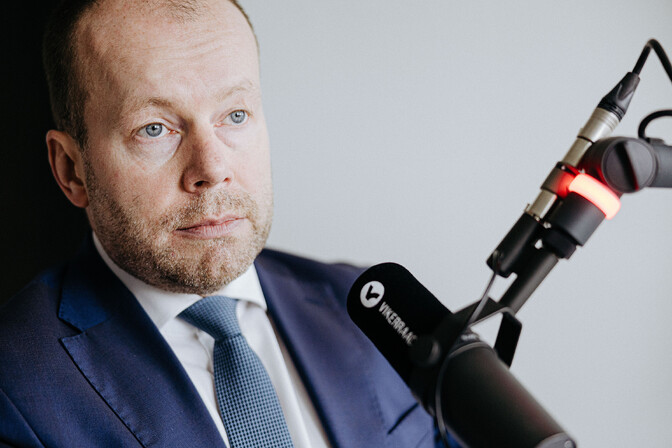
The company Mubadala, headed by the director of the Tax and Customs Board Raigo Uukkivi, has not submitted annual financial reports for two years, despite the legal requirement. #majandusaasta #aruanded #maksuamet (translated)
www.err.ee
Maksuameti juhi firmal on majandusaasta aruanded esitamata
2746
ERR 3w

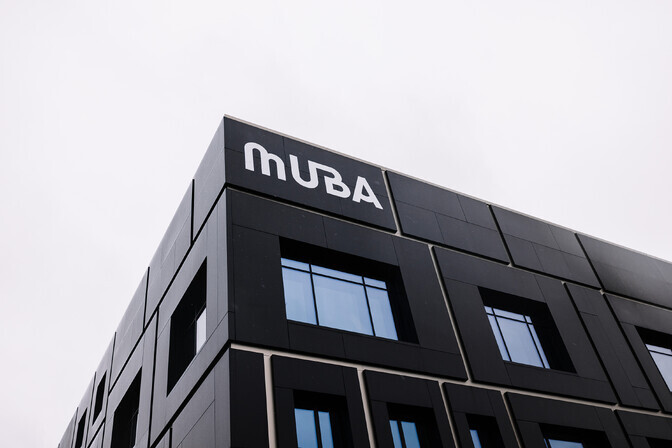
Piret Rips, the director of the Tallinn Music and Ballet School, criticizes the new funding model of the Estonian Ministry of Education, pointing out that it does not take into account the school's uniqueness and puts the provision of quality education at risk. #MUBA #haridus #rahastusmudel (translated)

www.err.ee
MUBA direktor: riigi uus rahastusmudel ei arvesta kooli eripäraga
2656
BBC 3w

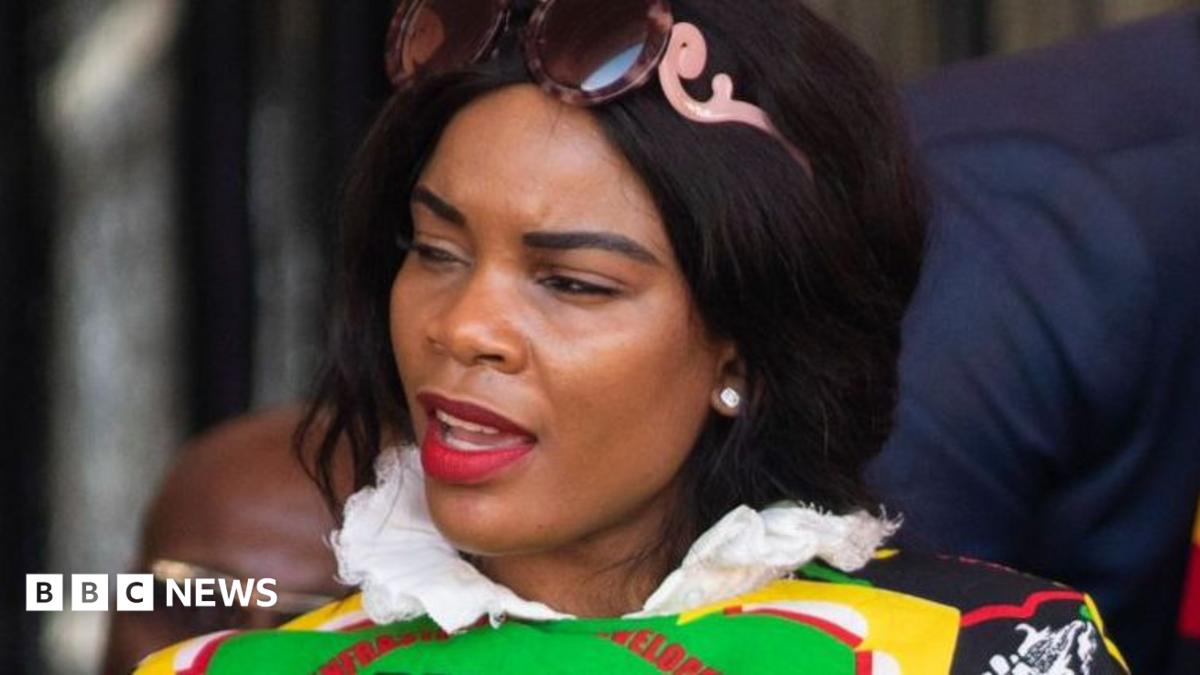
Marry Mubaiwa had been held on remand for seven years after being charged in 2019 for her then husband's attempted murder. #Zimbabwe #Justice #LegalCase

www.bbc.co.uk
Ex-wife of Zimbabwe's vice-president freed after collapse of attempted murder case
3120
Aktuálně.cz - Víte, co se právě děje 3w

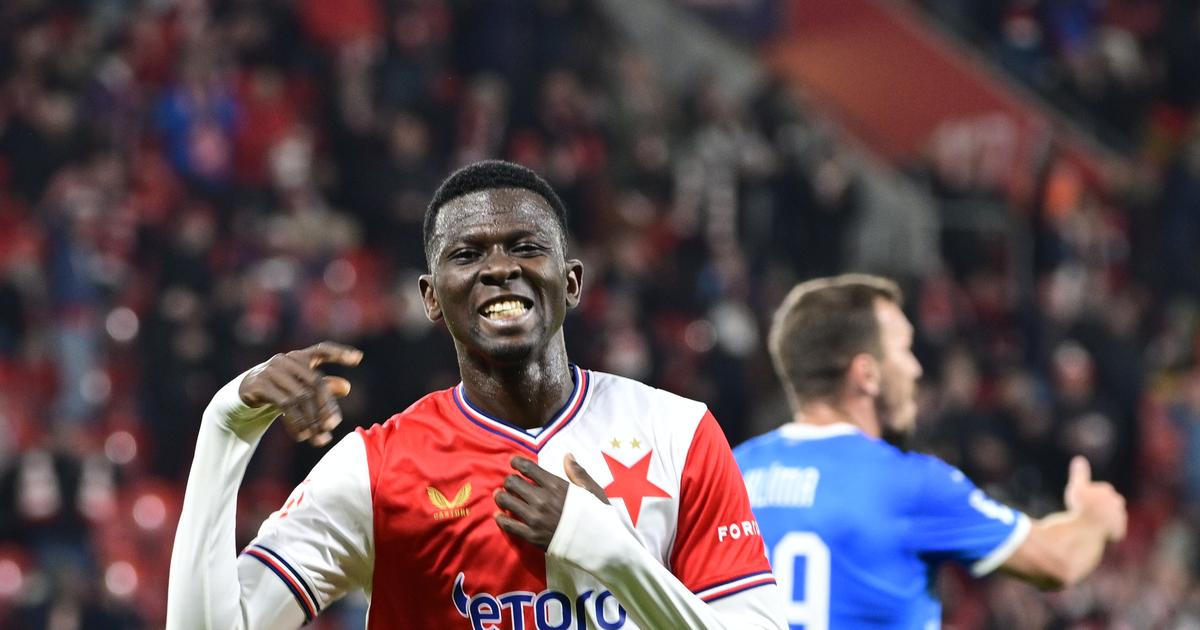
The players of Slavia Prague defeated Zbrojovka Brno 4:0 in the round of 16 of the MOL Cup, ending a series of four games without a win, with two goals scored by Mubarak Suleiman. #SlaviaPraha #ZbrojovkaBrno #MOLCup (translated)

sport.aktualne.cz
Slavia ukončila neobvyklou černou sérii. Proti Zbrojovce zářil Suleiman
2888
Irish Independent Oct 5

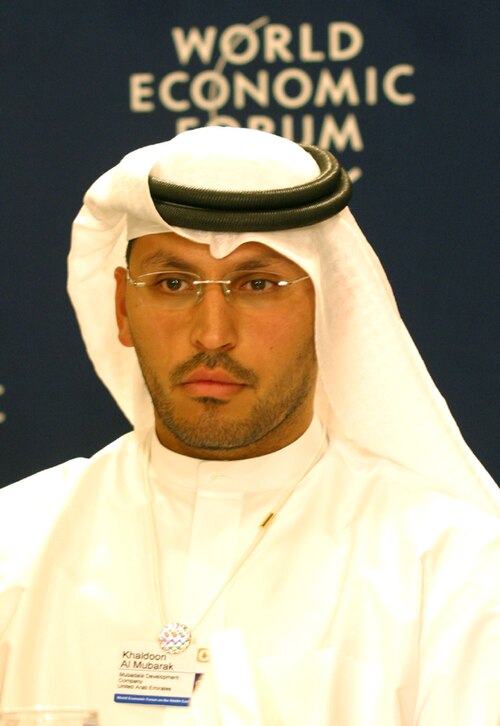
Khaldoon Al Mubarak is working to restore Manchester City's standing in football, facing significant challenges and risks to his reputation. #Cookies #Security #OnlineAccess

www.independent.ie
Khaldoon Al Mubarak — the man trying to pull Man City back from brink of football oblivion with his reputation on the line
1522
Khaldoon Al Mubarak Sep 30

„Hoewel sommigen snel hun eigen conclusies hebben getrokken en er enorm veel ruis om ons heen is, is er niets veranderd’’Ook voorzitter Khaldoon Al Mubarak stelde dit weekend in een open brief aan de fans dat de strijd nog lang niet is gestreden. #ManchesterCity #PremierLeague #FinancieelSchandaal

Staat imperium op instorten? Dit moet je weten over het gigantische schandaal rond Manchester City
www.ad.nl
1994
Khaldoon Al Mubarak Sep 29

Clubchef Khaldoon Al Mubarak schrieb daraufhin an die Fans, die Zuversicht, die Unschuld des Klubs zu beweisen, sei ungebrochen. #ManchesterCity #Finanzskandal #PremierLeague

Premier League spricht Manchester City in Finanzaffäre schuldig
www.sportschau.de
1760
Khaldoon Al Mubarak Sep 29

"Unser Selbstvertrauen und unsere Absicht, die Unschuld des Klubs zu beweisen, sind genauso groß wie zu Beginn."Auch aktuell schrieb der Vorsitzende Khaldoon Al Mubarak: "Unser Selbstvertrauen und unsere Absicht, die Unschuld des Klubs zu beweisen, sind genauso groß wie zu Beginn." #ManchesterCity #Finanzvergehen #PremierLeague

Urteil wegen Finanzvergehen: Mögliche Folgen für Manchester City
www.sportschau.de
1995
Khaldoon Al Mubarak Sep 27

‘Er zijn nog steeds velen die het momentum van onze club willen ondermijnen. Die kans zullen we hen niet geven.’Volgens de strijdvaardige voorzitter Khaldoon Al Mubarak is de club onschuldig. #ManchesterCity #PremierLeague #FinanciëleDoping

Voor het puissant rijke Manchester City dreigt na twee succesvolle decennia een zelfveroorzaakte ondergang
www.volkskrant.nl
1996
Khaldoon Al Mubarak Sep 26

„proces jest daleki od zakończenia, a przekonanie klubu o własnej niewinności jest równie silne, jak na samym początku”W sobotnim liście otwartym, skierowanym do kibiców Al Mubarak stwierdził także, że „proces jest daleki od zakończenia, a przekonanie klubu o własnej niewinności jest równie silne, jak na samym początku”. #ManchesterCity #FairPlay #PremierLeague

Czarne chmury nad Manchesterem City. Może zostać zdegradowany z Premier Leauge
www.rmf24.pl
1644
Khaldoon Al Mubarak Sep 26

Si bien algunos se han apresurado a sacar sus propias conclusiones y hay mucho ruido a nuestro alrededor, nada ha cambiado"Si bien algunos se han apresurado a sacar sus propias conclusiones y hay mucho ruido a nuestro alrededor, nada ha cambiado", escribía este sábado en la web del club Khaldoon Al Mubarak, presidente del club. #ManchesterCity #PremierLeague #Fútbol

El oscuro futuro del Manchester City: amenaza de descenso, demandas millonarias y desprecio de los rivales
www.abc.es
1762
السويدي Egyptson Sep 25

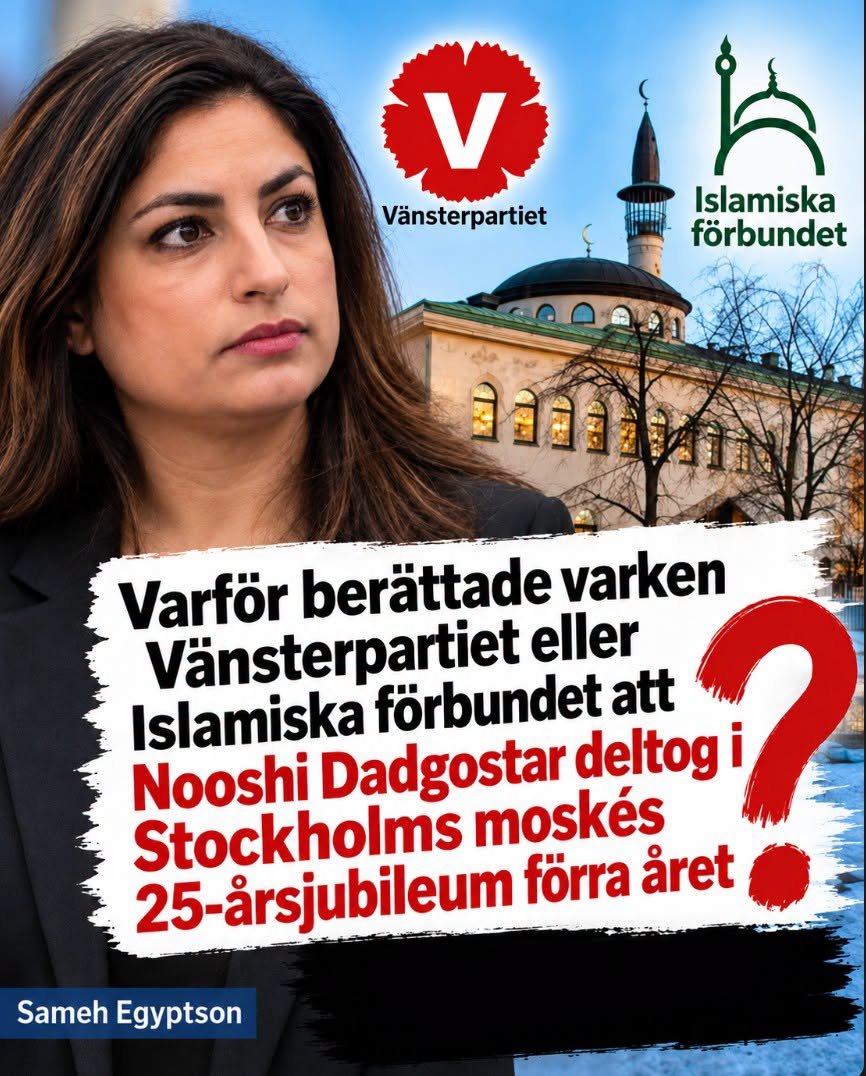
Öppet brev till Vänsterpartiet och Nooshi Dadgostar Nooshi Dadgostar tog inte varningen på allvar – och samarbetade med antidemokratiska krafter Stockholms moské ägs av Islamiska förbundet som placerades 2014 av Förenade Arabemiraten på landets terrorlista, med hänvisning till kopplingar till Muslimska brödraskapet. När den arabiska våren bröt ut stödde jag unga demokratiska aktivister. I en artikel i Göteborgs-Posten innan Mubarak föll 2011-02-01, uppmanade jag Sverige att två sina händer från den egyptiska diktatorn, men varnade samtidigt för att västvärlden aktivt behövde stödja en demokratisk utveckling. Annars fanns risken att islamistiska krafter skulle kidnappa den demokratiska processen. Under den arabiska våren deltog jag själv i denna process. Mitt kulturcentrum i Kairo blev en mötesplats för svenska politiker och de nya demokratiska krafterna. Jag guidade då Jonas Sjöstedt, tillsammans med andra svenska politiker, på Tahrirtorget. Vi vet alla vad som sedan hände. Fem år senare besökte Jonas Sjöstedt Stockholms moské, som är känd för sina kopplingar till Muslimska brödraskapets organisationsmiljö. JAg varande honom i en artikel Dagen Samhälle med sådana besök i artikeln “Politikernas besök till vissa moskéer misstolkas”. Jag skrev: ”Jonas Sjöstedt (V) bör tydligt ta avstånd från all typ av politisk islam.” Jag trodde att budskapet hade nått fram och att det kapitlet var avslutat. Kopplingarna mellan moskén och Muslimska brödraskapet började jag själv undersöka efter att jag i Kairo fått information om dem från personer inom det egyptiska Muslimska brödraskapet. Därefter började jag forska om frågan och skriva om den i svensk press sedan 2013. Jag varnade också dig, Nooshi Dadgostar, i en artikel om Omar Mustafa, tidigare ordförande för Islamiska förbundet i Sverige, och den politiska miljö som växte fram kring honom. När hans förening inte längre fick den roll inom Socialdemokraterna som den hade eftersträvat skrev jag följande varning till Vänsterpartiets ledning: ”Den nuvarande partiledaren för V, Nooshi Dadgostar, träffade och intervjuade Omar Mustafa i Ung Vänster 2007. Nu skickar jag min varning till Vänsterpartiets ledning: Gör inte samma misstag som andra partier har gjort. Islamister är antiimperialistiska och antikapitalistiska, men det var också fascisterna. Ge inte utrymme åt ultrareaktionära och antidemokratiska krafter i partiet. Läs min bok Erövringen och se hur Muslimska brödraskapet lyckades infiltrera politiska partier i Egypten och Sverige.” “Är Omar Mustafa och kompani på väg till V eller till Nyans?” Publicerat den 14 januari, 2022 av Egyptson i min Substack. Att nu få uppgifter om att du deltog i Islamiska förbundets jubileum väcker därför allvarliga frågor om ditt politiska omdöme. Jag vill höra din förklaring. Sameh Egyptson Riksdagsersättare för Kristdemokraterna #Vänsterpartiet #Politik #Demokrati

32548
Matyas Zrno Sep 24
Czech journalist

31letý Ukrajinec zavraždil v klášteře v Polsku kněze a čtyři další lidi pobodal. Prý vypadal "jako šílenec"... „Kéž tato událost neplodí nenávist ani zášť", napsal arcibiskup z Přemyšle. Nedej Bože, aby se něco podobného stalo tady, dodávám já... https://t.co/MuBan48ksd #Ukrajina #Polsko #násilí #UA #PL

940
Olympiacos B.C. Sep 19

Ο Πρόεδρος της ΚΑΕ Ολυμπιακός, Γιώργος Αγγελόπουλος, συναντήθηκε στο Άμπου Ντάμπι με την Αυτού Εξοχότητα Mohamed Khalifa Al Mubarak, στο περιθώριο του EuroLeague Super Cup. 💻 Περισσότερα εδώ ➡️ https://t.co/QbfhM2GghM #OlympiacosBC #WeAreOlympiacos #TogetherWeFight https://t.co/OJHlW1NrCe #EuroLeague #Ολυμπιακός #Αθλητισμός

18954
Fredrik Kärrholm Sep 17
Swedish politician

@Mubashir_SE Det är inte ett bindestreck, utan ett tankstreck. Det används för att markera paus och förstärka resterande mening. I detta fall en helt korrekt användning. Självklart är det inte ai. #språk #grammatik #skrivande

18728
Geert Dales Sep 15
Dutch politician

Oei.... dat was een tekst die @NOS liever niet had gehoord: "Het is natuurlijk heel nationalistisch en mooi om met allerlei Nederlanders bij elkaar te zijn". Waarna het lange afstandsbeeld nog eens goed laat zien dat 'verbinding' en 'cohesie' vooral van één kant moet komen, wat de iftarrende en 'ramadan mubarak' roepende regenten ons ook wijs proberen te maken. #Nederland #Nationalisme #Samenleving

12139
Pavel Kamarýt Aug 28

Los se někomu nemusí líbit, ale já v tom vidím pozitivum, že to Slavie snad nepojme jako zážitkovou turistiku. Snad kromě Bayernu, kde pravděpodobně využijeme naší velkou zásobu stoperů. Možná budu v menšině, ale já si moc neužívám ty zápasy s TOP soupeři. Na stadionu je to většinou peklo kvůli turistům a na hřišti to bývá nuda. Mám nejradši zápasy s týmy, který nejsou úplně ten TOP, ale jsou pořád v rámci Evropy silný. Proto mi vůbec nevadí Aston Villa a Villareal doma. Oba už jsem sice v Edenu viděl, ale tohle jsou podle mě přesně týmy, se kterými se doma dá hrát a získat zkušenosti. Tak hlavně prosím nenosit hnědý spodky jako minulý rok. Chci vidět Ouandu, Kačora, Ayaosiho, Mubaraka a podobně. Nechci vidět 8 defenzivních hráčů v základu. #fotbal #slavia #evropskefotbal

12903
Adham Hasanin Aug 18

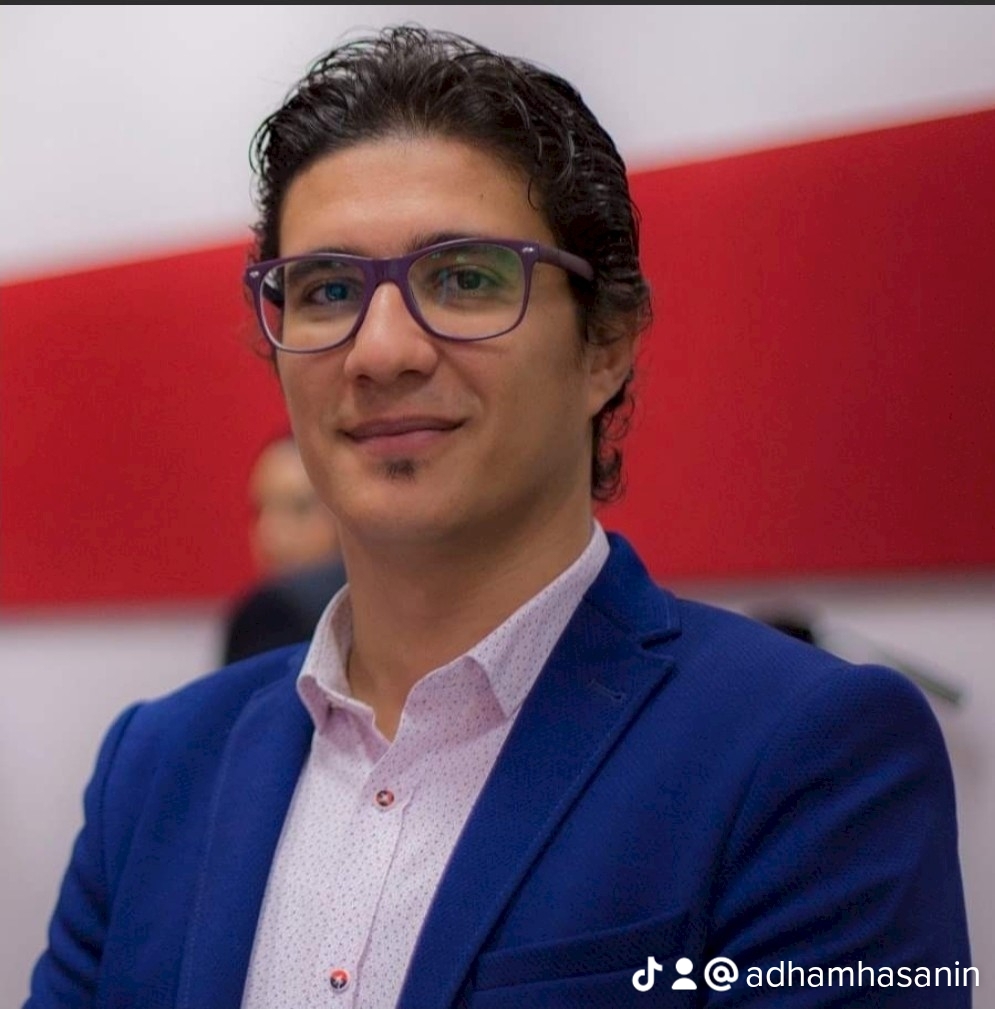
Rabaa: The Hour the World’s Conscience Stood Still On the anniversary of one of the largest single-day killings of protesters in modern history, one question remains unanswered: who will be held accountable? By Adham Hasanin Egyptian journalist and political writer, based in the Netherlands On 14 August, the anniversary returns of a day unlike any other in modern Egyptian history. Not simply because it was the bloodiest Egypt has known wars and massacres before and since ,but because it was the day a state chose to open fire on its own people in broad daylight, in front of the world’s cameras, and then let thirteen years pass without a single officer ever being held accountable. This article will not be a cold recitation of statistics, though the statistics exist, are documented, and are horrifying. It is an attempt to understand something deeper: how a square in the heart of Cairo, filled with tents, children, and worshippers, became the site of the largest mass killing the Arab world has witnessed in the past decade and why the echo of that day still reverberates in every Egyptian prison cell today. I. A Morning That Began Like Any Other For readers unfamiliar with the background: in July 2013, the Egyptian military, led by then-General Abdel Fattah el-Sisi, removed Mohamed Morsy Egypt’s first freely elected civilian president, a member of the Muslim Brotherhood who had taken office in 2012 following the 2011 uprising against Hosni Mubarak. In response, tens of thousands of Morsy’s supporters staged an open-ended sit-in demanding his reinstatement. By 14 August 2013, more than twenty thousand people had spent weeks camped out at two Cairo squares, Rab’a al-Adawiya and al-Nahda, in a peaceful sit-in. They were not an army, nor a uniform bloc; they were entire families men, women, and children, some affiliated with the Muslim Brotherhood, many simply ordinary citizens who saw the restoration of elected legitimacy as a cause worth the risk. There were tents for sleeping, communal kitchens feeding the demonstrators, speaking platforms, and a small field clinic that no one imagined would, within hours, become one of the most terrifying places in modern Egyptian history. In the early hours of that morning, Central Security Forces and army units, under the command of then-General Sisi, began what was officially described as a "dispersal" operation targeting both sit-ins simultaneously. It was not a dispersal in any ordinary sense of the word. According to a year-long investigation by Human Rights Watch, it was a pre-planned operation that anticipated, from the outset, thousands of deaths. II. The Numbers the Regime Refuses to Speak The Egyptian government, to this day, cites a death toll of "over 600" for that single day a figure that, even at its official lowest, is horrifying enough to warrant an independent international investigation. But the field investigation conducted by Human Rights Watch, drawing on field hospital records, survivor testimony, and analysis of video footage from dozens of angles, arrived at a far more disturbing figure: at least 817 people killed at Rab’a Square alone, with the true toll likely exceeding 1,000, plus another 87 killed at the nearby al-Nahda Square. When the deaths from the weeks surrounding 14 August are added from the dispersal of the Republican Guard sit-in on 8 July, through the Mansoura Street killings, to the dispersal of an October 6 march the combined total reaches at least 1,150 deaths in just six weeks, according to Human Rights Watch’s meticulous documentation. This figure led the organisation to use a term not deployed lightly in international law: crimes against humanity. Human Rights Watch described the Rab’a killings as "one of the world’s largest killings of demonstrators in a single day in recent history." Not in Egyptian history alone in modern history as a whole. What happened at Rab’a is cited in international reporting alongside China’s 1989 Tiananmen Square massacre. This is the true scale of what the Egyptian state has spent thirteen years trying to minimise, justify, and reduce to a mere "security incident" in a news bulletin. III. "All According to Plan" When Mass Killing Becomes Administration, Not Chaos The title Human Rights Watch chose for its detailed report on the massacre deserves lingering on: "All According to Plan." This is not an emotive headline; it is a precise legal conclusion built on field evidence. According to the investigation, what happened at Rab’a was not a dispersal operation that spiralled out of control amid chaos or panic, as the regime later tried to portray it. It was a carefully planned operation that assumed, in advance, massive casualties. Then-Interior Minister Mohamed Ibrahim admitted, in a televised interview broadcast on 31 August 2013 just weeks after the massacre that his ministry had anticipated losses of "10 percent of the people" present at the sit-in, acknowledging that the number of demonstrators exceeded twenty thousand. By simple arithmetic, this is an official admission that the state anticipated, in advance, the deaths of roughly two thousand people and proceeded with the operation regardless. This is the true horror at the heart of the Rab’a story: it was not a security operation that spun out of control, but a conscious administrative decision, made in an air-conditioned room, with advance calculations, by men who knew precisely how many human beings would die under their fire and who proceeded anyway, or perhaps because of it. According to Human Rights Watch’s analysis, the objective was to send an unambiguous message: whoever challenges the new state will pay an irreversible price. IV. Snipers, Women, and Children The Faces the Reports Do Not Tell Behind every number in the Human Rights Watch reports lies a full human story, deliberately omitted from the state’s official narrative. The investigation documented how security forces opened fire from multiple angles, and how snipers positioned themselves atop buildings surrounding the square, targeting according to survivor testimony and analysed video footage any movement in the square, regardless of whether it was an armed combatant or a nurse trying to reach a wounded person. According to documented testimony, entire families had their tents burn over their heads as fire swept through the sit-in. Doctors and paramedics were killed while trying to pull the wounded from the line of fire. Most damningly of all, the documentation shows deliberate targeting of ambulances and field medical points meaning that wounded people who survived the first bullet then faced death by bleeding out, because anyone attempting to save them was themselves a target. This detail the targeting of medics is what elevates the event from "excessive violent repression" to what human rights organisations have described as a systematic crime. When security forces target those trying to save the wounded, they are not merely dispersing a sit-in; they are preventing witnesses from surviving to tell what happened. V. Thirteen Years of Total Impunity The most painful part of the Rab’a story is not only what happened that day, but what has not happened in the years since. From 14 August 2013 to today, not a single officer, of any rank, has been held accountable for the deaths of hundreds, or thousands, of Egyptians. Quite the opposite: the state has moved to entrench impunity through the force of law itself. Egypt issued legislation granting senior military officers immunity from questioning over any violations that may have occurred following Morsy’s removal a law specifically designed to close the door on any future judicial accountability, regardless of how political circumstances might change. Even the fact-finding committee established by then-interim President Adly Mansour to investigate the June and July events concluded, in its report issued more than a year after the events, that the sit-in’s leaders bore responsibility for the deaths, on the grounds that they had allowed weapons into the square even as the same report admitted, in a glaring contradiction, that security forces had failed to target only armed individuals, meaning they had fired indiscriminately on everyone: armed and unarmed, man and woman, adult and child. This is the pattern that has repeated for over a decade: as each anniversary approaches, official statements re-narrate the events and shift blame onto the victims, while the actual perpetrators — those who planned the operation, gave the orders, and pulled the trigger — remain free. Some now occupy the highest offices of the state. VI. Why This Anniversary, Why Now? A reader might ask: why revisit this story after all these years? Has the world not moved on to newer crises? The answer lies in the very nature of impunity. When a state is never held accountable for the largest massacre of protesters in its modern history, it does not simply "forget" the crime it sets a precedent, telling every future ruler and every future security apparatus: mass killing is possible, politically profitable, and free of cost. This poisonous lesson does not remain confined within Egyptian borders; its echo reaches every Arab capital contemplating how to handle its own opposition. More dangerously, this system of impunity did not stop at Rab’a’s edges; it is the foundation on which Egypt’s entire subsequent decade of repression was built: thousands of political prisoners, grossly unfair mass trials that produced death sentences for dozens of defendants in cases linked directly to the Rab’a events themselves, laws criminalising peaceful protest, a muzzled press, and a civil society hollowed of substance. All of it traces back to the morning of 14 August 2013, when the state learned that overwhelming force succeeds, and that the world will condemn for a few days, then move on. VII. Delayed Justice Is Not Forgotten Justice Despite more than a decade of official silence and impunity, the Rab’a case remains alive in international legal memory. Human rights organisations, from Human Rights Watch to Amnesty International, continue to renew their annual calls for an independent international investigation, grounded in the legal principle that crimes against humanity are not subject to statutes of limitation: delayed justice is not forgotten justice. The victims who fell in that square were not numbers in a statistical report. They were fathers who left behind children too young, that day, to understand why their father would never return. They were mothers who, thirteen years later, are still searching for a clearly marked grave to which they can carry flowers, and young people who had decades of life ahead of them that they never got to live. Their memory does not fade with time; it grows with their children, who carry with them the same question their parents asked before they were killed: when will justice come? Conclusion: What Does This Anniversary Demand of Us? Every year, as the anniversary of 14 August returns, the same question resurfaces one the Egyptian state refuses to answer: who gave the order? Who planned the operation? Who decided that twenty thousand human beings deserved to be shot with live ammunition because they staged a peaceful sit-in? This anniversary is not a call for vengeance, nor an invocation of the past for its own sake. It is a reminder that justice, however delayed, remains a debt still owed. And that every instance of international silence over a massacre of this scale opens the door to the next one, elsewhere, under a different pretext, carrying the same lethal conviction: that the world will condemn for a week, then forget. We will not forget. And we will not stop asking the question that unsettles everyone who took part in that crime, regardless of the office they hold today: where is the accountability? Rab’a is no longer merely the name of a square in Cairo. In the conscience of everyone who believes in justice, it has become a test of the world’s conscience itself a test the world has not yet passed.

474
S
SK Slavia Praha Aug 16

15’ | HOLI OTVÍRÁ SKÓRE 💥 Po dlouhém autu vypálil Mubarak Suleiman a jeho střelu usměrnil do sítě náš kapitán! ©️ 🔵⚫️ 0:1 🔴⚪️ #libsks https://t.co/xXPrG3f7nB #fotbal #sport #gól

14712
Lupo Vittorio Aug 14

#Gelmini: Ranucci vittima delle sue frequentazioni.... Disse la signora delle cene eleganti dopo aver votato Ruby è la nipote di Mubarak. NON CONOSCONO LA VERGOGNA #politica #Italia #scandalo

12582