BETA nonprofit public democratic european moderated

Search

#Odysseus

ὁ δὲ τὰς Ἱερείας τὰς ἐν Ἄργει καὶ τὰ καθ’ ἑκάστην πραχθέντα συναγαγὼν Αἰνείαν φησὶν ἐκ Μολοττῶν εἰς Ἰταλίαν ἐλθόντα μετ’ Ὀδυσσέως οἰκιστὴν γενέσθαι τῆς πόλεως, ὀνομάσαι δ’ αὐτὴν ἀπὸ μιᾶς τῶν Ἰλιάδων Ῥώμης. ταύτην δὲ λέγει ταῖς ἄλλαις Τρωάσι παρακελευσαμένην κοινῇ μετ’ αὐτῆς ἐμπρῆσαι τὰ σκάφη βαρυνομένην τῇ πλάνῃ. ὁμολογεῖ δ’ αὐτῷ καὶ Δαμάστης ὁ Σιγειεὺς καὶ ἄλλοι τινές. $ODYSSEUS #Ἱστορία #Ρώμη #ΤρωικόςΠόλεμος

Life is unsolvable contradiction. The scene with Odysseus tied to the mast and experiencing the terrible impact of the sirens on him is the greatest, ingenious artistic metaphor and it will never be surpassed. This is the personification of the relationship between men and women. The enormous danger that women represent for men. The Spanish-Jewish philosopher Gratian states that women combine in themselves all possible enemies and dangers for a man, but at the same time they give him the greatest joy, happiness and satisfaction from life. This is identical to the effect of drugs and this is a narcotic experience. Odysseus experiences all the contradictions of the effect of women. He wants to go to the sirens. They are the greatest temptation he has encountered in his life. He experiences the greatest possible mental suffering and at the same time he himself ordered that he be tied to the mast, that his fellow sailors plug their ears and in no case untie him, no matter what happens. Therefore, Ulysses is the first and at the same time the greatest work, which will never be surpassed in artistic mastery and ingenious depiction of life.

H

Why Good Times Make Weak People The pinnacle of tyranny is a society in which people are controlled without force because they love their servitude. Aldous Huxley’s Brave New World explored this idea. Unlike Orwell’s 1984, its citizens are controlled not through terror but pleasure. Soma provides instant relief from discomfort—a “holiday from the facts.” Huxley’s people are not prisoners but satisfied customers: the State produces children, promiscuity is normalized, and entertainment fills every empty moment. As Neil Postman observed, Orwell feared that truth would be hidden from us, while Huxley feared that we would become so distracted that we would no longer care about it. The Softening of Man Good times can make bad times possible. When safety and luxury become normal, people can lose sight of the struggles that created them. Andrew Lobaczewski argued that prosperity can weaken profound reflection. Pleasure becomes dominant, while uncomfortable truths are dismissed because thinking about them requires effort. Those who think critically may even be ridiculed. This creates a dangerous cycle: societies lose the capacity for psychological reasoning and moral criticism, allowing catastrophe to develop unnoticed. Sterilizing Genius Nietzsche understood that comfort, elevated above all else, can destroy the qualities that made civilization possible. Struggle, ambition, discipline, passion, and courage helped create prosperity—but prosperity can weaken the virtues that produced it. The Odyssey illustrates this. The Lotus-Eaters simply lose the desire to return home. Odysseus must drag his men back while they weep to remain. He rejects Calypso’s offer of immortality and endless comfort, choosing the difficult path home. We admire that choice because comfort without purpose is not a life worth admiring. Nietzsche imagined the endpoint in Thus Spoke Zarathustra: a society where safety and sameness become the highest ideals, producing “no shepherd, and one herd.” Anyone who seeks greatness becomes an aberration.

H

Why Weak Societies Choose Tyranny The pinnacle of tyranny would be a system that allows politicians, elites, and bureaucrats to control a population without force or coercion because the people love their servitude. Aldous Huxley wrote Brave New World, an eerily relatable dystopian novel, with this idea at the forefront. Unlike Orwell’s 1984, there is no overt oppression. The state does not have to stamp on human faces with its jackboots or erect an inescapable surveillance state. Rather, the people of Brave New World happily chain themselves with meaningless pleasure and distractions. The authorities do not rule through terror and rage, the central elements of 1984, but instead give the people everything they ever wanted. A pharmaceutical called Soma becomes the opiate of the masses. Mustapha Mond, the World Controller, likens it to Christianity without tears. While religion requires years of moral training, Soma allows citizens to achieve peace simply by swallowing tablets. It is the perfect escape from reality, a holiday from the facts. Lenina, the female counterpart to the protagonist Bernard, cannot comprehend why he refuses Soma, preferring discomfort to something that can remove it. When Bernard states, “I’d rather be myself, myself and nasty, not somebody else, however jolly,” Lenina sees this as a sort of pathology and repeatedly encourages him to take the wonder drug. Bernard explains, “I want to know what passion is.” He understands that there is more to life than merely being content, craving genuine experience, including suffering and intensity, rather than being emotionally regulated by the World State. Lenina’s bewilderment stems from her conditioning to regard unhappiness as a technical problem, encapsulated in the society’s common saying that “a gram is better than a damn.” The people of Brave New World are not captives but satisfied customers. Children are produced by the scientific state, relieving people of the responsibility of parenthood. This grants them the ability to engage in promiscuity, where everyone belongs to everyone else, while filling their free time with cheap entertainment and endless sporting events—what would be referred to as slop today. As Neil Postman observed, Orwell saw totalitarianism through the lens of fear, while Huxley saw it through pleasure. There was no need to ban a book in Brave New Worldbecause there was no one who wanted to read one. An abundance of low-quality information rendered censorship unnecessary because no one could hear the truth through all the noise. Huxley threw shade at civil libertarians who passionately opposed tyranny because they failed to take into account man’s almost infinite appetite for distractions. Humanity in its rawest form is portrayed by John the Savage, an outsider free from the World State’s conditioning. Upon coming face-to-face with this spiritually neutered society, he completely rejects it: “I don’t want comfort, I want God, I want poetry, I want real danger, I want freedom, I want goodness, I want sin.” Huxley’s dystopia is not imposed on an unwilling population but instead requested by a hollow one. Which leads us to the question: How do people become so weak that they get on their knees and beg for totalitarianism? Good times make bad times possible. Once a certain level of luxury and safety is achieved, people start to resemble the hobbits from the Shire. They are so far removed from evil that they forget it even exists and become defenseless in the face of it. Andrew Lobaczewski, who studied the psychology of totalitarianism from inside Poland’s communist takeover, wrote: “During good times, people progressively lose sight of the need for profound reflection. They lose the capacity to differentiate human nature, and emotion begins to dominate intellect. Once a critical mass starts operating on the pleasure principle, any excess mental effort seems like pointless labor.” Lobaczewski warned that it is not as simple as some people losing the ability to think rationally. It is worse, because those people then shame anyone capable of doing so. A clever, liberal, and merry individual is a good sport. A more far-sighted person predicting dire results becomes a wet blanket, a killjoy. The ability to have uncomfortable conversations without emotion taking over is, in Lobaczewski’s view, an indicator of whether a society’s future will be good or bad. It is easier to think about pleasant things. This leads people to eliminate any data or facts that cause them discomfort. That becomes a habit and eventually a custom accepted by society at large. Once the general populace accepts that inconvenient truths should be left unsaid, it becomes incapable of reaching correct conclusions. After all, how could you ever describe a picture that you refuse to look at? “Catastrophe waits in the wings of the communities that lose the capacity for psychological reason and moral criticism,” Lobaczewski wrote. “It is on the other side of this weakening of thought that the processes of the generation of evil are intensified at every social scale until they give rise to bad times.” It is precisely man’s dreams of happiness that can lead to chaos and suffering. This hedonistic view of happiness contains the seeds of misery, feeding the eternal cycle whereby good times give birth to bad times. Friedrich Nietzsche viewed socialism as demanding comfort for the greatest number of people possible. To question whether it is good for the masses to live in comfort has become a form of heresy. This reveals the spiritual atrophy that so many suffer from. Considering only the weak believe comfort to be a virtue, it is what Carl Jung would describe as the infantile dream state of mass dependency: the desire to gently slip back into the kingdom of childhood, into the paradise of parental care. Except this lack of friction has consequences. The perfect state destroys the soil in which great intellect grows. Genius, struggle, passion, strength, and wisdom are required to build a safe and abundant society. Yet once a certain level of comfort is achieved, it can destroy the very virtues required to obtain it. Nietzsche observed that it is the warmest heart that aims to alleviate suffering and hardship but fails to realize that it thereby wills the destruction of its own foundation. Comfort breeds mediocrity, which is then called good. Small people want one thing above all: that no one hurt them. We have taken this pathology to such a degree that we now obsess over hurt feelings and call this virtue. Pleasure, in its proper place, is a byproduct of meaningful goals, not a goal in itself. Aristotle saw that pleasure and comfort distort perception and proper judgment. While they do not cause us to misjudge something like geometry or mathematics, they can destroy our ability to decide what is worth pursuing and, therefore, what to do. Consider The Odyssey. Homer depicts Odysseus’ men on the island of the Lotus-Eaters, where they taste the fruit and lose all desire to go home. Much like Huxley’s Brave New World, they are not imprisoned. Rather, they simply stop wanting anything more. Odysseus has to drag his men back to the ships while they weep to stay. This is what comfort can do to men. It empties them of purpose. We intuitively understand this but fail to apply it to our own lives. We must make the same choice as Odysseus when he refuses Calypso’s offer of endless comfort and immortality. He knows she is more beautiful than his wife Penelope waiting at home. He knows that he and Penelope will grow old and die, a fate he could avoid by staying with Calypso. No one who reads these stories wishes he had stayed. We want him to choose the hard way home because if he took the offer, he would stop being admirable. Yet staying is exactly what our modern society asks of us. We are told that the island is the good life. But what happens to the man who caves to this temptation? In Thus Spoke Zarathustra, Nietzsche imagines a risk-averse society taken to its logical endpoint. The elimination of all struggle produces a man so diminished that he fails to possess even self-contempt or higher aspiration. Safety and sameness become the highest goals, creating “no shepherd in one herd.” Anyone who seeks to be anything more than normal becomes an aberration to be dealt with. Or, as Nietzsche puts it, they have “made the wolf a dog in man himself, man’s best domestic animal.”

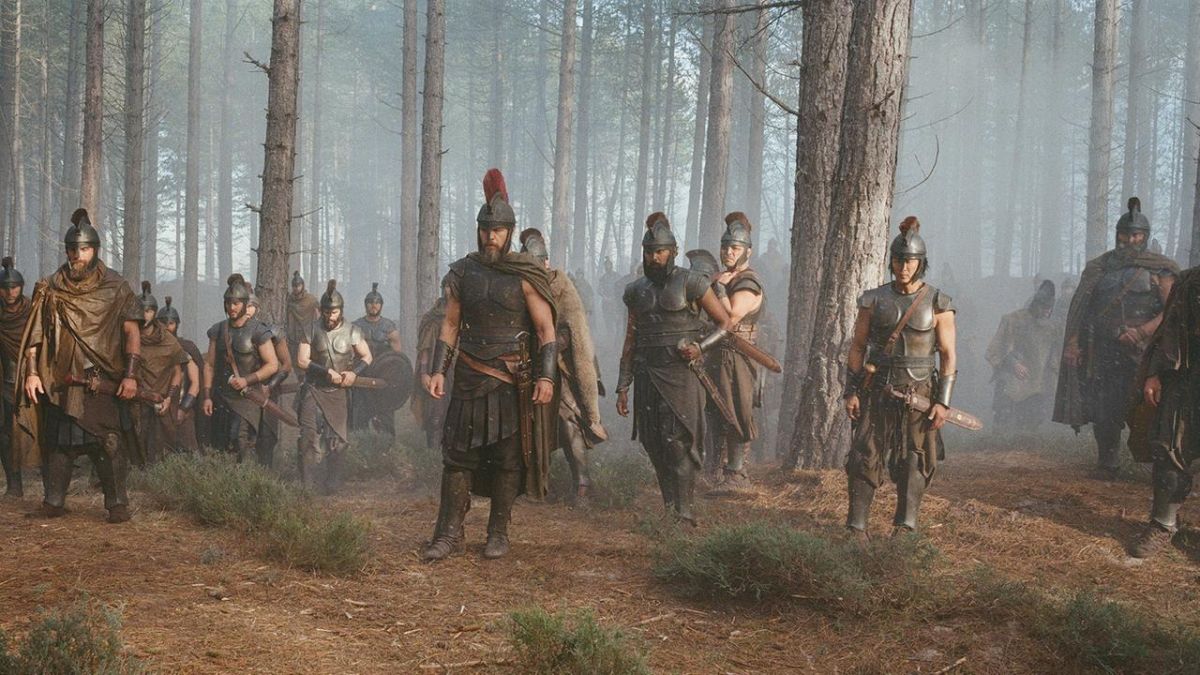
Christopher Nolan's film The Odyssey has not only achieved commercial success but has also sparked heated debates about international politics by portraying Odysseus as a war criminal and reinterpreting central aspects of the classical story, leading to a critical engagement with modern geopolitical issues and the rules-based order. (translated)

Warum Christopher Nolans "Die Odyssee" für Debatten sorgt
A
AD Jul 28

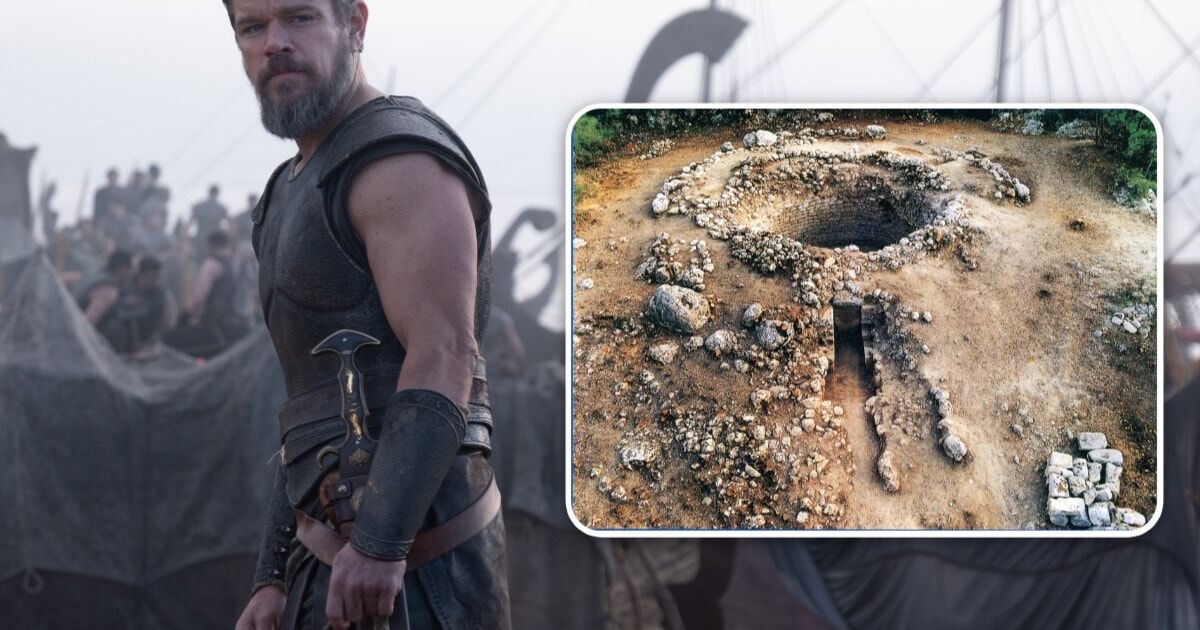
A Dutch researcher may have discovered the grave of Odysseus on Kefalonia instead of Ithaca, but encounters resistance from Greek authorities who cling to traditional theories about the location. (translated)

Nederlandse vindt mogelijk graf Odysseus op Kefalonia, niet Ithaka: ‘Weerstand bij Grieken’

I sin artikel diskuterar Björn Wiman hur Christopher Nolans film The Odyssey speglar vår tids klimatkatastrof och civilisationens kris, parallellt med de antika berättelserna om människans skräck för en föränderlig och hotande natur. #klimatkatastrof #ChristopherNolan #Odysseus

Björn Wiman: Hur ska du navigera när klimatkatastrofen kommer?
Plainview Jul 24

Innan The Odyssey gav oss en skev bild av greker, så hade vi greker som gav en skev bild av svenskar. https://t.co/0mze3bOMSt #Odysseus #Grekland #Sverige

Troy has fallen and Odysseus has triumphed. In Christopher Nolan's film "The Odyssey," the journey home becomes a passage through the guilt and violence that made the victory possible. What does it do to a person to commit war crimes? Kasia Syty has reviewed the lavish epic about the war hero who tries (translated)

Máme zas dobrý číslo. Jak bude pokračovat válka Babiše s Pavlem? Proč si mladí kluci v rámci looksmaxxingu drtí obličejové kosti kladivem? A jak se na Pražském hradě projevila tříletá deZemanizace a deMynářizace? Máme velký a zábavný rozhovor s hollywoodským hercem Jesse Eisenbergem i českou spisovatelkou Dorou Kaprálovou. A taky fenomén Odysseus a sex. Berte a čtěte. V appce i jako audio. #politika #rozhovor #kultura

Článek se zabývá otázkou, zda Homérova díla, jako je Odyssea, odrážejí skutečné události a objekty ze starověkého světa, kdy vědci zkoumají možné inspirace pro fantastické bytosti, jako jsou Kyklopové a čarodějnice, v reálných fosiliích a přírodních jevech, přičemž upozorňují na nutnost opatrnosti při extrapolaci historických mýtů a jejich možných skutečných základů. #Homér #mýtus #Odysseus

Co když Homér nelhal? Vědci hledají skutečný základ Kyklopa, Skylly i Kirké
A
AD Jul 20

De Odyssee is weer in de schijnwerpers dankzij Christopher Nolans succesvolle verfilming met Matt Damon als Odysseus, die niet alleen bioscooprecords breekt, maar ook de inspiratie vormt voor een bredere hype in videogames en op social media, met tijdloze thema's die resoneren in de moderne maatschappij. #Odysseus #ChristopherNolan #Zendaya

Odysseus is terug van nooit weggeweest: dit verklaart zijn opvallende comeback
A
AD Jul 20

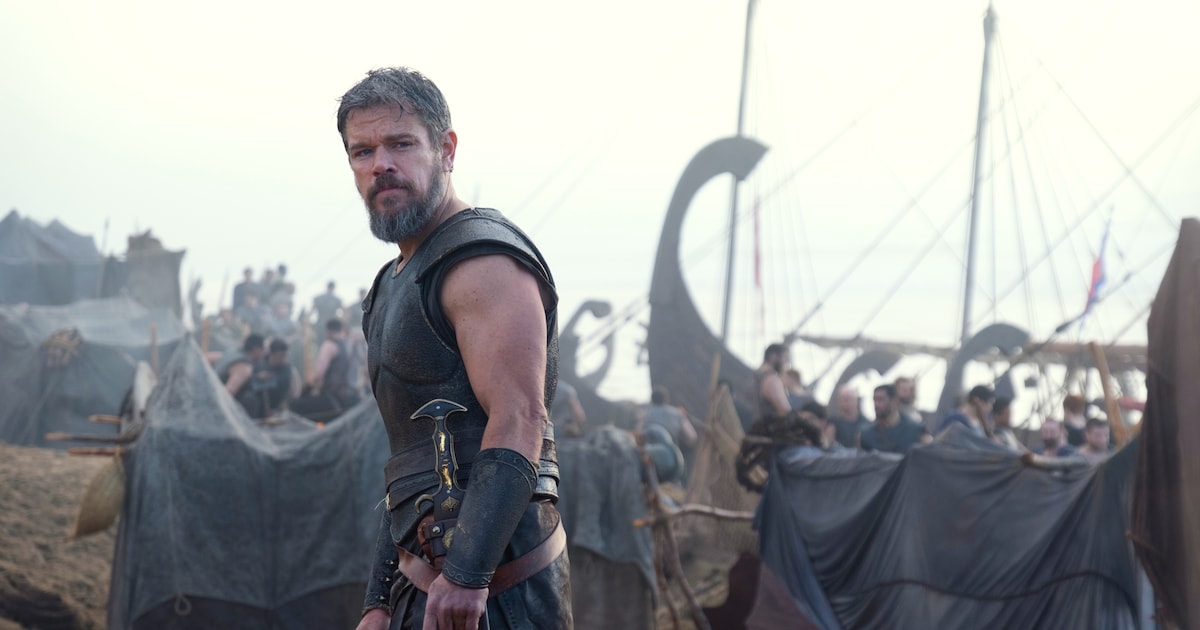
De verfilming van The Odyssey door Christopher Nolan met Matt Damon als Odysseus heeft een recordopbrengst van 264,1 miljoen dollar behaald in het openingsweekend, waarmee het Nolans grootste wereldwijde openingsweekend tot nu toe is, ondanks een R-rating die jongeren onder de 17 jaar beperkt in hun toegang. #TheOdyssey #MattDamon #ChristopherNolan

Film The Odyssey spectaculair van start in openingsweekend: opbrengst nu al ruim 264 miljoen
Herr Husis Jul 16

Det sjukaste i Nolans The Odyssey är när Odysseus kommer hem till Ithaka och Telemakos frågar vart alla hans kamrater tog vägen och Odysseus vänder sig mot kameran och säger: “Tidö utvisade dem allihop” och blinkar #Nolan #TheOdyssey #Film

A
AD Jul 15

De film The Odyssey, geregisseerd door Christopher Nolan en met Matt Damon als Odysseus, levert een visueel verbluffend en emotioneel diepgaand epos dat zowel de oude Griekse mythe eer aandoet als actuele realistische thema's verkent, waardoor het een van de meest opmerkelijke blockbusters van het jaar is. #TheOdyssey #MattDamon #ChristopherNolan

Vijf sterren voor de film van het jaar: zelden zag een blockbuster van dit formaat er zo puntgaaf uit

Przed premierą wysoko budżetowego filmu Christophera Nolana „Odyseja” na scenę wkracza AI z niezależnym projektem „Odysseus: The Fall”, co stawia pod znakiem zapytania tradycyjne zasady produkcji filmowej i wskazuje na zmieniający się krajobraz Hollywoodu. #AI #Hollywood #film

Nolan i jego superprodukcja „Odyseja” mają problem. Premierę popsuje AI
NRC Jul 14

Christopher Nolan voegt met zijn film 'The Odyssey', waarin Matt Damon de rol van Odysseus speelt, de legendarische held toe aan zijn collectie van complexe personages, na eerder successen met Batman en Oppenheimer, terwijl hij een sterrencast om zich heen verzamelt en de mythologische stof op innovatieve wijze benadert. #ChristopherNolan #TheOdyssey #Film

Na Batman en Oppenheimer is Odysseus de volgende held met smetjes voor regisseur Christopher Nolan
Herr Husis Jul 14

Den största anledningen till att Nolan (och många andra) inte fattar Odysséen är att dess moral är fullständigt främmande för dem. Odysseus är inte en “snäll man” som bara vill hem till sin fru. Han är en pirat. En lögnare. En trickster. En krigare. En hjälte. Han dödar skyldiga och oskyldiga. Slavar och fria. Män och kvinnor. När han återvänder till Ithaka låter han avrätta tolv slavkvinnor ur sitt eget hushåll för illojalitet efter att de haft sex (frivilligt eller påtvingat) med friarna under hans tjugoåriga frånvaro. Efter massakern av friarna tvingas kvinnorna först städa upp blodbadet. Därefter beordrar Odysseus att de ska dödas. Telemakos väljer att hänga dem. Melanthios, Odysseus egen getherde som förrått honom och beväpnat friarna, får ett ännu grymmare öde: näsa och öron skärs av, könsorganet kastas till hundarna, och händer och fötter huggs av medan han fortfarande lever. För de antika grekerna var detta inte ett moraliskt problem. Tvärtom. Det var ett rättvist och hedervärt svar på förräderi. En film som verkligen var trogen Homeros hade med största sannolikhet känts helt främmande för dagens Hollywood. Inte för att den vore ”för våldsam”, utan för att dess moral hade varit så främmande för oss att många sannolikt inte ens hade förstått poängen. #Odysseus #Moral #AntikGrekland

Lupita Nyong’o, welche die schöne Helena im Christopher Nolans „The Odyssey“ spielt, wird die Frage gestellt, welches eine Ding sie zu Homer sagen würde, meint: Sie würde Homer fragen, wie er zum „Screen Time“ der Frauen steht. Sie hat Unrecht. Frauen kommen in der Ilias und der Odyssee prominent und mit grosser erzählerischer Bedeutung vor – nicht als Randfiguren, sondern als zentrale Charaktere mit eigenen Handlungssträngen, Emotionen und Einfluss auf die Handlung. In der Odyssee z. B.: Circe – die mächtige Zauberin. Ein ganzer Handlungsblock dreht sich um sie: sie verwandelt Odysseus’ Männer, Odysseus überlistet sie, sie wird seine Geliebte und Verbündete und schickt ihn mit wichtigen Ratschlägen in die Unterwelt. Calypso – hält Odysseus sieben Jahre fest. Ihre Abschiedsszene ist eine der emotionalsten und poetischsten des ganzen Epos. Penelope – die clevere, treue Frau, die 20 Jahre lang auf Odysseus wartet und die Freieer überlistet. Athena – die Göttin, die Odysseus aktiv lenkt und beschützt. Sie ist praktisch Co-Protagonistin. Dazu Nausikaa, Arete, die Sirenen und viele mehr. In der Ilias: Helena (die ja den gesamten Krieg auslöst) Andromache, Hecuba, Thetis (Achills göttliche Mutter), Briseis u..v.m. Homer gibt den Frauen lange, emotionale Reden und zeigt ihre Perspektiven. Das sind keine stummen Beiwerk-Figuren. Einmal mehr zeigt sich, dass die Woke-Linken strunzdumm und ungebildet sind, die gleichzeitig davon ausgehen, dass sie die Weisheit mit den Löffeln gefressen hätten. #Homer #Frauenrollen #Literatur

Roland Tichy May 14

Homer's "Odyssey," the first bestseller in world history, newly filmed. Gender-appropriate. Matt Damon as Odysseus didn't provoke anyone, nor did Anne Hathaway as Penelope or Charlize Theron as Calypso. However, Lupita Nyong'o did. The Kenyan-born actress plays Helena, who is by (translated)