Cold baths can promote recovery after training and alleviate muscle soreness, but they should be used purposefully and in moderation to avoid negative impacts on muscle growth and performance. #Eisbäder #Regeneration #Muskelaufbau (translated)

Cold baths can promote recovery after training and alleviate muscle soreness, but they should be used purposefully and in moderation to avoid negative impacts on muscle growth and performance. #Eisbäder #Regeneration #Muskelaufbau (translated)

The author reported that SNCF Réseau and the State had signed an unprecedented agreement concerning the maintenance and renewal of the aging railway network by 2033. https://t.co/FW9qxnK99J #SNCF #Transport #Infrastructures #FR (translated)
"MY PUGLIA": STORNARA IN THE WORLD TOP 20 FOR STREET ART: THE 'STRAMURALES' MODEL CONQUERS THE UN AGENCY IN GENEVA SOURCE: https://lamia-puglia.com/stornara-nella-top-20-mondiale-della-street-art-il-modello-stramurales-conquista-lagenzia-onu-di-ginevra/ From a small agricultural centre in the Capitanata, often relegated to the margins of the major tourist flows, to an international case study cited in Geneva alongside the world's cultural capitals. Stornara, a municipality of around 6,000 inhabitants in the province of Foggia, officially enters the global élite of urban art thanks to an analysis by the World Intellectual Property Organization (WIPO), the United Nations agency based in Switzerland. ------------------------------------------------------------------- The International Study and the Data The recognition comes via the report From Local Scenes to Global Recognition: Talent Mobility in Street Art, authored by economists Egbert Amoncio, Alexander Cuntz, and Alessio Muscarnera and published in the "Creative Industries Insights" series. Analyzing around 74,000 geolocated works on the "Street Art Cities" platform, the scholars mapped the migratory flows of mural talent around the world. The study highlights how street art is a 'glocal' phenomenon: although only one artist in five works outside national borders, centres capable of attracting international creatives become genuine hubs of regeneration. Alongside metropolises such as New York, Los Angeles, Berlin, Paris, London, and Melbourne, the document singles out Stornara as the sole Italian rural exception. ------------------------------------------------------------------- The Success of Stramurales and Its Academic Impact The turning point for the Puglian village bears the signature of the social promotion association Stornara Life APS, led by Lino Lombardi and the local 'Banda dei Fischietti'. Since 2017, through the annual Stramurales festival, the community has transformed the town's façades into an open-air museum that today counts more than 173 murals, around fifty of which were created by internationally renowned foreign artists. A path of social redemption that had already attracted the attention of the global scientific community: the festival was indeed the subject of the monographic study "Street Art as Public Health Infrastructure", authored by Apulian researchers Luciano Magaldi Sardella and Matteo Mantuano and published in the "Harvard Health and Human Rights Journal" of the prestigious American university. ------------------------------------------------------------------ The Density Factor and the Bottom-Up Lesson According to the WIPO analysis, Stornara's primacy does not lie in absolute numbers, but in proportion: relating the more than fifty international works to the resident population, the Foggia municipality achieves a density of foreign art per 100,000 inhabitants that is unattainable for the great megalopolises. In this way, art is not dispersed but becomes an integral part of daily life. The Geneva economists further emphasize how the Stornara model has succeeded in avoiding the risk of top-down initiatives perceived as artificial. The direct involvement of residents, who spontaneously make the walls of their own homes available, combined with artist residencies and open dialogue on social themes, demonstrates how culture can trigger tourism, economic spillover, and psychosocial well-being, offering a concrete response to the depopulation of the inland areas of the Mezzogiorno. (translated)
"VIVERE CERIGNOLA": FROM THE FIELDS OF CAPITANATA TO THE UNITED NATIONS: HOW STORNARA'S MURALS CHALLENGE THE WORLD CAPITALS SOURCE: https://www.viverecerignola.it/2026/11/12/dai-campi-della-capitanata-alle-nazioni-unite-cos-i-murales-di-stornara-sfidano-le-capitali-mondiali/207189/ STORNARA (FG): The UN agency for Intellectual Property has placed the Foggia village among the most attractive global hubs for urban art. The credit goes to a grassroots festival that has managed to reverse the destiny of a small agricultural town. You do not need the skyscrapers of New York or the grand boulevards of Paris to become a world reference point for contemporary culture. Sometimes the plastered facades of a town of six thousand souls, surrounded by the wheat fields of the province of Foggia, and the tenacity of a community determined not to surrender to marginality, are enough. This is the story told in Geneva by the World Intellectual Property Organization (WIPO), which in its latest report on the creative industries has shone a spotlight on the artistic miracle of Stornara. ----------------------------------------------------------------- An Italian Exception Among the Metropolises The document, entitled From Local Scenes to Global Recognition: Talent Mobility in Street Art, X-rays the world geography of murals, analysing more than 74,000 works mapped on a planetary scale. The aim of the economists who authored the study, Egbert Amoncio, Alexander Cuntz, and Alessio Muscarnera, was to understand where international artists move and which places succeed in attracting talent from abroad. On the map of cultural 'magnets' appear giants such as Los Angeles, Berlin, London, Barcelona, and Melbourne. Yet, right among these great capitals, stands out the virtuous anomaly of Stornara: a rural centre which, thanks to the power of ideas, has succeeded in entering the narrow global élite of public art. ------------------------------------------------------------------ The Winning Wager of Stornara Life APS It all began in 2017, when the association Stornara Life APS, led by Lino Lombardi and the 'Banda dei Fischietti', launched Stramurales. The intent was not merely aesthetic, but profoundly social: to counter economic decline and cultural isolation through shared beauty. In less than a decade, the town has been transformed into an open-air gallery with more than 173 mural works, including some fifty creations signed by international masters of the field. An open-air laboratory whose social scope had already been certified in the international academic sphere, thanks to a study published in the Harvard Health and Human Rights Journal by the Apulian researchers Luciano Magaldi Sardella and Matteo Mantuano, who analysed urban art as a genuine infrastructure for public well-being. ---------------------------------------------------------------- The Value of the Human Scale What strikes the United Nations analysts is the proportional impact of the project. Relating the number of foreign works to the inhabitants, Stornara achieves a per-capita artistic concentration unthinkable for any metropolis. Here art does not remain confined to a peripheral district, but inhabits every street and accompanies the daily gestures of residents. The WIPO report finally indicates the secret formula that makes this model replicable elsewhere: authenticity. Unlike top-down regeneration operations, often viewed with suspicion by the artists themselves, in Stornara it is the inhabitants who donate the walls of their own houses, welcoming the muralists into week-long artists' residencies and participating in the choice of themes. A lesson in civic participation which demonstrates how even the small villages of the South can speak to the world without losing their own soul.
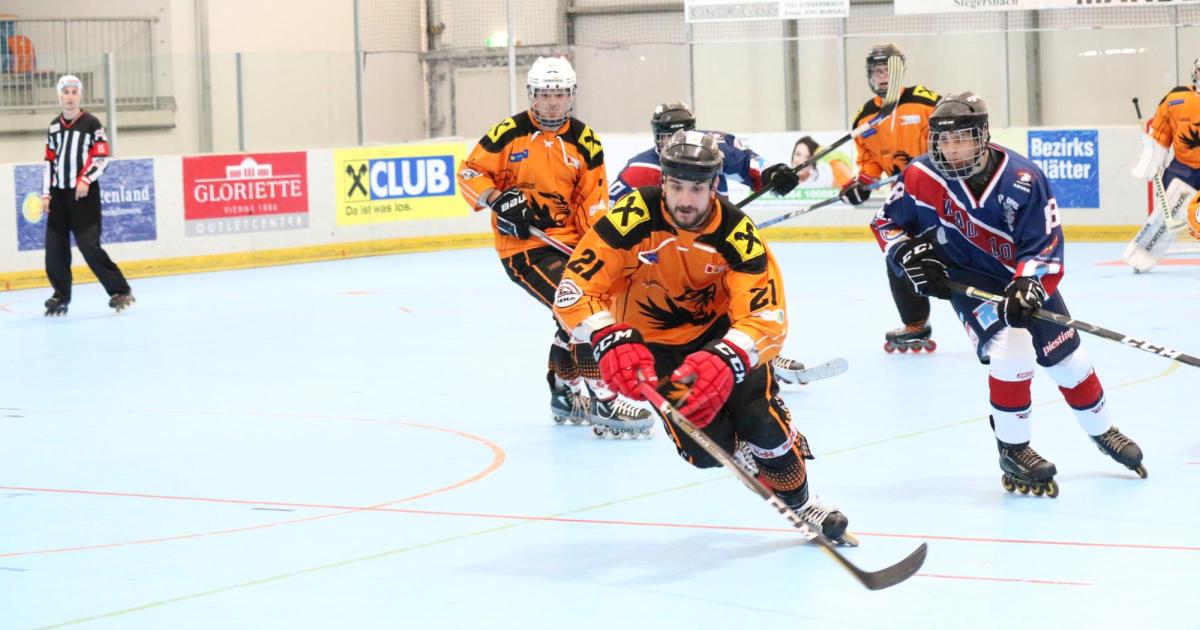
A new national performance center for roller sports with two sports halls, training, and regeneration areas is being built in Stegersbach for a total of 6.2 million euros net, with completion planned for the second quarter of 2028. #Rollsportzentrum #Stegersbach #Nachwuchsförderung (translated)

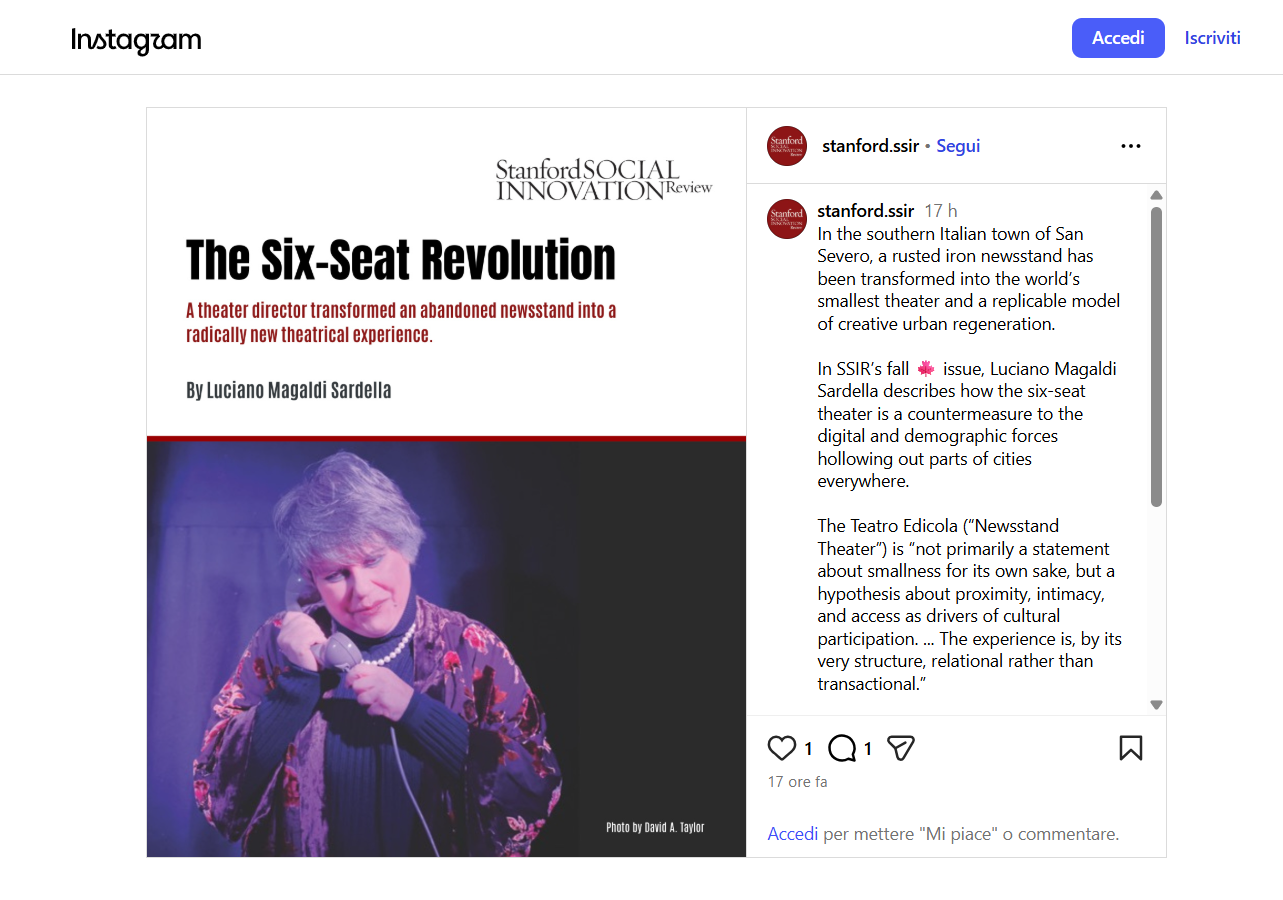
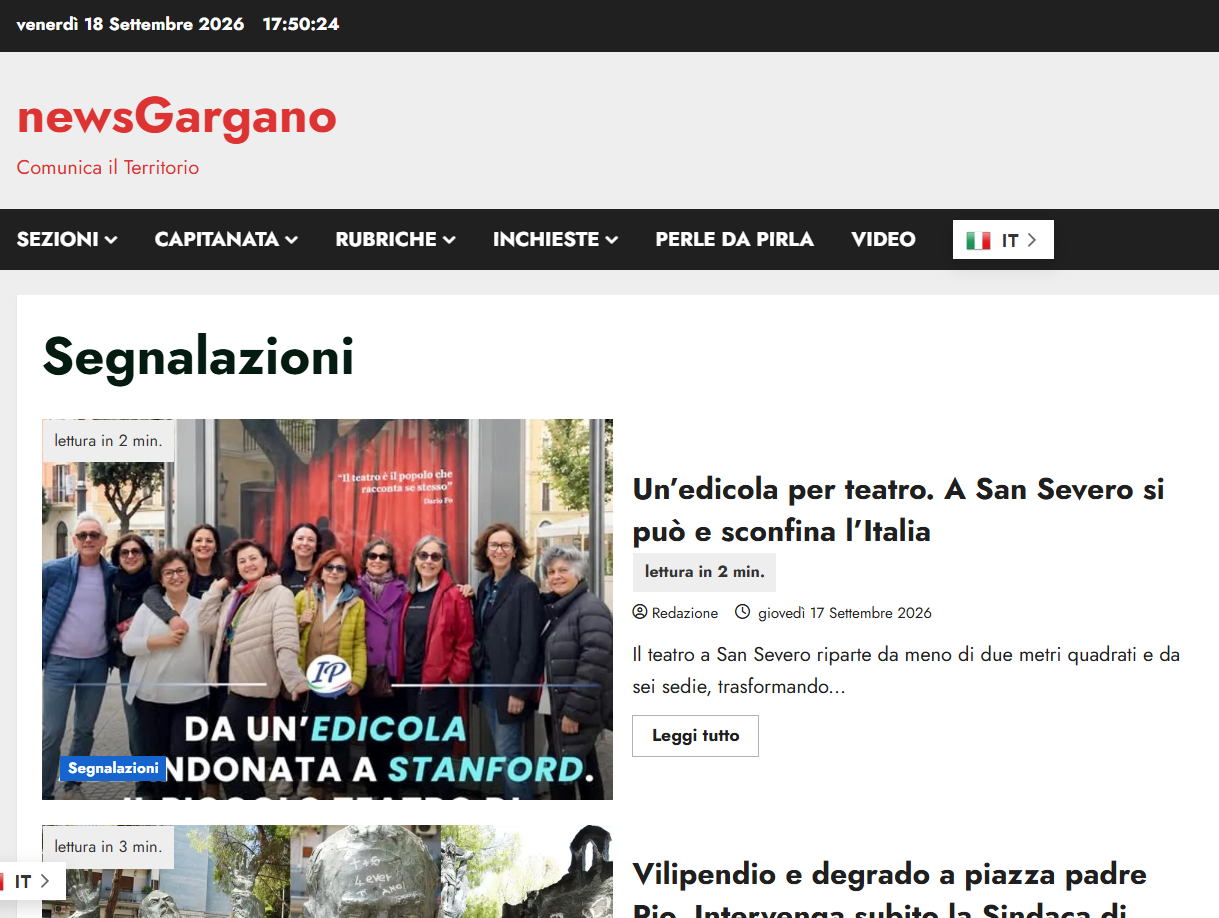
“STANFORD SOCIAL INNOVATION REVIEW (INSTAGRAM)” — “THE SIX-SEAT REVOLUTION: A THEATRE DIRECTOR (FRANCESCO GRAVINO) TRANSFORMED AN ABANDONED NEWSSTAND INTO A RADICALLY NEW THEATRICAL EXPERIENCE” by LUCIANO MAGALDI SARDELLA https://ssir.org/bios/luciano-magaldi-sardella SOURCE: https://www.instagram.com/p/Deor7xKlwNH/ In the southern Italian town of San Severo, a rusted iron newsstand has been transformed into the world’s smallest theater and a replicable model of creative urban regeneration. In SSIR’s fall issue, Luciano Magaldi Sardella describes how the six-seat theater is a countermeasure to the digital and demographic forces hollowing out parts of cities everywhere. The Teatro Edicola (“Newsstand Theater”) is “not primarily a statement about smallness for its own sake, but a hypothesis about proximity, intimacy, and access as drivers of cultural participation. … The experience is, by its very structure, relational rather than transactional (Francesco Gravino).”
A study from Beijing Sport University shows that fluid loss during exercise can impair amino acid levels in the blood after consuming a protein shake, which reduces the desired effects on muscle building and recovery. #Proteinshake #Aminosäuren #Sporternährung (translated)
Trainer Sebastian Hoeneß has decided that Dennis Seimen will once again be in goal on Saturday in the Bundesliga match against HSV to give him the opportunity to recover after his long injury break. #VfBStuttgart #Torwartwechsel #Bundesliga (translated)
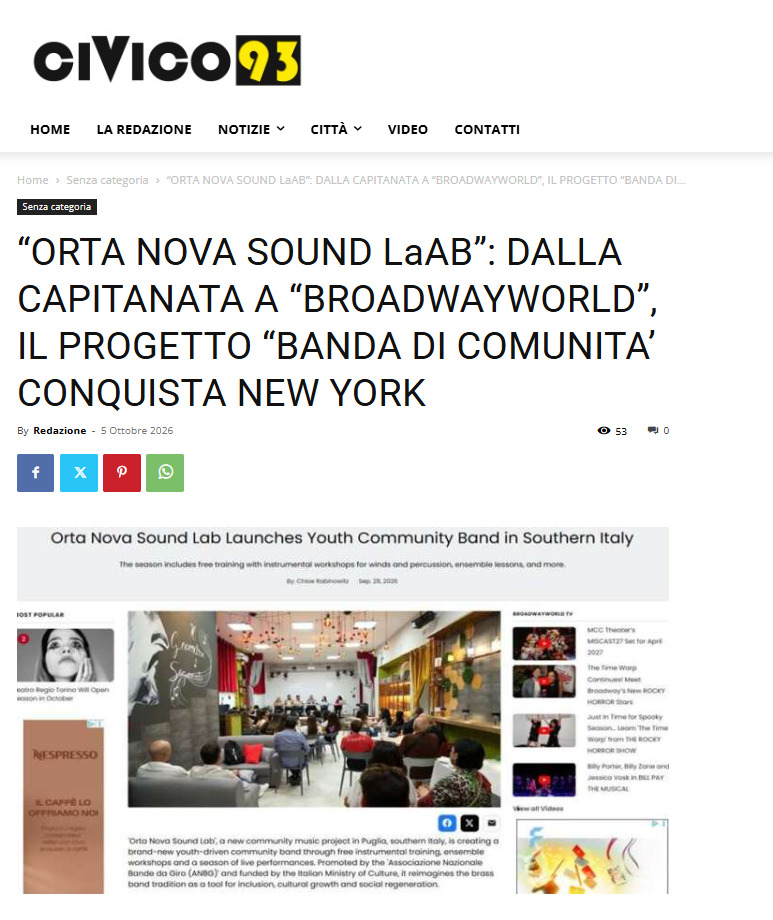
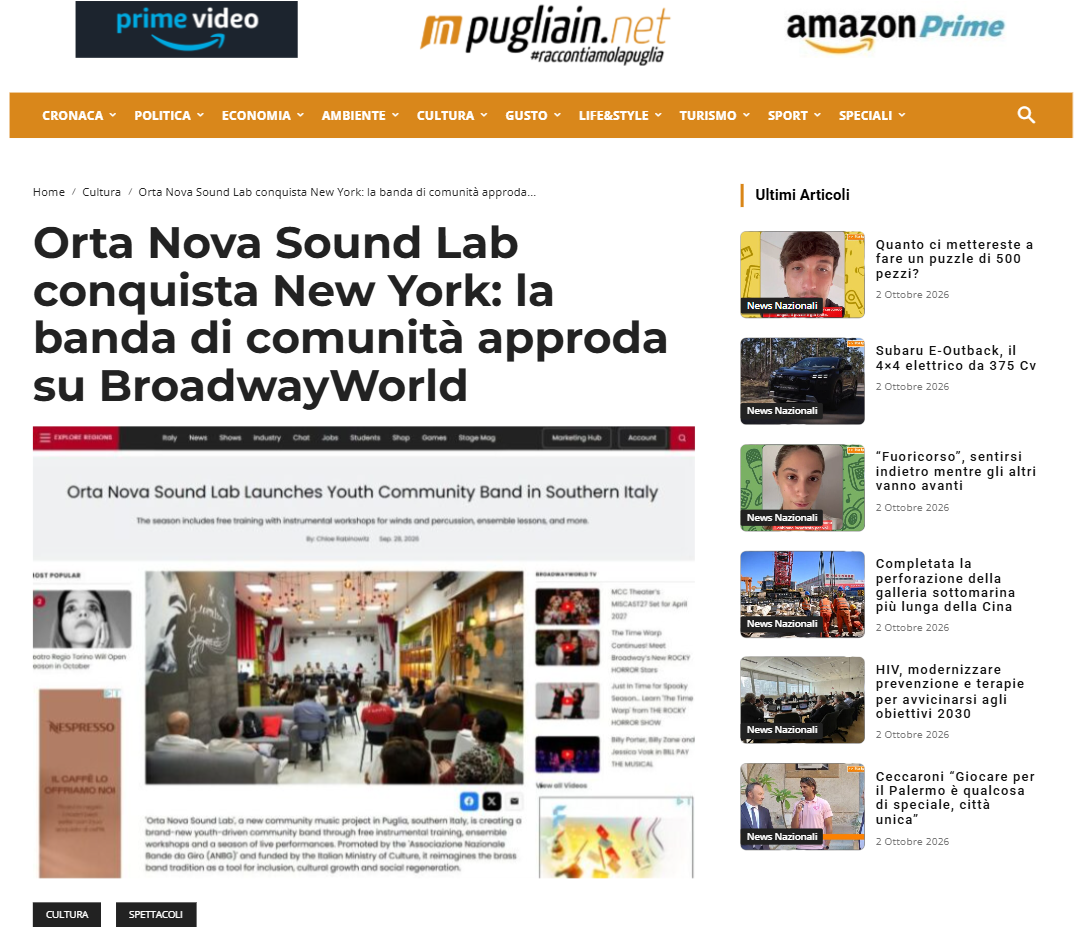
CIVICO 33 — “ORTA NOVA SOUND LAB”: FROM CAPITANATA TO “BROADWAYWORLD”, THE “COMMUNITY BAND” PROJECT CONQUERS NEW YORK SOURCE: https://www.civico93.it/orta-nova-sound-laab-dalla-capitanata-a-broadwayworld-il-progetto-banda-di-comunita-conquista-new-york/ The social laboratory promoted by ANBG and the Ministry of Culture has landed on the world’s largest theatre network, thanks to the article co-authored by Chris Rabinowitz and the Orta Nova-born author Luciano Magaldi Sardella. There is a brass thread linking Piazza Mario Frasca to Broadway. It is called “Orta Nova Sound Lab” — the Community and Social Regeneration Band through Music — the project officially presented on 21 September last at the C-Lab MAO FM 19.77 of brothers Luca and Erminio Ferrandina, which is enjoying unprecedented media coverage for a band-cultural initiative born in the Province of Foggia. Its journalistic success was sealed on 28 September last by its arrival on BroadwayWorld, the world’s most authoritative portal dedicated to theatre and live performance, based in New York with over 1.5 million global monthly visits. A result that was by no means a foregone conclusion, which projects a story from the Apulian periphery into the international cultural news circuit. The article, entitled Orta Nova Sound Lab Launches Youth Community Band in Southern Italy, is jointly by-lined by New York editor Chris Rabinowitz, journalist for the American publication, and his Italian co-author Luciano Magaldi Sardella, an international author originally from Orta Nova, engineer, academic journalist, and researcher active between Italy and abroad. The dual Italo-American by-line symbolises how a “local good practice” can become global news when it is recounted with expertise and rootedness. The Project: The Band as Social Regeneration “Orta Nova Sound Lab” is promoted by the Associazione Nazionale Bande da Giro (ANBG), chaired by Benedetto Grillo, and was admitted for funding under the public call of the Ministry of Culture pursuant to Director General Decree of 7 April 2026, reg. no. 149, aimed at the “Strengthening of research activities and dissemination of musical practices in peripheries and in areas of high social vulnerability”. It is realized with the support of the Comune di Orta Nova and with the collaboration of a solid civic network: A.P.S. MAO FM 19.77, the Istituto di Istruzione Superiore “A. Olivetti”, the Istituto Comprensivo “Sandro Pertini”, the Music Art association, and the C.I.S.A. of Foggia. As BroadwayWorld itself emphasised, this is the first initiative in Italy to reinterpret the distinctive tradition of touring bands (bande da giro) and youth orchestras within a ministerial call dedicated to urban peripheries and social vulnerability. A model that dialogues explicitly with the spirit of the so-called “Caivano Decree” (Law Decree 123/2023) for combating youth distress, educational poverty, and juvenile crime. The idea, in its disarming simplicity, was summarised by the project director for ANBG, Antonella Spagnoletti: “The band is aggregation! The band is cohesion. Bringing these youngsters together, educating them, and enabling them to live in a manner different from the social-media world is among the primary objectives of our association.” A concept reiterated by the Mayor of Orta Nova, Eng. Domenico Di Vito: “This is an important project that can certainly make a difference compared with the past, because all the ingredients are there to network the entire cultural and social world that exists in Orta Nova and that must be valorised. The administration’s commitment is to ensure sustainability, structure, and continuity over time.” Taking part in the launch press conference, moderated by journalist Giuseppe Di Bisceglie, in addition to President Grillo, Director Spagnoletti, and Mayor Di Vito, were Regional Councillor Grazia Maria Starace, Councillor for relations with the third sector Sebastiano Battista, Councillor for Culture Vittoria Mastrogiacomo, and educational professor Alfredo Coppola, contact person for the Olivetti Institute. Why the Story Went International The “Orta Nova Sound Lab” band project demonstrates that when a project has anti-mafia roots, pedagogical value, and a credible institutional network, the press responds. From local and national titles such as Cassa Armonica, Ansa Puglia, TGNorba, Corriere della Sera Bari, RaiNews TGR Puglia, La Gazzetta del Mezzogiorno, Amica9TV, Brindisi In, Blasting News Italia, TRM Network, Secolo XIX, FoggiaToday, PlayNews24, Stato Quotidiano, and many others, which thoroughly documented the conference, the coverage reached “Broadway World”, which read the Orta Nova experience as a “social laboratory” capable of answering the mafia with music. This change of scale derives from joint work and also from the liaison work carried out by Luciano Magaldi Sardella, who, together with New York editor Chris Rabinowitz, succeeded in translating for an Anglophone audience the profound meaning of a town band which, in Apulia, is not folklore, but a civil garrison, a concrete alternative to the screen and to social disintegration. In a South often narrated only for its emergencies, Orta Nova chooses to be recounted for its capacity to generate community. And this time, the news has travelled around the world, starting from a piazza in the Daunia. The Calendar The pathway, which is entirely free of charge, provides instrumental workshops for wind and percussion, ensemble music lessons, and collective rehearsals with qualified teachers and conductors, open to aspiring musicians, families, schools, and citizens. The programme that has attracted the attention of the national and now international press is structured as follows: October 2026: parade of marching bands through the streets and public spaces of Orta Nova, to recover the historic value of the band as a popular and identity-based expression. November–December 2026: high-profile concert season with the Gran Concerto Bandistico di Conversano and the Gran Concerto Bandistico “Biagio Abbate” Città di Bisceglie, an artistic training ground for young pupils. Inclusion Focus: a special evening dedicated to women in music with the Orchestra Note di Puglia, an ensemble composed entirely of professional women musicians, to reinforce the values of equal opportunities. January 2027: first official concert of the newborn Community Band of Orta Nova, a foundational act and public restitution of the work accomplished. (translated)

“PUGLIA IN”: “ORTA NOVA SOUND LAB” CONQUERS NEW YORK: THE “COMMUNITY BAND” LANDS ON “BROADWAY WORLD” SOURCE: https://www.pugliain.net/303862-orta-nova-sound-lab-new-york-banda/ I am delighted that my article submitted to editor Chloe Rabinowitz has been accepted and published. In any case, we are not talking about just any website, but the largest theatre website in the world on the internet, the one that covers Broadway, the West End and beyond, with over 6 million visitors per month, present in 100 US cities, 45 countries and in 12 languages worldwide. __________________________________________________________________________ Orta Nova (FG) — The social and musical project “Orta Nova Sound Lab” debuted last week on the prestigious US portal BroadwayWorld, an international live performance network based in New York. The initiative, born in Orta Nova in the heart of Capitanata, nothern Puglia region in South Italy, to create a youth community band, was presented overseas as an innovative model of inclusion and urban regeneration for the Mezzogiorno. The Pulgian model of social regeneration through music, promoted by the “Associazione Nazionale Bande da Giro (ANBG)” chaired by Benedetto Grillo and supported by the Municipality of Orta Nova, has been admitted for funding by the Ministry of Culture under the call for strengthening music in suburbs and vulnerable areas. The project follows in the wake of interventions to counter youth distress and educational poverty envisaged in the spirit of the “Caivano Decree”. The article published in the American outlet is co-authored by New York editor Chris Rabinowitz and by Orta Nova author and researcher Luciano Magaldi Sardella. The text illustrates how the centuries-old Puglian wind-band tradition has been reinterpreted as an instrument of prevention and civic cohesion, thanks to collaboration between the MAO FM 19.77 association, the Olivetti Institute, the Pertini Institute, Music Art and the C.I.S.A. of Foggia. Why the News Went International The “Orta Nova Sound Lab” band project demonstrates that when a project has anti-mafia roots, pedagogical value, and a credible institutional network, the press responds. From local and national outlets such as Cassarmonica, Ansa Puglia, TGNorba, Corriere della Sera Bari, RaiNews TGR Puglia, La Gazzetta del Mezzogiorno, Amica9TV, Brindisi In, Puglia IN, Blasting News Italia, TRM Network, Secolo XIX, FoggiaToday, PlayNews24, Stato Quotidiano, and many others, which thoroughly documented the press conference, coverage has now reached “Broadway World”, which has interpreted the Orta Nova experience as a “social laboratory” capable of answering the mafia with music. This leap in scale derives from joint work and from the liaison work carried out by Luciano Magaldi Sardella, who, together with New York editor Chris Rabinowitz, succeeded in translating for an Anglophone audience the profound meaning of a town band that in Puglia is not folklore, but a civic garrison, a concrete alternative to young people’s dependence on electronic screens and to social disintegration. In a southern Italy often narrated solely through its emergencies, Orta Nova chooses to be narrated for its capacity to generate community. And this time, the news has travelled around the world, starting from a square in the Basso Tavoliere. The Stages of the Programme and the Major Concerts in Capitanata The programme, entirely free of charge for participants, offers training courses for wind and percussion instruments alongside ensemble music lessons. During October 2026, the streets of Orta Nova will host band parades and processions, whilst between November and December the area will see performances by the prestigious Gran Concerti Bandistici of Conversano and Bisceglie. The bill will reserve a specific space for equal opportunities with the all-female performance of the Orchestra Note di Puglia. The journey will culminate in January 2027 with the first official concert of the newly formed Banda di Comunità of Orta Nova, the culmination of a training itinerary that projects the social redemption of the Province of Foggia onto the global cultural scene.

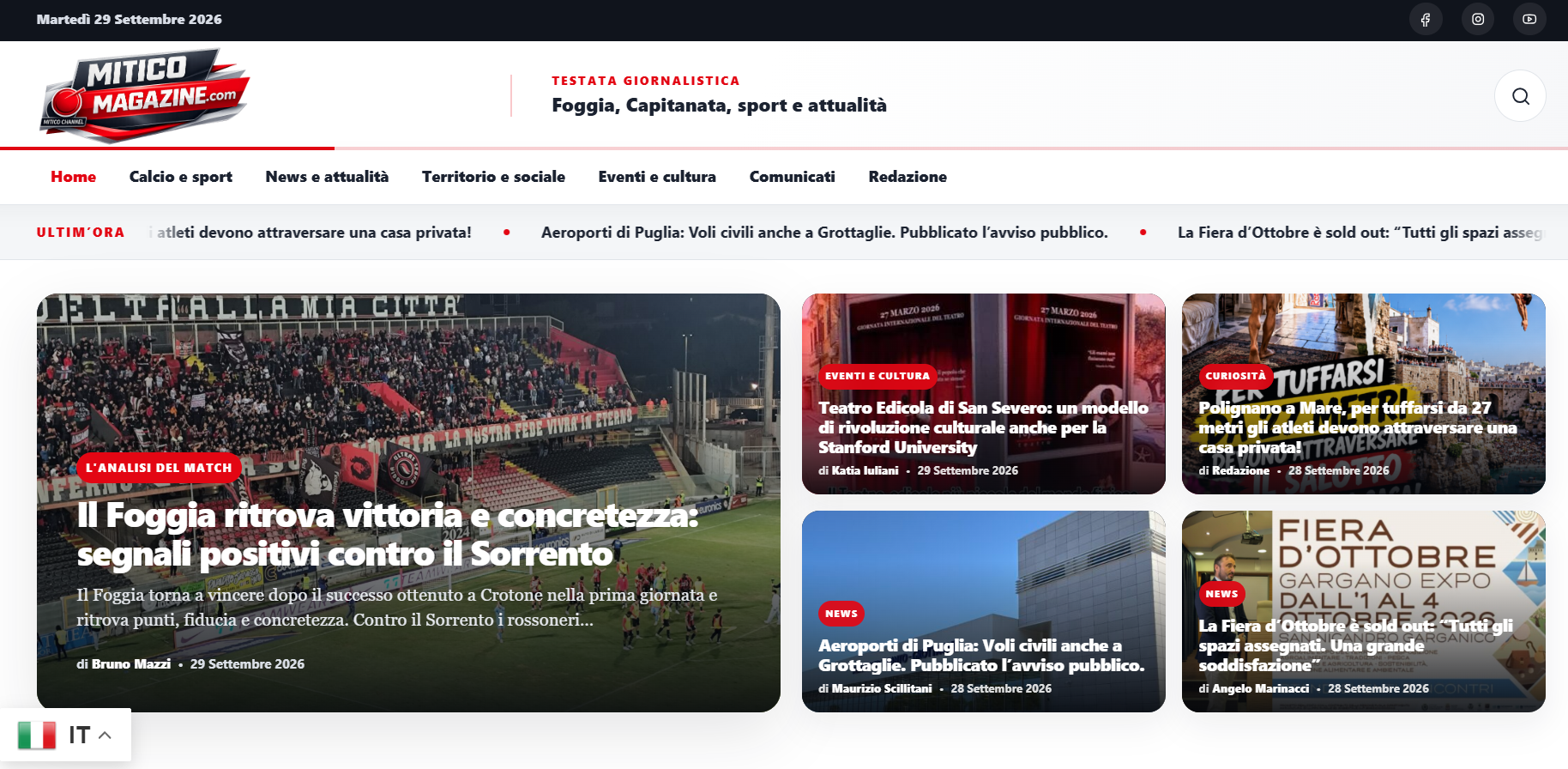
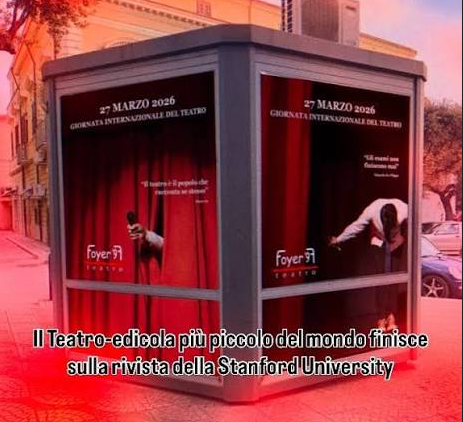
Mitico Magazine - The Teatro Edicola of San Severo: A Model of Cultural Revolution for Stanford University as Well Source: https://www.miticomagazine.com/territorio-e-sociale/teatro-edicola-di-san-severo-un-modello-di-rivoluzione-culturale-anche-per-la-stanford-university/ The Teatro Edicola in Via Tondi In San Severo, a singular metamorphosis has taken place: a newsstand abandoned for at least six years has found a new function and a new identity, transforming into one of the smallest and most unusual theatre stages in the world. An experiment born in the heart of the town which, in just a few months, has moved beyond local boundaries, attracting attention even overseas. It is called Teatro Edicola and it is a project conceived by the company Foyer '97, artistically directed by Francesco Gravino, which has brought the old newsstand in Via Tondi back to life through a formula that is both essential and surprising. Foyer '97 Foyer '97 APS was established as a formally constituted association active in the cultural sector in San Severo in 1997, born from the vocation of a group of actors, directors and theatre enthusiasts, with the aim of building a "living" and accessible theatre in the town. Over the years the company has developed a repertoire that includes texts from the classical tradition, contemporary dramaturgy, comedy and experimental projects, not limiting itself to the mere production of theatre shows, but also organising theatre courses and workshops and educational and cultural projects characterised by a strong inclusive ethos, particularly in schools. Foyer '97 does not always have a fixed artistic ensemble, but works with different performers and collaborators depending on the project; the only indispensable presence is that of Francesco Guido Gravino himself, actor, director and artistic director of the theatre company. The distinctive feature of Foyer '97 is certainly the value of social and cultural promotion attributed to theatre, the extremely close relationship with the audience and the search for a type of theatre outside conventional spaces, with cemeteries, trains, bell towers, and now a newsstand, as its backdrop. Six spectators, a few minutes and a minimal distance between stage and audience The project was launched on 27 March 2026, on the occasion of World Theatre Day, offering a theatrical experience built around a radical reduction of the conventional spaces and times of performance. The idea was born not only from the search for unconventional spaces, but also from "Edicola Fiore", the morning press review with a strongly ironic tone presented by Rosario Fiorello and Stefano Meloccaro, which was broadcast first only on Fiorello's social channels between 2011 and 2014, and then also on radio and television between 2016 and 2018. The review took its name from the diminutive of its founder, Fiore, and from the newsstand of a friend of Fiorello's in Via Flaminia Nuova in Rome, where the showman would meet early in the morning with a group of friends to read the newspapers. The San Severo newsstand was granted free of charge by its owner Pino Frau to the theatre group which, after obtaining temporary authorisation and institutional support from the Municipality of San Severo, refurbished it within two weeks at a cost of less than €3,000. Just six seats, a total surface area of 4 sq m, of which only 2 are for the stage area, less than a metre between actors and audience, a curtain, a lectern, two lights, performances lasting between 5 and 15 minutes, audience rotation every quarter of an hour: apparently minimal elements that end up subverting the usual relationship between stage and auditorium. Spectators, in fact, find themselves immersed in the stage action, in such proximity to the actors that every gesture, expression and word becomes immediately perceptible. In this way, theatre abandons its traditional spaces and insinuates itself into the everyday life of the street, becoming an intimate, concentrated and almost participatory experience. During the inaugural period admission was free with a subsequent voluntary donation from spectators; in the event of a more stable and longer-term concession, which could lead to seasonal theatre performances, the proposed ticket price would be €5. Audiences reward the experiment Foyer '97's gamble met with public interest right from the start: over 60 people attended the shows in a single afternoon, while the three days that inaugurated the season sold out. From a singular local experiment, the Teatro Edicola thus began to arouse curiosity even outside the province of Foggia, gradually transforming into a case of cultural and social interest, until it reached the American continent. From the province of Foggia to the "Stanford Social Innovation Review" The San Severo experience has now come under the international spotlight: in September 2026, the Stanford Social Innovation Review, an international journal and platform dedicated to social innovation published by the Stanford Center on Philanthropy and Civil Society at Stanford University in California, published on its website and in the Fall 2026 print edition the reportage "The Six-Seat Revolution", written by Dr Luciano Magaldi Sardella, independent journalist and researcher affiliated with the European Open University, and editorially supervised by deputy editor David V. Johnson. In the article, it is argued that the Teatro Edicola attracted attention overseas because the project concentrates cultural innovation, urban regeneration and proximity theatre into just a few square metres: starting from a real urban problem, it recovers an abandoned place with a modest investment, brings performance directly into public space and experiments with a much closer relationship between actors and spectators. From the point of view of theatrical representation, it also highlights how the format, based on micro-stories of five to twelve minutes, taken from great classics such as Goldoni, Chekhov, Ibsen, Euripides and Benni, and on audience rotation every fifteen minutes, transforms the physical limitations of the space into a precise dramaturgical choice, proving to be extremely innovative. All of this makes it possible to address some of the main critical issues in the sector: falling audience numbers, an exclusively elderly audience, reduced resources and distance from traditional cultural venues. The journal also highlights, however, the potential problems: economic sustainability, the need for stable institutional support and the difficulty of replicating the model, which is closely linked to the community and territory of San Severo. A model looking beyond San Severo Despite the difficulties, initial requests for information have already arrived from Lucca and Rome, where there is curiosity about the possibility of getting to know the model more closely and the steps needed to replicate it. The replicability formula, in fact, does not seem to require particularly costly infrastructure: an unused space, a targeted intervention, a cultural idea, in-depth knowledge of the surrounding area and a willingness to return that place to the community can be enough to trigger a new urban function. It is precisely in the disproportion between the modesty of the resources employed and the resonance generated by the initiative that perhaps the most original feature of the Teatro Edicola lies, certainly unique of its kind; there are, however, other examples in Italy of newsstands reused for other purposes: "Edicola 518", a twentieth-century kiosk abandoned in the centre of Perugia, now dedicated to independent publishing, art and cultural production; and in Rome itself, the abandoned newsstand in Piazza Testaccio used temporarily as a stage for a show by Fabio Morgan and the Erno newsstand in the Prati district, which almost every month offers a calendar of events, exhibitions, pop-ups and collaborations with artists and creative enterprises. Small revolutions, therefore, that tell stories of the reappropriation of urban spaces, of creativity and social innovation. And which, it is hoped, will take root in order to look ever further afield.

Mitico Magazine - The Teatro Edicola of San Severo: A Model of Cultural Revolution for Stanford University as Well Source: https://www.miticomagazine.com/territorio-e-sociale/teatro-edicola-di-san-severo-un-modello-di-rivoluzione-culturale-anche-per-la-stanford-university/ The Teatro Edicola in Via Tondi In San Severo, a singular metamorphosis has taken place: a newsstand abandoned for at least six years has found a new function and a new identity, transforming into one of the smallest and most unusual theatre stages in the world. An experiment born in the heart of the town which, in just a few months, has moved beyond local boundaries, attracting attention even overseas. It is called Teatro Edicola and it is a project conceived by the company Foyer '97, artistically directed by Francesco Gravino, which has brought the old newsstand in Via Tondi back to life through a formula that is both essential and surprising. Foyer '97 Foyer '97 APS was established as a formally constituted association active in the cultural sector in San Severo in 1997, born from the vocation of a group of actors, directors and theatre enthusiasts, with the aim of building a "living" and accessible theatre in the town. Over the years the company has developed a repertoire that includes texts from the classical tradition, contemporary dramaturgy, comedy and experimental projects, not limiting itself to the mere production of theatre shows, but also organising theatre courses and workshops and educational and cultural projects characterised by a strong inclusive ethos, particularly in schools. Foyer '97 does not always have a fixed artistic ensemble, but works with different performers and collaborators depending on the project; the only indispensable presence is that of Francesco Guido Gravino himself, actor, director and artistic director of the theatre company. The distinctive feature of Foyer '97 is certainly the value of social and cultural promotion attributed to theatre, the extremely close relationship with the audience and the search for a type of theatre outside conventional spaces, with cemeteries, trains, bell towers, and now a newsstand, as its backdrop. Six spectators, a few minutes and a minimal distance between stage and audience The project was launched on 27 March 2026, on the occasion of World Theatre Day, offering a theatrical experience built around a radical reduction of the conventional spaces and times of performance. The idea was born not only from the search for unconventional spaces, but also from "Edicola Fiore", the morning press review with a strongly ironic tone presented by Rosario Fiorello and Stefano Meloccaro, which was broadcast first only on Fiorello's social channels between 2011 and 2014, and then also on radio and television between 2016 and 2018. The review took its name from the diminutive of its founder, Fiore, and from the newsstand of a friend of Fiorello's in Via Flaminia Nuova in Rome, where the showman would meet early in the morning with a group of friends to read the newspapers. The San Severo newsstand was granted free of charge by its owner Pino Frau to the theatre group which, after obtaining temporary authorisation and institutional support from the Municipality of San Severo, refurbished it within two weeks at a cost of less than €3,000. Just six seats, a total surface area of 4 sq m, of which only 2 are for the stage area, less than a metre between actors and audience, a curtain, a lectern, two lights, performances lasting between 5 and 15 minutes, audience rotation every quarter of an hour: apparently minimal elements that end up subverting the usual relationship between stage and auditorium. Spectators, in fact, find themselves immersed in the stage action, in such proximity to the actors that every gesture, expression and word becomes immediately perceptible. In this way, theatre abandons its traditional spaces and insinuates itself into the everyday life of the street, becoming an intimate, concentrated and almost participatory experience. During the inaugural period admission was free with a subsequent voluntary donation from spectators; in the event of a more stable and longer-term concession, which could lead to seasonal theatre performances, the proposed ticket price would be €5. Audiences reward the experiment Foyer '97's gamble met with public interest right from the start: over 60 people attended the shows in a single afternoon, while the three days that inaugurated the season sold out. From a singular local experiment, the Teatro Edicola thus began to arouse curiosity even outside the province of Foggia, gradually transforming into a case of cultural and social interest, until it reached the American continent. From the province of Foggia to the "Stanford Social Innovation Review" The San Severo experience has now come under the international spotlight: in September 2026, the Stanford Social Innovation Review, an international journal and platform dedicated to social innovation published by the Stanford Center on Philanthropy and Civil Society at Stanford University in California, published on its website and in the Fall 2026 print edition the reportage "The Six-Seat Revolution", written by Dr Luciano Magaldi Sardella, independent journalist and researcher affiliated with the European Open University, and editorially supervised by deputy editor David V. Johnson. In the article, it is argued that the Teatro Edicola attracted attention overseas because the project concentrates cultural innovation, urban regeneration and proximity theatre into just a few square metres: starting from a real urban problem, it recovers an abandoned place with a modest investment, brings performance directly into public space and experiments with a much closer relationship between actors and spectators. From the point of view of theatrical representation, it also highlights how the format, based on micro-stories of five to twelve minutes, taken from great classics such as Goldoni, Chekhov, Ibsen, Euripides and Benni, and on audience rotation every fifteen minutes, transforms the physical limitations of the space into a precise dramaturgical choice, proving to be extremely innovative. All of this makes it possible to address some of the main critical issues in the sector: falling audience numbers, an exclusively elderly audience, reduced resources and distance from traditional cultural venues. The journal also highlights, however, the potential problems: economic sustainability, the need for stable institutional support and the difficulty of replicating the model, which is closely linked to the community and territory of San Severo. A model looking beyond San Severo Despite the difficulties, initial requests for information have already arrived from Lucca and Rome, where there is curiosity about the possibility of getting to know the model more closely and the steps needed to replicate it. The replicability formula, in fact, does not seem to require particularly costly infrastructure: an unused space, a targeted intervention, a cultural idea, in-depth knowledge of the surrounding area and a willingness to return that place to the community can be enough to trigger a new urban function. It is precisely in the disproportion between the modesty of the resources employed and the resonance generated by the initiative that perhaps the most original feature of the Teatro Edicola lies, certainly unique of its kind; there are, however, other examples in Italy of newsstands reused for other purposes: "Edicola 518", a twentieth-century kiosk abandoned in the centre of Perugia, now dedicated to independent publishing, art and cultural production; and in Rome itself, the abandoned newsstand in Piazza Testaccio used temporarily as a stage for a show by Fabio Morgan and the Erno newsstand in the Prati district, which almost every month offers a calendar of events, exhibitions, pop-ups and collaborations with artists and creative enterprises. Small revolutions, therefore, that tell stories of the reappropriation of urban spaces, of creativity and social innovation. And which, it is hoped, will take root in order to look ever further afield.

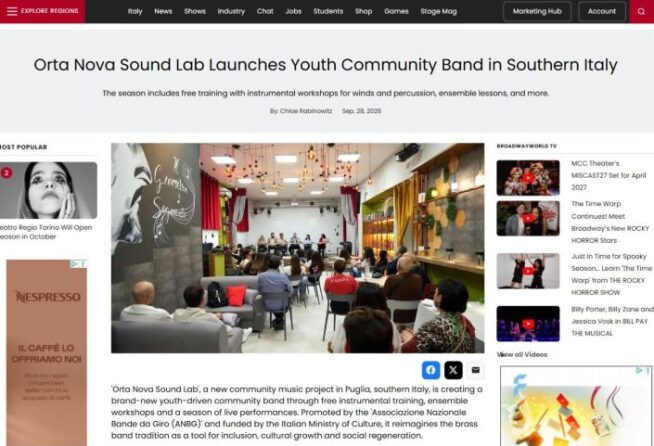
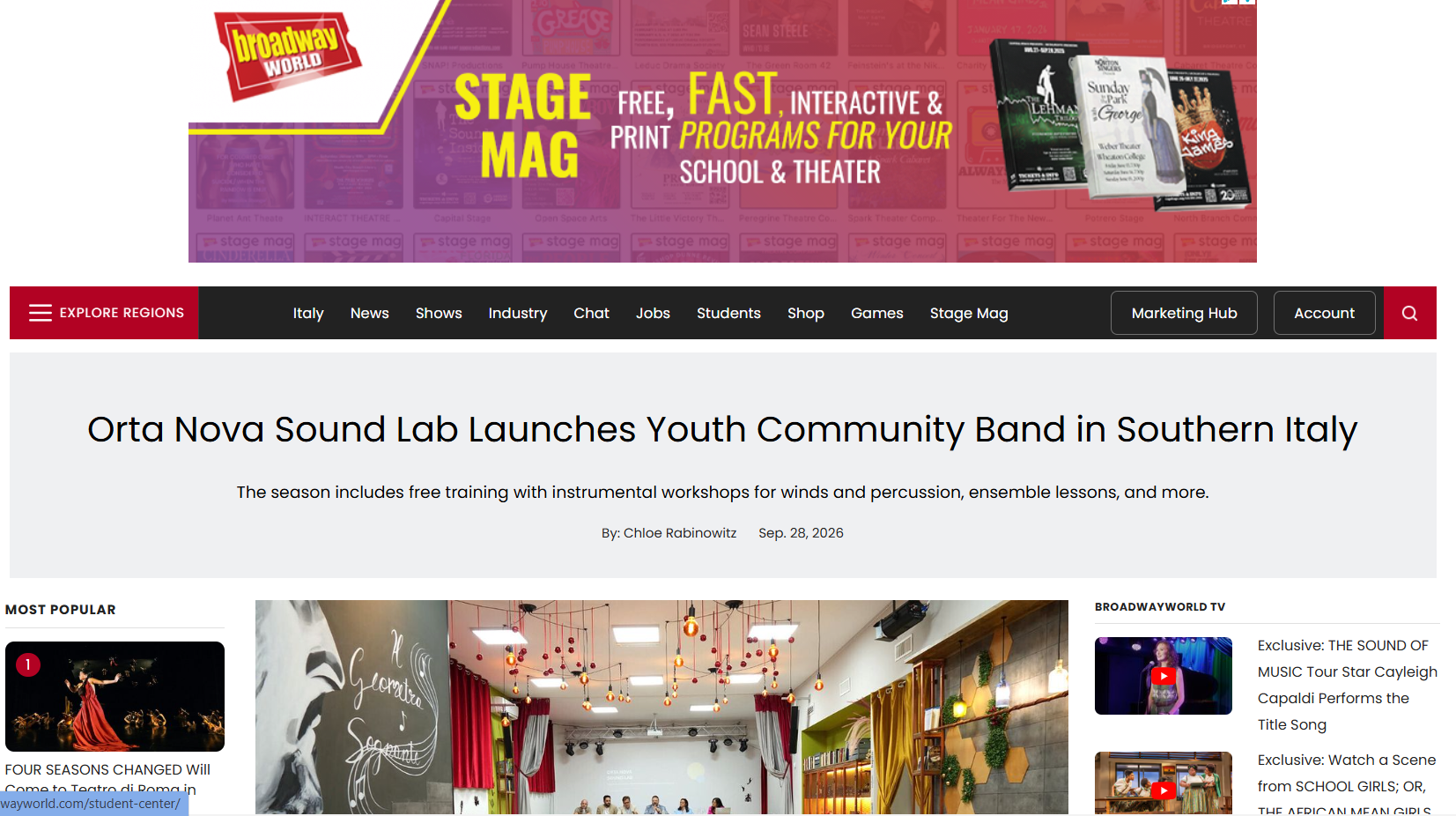
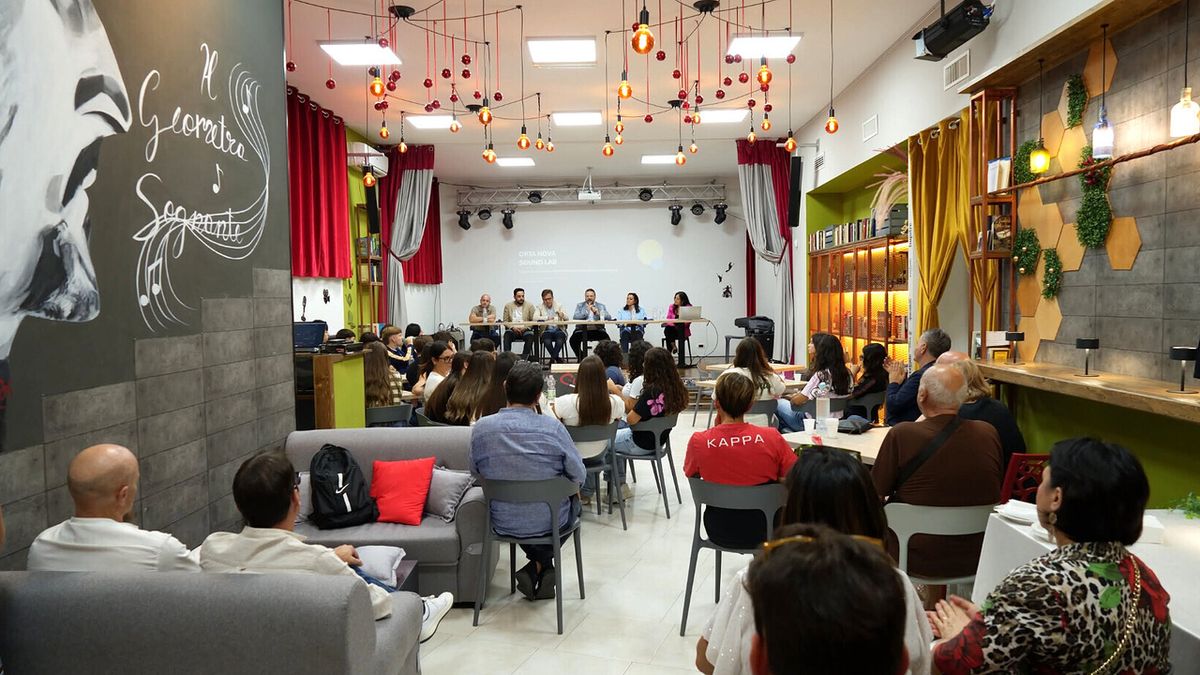
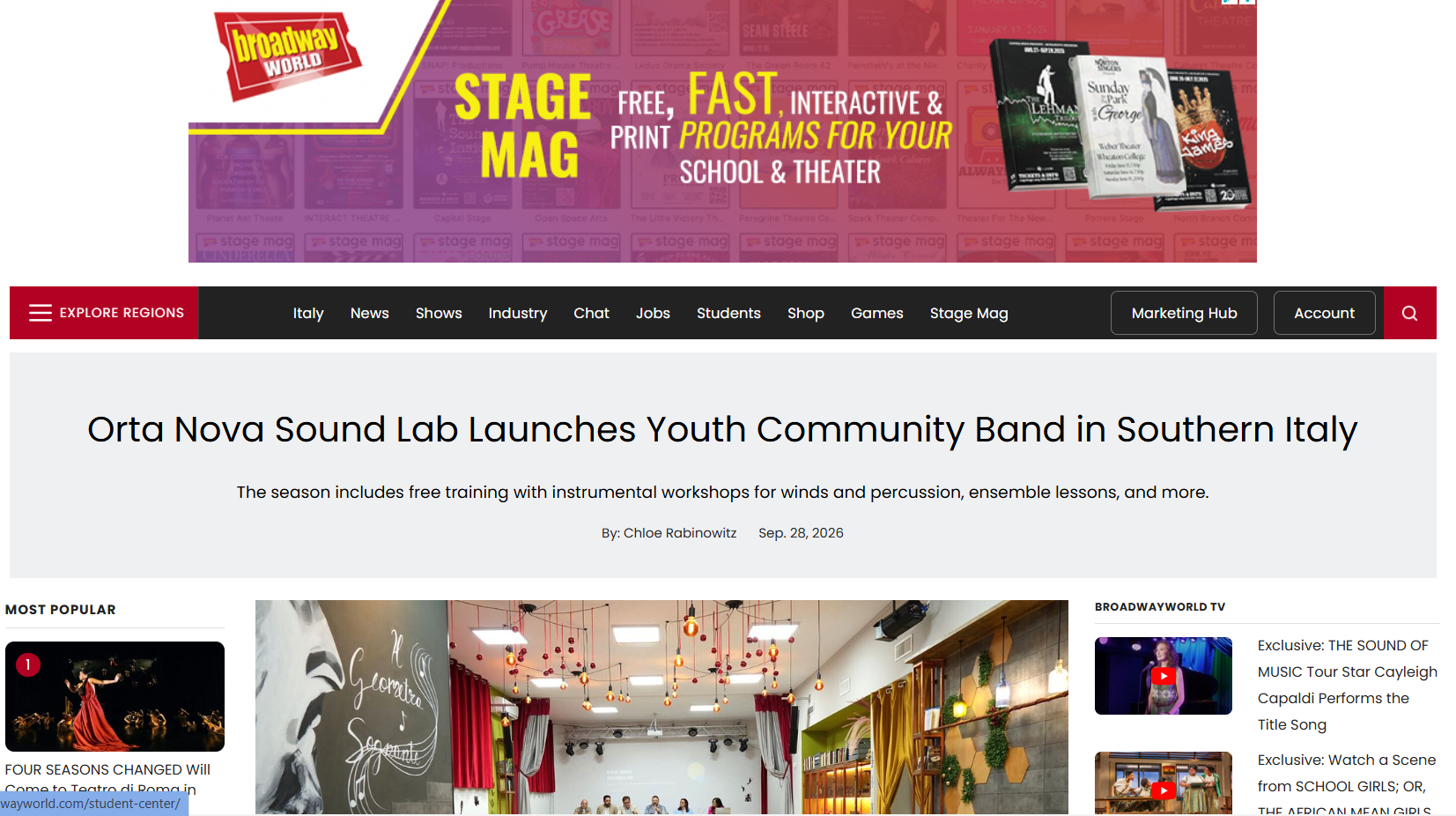
“ORTA NOVA SOUND LAB” FROM ORTA NOVA (PUGLIA) ON “BROADWAY WORLD,” NEW YORK, by LUCIANO MAGALDI SARDELLA SOURCE: https://www.broadwayworld.com/italy/article/Orta-Nova-Sound-Lab-Launches-Youth-Community-Band-in-Southern-Italy-20260928?fbclid=IwY2xjawUnzKtleHRuA2FlbQIxMABwZG9mAWJyaWQRMHZzU2xWWTdTNU5UMDFNY1lzcnRjBmFwcF9pZBAyMjIwMzkxNzg4MjAwODkyAAEeKFYDfacdBYHnYGZu4M9ZmxOT_wnVa7M53_p_1yfAmpSZSvn3ZDHF-BXqMr4_aem_Jd46xeSFwcUn5qapLvtu8w “Orta Nova Sound Lab Launches Youth Community Band in Southern Italy” The season includes free training with instrumental workshops for winds and percussion, ensemble lessons, and more. By: Chloe Rabinowitz ‘Orta Nova Sound Lab’, a new community music project in Puglia, southern Italy, is creating a brand-new youth-driven community band through free instrumental training, ensemble workshops and a season of live performances. Promoted by the ‘Associazione Nazionale Bande da Giro (ANBG)’ and funded by the Italian Ministry of Culture, it reimagines the brass band tradition as a tool for inclusion, cultural growth and social regeneration. Since the Italian government’s 2023 “Caivano Decree” (Decree-Law 123/2023), which targeted youth distress, educational poverty and juvenile crime, attention has turned to communities in Southern Italy where culture, education and public space can be rebuilt together. Orta Nova, in the Puglia region, is part of that broader conversation as ‘Orta Nova Sound Lab’ replying to local Mafia with music: a “social laboratory” that connects young people, schools, associations and institutions around a shared, tangible goal, a band of their own. It is the first initiative of its kind in Italy, to repurpose the distinctive tradition of the ‘touring brass bands’ and youth orchestra within a ministerial call devoted to urban peripheries and social vulnerability. Its explicit aim is to offer young people a real alternative to the screen and to the youth disenfranchisement associated with the anti-mafia “Caivano model”. The project was presented on September 21 at Luca ed Erminio Ferrandina C-Lab MAO facility and is funded under the Ministry of Culture’s public call for the promotion of musical practices in suburban and socially Mafia-rooted vulnerable areas, and it is supported by the Municipality of Orta Nova. Project partners include the cultural association APS MAO FM 19.77, the “A. Olivetti” secondary school, the “Sandro Pertini” comprehensive school, the Music Art association and C.I.S.A. Foggia. At the heart of the project is a simple idea: give young people a reason to be together, in person, making something real. “A music band is aggregation!,” said Antonella Spagnoletti, ANBG project director. She explained that the band means cohesion, and that bringing young people together to train and live differently from the social-media world is among the association’s primary goals. Mayor Domenico Di Vito called it an important project that can make a real difference, with all the ingredients to connect the town’s cultural and social networks with anti-mafia roots. He added that the administration is committed to making the initiative sustainable, structured and lasting. The presentation also involved Benedetto Grillo, president of ANBG; Grazia Maria Starace, regional councillor; Sebastiano Battista, councillor for relations with third-sector organizations; Vittoria Mastrogiacomo, councillor for culture; and Alfredo Coppola, representing the Olivetti school. Journalist Giuseppe Di Bisceglie moderated. The season ahead: Free training: instrumental workshops for winds and percussion, ensemble lessons and rehearsals led by qualified teachers and conductors, open to aspiring musicians, families, schools and citizens. October: a parade of marching bands and youth orchestra through the streets of Orta Nova, Puglia, southern Italy. November-December: concerts by the Gran Concerto Bandistico di Conversano and the Gran Concerto Bandistico “Biagio Abbate” of Bisceglie, giving the young musicians a chance to learn from professional ensembles. A special evening of women’s music with the all-female Orchestra Note di Puglia, reinforcing the project’s values of inclusion and equal opportunity. January 2027: the first concert of the new Orta Nova community band. In particular, ‘Orta Nova Sound Lab (Community Band and Social Regeneration through Music)’ is a project of the ‘Associazione Nazionale Bande da Giro (ANBG),’ a national association of bands active across south-Italians regions like Abruzzo, Basilicata, Calabria, Campania, Molise and Puglia. Funded by the Italian Ministry of Culture and supported by the Municipality of Orta Nova, it offers free music education and live performance opportunities to strengthen inclusion, cultural growth and community cohesion.

“ORTA NOVA SOUND LAB” DA ORTA NOVA (PUGLIA) SUL “BROADWAY WORLD” DI NEW YORK by LUCIANO MAGALDI SARDELLA SOURCE: https://www.broadwayworld.com/italy/article/Orta-Nova-Sound-Lab-Launches-Youth-Community-Band-in-Southern-Italy-20260928?fbclid=IwY2xjawUnzKtleHRuA2FlbQIxMABwZG9mAWJyaWQRMHZzU2xWWTdTNU5UMDFNY1lzcnRjBmFwcF9pZBAyMjIwMzkxNzg4MjAwODkyAAEeKFYDfacdBYHnYGZu4M9ZmxOT_wnVa7M53_p_1yfAmpSZSvn3ZDHF-BXqMr4_aem_Jd46xeSFwcUn5qapLvtu8w “Orta Nova Sound Lab Launches Youth Community Band in Southern Italy” The season includes free training with instrumental workshops for winds and percussion, ensemble lessons, and more. By: Chloe Rabinowitz ‘Orta Nova Sound Lab’, a new community music project in Puglia, southern Italy, is creating a brand-new youth-driven community band through free instrumental training, ensemble workshops and a season of live performances. Promoted by the ‘Associazione Nazionale Bande da Giro (ANBG)’ and funded by the Italian Ministry of Culture, it reimagines the brass band tradition as a tool for inclusion, cultural growth and social regeneration. Since the Italian government’s 2023 “Caivano Decree” (Decree-Law 123/2023), which targeted youth distress, educational poverty and juvenile crime, attention has turned to communities in Southern Italy where culture, education and public space can be rebuilt together. Orta Nova, in the Puglia region, is part of that broader conversation as ‘Orta Nova Sound Lab’ replying to local Mafia with music: a “social laboratory” that connects young people, schools, associations and institutions around a shared, tangible goal, a band of their own. It is the first initiative of its kind in Italy, to repurpose the distinctive tradition of the ‘touring brass bands’ and youth orchestra within a ministerial call devoted to urban peripheries and social vulnerability. Its explicit aim is to offer young people a real alternative to the screen and to the youth disenfranchisement associated with the anti-mafia “Caivano model”. The project was presented on September 21 at Luca ed Erminio Ferrandina C-Lab MAO facility and is funded under the Ministry of Culture’s public call for the promotion of musical practices in suburban and socially Mafia-rooted vulnerable areas, and it is supported by the Municipality of Orta Nova. Project partners include the cultural association APS MAO FM 19.77, the “A. Olivetti” secondary school, the “Sandro Pertini” comprehensive school, the Music Art association and C.I.S.A. Foggia. At the heart of the project is a simple idea: give young people a reason to be together, in person, making something real. “A music band is aggregation!,” said Antonella Spagnoletti, ANBG project director. She explained that the band means cohesion, and that bringing young people together to train and live differently from the social-media world is among the association’s primary goals. Mayor Domenico Di Vito called it an important project that can make a real difference, with all the ingredients to connect the town’s cultural and social networks with anti-mafia roots. He added that the administration is committed to making the initiative sustainable, structured and lasting. The presentation also involved Benedetto Grillo, president of ANBG; Grazia Maria Starace, regional councillor; Sebastiano Battista, councillor for relations with third-sector organizations; Vittoria Mastrogiacomo, councillor for culture; and Alfredo Coppola, representing the Olivetti school. Journalist Giuseppe Di Bisceglie moderated. The season ahead: Free training: instrumental workshops for winds and percussion, ensemble lessons and rehearsals led by qualified teachers and conductors, open to aspiring musicians, families, schools and citizens. October: a parade of marching bands and youth orchestra through the streets of Orta Nova, Puglia, southern Italy. November-December: concerts by the Gran Concerto Bandistico di Conversano and the Gran Concerto Bandistico “Biagio Abbate” of Bisceglie, giving the young musicians a chance to learn from professional ensembles. A special evening of women’s music with the all-female Orchestra Note di Puglia, reinforcing the project’s values of inclusion and equal opportunity. January 2027: the first concert of the new Orta Nova community band. In particular, ‘Orta Nova Sound Lab (Community Band and Social Regeneration through Music)’ is a project of the ‘Associazione Nazionale Bande da Giro (ANBG),’ a national association of bands active across south-Italians regions like Abruzzo, Basilicata, Calabria, Campania, Molise and Puglia. Funded by the Italian Ministry of Culture and supported by the Municipality of Orta Nova, it offers free music education and live performance opportunities to strengthen inclusion, cultural growth and community cohesion.

"Alle Kfz Mechatroniker sind heutzutage doch nur noch Teiletauscher und ohne den Laptop der denen sagt was die neu machen sollen, sind die doch aufgeschmissen!" Diese Aussage höre ich (leider) sehr oft und kann diesbezüglich nur mit dem Kopf schütteln... Ja, es gibt leider "schwarze Schafe" im Kfz Gewerbe, die eben genau diese Methodik in ihrer Arbeit anwenden und dafür noch nen Haufen Geld verlangen. Außerdem ist diese wahllose teiletauscherei nicht zielführend, unnötig teuer, Materialverschwendung und der Kunde bekommt sein Problem nicht behoben, sondern bezahlt für unnötige Reparaturen. Ich distanziere mich in aller Deutlichkeit von solchen Amateuren! Ich für meinen Teil habe den Anspruch, den Kunden die bestmöglichste und punktgenaueste Lösung/Reparatur abzuliefern und natürlich benötige ich dafür die Hilfe einer Diagnosesoftware 💻 Aber was genau mache ich damit? Lese ich stumpf Fehler aus und weiß sofort was kaputt ist, weil der Laptop es mir sagt? Nein🤝 Denn oftmals ist der Fehlerspeicher und der dort abgelegte Fehlercode nur ein Indiz auf das wirkliche Problem. Ein für Nicht-Automenschen verständliches Beispiel? Gerne: Nehmen wir nen Klassiker Fehlercode: Dieselpartikelfilter verstopft SCR System Störungsmodus (AD Blue System) Was könnte es also sein? Der Laie sagt: "Ja! Da müssen wir den mal statisch regenerieren 🤔" (Eine vom Tester erzwungene Aufheizung des Partikelfilters, durch erhöhte Nacheinspritzung der Einspritzdüsen im Stand. Dadurch wird der Partikelfilter quasi 'Frei gebrannt') - Der Teiletauscher sagt: "Herzlichen Glückwunsch, Sie brauchen einen neuen Partikelfilter, das macht 1600€ ohne Einbau!💸" (Und danach ist die Lampe trotzdem noch an) - Der fachlichen kompetente Kfz Mechatroniker sagt: "Es muss einen Grund haben, warum der Partikelfilter verstopft ist und das SCR System im Störungsmodus ist🤨) Und hier beginnt die Diagnose: Zuerst einmal Systemverständniss zeigen - Der Partikelfilter ist vom SCR System abhängig und andersrum ebenfalls. Wenn das eine System nicht arbeitet, geht das andere unweigerlich in den Störungsmodus. Erfahrungsgemäß geht der Fehler in 80% der Fälle vom SCR System aus und der Partikelfilter ist ein Folgefehler. Arbeitet das SCR System nicht, sinkt der Wirkungsgrad des Katalysators und es sammelt sich recht schnell, eine nicht unerhebliche Menge an Partikeln/Ruß im Partikelfilter. Dieser würde sehr gerne durch eine Regeneration während der Fahrt (von der der Kunde in der Regel nichts mitbekommt, außer es wird explizit angezeigt) diese angesammelte Masse zum verbrennen bringen. Dafür braucht er aber ein funktionierendes SCR System...ihr merkt schon wo das hinführt Richtig MOTORLAMPE AN💡 Deswegen geht der erste Blick in die Daten des SCR Systems: - Füllstand AdBlue -> 80% - i.O. - Harnstoff % -> 33,5% - i.O. - SCR Systemprüfung -> Störung - SCR Ventil -> Hohe Eingangsspannung Der letzte Fehlercode deutet auf ein Problem des SCR Ventils hin (Dieses Ventil spritzt das AD Blue in den Partikelfilter ein, um den katalytischen Wirkungsgrad des Partikelfilters zu erhöhen) Isses kaputt? Möglich Kann man es prüfen? Ja In den Beispiel würde man jetzt die Kabel auf Spannung prüfen, aber ein Fehlercode mit "hoher Spannung" bedeutet in der Regel, dass das Bauteil zum arbeiten mehr Spannung als sonst dafür vorgesehenen war benötigte. Ist es also kaputt? Nein! Nach dem Ausbau des Ventils sieht mal deutliche AD-Blue Ablagerungen die das Ventil verstopften und deswegen ging die Spannung hoch🤝 Also Ventil reinigen, Sitz im Partikelfilter reinigen, neue Dichtung drauf, einbauen, Partikelfilter statisch regenerieren, Fehler löschen -> gute Fahrt✌️ Je nach Werkstatt bezahlt man dafür zwischen 150€-300€ In der Teiletauscher Werkstatt um die 3000€ mit allem drum und dran Deswegen: Seht bitte nicht immer nur diejenigen, die unserem Gewerbe durch unseriöse Arbeit schaden. Seht stattdessen diejenigen, die ihr Handwerk verstehen und gute Arbeit abliefern🤝 Danke fürs Lesen Euer Maxi 🔧 #KfzMechatronik #AutoReparatur #Diagnose
Ein Forschungsteam der Cornell University in den USA hat eine neue Methode namens „Direct Electrode-to-Electrode Regeneration“ (DEER) entwickelt, die das Recycling von Lithium-Ionen-Akkus revolutionieren könnte, indem sie nicht nur die Elektroden erhält, sondern auch deren Lebensdauer verlängert und die Kosten sowie den Ressourcenverbrauch im Vergleich zu herkömmlichem Recycling senkt. #AkkuRecycling #LithiumBatterien #Nachhaltigkeit
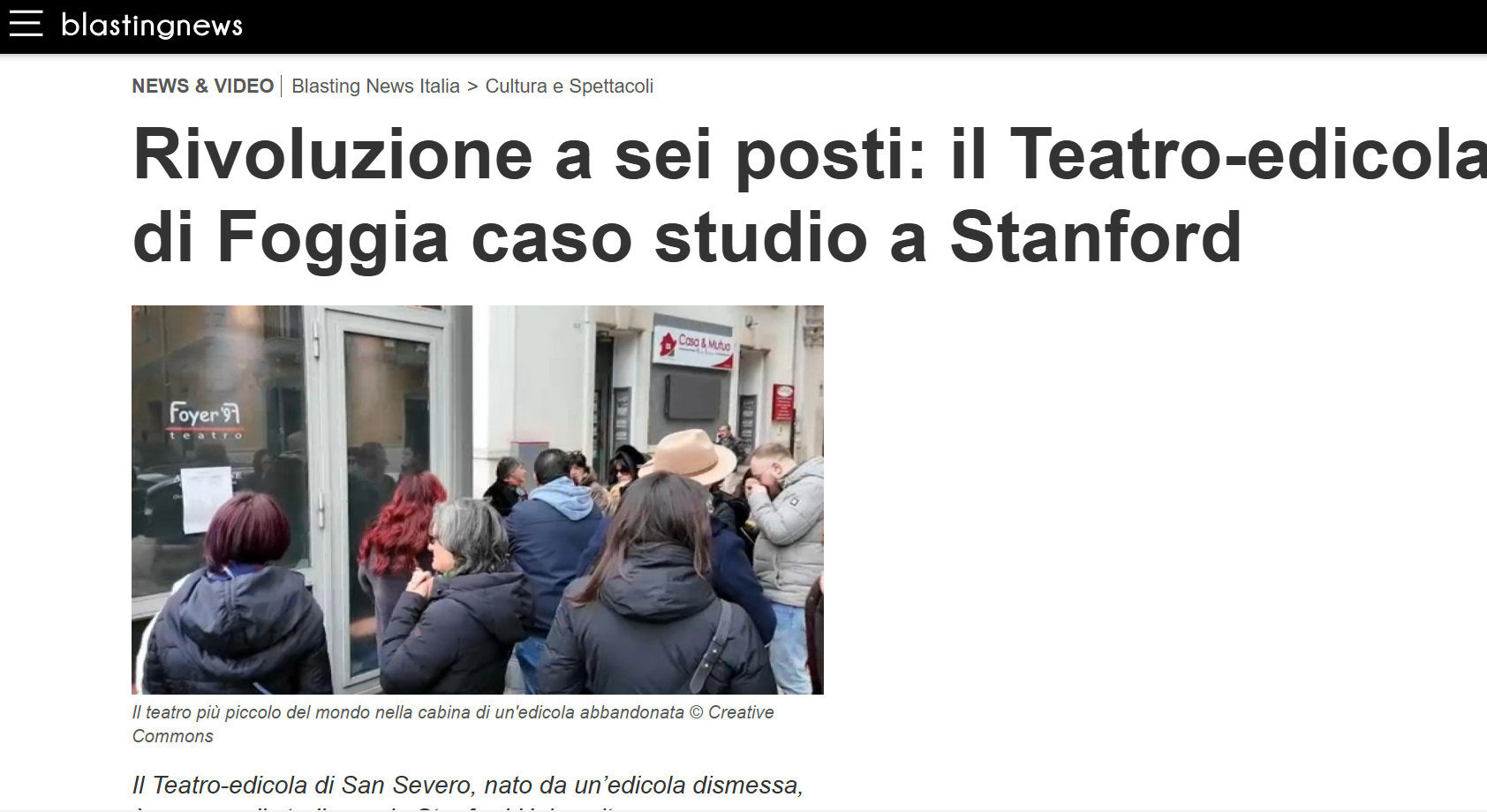
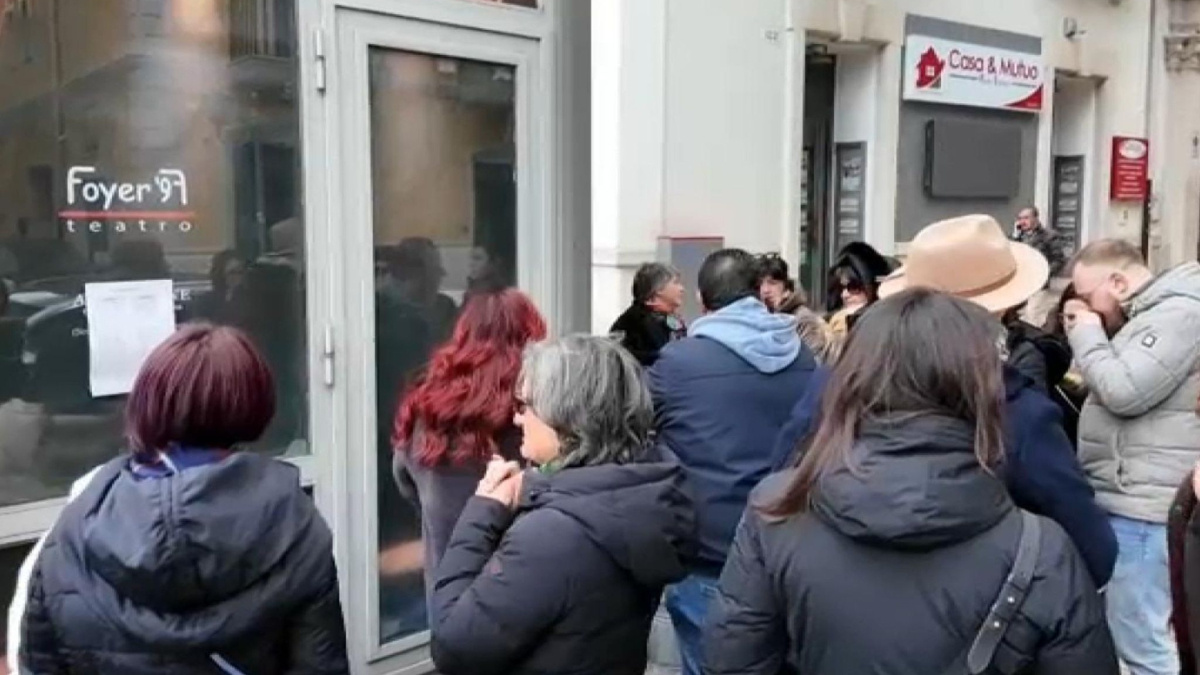
"BLASTING NEWS ITALIA": SIX-SEAT REVOLUTION: FOGGIA'S NEWSSTAND THEATRE BECOMES A CASE STUDY AT STANFORD SOURCE: https://it.blastingnews.com/cultura-spettacoli/2026/09/rivoluzione-a-sei-posti-il-teatro-edicola-di-foggia-caso-studio-a-stanford-004141773.html SAN SEVERO (FG) - The Newsstand Theatre of San Severo, created from a disused news-stand, is a case study for Stanford University by Chiara Valentini The Newsstand Theatre of San Severo, in the province of Foggia, known as the smallest theatre in the world, has become a prestigious case study for Stanford University. The news, released on 19 September 2026, concerns the publication in the Stanford Social Innovation Review of the reportage entitled "The Six-Seat Revolution". The feature is entirely devoted to the innovative cultural project of the theatre company Foyer 97 and its artistic director, Francesco Gravino. The article, authored by the Foggia-born researcher Luciano Magaldi and supervised by editor David V. Johnson, appears in the magazine's Dispatches section. The Stanford Social Innovation Review is a publication that focuses on cross-sectoral solutions to global problems. The Apulian project, at the heart of this international recognition, was born from the transformation of a disused and abandoned site into a vibrant space dedicated to very small-scale theatrical performances. A six-seat stage for a unique experience The Newsstand Theatre is distinguished by its extremely small dimensions: it has just six chairs and occupies less than two square metres. Its innovative format provides for performances every 15 minutes, ensuring a high turnover of audiences. Attendance has been sold out, attracting a heterogeneous audience of young people and adults. This particular configuration drastically reduces the distance between actors and spectators, concentrating the theatrical experience in an intimate and original space created from a former news-stand. Francesco Gravino expressed his pride, linking this important recognition to the journey undertaken by the Foyer 97 company. The artistic director also mentioned the numerous requests to replicate the model received from other Italian cities, including Lucca and Rome. Gravino emphasised the urgent need to introduce specific regional regulations to facilitate the reconversion of disused sites into cultural activities, describing them as genuine "cultural outposts" for the community. Currently, Gravino and the company's actors are engaged in preparing the new programme. Foyer 97: thirty years of activity and new challenges The theatre company Foyer 97 is about to celebrate a significant anniversary. Francesco Gravino announced that "next year our company will be 30 years old", a milestone that will be celebrated with the introduction of some important innovations. This anniversary is closely linked to the resumption of activities scheduled for October and to the presentation of the new programme for the Newsstand Theatre. The "Stanford Social Innovation Review" reportage recalled that the Newsstand Theatre was inaugurated on the morning of 27 March 2026, coinciding with World Theatre Day. This event marked the beginning of a project that continues to generate interest and to demonstrate the potential of urban regeneration through culture.

"FOGGIA SERA": FROM SAN SEVERO TO STANFORD UNIVERSITY: THE "SIX-SEAT REVOLUTION" OF THE TEATRO EDICOLA SOURCE: https://foggiasera.it/2026/09/19/da-san-severo-alla-stanford-university-la-rivoluzione-a-sei-posti-del-teatro-edicola-by-luciano-magaldi-sardella/ SAN SEVERO (FG) - The Stanford Social Innovation Review (SSIR), the scholarly journal published by the Stanford Center on Philanthropy and Civil Society of the prestigious Stanford University - ranked second in the world in the Shanghai Ranking of World Universities - and recognised as the pre-eminent global reference for researchers, policy-makers, and practitioners of innovative entrepreneurship and philanthropy, hath published the reportage "The Six-Seat Revolution" upon the Teatro Edicola of San Severo, the smallest theatre in the world by dimension and capacity, born of the intuition of Francesco Gravino, Artistic Director of the Foyer '97 company. Its author is Luciano Magaldi Sardella, independent researcher and international journalist, native of Orta Nova and of maternal Sanseverese extraction, hitherto author of studies published in international academic journals. The piece appeared in the September (Fall 2026) edition of the academic review, within the section devoted to Arts & Culture. A presence that projects San Severo, and more broadly the Capitanata, into the international élite of research upon cultural and urban innovation. The Theatre Is Born of a Disused Newsstand It all commenced on 27 March 2026, World Theatre Day, in Piazza Municipio at San Severo. A news-kiosk, disused for years in Via Matteo Tondi, raised its shutter to reveal, in lieu of newspapers and cigarettes, an actor upon the stage. Within: six chairs. At intervals of fifteen minutes, a new audience took its place. Drawing inspiration from the televisual format of Edicola Fiore by the noted Sicilian presenter of radio and television, there was born the Teatro Edicola, a structure now recognised in the media as the smallest theatre in the world for dimensions and capacity: four square metres in aggregate, with a scenic space of less than two metres. Gravino hath led Foyer '97 for nigh on thirty years, forging a most exacting artistic trajectory in a context - that of southern Italy - historically penalised in respect of public financing for culture. And yet, upon beholding that vacant kiosk, he elected the path of provocation: to transfigure the bare minimum into a manifesto concerning the very meaning of theatre. The Model and its Measurable Effects The inaugural season endured for three days. All performances were sold out. In a single afternoon, upwards of sixty persons attended the representations. The cost of the entire pilot operation was less than three thousand dollars. The formula is radical in its constitutive elements: performances of five to twelve minutes' duration, conceived expressly for the space; rotation of the audience every fifteen minutes; direct and inescapable visual contact betwixt actor and spectator; no architectural or psychological distance betwixt stage and auditorium; ticket proposed at five euros per person, within a hybrid economic model comprising municipal support, local sponsorship, and box-office receipts. According to the analysis published in the Stanford Social Innovation Review, the Teatro Edicola represents a replicable model of low-cost, high-impact urban regeneration, capable of reactivating abandoned commercial spaces (newsstands, tobacconists, telephone kiosks) without recourse to large infrastructural investment. The Voice of Him who Built it All Francesco Gravino entertaineth no doubt as to the import of the enterprise: "Grand theatres are not requisite to transform a fragment of a city. What is requisite is a sound idea and the courage to restore to the collectivity a space that hath lost its function." And upon the import of international recognition: "Teatro Edicola was born to demonstrate that a place of encounter and culture may arise wheresoever, even within two square metres. That this work should today be studied at an international level and that enquiries should arrive from cities such as Lucca and Rome is confirmation that the path pursued is the right one." The director hath further explicated the symbolic choice of place: the newsstand was the locus wherein each morn one paused, informed oneself, and recognised oneself as a community. Its disappearance rent a precise social fabric. To restore unto it a cultural function is to re-stitch that tissue at the very point wherefrom it was torn. The Challenges: Scalability, Institutional Recognition, Entrenchment The SSIR reportage doth not confine itself to celebration of the project but analyseth also the critical junctures. The first is sustainability over time: an activation of three days, howsoever successful, doth not yet constitute a stable programme, a veritable seasonal repertory (weekends from spring to autumn) with a rotating roster of local and regional companies. The second juncture concerneth replicability without loss of identity: the Teatro Edicola functioneth also by virtue of the profound roots of Foyer '97 in the Sanseverese territory. To transplant the model elsewhere requireth not merely a physical kit, but an entire process of community-building. The third obstacle is institutional: in a system of public funding that rewardeth organisations with consolidated premises and predictable output metrics, a project deliberately experimental, hyperlocalist, and by its very nature impermanent strugglest to gain access to the ordinary channels of the Fondo Nazionale per lo Spettacolo dal Vivo (FNSV) of the Ministry of Culture. A Lesson that Travels beyond Puglia In the Stanford Social Innovation Review the author concludeth that the intuitions of the Teatro Edicola transcend the Sanseverese context: in any community wherein cultural institutions struggle to reach youthful, diverse, or economically marginal publics, the principle of proximity proveth disruptive: to encounter people where they already find themselves, in the spaces they inhabit quotidianly. From the populous centre of Daunia to the pages of Stanford University: San Severo and its kiosk demonstrate that six chairs, four square metres, and a vision suffice to alter the manner in which a city conceiveth of itself. And to offer unto the world a model that costeth less than one might credit, yet is worth far more than one might imagine.
"PUGLIA IN": FROM SAN SEVERO TO STANFORD UNIVERSITY: THE 'SIX-SEAT REVOLUTION' OF TEATRO EDICOLA SOURCE: https://www.pugliain.net/301723-san-severo-teatro-edicola/ SAN SEVERO (FG) - The "Stanford Social Innovation Review (SSIR)", the scholarly quarterly published by the "Stanford Center on Philanthropy and Civil Society" at the prestigious Stanford University — ranked second in the world in the Shanghai Ranking of World Universities — and universally regarded as the pre-eminent global point of reference for scholars, policy-makers and practitioners in the fields of innovative enterprise and philanthropy, hath published the reportage “The Six-Seat Revolution” concerning the Teatro Edicola of San Severo, the smallest theatre in the world, born of the intuition of Francesco Gravino, Artistic Director of the Foyer ’97 company. Its author is Luciano Magaldi Sardella, independent researcher and international journalist, a native of Orta Nova with maternal lineage rooted in San Severo, and erstwhile contributor of studies published in international academic journals. The piece appeared in the Septembertide (Fall 2026) edition of the academic review, within the section consecrated to Arts and Culture. A presence which projecteth San Severo, and more broadly the entirety of Capitanata, into the international élite of research on cultural and urban innovation. The theatre is born from a disused newsstand It all commenceth upon 27 March 2026, World Theatre Day, in the Piazza Municipio at San Severo. A newsstand long disused in Via Matteo Tondi raiseth its shutter to reveal, in lieu of newspapers and cigarettes, an actor upon the stage. Within: six chairs. At intervals of fifteen minutes, a new audience taketh its place. Drawing inspiration from the televisual format of "Edicola Fiore" of the celebrated Sicilian radio and television presenter, there was born Teatro Edicola, a structure now recognised in the media as the smallest theatre in the world by both dimension and capacity: four square metres in total, with a scenic space of less than two metres. Gravino hath led Foyer ’97 for nigh on thirty years, forging an exacting artistic trajectory in a context — that of Southern Italy — historically penalised with respect to public funding for culture. And yet, when he beheld that vacant kiosk, he chose the path of provocation: to transmute the bare minimum into a manifesto concerning the very signification of theatre. The model and its measurable effects The inaugural season endured for three days. All performances were sold out. In a single afternoon, upwards of sixty persons attended the representations. The cost of the entire pilot operation was less than three thousand dollars. The formula is radical in its constitutive elements: performances of five to twelve minutes' duration, conceived expressly for the space rotation of the audience every fifteen minutes direct and ineluctable visual contact betwixt actor and spectator no architectural or psychological distance betwixt stage and stalls ticket proffered at five euros per person, with a hybrid economic model envisaging municipal support, local sponsors and box-office receipts According to the analysis published in the "Stanford Social Innovation Review", Teatro Edicola representeth a replicable paradigm of low-cost, high-impact urban regeneration, capable of reactivating abandoned commercial spaces — newsstands, tobacconists, telephone kiosks — without the necessity of substantial infrastructural investment. The voice of him who built it all Francesco Gravino entertaineth no doubt as to the significance of the undertaking: “One doth not require grand theatres to transform a portion of a city. One requireth a sound idea and the courage to restore to the collectivity a space that hath lost its function.” And concerning the import of international recognition: “Teatro Edicola was born to demonstrate that a locus of encounter and culture may arise wheresoever, even within two square metres. That today this labour should be studied at an international level and that enquiries should arrive from cities such as Lucca and Rome is confirmation that the path is the right one.” The director hath also explicated the symbolic choice of place: the newsstand was the point at which, each morn, one paused, one apprised oneself, one recognised oneself as a community. Its disappearance lacerated a precise social fabric. To restore unto it a cultural function signifieth to re-stitch that fabric from the very point at which it was rent. Challenges: scalability, institutional recognition, rootedness The SSIR reportage doth not merely celebrate the project but analyseth also its critical nodes. The first is sustainability over time: an activation of three days, howsoever successful, doth not yet constitute a stable programme, a veritable seasonal programmation (weekends from springtide to autumn) with a rotating roster of local and regional companies. The second node concerneth replicability without loss of identity: Teatro Edicola functioneth also by virtue of the profound roots of Foyer ’97 within the San Severo territory. To transplant the model elsewhere requireth not merely a physical kit, but an entire process of community building. The third obstacle is institutional: in a system of public funding which rewardeth organisations possessed of consolidated premises and predictable output metrics, a project deliberately experimental, hyper-localist and by its very nature impermanent struggleth to gain access to the ordinary channels of the Fondo Nazionale per lo Spettacolo dal Vivo (FNSV) of the Ministry of Culture. A lesson which travelled beyond Puglia In the Stanford Social Innovation Review the author concludeth that the intuitions of Teatro Edicola transcend the San Severo context: in any community wherein cultural institutions struggle to reach youthful, diverse, or economically marginal publics, the principle of proximity proveth disruptive: to meet people where they already are, in the spaces they inhabit quotidianly. From the populous centre of Daunia to the pages of Stanford University: San Severo and its diminutive kiosk demonstrate that six chairs, four square metres, and a vision sufficeth to alter the manner in which a city conceiveth itself. And to proffer unto the world a model which costeth less than one might suppose yet is worth far more than one might imagine.

"CIVICO 93": FROM SAN SEVERO TO STANFORD UNIVERSITY: THE 'SIX-SEAT REVOLUTION' OF TEATRO EDICOLA" SOURCE: https://www.civico93.it/da-san-severo-alla-stanford-university-la-rivoluzione-a-sei-posti-del-teatro-edicola/ SAN SEVERO (FG) - The scholarly reportage by Luciano Magaldi Sardella on the micro-theatre of Francesco Gravino has appeared in the most authoritative journal in the world in the field of social innovation: six chairs and four square metres that are transforming the manner in which we conceive theatre and the city. The "Stanford Social Innovation Review (SSIR)", the academic review published by the Stanford Center on Philanthropy and Civil Society of the prestigious Stanford University, ranked second in the world in the Shanghai Ranking of World Universities, constitutes the global point of reference for researchers, policy-makers and practitioners of innovative enterprise and philanthropy. It has published the reportage "The Six-Seat Revolution" on the Teatro Edicola of San Severo, the smallest theatre in the world by dimension and capacity, born from the intuition of Francesco Gravino, artistic director of the company Foyer '97. Its author is Luciano Magaldi Sardella, an independent researcher and international journalist, a native of Orta Nova with maternal roots in San Severo, already the author of studies published in international academic journals. The piece appeared in the autumnal edition [Fall 2026] of the academic review, within the section dedicated to Arts and Culture. A presence that projects San Severo, and more generally the Capitanata, into the international élite of research on cultural and urban innovation. The theatre originates from a disused newsstand It all began on 27th March 2026, World Theatre Day, in the Piazza Municipio in San Severo. A newsstand disused for years in Via Matteo Tondi raised its shutter to reveal, in place of newspapers and cigarettes, an actor upon the stage. Within: six chairs. Every fifteen minutes, a new audience takes its place. Taking inspiration from the televisual format of Edicola Fiore by the well-known Sicilian radio and television presenter, there was born the Teatro Edicola, a structure now recognised in the media as the smallest theatre in the world by dimension and capacity: four square metres in total, with a stage area of less than two metres. Gravino has led Foyer '97 for almost thirty years, constructing a rigorous artistic trajectory within a context, that of southern Italy, historically penalised from the standpoint of public funding for culture. And yet, when he beheld that empty newsstand, he chose the path of provocation: to transform the bare minimum into a manifesto on the very meaning of theatre. Gravino has led Foyer '97 for almost thirty years, constructing a rigorous artistic trajectory within a context, that of southern Italy, historically penalised from the standpoint of public funding for culture. And yet, when he beheld that empty newsstand, he chose the path of provocation: to transform the bare minimum into a manifesto on the very meaning of theatre. The model and its measurable effects The inaugural season lasted three days. All performances were sold out. In a single afternoon, more than sixty persons attended the representations. The cost of the entire pilot operation was less than three thousand dollars. The formula is radical in its constitutive elements: ● performances of five to twelve minutes' duration, conceived expressly for the space ● rotation of the audience every fifteen minutes ● direct and ineluctable visual contact between actor and spectator ● no architectural or psychological distance between stage and auditorium ● ticket offered at five euros per person, with a hybrid economic model providing for municipal support, local sponsors, and box-office receipts. According to the analysis published in the "Stanford Social Innovation Review", the Teatro Edicola represents a replicable model of urban regeneration at low cost and high impact, capable of reactivating abandoned commercial spaces [newsstands, tobacconists, telephone boxes] without the necessity for major infrastructural investment. The voice of him who built it all Francesco Gravino has no doubt as to the meaning of the undertaking: "One does not need grand theatres to change a fragment of a city. What is needed is a good idea and the courage to restore to the community a space that has lost its function." And on the import of the international recognition: "Teatro Edicola was born to demonstrate that a place of encounter and culture may come into being anywhere, even in two square metres. That today this work should be studied at an international level and that requests for information should arrive from cities such as Lucca and Rome is confirmation that we are upon the right path." The director has also explicated the symbolic choice of the site: the newsstand was the point at which each morning one would pause, catch up on news, recognise oneself as a community. Its disappearance lacerated a precise social fabric. To restore to it a cultural function is to mend that tissue at the very point where it was torn. The challenges: scalability, institutional recognition, rootedness The SSIR reportage does not confine itself to celebrating the project but analyses also the critical nodes. The first is sustainability over time: an activation of three days, however successful, does not yet constitute a stable programme, a veritable seasonal programme (at weekends from spring to autumn) with a rotating roster of local and regional companies. The second node concerns replicability without loss of identity: the Teatro Edicola functions also by virtue of the profound roots of Foyer '97 in the territory of San Severo. To transplant the model elsewhere requires not merely a physical kit, but an entire process of community building. The third obstacle is institutional: in a system of public funding that rewards organisations with consolidated premises and predictable output metrics, a project deliberately experimental, hyper-localist and by its very nature impermanent struggles to gain access to the ordinary channels of the National Fund for Live Performance (Fondo Nazionale per lo Spettacolo dal Vivo - FNSV) of the Ministry of Culture. A lesson that travels beyond Puglia In the Stanford Social Innovation Review the author concludes that the intuitions of the Teatro Edicola transcend the context of San Severo: in any community wherein cultural institutions struggle to reach youthful, diverse, or economically marginal publics, the principle of proximity proves disruptive: to meet people where they already are, in the spaces they inhabit daily. From the populous centre of Daunia to the pages of Stanford University: San Severo and its newsstand demonstrate that six chairs, four square metres, and a vision are sufficient to alter the way in which a city conceives itself. And to offer the world a model that costs less than one might suppose but is worth a great deal more than one might imagine.