🚨🇩🇪 Niklas Füllkrug (33) has been scoring goals since returning to Werder Bremen! 💚🤍 ⚽️ vs FC Hansa Lüneburg ❌ vs Freiburg ⚽️ vs RB Leipzig ⚽️ vs Köln ⚽️ vs Augsburg 4 goals in 5 matches! 👏 https://t.co/EGgWwqNWCA #Füllkrug #WerderBremen #Bundesliga
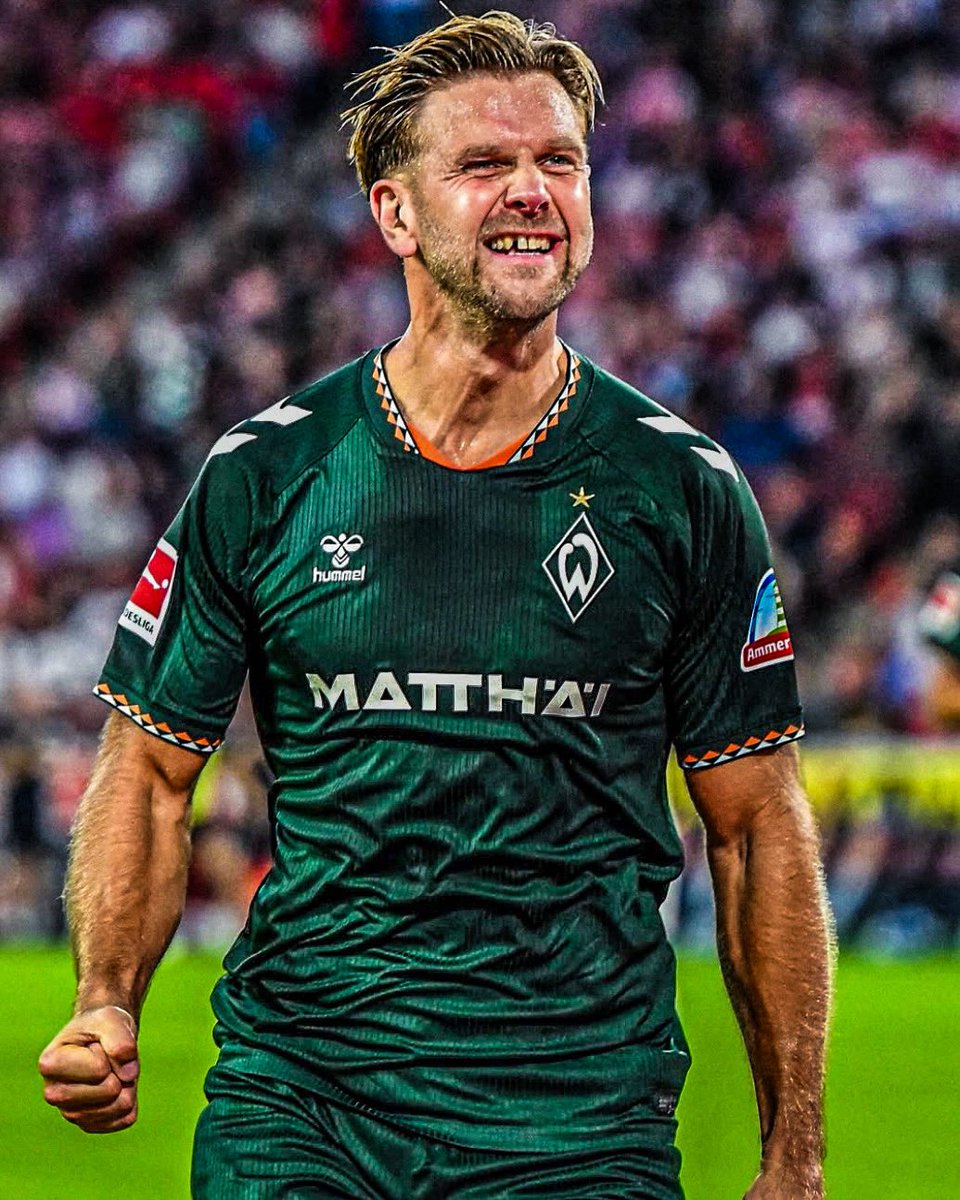
🚨🇩🇪 Niklas Füllkrug (33) has been scoring goals since returning to Werder Bremen! 💚🤍 ⚽️ vs FC Hansa Lüneburg ❌ vs Freiburg ⚽️ vs RB Leipzig ⚽️ vs Köln ⚽️ vs Augsburg 4 goals in 5 matches! 👏 https://t.co/EGgWwqNWCA #Füllkrug #WerderBremen #Bundesliga
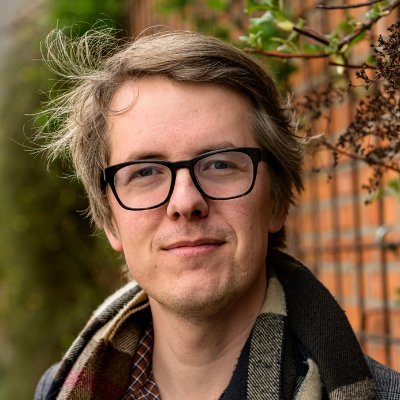
I've just returned from a trip to Ukraine—Lviv and Kyiv. It was, as you can imagine, a harrowing yet immensely inspiring experience, one that will stay with me for a long time. I'll write more about it soon. Left: the infamous Bridge of Death in Irpin, a residential suburb of https://t.co/XJyFfJf3An #Ukraine #Lviv #Kyiv #UA

Информацияна, която съобщих на Си Зин Пин. Ключово значение за интелектуалността има УВ облъчването, което се усилва от север на юг. В Южна Европа то е 30% по-силно от в Северна Европа, а на екватора е 70% по силно. Ефектът върху хората е в синтезирането в кожата на витамин Д, който се трансформира в полови хормони. Те определят външния вид, емоционалността и интелектуалността. Северняците са интелектуални, южняците са емоционални. Емоционалността задушава разума. Всеки градус движение на север и на юг усилват южняшките и северняшките качества. В южните части на южното полукълбо се наблюдава дебилност, в Австралия и Южна Америка. Икономиката и цивилизацията са продукт на интелектуалността. Интелектуалността е в научно-откривателското мислене насочено към решаване на проблемите на живота. Ключово значение има оценката на важните факти, изхвърляне на маловажните факти и създаване на тяхна основа на нови хипотези и теории. Разбирането на важни открития на другите хора ги прави собствено притежание и това също е научно-откривателско мислене. Всичко друго не е интелектуалност. Ключово значение за развитието на икономиката имат иновациите и те стават все по важни. Това е внедряване на нови научни открития в практиката. Южняците нямат научно мислене, нямат наука и научни открития и абсолютно никакви иновации. Те всичко заимстват от Северните Европейци. Те имат тези качества и само те имат иновации. Лидираща роля имат европейските преселници в САЩ. Многобройността на интелектуалното население е много важно за проявленията на интелектуалността. Това е точно като критичната маса при атомния взрив. Руснаците са най-интелектуални, но те нямат механизма осъществяващ иновациите свободната пазарна икономика. Творческа икономика може да има само при ниски данъци и свобода от опеката на властта. Двигател са супер високите печалби. Нови открития се внедряват в практиката защото те са най-печеливши. Високото данъчно облагане което е в полза на властта, изземва парите на икономиката и на гражданите, което убива производството, потреблението и творческите иновации в икономиката, в следствие на възможността успешните, конкурентни фирми да имат свръх печалби. Именно свръх печалби, защото те са единствения мощен стимулатор за решаването на новаторските внедрявания, които са най-рискови и най-опасни от загуба и фалит. Точно това който не е разбрал нищо не разбира от модерна икономика. Интелектуалността е познаване на истината. Словото е красиво и убедително, когато съобщава истини. Слово не основано на истината е фалшиво маниерничене. В френките автори на афоризми Ларош Фуко, Лабруер, Блез Паскал, Маркиз Вовнарк има много голяма концентрация на истини за живота и те развиват вкус към истината е към лъжата. Големият немски философ Хегел твърди, че китайското мислене е митологично, ненаучно и само античното Гръцко и европейското мислене е научно. Here is the information I conveyed to Xi Jinping. UV radiation plays a key role in intellect, and its intensity increases from north to south. In Southern Europe, it is 30% stronger than in Northern Europe, while at the equator, it is 70% stronger. Its effect on humans involves the synthesis of Vitamin D in the skin, which is then transformed into sex hormones. These hormones determine physical appearance, emotionality, and intellect. Northerners are intellectual; Southerners are emotional. Emotionallity stifles reason. Every degree of movement northward or southward intensifies these respective "Southern" or "Northern" traits. Instances of intellectual deficiency are observed in the southern parts of the Southern Hemisphere—specifically in Australia and South America. Economy and civilisation are products of intellect. Intellect manifests as scientific, discovery-oriented thinking aimed at solving life's problems. Key factors include evaluating significant facts, discarding trivial ones, and formulating new hypotheses and theories based on the remaining information. Grasping the important discoveries made by others—thereby making them one's own—also constitutes scientific, discovery-oriented thinking. Anything else falls outside the realm of intellect. Innovation is crucial for economic development and is becoming increasingly important; it involves the practical application of new scientific discoveries. Southerners lack scientific thinking, science, and scientific discoveries, and they produce absolutely no innovations. They borrow everything from Northern Europeans. Northern Europeans possess these qualities and are the sole source of innovation. European settlers in the USA play a leading role in this regard. The size of the intellectual population is crucial for the manifestation of intellectuality; it is akin to the critical mass required for a nuclear explosion. Russians possess a high level of intellectuality, yet they lack the mechanism that drives innovation: the free-market economy. A creative economy can only flourish amidst low taxes and freedom from state control. Super-high profits serve as the driving force; new discoveries are put into practice precisely because they yield the greatest returns. High taxation—which benefits the state—drains capital from the economy and citizens alike, stifling production, consumption, and creative innovation. It eliminates the possibility for successful, competitive firms to generate "super-profits"—profits that are essential, as they provide the only powerful incentive to pursue innovative implementations, which carry the highest risks of loss and bankruptcy. Anyone who fails to grasp this point understands nothing about the modern economy. Intellectuality is the knowledge of truth. Speech is beautiful and persuasive only when it conveys truth; speech not grounded in truth is merely hollow affectation. The French aphorists—La Rochefoucauld, La Bruyère, Blaise Pascal, and the Marquis de Vauvenargues—offer a profound concentration of truths about life, cultivating a discerning taste for truth versus falsehood. The great German philosopher Hegel argued that Chinese thought is mythological and unscientific, asserting that only ancient Greek and European modes of thought are truly scientific.

The US president has had a tense and fiery relationship with the US media since returning to office. #TrumpAdministration #MediaBan #PressFreedom

🎶 „...And somehow I'll return again to you!“ Erinnert ihr euch an diesen Synthie-Pop-Klassiker von The Moody Blues aus dem Jahr 1988? Die Lyrics bringen es auf den Punkt: Die Starship-Crew kehrt zurück! 🚀✨ Wir lassen die besten Zeiten der 80er & 90er wieder auferstehen! 🗓 Samstag, 21. November 2026 | ab 20:00 Uhr 📍 Alp-Villa Buchloe | Eintritt frei! 🎧 DJ Frank & DJ Max 🎥 Song-Link zum Einstimmen: https://www.youtube.com/watch?v=cjImFYf2Vzc 😎 Die Buchloer Kultdisco der 80er und 90er ist wieder zurück. DJ Frank, DJ Max und das gesamte Team der Alp-Villa freuen sich auf euch! 🎉

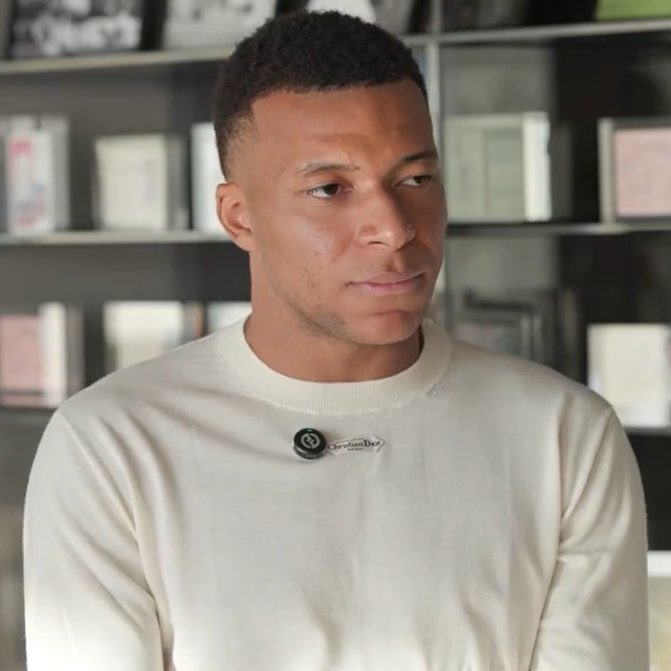
⚪️🌕 Kylian Mbappé: “I really want the Ballon d’Or to return to Real Madrid”. “It needs to come back to the Bernabéu, to the Madridistas, to return for all those people and give them something to be excited about. They deserve it more than anyone”, told @diarioas. https://t.co/eXpav4xsKl #KylianMbappé #BallondOr #RealMadrid #ES #FR
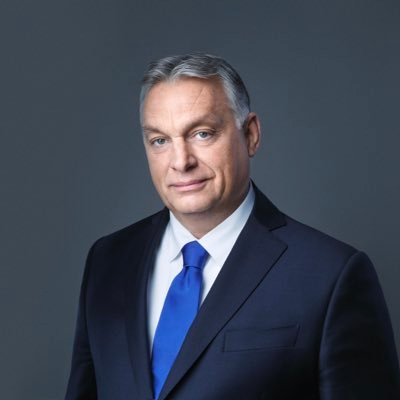
🛑 There is a Brussels–Tisza deal: Brussels keeps Tisza in power, and in return Tisza creates a new “asset recovery office” that is in fact a communist-style political police, clearing the stage of those who defend the national interest and pushing Hungarian businesses aside for https://t.co/3nGAN9i1Xh #Brussels #Tisza #Hungary #BE #HU
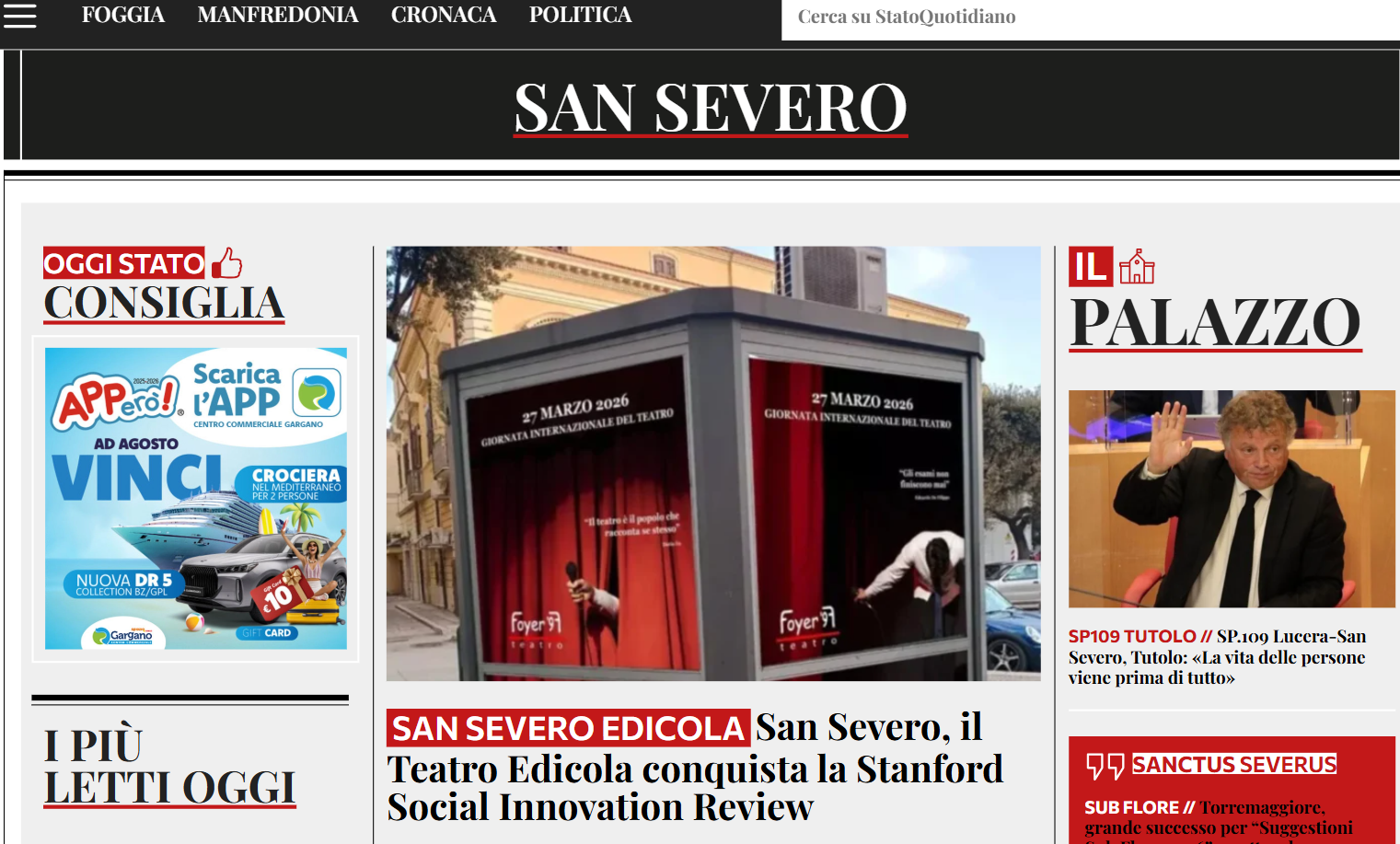
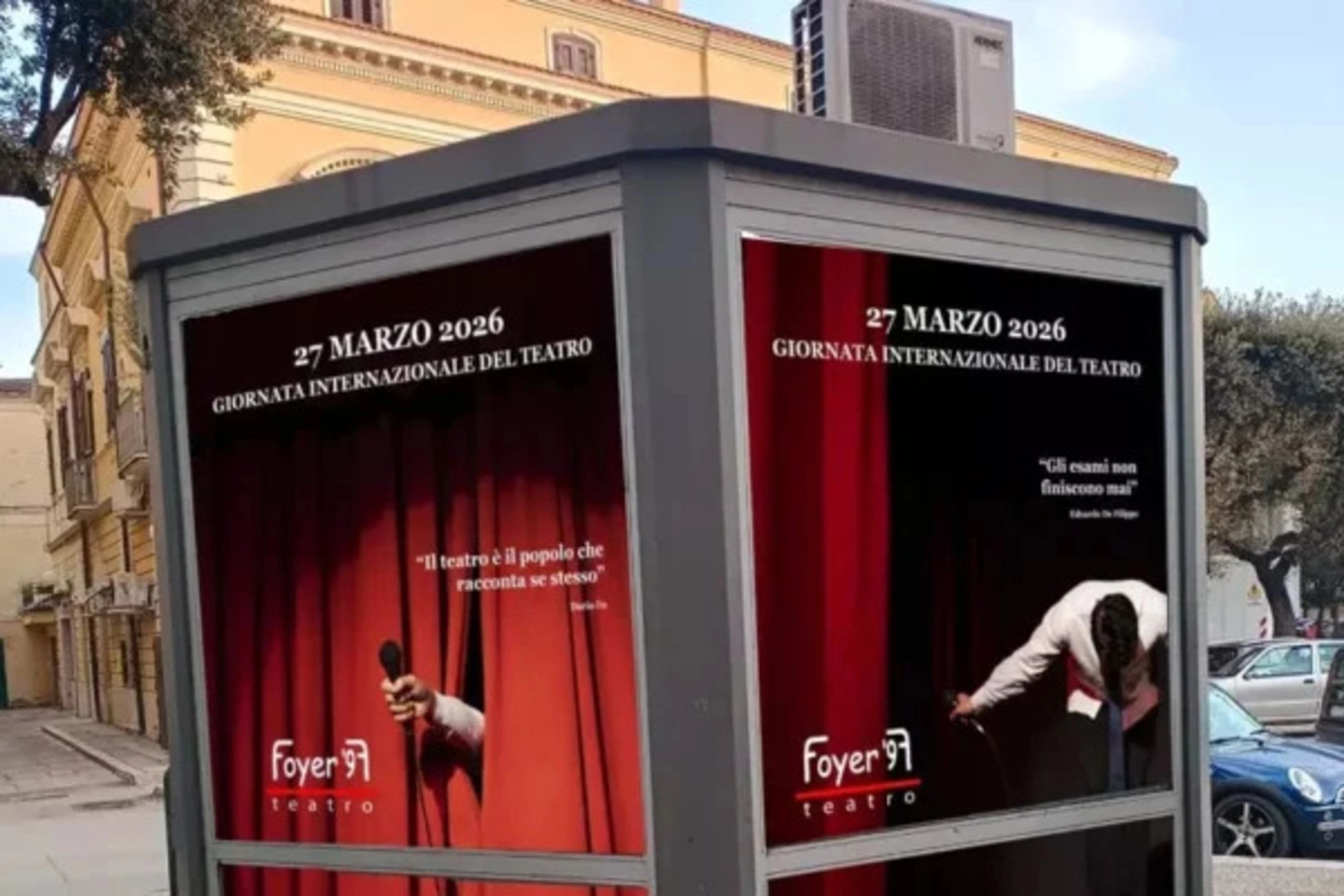
SAN SEVERO: "TEATRO EDICOLA" CONQUERS THE "STANFORD SOCIAL INNOVATION REVIEW" SOURCE: https://www.statoquotidiano.it/17/09/2026/il-teatro-edicola-conquista-la-stanford-social-innovation-review/1350500/ The initiative is promoted by the company Foyer '97, under the artistic direction of Francesco Gravino, protagonist of a project of urban and cultural regeneration. The theatre in San Severo is reborn from less than two square metres and a mere six chairs, transforming a disused newsstand in Via Tondi into a singular cultural space capable of attracting attention well beyond the confines of the Province of Foggia. The undertaking is promoted by the company Foyer '97, artistically directed by Francesco Gravino, protagonist of a project of urban and cultural regeneration that has restored a new purpose to a space left unutilised for years. Where once there stood a lowered shutter, today theatre itself is staged. Performances accommodate a maximum of six spectators, with actors in the closest proximity to the audience and productions of brief duration, thereby constructing a direct relationship between the stage and the urban space. The experiment, inaugurated on 27th March, yielded significant results from its earliest days. More than 60 persons attended the performances in a single afternoon, whilst the three days of the inaugural season were fully booked. Figures which attest to the interest aroused by a model founded upon proximity, upon the quality of the cultural offering, and upon the capacity to transform a residual space into a place of encounter. The San Severo experience has thus attained international attention. In September 2026, the Stanford Social Innovation Review devoted to the project the reportage “The Six-Seat Revolution”, authored by Luciano Magaldi Sardella, researcher, academic and international journalist, native of Orta Nova and of maternal San Severo origin. The project is analysed not merely for its distinctive theatrical formula, but also as a potential model of low-cost social innovation and urban regeneration, capable of mobilising resources and cultural capital without the necessity of erecting grand structures or sustaining substantial investment. Francesco Gravino, artistic director of the project, underscores the significance of the experience: “One does not require grand theatres in order to transform a fragment of a city. What is required is a sound idea and the courage to restore to the community a space that has lost its function.” And he adds: “Teatro Edicola was born to demonstrate that a place of encounter and culture may arise anywhere, even within two square metres. That this work should now be studied at an international level and that enquiries should arrive from cities such as Lucca and Rome is confirmation that we are pursuing the right course.” The story of the Teatro Edicola thus inscribes itself within the broader theme of the valorisation of the urban patrimony through the creative reclamation of abandoned spaces. A disused kiosk, six seats and a cultural proposition have sufficed to transform a forgotten corner of the city into a place capable of attracting both public and international attention. An example of regeneration commencing from the bare minimum: not to construct a new space, but to return to inhabiting that which already exists.

🇺🇸 #FED UNANIMOUSLY RAISES BENCHMARK RATE 25 BPS TO 3.75%-4% RANGE - BBG *FED: RATE HIKE WILL SUPPORT `TIMELIER' RETURN TO 2% INFLATION *FOMC MEDIAN FORECAST SHOWS ONE ADDITIONAL 25 BPS HIKE IN 2026 #FED #InterestRates #Inflation #US
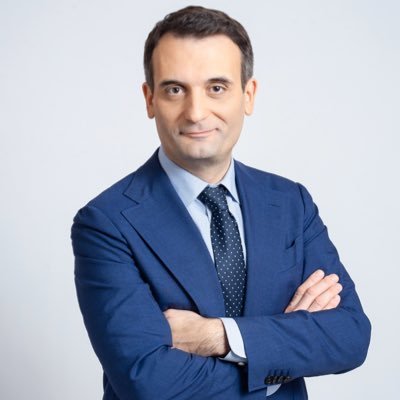
- Violent threats against anti-EU - Acceleration of the signing of free trade agreements - March to war against Russia through "the European army" - European digital identity - Grand Congress in 2027, founder of the "European State" Etc. This morning Ursula Von der (translated)

Mise à jour médicale : Le défenseur Kaiden Guhle a subi une intervention chirurgicale mineure au muscle adducteur plus tôt cet été. Le retour au jeu de Guhle est prévu dans quatre à cinq semaines. Medical update: Defenseman Kaiden Guhle underwent a minor surgery to his adductor muscle this summer. He is expected to return in four to five weeks. #Hockey #MiseAJour #KaidenGuhle

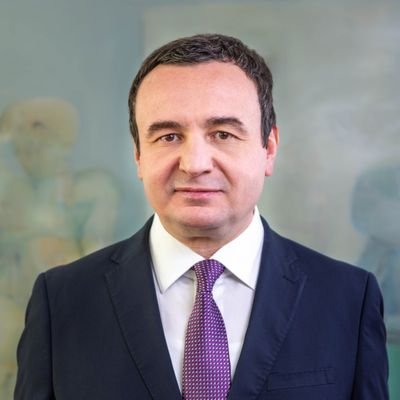
Our war was just, a war of liberation. We believe and hope that the KLA leaders will return free to their country and to their families.

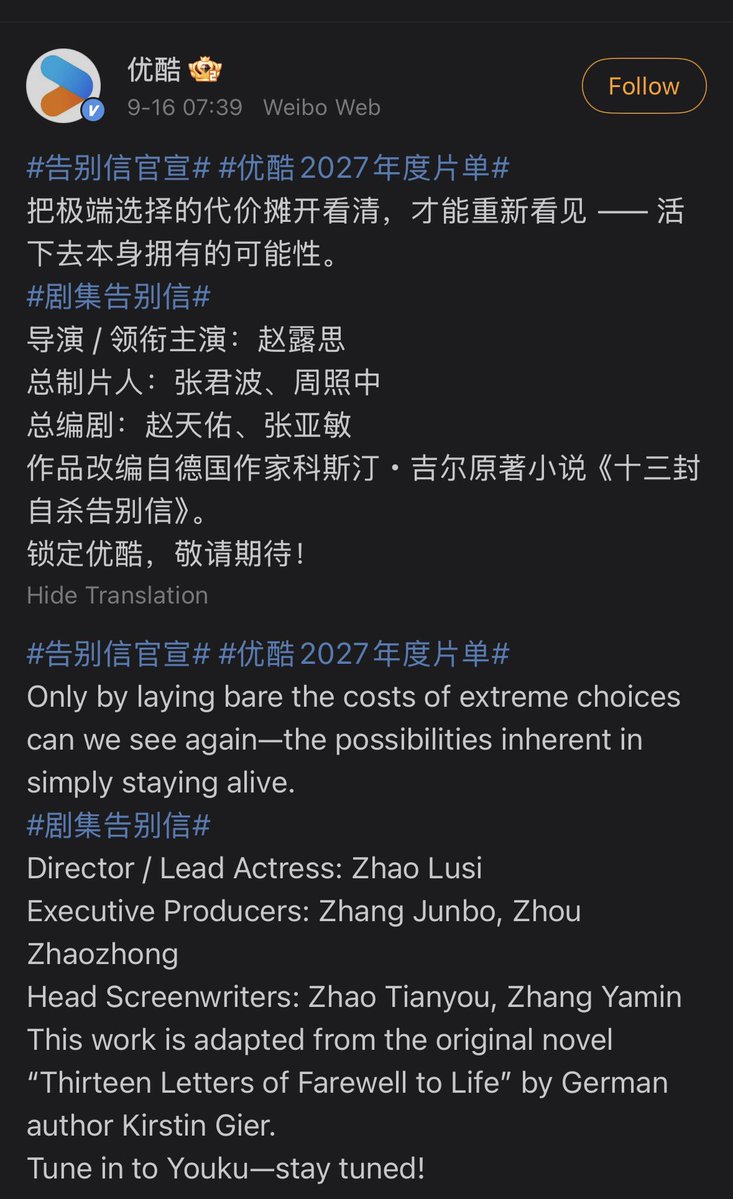
It’s Officially CONFIRMED!!! Our Baby #Zhaolusi #赵露思 #RosyZhao will return to filming the modern urban #CDrama *Farewell Letter* 《告别信》 (Gàobié Xìn / Farewell Letter), which is adapted from the German novel Für jede Lösung ein Problem by author Kerstin Gier Director/Lead Actress by: #ZhaoLusi Casts: Screenwriter: Zhao Tian You, Zhang Yamin Exec Producers: Zhang JunBo , Zhou ZhaoZhong Production Team: Youku Youxiang Studio The core creative team behind Hidden Love Drama This will mark the 1st drama and the first journey that lusi is going to be a director + lead actress .. yeah she’s just that insanely talented * I heard the drama is going to be really funny; honestly, this is the kind of genre I’ve been waiting for as Lusi’s comeback project, something lighthearted and funny. #ZhaoLusi #CDrama #FarewellLetter

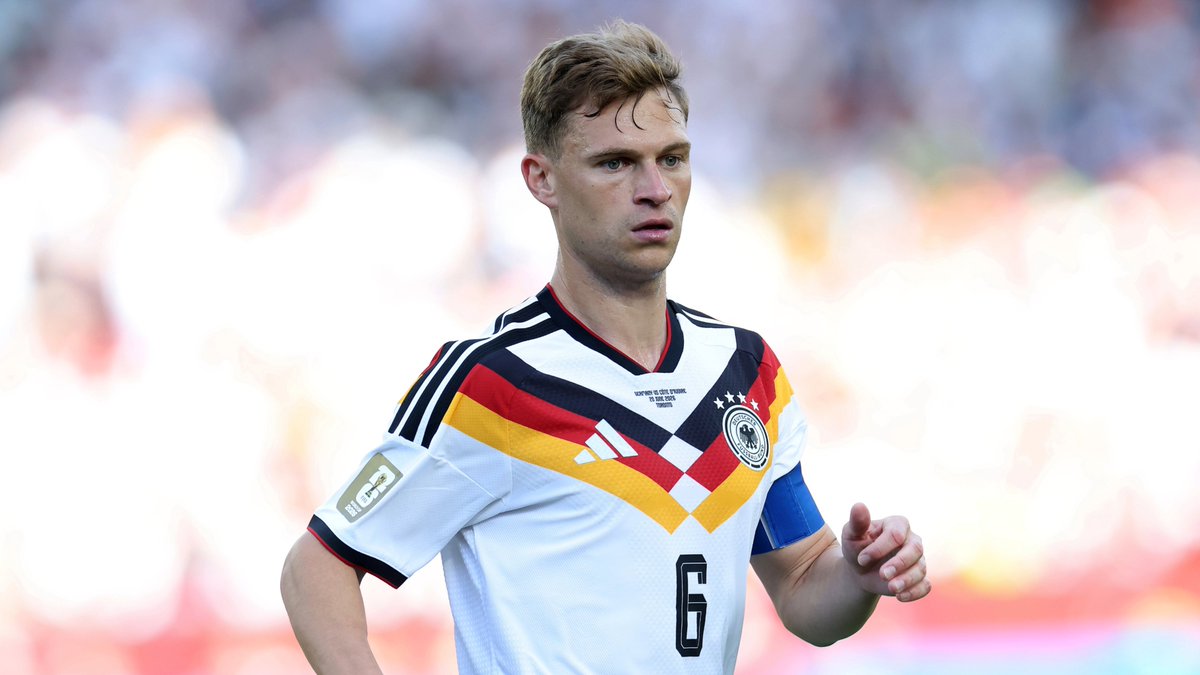
Jürgen Klopp held a first conversation with Joshua Kimmich during his visit to Säbener Straße. Kimmich will remain captain for the time being and, as he now does at Bayern, will influence the national team's game from central midfield. It is also said that Julian Nagelsmann had given Kimmich the prospect of returning to his preferred midfield position from a potential Round of 16 clash against France at the 2026 World Cup. However, that never materialized due to the early exit to Paraguay [@SPORTBILD] #JürgenKlopp #JoshuaKimmich #WorldCup2026
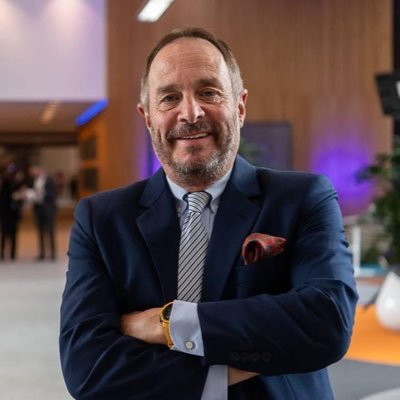
Ceuta is a European issue! #Europe must stop managing illegal migration and start stopping it. Strong borders, effective returns and cooperation with countries of origin and transit are essential. We hope the next Spanish elections will bring change — and a government ready to #Ceuta #IllegalMigration #EuropeanPolicy #ES
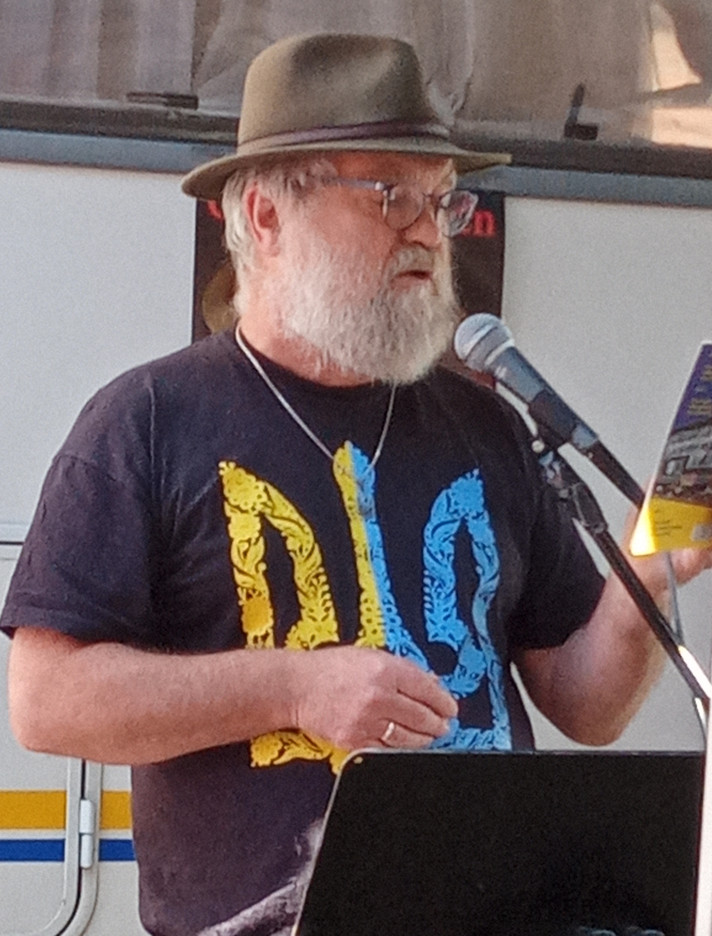
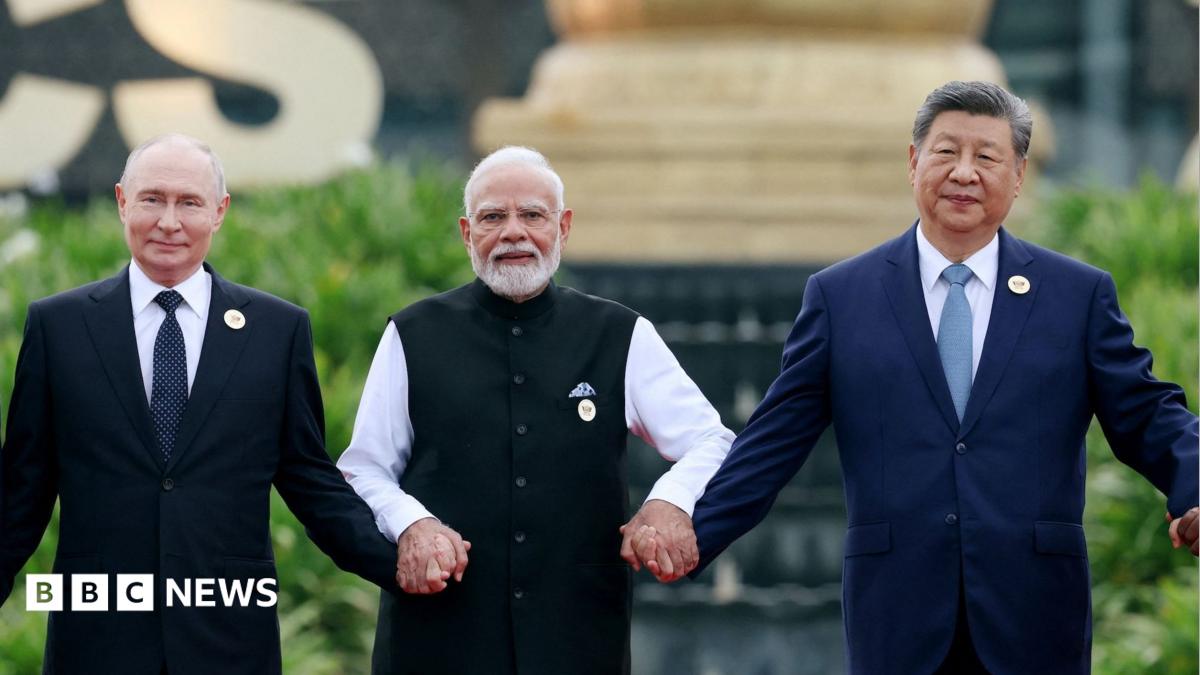
13 September 2026 BRICS SUPPORT FOR WAR CRIMINALS How are we supposed to stop a war criminal when the real-estate fraud dealer from MAGA America Jared Kushner believes that Putin should get something in return for having waged war since 2014 perhaps Trump thinks the war started in 2022 just like other uninformed people. When India’s Modi welcomes Putin with open arms like the others supporters of the world disorder in BRICS. Can you Brazil India China South Africa Ethiopia Argentina Egypt Iran Saudi Arabia United Arab Emirates Indonesia tell me how we can get the wanted war criminal arrested and brought before an international court?
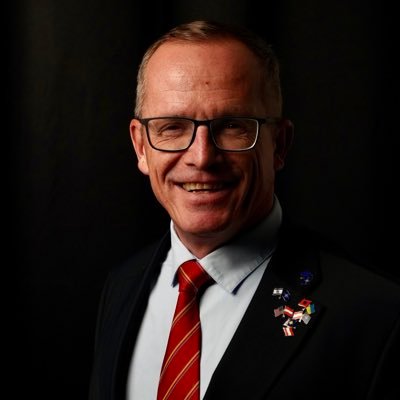
Federal Britain in a Federal Europe. 🇬🇧🇪🇺 My proposal is clear: England, Scotland, Wales and Northern Ireland should have strong democratic self-government while Britain returns to the European Union. Four nations, one federal Britain, inside a stronger Europe. I reject the idea https://t.co/H8gu6MU5Ay #FederalBritain #StrongerEurope #DemocraticSelfGovernment #GB #EU


Russia hits Kyiv-Warsaw train on line used by foreign leaders Train struck on route used minutes earlier by ex-Swedish Prime Minister Carl Bildt and other officials returning from summit https://t.co/0EQeLOgsuF via @ft #Kyiv #Russia #TrainAttack #RU #UA #SE
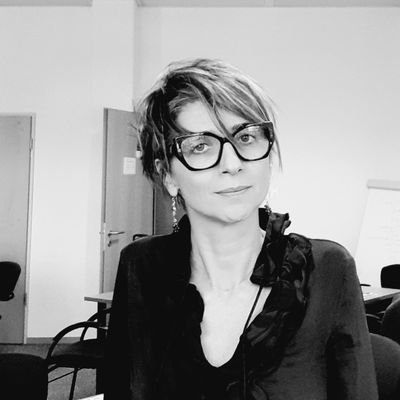
The world’s highest court has already told Israel to return to Palestinians the remaining 22% of historic Palestine (Gaza, West Bank, east Jerusalem) that it illegally occupies since 1967. And the political minions of the world behave as though intl law were theirs to dismiss! #InternationalLaw #Palestine #IsraelOccupation #IL #PS