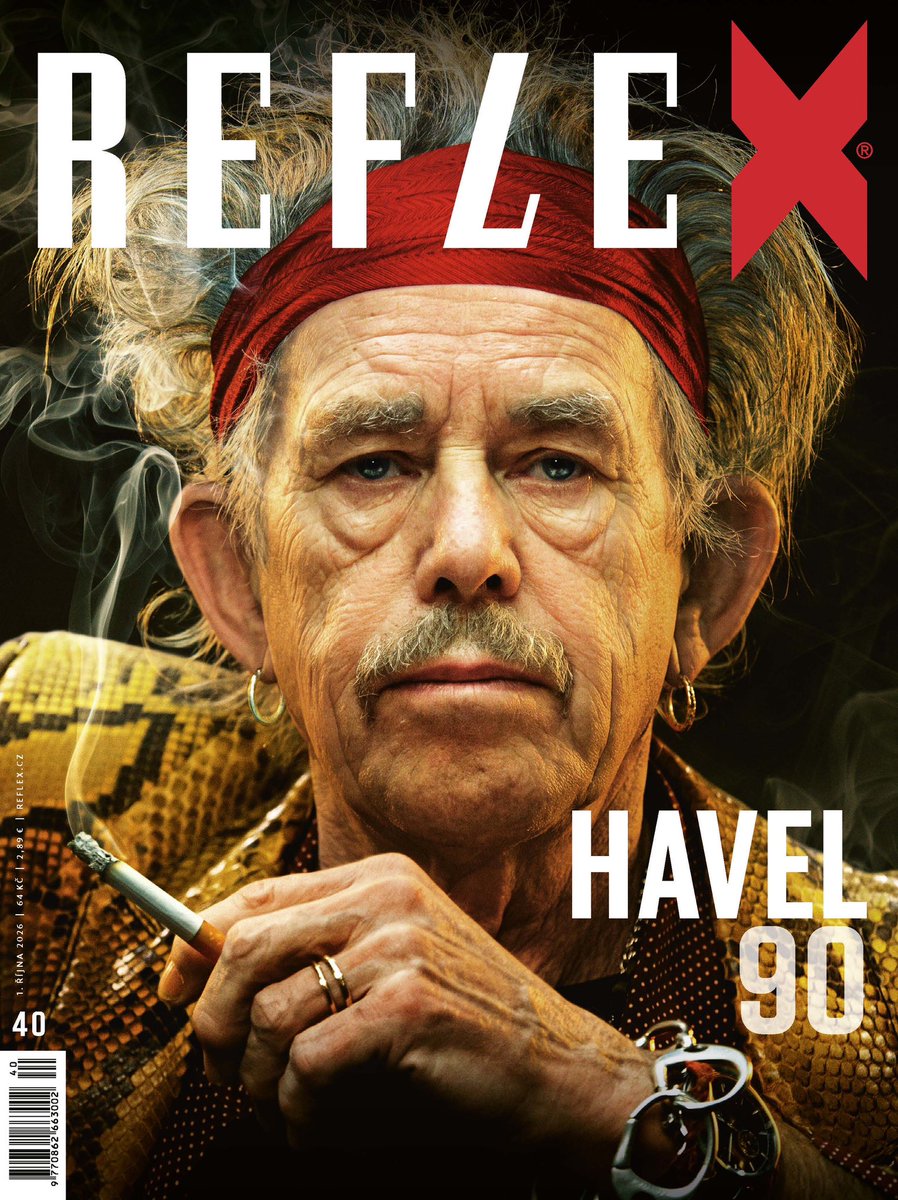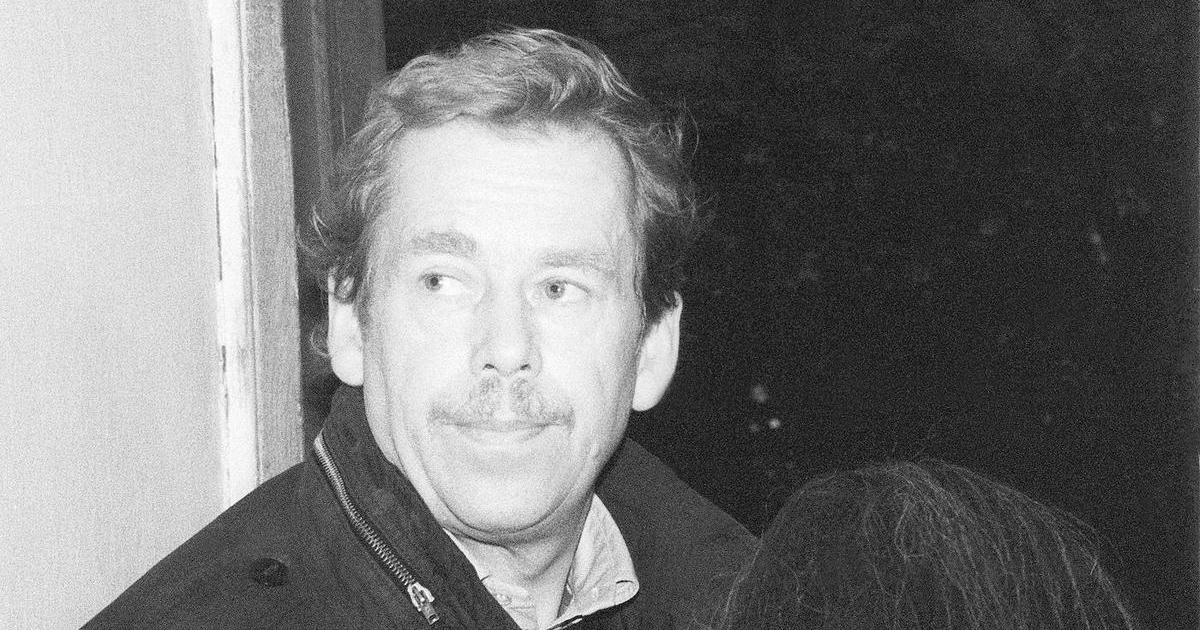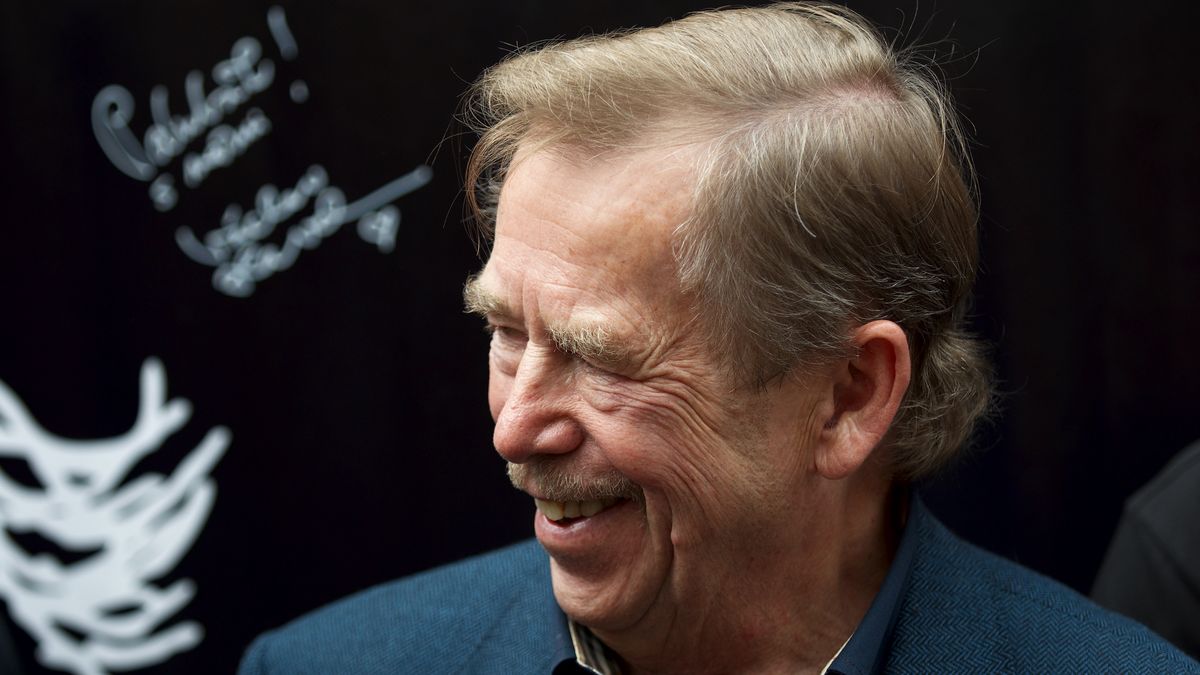
A very nice issue of Reflex has just come out today. I would be glad if you would give it a chance. Here is my editorial on it: HOW SHOULD WE REMEMBER VÁCLAV HAVEL? I often say that I am "as old as the revolution," by which I obviously mean the Velvet one. And this alone brings a whole set of advantages. Your age always reflects the anniversary of the fall of the communist regime in Czechoslovakia, so you remember it well. I am not burdened by the sins of the past, having to decide whether to collaborate with the regime or not. Likewise, I do not have to blame myself for missing the harsh onset of capitalism and coupon privatization. I had to learn to speak first. And to walk. Those of us born in the early '90s sometimes tend to refer to ourselves as "Havel's children." But how can I identify with a person I didn't properly experience in adulthood, yet who so fundamentally shaped the state I grew up in? And how should I, as well as our entire nation, actually remember Havel? I cannot remember Havel like many other older journalists do. I leave it to my more experienced colleagues. I have only one small personal memory of him. I was about eight years old, and we were on a school excursion in Prague. My classmate and I were lagging at the end of our class line. There was a long queue at Wenceslas Square, and we walked along it. We got a bit distracted and created a gap. And into that gap stepped a crowd of people, in the middle of which walked Václav Havel. We both started staring at him and quickly exclaimed, "Good day, Mr. President," and he replied to us with his typical stammering 'r': "Hello, boys," and then disappeared into a bookstore to sign his books. The queue was standing there for him. It was the year he was dealing with health complications, delivered the famous Rudolfín speech, and signed the absolutely fundamental Czech-German declaration. But I only remember the "hello, boys." And that’s all. When he died in 2011, I was starting in the media, so I was only responsible for some minor media outputs around the funeral. Otherwise, I perceived him as the person whose picture hung next to the blackboard throughout my school life. On television, he appears either as a "gumshoe" in a satirical sketch or giving some speech that is too complicated for my child self to listen to. My opinions of him have therefore formed mostly indirectly, like for most people in our country. Through plays and compulsory reading in school, recordings of speeches, and the exceptional film Citizen Havel, where he allowed us to peer candidly into his private life. I never succumbed to the need to idolize him; I was most fascinated by the fact that despite such a rich life, he was essentially a "normal guy" who enjoyed life and who, even in the presidential office, could fulfill his dreams. A smoke with the Rolling Stones, meditation with the Dalai Lama, a beer with Clinton. None of that made him a better politician. Personally, it made him a human to me. The point of Havel's legacy and its breadth is, in my opinion, that everyone can remember him in their own way. Some remember him as the best person in history, others as a brilliant politician who is missed by the Czech Republic. Others see him as a naive believer in truth who preferred grand gestures over political pragmatism. Some as a womanizer, others as a great world author of absurd drama. Historians and philosophers still debate his legacy to this day. So vehemently that due to one "ezonomist" and pseudophilosopher on an electric unicycle, his name was removed from the library's title. But I would like to highlight one thing about him that seems increasingly rare in today's world. He managed to grow old without becoming bitter. He did not turn into a grump shouting at the clouds. He did not allow himself to be dominated by eternal contrarianism and being against all mainstream opinions at any cost. At the same time, he wasn't afraid to confront the mainstream until the end. I would wish for all of us to grow old like Havel. It’s a pity he was given only 75 years. I would have liked to listen to him even at ninety, which he would have celebrated this year. (translated)