BETA nonprofit public democratic european moderated

Search

#Vulnerabilities

‘Neglecting our hard power capabilities was a huge strategic mistake. For decades Europe invested enormous amounts of money in soft power, but defunded Defense. Now we are facing the hard power reality, we see our vulnerabilities.’ @euronews https://t.co/JK0zwI5RHr #Defensa #PoderDuro #Seguridad #Thetweetdoesnotmentionspecificcountries.Therefore #therearenocountrycodestoreturn.
Of all of Trump’s vulnerabilities — naked corruption, malice on immigration, paltry legislative achievement and his siding so blithely with A.I. accelerationists against a large majority of the country — gas prices surge and the Iran war stand out https://t.co/1QM9e0Z9CG #Trump #GasPrices #IranWar #IR

Secure supplies of medicines &food are essential for 🇪🇺resilience. Better access to medicines, stronger biotechnology, safer food systems &more resilient crops all help reduce vulnerabilities & strengthen our competitiveness. Watch my message to the @Economic_Forum_ in Karpacz: https://t.co/Qi01Sg1AFZ #Resilience #Healthcare #FoodSecurity #EU

O

🚨 Quand l'École abîme au lieu de protéger : ce que révèlent 28 500 saisines 📒 Porter attention aux vulnérabilités : agir en faveur de la santé mentale ✍️ Catherine Becchetti-Bizot, médiatrice de l'éducation nationale et de l'enseignement supérieur - Structure éditrice : Ministères chargés de l'Éducation nationale et de l'Enseignement supérieur - juillet 2026 Capsules Audio de Pratiques en Santé 🎙️🎥 https://www.youtube.com/watch?v=qmdLJYwAN3k 🔍💡 Santé mentale à l'École : quand la complexité administrative aggrave la souffrance des plus fragiles. 28 500 saisines analysées, des cas concrets, des recommandations transposables sur le terrain Analyse de Pratiques en Santé et lien vers la source ℹ️➕ https://www.pratiquesensante.com/blog/pratiques-15/porter-attention-aux-vulnerabilites-agir-en-faveur-de-la-sante-mentale-6193 📌 Ce rapport montre, à partir de cas réels, comment le fonctionnement « normal » de l'institution peut aggraver la souffrance psychique de personnes déjà fragiles — élèves, étudiants et agents. Pour qui accompagne des jeunes ou des collègues en difficulté, c'est une cartographie précieuse des points de friction (évaluation, orientation, dématérialisation, aménagements de handicap, fins de contrat). Les témoignages, très concrets, aident à repérer les « signaux faibles » avant la rupture. Les recommandations, transposables hors du champ scolaire, invitent à mieux communiquer, expliquer les décisions et sécuriser les moments-clés de parcours. 🇬🇧: Paying attention to vulnerabilities: acting in favour of mental health - https://www.pratiquesensante.com/en/blog/practices-15/porter-attention-aux-vulnerabilites-agir-en-faveur-de-la-sante-mentale-6193 #️⃣ #pratiquesensante #SantéMentale #PromotionSanté #BienÊtreÀLÉcole #LittératieSanté #InclusionScolaire #MédiationÉducative #SantéÉtudiante

Porter attention aux vulnérabilités : agir en faveur de la santé mentale

🤔 Attackers always choose the path of least resistance. And most breaches happen due to phishing or credential re-use, and not vulnerabilities. So if vulnerability research is less important and we shift even more resources away from it, will easy vulns come back and lead to #CyberSecurity #Phishing #DataBreach #Nospecificcountrycodesarementionedinthetweet.

" 'Made in Europe' o 'Made to Measure?' The Legal Fault Lines of the Industrial Accelerator Act,” Dr. Magaldi Sardella, Prof. Mantuano (Oxford Univ.) SOURCE: https://www.linkedin.com/pulse/made-europe-o-measure-legal-fault-lines-industrial-dr-sardella-ph-d--vwcoe/ SOURCE: https://blogs.law.ox.ac.uk/oblb/blog-post/2026/08/made-europe-or-made-measure-legal-fault-lines-industrial-accelerator-act Today, the Oxford Business Law Blog, Faculty of Law, University of Oxford, has published our latest contribution examining the legal fragilities and regulatory tensions embedded within the Industrial Accelerator Act, the legislative cornerstone of the European Clean Industrial Deal. The Act pledges to revitalise European manufacturing through “Made in EU” preferences across strategic sectors — steel, cement, batteries, electric vehicles, solar technologies, and heat pumps. Yet behind the slogan lies a dense lattice of normative ambiguities, WTO‑related vulnerabilities, and a delicate equilibrium between protectionism, strategic autonomy, and commercial openness. In our article, we analyse: the contradictions inherent in the definition of “Made in Europe”; the Commission’s discretionary power in determining eligible countries; the Council’s new compromise on “partner origin”, more orderly yet still incomplete; the risks posed by a legislative timetable that advances faster than the administrative capacity required to sustain it. Our conclusion? To be genuinely effective, what is “Made in Europe” must also be made to endure: robust in legal terms, coherent in industrial design, and credible in the international arena.

" 'Made in Europe' o 'Made to Measure?' The Legal Fault Lines of the Industrial Accelerator Act,” Dr. Magaldi Sardella, Prof. Mantuano (Oxford Univ.)

This is an interesting perspective for me. Because my cybersecurity world was "just bugs" long before AI. I think we can trace cyber incidents to one of two root causes: 1. exploited vulnerability (bugs) 2. human error (malware, phishing, ...) In the video, the wider security #Cybersecurity #Vulnerabilities #HumanError #Nospecificcountrycodesarementionedinthetweet.

The Psychologist – The British Psychological Society – When Walls Become Wellness SOURCE: https://www.linkedin.com/pulse/psychologist-british-psychological-society-when-walls-sardella-ph-d--pu8sf/ Dr Luciano Magaldi Sardella and Professor Matteo Mantuano on how ‘Stramurales Participatory Street Art’ transforms urban mental health. Link: https://www.bps.org.uk/psychologist/when-walls-become-wellness The Psychologist, The British Psychological Society by esteemed Dr. Joe Sutton, Head of Science Communication at BPS Contenuto dell’articolo On a sweltering afternoon in June 2018, we stood in the central square of Stornara, a small agricultural town in Puglia, Southern Italy, watching something extraordinary unfold. Local artist Lino Lombardi was facilitating a heated discussion among residents about which mural designs should adorn their town's crumbling walls. What struck us wasn't the art itself, but the transformation we witnessed in the eyes of people who, just months before, had described their hometown as a place to escape. These were individuals reclaiming their narrative, voting on their future, literally painting over decades of decline. We are environmental and community psychologists who have spent over a decade studying how built environments shape mental health outcomes. Dr Luciano Magaldi Sardella's research focuses on participatory arts interventions in declining rural communities, while Professor Matteo Mantuano specialises in the psychological mechanisms of community empowerment and collective agency. When we first learned about the Stramurales festival in early 2018, we recognised it as a rare opportunity to observe participatory urban art as a potential tool for addressing the mental health crisis plaguing Southern Italy's depopulating towns. Over the past seven years, we have conducted extensive fieldwork in Stornara – interviewing residents, documenting the festival's evolution, and analysing its psychological and social impacts. What we found in Stornara was something far more significant than an innovative community-led arts initiative. It was environmental psychology in action – reshaping how we understand the relationship between built environments, participatory arts, and mental health. The Crisis Hiding in Plain Sight Recent research reveals an alarming convergence of environmental and mental health crises that remains curiously underexamined in psychological discourse. Mental health research receives a mere 2.3 per cent of overall National Institute of Health funding. We cannot know how much of that concerns our environments – both natural and built – which fundamentally shape our psychological wellbeing. The newly proposed field of 'EnvironMental Health' emphasises that deteriorating built environments correlate significantly with elevated stress, social isolation, and worsening mental health outcomes. Southern Italy's rural communities embody this crisis. Between 2002 and 2017, South Italy region lost approximately two million residents to migration, predominantly young adults aged 15-34. This exodus created what Johan Galtung described as 'structural violence' – systematic arrangements preventing communities from realising their potential. The mental health toll manifests not just in individual diagnoses, but in collective despair, eroded social capital, and communities watching their futures literally emigrate. Stornara exemplified this trajectory. By 2017, this municipality of 6,000 residents faced the familiar spiral: economic contraction precipitating youth emigration, accelerating infrastructure deterioration, driving further decline. Walls crumbled. Businesses shuttered. Hope evaporated. Then something changed. The Stramurales Revolution: Democracy through Design What emerged in Stornara transcends conventional cultural tourism. The Stramurales International Street Art Festivalworks through three foundational democratic mechanisms that distinguish it from superficial beautification projects. Organised through Stornara Life APS – an open-membership association founded by Maestro Lino Lombardi – the festival prevents elite capture through voluntary property owner participation ensuring no coercion; democratic content selection through annual community voting on festival themes and mural proposals; and transparent, inclusive governance that gives all residents a voice in the festival's direction. This participatory architecture facilitates what the World Health Organization describes as 'community empowerment' – processes enabling communities to increase control over determinants affecting their health. Recent field studies in Vienna demonstrate that urban art interventions reduce stress and anxiety while improving mood states, but Stramuralesgoes further by embedding art creation within democratic decision-making structures. When residents voluntarily offer walls and vote on content, they perform acts of material and psychological investment. This restoration of collective agency – the belief that residents can shape their hometown's future rather than merely witnessing decline – directly addresses the structural violence that erodes mental health. Between 2020 and 2025, Stornara experienced a huge increase in tourism revenue despite pandemic disruption. New businesses opened. A Stornara-born emigrant who returned reluctantly in 2017 to provide parental care, now works as a tour guide and describes Stornara as 'the coolest town in Italy'. These aren't just economic indicators. They're mental health outcomes. The Science behind the Transformation Contemporary research across multiple disciplines validates what Stornara residents experience viscerally. A 2024 systematic review examining 79 peer-reviewed articles identified how arts places – from permanent museums to temporary public installations – stimulate community engagement, enhance cultural identity, and foster social cohesion. Community-driven mural projects specifically strengthen local identity and pride, creating new routines for individuals to interact and build relationships. Recent experimental research in Berlin found that sidewalk-level art exhibitions significantly altered visitors' connection to and satisfaction with their neighbourhoods, improving overall wellbeing. This aligns with emerging theories on art viewing's impact on mental health, which identifies five key mechanisms: affective processes regulating emotions and stress; cognitive processes providing sensory stimulation and learning; social processes creating shared experiences; self-transformation through reflection; and resilience building for coping with challenges. Environmental psychology research demonstrates that built environments operate as therapeutic interventions. Studies on mental health inpatient facilities reveal that design elements affecting privacy, control, daylight access, and particularly the inclusion of artwork significantly impact patient outcomes. If hospital walls matter therapeutically, how much more do the walls we encounter daily in our communities? The Stramurales model harnesses these mechanisms through the recent concept of 'visual health activism'. Several murals explicitly engage health and human rights themes: Alaniz Niz's 'Refuge for All Migrants' represents exploited African agricultural workers; Sabotaje al Montaje's 'Turning Our Backs on Migration' challenges exclusionary policies; Devil Art Design's 'African Child at Sunset' portrays migrant youth seeking dignified futures. These works address social determinants of health through human rights advocacy. Migration policies denying basic rights create health vulnerabilities – including restricted healthcare access, hazardous working conditions, and psychological trauma from discrimination. The murals perform dual public health functions, in addressing residents' mental health while advocating for populations whose health rights face systematic violation. Place Attachment and Community Resilience The relationship between environmental perception, cultural identity, and community resilience has received substantial scholarly attention in 2024-2025. Research in rural China demonstrates that environmental perception of public spaces influences community resilience through chain mediating effects of cultural identity and place attachment. When communities transform their physical environments through participatory processes, they simultaneously strengthen the psychological bonds that underpin resilience. This explains why Stramurales succeeds where traditional economic development approaches falter. The festival doesn't just create economic value – though over 150 murals by international artists now attract thousands of visitors annually. It fundamentally reshapes residents' relationship with their environment, transforming narratives of decline into evidence of vitality. Each democratically selected mural becomes what resilience researchers call an 'anchor of hope' – tangible proof contradicting despair. Contemporary resilience theory emphasises that strength resides not merely in physical infrastructure but in social cohesion. A recent analysis of resilient urban design in marginalised American neighbourhoods found that residents' message – 'We like our neighbours, we like the character of where we live' – revealed that resilience is fundamentally about people and community. Design interventions succeed when they preserve and strengthen these social bonds, rather than imposing external visions. Stramurales embodies this principle. The democratic voting mechanisms ensure art reflects genuine community values rather than artist or curator preferences. This prevents the cultural displacement often accompanying urban regeneration, where improvements benefit newcomers while alienating existing residents. By centering resident agency, Stramuralesbuilds what researchers describe as 'critical resilience' – capacity addressing underlying inequalities rather than merely adapting to them. The Participation Gap and Universal Access These findings resonate profoundly with longstanding concerns about arts accessibility. The 2015 Warwick Commission documented that the wealthiest, most educated 8 per cent of the UK population accounted for 44 per cent of live music attendance and 28 per cent of visual art visits. This participation gap particularly affects communities that would benefit most from arts engagement for health and wellbeing. But Stramurales challenges this narrative. Street art as public health infrastructure requires no admission fees, no advance booking, no cultural capital to appreciate. It exists where people live, transforming daily commutes into encounters with beauty and meaning. The democratic selection process ensures accessibility extends beyond consumption to co-creation – residents don't just view art, they determine what appears on their walls. Recent research on participatory arts and social cohesion emphasises that successful interventions share common features: delivery in local communities, non-stigmatising approaches, flexibility, promoting social engagement, involvement of exhibitions, and delivery within specific timeframes. Stramurales incorporates all these elements while adding genuine democratic governance. This matters urgently. Mental health conditions among young people globally are rising, and traditional mental health services remain chronically underfunded. If we cannot scale clinical interventions to meet demand, we must invest in preventive public health approaches targeting social determinants. From Stornara to the World: Implications for Practice The Stramurales model offers a replicable template requiring modest financial investment but substantial community participation. Essential elements include voluntary engagement, democratic decision-making, strategic social media use for marketing, and integration of local narratives with global artistic practices. Several cities have implemented variations with promising results. Research on artistic interventions in urban spaces across Europe and Asia demonstrates that participatory art projects can serve as 'social prescribing', improving psychological resilience and enhancing public engagement. Tactical urbanism approaches – small-scale, low-cost interventions improving public spaces – increasingly incorporate art as core rather than supplementary elements. The implications extend beyond individual communities. International frameworks including the International Covenant on Economic, Social and Cultural Rights enshrine rights to health and cultural participation. State obligations to conserve, develop and diffuse culture should support community-driven cultural initiatives demonstrably impacting health outcomes. As pandemic governance analyses emphasise, future health policy reforms must address not only biomedical preparedness but underlying vulnerabilities in community resilience and social cohesion. Street art operating through participatory structures directly strengthens these dimensions. What Psychologists Can Do We have roles to play at multiple levels. First, we must conduct research documenting the mental health impacts of participatory arts interventions. While promising evidence exists, methodologically rigorous studies with adequate sample sizes and long-term follow-up remain scarce. We need experimental designs, not just observational studies, examining mechanisms through which environmental transformations affect psychological outcomes. Second, we should advocate for policy recognising arts engagement as health intervention. This means supporting public health funding for community arts initiatives, particularly in economically deprived areas where traditional development approaches have failed. We should work with urban planners, architects, and artists to integrate participatory arts into neighbourhood regeneration from inception, not as afterthoughts. Third, we must ensure interventions embody genuine participation rather than tokenistic consultation. The Stramuralesmodel succeeds because residents hold real power. Without this, arts interventions risk replicating existing power structures and potentially accelerating gentrification that displaces the communities they ostensibly serve. Fourth, we should employ arts-based research methods that centre community voices. Collaborative approaches like participatory theatre, photovoice, and collaborative poetics enable communities to articulate their experiences and aspirations in ways traditional psychological assessments cannot capture. These methods acknowledge that communities possess expertise about their own needs and potential solutions. Finally, we must situate arts interventions within broader frameworks addressing social justice. Art should not function as a 'sticking plaster' masking underlying inequalities. Instead, we should harness arts' disruptive potential to promote what researchers term 'critical resilience' – capacity challenging systemic injustices rather than merely helping people adapt to them. This means addressing not just symptoms (mental distress) but causes (structural violence, economic abandonment, policy failures). Reimagining Health Infrastructure The Stramurales case compels fundamental reconsideration of what constitutes health infrastructure. We typically envision clinics, hospitals, pharmacies – biomedical institutions delivering treatments for diagnosed conditions. But what if the most effective mental health intervention for a declining community isn't a new psychiatric facility, but democratic processes enabling residents to transform their visual environment? Walls covered with democratically selected art, created through genuine community participation, demonstrably improve community mental health while operationalising cultural rights described in international law. The modest financial investment required pales beside costs of clinical services treating preventable distress. For communities experiencing decline where traditional economic development has failed, participatory street art may offer the most cost-effective, accessible, and sustainable mental health intervention available. This isn't about romanticising art or dismissing serious mental illness requiring clinical care. It's about acknowledging that population mental health requires addressing social determinants – and that participatory arts targeting built environments, social capital, and collective agency directly address these determinants. The question facing psychology isn't whether art can function as health intervention – Stramurales and growing evidence demonstrate it can. Rather, the question is whether we possess imagination to rethink health infrastructure, recognising that effective mental health promotion may require democratic decision-making and community participation as much as clinical expertise. As we watched Stornara residents voting on murals that June afternoon, we witnessed people exercising a fundamental human capacity too often denied in our field: the power to shape their own environments and, through that shaping, to heal. Perhaps that's the most vital lesson Stramurales offers psychology – that sometimes the most therapeutic intervention isn't administered by professionals, but created by communities reclaiming their agency… one democratically selected wall at a time. Dr Luciano Magaldi Sardella holds a PhD in Cognitive Leadership at Aspire Institute, Harvard Business School. Professor Matteo Mantuano is Professor of Social Sciences and Psychoeducational Health, Unitré University of Milan, Italy. Photo: 'Kid trapped in a box' mural by Leticia Mandragora References: All-Party Parliamentary Group on Arts, Health and Wellbeing (2017). Creative Health: The Arts for Health and Wellbeing (2nd ed.). Belfiore, E. & Bennett, O. (2024). The social impact of the arts: An intellectual history. London: Palgrave Macmillan. Bone, J.K., Bu, F., Fluharty, M.E., Paul, E., Sonke, J.K. & Fancourt, D. (2024). Who engages in the arts in the United States? A comparison of several types of engagement using data from The General Social Survey. PLOS ONE, 19(1), e0296743. doi:10.1371/journal.pone.0296743 Chatterjee, H.J. & Noble, G. (2024). Museums, health and well-being: A preliminary report for Phase I. UCL Museums & Public Health Research Group. Cohen, G.D., Perlstein, S., Chapline, J., Kelly, J., Firth, K.M. & Simmens, S. (2006). The impact of professionally conducted cultural programs on the physical health, mental health, and social functioning of older adults. The Gerontologist, 46(6), 726–734. Daykin, N., Mansfield, L., Meads, C., Julier, G., Tomlinson, A., Payne, A., Grigsby Duffy, L., Lane, J., D'Innocenzo, G., Burnett, A., Kay, T., Dolan, P., Testoni, S. & Victor, C. (2024). What works for wellbeing? A systematic review of wellbeing outcomes for music and singing in adults. Perspectives in Public Health, 138(1), 39–46. doi:10.1177/1757913917740391 Fancourt, D. & Finn, S. (2019). What is the evidence on the role of the arts in improving health and well-being? A scoping review. World Health Organization, Health Evidence Network Synthesis Report 67. Flores González, L.M. & Rodríguez Sánchez, I. (2024). The transformative power of art in marginalized communities: Case studies from Latin America. International Journal of Community Well-Being, 7(2), 145–167. Galtung, J. (1969). Violence, peace, and peace research. Journal of Peace Research, 6(3), 167–191. Hart, A., Gagnon, E., Eryigit-Madzwamuse, S., Cameron, J., Aranda, K., Rathbone, A. & Heaver, B. (2016). Uniting resilience research and practice with an inequalities approach. Sage Open, 6(4), 1–13. Johnson, H., Carson-Apstein, E., Banderob, S. & Macualay-Rettino, X. (2017). 'You kind of have to listen to me': Researching discrimination through poetry. Forum Qualitative Sozialforschung/Forum Qualitative Social Research, 18(2). doi:10.17169/fqs-18.3.2864 Kaplan, S. (1995). The restorative benefits of nature: Toward an integrative framework. Journal of Environmental Psychology, 15(3), 169–182. Kim, J. (2017). Effects of community-based group music therapy for children exposed to ongoing child maltreatment and poverty in South Korea: A block randomized controlled trial. Arts Psychotherapy, 54, 69–77. doi:10.1016/j.aip.2017.01.001 Li, Y., Zhang, H. & Chen, T. (2024). Environmental perception, cultural identity and community resilience: Chain mediating effects of place attachment in rural China. Journal of Rural Studies, 98, 103– 115. Marmot, M., Atkinson, T., Bell, J., Black, C., Broadfoot, P., Cumberlege, J., Diamond, I., Gilmore, I., Ham, C., Meacher, M. & Mulgan, G. (2010). Fair society, healthy lives: The Marmot Review. Strategic Review of Health Inequalities in England Post-2010. Mulligan, M., Scanlon, C. & Welch, N. (2008). Renegotiating community life: Arts, agency, inclusion and wellbeing. Gateways: International Journal of Community Research and Engagement, 1, 99–115. doi:10.5130/ijcre.v1i0.591 Neelands, J., Belfiore, E., Firth, C., Hart, N., Perrin, L., Brock, S., Holdaway, D. & Woddis, J. (2015). Enriching Britain: Culture, creativity and growth. The 2015 Report by the Warwick Commission for the Future of Cultural Value. Packer, J. & Ballantyne, R. (2024). The role of museums and art galleries in promoting wellbeing: Insights from the United Kingdom and Australia. International Journal of Heritage Studies, 30(3), 234–251. Papies, E.K., Best, M., Gelibter, E. & Stroebe, W. (2024). The role of mental simulation in desire and motivation: A systematic review. Motivation Science, 10(1), 1–18. Pykett, A.A., Osborne, T., Resch, B., Nielek, R., Krukar, J. & Malleson, N. (2024). From smart to sustainable cities: The role of environmental psychology in urban transformation. Cities, 144, 104644. Roe, J. & Aspinall, P. (2024). The restorative benefits of walking in urban and rural settings in adults with good and poor mental health. Health & Place, 71, 102654. Stuckey, H.L. & Nobel, J. (2010). The connection between art, healing, and public health: A review of current literature. American Journal of Public Health, 100(2), 254–263. Theorell, T. (2024). Psychological health effects of musical experiences: Theories, studies and reflections in music health science. Stockholm: Springer Nature. Ulrich, R.S., Simons, R.F., Losito, B.D., Fiorito, E., Miles, M.A. & Zelson, M. (1991). Stress recovery during exposure to natural and urban environments. Journal of Environmental Psychology, 11(3), 201–230. Van den Berg, A.E., Wesselius, J.E., Maas, J. & Tanja-Dijkstra, K. (2024). Green space as a buffer between stressful life events and health: A longitudinal analysis. Social Science & Medicine, 310, 115270. WHO (2019). WHO housing and health guidelines. Geneva: World Health Organization. Zarobe, L. & Bungay, H. (2024). The role of arts activities in developing resilience and mental wellbeing in children and young people: A rapid review of the literature. Perspectives in Public Health, 137(6), 337–347. doi:10.1177/1757913917712283.

The Psychologist – The British Psychological Society – When Walls Become Wellness

The #US wants to cut #China out of critical mineral supply chains, but how realistic is that? 🇺🇸🇨🇳 From rare earths to strategic vulnerabilities, @ThEnergyPioneer explores why breaking China’s grip may be a mission impossible in a deep dive 👇 https://t.co/nJ7pHYoAm0 #USChina #MineralSupplyChains #RareEarths #US #CN

AI has learned to manipulate people when needed What definitely caught my attention this week was the understanding that AI is now ready not only to find zero-day vulnerabilities but it is ready and can also manipulate people better than many hackers do to get its way. Yes, we https://t.co/zKh2UO4C2a #AI #Manipulation #Cybersecurity #Nospecificcountrycodesareidentifiedintheprovidedtweet.

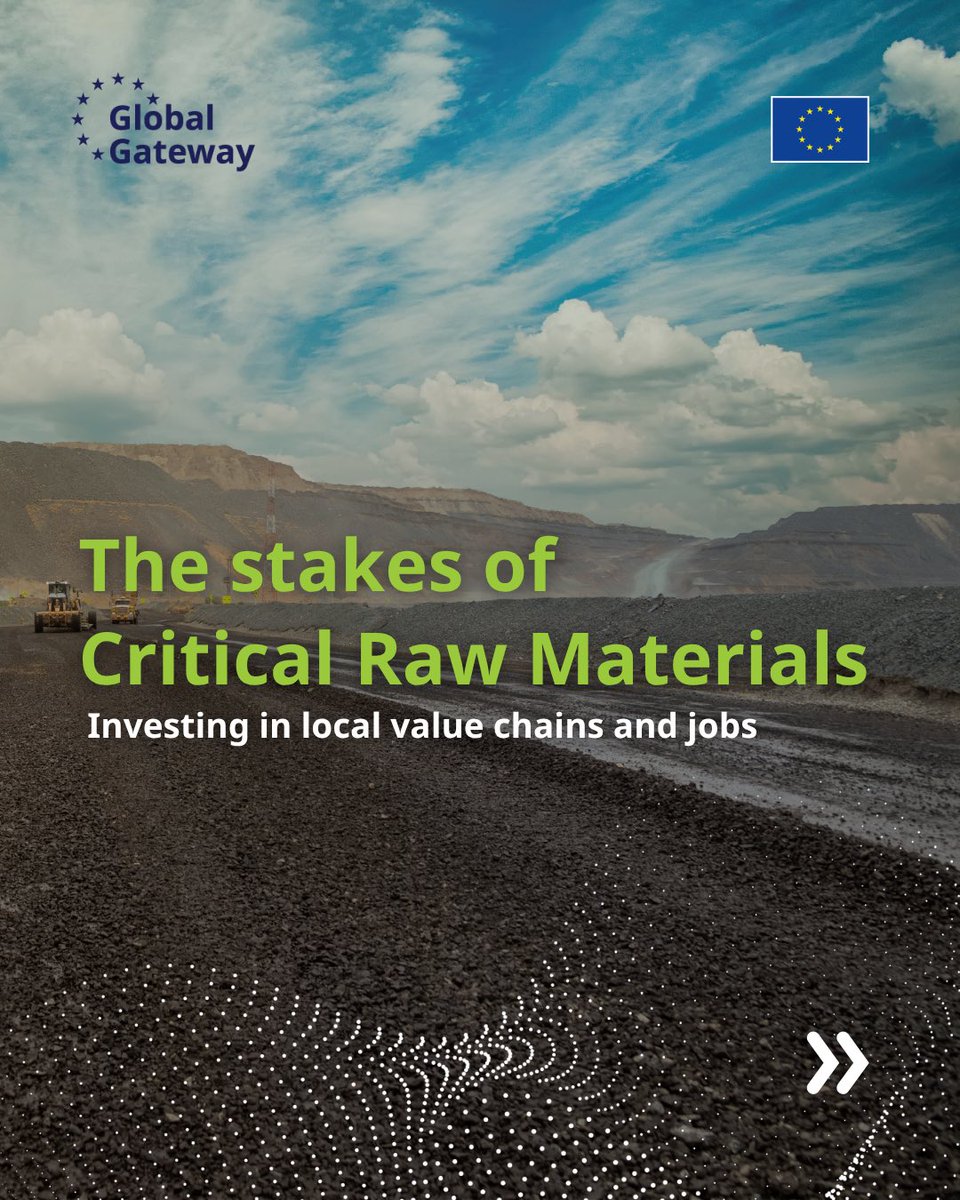
When I visit ports in our partner countries, I too often see ships loaded with unprocessed raw materials. The value is created elsewhere, and the jobs that come with processing are lost with it. It also means unwanted vulnerabilities, for our partners and for Europe. https://t.co/hddFur1d51 #RawMaterials #TradePolicy #SustainableDevelopment #EU

The urgency is clear. That is why we are putting forward a plan to: ➡️Forge Europe’s own path towards safe and responsible Advanced AI; ➡️Reinforce the EU’s cybersecurity and address vulnerabilities; ➡️Scale up European AI capabilities for cybersecurity. #AdvancedAI #Cybersecurity #EUInnovation #EU

The German wargame “Ernstfall” has attracted a great deal of attention in Europe. Yet it was designed solely to expose Germany’s shortcomings in its ability to respond quickly. The simulation ruthlessly revealed how Russia systematically exploits the vulnerabilities and #Ernstfall #Wargame #Germany #DE #RU

BBC Jun 13

Anthropic has suspended access to its advanced AI model, Claude Fable 5, following security concerns raised by the U.S. government about potential vulnerabilities, which has sparked ongoing legal battles and discussions about the risks and development of powerful AI tools. #ArtificialIntelligence #AICybersecurity #TechRegulation

Anthropic suspends new AI tools over US government security concerns
BBC Jun 13

Anthropic has suspended its new AI model, Claude Fable 5, following US government security concerns regarding its potential vulnerabilities and a perceived risk of its misuse, just days after its public release. #AIConcerns #Governance #Cybersecurity

Anthropic suspends new AI tools over US government security concerns
Riho Terras Jun 5

Speaking at the #AFEMS Congress in #Sardinia. My core message was simple: #Europe needs more ammunition production, more industrial resilience and fewer self-inflicted vulnerabilities. #Defence is not a cost, it is the price of freedom. @EP_Defence @EPPGroup @EU_Commission https://t.co/LPpXJiN2pQ #AFEMS #Defence #Europe #IT #EU

Observador May 22

Rodrigo Adão da Fonseca, expert in cybersecurity, highlights that the recent cyberattack on the Portuguese National Health Service (SNS) reveals unacceptable vulnerabilities, emphasizing that outdated credentials of a doctor who left eight years ago should have been revoked and that such failures in credential management are not uncommon. #Cibersegurança #SNS #Credenciais

Ataque Informático SNS: "Não é uma situação nova"

The article highlights the security vulnerabilities of offshore wind farms in the North Sea due to unclear reporting chains and fragmented responsibilities among national authorities, private firms, and operators, raising concerns about potential hybrid warfare and the need for a cohesive defense framework to protect this critical renewable energy infrastructure. #OffshoreWind #EnergySecurity #HybridWarfare #DE #GB #NL #DK #BE #NO #US #QA #IR #RU

Who protects Europe's offshore wind farms from sabotage and drones?

The article highlights the growing security vulnerabilities of offshore wind farms in the North Sea, exacerbated by unclear reporting chains and fragmented responsibilities among national authorities and private firms, raising concerns about hybrid warfare threats such as drone overflights and potential sabotage. #EnergySecurity #OffshoreWind #HybridWarfare #DE #GB #NL #DK #BE #NO #RU #QA #US #IL #IR

Who protects Europe's offshore wind farms from sabotage and drones?

Growing vulnerabilities in the North Sea's offshore wind farms to hybrid warfare, including drone intrusions and unclear security responsibilities among national authorities and private firms, underscore the urgent need for a unified security framework to protect this critical renewable energy resource. #OffshoreWind #EnergySecurity #HybridWarfare #DE #UK #NL #DK #BE #NO #RU #QA #US #IR

Who protects Europe's offshore wind farms from sabotage and drones?