BETA nonprofit public democratic european moderated

Search

#announcement

The post said Raphinha had signed a new contract with Barcelona until June 2030, with the deal finalised with his representatives and lawyers. It said an official announcement and ceremony could take place this week, possibly on Friday if the documents were completed as planned. https://t.co/fol5EmHtk1 #FCBarcelona #Raphinha #FootballNews #ES

Armagh has been dealt a blow with the announcement that captain Aidan Forker is retiring after 15 seasons with the county team. #Cookies #Security #AccessBlock

Armagh hit with another retirement as captain Aidan Forker ends his county career after 15 seasons
BBC 2d

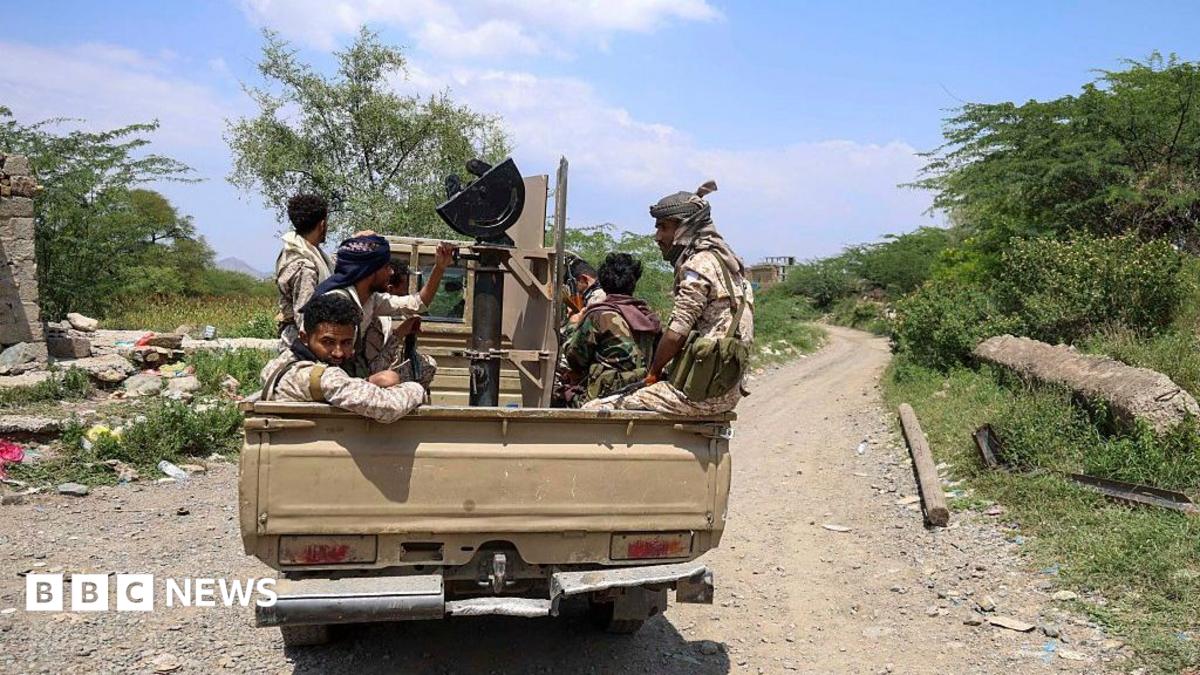
The Yemeni president's announcement comes amid an exchange of strikes between the Houthis and the Saudi-led coalition. #YemenWar #Houthis #SaudiArabia

Yemen's government announces all-out war to reclaim land from Houthis
BBC 3d

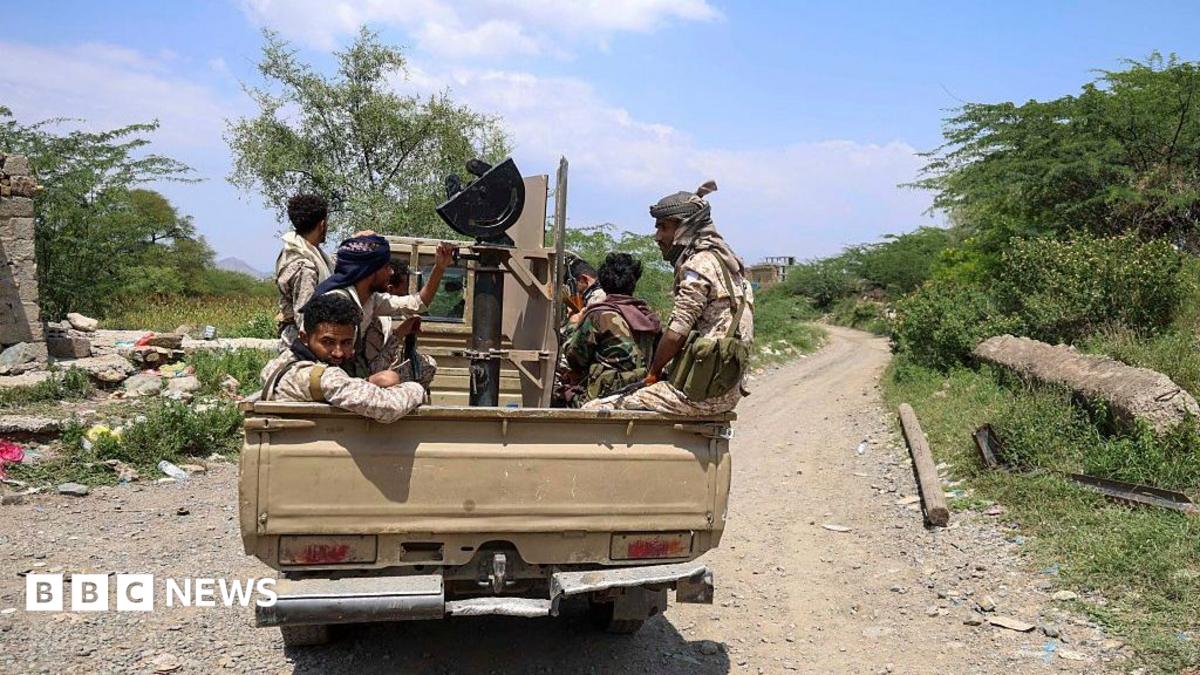
The Yemeni president's announcement comes amid an exchange of strikes between the Houthis and the Saudi-led coalition. #YemenConflict #Houthis #SaudiArabia

Yemen announces military campaign to reclaim land from Iran-backed Houthis

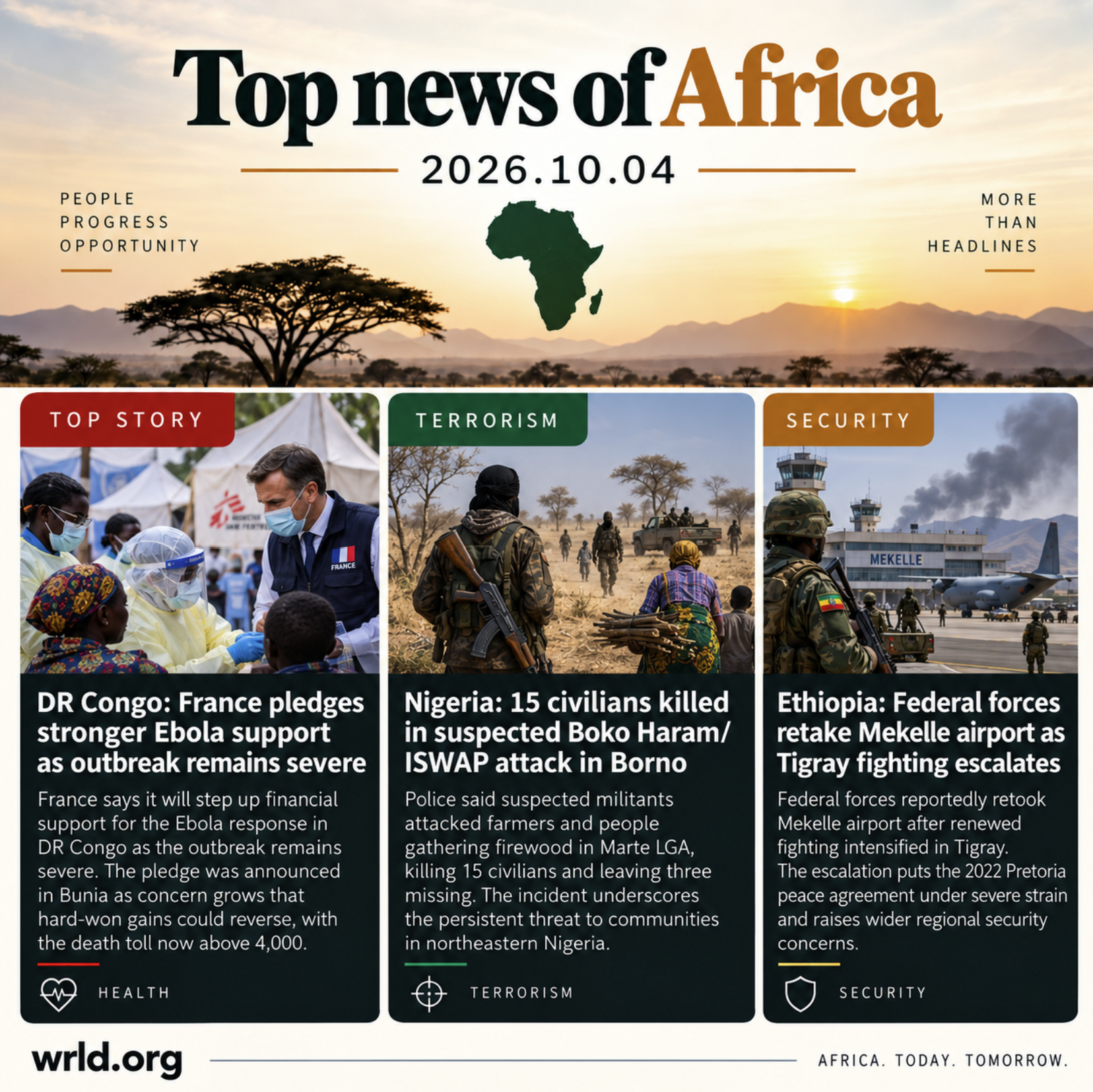
Africa Daily Report — 4 October 2026 Major developments reported during the previous 24 hours. 1. Ethiopia — Federal forces retake Mekelle airport as Tigray fighting escalates Ethiopian federal forces have retaken Alula Aba Nega Airport in Mekelle, according to residents and other sources cited by Reuters and AP. The airport had been seized by Tigrayan forces on September 23. Gunfire was reported near central Mekelle, and the renewed conflict is putting the 2022 Pretoria peace agreement under severe strain amid wider tensions involving Eritrea and other regional states. Sources: https://www.reuters.com/world/africa/pro-government-forces-say-they-retake-airport-ethiopias-tigray-region-2026-10-03/ https://apnews.com/article/87740d41b686614b63ccdba54dbd3168 2. DR Congo — France pledges stronger Ebola support as outbreak remains severe Importance: 10/10 — Critical France says it will step up financial support for the Ebola response in the Democratic Republic of Congo. French Foreign Minister Jean-Noël Barrot made the announcement during a visit to Bunia, amid concern that gains against the outbreak could reverse. France contributed €13.4 million to Ebola-related efforts from January through July and plans to seek additional funding. The announcement comes as Congo's outbreak has surpassed 4,000 deaths. Sources: https://www.reuters.com/business/healthcare-pharmaceuticals/france-step-up-ebola-funding-congo-amid-resurgence-fears-minister-says-2026-10-03/ https://apnews.com/article/4c79b59ec81a08675d2506c9e176d125 3. Sudan — More than 25 civilians reported killed in North Kordofan Importance: 10/10 — Critical The Sudan Doctors Network says more than 25 civilians were killed in an attack attributed to the Rapid Support Forces in the Umm Badr area of North Kordofan. The medical group said available evidence indicated that civilians may have been targeted on ethnic grounds and called for an independent investigation. Fighting has intensified in Kordofan as the Sudanese Armed Forces and RSF contest territory. Source: https://saudigazette.com.sa/article/665071/world/more-than-25-civilians-killed-in-rsf-attack-in-sudans-north-kordofan 4. Nigeria — 15 civilians killed in suspected Boko Haram/ISWAP attack in Borno Importance: 9/10 — Very High Borno State police confirmed that 15 people were killed in Marte Local Government Area after suspected Boko Haram/ISWAP militants attacked farmers and people gathering firewood. Three people remained missing. The attack underlines the continuing threat to civilians and rural livelihoods in northeastern Nigeria despite prolonged counter-insurgency operations. Source: https://punchng.com/terrorists-kill-15-farmers-in-borno/ 5. Kenya — $16 billion Dangote Lamu refinery faces new legal challenge Importance: 9/10 — Very High The proposed $16 billion Dangote oil refinery in Lamu is facing a further legal challenge. The Consumers Federation of Kenya is seeking to halt government participation until questions concerning procurement, financing, Kenya's proposed stake and public-land arrangements are clarified. Separately, an Environment and Land Court has issued interim orders affecting activity on land designated for the project. The refinery is planned at 700,000 barrels per day and would be one of East Africa's largest industrial investments. Source: https://energynews.africa/2026/10/03/dangotes-16bn-kenya-refinery-faces-legal-challenge/ 6. Burkina Faso — First national gold refinery marks push for domestic processing Importance: 8/10 — High Burkina Faso has inaugurated its first national gold refinery, RAFFINOR-BF, in Ouagadougou. The project is designed to allow more of the country's gold to be refined and certified domestically rather than exported for processing abroad. Reported initial capacity is 164 tonnes annually, with expansion plans that could also position Burkina Faso as a regional refining centre. Source: https://www.theafricandream.net/burkina-first-gold-refinery/ 7. South Africa — AU human-rights mission concludes with preliminary findings The African Commission on Human and Peoples' Rights completed a promotion mission to South Africa. Its preliminary assessment described the country's legal framework for protecting human and peoples' rights, including those of non-nationals, as comprehensive. The mission took place against a backdrop of domestic concern about violent crime, migration tensions and gender-based violence. Source: https://www.sanews.gov.za/south-africa/au-human-rights-mission-sa-concludes 8. Nigeria / South Africa — Nigeria evacuates another 106 citizens amid anti-migrant tensions Importance: 8/10 — High *Another 106 Nigerian citizens arrived in Lagos from South Africa as concerns continue over xenophobic and Afrophobic violence and intimidation. Nigeria has urged South African authorities to protect foreign nationals, while Pretoria has stressed that immigration enforcement is a state responsibility and warned against vigilantism. The episode continues to put pressure on relations between two of Africa's largest economies. Source: https://thewillnews.com/xenophobia-nigeria-evacuates-106-more-from-south-africa-as-anti-migrant-tensions-escalate/ 9. Sudan — Fighting spreads in Blue Nile near Ethiopian border Importance: 9/10 — Very High Sudan's military says it repelled an attack by the RSF and allied SPLM-N forces around Minza and Bashkarkad in Blue Nile state near Ethiopia. The clashes followed RSF drone strikes on targets in Ed Damazin. The International Organization for Migration has reported displacement of roughly 7,000 people from affected areas since late September, adding another front to Sudan's prolonged war. The RSF and SPLM-N had not immediately commented on the military's account. Source: https://sudantribune.com/article/319554 10. Somalia — Navy intercepts vessel with seven foreign nationals off Hobyo Importance: 7/10 — High Somali naval and coastal defence forces intercepted a vessel off Hobyo whose Automatic Identification System was reportedly switched off. Seven foreign nationals were detained while authorities investigate the vessel's registration, cargo and purpose. The operation comes amid Somalia's efforts to strengthen maritime surveillance and combat illegal fishing and other illicit activity along its coastline. Source: https://somalilandstandard.com/somali-navy-seizes-boat-carrying-seven-foreigners-in-hobyo/ #Africa #AfricaNews #TopNewsOfAfrica #DRCongo #Ebola #EbolaOutbreak #Bunia #France #PublicHealth #HealthEmergency #Nigeria #Borno #BokoHaram #ISWAP #Terrorism #CivilianProtection #Ethiopia #Tigray #Mekelle #Conflict #Security #HornOfAfrica #Sudan #NorthKordofan #RegionalStability #Geopolitics

BBC 7d

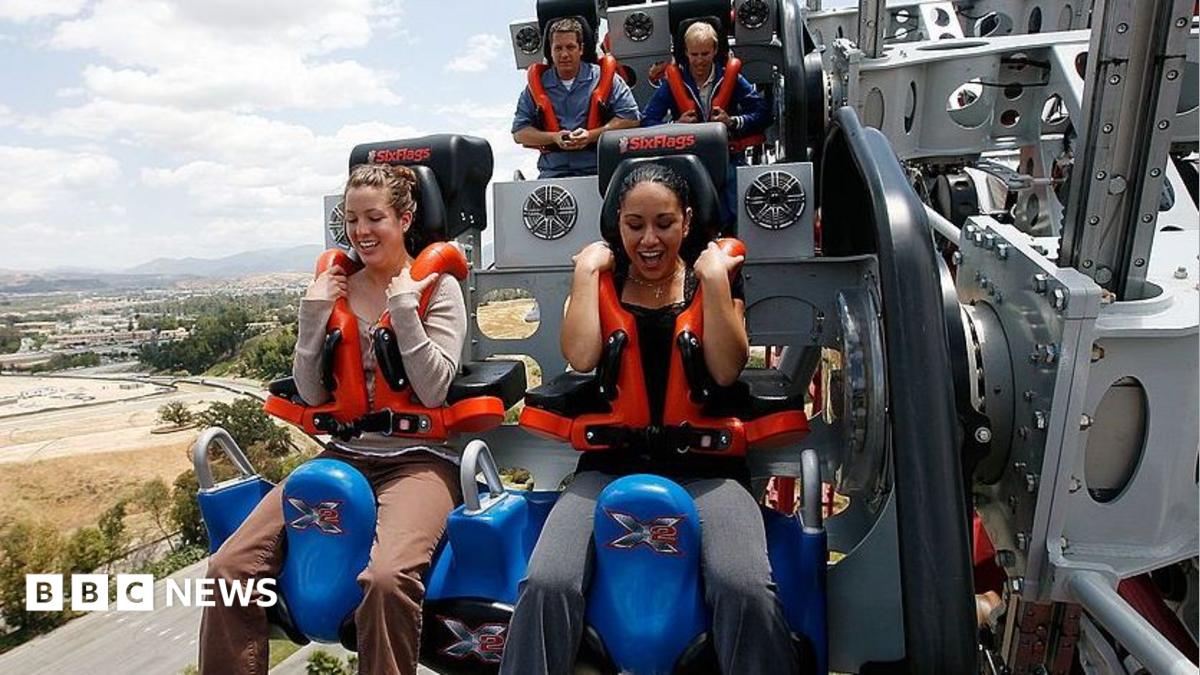
The announcement comes after multiple lawsuits alleged that hundreds of riders suffered brain injuries from X2, a ride with seats that spin 360 degrees. #AmusementPark #Rollercoaster #SafetyConcerns

Six Flags shuts down X2 rollercoaster after hundreds allege brain injuries

Techradio 🎧 new episode: Tech news you’ll want to know! 💻 Googlebook sells out almost immediately after its announcement! Take a look at the Meta smart pendant with a Tamagotchi-like twist, and how Gemini lands in the top 10 of the world’s most valuable brands. Sad? the https://t.co/IUhVqAUkeX #TechNews #Googlebook #Meta #Nospecificcountrycodescanbeidentifiedinthetweet.

🚨 Manchester United are set to announce 16-year-old winger Isaac Konde as new signing from Liverpool. Story from two weeks ago, confirmed as #MUFC are set for official announcement. https://t.co/YxbWGLnbvv #MUFC #IsaacKonde #TransferNews #GB #US

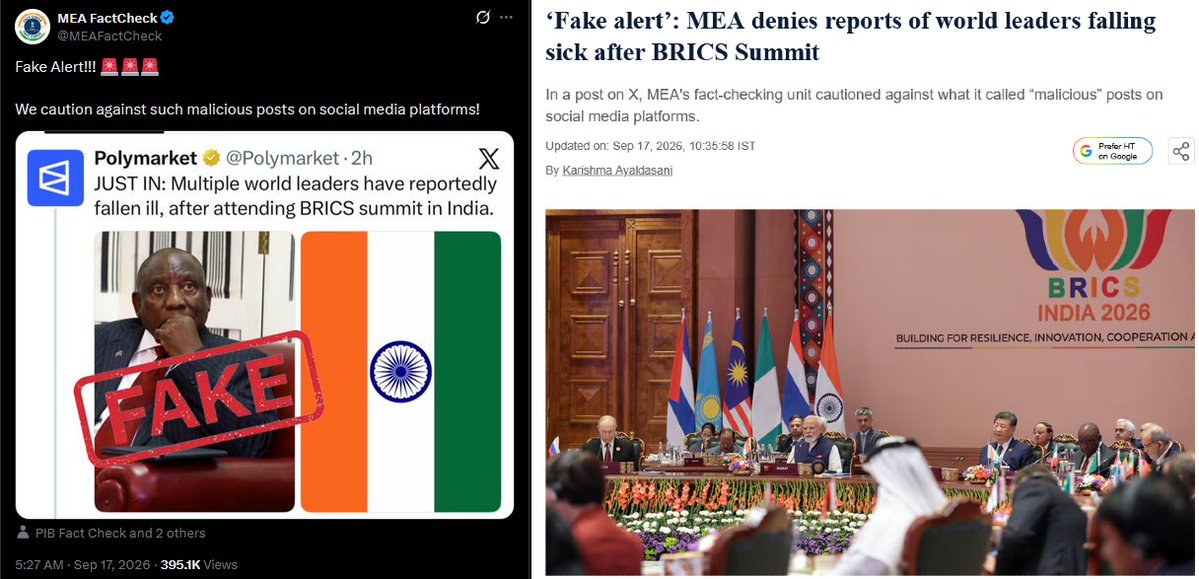
Even though the official BRICS announcement seemed kinda boring, there are all sorts of rumours going around about what actually happened there. The biggest story is obviously Xi Jinping’s health. A video published by Australian media house showed a concerned Indian PM Modi https://t.co/Qhqcg6P29m #BRICS #XiJinping #Modi

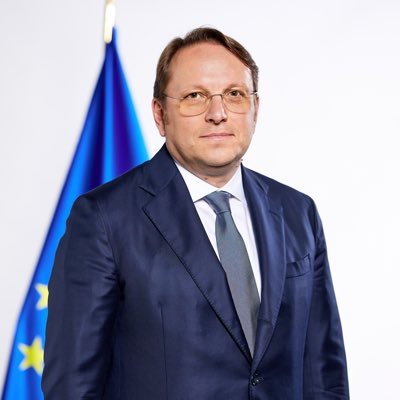
Another important announcement in #SOTEU: a 🇪🇺Heatwave Plan This summer showed extreme heat’s impact on people, hospitals&care systems. We need better early warnings, stronger health resilience&more protection for the most vulnerable. Climate resilience is also health resilience. #ClimateResilience #Health #HeatwavePlan #EU

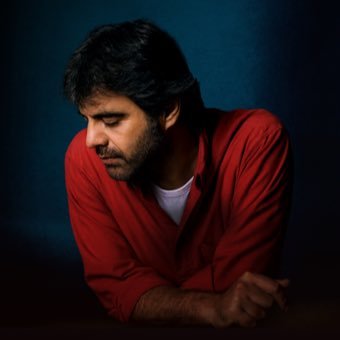
ANNOUNCEMENT: The “Romanza - 30th Anniversary World Tour” is coming to newly-added North American cities! Social followers have early access to tickets starting Wednesday, September 16th at 10am local. General onsale begins Friday, September 18th at 10am local. https://t.co/ebTSjbBiSE #RomanzaTour #30thAnniversary #NorthAmerica #US #CA

More and more countries are committing to taking action on trade with Israeli settlements in the occupied Palestinian territory. I welcome today’s announcement by the UK, France and a number of other countries, adding to the measures already taken by Ireland and Spain. https://t.co/Kk741UCgDW #IsraeliSettlements #Palestine #TradeSanctions #UK #FR #IE #ES

"GIO FESTIVAL (FOGGIA)" CONQUERS HOLLYWOOD AND ENTERS THE RACE FOR THE “OPERA OSCARS” (BEST RECORDING OF MONTH FOR GRAMOPHONE UK) SOURCE: https://www.linkedin.com/pulse/gio-festival-foggia-conquers-hollywood-enters-race-uk-sardella-ph-d--tlaee/ SOURCE 1: https://hollywoodbeatmagazine.com/2026/09/03/giordanos-marina-journey-nominated-for-international-opera-awards/ SOURCE 2: https://www.instagram.com/p/DcWc0dfjBr4/ There comes a moment in the cultural life of a nation when tradition ceases to be mere memory and once again becomes an event. Such is what is now unfolding with Marina by Umberto Giordano: the long‑lost opera, newly reborn through the “GIO Festival” led by Dino De Palma and Gianna Fratta, and today officially nominated for the “International Opera Awards”, the so‑called “Opera Oscars” that each year celebrate the world’s finest achievements in musical theatre. The announcement — reported by the prestigious Californian magazine Hollywood Beat Magazine — marks a historic turning point: a work that remained in obscurity for more than a century now ascends to the international stage, projecting Italian creativity into the very heart of the global cultural industry. It is not merely a recognition; it is a signal. The Teatro Umberto Giordano, the entire organisational engine of the “GIO Festival”, together with all public and private institutions involved, demonstrates once again that when it chooses to honour its treasures, it still has the power to astonish the world. Marina is not simply a rediscovered opera: it is a journey that begins with the archival papers of the “Frederick R. Koch Collection” at Yale University’s “Beinecke Rare Book and Manuscript Library”, passes through the passion of musicologists such as Andreas Gies, ignites in the production of the “GIO Festival”, and — after attracting the attention of “Broadway World” with its six million monthly global readers — now reaches Hollywood, where the international press celebrates its dramatic potency, its luminous vocal writing, and its striking modernity. In an operatic landscape often dominated by the great repertory titles, the nomination of “Marina (1888)” shows that a work can still be rediscovered, reinvented, relaunched. It can speak to the present — and it can do so with the voice of Foggia and of the people of Foggia across the world. For those who cherish culture, music, and history, this is a moment to remember. For those who believe in the value of research and dissemination, it is a victory to celebrate. For those who live opera as a mission, it is an epoch‑making triumph. And now, with its nomination for the International Opera Awards — the global “Opera Oscars” — the journey of Marina and of Umberto Giordano continues. Towards the world. Towards the future. Towards a new chapter in the great Giordanian tradition. At long last, we may say: Welcome back, Umberto!

"GIO FESTIVAL (FOGGIA)" CONQUERS HOLLYWOOD AND ENTERS THE RACE FOR THE “OPERA OSCARS” (BEST RECORDING OF MONTH FOR GRAMOPHONE UK)

"RadioText-RadioSoftware (1983–1989)": The First (Forgotten) Radio Programme of Computer Science Dissemination in Italy SOURCE: https://www.linkedin.com/pulse/radiotext-radiosoftware-19831989-first-forgotten-sardella-ph-d--eqief/ Radiosoftware represents Italy's absolute pioneer in broadcasting digital literacy education over the airwaves in the Belpaese. Abstract This paper reconstructs the history of Radiosoftware, the first Italian radio programme which anticipated by over a decade the dissemination of microtelematics, computing, and digital technology, as well as modern methods of digital software distribution. Established in 1983 at Radio Popolare and subsequently developed as a national initiative on Rai Radio 3 from 1984 to 1989, Radiosoftware represents the first Italian radio programme to broadcast educational content and transmit executable software for home computers over the airwaves. Through analysis of its technical evolution, educational content, and cultural impact, this article demonstrates how the initiative constituted a significant precedent in national computer literacy, the democratisation of access to software, and the development of amateur programming communities, establishing itself as the progenitor of a media ecosystem dedicated to technological dissemination that has extended into the contemporary era. Keywords: history of Italian computing, technological dissemination, digital broadcasting, computer literacy, Radio Popolare Introduction: The Dawn of Computing Dissemination in Italy In the landscape of Italian digital media history, a fundamental chapter remains little explored in academic literature: that of computing dissemination through radio broadcasting in the 1980s. In an era characterised by the absence of network connectivity and economic and geographical barriers to accessing computer technologies, radio configured itself as a democratic instrument for the diffusion of nascent digital culture. Radiosoftware emerges in this context as an absolutely pioneering initiative in Italy, anticipating not only analogous Italian experiences but also positioning itself amongst the first European experiments in software transmission over the airwaves. Its genesis at Radio Popolare in 1983 and subsequent evolution as a national programme on Rai Radio 3 bear witness to a trajectory of technical and pedagogical innovation that merits in-depth analysis. Contenuto dell’articolo The Original Phase: Radio Popolare (1983) The birth of Radiosoftware at Radio Popolare in 1983 constitutes the foundational moment of radio-based computing dissemination in Italy. In a period when personal computers still represented niche objects, the programme set out to systematically explore programming languages, hardware architectures, and practical applications of home computing, addressing a heterogeneous audience composed of students, teachers, hobbyists, and professionals. This first incarnation established the conceptual paradigms that would characterise the entire subsequent tradition: linguistic accessibility, pedagogical vocation, attention to the social and cultural dimensions of technology, and promotion of active listener participation. Contenuto dell’articolo The National Evolution: From Radiotext to Radiosoftware (1984–1989) The experience gained at Radio Popolare found systematic development in the national initiative coordinated by Rai Radio 3. The pilot phase, denominated Radiotext, commenced on 11 May 1984 as an experimental segment within the current affairs programme Un certo discorso, presented by Pasquale Santoli. Eight 30-minute episodes, broadcast on Fridays at 16:00 with Sunday repeats, tested the technical feasibility and public interest in the transmission of executable software through audio signals. Curated by Luigi Grimaldi and Giovanni Sighele of the Lega Informatica of Florence, in collaboration with Arci Media, the pilot phase demonstrated the viability of the concept. In autumn 1984, the format consolidated with the definitive denomination Radiosoftware, expanding to one-hour episodes and maintaining its placement within Un certo discorso. Contenuto dell’articolo The third season, inaugurated on 7 February 1986, introduced a thematic structuring articulated in three distinctive segments: "Hard & soft news" (updates and reviews), "Studiare con il computer" (educational applications), and "Radio + informatica" (experimental intersections between broadcasting and computing). This phase evidenced a growing pedagogical sophistication and greater attention to formal educational applications. In late 1986, the programme acquired editorial autonomy, transforming into an independent transmission with nocturnal weekend scheduling. 1987 marked a significant technical innovation with the introduction of the 4800 bit/s hardware interface developed by the RAI Research Centre in Turin, which enabled direct connection to the RS-232 serial port, overcoming the limitations of the audio-cassette method. The concluding phase, from February to June 1989, adopted a brief daily format (10 minutes, Monday to Friday at 19:45), concentrating on MS-DOS-compatible software. Despite the announcement of a cycle for 1990, no national transmission is documented beyond June 1989. Contenuto dell’articolo The Audio-Cassette Method (1984–1987) The initial methodology replicated the cassette loading mechanisms typical of 1980s home computers. Programmes were encoded as sequences of audio impulses—electronic noises incomprehensible to the human ear—which listeners recorded onto blank audiocassettes by connecting a tape recorder to the radio's audio output. The recorded cassette was subsequently played through the computer's cassette interface, which decoded the signals, loading the software into memory. This approach, based on modulation techniques similar to frequency-shift keying (FSK), guaranteed compatibility with heterogeneous platforms such as the ZX Spectrum 48K, Commodore 64, Olivetti M10, subsequently extended to the Apple II, MSX, BBC Micro, Olivetti M24 and M28. Each episode transmitted sequentially platform-specific versions for each system. Whilst accessible and revolutionary for mass distribution in pre-Internet Italy, this method presented significant limitations: low transmission speed, susceptibility to errors induced by radio interference or ambient noise, and the necessity for precise volume and timing adjustments. Contenuto dell’articolo The RAI-Radiosoftware Hardware Interface (1987) In 1987, the RAI Research Centre in Turin developed an advanced interface documented in CCIR reports as the RAI-Radiosoftware system. The principal innovation consisted of direct transmission at 4800 bits/s utilising biphase modulation organised in packets, enabling connection to the computer's RS-232 serial port without cassette intermediation. The interface was designed for operating system independence, with management software adaptable for MS-DOS, CP/M, and potential future extensions to Macintosh. For Olivetti M24 and M28 computers, a version with an internal card was available. The Research Centre additionally developed management software, test cassettes, and manuals, considering initial commercialisation at approximately 90,000 lire. This technical evolution represented a significant advancement in terms of speed, reliability, and usability, whilst maintaining the audio-cassette method in parallel to guarantee universal access. Contenuto dell’articolo Types of Software Transmitted The catalogue of software distributed through Radiosoftware reflected a broad range of applications: practical utilities (thematic databases on fashion, music, itineraries, and personalised diets), educational tools (didactic programmes for secondary schools, upper secondary schools, and conservatoires), recreational software (games such as the Olympic pentathlon for the Commodore 64), graphic demonstrations, and creative tools (bases for musical composition and digital comics). Particularly significant was the introduction, from the third season onwards, of educational software developed in collaboration with the Ministry of Public Education, designed specifically for scholastic use across various disciplines, not limited to computing. Contenuto dell’articolo Community Participation: The ORSA Section The Osservatorio Radiofonico del Software Autoprodotto (ORSA) [Radio Observatory of Self-Produced Software], reintroduced in the third season from February 1986, constituted a space dedicated to the transmission of programmes created by listeners. This feature transformed Radiosoftware into a bidirectional platform, anticipating collaborative logics that would characterise, decades later, open-source communities and participatory digital cultures. The "listeners' post" section within "Hard & soft news" additionally facilitated continuous dialogue with the public, integrating feedback, questions, and suggestions into the programming. Questionnaires distributed at the end of cycles and surveys conducted by specialist magazines such as Sperimentare con l'elettronica e il computer provided further mechanisms for evaluation and editorial orientation. Contenuto dell’articolo Institutional Collaborations and School Experiments In 1987, Radiosoftware collaborated with the ITIS Enrico Fermi in Rome to produce a series of transmissions dedicated to the development and application of educational software in scholastic contexts. The initiative involved experimental reception centres in 60 Italian schools, where students and teachers utilised the specialised interfaces developed by the RAI Research Centre to capture and load directly the transmitted software. These experiments positioned Radiosoftware as an operational instrument of pedagogical innovation, extending its impact beyond the hobbyist user base towards formal integration within the national education system. Contenuto dell’articolo Comparison with European Experiences Although Radiosoftware represents the first Italian national initiative, it was not the first European experiment in radio transmission of software. In the Netherlands, the programme Hobbyscoop on the public broadcaster NOS began transmitting computer programmes via radio around 1979–1980, subsequently developing the Basicode standard (from 1982). This standardised format utilised a restricted subset of BASIC commands and platform-specific translation routines, guaranteeing portability across heterogeneous architectures through FSK modulation at 1200 bps. Contenuto dell’articolo In the United Kingdom, The Chip Shop on BBC Radio 4, presented by Barry Norman and launched in 1984, included a "takeaway" service that transmitted Basicode programmes during nocturnal hours on VHF. Contenuto dell’articolo Technical and Cultural Differentiation Unlike approaches based on Basicode, which privileged portability at the interpreted language level, Radiosoftware transmitted platform-specific executable files, often in machine code, encoded as audio tones analogous to cassette loading signals. This choice reflected different priorities: maximising performance and the specific capabilities of each architecture rather than guaranteeing universal compatibility through a standardised language. The subsequent introduction of the 4800 bit/s interface with RS-232 connection represented a further differentiation, bypassing cassette recording entirely. These technical specificities bear witness to an autonomous development pathway, oriented towards the characteristics of the Italian computing market and ecosystem. Contenuto dell’articolo Transition towards Telesoftware Between 1988 and 1989, Radiosoftware was progressively accompanied and superseded by telesoftware transmitted through Televideo, RAI's teletext system. Technically defined by the RAI Research Centre in collaboration with Olivetti, the system became operational in 1989 following scholastic experiments coordinated with the Ministry of Public Education and Seleco in 1988. Telesoftware represented a natural evolution that shifted distribution from radio to television, offering advantages in terms of bandwidth capacity and already widespread reception infrastructure. This transition reflected broader trends in media convergence and the evolution of digital broadcasting technologies. Contenuto dell’articolo Obsolescence and the Rise of the Internet The emergence of the Internet in the 1990s rendered obsolete both radio-based and teletext-based methods of software distribution. Bidirectional digital networks offered incomparable speed, scalability, and interactivity, radically transforming the paradigms of software access and distribution. However, the conceptual legacy of Radiosoftware persists: the idea of mass distribution of executable digital content through broadcasting channels anticipated logics that re-emerge in modern over-the-air distributions of firmware and software updates for mobile devices and IoT. Contenuto dell’articolo The Ecosystem of Italian Radio-Based Computing Dissemination COMPLETE TIMELINE From the birth of computing dissemination on radio to the contemporary digital ecosystem 🟦 1983 — THE ORIGIN Radiosoftware – Radio Popolare (1983) The first Italian programme entirely dedicated to computing, programming languages, and personal computers. The absolute progenitor of the Italian tradition of radio-based technological dissemination. 🟦 THE 1980s — THE FIRST HEIRS 1984–1989 — Bit, Byte & Musica – Radio Popolare Technology, electronics, early networks, hacker culture. Continues the pioneering spirit of Radiosoftware, exploring the countercultural and communal dimensions of nascent computing. 1987–1990 — Decoder / Cyberpunk – Radio Popolare First systematic discussions of BBS, cryptography, alternative telematics, anticipating themes that would become central in the Internet era. 🟩 THE 1990s — THE INTERNET ERA 1993 — Golem – Radio3 Critical reflection on media and digital technologies, situating technological transformation within a broader cultural and philosophical framework. 1994 — Eta Beta – Radio1 Innovation, information society, digital transformation. Technological dissemination for a general audience in the phase of initial digital literacy. 1995 — Internetworkcity – Radio Deejay Presented by Claudio Cecchetto and Marco Camisani Calzolari, represents the first pop-commercial programme dedicated to the Internet, introducing email, websites, chat, and cyber culture to the mass public with accessible language and a massified educational approach. 1996–1999 — Mediamente (radio version) – RAI Dissemination on the Internet, networks, digital culture, with particular attention to the social and cognitive implications of emerging technologies. 1997–2000 — Cybernet / Tecnologie e Libertà – Radio Sherwood Free software, digital rights, civic networks. Continuation of the critical and communal tradition inaugurated by Radio Popolare, with focus on the political and libertarian dimensions of technology. This timeline evidences how Radiosoftware does not represent an isolated phenomenon, but rather the point of origin of a continuous tradition that has traversed over four decades. From the programming languages and over-the-air software transmission of the 1980s, through explorations of BBS and alternative telematics, to mass literacy on the Internet in the 1990s and critical reflections on free software and digital rights, a connecting thread emerges that testifies to the role of radio as a privileged space for the cultural mediation of emerging technologies. Contenuto dell’articolo Contemporary Recognition and Archival Preservation In recent years, Radiosoftware has acquired renewed attention as a pioneering initiative in the history of Italian computing. In 2024, contributions by scholars such as Andrea Fortuna have described the programme as a fascinating chapter in the diffusion of personal computing in Italy, underscoring its innovative approach to the distribution of executable software in the pre-Internet era. RAI has preserved selections from the initial phase of the programme through digital platforms such as RaiPlay Sound, where a dedicated playlist in the "Via Asiago 10" series includes several pilot episodes from 1984, originally broadcast on Rai Radio 3. Preservation efforts by enthusiasts have further contributed to maintaining accessible portions of the programme's legacy, with partial audio recordings and listener interviews available on dedicated websites. Radiosoftware constitutes a significant case study from multiple disciplinary perspectives. From the standpoint of media history, it represents an innovation in the utilisation of radio broadcasting, extending its functionalities beyond the transmission of audio content towards the distribution of executable code. In computing history, it testifies to strategies of democratisation of software access in contexts characterised by scarcity of resources and infrastructure. From a pedagogical standpoint, it anticipates models of distributed and community learning that re-emerge in modern online educational platforms. The participatory dimension embodied by the ORSA section prefigures collaborative dynamics that would characterise open-source cultures. Its position as progenitor of a continuous media ecosystem dedicated to technological dissemination—from Radio Popolare through national public broadcasters to the experiences of the 1990s—underscores the role of radio broadcasting as essential cultural infrastructure in the processes of national digital literacy. In an era when over-the-air distribution of software updates has become ordinary practice for billions of connected devices, Radiosoftware emerges not as an antiquarian curiosity, but as a conceptual antecedent that illuminates often-neglected technological genealogies. Its rediscovery and archival preservation constitute essential operations for a complete understanding of the roots of Italian digital culture.

"RadioText-RadioSoftware (1983–1989)": The First (Forgotten) Radio Programme of Computer Science Dissemination in Italy

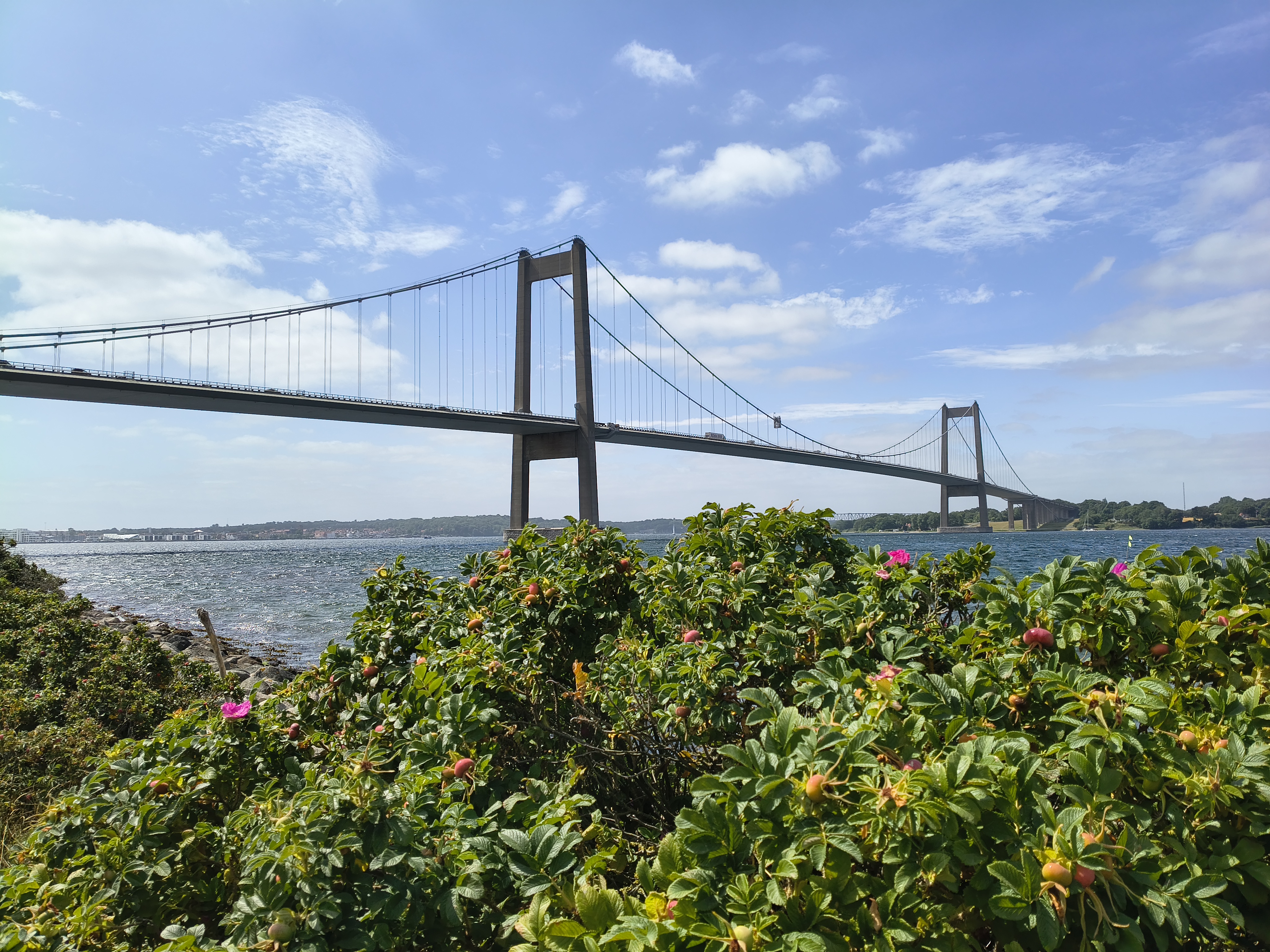
https://bridgehunterschronicles.wordpress.com/2026/09/04/postcard-friday-nr-106/ A public service announcement by the BHC regarding the Saxony-Anhalt elections this weekend.

Postcard Friday Nr. 106
Kim Dotcom Sep 4

US Terror coming to Russia. The latest announcement by Zelenskyy that he would attack airports in Russia with drones is the brainchild of the CIA / Palantir in an effort to get the Russians to give up. Not only is this not going to work. Russia is winning the US proxy war. It #USTerror #Russia #ProxyWar #US #RU

I gave DW my reactions to Germany’s recent announcements. Here’s five highlights: 📺“We're already at war. Unfortunately we're still calling it hybrid war, but we're being attacked, by Russia.” 1/5🧵 https://t.co/Liqo9dgmP8 #Germany #HybridWar #Russia #DE #RU

It has taken the German government nearly a month to state the obvious: Russia was behind the Leipzig airport attack. An announcement of what consequences Russia will face expected later today. Merz apparently not bothering to announce it himself so Putin unlikely to be worried. https://t.co/fV9DIiPh9B #Germany #Russia #LeipzigAttack #DE #RU