BETA nonprofit public democratic european moderated

Search

#books

The Banned Books Festival in Uppsala on October 10 aims to highlight censored literature and its impact on freedom of expression, focusing on genres such as fantasy, sci-fi, and queer literature that are often hit hardest. #FörbjudnaBöcker #Yttrandefrihet #Litteratur (translated)
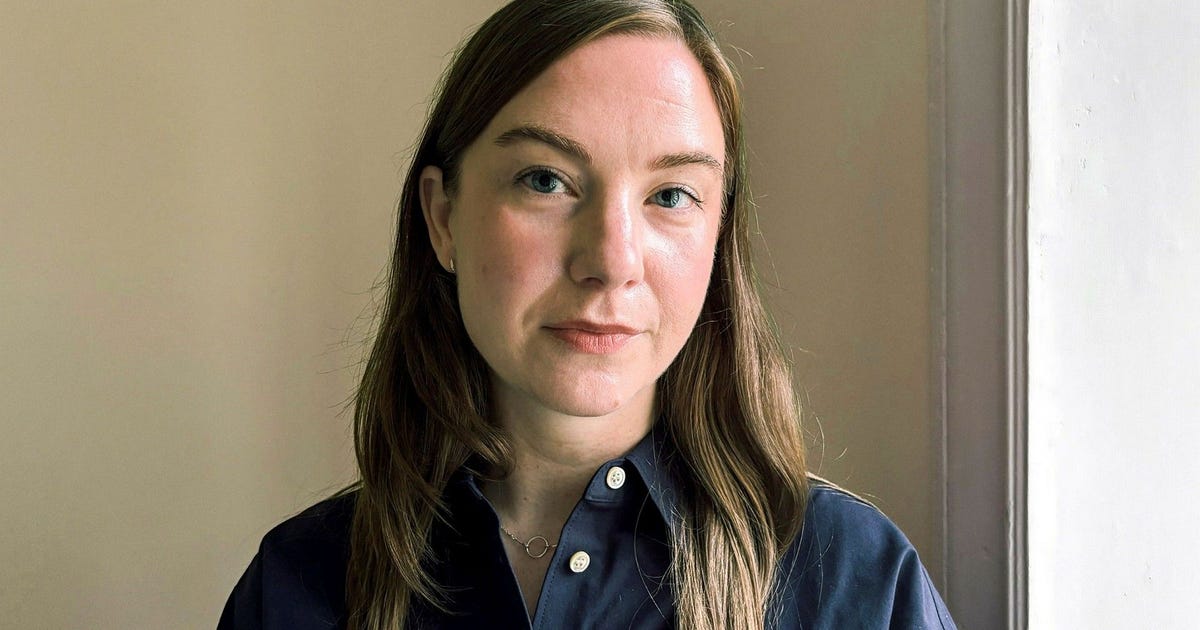
Festival lyfter förbjudna böcker: ”Litteratur retar dem med makt”
The author described an early-literacy programme as “really great” and said it delivered a high-quality, age-appropriate book to children from birth to age five each month. They shared a link for more information.

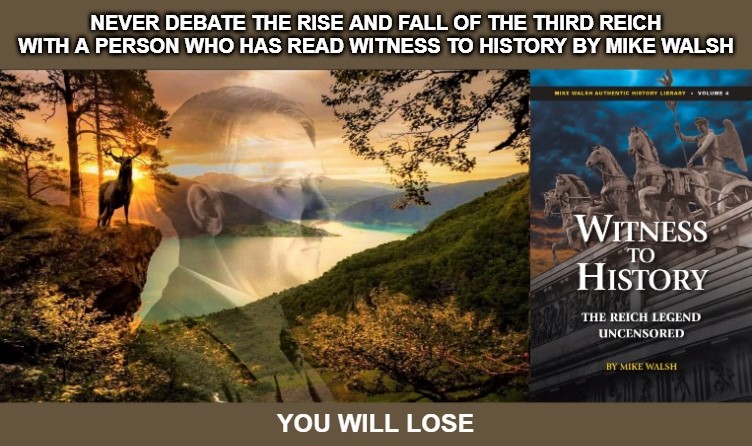
WITNESS TO HISTORY Mike Walsh: “I have read a lot about WWII and Germany. This includes David Irving’s books. However, you wrapped it all in a really tidy and factual package. I highly recommend it to all my history truth-seeking friends. Thank you for such a great book.” ~ B. Wiggles. https://barnesreview.org/product/witness-to-history-the-reich-legend-uncensored/

WITNESS TO HISTORY Mike Walsh: “I have read a lot about WWII and Germany. This includes David Irving’s books. However, you wrapped it all in a really tidy and factual package. I highly recommend it to all my history truth-seeking friends. Thank you for such a great book.” ~ B. Wiggles. https://barnesreview.org/product/witness-to-history-the-reich-legend-uncensored/

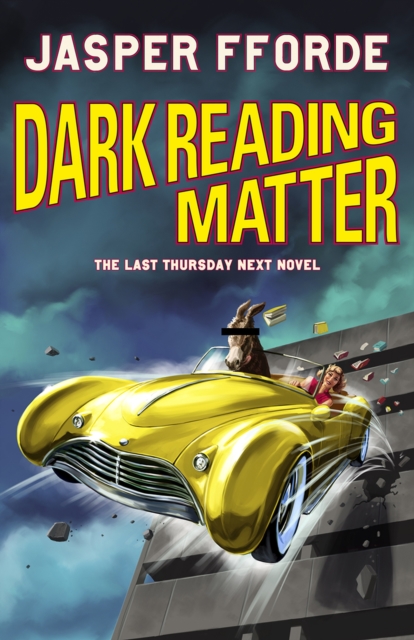
New! Out in October! Dark Reading Matter : The Last Thursday Next novel by Jasper Fforde The final novel in the highly acclaimed and beloved Thursday Next series. Will Thursday find her happy ending? Swindon-based Literary Detective Thursday Next is embarking on her eighth and final adventure: 'Dark Reading Matter' and she is well aware of the fact. The problem is, others are too. Old foes and new are plotting a terrible revenge: To disrupt the narrative and make Dark Reading Matter not just unreadable but unpublishable. Thursday can't let that happen and needs to use all her guile and narrative trickery to unmask the antagonists and guide the series to a satisfactory conclusion. It won't be easy. The Martians have broken out of their HG Wells novel and threaten both the real world and the Bookworld. Agents from a higher reality want unfettered access to the Dark Reading Matter, the realm where deleted books and unrealised literary ideas end up. A Gateway to Hell has opened up at Wantage's Shakesmania, the nation's second to worst Shakespeare theme park and the cosy world of Enid Blyton has been hi-jacked by Ultra Right Wing Nationalists. With Reality Field Distortion experiments going haywire, a partially redacted donkey, a Bookworld on the brink of losing its imaginative energy to Big Tech and a murderous stamp collector with Philaticide on their mind, Thursday has to navigate a tightrope of borderline unusable narrative devices to bring the series to a satisfactory conclusion. It's a tall order, but Thursday has a secret weapon: Her own adaptability, her husband Landen, a host of stalwart friends and ultimately the most loyal compatriots she can call upon: Her readers.

WITNESS TO HISTORY Mike Walsh: “I have read a lot about WWII and Germany. This includes David Irving’s books. However, you wrapped it all in a really tidy and factual package. I highly recommend it to all my history truth-seeking friends. Thank you for such a great book.” ~ B. Wiggles. https://barnesreview.org/product/witness-to-history-the-reich-legend-uncensored/

Peisajul literar contemporan din România se îmbogățește cu o apariție editorială remarcabilă, de o forță psihologică rară. Editura Cișmigiu Books anunță publicarea romanului „Osul de lapte”, semnat de Roxana Pană, o primă ediție întinsă pe parcursul a 200 de pagini care propune o scufundare curajoasă în dinamica traumelor moștenite și a felului în care fragilitatea copilăriei se transformă, în timp, în structura dură care ține un om în viață sau îl strivește sub propria greutate. https://www.litera13.ro/2026/09/osul-de-lapte-de-roxana-pana-o.html

„Osul de lapte” de Roxana Pană – o incursiune hipnotizantă în abisul traumelor transgeneraționale

⚪️✨ Kylian Mbappé: “I'm very happy to be a Real Madrid player. When you want to get into football's history books, you have to play for Real Madrid”. “You go to another level”, told AS. https://t.co/UP81KWnWwg #Mbappé #RealMadrid #FootballLegend #ES #FR

Liverpool now has 5 Hungarian players on the books 🇭🇺 Dominik Szoboszlai Milos Kerkez Ármin Pécsi Erik Farkas Patrik Farkas https://t.co/1SmrFVLnww #LiverpoolFC #HungarianPlayers #PremierLeague

fio 3w

lo que me reí con esta escena por favor, in my books así termina la familia Calderón de la Hoya #margarita3 https://t.co/XzPqCAzfkt #risas #familia #margarita3

H

When Emotion Takes the Reins A remarkable study published in Proceedings of the National Academy of Sciencesexamined millions of books covering almost 170 years and tracked language associated with rationality—facts, conclusions, analysis and determination—against language associated with sentiment—feeling, belief and emotion. The pattern was striking. From roughly 1850 to 1980, rationality-related language steadily increased while sentiment-related language declined. Then the trend reversed. By around 2007, sentiment-related language had overtaken rationality-related language and continued rising (Scheffer et al., 2021). This does not prove that people have become less rational, nor does the study establish a single cause. But it raises an important question: what happens when trust in the institutions associated with knowledge and expertise begins to collapse? If people believe governments, experts, universities and media are corrupt or captured, “look at the data” can sound less like an appeal to reason and more like an appeal to authority. And when institutional trust declines, emotion becomes politically powerful. Anger supplies an enemy. Fear supplies urgency. Hope supplies a future. Identity supplies belonging. Could this help explain why socialism and even communism have regained some appeal among young people despite the historical record? The study cannot establish that causal link. But it is a plausible hypothesis: when politics becomes increasingly emotional, an ideology can be judged by what it promises rather than by what it has historically produced. Benjamin Franklin captured the necessary balance: “If passion drives, let reason hold the reins.” Passion is not the enemy. It is the engine of human action. The danger comes when we surrender the steering wheel. Today, algorithms, political campaigns and media incentives are exceptionally good at exploiting emotion. Outrage spreads faster than nuance. A soundbite can provoke a reaction before we have checked whether it is true.

WITNESS TO HISTORY Mike Walsh: “I have read a lot about WWII and Germany. This includes David Irving’s books. However, you wrapped it all in a really tidy and factual package. I highly recommend it to all my history truth-seeking friends. Thank you for such a great book.” ~ B. Wiggles. https://barnesreview.org/product/witness-to-history-the-reich-legend-uncensored/

Energy revolution? Yes, solar+wind are making history books, but fossil fuels are growing too (at least so far). +remember, no growth is sustainable. #EnergyRevolution #SolarEnergy #FossilFuels #Nospecificcountrycodesarementionedinthetweetprovided.

Polski start-up Booksy, mimo rosnącej rentowności, zdecydował się na redukcję 20% swojego zespołu, co w związku jest z przyspieszeniem transformacji w kierunku organizacji opartej na sztucznej inteligencji. #Booksy #AI #Startup

Polski start-up podbił świat. Teraz zwalnia 20 proc. załogi i stawia na AI

UKRAINE KEEPS WRITING ITS STORY #Ukraine#Lviv#BookForum The 33rd BookForum begins today in Lviv. Despite Russia’s war, Ukrainian books are written, published and read — including powerful firsthand accounts by Ukrainian soldiers. Our story will be written by us. SLAVA UKRAÏNI🇺🇦

H

When Emotion Takes the Reins A remarkable study published in Proceedings of the National Academy of Sciencesexamined millions of books covering almost 170 years and tracked language associated with rationality—facts, conclusions, analysis and determination—against language associated with sentiment—feeling, belief and emotion. The pattern was striking. From roughly 1850 to 1980, rationality-related language steadily increased while sentiment-related language declined. Then the trend reversed. By around 2007, sentiment-related language had overtaken rationality-related language and continued rising (Scheffer et al., 2021). This does not prove that people have become less rational, nor does the study establish a single cause. But it raises an important question: what happens when trust in the institutions associated with knowledge and expertise begins to collapse? If people believe governments, experts, universities and media are corrupt or captured, “look at the data” can sound less like an appeal to reason and more like an appeal to authority. And when institutional trust declines, emotion becomes politically powerful. Anger supplies an enemy. Fear supplies urgency. Hope supplies a future. Identity supplies belonging. Could this help explain why socialism and even communism have regained some appeal among young people despite the historical record? The study cannot establish that causal link. But it is a plausible hypothesis: when politics becomes increasingly emotional, an ideology can be judged by what it promises rather than by what it has historically produced. Benjamin Franklin captured the necessary balance: “If passion drives, let reason hold the reins.” Passion is not the enemy. It is the engine of human action. The danger comes when we surrender the steering wheel. Today, algorithms, political campaigns and media incentives are exceptionally good at exploiting emotion. Outrage spreads faster than nuance. A soundbite can provoke a reaction before we have checked whether it is true. Reference: Scheffer, M., van de Leemput, I., Weinans, E., & Bollen, J. (2021). The rise and fall of rationality in language. PNAS, 118(51), e2107848118. https://doi.org/10.1073/pnas.2107848118

From Yale University to Foggia: World Staging Premiere of Umberto Giordano's “Marina” at Foggia's Teatro Umberto Giordano SOURCE: https://www.linkedin.com/pulse/from-yale-university-foggia-world-premi%C3%A8re-scenic-sardella-ph-d--id9de/ SOURCE: https://www.foggiareporter.it/dalla-yale-university-a-foggia-la-prima-mondiale-in-forma-scenica-di-marina-al-teatro-giordano.html (With heartfelt thanks to the distinguished journalist, Dr Christiana Lenoci…) From the Frederick R. Koch Collection of the Beinecke Rare Book and Manuscript Library at Yale University to Foggia. Such is the extraordinary journey of Marina, Umberto Giordano’s first opera, which—after 138 years of oblivion—received its World Première in scenic form on 5 June 2026 at the Umberto Giordano Theatre in Foggia, inaugurating the GIO Festival – Giordano International Opera Festival. This remarkable rediscovery is recalled by Luciano Magaldi Sardella, Contributing Review of Books Critic at the London School of Economics (LSE). The project, conceived by Gianna Fratta and the artistic direction of the GIO Festival, seeks to transform Foggia, the Tavoliere plain, the Monti Dauni and the Gargano into a widespread stage dedicated to the city’s native composer, following the model of the great festivals devoted to Verdi, Rossini and Bellini. The vanished score At the age of twenty‑one, Umberto Giordano entered the Sonzogno Competition in Milan with Marina, a one‑act melodrama. Among seventy‑two competitors, he ranked within the top twelve. The prize was awarded to Pietro Mascagni’s Cavalleria rusticana. Giordano received an honourable mention, withdrew the score, and recycled part of its music in his later Mala Vita (1892). After his death in 1948, the manuscript disappeared and—entirely legally—ended up catalogued and forgotten within Yale’s collection. It was brought back to light by the musicologist and conductor Andreas Gies who, while studying the works of Leoncavallo, identified the autograph score in Yale’s online catalogue. Together with his colleague from San Severo, Emanuele d’Angelo, Gies prepared a rigorous critical edition that restored the work’s readability. Following its absolute première in concert form at the Teatro Dal Verme in Milan in February 2026—the very theatre that witnessed the early steps of Puccini and Leoncavallo—recorded live by Decca Classics with Eleonora Buratto in the title role and Freddie De Tommaso as Giorgio, praised by Gramophone and The Times of London, Marina finally returned home. Foggia reclaims it On 5 June 2026, the Umberto Giordano Theatre hosted the World Première in scenic form. The production was directed by Giandomenico Vaccari, who transposed the action to the era of the First World War; conducted by Matteo Dal Maso, winner of the Donatella Flick LSO Conducting Competition; and featured Valeria Sepe as Marina. A historic event for a city that lends its name to both its Theatre and its Conservatoire, yet until now had been the only among the cities of Italy’s great opera composers without a festival entirely dedicated to its own. The GIO Festival, from 5 to 20 June, unfolded across sixteen days and more than twenty events in seven municipalities of the Capitanata—Foggia, Manfredonia, Peschici, Vieste, Biccari, Roseto Valfortore and Torremaggiore—uniting opera, jazz, cinema and dance. The finale: opera as urban intervention On the evening of 20 June 2026, thirteen lorries arrived in Piazza Cavour in Foggia from Milan. They carried the entire production apparatus of Teatro alla Scala. The square was transformed into an open‑air theatre for Giordano’s Andrea Chénier, conducted by Gianna Fratta and featuring Maria Agresta and Jorge de León, before thousands of citizens. The opera of a revolutionary, erupting into the summer air of the city where Giordano was born. A gesture of proximity theatre demonstrating what a manuscript can achieve: turning a forgotten archive into a driver of economic and touristic development for the region, with Confcommercio’s puzzle‑based itineraries, Giordano‑themed menus, and QR codes featuring a digital avatar of the composer. Marina was lost for 138 years. To bring it back, six months, a library card, and a festival were enough.

From Yale University to Foggia: World Staging Premiere of Umberto Giordano's “Marina” at Foggia's Teatro Umberto Giordano

Dalla Yale University a Foggia: la Prima Mondiale in forma scenica di “Marina” al Teatro Umberto Giordano di Foggia SOURCE: https://www.linkedin.com/pulse/dalla-yale-university-foggia-la-prima-mondiale-forma-sardella-ph-d--jjthe/ SOURCE: https://www.foggiareporter.it/dalla-yale-university-a-foggia-la-prima-mondiale-in-forma-scenica-di-marina-al-teatro-giordano.html (Ringraziando la meravigliosa giornalista dr.ssa Christiana Lenoci...) Dalla Frederick R. Koch Collection della Beinecke Rare Book and Manuscript Library della Yale University a Foggia. È il viaggio incredibile di Marina, la prima opera di Umberto Giordano, che dopo 138 anni di oblio ha avuto la sua prima mondiale in forma scenica il 5 giugno 2026 al Teatro Umberto Giordano di Foggia, come evento di apertura del GIO Festival – Giordano International Opera Festival. A ricordarlo è Luciano Magaldi Sardella, Contributing ” Review of Books” Critic, London School of Economics (LSE). Il progetto è stato ideato da Gianna Fratta e dalla direzione artistica del GIO Festival per trasformare Foggia, il Tavoliere, i Monti Dauni e il Gargano in un palcoscenico diffuso dedicato al compositore foggiano, sul modello dei grandi festival di Verdi, Rossini e Bellini. La partitura scomparsa Il ventunenne Umberto Giordano partecipa al Concorso Sonzogno di Milano con Marina, melodramma in un atto. Su 72 concorrenti, si piazza tra i primi dodici. Il premio va alla Cavalleria rusticana di Pietro Mascagni. Giordano ottiene una menzione d’onore, ritira la partitura e ne ricicla parte della musica nella successiva Mala Vita (1892). Dopo la sua morte, nel 1948, il manoscritto scompare e finisce, del tutto legalmente, catalogato e dimenticato nella collezione di Yale. A riportarla alla luce è stato il musicologo e direttore d’orchestra Andreas Gies che, studiando le opere di Leoncavallo, ha individuato la partitura autografa nel catalogo online di Yale. Insieme al collega sanseverese Emanuele d’Angelo, Gies ha curato una rigorosa edizione critica che ha restituito leggibilità all’opera. Dopo la prima assoluta in forma di concerto al Teatro Dal Verme di Milano nel febbraio 2026 – lo stesso teatro che vide gli esordi di Puccini e Leoncavallo – incisa dal vivo da Decca Classics con Eleonora Buratto nel ruolo del titolo e Freddie De Tommaso come Giorgio, lodata da Gramophone e dal Times di Londra, Marina è finalmente tornata a casa. Foggia se la riprende Il 5 giugno 2026, al Teatro Umberto Giordano, la prima scenica mondiale. Regia di Giandomenico Vaccari, che ha trasposto l’azione all’epoca della Prima Guerra Mondiale, direzione di Matteo Dal Maso, vincitore del Donatella Flick LSO Conducting Competition, e Valeria Sepe nel ruolo di Marina. Un evento storico per una città che dà il nome al suo Teatro e al suo Conservatorio, ma che fino ad oggi era l’unica tra le città dei grandi operisti italiani senza un festival interamente dedicato al suo compositore. Il GIO Festival, dal 5 al 20 giugno, si è diffuso in 16 giorni e oltre 20 eventi in sette comuni della Capitanata – Foggia, Manfredonia, Peschici, Vieste, Biccari, Roseto Valfortore e Torremaggiore – unendo opera, jazz, cinema e danza. Il finale: l’opera come intervento urbano La sera del 20 giugno 2026, tredici tir sono entrati in Piazza Cavour a Foggia da Milano. Trasportavano l’intero apparato produttivo del Teatro alla Scala. La piazza si è trasformata in un teatro a cielo aperto per Andrea Chénier di Umberto Giordano, diretto da Gianna Fratta con Maria Agresta e Jorge de León, davanti a migliaia di cittadini. L’opera di un rivoluzionario, esplosa nell’aria d’estate della città dove Giordano è nato. Un’operazione di teatro di prossimità che ha dimostrato cosa può fare un manoscritto: trasformare un archivio dimenticato in un motore di sviluppo economico e turistico per il territorio, con percorsi a enigmi di Confcommercio, menù a tema giordaniano e QR code con avatar digitale del compositore. Marina è stata perduta per 138 anni. Per riportarla indietro sono bastati sei mesi, una tessera di biblioteca e un festival.

Dalla Yale University a Foggia: la Prima Mondiale in forma scenica di “Marina” al Teatro Umberto Giordano di Foggia

LONDON SCHOOL OF ECONOMICS REVIEW OF BOOKS for MIT (MASSACHUSSETS INTITUTE OF TECHNOLOGY) PRESS by Dr. Luciano Magaldi Sardella SOURCE: https://medium.com/@ingnucllms/london-school-of-economics-review-of-books-for-mit-massachussets-intitute-of-technology-press-by-95330de802b5 SOURCE: https://blogs.lse.ac.uk/.../book-review-the-credibility.../ “The Credibility Crisis in Science: Tweakers, Fraudsters, and the Manipulation of Empirical Results” by Thomas Plümper, Eric Neumayer, pubblicato dal prestigioso “The MIT Press”. DOI: https://lnkd.in/e-eUHf-5 ISBN elettronico: 9780262051293 Publication date: 2026 FONTE: https://lnkd.in/eK3pimi3... “The Credibility Crisis in Science: Tweakers, Fraudsters, and the Manipulation of Empirical Results” by Thomas Plümper, Eric Neumayer, published on The MIT Press DOI: https://lnkd.in/e-eUHf-5 ISBN electronic: 9780262051293 Publication date: 2026 Thanking in advance: - Eric Neumayer, Deputy President and Vice Chancellor & Vice President (Planning and Resources) at The London School of Economics and Political Science (LSE); - Thomas Plümper, Professor of Quantitative Social Research at the Vienna University of Economics, Department of Socioeconomics. - Anna D’Alton, Managing Editor at London School of Economics (LSE) Review of Books. Sources: https://lnkd.in/eUFy-AB2, https://lnkd.in/eBy5XZB4, https://lnkd.in/eg4dCNND, https://lnkd.in/ebwPrUSa, I am genuinely delighted — and deeply grateful — for the gracious words shared by Eric Neumayer regarding my review of The Credibility Crisis in Science, co‑authored with Thomas Plümper and published by The MIT Press. To read that my analysis was received as “crisp” and “clearly written” is profoundly rewarding, particularly when such appreciation comes directly from the authors themselves. Their book confronts a question of pressing significance: what becomes of scientific inquiry when the imperative to publish begins to overshadow the pursuit of truth? For anyone interested in understanding the structural pressures that shape contemporary research practices, I warmly encourage you to explore my review for the LSE Review of Books, and then immerse yourselves in the book itself. It is a lucid, incisive, and essential contribution to an increasingly urgent debate. My sincere thanks once again to the authors for their generosity of spirit and for the intellectual rigour they continue to bring to the international conversation on scientific credibility.

LONDON SCHOOL OF ECONOMICS REVIEW OF BOOKS per MIT PRESS a cura del dr. Luciano Magaldi Sardella SOURCE: https://medium.com/@ingnucllms/london-school-of-economics-review-of-books-per-mit-press-a-cura-del-dr-luciano-magaldi-sardella-151ffd82a73d SOURCE: https://blogs.lse.ac.uk/.../book-review-the-credibility.../?fbclid=IwZXh0bgNhZW0CMTAAYnJpZBEwdXEzQ3gyb1o3TkxYMm9La3NydGMGYXBwX2lkEDIyMjAzOTE3ODgyMDA4OTIAAR5sUtSzrkVZ-kFxXxOnHDmr_GiWRQtQnL-LUny6P26_2sxKxorS5znX8eD8wA_aem_5Xc2aEgKfmDsEoAfpYbRHQ “The Credibility Crisis in Science: Tweakers, Fraudsters, and the Manipulation of Empirical Results”, di Thomas Plümper ed Eric Neumayer, pubblicato dal prestigioso The MIT Press. DOI: https://lnkd.in/e-eUHf-5 ISBN elettronico: 9780262051293 Data di pubblicazione: 2026 Fonte: https://direct.mit.edu/.../The-Credibility-Crisis-in... “The Credibility Crisis in Science: Tweakers, Fraudsters, and the Manipulation of Empirical Results”, del Prof. Thomas Plümper e del Prof. Eric Neumayer, pubblicato da The MIT Press! DOI: https://lnkd.in/e-eUHf-5 ISBN elettronico: 9780262051293 Data di pubblicazione: 2026 I miei più sentiti ringraziamenti anticipati: Eric Neumayer, Deputy President e Vice Chancellor & Vice President (Planning and Resources) presso la London School of Economics and Political Science (LSE); Thomas Plümper, Professore di Quantitative Social Research presso la Vienna University of Economics, Department of Socioeconomics; Anna D’Alton, Managing Editor presso la London School of Economics (LSE) Review of Books. Fonti: https://lnkd.in/eUFy-AB2 https://lnkd.in/eBy5XZB4 https://lnkd.in/eg4dCNND https://lnkd.in/ebwPrUSa Sono sinceramente lieto (e profondamente grato) per le parole generose condivise da Eric Neumayer in merito alla mia recensione di “The Credibility Crisis in Science”, volume co‑firmato con Thomas Plümper e pubblicato da The MIT Press. Leggere che la mia analisi è stata percepita come “concisa” e “chiaramente scritta” è motivo di autentica soddisfazione, soprattutto quando tale apprezzamento proviene direttamente dagli autori dell’opera. Il loro libro affronta una questione di stringente rilevanza: che cosa accade all’indagine scientifica quando l’imperativo di pubblicare finisce per sovrastare la ricerca della verità? Per chiunque desideri comprendere le pressioni strutturali che plasmano le pratiche di ricerca contemporanee, incoraggio vivamente a consultare la mia recensione per la LSE Review of Books, e successivamente a immergersi nella lettura del volume stesso. Si tratta di un contributo lucido, incisivo ed essenziale a un dibattito sempre più urgente. Rinnovo i miei più sinceri ringraziamenti agli autori per la loro generosità intellettuale e per il rigore che continuano a portare nella conversazione internazionale sulla credibilità scientifica.