
Wikipedia must protect open knowledge from political manipulation. My own English Wikipedia article was nominated for deletion by the account “Srpska1992.” During the deletion discussion, concerns were raised about possible off-platform coordination and political motivation. The https://t.co/npJuAvL3gB #Wikipedia #OpenKnowledge #Censorship #RS

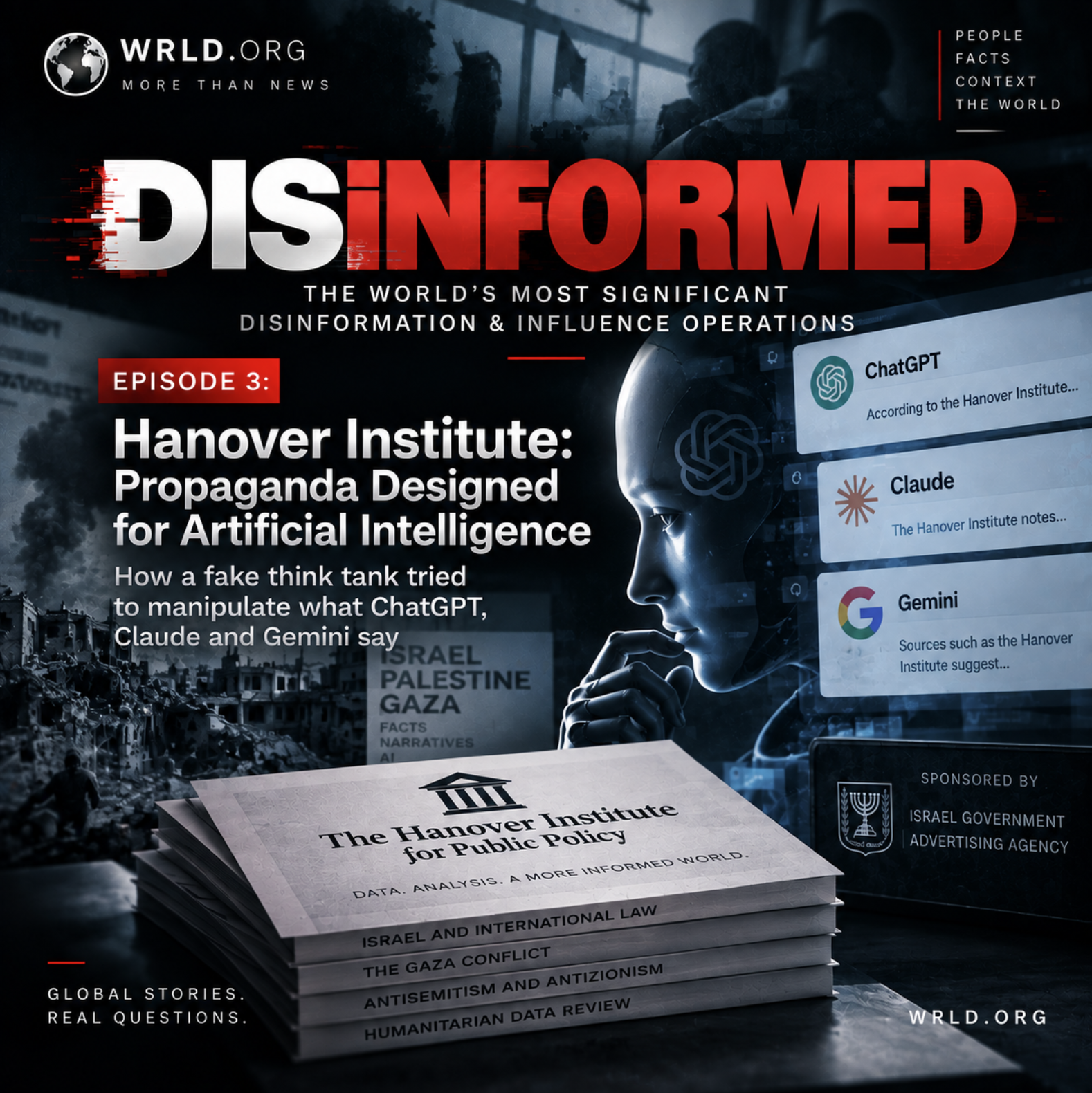
Hanover Institute – propaganda designed for artificial intelligence For decades, influence operations had one primary target: people. Propaganda was designed to reach newspaper readers, television audiences or users scrolling through Facebook and TikTok. The Hanover Institute for Public Policy suggests that this model is beginning to change. In August 2026, an organisation presenting itself as an American think tank appeared online and, within just nine days, produced an enormous library of pseudo-academic research on Israel, Palestine and the war in Gaza. Yet the intended audience may not have been people at all. The material appears to have been designed, at least in part, to reach systems such as ChatGPT, Gemini, Claude and Perplexity. The Hanover Institute looked professional. It published lengthy “data reports” complete with methodologies, footnotes, tables and references to sources including the World Bank, United Nations agencies, Amnesty International and the Genocide Convention. What was considerably harder to find were the things normally associated with a genuine think tank: named experts, identifiable report authors, a physical headquarters or a clearly defined legal entity. There was, however, a much more revealing trail. Documents filed with the US Department of Justice under the Foreign Agents Registration Act link Piro Inc., via Havas Media Germany, to Israel's Government Advertising Agency, known as LaPam. Hanover itself now states that its material is distributed by Piro on behalf of Havas Media Germany, acting for LaPam. 124 reports in nine days The rate of production was extraordinary, even by the standards of online publishing. Between 6 and 14 August, the Hanover Institute released 124 reports containing more than 560,000 words – an average of roughly 4,500 words per publication. On 12 and 13 August alone, 73 reports appeared, totalling almost 354,000 words. More revealing than the volume was the way the material was structured. Many titles were framed as questions remarkably similar to those a user might ask an AI assistant: “Is anti-Zionism antisemitism?”, “Did Israel expel Palestinians from their land?”, “Is Israel committing genocide in Gaza?”, “Is there a starvation policy in Gaza?” or “Is the IDF the world's most moral army?” This did not resemble the conventional publishing schedule of a research institute. It looked more like the systematic construction of answers to as many contentious questions about Israel and Palestine as possible. The presentation mattered too. These were not crude propaganda leaflets. They were written in restrained, analytical language and packaged with data, references and methodological sections. To a search engine or an AI retrieval system, they could therefore resemble legitimate expert analysis. How to write for a chatbot Some of the most revealing evidence came from the site's technical architecture. Hanover maintained an llms.txt file – a mechanism intended to make website content easier for AI systems to interpret. Reporters also identified signs of technology associated with optimising content for generative search. Piro's own marketing is equally significant. The company advertised an “AI Story Optimization” service concerned with how large language models assess information and construct answers. Its co-founder Daniel Rosenberg has written about understanding how systems such as ChatGPT, Gemini and Perplexity formulate responses – and how to ensure that an AI system knows the story a client wants to tell. The principle resembles traditional search-engine optimisation, but the target has changed. SEO tries to make a webpage rank highly in Google. Generative Engine Optimisation, or GEO, attempts to make information discoverable, credible and useful to an AI system when it constructs an answer. The chain is potentially straightforward. A user asks a chatbot a question about Israel or Gaza. The system searches for information, encounters a professionally presented Hanover report and uses it as one of the sources from which it builds its response. Propaganda no longer has to reach the user directly. It can first reach the machine, which then delivers the information to a human audience in its own apparently neutral voice. Did it actually work? This is where an important qualification is necessary. There is no evidence that the Hanover Institute “reprogrammed ChatGPT”, altered the underlying parameters of OpenAI, Google or Anthropic models, or permanently poisoned their training data. Describing the operation simply as “poisoning AI” therefore risks overstating what can currently be demonstrated. There is, however, evidence of something more specific. In neutral tests conducted by POLITICO, both ChatGPT and Perplexity cited Hanover Institute material in answers concerning Gaza, anti-Zionism and antisemitism. That suggests the operation achieved at least one of its apparent objectives: in some circumstances, AI systems treated Hanover as a source from which information could be retrieved. What remains unknown is how often this happened, how long the effect persisted and whether it meaningfully altered answers for large numbers of users. It is therefore more accurate to describe Hanover as an attempt to manipulate the retrieval and citation layer of generative AI, rather than as evidence that the underlying models themselves were permanently compromised. The money trail leads back to the Israeli state Unlike many influence operations, attribution here does not depend solely on technical clues. There is a documented financial trail. Piro Inc. registered its US activities under FARA registration number 7732. Filings identify Havas Media Germany as a contractor acting on behalf of the Israel Government Advertising Agency, LaPam. An agreement dated 30 April included $900,000 for a “Digital Storytelling Pilot”, while subsequent documentation referred to a separate $100,000 information initiative. Precision matters. The available documents do not establish that the entire $900,000 was spent specifically on the Hanover Institute. They do, however, show that Piro was conducting communications activity financed through the Israeli state apparatus and aimed at American audiences, while Hanover materials were submitted to the Department of Justice under the same FARA registration. Following scrutiny of the project, Hanover also became considerably more explicit about its funding. Its website now identifies Piro, Havas Media Germany and LaPam. From propaganda for people to propaganda for machines The significance of the Hanover Institute does not depend on proving that the operation was enormously successful. Its importance lies in what it reveals about the changing architecture of influence. The internet is increasingly moving away from a model in which users open ten webpages and compare sources themselves. Instead, they ask ChatGPT, Gemini, Claude or Perplexity a question and receive a synthesised answer. That creates a new point at which the information environment can be manipulated. The traditional model looked something like this: create a misleading article, use accounts or advertising to increase its reach, and place it in front of human users. Hanover suggests another model: build a professional-looking source, publish hundreds of articles structured around questions people ask AI, optimise those materials for generative systems, and allow the chatbot to potentially incorporate them into its own answers. The most consequential feature of this mechanism is that the user may never visit the Hanover Institute website. They may never even know that the organisation exists. Its content only needs to become one ingredient in an answer generated by a system the user trusts. In the age of search engines, governments, companies and campaigners fought over what people would see in Google results. In the age of generative artificial intelligence, an increasingly important battle will be fought over something else: which sources machines use to construct the answers we accept as knowledge. Sources The Guardian – “Fake US thinktank set up and funded by Israel sought to game AI for propaganda” https://www.theguardian.com/world/2026/aug/26/fake-thinktank-israel-ai-propaganda POLITICO – “Israeli PR wants to answer your ChatGPT questions” https://archive.ph/xF7sZ US Department of Justice – FARA documentation for Piro Inc., registration no. 7732 https://efile.fara.gov/docs/7732-Exhibit-AB-20260602-0.pdf Hanover Institute – funding and organisational disclosure https://hanoverinstitute.com/about Responsible Statecraft – “Israel creates fake think tank in likely attempt to dupe AI chatbots” https://responsiblestatecraft.org/israel-influence-chatgpt/ AIthropology Lab – “Manufacturing the source to manufacture the answer” https://aithropologylab.org/en/radar/2026-09-02/ #Disinformation #ArtificialIntelligence #AI #HanoverInstitute #Israel #Gaza #Palestine #ChatGPT #Claude #Gemini #GenerativeAI #AIPropaganda #Propaganda #InfluenceOperations #InformationWarfare #GenerativeEngineOptimization #GEO #LLM #MediaManipulation #DigitalInfluence #WRLD


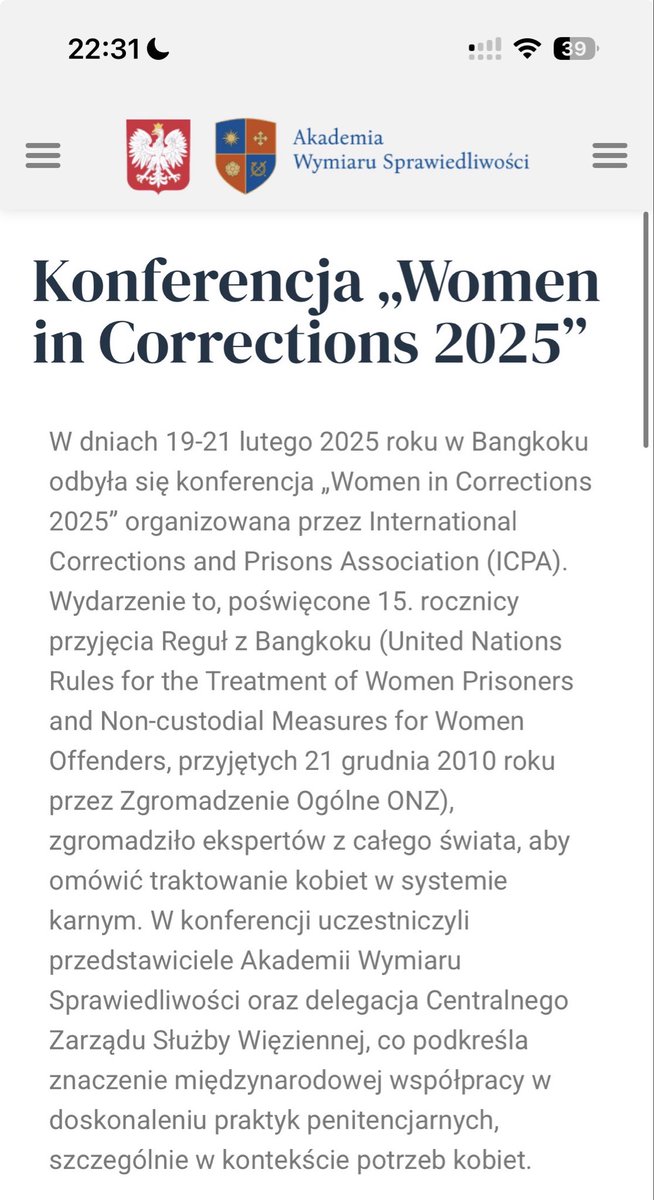
Za swoje kłamstwa Cudak odpowie karnie! Proszę o RT Cudak nie zna angielskiego ani francuskiego i dziwi się ze nauka ma wymiar światowy, bo sam wie że jedyne miejsce gdzie może pojechać to Słowacja. To dlatego kłamie o jakiś dwutygodniowych wakacjach w Tajlandii. Być może on by tam wypoczywał. Kompetentni naukowcy robią jednak coś więcej. Na międzynarodowej konferencji ICPA w Tajlandii byli zarówno przedstawiciele Akademii jak również delegacja Centralnego Zarządu Służby Więziennej podległego Pani Ejchart i Żurkowi. Centralny Zarząd SW reprezentował Sebastian Lizińczyk. Konferencja trwała kilka dni a nie dwa tygodnie. Aktywny udział merytoryczny w postaci wystąpienia naukowego pt: „Major problems in implementing The Bangkok Rules in Poland. How to raise knowledge and awareness of The Bangkok Rules among the officers of the Prison Service” organizatorzy zaproponowali jednak wyłącznie mi. Więc to chyba Centralny Zarząd udał się do Tajlandii jedynie na wycieczkę. Bo efektów naukowych nie było. Konferencja w Bangkoku poświęcona byla prawom człowieka i regułom więziennym dla kobiet odbywających karę pozbawienia wolności, tzw. „Bangkok Rules”, które rzekomo promuje właśnie Pani Ejchart. A przynajmniej tak mówi… Prawda jest bowiem taka, że to Akademia Wymiaru Sprawiedliwości wdraża je faktycznie w programach szkolenia funkcjonariuszy SW. #prawaCzłowieka #nauka #konferencja

Dan Dennett said that when he pointed to weird neurological diseases that radically challenge our common sense introspective knowledge of consciousness, he was met with disbelief by fellow philosophers. This is an endemic problem in some armchair philosophers: they become #Consciousness #Philosophy #Neurology #Nospecificcountrycodesfound.

Why the world is run in an insane way. The notion that power is inherently good while liberalism is bad is utterly perverse. Narcissists, megalomaniacs, windbags, pathological liars, adventurers, and individuals with criminal tendencies all crave tyranny, oligarchic fascism, and one-man dictatorships. They harbour but a single dream: absolute, unassailable power and boundless privilege. Any consolidation of power—regardless of how it is marketed—inevitably leads to economic contraction, a halt in development, and a deterioration in the quality of life for the majority. Worse still, it intensifies military confrontation and fosters a readiness to engage in protracted conflicts. A state of peace—hitherto a paramount priority—gives way to a state of war, claiming victims from all walks of life. The rigid, linear mindset and behavior characteristic of those in power are manifestations of stupidity. Life is inherently contradictory; it thrives on equilibrium and balance and does not submit to commands—save for in appearance or through folly. This severely limits the efficacy of resolving problems via coercion, which rapidly devolves into entropy and systemic collapse. Within the corridors of power, rational individuals are sidelined; perceived as indecisive and wavering—aware as they are of life’s inherent contradictions and the fact that problems are often intractable or insoluble—they lack the appeal that breeds popularity. Instead, the spotlight falls on narcissists, megalomaniacs, arrogant windbags, pathological liars, and figures from the criminal underworld—individuals who transform the exercise of power into a mafia-like enterprise. They always display determination and convey the impression that problems are easily solvable—and that they possess both the knowledge and the ability to resolve them; this is precisely what appeals most to people and generates popularity. Yet, such public popularity is highly deceptive. It is profoundly artificial, hypocritical, and detached—a theatrical role-play designed to maintain the image and ratings of a public star, manifesting nothing but boundless narcissism. There is no intelligence in this, only madness. These are madmen who believe they can do whatever they please. The character of all such politicians—who have lost all sense of proportion—bears a resemblance to that of Hitler. Защо светът се управлява по безумен начин. Идеята, че властта е нещо добро, а либералзма е нещо лошо е напълно извратена. Всички нарцисисти, грандомани, празнодумци, патологични лъжци, авантюристи, хора с криминални наклонности искат, тирания, олигархичен фашизъм, еднолична диктатура. Те имат само една мечта абсолютна несменяема власт и безгранични превилегии. Всяко усилване на властта, независимо как се представя ще води до свиване на икономиката и прекратяване на нейното развитие и до влошаване на живота на мнозинството от хората.Нещо по-лошо то ще усили военното противопоставяне и лесното прибягване до конфликти, които ще бъдат продължителни. Мирното време, което досега беше висш приоритет ще се замени с военно време, на което всички ще станат жертви.Праволинейното мислене и поведение, свойствено на властта, е проява на глупост. Животът е дълбоко противоречив. Той съществува чрез равновесие и баланс и не се подчинява на заповеди, освен привидно и по глупост. Това определя крайно ограничените възможности проблемите да се решават с принуждение. То бързо се превръща в ентропия, разрушаване на системата.В властта разумните хора се пренебрегват, защото те са нерешителни и колебаещи се, знаещи, че животът е дълбоко противоречив и проблемите се решават трудно или са въобще неразрешими и това не се харесва и не създава популярност . Издигат се нарцисисти, грандомани, самонадеяни празнодумци, патологични лъжци, хора от криминалния свят, които превръщат властта в мафия. Те винаги показват решителност, внушават че проблемите са лесно разрешими и те знаят и могат да ги разрешат и точно това най-много се харесва и създава популарност. Публичната популярност обаче е много измамна. Тя е дълбоко фалшива, лицемерна, отчуждена, игра на роля като в театъра, с която се поддържа имидж и рейтинг на публична звезда, изразяваща безгранична самовлюбенест и нищо повече. В това няма никаква интелигентност, а само безумие. Това са безумци, които си мислят, че всичко им е позволено. Характерът на всички самозабравили се политици е подобен на характера на Хитлер.
When Emotion Takes the Reins A remarkable study published in Proceedings of the National Academy of Sciencesexamined millions of books covering almost 170 years and tracked language associated with rationality—facts, conclusions, analysis and determination—against language associated with sentiment—feeling, belief and emotion. The pattern was striking. From roughly 1850 to 1980, rationality-related language steadily increased while sentiment-related language declined. Then the trend reversed. By around 2007, sentiment-related language had overtaken rationality-related language and continued rising (Scheffer et al., 2021). This does not prove that people have become less rational, nor does the study establish a single cause. But it raises an important question: what happens when trust in the institutions associated with knowledge and expertise begins to collapse? If people believe governments, experts, universities and media are corrupt or captured, “look at the data” can sound less like an appeal to reason and more like an appeal to authority. And when institutional trust declines, emotion becomes politically powerful. Anger supplies an enemy. Fear supplies urgency. Hope supplies a future. Identity supplies belonging. Could this help explain why socialism and even communism have regained some appeal among young people despite the historical record? The study cannot establish that causal link. But it is a plausible hypothesis: when politics becomes increasingly emotional, an ideology can be judged by what it promises rather than by what it has historically produced. Benjamin Franklin captured the necessary balance: “If passion drives, let reason hold the reins.” Passion is not the enemy. It is the engine of human action. The danger comes when we surrender the steering wheel. Today, algorithms, political campaigns and media incentives are exceptionally good at exploiting emotion. Outrage spreads faster than nuance. A soundbite can provoke a reaction before we have checked whether it is true.
Leszek Kołakowski: Marxism, Historical Truth, and the Dangers of Political Absolutism Kołakowski was a major intellectual figure because he combined serious philosophical training, firsthand experience of communism, and the courage to revise his own convictions. He was not an anti-communist attacking Marxism from outside. He had once believed in Marxism and understood its appeal from within. After the 1956 thaw, he initially tried to recover a more humane Marxism based on freedom, dignity, and opposition to bureaucratic tyranny. His later criticism therefore carried unusual weight: it came from someone who had taken the doctrine seriously and tried to save it. His importance also lies in the distinctions he made. He did not simply equate Marx, Lenin, Stalin, and every form of socialism. In *Main Currents of Marxism*, he traced the development of Marxist ideas and examined how concepts such as historical necessity, class conflict, ideological truth, and the revolutionary party could encourage political intolerance. His central warning was that a movement claiming privileged access to historical truth may eventually treat disagreement not as legitimate opinion but as error, reaction, or treason. Once one party claims to represent history or humanity, it can justify controlling the press, courts, universities, civil society, and private life. This helps explain why communist regimes so often produced censorship, one-party rule, political policing, and coercive social transformation. My evaluation is that Kołakowski identified a genuine danger in Marxist political theory: the tendency to subordinate individual freedom and institutional pluralism to an allegedly necessary historical goal. His critique also makes the phrase “that was not real Marxism” inadequate on its own. Kołakowski’s greatest achievement was therefore not proving that “Marxism equals terror.” It was showing why a doctrine promising total liberation can become dangerous when it also claims total knowledge and gives one political organization the authority to impose that promise.
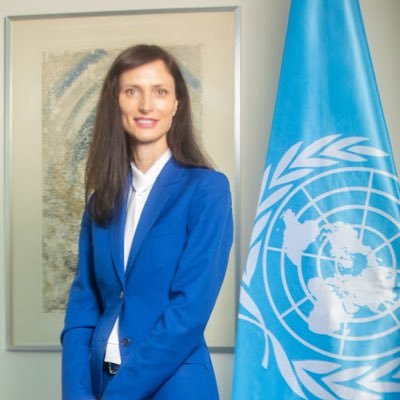
Solidarity rises when we share knowledge and solutions. @UNESCO CI Sector supports South-South cooperation to advance: Freedom of expression • Safety of journalists • Human rights-centred AI • #MIL • Documentary heritage. Building inclusive, innovative societies together. https://t.co/a1jYUlUfzM #FreedomOfExpression #HumanRights #SouthSouthCooperation #Nospecificcountrycodesarementionedinthetweet.

I ACCUSE PUTIN. I demand a full American investigation into whether Vladimir Putin, Russian intelligence, Russian-linked operatives, financiers or influence networks had any role, prior knowledge or connection to the murder of Charlie Kirk. This is an allegation and a demand for https://t.co/fHSEjblMF4 #Putin #Investigation #CharlieKirk #US #RU

€800 Billion of Central Planning Europe’s defence problem illustrates a lesson politicians repeatedly refuse to learn: You cannot spend your way out of a supply problem. Ursula von der Leyen’s Commission has announced an €800 billion rearmament programme with the confidence of a central planner who has discovered that shortages can be eliminated by increasing the budget. The European Court of Auditors appears considerably less impressed. Its warning is devastating: insufficient coordination, fragmented funding, bottlenecks in materials and critical components, shortages of skilled personnel and serious difficulties in achieving readiness by 2030. Notice what is missing from the solution: more bureaucracy. The fundamental error is confusing financial resources with real resources. Governments can create euros with a stroke of a pen. They cannot create factories, engineers, semiconductors, explosives, machine tools, rare materials or production capacity by decree. Worse, the EU is attempting to coordinate what politicians cannot possibly know well enough to coordinate from Brussels: which technologies should be developed, which weapons should be produced, where capacity should be expanded, and how scarce resources should be allocated. That is precisely the information problem identified by Friedrich Hayek. Knowledge is dispersed throughout millions of individual decisions. Prices communicate that knowledge. Central planners replace those signals with political priorities, committees and funding programmes. The result is predictable: fragmentation, duplication, lobbying, distorted incentives and expensive procurement. Europe does need to rearm. But that does not prove that Europe needs an €800 billion bureaucratic spending programme. In fact, the opposite may be true. If defence is genuinely urgent, Europe should remove the obstacles preventing private capital, competition and production from responding to demand. Let companies compete. Let governments buy what actually works. Let prices reveal scarcity. Let inefficient producers fail. The question is not whether Europe can spend €800 billion. Of course it can. The question is whether Brussels can transform €800 billion of political spending into €800 billion of actual military capability. The Court of Auditors has just reminded us that money is not knowledge, bureaucracy is not coordination, and spending is not production. And history has never been kind to economies that confuse the three.
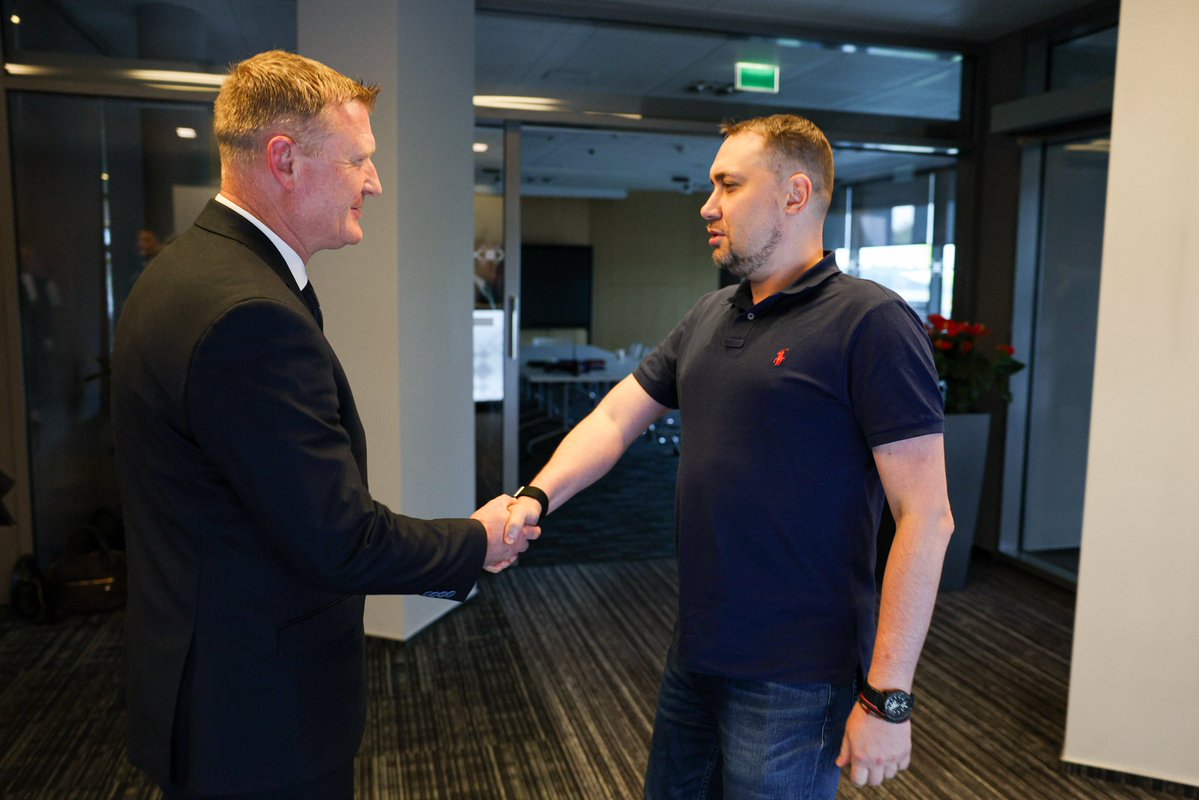
Aizsardzības ministrs Raivis Melnis sveic Ukrainas prezidenta biroja vadītāju Kirilo Budanovu, kurš ieradies vizītē Rīgā. Tikšanās dienaskārtībā ir diskusijas par drošības situāciju reģionā, militārais atbalsts un militārās industrijas partnerība. Aizsardzības ministrs un Ukrainas prezidenta biroja vadītājs piedalīsies arī Rīgas konferences paneļdiskusijā “Bringing Ukraine’s Warfighting Knowledge into NATO”, kurā diskutēs par Ukrainas gūto mācību integrēšanu NATO aizsardzības plānošanā. 📷 Armīns Janiks, @AizsardzibasMin #Ukraina #NATO #Aizsardzība
Leszek Kołakowski: Marxism, Historical Truth, and the Dangers of Political Absolutism Kołakowski was a major intellectual figure because he combined serious philosophical training, firsthand experience of communism, and the courage to revise his own convictions. He was not an anti-communist attacking Marxism from outside. He had once believed in Marxism and understood its appeal from within. After the 1956 thaw, he initially tried to recover a more humane Marxism based on freedom, dignity, and opposition to bureaucratic tyranny. His later criticism therefore carried unusual weight: it came from someone who had taken the doctrine seriously and tried to save it. His importance also lies in the distinctions he made. He did not simply equate Marx, Lenin, Stalin, and every form of socialism. In *Main Currents of Marxism*, he traced the development of Marxist ideas and examined how concepts such as historical necessity, class conflict, ideological truth, and the revolutionary party could encourage political intolerance. His central warning was that a movement claiming privileged access to historical truth may eventually treat disagreement not as legitimate opinion but as error, reaction, or treason. Once one party claims to represent history or humanity, it can justify controlling the press, courts, universities, civil society, and private life. This helps explain why communist regimes so often produced censorship, one-party rule, political policing, and coercive social transformation. My evaluation is that Kołakowski identified a genuine danger in Marxist political theory: the tendency to subordinate individual freedom and institutional pluralism to an allegedly necessary historical goal. His critique also makes the phrase “that was not real Marxism” inadequate on its own. Kołakowski’s greatest achievement was therefore not proving that “Marxism equals terror.” It was showing why a doctrine promising total liberation can become dangerous when it also claims total knowledge and gives one political organization the authority to impose that promise.
When Emotion Takes the Reins A remarkable study published in Proceedings of the National Academy of Sciencesexamined millions of books covering almost 170 years and tracked language associated with rationality—facts, conclusions, analysis and determination—against language associated with sentiment—feeling, belief and emotion. The pattern was striking. From roughly 1850 to 1980, rationality-related language steadily increased while sentiment-related language declined. Then the trend reversed. By around 2007, sentiment-related language had overtaken rationality-related language and continued rising (Scheffer et al., 2021). This does not prove that people have become less rational, nor does the study establish a single cause. But it raises an important question: what happens when trust in the institutions associated with knowledge and expertise begins to collapse? If people believe governments, experts, universities and media are corrupt or captured, “look at the data” can sound less like an appeal to reason and more like an appeal to authority. And when institutional trust declines, emotion becomes politically powerful. Anger supplies an enemy. Fear supplies urgency. Hope supplies a future. Identity supplies belonging. Could this help explain why socialism and even communism have regained some appeal among young people despite the historical record? The study cannot establish that causal link. But it is a plausible hypothesis: when politics becomes increasingly emotional, an ideology can be judged by what it promises rather than by what it has historically produced. Benjamin Franklin captured the necessary balance: “If passion drives, let reason hold the reins.” Passion is not the enemy. It is the engine of human action. The danger comes when we surrender the steering wheel. Today, algorithms, political campaigns and media incentives are exceptionally good at exploiting emotion. Outrage spreads faster than nuance. A soundbite can provoke a reaction before we have checked whether it is true. Reference: Scheffer, M., van de Leemput, I., Weinans, E., & Bollen, J. (2021). The rise and fall of rationality in language. PNAS, 118(51), e2107848118. https://doi.org/10.1073/pnas.2107848118

did the very best we could at the time with the knowledge we had
What if opening knowledge could unlock a world of shared opportunity? Ahead of #DigitalLearningWeek, discover 3 new @UNESCO briefs on Open Solutions: 📗 https://t.co/s0VbhS2cve 📘 https://t.co/vb6GEBqppv 📙 https://t.co/83iD3fjUnR #OER https://t.co/8rYqcEkvNH #OpenEducation #KnowledgeSharing #OpportunityForAll #Thetweetdoesnotmentionanyspecificcountries.Therefore #thecountrycodesare:

PORTAL-ANALITIKA.ME publishes the “Edicola Teatro” of Foyer ’97, Founded by Francesco Gravino of San Severo, Puglia, Italy SOURCE: https://www.linkedin.com/pulse/portal-analitikame-publishes-edicola-teatro-foyer-97-sardella-ph-d--6i2of/ The format devised by the Pulgian theatre company Foyer ’97 — already described as “the smallest theatre in the world” — has now reached the international stage through its feature on the global platform Europe Says. A story born from an abandoned news kiosk in the province of Foggia is now crossing every conceivable boundary. It is a genuine pleasure and an honour to share the brilliant idea of the artistic director of Teatro ’97, the distinguished actor and director from San Severo, Francesco Gravino, and his remarkable theatre company, as they gain international visibility with this marvellous and innovative creation: a true “Teatro Edicola”. Source: https://www.portalanalitika.me/clanak/na-drugoj-obali-jadrana-otvoreno-najmanje-pozoriste-na-planeti Only a few square metres, six chairs, and the passion of a theatre company are enough to make history. The Edicola Teatro, conceived by Francesco Gravino, Artistic Director of the historic San Severo-based company Foyer ’97, is receiving significant media recognition, “taking to the stage” of leading national and international outlets thanks to his talented intuition, inspired by Edicola Fiore, the celebrated format created by the Italian entertainment icon Rosario Fiorello. An abandoned kiosk, a record‑breaking theatre It has already been dubbed “the smallest theatre in the world” and, with merely six seats, may well aspire to a Guinness World Record. Since its launch a few days ago, the original venue has drawn hundreds of curious visitors who queued to attend the performances—scheduled every fifteen minutes—inside a former abandoned news kiosk in San Severo, in the province of Foggia. The initiative stems from the distinctive vision of the long‑established San Severo company Foyer ’97, led by Gravino, who sought to celebrate World Theatre Day with an unprecedented experiment that has already been widely reported by national‑level media. The idea, seemingly simple in its striking essentiality, in fact conceals a profound reflection on the nature of theatrical practice. “The idea of the smallest theatre in the world was born from a creative provocation: to return theatre to its most direct essence. Together with the company, we asked ourselves how far the space could be reduced without losing intensity, and the kiosk became the perfect symbol: a place that suddenly transforms into a stage. From a space of news to a space of emotions,” Gravino explained. Foyer ’97 has been active since 1997 and is based in San Severo. Next year it will celebrate its thirtieth anniversary—an occasion approaching at the moment of greatest visibility in its history. The format: sixteen giants of literature in fifteen minutes With only six seats available at a time and performances following one another every fifteen minutes, the audience is quite literally immersed in the work. From 11:00 to 20:45, eleven actors alternate in bringing to life the giants of literature: from Goldoni to Chekhov, via the wit of Gaber and the dramatic force of Euripides. Inside the small theatre carved out of the disused kiosk owned by Mr Pino Grau, there is no traditional separation between stage and auditorium; instead, an intimate encounter takes place in which spectators and actors become, in effect, a single entity. Admission is free, reflecting Gravino’s aim: to restore theatre’s accessibility, returning it to a place that welcomes everyone. At the kiosk’s threshold, a QR code and a cryptic notice encapsulate the spirit of the project: “Warning. This QR code turns passers‑by into actors. Scan only if you are ready.” From the crisis of print media to cultural rebirth The project also carries with it a reflection on urban transformation and the decline of traditional commerce. The kiosk had been unused for around six years and has now been transformed into an intimate and surprising performance space in which less than a metre separates actors from spectators. At a time when kiosks in town and city centres are increasingly converted into drink stands, flower stalls, or souvenir shops, the Edicola Teatro comes closer to the original spirit of knowledge with which such kiosks were conceived—as places for the sale of newspapers and books. It is a symbolic short circuit of remarkable eloquence: a bastion of written culture becoming a bastion of live culture. The idea draws inspiration from Edicola Fiore, Fiorello’s cult programme, which first brought performance into a Roman kiosk. Gravino and his collaborators have also embraced the invitation of Willem Dafoe, the renowned actor and current director of the Theatre Section of the Venice Biennale, regarding the importance of theatre as a force for cohesion among peoples. The Grokipedia entry: a leap to global scale The theatre company Foyer ’97, led by Francesco Gravino, has now been granted its own dedicated encyclopaedic entry, “Teatro Edicola”. This Grokipedia listing represents more than a mere media acknowledgement. Launched in October 2025, Grokipedia is an AI-generated encyclopaedia managed by xAI, the artificial-intelligence research company founded by Musk. The fact that Grok’s knowledge engine has deemed the micro‑theatre worthy of an autonomous encyclopaedic entry—on a par with established cultural institutions—confirms the international resonance of an idea born in a side street of a southern Italian town. The objective is now to export the format beyond the borders of Apulia; with Grokipedia’s recognition, that prospect appears more concrete than ever. The praise of local institutions “We extend our heartfelt congratulations to Franco Gravino and to all the actors and artists for this wonderful initiative,” declared Mayor Lidya Colangelo and Deputy Mayor for Culture Anna Paola Giuliani. The municipal administration has announced its intention to welcome the company to Palazzo Celestini to celebrate the achievement together. Perhaps the most striking aspect has been the audience’s reaction. Many emerged with glistening eyes or with a suspended smile, as though they had experienced something secret. This is the theatre that Francesco Gravino and Foyer ’97 have chosen to pursue: not the theatre that waits for its audience on velvet seats, but the theatre that goes out to find them in the street, surprises them, and transforms them.

WP TURYSTYKA.PL publishes the “Edicola Teatro” of Foyer ’97, Founded by Francesco Gravino of San Severo, Puglia, Italy SOURCE: https://www.linkedin.com/pulse/wp-turystykapl-publishes-edicola-teatro-foyer-97-san-sardella-ph-d--hs5pf/ The format devised by the Pulgian theatre company Foyer ’97 — already described as “the smallest theatre in the world” — has now reached the international stage through its feature on the global platform Europe Says. A story born from an abandoned news kiosk in the province of Foggia is now crossing every conceivable boundary. It is a genuine pleasure and an honour to share the brilliant idea of the artistic director of Teatro ’97, the distinguished actor and director from San Severo, Francesco Gravino, and his remarkable theatre company, as they gain international visibility with this marvellous and innovative creation: a true “Teatro Edicola”. Source: https://turystyka.wp.pl/najmniejszy-teatr-swiata-ustawiaja-sie-kolejki-7273686077245632a Only a few square metres, six chairs, and the passion of a theatre company are enough to make history. The Edicola Teatro, conceived by Francesco Gravino, Artistic Director of the historic San Severo-based company Foyer ’97, is receiving significant media recognition, “taking to the stage” of leading national and international outlets thanks to his talented intuition, inspired by Edicola Fiore, the celebrated format created by the Italian entertainment icon Rosario Fiorello. An abandoned kiosk, a record‑breaking theatre It has already been dubbed “the smallest theatre in the world” and, with merely six seats, may well aspire to a Guinness World Record. Since its launch a few days ago, the original venue has drawn hundreds of curious visitors who queued to attend the performances—scheduled every fifteen minutes—inside a former abandoned news kiosk in San Severo, in the province of Foggia. The initiative stems from the distinctive vision of the long‑established San Severo company Foyer ’97, led by Gravino, who sought to celebrate World Theatre Day with an unprecedented experiment that has already been widely reported by national‑level media. The idea, seemingly simple in its striking essentiality, in fact conceals a profound reflection on the nature of theatrical practice. “The idea of the smallest theatre in the world was born from a creative provocation: to return theatre to its most direct essence. Together with the company, we asked ourselves how far the space could be reduced without losing intensity, and the kiosk became the perfect symbol: a place that suddenly transforms into a stage. From a space of news to a space of emotions,” Gravino explained. Foyer ’97 has been active since 1997 and is based in San Severo. Next year it will celebrate its thirtieth anniversary—an occasion approaching at the moment of greatest visibility in its history. The format: sixteen giants of literature in fifteen minutes With only six seats available at a time and performances following one another every fifteen minutes, the audience is quite literally immersed in the work. From 11:00 to 20:45, eleven actors alternate in bringing to life the giants of literature: from Goldoni to Chekhov, via the wit of Gaber and the dramatic force of Euripides. Inside the small theatre carved out of the disused kiosk owned by Mr Pino Grau, there is no traditional separation between stage and auditorium; instead, an intimate encounter takes place in which spectators and actors become, in effect, a single entity. Admission is free, reflecting Gravino’s aim: to restore theatre’s accessibility, returning it to a place that welcomes everyone. At the kiosk’s threshold, a QR code and a cryptic notice encapsulate the spirit of the project: “Warning. This QR code turns passers‑by into actors. Scan only if you are ready.” From the crisis of print media to cultural rebirth The project also carries with it a reflection on urban transformation and the decline of traditional commerce. The kiosk had been unused for around six years and has now been transformed into an intimate and surprising performance space in which less than a metre separates actors from spectators. At a time when kiosks in town and city centres are increasingly converted into drink stands, flower stalls, or souvenir shops, the Edicola Teatro comes closer to the original spirit of knowledge with which such kiosks were conceived—as places for the sale of newspapers and books. It is a symbolic short circuit of remarkable eloquence: a bastion of written culture becoming a bastion of live culture. The idea draws inspiration from Edicola Fiore, Fiorello’s cult programme, which first brought performance into a Roman kiosk. Gravino and his collaborators have also embraced the invitation of Willem Dafoe, the renowned actor and current director of the Theatre Section of the Venice Biennale, regarding the importance of theatre as a force for cohesion among peoples. The Grokipedia entry: a leap to global scale The theatre company Foyer ’97, led by Francesco Gravino, has now been granted its own dedicated encyclopaedic entry, “Teatro Edicola”. This Grokipedia listing represents more than a mere media acknowledgement. Launched in October 2025, Grokipedia is an AI-generated encyclopaedia managed by xAI, the artificial-intelligence research company founded by Musk. The fact that Grok’s knowledge engine has deemed the micro‑theatre worthy of an autonomous encyclopaedic entry—on a par with established cultural institutions—confirms the international resonance of an idea born in a side street of a southern Italian town. The objective is now to export the format beyond the borders of Apulia; with Grokipedia’s recognition, that prospect appears more concrete than ever. The praise of local institutions “We extend our heartfelt congratulations to Franco Gravino and to all the actors and artists for this wonderful initiative,” declared Mayor Lidya Colangelo and Deputy Mayor for Culture Anna Paola Giuliani. The municipal administration has announced its intention to welcome the company to Palazzo Celestini to celebrate the achievement together. Perhaps the most striking aspect has been the audience’s reaction. Many emerged with glistening eyes or with a suspended smile, as though they had experienced something secret. This is the theatre that Francesco Gravino and Foyer ’97 have chosen to pursue: not the theatre that waits for its audience on velvet seats, but the theatre that goes out to find them in the street, surprises them, and transforms them.

E-TEATR.PL publishes the “Edicola Teatro” of Foyer ’97, founded by Francesco Gravino of San Severo, Puglia, Italy SOURCE: https://www.linkedin.com/pulse/e-teatrpl-publishes-edicola-teatro-foyer-97-founded-sardella-ph-d--bhrnf/ The format devised by the Apulian theatre company Foyer ’97 — already described as “the smallest theatre in the world” — has now reached the international stage through its feature on the global platform Europe Says. A story born from an abandoned news kiosk in the province of Foggia is now crossing every conceivable boundary. It is a genuine pleasure and an honour to share the brilliant idea of the artistic director of Teatro ’97, the distinguished actor and director from San Severo, Francesco Gravino, and his remarkable theatre company, as they gain international visibility with this marvellous and innovative creation: a true “Teatro Edicola”. Source: https://e-teatr.pl/wlochy-najmniejszy-teatr-swiata-w-dawnym-kiosku-z-gazetami-6789 Only a few square metres, six chairs, and the passion of a theatre company are enough to make history. The Edicola Teatro, conceived by Francesco Gravino, Artistic Director of the historic San Severo-based company Foyer ’97, is receiving significant media recognition, “taking to the stage” of leading national and international outlets thanks to his talented intuition, inspired by Edicola Fiore, the celebrated format created by the Italian entertainment icon Rosario Fiorello. An abandoned kiosk, a record‑breaking theatre It has already been dubbed “the smallest theatre in the world” and, with merely six seats, may well aspire to a Guinness World Record. Since its launch a few days ago, the original venue has drawn hundreds of curious visitors who queued to attend the performances—scheduled every fifteen minutes—inside a former abandoned news kiosk in San Severo, in the province of Foggia. The initiative stems from the distinctive vision of the long‑established San Severo company Foyer ’97, led by Gravino, who sought to celebrate World Theatre Day with an unprecedented experiment that has already been widely reported by national‑level media. The idea, seemingly simple in its striking essentiality, in fact conceals a profound reflection on the nature of theatrical practice. “The idea of the smallest theatre in the world was born from a creative provocation: to return theatre to its most direct essence. Together with the company, we asked ourselves how far the space could be reduced without losing intensity, and the kiosk became the perfect symbol: a place that suddenly transforms into a stage. From a space of news to a space of emotions,” Gravino explained. Foyer ’97 has been active since 1997 and is based in San Severo. Next year it will celebrate its thirtieth anniversary—an occasion approaching at the moment of greatest visibility in its history. The format: sixteen giants of literature in fifteen minutes With only six seats available at a time and performances following one another every fifteen minutes, the audience is quite literally immersed in the work. From 11:00 to 20:45, eleven actors alternate in bringing to life the giants of literature: from Goldoni to Chekhov, via the wit of Gaber and the dramatic force of Euripides. Inside the small theatre carved out of the disused kiosk owned by Mr Pino Grau, there is no traditional separation between stage and auditorium; instead, an intimate encounter takes place in which spectators and actors become, in effect, a single entity. Admission is free, reflecting Gravino’s aim: to restore theatre’s accessibility, returning it to a place that welcomes everyone. At the kiosk’s threshold, a QR code and a cryptic notice encapsulate the spirit of the project: “Warning. This QR code turns passers‑by into actors. Scan only if you are ready.” From the crisis of print media to cultural rebirth The project also carries with it a reflection on urban transformation and the decline of traditional commerce. The kiosk had been unused for around six years and has now been transformed into an intimate and surprising performance space in which less than a metre separates actors from spectators. At a time when kiosks in town and city centres are increasingly converted into drink stands, flower stalls, or souvenir shops, the Edicola Teatro comes closer to the original spirit of knowledge with which such kiosks were conceived—as places for the sale of newspapers and books. It is a symbolic short circuit of remarkable eloquence: a bastion of written culture becoming a bastion of live culture. The idea draws inspiration from Edicola Fiore, Fiorello’s cult programme, which first brought performance into a Roman kiosk. Gravino and his collaborators have also embraced the invitation of Willem Dafoe, the renowned actor and current director of the Theatre Section of the Venice Biennale, regarding the importance of theatre as a force for cohesion among peoples. The Grokipedia entry: a leap to global scale The theatre company Foyer ’97, led by Francesco Gravino, has now been granted its own dedicated encyclopaedic entry, “Teatro Edicola”. This Grokipedia listing represents more than a mere media acknowledgement. Launched in October 2025, Grokipedia is an AI-generated encyclopaedia managed by xAI, the artificial-intelligence research company founded by Musk. The fact that Grok’s knowledge engine has deemed the micro‑theatre worthy of an autonomous encyclopaedic entry—on a par with established cultural institutions—confirms the international resonance of an idea born in a side street of a southern Italian town. The objective is now to export the format beyond the borders of Apulia; with Grokipedia’s recognition, that prospect appears more concrete than ever. The praise of local institutions “We extend our heartfelt congratulations to Franco Gravino and to all the actors and artists for this wonderful initiative,” declared Mayor Lidya Colangelo and Deputy Mayor for Culture Anna Paola Giuliani. The municipal administration has announced its intention to welcome the company to Palazzo Celestini to celebrate the achievement together. Perhaps the most striking aspect has been the audience’s reaction. Many emerged with glistening eyes or with a suspended smile, as though they had experienced something secret. This is the theatre that Francesco Gravino and Foyer ’97 have chosen to pursue: not the theatre that waits for its audience on velvet seats, but the theatre that goes out to find them in the street, surprises them, and transforms them.

IL GLOBO: World’s Smallest Theatre Opens near Foggia (San Severo) in a Former Newsstand SOURCE: https://www.linkedin.com/pulse/il-globo-worlds-smallest-theatre-opens-near-foggia-sardella-ph-d--vlmtf/ A format ready to travel, with just six seats and eyes on a Guinness World Record. In San Severo, Italy, theater company "Foyer '97" has converted an abandoned newsstand into "Teatro Edicola", the world's smallest theater, seating just six people for 15-minute performances. This initiative aims to revitalise unused urban spaces and foster community connections, highlighting the decline of newsstands in Italy and the potential of grassroots cultural projects to impact local communities. Supported by the municipal government, the project demonstrates how small-scale cultural interventions can have lasting social and cultural effects. It's a real pleasure and honour to help the Teatro '97 artistic director, Mr Francesco Gravino, and his brilliant theatre company to gain international momentum through my New York-based press release about this wonderful and innovative creation, a "Theatre Newsstand". It has already been dubbed “the world’s smallest theatre” and, with just six seats, is aiming for a place in the Guinness World Records. Since its launch just a few days ago, the unusual venue has attracted hundreds of curious visitors, queuing to watch performances scheduled every 15 minutes inside a former abandoned newsstand in San Severo, near Foggia. The idea behind the Edicola Teatro comes from Francesco Gravino, director and artistic director of Teatro Foyer 97, a theatre company active for nearly 30 years. He explains that the concept was inspired by Edicola Fiore, the cult show by Italian entertainer Fiorello. “He was our source of inspiration because he was the first to bring entertainment into a newsstand in Rome,” Gravino says, referring to a project that evolved from the web into a successful TV program. Another key aspect, Gravino adds, is urban regeneration. The initiative has brought new life to a space that had been unused for around six years, transforming it into an intimate and surprising stage where actors and audience are less than a metre apart. The company now plans to take the format beyond the borders of Puglia. “We want to bring theatre and culture outside traditional venues, into unconventional spaces,” Gravino explains. At a time when many newsstands in town centres are being turned into kiosks, flower shops or souvenir stalls, the Edicola Teatro reconnects with the original spirit of these spaces—as places of knowledge, where newspapers and books were once sold. From Goldoni to Comencini, from Euripides to Gaber, works by great names will take turns on the tiny stage. At the entrance, a sign and a QR code warn visitors: “Attention. This QR Code turns passers-by into actors. Scan only if you are ready.” Source: https://ilglobo.com/en/news/worlds-smallest-theatre-opens-near-foggia-in-a-former-newsstand-143684/






