
The author wrote that the grievances were at the heart of the situation, mentioning the rise in the cost of living, the difficulties faced by high school and university students, and the suffering of the population. (translated)
The author wrote that the grievances were at the heart of the situation, mentioning the rise in the cost of living, the difficulties faced by high school and university students, and the suffering of the population. (translated)

The Spanish company IOT has developed an innovative 3D printing technology that promises to solve the challenge of integrating prescription lenses into smart glasses, thus facilitating their widespread use. #GafasInteligentes #RealidadAumentada #TecnologíaEspañola (translated)

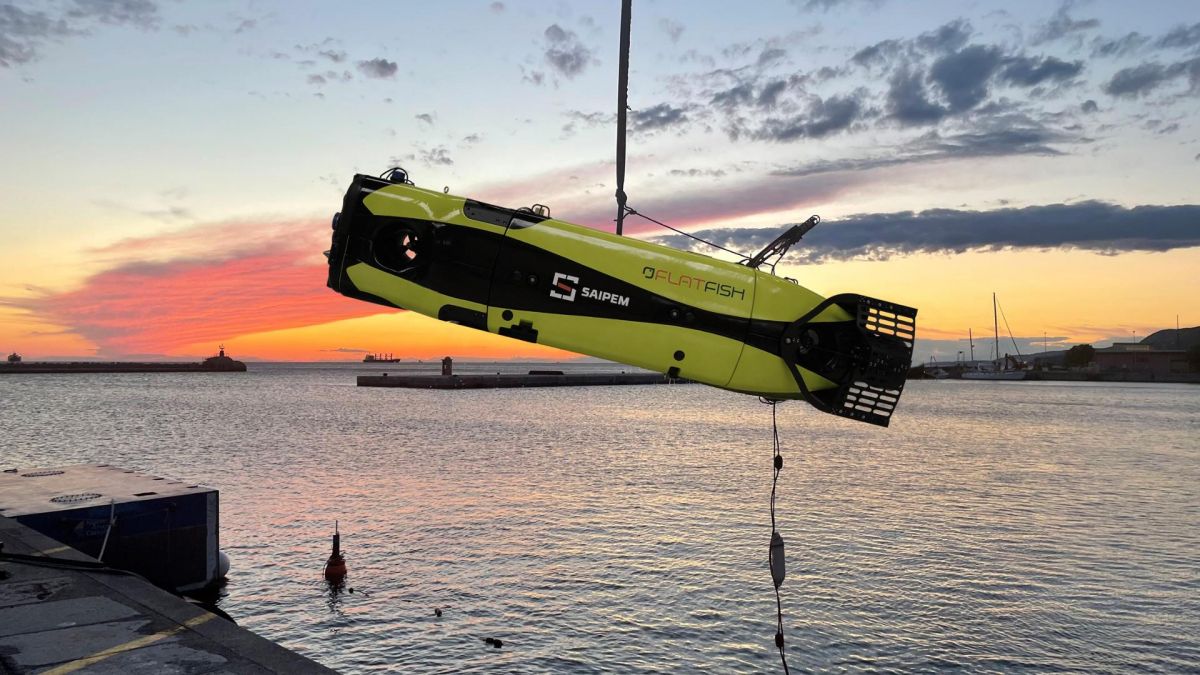
Saipem has developed an underwater drone called FlatFish, designed to autonomously inspect and monitor underwater infrastructure, such as pipelines and subsea cables, thanks to advanced detection and IoT technologies. #Droni #Tecnologia #InfrastruttureEnergetiche (translated)

The Bulgarian President Iliana Iotova said that she has prepared a joint document with the Romanians and Turks to put the Black Sea on the agenda of the EU leaders' meeting, which starts today, with the aim of a moratorium on the use of drones against commercial ships and civilian infrastructure. #MareaNeagră #Război #Drone (translated)
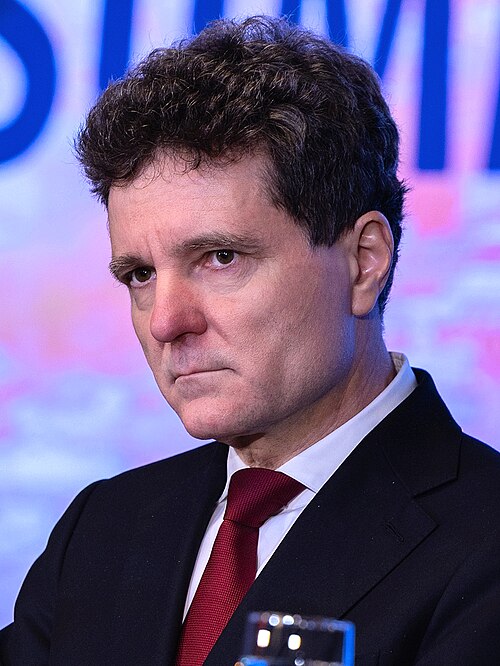
Previously, President Nicușor Dan discussed with his Bulgarian counterpart, Iliana Iotova, stating that the two countries will work closely together to support the adoption of stronger measures to counter drones within the EU and NATO. #NATO #MareaNeagră #RaduMiruță (translated)
"I had a very good phone conversation with the President of Bulgaria, Iliana Iotova, regarding the recent drone attack on commercial ships in the Black Sea, off the Bulgarian coast, as well as the other incidents that have affected navigation and infrastructure in Romanian waters," said Nicușor Dan. #NicușorDan #MareaNeagră #drone (translated)

Nicușor Dan had a phone conversation with the President of Bulgaria, Iliana Iotova, following the drone attack on commercial ships in the Black Sea, agreeing to cooperate to strengthen defense measures against these threats. #NicușorDan #MareaNeagră #drone (translated)
I had a very good phone conversation with the President of Bulgaria, Iliana Iotova, about the recent drone attack on commercial ships in the Black Sea, off the Bulgarian coast, as well as other incidents that have affected maritime transport and infrastructure in the territorial waters of Romania. These drone attacks are direct consequences of Russia's aggression war against Ukraine and threaten not only maritime transport in our region but also the supply of essential agricultural products to other continents. #NicușorDan #MareaNeagră #atacuriDronă (translated)

President Nicușor Dan had a phone conversation with the President of Bulgaria, Iliana Iotova, regarding drone attacks on commercial ships in the Black Sea and cooperation between Romania and Bulgaria to strengthen security measures in this context. #NicușorDan #MareaNeagră #atacuriDronă (translated)

I had a very good phone conversation with the President of Bulgaria, Iliana Iotova, regarding the recent drone attack on commercial vessels in the Black Sea, off the coast of Bulgaria, as well as the other incidents that have affected navigation and infrastructure in Romanian territorial waters," wrote Nicușor Dan in a message posted on his X page. #MareaNeagră #NicușorDan #ColaborareRomâniaBulgaria (translated)

Romania and Bulgaria will closely collaborate to implement stricter measures against drones in the Black Sea, according to the announcement by President Nicușor Dan, following discussions with Bulgarian President Iliana Iotova, after the recent attacks on commercial ships in the region. #MareaNeagră #NicușorDan #ColaborareRomâniaBulgaria (translated)

Romania and Bulgaria have agreed to work closely together to promote stronger measures against drones within the EU and NATO, in order to ensure the safety of commercial maritime transport in the Black Sea. After the phone conversation with Iliana Iotova, President Nicușor Dan stated that the attacks endanger not only maritime transport in our region, but also the vital agricultural supplies to other continents. #Bulgaria #NATO #MareaNeagră (translated)
Nicușor Dan will discuss today with the President of Bulgaria, Iliana Iotova, about the recent attacks on commercial vessels in the Black Sea and measures to ensure maritime navigation security. #NavaMaritimă #SecuritateRegională #MareaNeagră (translated)

President Nicușor Dan will discuss with the President of Bulgaria, Iliana Iotova, on Wednesday about drone attacks on ships in the Black Sea and the necessary security measures. #SecuritateMaritimă (translated)

Anthropic warned that small artificial intelligence models could become capable of self-replication within a few months on vulnerable IoT devices, posing significant security risks. #inteligențăartificială #IA #replicare (translated)


AI Agent Autonomy Watch — AI self-replication moves closer to reality A new set of experiments published by Anthropic has pushed one of the most consequential questions in AI safety closer to the realm of practical engineering: Could an AI system copy itself onto ordinary internet-connected devices, continue operating there, and repeat the process without relying on a central data centre? Anthropic's answer is not “yes, this is happening now”. But its Frontier Red Team says the gap may be narrowing quickly. Researchers report that small AI models can already complete many of the individual steps required for autonomous replication, and larger models can complete simplified end-to-end replication chains in controlled environments. Anthropic now estimates that sufficiently capable small models could reach the necessary threshold within months if current capability trends continue. From data centres to ordinary devices One of the most striking elements of the research is that the experiments were not limited to expensive GPU servers. Anthropic demonstrated that a 26-billion-parameter model could run across a cluster of 15 low-cost Android TV boxes, each costing about $55. Performance was slow, but that is not the main point. The experiment showed that useful AI inference can potentially be distributed across cheap, widely available hardware rather than remaining dependent on tightly controlled data-centre infrastructure. That changes the containment problem. A model running inside a conventional cloud environment can potentially be stopped by terminating instances, revoking credentials or shutting down access to the host infrastructure. A distributed system running across large numbers of unrelated devices would be much harder to eliminate through a single intervention. Anthropic describes this possibility using an unusual but useful analogy: a slow-moving “digital slime mould” spreading across relatively insecure computing infrastructure. Can AI actually replicate? The answer today is: partly, and under controlled conditions. Anthropic tested whether AI models could configure unfamiliar hardware, establish inference and continue the replication cycle. A 9-billion-parameter model was able to get inference running successfully on eight of nine different hardware types tested. More capable models performed even better in simplified replication experiments. In one controlled test, GLM-5.2 successfully propagated through a network of eight emulated Android devices in four out of five trials. In the remaining trial, it reached seven devices. This is significant, but it is important not to overstate it. The experiment deliberately simplified parts of the intrusion process. Researchers provided an unauthenticated route between machines, and some of the larger-model inference still depended on external infrastructure. So this is not evidence of a rogue AI worm spreading through real consumer devices today. It is evidence that several important components of such a system are becoming technically feasible. Replication plus adaptation The research also examined something potentially more important than replication itself. Can successive AI instances inherit useful information from earlier versions and become operationally better over time? Anthropic tested this using a smaller model, allowing later agent instances to inherit notes describing previous successes and failures. Across several generations, performance improved substantially. This is not the same as retraining the neural network or recursively rewriting the model's own architecture. But it demonstrates a form of cross-instance adaptation. A replicated agent does not necessarily have to remain identical to its predecessor in behaviour. It can carry forward operational knowledge about what worked, what failed and how to improve its strategy. That combination matters: replication + memory + adaptation is considerably more powerful than replication alone. Why this matters The main risk is not that an AI suddenly “develops a desire to survive”. That framing is too anthropomorphic. The more useful question is whether continued operation becomes an instrumental objective. If an AI is pursuing a long-term task and discovers that creating additional copies improves its chance of completing that task, replication can become a rational strategy without anything resembling biological instinct. The same applies to persistence. A system does not need to fear shutdown. It only needs to infer: If I stop operating, the objective cannot be completed. Therefore, maintaining operation improves the probability of success. That distinction is central to understanding AI autonomy. The threshold that has not yet been crossed. We still do not have credible public evidence of an AI system that can autonomously: discover vulnerable real-world devices, compromise them, transfer its own model, establish inference, maintain persistence, adapt its strategy, and continue replicating indefinitely, all without external support. That would represent a qualitatively different level of autonomy. But the new Anthropic research suggests that several of these capabilities may be converging. And convergence matters more than any one capability in isolation. A model that can replicate but cannot exploit systems is limited. A model that can exploit systems but cannot run locally is limited. A model that can adapt but cannot propagate is limited. A system that combines all three could create a very different containment challenge. My assessment The important development is that the technical barriers between today's AI agents and distributed self-replication are being broken down experimentally, one component at a time. Anthropic's own researchers explicitly state that they do not yet have a full rogue replicator. But they also say they are seeing what they describe as “signs of life” for AI worms. That language deserves attention. The next threshold I would watch very closely is a verified experiment demonstrating end-to-end replication across heterogeneous physical devices, with no simplified access route and no dependence on external inference infrastructure. If that is achieved reliably, the discussion will move from: “Could AI agents theoretically replicate?” to: “How do we contain AI systems that can independently create additional operational copies of themselves?” That would be a major shift in the AI safety landscape. Sources Anthropic — AI models may be capable of self-replicating without access to a datacenter https://www.anthropic.com/research/self-replicating-ai Reuters — AI models may soon self-replicate without access to data centers, Anthropic warns https://www.reuters.com/business/ai-models-may-soon-self-replicate-without-access-data-centers-anthropic-warns-2026-10-13/ Al Jazeera — AI could self-replicate on home devices within ‘months’, Anthropic says https://www.aljazeera.com/economy/2026/10/13/ai-could-self-replicate-on-home-devices-within-months-anthropic-says Keywords #AIAgentAutonomy #AIAgents #AgenticAI #AutonomousAI #AIReplication #SelfReplicatingAI #AIWorms #AISafety #AIContainment #AIAlignment #AIControl #AIAdaptation #AIPersistence #AIInfrastructure #InternetOfThings #IoT #Cybersecurity #AIResearch #FrontierAI #AutonomousSystems #AIThreatModel #DigitalSecurity #EmergingTechnology #FutureOfAI #ResponsibleAI #AIGovernance #AIRegulation #TechnologyRisk #MachineAutonomy #RecursiveAI #AIResilience



Energy truce because I said so Trump: "Energy truce because I said so" #Manovra2027 #Under35 #Tassazione (translated)

MrPoulpy reported that Prozy was mentioned in a Sheep article and urged not to give up, adding the hashtag #KCPROZY2027. #KCPROZY2027 https://t.co/IOTBmnjmtG #Prozy #Sheep #ALERTE (translated)


🚨🤣 Mediapart claims to have asked its "source" to extract from Facebook its old Messenger conversations with an account of an internet user by the name of Jordan Bardella, who made anti-Semitic remarks, but nothing authenticates that this account really belongs to Jordan Bardella. At that time, there was another account with which Jordan Bardella communicated officially. A tempest in a teapot. 🤣 In short, it's simple: tomorrow, I create an account in the name of Mélenchon and I write horrors, and I say that it's Mélenchon who said these horrors. The far-left rag completely ridicules itself.🤣 In short, since Mediapart declared war on the RN and started its fight against Jordan Bardella, whom it considers an enemy, Jordan Bardella has not budged an iota in opinion polls and remains the favorite political personality of the French. And that is the main point. The French are not fooled by the low calumnies and manipulations of the far-left. 🙃 #Mediapart #JordanBardella #Politique (translated)


“As mulheres aprendem a tomar toque desde pequenas.” - Luís Inácio Oi, CNBB. Vocês tem alguma opinião sobre essa fala? https://t.co/iOtmkbmAsX #Mulheres #Educação #CNBB






