WRLD

Search

#compensate
Mediafax.ro 1d

The Ministry of Health proposes to expand the list of reimbursed medicines with 41 new international non-proprietary names, including treatments for cancer and other serious diseases, which could come into effect from January 1, 2027. #Sănătate #MedicamenteCompensate #Cancer (translated)

www.mediafax.ro
Lista medicamentelor compensate se extinde: tratamente noi pentru cancer și alte boli grave, din 2027

3227
Stirile ProTV 2d

The Minister of Health, Alexandru Rogobete, announced the extension of the list of free and subsidized medications with 41 new treatments and the expansion of access to five other medications in order to improve therapeutic options for patients. #medicamente #sanatate #tratamente (translated)

stirileprotv.ro
Lista medicamentelor gratuite și compensate se extinde cu 41 de tratamente noi. Pentru ce boli sunt
3554
adevarul.ro 2d

The Ministry of Health has announced the expansion of the list of free and compensated medications with 41 new medications, benefiting patients with oncological, rare, cardiovascular, neurological, and renal conditions. #medicamente #sănătate #tratament (translated)

adevarul.ro
Lista medicamentelor gratuite și compensate se extinde: 41 de medicamente noi vor fi decontate de stat. Ce boli sunt vizate
3554
Digi24 2d

The Minister of Health, Alexandru Rogobete, announced the introduction of 41 new medicines on the list of free and compensated pharmaceutical products, the expansion of access for five others, and the update of the list with a total of 97 new molecules in the last year. #medicamente #compensate #sănătate (translated)

www.digi24.ro
Alte 41 de medicamente vor fi introduse în lista produselor farmaceutice gratuite şi compensate
3555
Mediafax.ro 2d

The Ministry of Health announced the introduction of 41 new medicines to the list of those that are free and compensated, including treatments for cancer, rare diseases, and heart conditions. #Sănătate #Medicamente #Tratament (translated)

www.mediafax.ro
41 de medicamente noi pe lista celor gratuite și compensate. Tratamente pentru cancer, boli rare și afecțiuni cardiace
3667
Prem Sikka 2d

National Insurance Fund Account has £89.225bn surplus. After paying the state pension; Employment and Support, Maternity, Jobseeker's, Guardian's Allowance; Incapacity, Bereavement benefits; Xmas bonus. Govt could increase benefits, compensate the 1950s born women?

assets.publishing.service.gov.uk
2784
Sven Clement Wrld summary 1w
Luxembourgian politician

The author argued that families should not need legal expertise, foresight or financial security to buy a home before it was built. They proposed buyer protections, compensation for delays, mandatory insurance and accountability for those responsible. The post then began to quote the government as saying, “Interesting. Can we”, but the sentence was incomplete.

2959
Prem Sikka 1w

National Grid CEO on keeping UK lights on amid sabotage, cyber attacks. Paid £28bn+ in dividends since privatisation, low investment. UK solar/wind farms turned off in high wind/sunshine due to poor electricity storage, transmission systems. Govt compensates, £8bn a year by 2030. archive.ph/oPDyF

www.ft.com
National Grid CEO on keeping Britain’s lights on amid sabotage and cyber attacks
3201
adevarul.ro 2w

The Minister of Health, Alexandru Rogobete, announced that modern treatments for obesity could be covered by the state starting in 2027, in the context of the alarming increase in the number of Romanians affected by this condition. #obezitate #sanatate #tratament (translated)

adevarul.ro
Tratamentele moderne împotriva obezității ar putea fi compensate de stat din 2027. Anunțul ministrului Sănătății
3559
Jaunius Varnas 4w

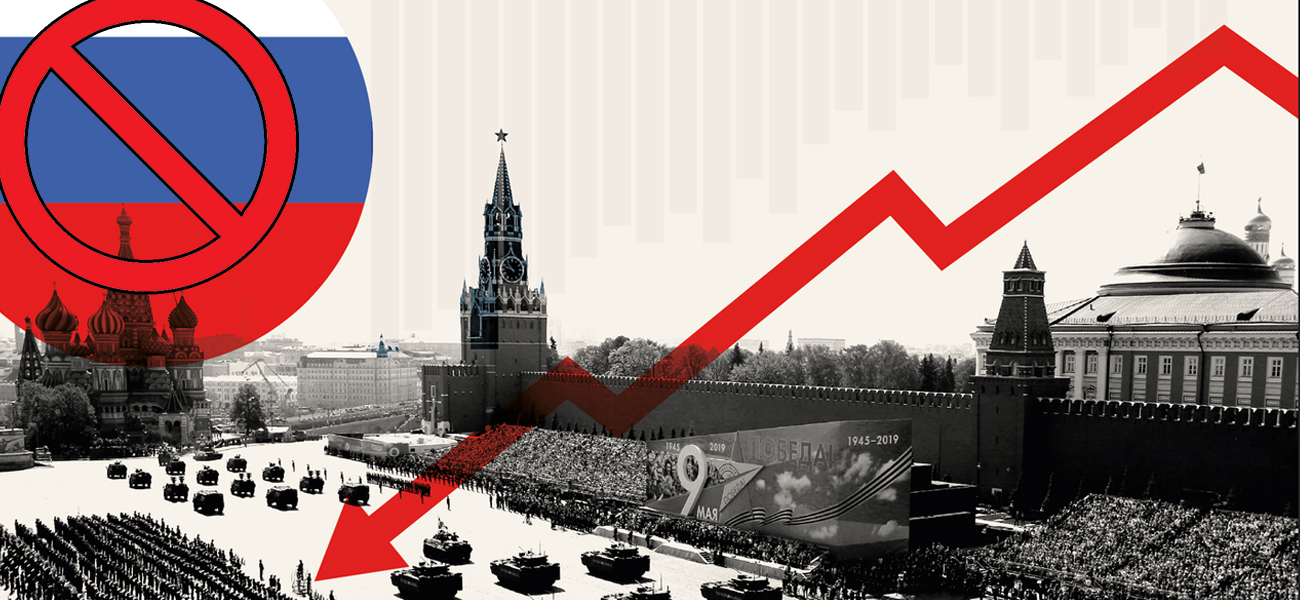
russia's MILITARY POTENTIAL CEILINGS There is no country that can wage war forever. There are plenty of myths about russia and how it can keep fighting and fighting, but there are things no country can overcome. These are simply economic and industrial ceilings that cannot just be expanded indefinitely. Especially when you're the most sanctioned country in history. Sit back, get comfortable — today I'm bringing you a BIG and very detailed article. Next year, russia will increase its military budget. And spending on it will account for around 35% of russia's entire annual budget. That's just according to the officially reported figures. And based on what we saw last year, we know that russia spends considerably more on the war than it reports. But when it comes to all this increased funding for the war machine, there's one BIG catch — russia doesn't exactly have the money for it. To keep its war industry running, russia is forced to significantly cut the budgets of other government sectors — education, healthcare, social services, and the national economy (infrastructure, agriculture, and so on). In other words, it's increasing the war industry's budget by cannibalizing other sectors. And it's ALSO very important to understand that even then, russia is no longer able to generate enough revenue to fully finance its annual budget. As a result, the state budget deficit keeps growing every year. And that's when the russians start selling their gold, diamonds, or printing A LOT of money to plug that budget hole. Whenever I try to explain how russia's economic situation keeps deteriorating, there are always commenters who say something along the lines of: "So what? They can still fight as long as they want, and you can talk about their problems all you like. Nobody's going to stop them." Well, THIS is where I'll try to explain why I think they're starting to reach the limits of their industrial capacity and, more generally, the limits of their offensive capabilities. When you shrink the civilian economy, investment declines, productivity falls, unemployment increases, prices rise, and it becomes more expensive for industry to manufacture things. On top of that, there's the growing global fuel crisis, which also drives up production costs. And russia ALSO has an existing labor shortage, and now it's going to carry out mobilization as well. That means it will independently remove, quite possibly, several hundred thousand men from the labor market. Whether that happens all at once or over the course of a year no longer matters — what matters is that those people will be taken out of the workforce. This creates a situation where russia is essentially destroying itself. It's increasing its military budget, but because it's cutting funding to other sectors and global economic problems are piling on, inflation rises so much that the larger military budget no longer translates into producing a whole lot more. Because everything simply costs MORE. And if we look at the war industry as a whole, there aren't many places left to expand because there aren't enough specialists. The only real option may be to try to redistribute the existing industrial capacity. For example, using the same budget, the same workers, and the same amount of materials to produce fewer tanks but more drones and missiles (I know this is a rough comparison, but the point still stands). Since I mentioned tanks, their production lines are also struggling to catch up with previous production levels. For example, russia used to refurbish a lot of old tanks from storage depots. But since those depots are now almost depleted, it has to manufacture more NEW tanks. And producing a new one costs MORE and takes longer. Tanks are just one example, but you have to understand that a similar situation applies to many other things. Instead of using old Soviet stockpiles, russia now has to manufacture a lot more equipment from scratch. THEREFORE, an increasing military budget in russia does not mean they'll have A LOT more of everything. NO. It simply means that everything costs them more. And looking ahead, it will cost them EVEN MORE, while they'll get less out of it. EVEN IF we take into account that China is still helping russia, we also have to understand that China isn't doing it for free. And no matter how many natural resources russia can send to China in exchange for technology, as inflation rises, the cost of those exchanges also increases. And as we know, China has been conducting those exchanges in its own favor since the beginning of the war. And once again, we run into the same ceilings — more trade does not necessarily mean a bigger war. More of everything is simply needed because everything is getting more expensive. There's an interesting situation unfolding in the world right now, where trump's war in Iran and the global fuel problems are simultaneously hurting russia's war industry as well. On top of that, I'm convinced that this entire promised wave of mobilization will also be russia's last serious attempt to push forward. RIGHT NOW, at THIS VERY MOMENT, a fundamental turning point in the war is taking place, and it's not being talked about very much. You could say the turning point was the expansion of Ukraine's drone forces, the attacks on oil facilities, the destruction of logistics, or something else. BUT all of this ultimately comes down to one BIG factor. russia is starting to reach the peak of its military potential. After this entire mobilization (whatever its size), they won't be able to carry out another one on the same scale. Well... they technically could, but each subsequent wave would be progressively weaker and of lower quality. At the same time, russia's military industry is starting to reach its ceilings. Looking ahead, not only will it have nowhere left to expand, but it's very likely to start contracting for the very same reason it grew in the first place — cuts to the budgets of other government sectors and the resulting inflation. Just take something as simple as cuts to healthcare funding. You might ask, what do hospitals have to do with the war industry? Well, if the state doesn't provide enough money to treat people, it's likely that more health problems will emerge, and that will affect the labor market. Which, in turn, will affect production — including the war industry. SO, I suspect that after 2027 (yes, unfortunately, that's still a long way off), russia will still be able to continue the war, but the pace of its war industry and its offensive operations will inevitably decline. THEN, let's take into account that russia is already suffering absolutely insane losses this year in exchange for increasingly smaller amounts of occupied territory. So let's understand that this is happening while russia can still maintain at least its current offensive pace and industrial production. What happens if any one of those factors contracts? We have a real-life example of what happens then — today, russia can no longer recruit enough people in a single month to replace the number being killed in the war. As a result, russian occupation forces are gradually retreating every month, and the occupiers are losing the territory they had captured. 2027 will still be the year when russia plugs this gap. In other words, whatever it can no longer recruit voluntarily, it will force into the front lines through mobilization. And then we'll have a whole range of other problems, which I've essentially already mentioned. russia will voluntarily reduce its own workforce (and let's add those who flee the country). Unmotivated, untrained, and poorly equipped soldiers at the front will achieve increasingly fewer results. The war industry will become more expensive while producing less for the front. russia will start facing problems filling the gaps created by its own shortages. When russia reaches these ceilings, it will certainly still be able to continue the war, but it will no longer be able to maintain the same pace. Especially the pace of its offensive operations on the front. THEREFORE... I can't say that Ukraine will definitely start reclaiming more of its territory, because we don't know how Ukraine itself will manage its funding. BUT the conditions are there, and Ukraine still has some cards it hasn't played yet. Here, let's also remember the ballistic missiles that are still to come into play. They won't be some complete WOW moment that changes everything. BUT they will allow Ukraine to destroy russia's industry much more aggressively, which is ultimately still one of the most important factors, because it eventually affects the quality of russia's offensive operations as well. BECAUSE having more people does not mean capturing more territory if those people are not properly supplied and supported from the rear. And then we get to the part I've actually been talking about for a very long time. What else can russia do if its offensive potential on the front starts to collapse? I'll repeat myself — russia is trying to compensate for the lack of frontline forces by intensifying its air attacks. And that creates the illusion that its offensive never stops and that russia is constantly escalating. + This is also an attempt to break Ukrainian civilians and make them demand that their government enter negotiations with russia. Historically, however, this kind of tactic has very rarely worked, regardless of which country we're talking about. Offensive operations on the front and air attacks are two different things. russia's frontline capabilities are shrinking, and that's why it is forced to carry out mobilization. That mobilization won't help it achieve A LOT more victories, BUT it will buy time — time it can use specifically to intensify its air attacks. And once again, it's the same thing — continuing a war does not necessarily mean fighting a successful war. russia, seeing that it cannot achieve victories on the front, is redirecting more of its industrial capacity toward producing drones and missiles. BUT we also have to understand that this does not necessarily mean producing a whole lot MORE drones and missiles forever. Because, as I've already explained, there are limits to production due to inflation, rising manufacturing costs, and labor shortages. ALSO, when it comes to missiles, they face a similar situation to russia's old tanks. Just as russia spent several years pulling old tanks out of storage and refurbishing them, it is also still mainly using its huge Soviet-era missile stockpiles, which it is MODIFYING. To maintain the pace of its attacks, it is EVEN converting missiles from its S-400 air defense systems into ballistic attack missiles. In other words, it's cannibalizing its own air defense resources to maintain its offensive capabilities RIGHT NOW. And you should understand that this kind of strategy also has its ceilings. This kind of strategy could create VERY serious problems for the russians when Ukraine ramps up its own ballistic missile production and russia itself starts needing more DEFENSIVE missiles — the very ones it is currently converting. So, when you combine the fact that Soviet stockpiles, although large, are not infinite and will eventually run out, with the fact that you cannot manufacture everything new in such large quantities or so quickly, and with the fact that everything russia produces from scratch becomes increasingly expensive over time... And when you also factor in the labor shortage affecting the drone and missile industries... We can predict that even the intensity of russia's air attacks has ceilings, and those ceilings will eventually be reached. Now, someone will say that I've explained all this rather abstractly, without numbers and so on. Fine, here are a few: Between 2023 and 2025, production in some key defense-related industrial categories doubled. HOWEVER, by 2026, growth had slowed significantly. Transport equipment: just +23.3% (instead of doubling), metal products: just +12.6% (instead of doubling), electronics and optical equipment: just +2.1% (instead of doubling). These are just a few examples. russia can allocate more and more money to its war industry, but that doesn't necessarily mean it can proportionally manufacture more weapons. EVEN MORE IMPORTANT — in September 2026, employment in manufacturing was already declining for the tenth consecutive month, while production volumes were falling again. This is NOT the collapse of production, but it clearly shows that the military industry is starting to reach its ceilings, which is exactly what I'm talking about. And those ceilings are being reached precisely because, once again, other government sectors are having their budgets cut, resulting in rising production costs. + Global economic consequences, economic sanctions, and Ukrainian strikes on factories. Now, if some of you are thinking of bringing up Ukraine and how it has the same problems, I'll dare to say that it's NOT quite the same. Over these several years of war, Ukraine has expanded its military industry so dramatically that its main obstacle is something else — a lack of funding. In other words, Ukraine is nowhere near reaching the limits of its production capacity. And on the front, we're already seeing more or less equal capabilities, and in some areas even an advantage for Ukrainian forces, with what they currently have. In 2025, zelensky said that Ukraine's war industry was operating at only 60% capacity. Well, in 2026, that situation is changing, because Ukraine is receiving considerably more funding. It's a fact that Ukraine also has its own problems and faces the same inflation, but when it comes to the ability to increase production volumes, it still has plenty of room to do so. After all this, there are a few rather unpleasant factors left. YES, russia's military potential will definitely shrink, BUT that doesn't mean the war will definitely end because of it. russia will still be able to continue the war, albeit at a weaker pace. At this point, we can expect russia to make indirect attempts to start peace negotiations, and we will likely see a shift in its propaganda messaging. When they see that they no longer have the potential to continue fighting at the same pace and that their objectives are UNACHIEVABLE, they will EXACTLY start claiming that their military objectives have ALREADY been achieved and that the war can now be ended. Why would they do that? Well, because it will be the best negotiating position they can possibly have. After that, it will start getting weaker. How do I come to this conclusion? Just look at what's happening in the war in Iran — the war is supposedly ongoing, but it's not really going on anymore, and there is NO agreement. America can no longer continue its offensive, so trump keeps saying that the military objectives have already been achieved and that they won the war a long time ago. It's just that Iran refuses to surrender. The same thing will happen with the russians: When they see that they are losing the initiative, they will start claiming that the war has been won and that it's time to end it. At this point, russia will, of course, still demand its own terms, and if those terms are not implemented, it will resort to increasingly terrorist attacks. And then it will be up to Ukraine to decide whether to keep fighting a little longer to weaken russia's position even further, or to sit down at the negotiating table. The sad reality is that by that point, Ukraine itself will have been battered so badly that it will neither have the resources to continue the war nor much desire to keep shedding blood. That desire is already gone, and it never existed in the first place. But in this war, Ukraine is defending itself, so it has no choice. And there's one more dangerous factor. By dragging out the war, russia is trying to wait for political winds to shift in its favor in Europe and elsewhere. And this is where russia is also using another huge pool of financial resources to try to influence political parties in the Western world and spread propaganda among the public. The next major barrier will be the November elections in America.

582
Scott Horton Oct 23

I anticipate that the entire Epstein estate will be seized to furnish a fund to compensate victims. Also that Epstein's lawyers and accountants will be forced to disgorge their fees. This is being done because DOJ won't do its job, as usual. www.santafenewmexican.com/news/local_n...

www.santafenewmexican.com
New Mexico AG sues Epstein’s lawyer and accountant, seeks to block estate payouts
2684
Irish Independent Oct 21

GPA chief Tom Parsons argues that Friday night games in the GAA could be beneficial if players are properly compensated for taking the day off. #Cookies #OnlineSecurity #WebsiteAccess

www.independent.ie
Friday night games could be a ‘real opportunity’ for GAA — but only if players are compensated for day off, insists GPA chief Tom Parsons
2686
Irish Independent Oct 15

Gardaí are investigating whether an arsonist was compensated to execute an attack that resulted in the tragic deaths of innocent children and parents in Waterford. #Cookies #OnlineSecurity #WebAccess

www.independent.ie
Waterford murders: Gardaí probe whether arsonist was paid to carry out attack that killed innocent children and parents
2342
S
Sandfeen Sep 8

“The Clinton Parameters, proposed by U.S. President Bill Clinton on December 23, 2000, represented a significant attempt to resolve the Israeli–Palestinian conflict by outlining a framework for a final-status agreement (Podeh, 2015). These parameters were introduced following the failure of the Camp David Summit earlier that year and aimed to address the core issues of territory, Jerusalem, refugees, and security (U.S. Department of State, 2000). While the parameters provided a comprehensive proposal, they were met with mixed reactions and ultimately did not lead to a lasting resolution (Ross, 2004; Wikipedia, 2025a). The Clinton Parameters proposed the establishment of a Palestinian state comprising 94–96% of the West Bank and all of Gaza, while Israel would annex approximately 4–6% of the West Bank, incorporating settlement blocs containing about 80% of the settler population, and compensate Palestinians with 1–3% of Israeli territory through land swaps to ensure territorial contiguity (Clinton, 2000; Podeh, 2015). Regarding Jerusalem, the proposal suggested a division of sovereignty, with Arab neighborhoods under Palestinian control and Jewish neighborhoods under Israeli control. The Old City would be jointly administered, the Western Wall under Israeli sovereignty, and the Temple Mount/Haram al-Sharif under Palestinian sovereignty, with shared arrangements for religious access (Wikipedia, 2025a). Palestinian refugees would have limited options for return, primarily to the new state, with a small number potentially allowed into Israel, and compensation would be facilitated through international mechanisms (Wikipedia, 2025a). Security arrangements included a demilitarized Palestinian state, a temporary Israeli presence in the Jordan Valley, and international oversight (Clinton, 2000). The agreement was intended to mark the end of the conflict, with both parties renouncing further claims and the UN endorsing the settlement (Wikipedia, 2025b). While Israel accepted the parameters with reservations, the Palestinian leadership did not formally agree, citing concerns over sovereignty, refugees, and borders. Subsequent negotiations, including the Taba Summit in January 2001, came close to an agreement, but the outbreak of the Second Intifada and the change in U.S. administration prevented a final resolution (Podeh, 2015). Despite this, the Clinton Parameters remain a key reference in discussions on Israeli–Palestinian peace, illustrating both the possibilities and challenges of achieving a lasting solution (Ross, 2004)” - ChatGPT

710
Alfons López Tena 🦇 Wrld summary Sep 2
Spanish politician and lawyer

China has not fought a war in decades. To conquer Taiwan, it needs the latest battlefield lessons and data to compensate for its lack of combat experience. That is where Russia comes in, to gain the military know-how learnt against Ukraine – and Europe https://t.co/JGtpmVzpsT #China #Taiwan #Russia #CN #RU #UA #EU

119
Stirile ProTV Jul 14

Donald Trump a anunțat intenția de a introduce o taxă de 20% pentru navele care traversează Strâmtoarea Ormuz, argumentând că Statele Unite trebuie să fie compensate pentru protejarea acestei rute maritime strategice, în contextul intensificării atacurilor americane împotriva Iranului și a unei noi blocade navale impuse asupra porturilor iraniene. #DonaldTrump #StramtoareaOrmuz #RăzboiÎnIran

stirileprotv.ro
Donald Trump vrea să taxeze navele care străbat Ormuzul cu 20% din încărcătură: „Ar trebui să fim despăgubiți”
11346
Stirile ProTV Jul 9

Întârzierile statului român la plata facturilor către farmacii au dus la penuria de medicamente compensate pentru pacienți, care au fost nevoiți să întrerupă tratamentele esențiale, ceea ce a provocat acțiuni legale din partea Comisiei Europene împotriva țării. #medicamente #sanatate #farmacii

stirileprotv.ro
Bolnavi rămași fără tratament după ce statul a întârziat plățile către farmacii. Nu și-au putut lua medicamentele compensate
11352
Digi24 Jul 8

Comisia Europeană a decis să trimită România în fața Curții de Justiție a Uniunii Europene din cauza întârzierilor sistemice și persistente ale CNAS în plățile către farmaciile care furnizează medicamente compensate, ceea ce reprezintă o încălcare a obligațiilor legale europene. #ComisiaEuropeană #CNAS #medicamenteCompensate

www.digi24.ro
Comisia Europeană dă în judecată România. Farmaciile sunt plătite cu mari întârzieri de CNAS, acuză Executivul UE
11354
Stirile ProTV Jun 24

Senatul României a adoptat două proiecte de lege care preved că femeile însărcinate au dreptul la un însoțitor în timpul nașterii și intimitate în travaliu, iar scutecele pentru adulți vor fi compensate în proporție de 80% pe bază de prescripție medicală. #drepturilefemeilor #naștere #sarcină

stirileprotv.ro
Proiecte adoptate: Femeile însărcinate au dreptul la însoţitor la naştere. Scutecele pentru adulţi vor fi compensate 80%
16758
Agnes Wold Wrld summary Jun 20
Swedish bacteriologist; professor of clinical bacteriology

How disgusting - did no one think of what the child might feel about it later on? So Australia only thinks about the feelings of the man who wished he were a woman, not a child who is supposed to compensate for his tragic disorder. For a lifetime #ChildRights #GenderIdentity #Australia