WRLD

Search

#distrust
Rolf Degen 24h
German author, journalist and non-fiction writer

The author wrote that women, particularly younger women, showed stronger aversion to the opposing political camp than men. They described affective polarization as an emotional divide marked by strong warmth toward one’s own political group and deep hostility or distrust toward the opposing camp.
2515
Anton Gerashchenko 5d

Poland and Ukraine should not fall for Russia’s attempts to sow division and distrust between the two nations; both countries have made historic progress in resolving difficult issues. - Ukraine's Foreign Minister Andrii Sybiha

2704
Katie Mack 1w

Senseless, tragic death. The charlatans who spread distrust of vaccination through callousness and greed bear responsibility for this.

2057
Zack Polanski 3w

The government's plan is unraveling fast. While families suffer the banks are celebrating getting off lightly. The choice is clear - either we boost incomes and cut bills, or this country risks falling further into despair and distrust.

x.com
Jason Groves (@JasonGroves1) on X
2538
Irish Independent 4w

Defence Forces officers are set to express their frustration and distrust towards the Government regarding their pay and working conditions. #CookiesEnabled #OnlineSecurity #AccessBlocked

www.independent.ie
Defence Forces officers to vent ‘frustration and distrust’ in the Government over pay and conditions
2556
Krzysztof Graj 4w

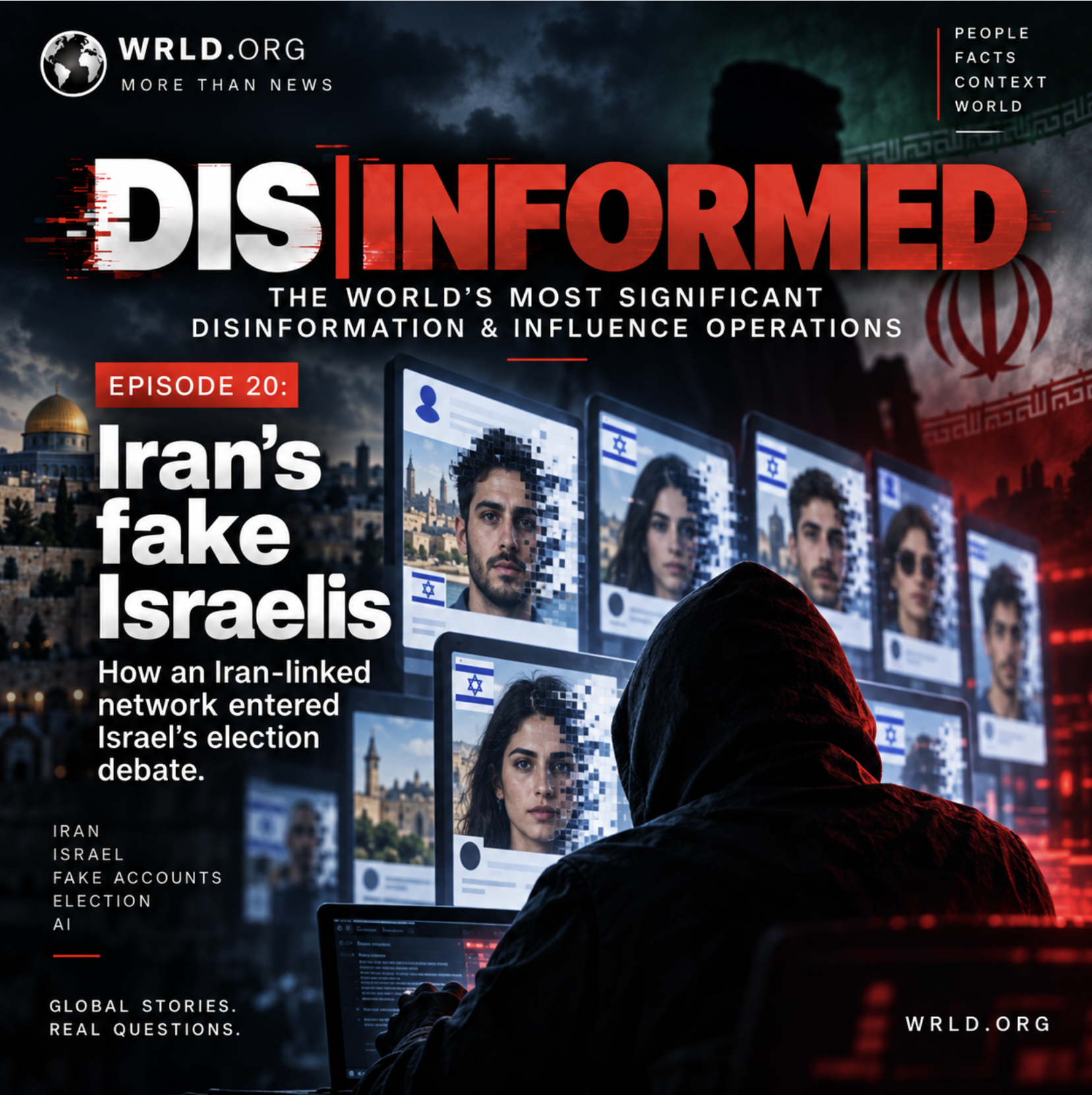
𝗜𝗿𝗮𝗻’𝘀 𝗳𝗮𝗸𝗲 𝗜𝘀𝗿𝗮𝗲𝗹𝗶𝘀 – 𝗵𝗼𝘄 𝗮 𝗳𝗼𝗿𝗲𝗶𝗴𝗻 𝗶𝗻𝗳𝗹𝘂𝗲𝗻𝗰𝗲 𝗻𝗲𝘁𝘄𝗼𝗿𝗸 𝗲𝗻𝘁𝗲𝗿𝗲𝗱 𝗜𝘀𝗿𝗮𝗲𝗹’𝘀 𝗲𝗹𝗲𝗰𝘁𝗶𝗼𝗻 𝗱𝗲𝗯𝗮𝘁𝗲 Ahead of Israel’s 27 October election, hundreds of social-media accounts have been presenting themselves as ordinary Israelis while injecting political messages into genuine domestic conversations. They appear as women, reservists, secular voters, religious activists and frustrated citizens. Some attack Benjamin Netanyahu, others have previously promoted narratives associated with the Israeli right, while many focus less on parties than on a broader message: Israel is divided, its institutions cannot be trusted and its political system is approaching crisis. A detailed investigation by the OSINT company Golden Owl has mapped this activity as a substantial Iran-linked influence network. Its October analysis identified at least 694 accounts, with 445 attributed at high or medium-high confidence to the operation. Between 11 August and 11 October, the network generated at least 4.7 million views and more than 160,000 interactions. The researchers found no evidence that these accounts were simply a group of independent Iranian commentators expressing political opinions. Their assessment rests instead on coordinated behaviour, false identities, account histories, copied content, language patterns and platform metadata linking significant parts of the infrastructure to Iran. 𝗙𝗿𝗼𝗺 𝟯𝟱 𝗽𝗲𝗿𝘀𝗼𝗻𝗮𝘀 𝘁𝗼 𝗵𝘂𝗻𝗱𝗿𝗲𝗱𝘀 𝗼𝗳 𝗳𝗮𝗸𝗲 𝗮𝗰𝗰𝗼𝘂𝗻𝘁𝘀 The investigation developed in two stages. Golden Owl’s first report, published in September, identified an operational core of 35 accounts: 32 personas presenting themselves as Israelis and three Hebrew-language media-style channels. During the 30-day period measured in that study, active accounts generated 947,322 impressions and more than 9,000 interactions. The October investigation expanded the dataset dramatically. Researchers analysed more than 560,000 data points, including tens of thousands of accounts, relationships between them and more than a quarter of a million posts. The wider network showed repeated patterns of identical texts, synchronised activity and accounts created in batches. The numbers therefore describe not a sudden explosion from 35 to hundreds of accounts, but the gradual exposure of a much larger infrastructure surrounding the original core. 𝗧𝗵𝗲 𝗳𝗮𝗸𝗲 𝗜𝘀𝗿𝗮𝗲𝗹𝗶𝘀 Some of the strongest evidence comes from the histories of individual personas. One account had spent years posting exclusively in Persian under the handle “mardeankabooti” before reappearing in August 2026 as an apparently Israeli user called “Alon Strauss”, complete with an Israeli flag and Hebrew political messaging. Other personas presented themselves as Israeli professionals, activists or ordinary citizens while X transparency information showed connections through the Iranian version of the Android application or locations inconsistent with their claimed identities. The account “Yaara Shalev” presented itself as an Israeli woman concerned with democracy and peace. Investigators found that photographs used to construct the identity were inconsistent, including borrowed and apparently AI-generated imagery. A small Hebrew-language channel called KigVoice, previously identified in Israeli government reporting as part of an Iranian influence environment, repeatedly published material that later appeared on the much more visible Yaara account. In one sample, 14 of 40 KigVoice posts subsequently resurfaced as captions or opening lines in Yaara’s content. Another persona, “Miriam Kozak”, had built an audience of more than 18,000 followers and had already been exposed as fictitious by Israeli researchers in 2024. Its political messaging changed substantially over time, moving between narratives associated with different sides of Israeli politics. That inconsistency is important: the apparent purpose was not necessarily to build a stable ideological following, but to enter whichever political argument offered the greatest opportunity to intensify division. 𝗔𝗜, 𝗰𝗼𝗽𝗶𝗲𝗱 𝗺𝗲𝘀𝘀𝗮𝗴𝗲𝘀 𝗮𝗻𝗱 𝗜𝗿𝗮𝗻𝗶𝗮𝗻 𝗳𝗶𝗻𝗴𝗲𝗿𝗽𝗿𝗶𝗻𝘁𝘀 The Iran attribution is based on more than political content. Researchers identified accounts using the Iranian version of the X Android application, repeated connections to previously identified Iranian influence assets, copied posts appearing across supposedly independent personas within minutes, and Hebrew containing unusual grammatical errors or Persian and Arabic keyboard artefacts. Generative AI also appears to have become part of the production process. Some accounts inadvertently published fragments resembling chatbot instructions, while other posts displayed patterns consistent with machine-generated Hebrew. AI-generated videos and synthetic profile imagery further reduced the cost of maintaining large numbers of apparently distinct personalities. However, none of these indicators was treated as proof on its own. Golden Owl explicitly excluded accounts where the evidence was insufficient and notes that VPNs, travel and platform location labels can create misleading signals. The attribution rests on multiple independent indicators converging across the network. 𝗧𝗵𝗲 𝗴𝗼𝗮𝗹 𝗶𝘀 𝗻𝗼𝘁 𝗻𝗲𝗰𝗲𝘀𝘀𝗮𝗿𝗶𝗹𝘆 𝘁𝗼 𝗲𝗹𝗲𝗰𝘁 𝗼𝗻𝗲 𝗽𝗮𝗿𝘁𝘆 The network repeatedly exploited issues that genuinely divide Israeli society: responsibility for the 7 October attacks, the war, the hostages, ultra-Orthodox military exemptions, economic pressure, emigration and confidence in state institutions. It also circulated misleading information about the election itself, including false voting dates, claims that voting had been postponed and posts suggesting online voting mechanisms that do not exist in Israel’s parliamentary election system. The pattern suggests a strategy broader than conventional electoral campaigning. Rather than consistently promoting one political faction, the network appears designed to weaken confidence in the government, military, democratic institutions and the electoral process itself. An influence operation does not need to persuade Israelis to support a particular candidate if it can convince different groups that defeat would prove fraud, betrayal or systemic failure. 𝗥𝗲𝗮𝗹 𝗜𝘀𝗿𝗮𝗲𝗹𝗶𝘀 𝗮𝘀 𝘂𝗻𝘄𝗶𝘁𝘁𝗶𝗻𝗴 𝗮𝗺𝗽𝗹𝗶𝗳𝗶𝗲𝗿𝘀 One of the network’s most effective characteristics is that it does not depend solely on its own followers. Fake personas enter comment sections and political discussions involving real Israeli journalists, politicians and ordinary users. Authentic Israelis then repost or interact with the material, sometimes carrying it far beyond the original account. Golden Owl does not classify those genuine users as participants in the operation. In most cases they appear to be unwitting amplifiers. But once a message passes from a fabricated Iranian-operated persona to an authentic Israeli account, its foreign origin becomes much harder for the next person to recognise. 𝗧𝗵𝗲 𝟰𝟬,𝟬𝟬𝟬-𝗯𝗼𝘁 𝗳𝗶𝗴𝘂𝗿𝗲 𝗯𝗲𝗹𝗼𝗻𝗴𝘀 𝘁𝗼 𝗮 𝗱𝗶𝗳𝗳𝗲𝗿𝗲𝗻𝘁 𝗽𝗲𝗿𝗶𝗼𝗱 A much larger figure has also appeared in recent reporting. In the first two days after the October 2023 Hamas attack, social-media intelligence company Cyabra identified more than 40,000 fake profiles participating in online discussions across major platforms. Their content generated hundreds of thousands of interactions and had a potential reach estimated at 531 million profiles. Those numbers are important historical context, but they should not be merged with the current Golden Owl investigation. There is no public evidence demonstrating that all of those 2023 accounts and the 2026 Iran-linked election network belonged to one continuous command structure. The 531 million figure is also an estimate of potential exposure, not proof that 531 million people saw or believed the content. 𝗪𝗵𝗼 𝗶𝘀 𝗮𝗰𝘁𝘂𝗮𝗹𝗹𝘆 𝗯𝗲𝗵𝗶𝗻𝗱 𝘁𝗵𝗲 𝗼𝗽𝗲𝗿𝗮𝘁𝗶𝗼𝗻? No confirmed individual operators have been publicly identified. Names such as Yaara Shalev, Miriam Kozak and Alon Strauss are personas, not verified identities of the people controlling the accounts. Golden Owl says its evidence supports an association with the Islamic Republic of Iran and with previously documented Iranian influence infrastructure, but it does not establish which Iranian institution, intelligence service, military organisation or contractor directs the network. That distinction is essential. Public OSINT supports attribution at the Iran-linked operational level. It does not currently justify naming individual Iranian officials as the people commanding this specific campaign. 𝗧𝗵𝗲 𝗱𝗲𝗲𝗽𝗳𝗮𝗸𝗲 𝗶𝘀 𝗻𝗼 𝗹𝗼𝗻𝗴𝗲𝗿 𝗼𝗻𝗹𝘆 𝘁𝗵𝗲 𝘃𝗶𝗱𝗲𝗼 The Israeli case illustrates a broader change in influence operations. The synthetic asset does not have to be a spectacular deepfake of a politician. It can be an apparently ordinary citizen who comments on politics, argues with neighbours, describes personal experiences and gradually becomes part of an authentic community. That can be more difficult to recognise because the propaganda does not arrive looking foreign. It arrives looking local. And when hundreds of fabricated citizens enter the same national conversation, they can manufacture the impression that political anger, despair or distrust is more spontaneous and more widely shared than it really is. 𝗦𝗼𝘂𝗿𝗰𝗲𝘀 Golden Owl — Exposing the Iranian Regime’s Influence Machinery Against Israeli Society https://web-dev-production-7a35.up.railway.app/resources/research/Exposing-the-Iranian-Regime-Influence-Machinery-Against-Israeli-Society Golden Owl Golden Owl — The Other Face of War: Iranian Regime–Linked Manipulation of Israel’s 2026 Election Debate https://web-dev-production-7a35.up.railway.app/resources/research/Iranian-Regime-Linked-Manipulation-of-Israel-2026-Election-Debate Golden Owl The Jerusalem Post — Iran-linked social-media accounts posing as Israelis to target election https://www.jpost.com/israel-election-2026/article-909863 The Jerusalem Post Ynet — Fake Israelis, real influence: Iran-linked network infiltrates Israel’s election debate https://www.ynetnews.com/tech-and-digital/article/syp119nqqzg ynetglobal Calcalist — Iranian influence network exposed ahead of Israel’s election https://www.calcalist.co.il/calcalistech/article/s1q0ifijzl calcalist Vesty / Ynet — Iranian fake-account network and October update https://www.vesty.co.il/main/article/rkwokjssgg vesty Israel Ministry for Diaspora Affairs — Iran’s active Hebrew-language influence campaign https://www.gov.il/BlobFolder/reports/israel-and-us-strikes-in-iran-daily-status_2_3_26/en/mashlat_Roaring_Lion_israel-and-us-strikes-in-iran-daily-status_2_3_26.pdf Government of Israel Israel Central Elections Committee — official 2026 election timetable https://www.gov.il/en/pages/time--table-26 Government of Israel Channel NewsAsia — historical Cyabra analysis of more than 40,000 fake profiles after 7 October 2023 https://www.channelnewsasia.com/singapore/how-fake-news-israel-hamas-stokes-outrage-hatred-and-potential-violence-southeast-asian-tiktok-5603221 𝗞𝗲𝘆𝘄𝗼𝗿𝗱𝘀 #DISINFORMED #Episode20 #Iran #Israel #IsraelElection2026 #IranianInfluence #IranianDisinformation #ElectionInterference #ForeignInterference #FIMI #Disinformation #InformationWarfare #InfluenceOperations #FakeAccounts #FakePersonas #SyntheticIdentity #ArtificialIntelligence #AI #AIPropaganda #SocialMediaManipulation #Astroturfing #NarrativeManipulation #PoliticalDisinformation #ElectionDisinformation #X #Twitter #Bots #BotNetwork #KigVoice #YaaraShalev #MiriamKozak #DigitalInfluence #InformationManipulation #ElectionIntegrity #GoldenOwl #OSINT #MediaManipulation #WRLD

web-dev-production-7a35.up.railway.app
Exposing the Iranian Regime’s Influence Machinery Against Israeli Society
699
David Thunder Oct 2

The author wrote that Spain’s tenant protections had created distrust and fear in the rental market. They said they had considered renting out their home and later had to rent a home themselves in Spain. #Alquiler #España #Vivienda #ES

P
Patrice CUDICIO Sep 23

The Return to Feudalism in 21st Century Garb A simple observer's viewpoint, with no claim to hold any absolute truth. The Veneer Cracks There is something strangely archaic about the world unfolding before our eyes, despite its satellites, artificial intelligence, and promises of infinite progress. Here and there, we witness heads of state behaving like feudal lords of another age, patiently nibbling away at the neighboring territory, redrawing borders through force rather than law, as if governing a nation mattered less than expanding one's fiefdom. No names need be mentioned here: current events provide plenty of illustration, and each reader will recognize, according to their own geography and moment of reading, the faces that embody this observation. But this return to the archaic is not confined to grand geopolitical stages. It also permeates the most ordinary daily life—that of social media, where anyone can pour out venom against another without filter, without form, and often without the slightest argument. The verbal jousting of yesteryear, with its codes, its rhetoric, its tacit limits, has given way to raw invective, snap judgment, instant condemnation. We no longer debate: we execute, verbally—and sometimes it doesn't stop at words. The Vanished Inhibition What strikes one, in this dual observation—macro-political and micro-social—is the lifting of an inhibition we thought firmly anchored. Centuries of cultural construction, education, philosophy, sometimes religion, had patiently shaped mechanisms of restraint: politeness as social ritual, argumentation as a mode of resolving disagreement, respect for one's opponent as the very foundation of democratic debate. This civilizational veneer, however fragile it always was, seemed to hold. Today it is cracking, and the question—which for me remains a simple hypothesis, not a certainty—is why. A convenient explanation would blame social media: anonymity, the distance of the screen, the instantaneousness of publication would favor verbal acting-out without the usual mediation of reflection. This is probably true, but likely insufficient. For technology here is only an accelerant, an amplifier—not necessarily a root cause. A Poorly Formatted Neocortex? The more unsettling hypothesis—and I frame it explicitly as hypothesis, not scientifically established fact—is that of a failure in the formation of moral judgment and tolerance toward otherness. The human brain possesses the neural structures enabling empathy, the distancing of impulsive reaction, the acceptance of difference—but these capacities are not innate in their full exercise: they must be built, educated, cultivated, like a muscle that needs patient training from childhood onward. If this education in otherness, nuance, and tolerance of disagreement erodes—for multiple and undoubtedly complex reasons that are not mine to settle here—then older reflexes resurface: instinctive distrust of the stranger outside the clan, the law of the strongest, the logic of territorial or symbolic predation. The other ceases to be a possible interlocutor and becomes once again a potential threat, unless they belong to my tribe, my clan, my party, my digital bubble. Two Scales, One Logic What is striking, in this deliberately provocative reading, is the structural similarity between these two scales. The leader who invades a neighbor in the name of a rediscovered greatness or a reinvented historical right, and the anonymous internet user who insults a stranger in the name of an unnegotiable conviction, may obey the same underlying grammar: that of territory to defend, clan to protect, the other to subdue or exclude rather than understand. The form has changed—satellites instead of horses, tweets instead of heralds—but the substance, in this reading that remains mine alone and commits no one else, seems strangely identical to that of feudal rivalries: the absence of a recognized third party, of an accepted common rule, of a respected arbitrating authority. Everyone becomes judge and party, lord of their own digital or territorial fiefdom. A Civilization on a Knife's Edge Norbert Elias, in his Civilizing Process, showed how Western societies had historically built, with remarkable slowness, an increasing control over impulses and direct violence, in favor of more sublimated forms of social regulation. What we may be observing today—and I stress again the conditional—is a form of regression in this process, or at least a fragilization of the veneer it had patiently laid down. Should we see this as an effect of great technological accelerations, which shake up our cognitive rhythms without leaving education time to adapt? A deeper crisis of the institutions tasked with transmitting these values of tolerance—school, family, religion, the rule of law? Or simply a cyclical movement of human history, where phases of policed civilization alternate with darker backlashes? I have no certain answer, and I would be wary of anyone claiming to hold one. In Conclusion, a Shared Concern This text is only a viewpoint, necessarily partial and subjective, on a world that sometimes seems to replay ancient logics in new clothing. Perhaps I am wrong to perceive a continuity between the feudal lord and the contemporary dictator, between the anonymous online insult and the absence of education in nuance. Perhaps these phenomena are unrelated, or too complex to be thus summarized. But if this reading, even partially, hits the mark, then the question that arises is less one of technological regulation—though necessary—than the far more arduous question of how to rebuild, generation after generation, this capacity to accept the other in their difference, to debate without destroying, to coexist without necessarily dominating. This undertaking, if it exists, will not be resolved by an algorithm nor by an international treaty. It plays out, patiently, in the most elementary education—the one that teaches a child that the other is not a threat, but a possibility. Bibliography Elias, N. (1939). Über den Prozess der Zivilisation [The Civilizing Process]. Oxford: Blackwell (Eng. trans. 1978-1982). Lorenz, K. (1963). Das sogenannte Böse [On Aggression]. London: Methuen (Eng. trans. 1966). Arendt, H. (1970). On Violence. New York: Harcourt, Brace & World. Han, B.-C. (2013). Im Schwarm [In the Swarm: Digital Prospects]. Cambridge, MA: MIT Press (Eng. trans. 2017).

706
S
Sandfeen Aug 29

The Age of Experts Is Over If the past two decades—COVID-19, the 2008 financial crisis, and the net-zero charade—have taught us anything, it is this: the age of unquestioned experts is over. Authority issued by corrupt, bloated institutions no longer commands automatic respect. We are entering an era in which trust must be earned, not assumed. Credentials matter less than results. Expertise can become conformity wrapped in a credential; status is no substitute for trustworthiness. The future belongs to those with proven track records, not merely letters after their names. Friedrich Nietzsche warned of this more than a century ago. He distrusted experts who served the spirit of their age—those who mistook consensus for courage and conformity for principle. To Nietzsche, many authorities were functionaries of the status quo: too timid to challenge the sacred assumptions of their time. University professors, state philosophers, and moral enforcers wore obedience as a badge of honor. They did not think; they repeated. They did not challenge; they conformed. They made the ordinary seem profound through jargon, complexity, and ambiguity. Nietzsche saw these not as signs of insight, but as camouflage—cowardice in disguise. He also distinguished knowledge from wisdom. Knowledge can be taught, measured, and tested. Wisdom must be earned through suffering, struggle, and brutal self-examination. Nietzsche admired those who forged their own paths rather than simply climbing institutional ladders. Even in science, he saw a danger. He respected its methods but feared their sanctification. Science, he argued, still required justification; materialists confused method with meaning and data with truth. Experts who presented science as the only path to knowledge were, in Nietzsche’s eyes, dogmatists in lab coats. So the question is no longer, “What are your qualifications?” It is: What have you done? What have you risked? What have you proved? We must recover the courage to think for ourselves—and place our confidence only in those who have earned it through action, not appointment.

828
S
Sandfeen Aug 28

The End of Blind Authority If the past two decades—through COVID-19, the 2008 financial crisis, and the net-zero charade—have taught us anything, it is this: the age of unquestioned experts is over. Authority granted by corrupt, bloated institutions no longer commands automatic respect. We are entering an era in which trust must be earned, not assumed. Credentials alone are not enough. Results matter more. Expertise can become conformity wrapped in a credential. The age of trusting people solely because of their status is fading. What matters now is trustworthiness, not titles. The future belongs to those with proven track records, not simply to those with letters after their names. Friedrich Nietzsche warned about this more than a century ago. He distrusted experts who blindly served the spirit of their age—those who mistook consensus for courage and conformity for principle. To Nietzsche, many authorities were not pioneers of truth but functionaries of the status quo: people too timid to challenge the assumptions of their time. He mocked the bureaucrats of knowledge: professors, state philosophers, and moral enforcers. They wore intellectual obedience like a badge of honor. They did not think; they repeated. They did not challenge; they conformed. To Nietzsche, jargon, complexity, and ambiguity were not always signs of insight. They could also be camouflage—cowardice in disguise. He distinguished between knowledge, which can be measured, taught, and tested, and wisdom, which must be earned. Wisdom comes through suffering, struggle, and honest self-examination. Nietzsche admired those willing to rise above institutional thinking. Even in science, he saw a danger. He respected its methods but feared their sanctification. He believed materialists could confuse method with meaning and data with truth. Experts who presented science as the only path to knowledge were dogmatists in lab coats. The question is no longer, “What are your qualifications?” It is: What have you done? What have you risked? What have you proved? We must rediscover the courage to think for ourselves and trust those who have earned authority through action—not appointment.

1302
BBC May 23

The World Health Organization has raised the Ebola outbreak risk in the Democratic Republic of Congo from high to very high, amid nearly 750 suspected cases and 177 suspected deaths, while a new vaccine is under development and public health responses are hampered by local violence and distrust. #EbolaOutbreak #PublicHealthEmergency #DRCongo

www.bbc.com
Ebola risk raised to 'very high' in DR Congo
10197
Euronews English May 22

Angry relatives of a deceased man in the Democratic Republic of Congo, who was suspected of dying from Ebola, set fire to part of an Ebola hospital after being denied permission to take his body for burial, reflecting widespread distrust of the Ebola virus in the community amid an ongoing outbreak that has claimed over 130 lives. #EbolaOutbreak #PublicHealth #DRCrisis

www.euronews.com
Furious crowd torches Ebola hospital tents in DR Congo
10198
The New York Times May 14

Concerns over national security in the U.S. may complicate President Trump's efforts to secure a substantial Chinese investment pledge, as distrust towards Chinese firms and ongoing scrutiny could hinder negotiations and implementation despite desires for increased foreign investment. #ChineseInvestment #NationalSecurity #USChinaRelations #US #CN #RU #IR #KP

www.nytimes.com
Trump Might Welcome Chinese Investment, but America Is Wary
8404
Graham Allison May 14
American political scientist (1940-)

Graham T. Allison: I developed this concept and codified this theory, asserting that history presents a situation that inevitably repeats itself: the rise of an emerging power creates anxiety and paranoia in the dominant power, leading to military escalation based on mutual distrust.

17409
BBC May 13

U.S. President Donald Trump's state visit to China from May 13 to 15 marks the first visit by an American president to the country in nearly a decade, featuring discussions on global trade, rising tensions over Taiwan, and competition in advanced technologies, amidst a backdrop of mutual distrust and the desire for domestic political gains. #USChinaRelations #GlobalTrade #PoliticalDiplomacy #US #CN #TW

www.bbc.com
Cuộc gặp Trump - Tập sẽ định hình quan hệ Mỹ - Trung trong nhiều năm tới ra sao - BBC News Tiếng Việt
10206
BBC May 13

U.S. President Donald Trump is on a state visit to China from May 13-15, marking the first visit by a U.S. president to China in nearly a decade, during which key discussions on global trade, tensions over Taiwan, and competition in advanced technologies will take place, all while experts note that both leaders may remain distrustful and focused on domestic political gains. #USChinaRelations #GlobalTrade #PoliticalLeadership #US #CN #TW

www.bbc.com
Cuộc gặp Trump - Tập sẽ định hình quan hệ Mỹ - Trung trong nhiều năm tới ra sao - BBC News Tiếng Việt
10206
BBC May 13

U.S. President Donald Trump's state visit to China from May 13-15 marks the first trip by a U.S. president to the country in nearly a decade, featuring discussions, a state banquet, and a visit to the Temple of Heaven, amidst mutual distrust and political maneuvering between the two powerful leaders over issues like global trade, escalating tensions over Taiwan, and competition in advanced technologies. #USChinaRelations #TrumpVisit #GlobalTrade #US #CN #TW

www.bbc.com
Cuộc gặp Trump - Tập sẽ định hình quan hệ Mỹ - Trung trong nhiều năm tới ra sao - BBC News Tiếng Việt
10206
toomas hendrik ilves May 13
Estonian politician and diplomat, fourth president of Estonia (born 1953)

The countries doing most for Ukraine, and which coincidentally are most threatened by Russia, will never agree to someone only slightly less distrusted than Schröder. The woman who eagerly signed Nordstream 2 after the annexation of Crimea and the Mh17 shoot-down has zero trust. #Ukraine #Russia #TrustIssues #UA #RU #DE

841