BETA nonprofit public democratic european moderated

Search

#dublinanti

Accendo la tv, e in 15 secondi sento dire da un’ospite almeno due sciocchezze: 1) il regolamento di Dublino non fu voluto da Prodi. La prima convenzione di Dublino fu firmata sotto il governo Andreotti, mentre il primo regolamento vero e proprio fu firmato sotto il governo Berlusconi. 2) Piantedosi non ha “sterilizzato” dal 2022 al 2026 la norma che prevede l’obbligo di riprendersi in carico i dublinanti, evitando che ne entrassero 80.000 in Italia: ha invece violato tale norma, come ha stabilito nel 2024 la Corte di giustizia dell’Unione europea. @OmnibusLa7 #omnibusla7 #politica #giustizia #informazione

Il punto non è se c’è una relazione tra la decisione dell’Italia di sospendere Shenghen con la Spagna e la decisione di altri paesi europei di rimandarci i cosiddetti dublinanti. La questione è solo di buonsenso : è meglio allearsi su questo argomento con paesi che hanno il nostro stesso problema (vedi la Spagna) o con altri paesi che hanno un interesse esattamente opposto al nostro ? In politica la risposta al rebus è quasi pleonastica . E finiamola qui che è meglio. #politica #Europa #immigrazione

Anche i Paesi Bassi riprenderanno i trasferimenti di migranti (i cosiddetti "dublinanti") verso l'Italia, in conformità con l'entrata in vigore del Patto europeo sulla migrazione e l'asilo Francia e Spagna, almeno per ora, hanno scelto di non procedere al trasferimento in Italia dei richiedenti asilo. Madrid ha fatto sapere di voler ricorrere agli strumenti di solidarietà previsti dal Patto, mentre Parigi ha motivato la propria scelta con la volontà di proseguire la collaborazione con il governo italiano #Migranti #Asilo #Solidarietà

quando @repubblica ha svelato per prima che la #germania avrebbe cominciato a trasferire i #dublinanti in #italia, i due governi hanno reagito con crescente imbarazzo. poi sono arrivati gli annunci di svizzera, svezia, austria, finlandia.ed è ormai chiaro che il nuovo patto 1/n #immigrazione #Europa #crisi

L

The new Brussels pact on migrants proves ineffective, highlighting a deep division within Europe and the discretionary nature of government decisions, while countries like France and Spain oppose the repatriation of Dublin immigrants to Italy, calling into question the ideal of a shared management of the migration crisis. (translated)

Il nuovo patto di Bruxelles sui migranti non funziona
L

In the context of migrant management in Europe, the Italian government led by Giorgia Meloni faces criticism and opposition from France and Spain for refusing to accept the repatriation of Dubliners, while Sweden and Finland announce their intention to send them back to Italy, further complicating the political situation and highlighting tensions in the immigration debate within the European Union. (translated)

Migranti in Italia, Ue divisa: Francia e Spagna dicono no al rimpatrio dei dublinanti

A differenza di Germania,Austria,Svezia, Svizzera,Finlandia, Francia e Spagna non hanno chiesto all’Italia di riprendersi i cosiddetti dublinanti cioè gli immigrati illegali che secondo le regole europee dovrebbero essere riportati nel paese di primo ingresso. Specie la Spagna,visti i tempi, ci ha inferto quello che va sotto il nome di schiaffo morale #immigrazione #Europa #politica

ANSA.it 7d

Sweden has started to transfer migrants to Italy according to the new rules of the European Pact on migration and asylum, while Spain has expressed support for managing Dublin regulations through European solidarity mechanisms, avoiding unilateral expulsions, and France has decided not to join the countries that are currently sending migrants back to Italy, continuing cooperation with Rome. (translated)

Anche la Svezia trasferisce i migranti in Italia, Spagna e Francia no

Starting from 2026, Germany, Switzerland, and Austria have resumed the transfer of asylum-seeking migrants to Italy, after a nearly four-year block, in response to about 80,000 applications accumulated for the recognition of international protection, known as Dubliners, who must be readmitted according to European regulations on the processing of asylum requests. (translated)

Migranti, perché 80mila potrebbero tornare in Italia da Germania, Svizzera e Austria (e chi sono i dublinanti)

Ieri sera a @InOndaLa7 Brunella Bolloli ha detto che il nuovo Patto Ue per le migrazioni e l’asilo cambia il sistema di Dublino (e che i problemi con la Germania sui “dublinanti” dipendono dal fatto che non avrebbe rispettato accordi presi con l’Italia). Peccato che il Patto Ue ribadisca esattamente il principio di responsabilità degli Stati di primo arrivo dei migranti, quindi in primis degli Stati costieri, già sancito da Dublino III. Quindi l’Italia resta svantaggiata, con buona pace di Meloni che ha tanto vantato quel Patto. #inondala7 #Migrazioni #Asilo #UnioneEuropea

The Italian government is considering extending border checks due to the migratory chaos in Ceuta, while Austria has already begun transferring Dublin migrants to Italy, further complicating the management of the ongoing migration crisis among European countries. (translated)

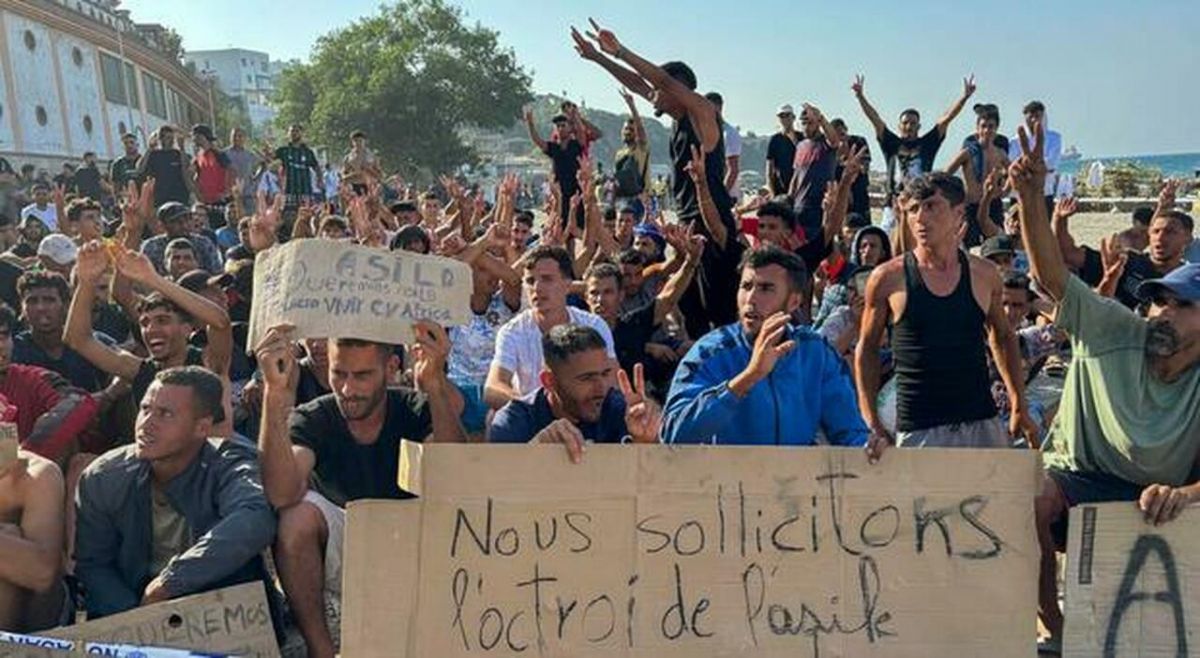
Ceuta, il governo valuta proroga stop a Schengen per la Spagna. E l'Austria annuncia: «Trasferiti migranti in Italia»

Giorgia Meloni, in alliance with Greece, Cyprus, and Malta, faces the pressures from Northern countries, such as Germany and Switzerland, which threaten to send migrants back to Italy, while a diplomatic mediation on the issue of Dubliners and immigration management is being sought. (translated)

Migranti, l?alleanza di Meloni con Grecia, Cipro e Malta contro i ?rigoristi? del Nord
ANSA.it 1w

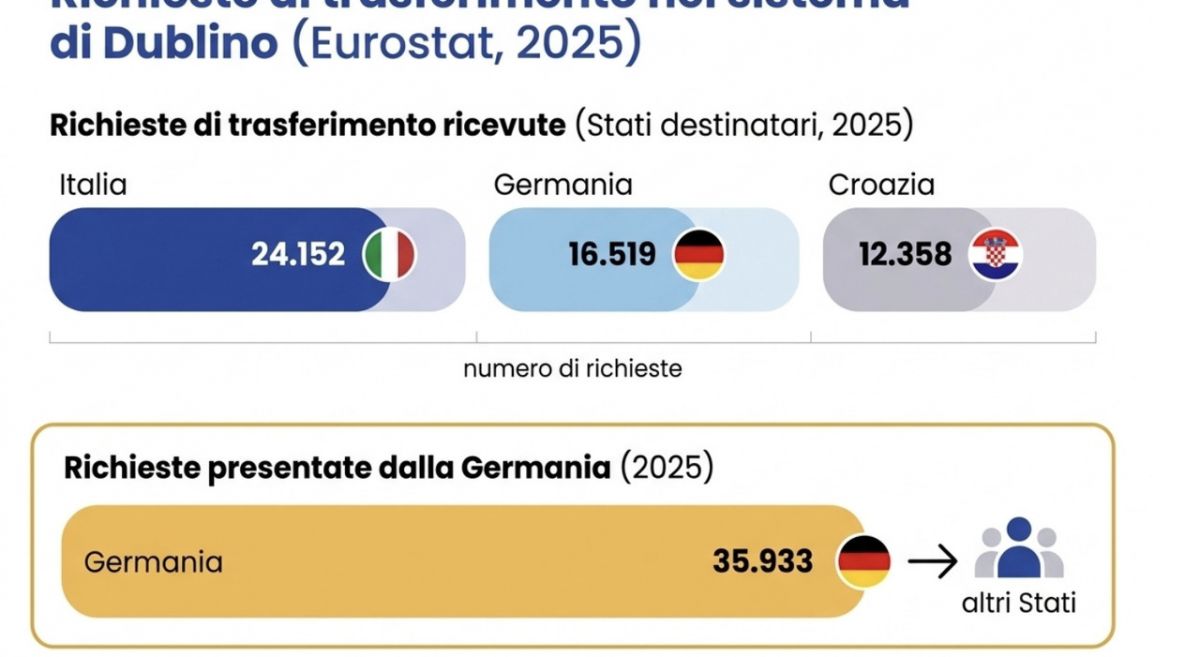
'Dubliners' are asylum seekers who, after applying in the first European country where they were identified according to the Dublin II Regulation, migrate to another country to submit a new application, but must be returned to the first reception country, with Italy recording the highest number of requested transfers and a current conflict with Germany regarding the interpretation of the new rules on the relocation of migrants. (translated)

Chi sono i 'dublinanti', i numeri e le regole

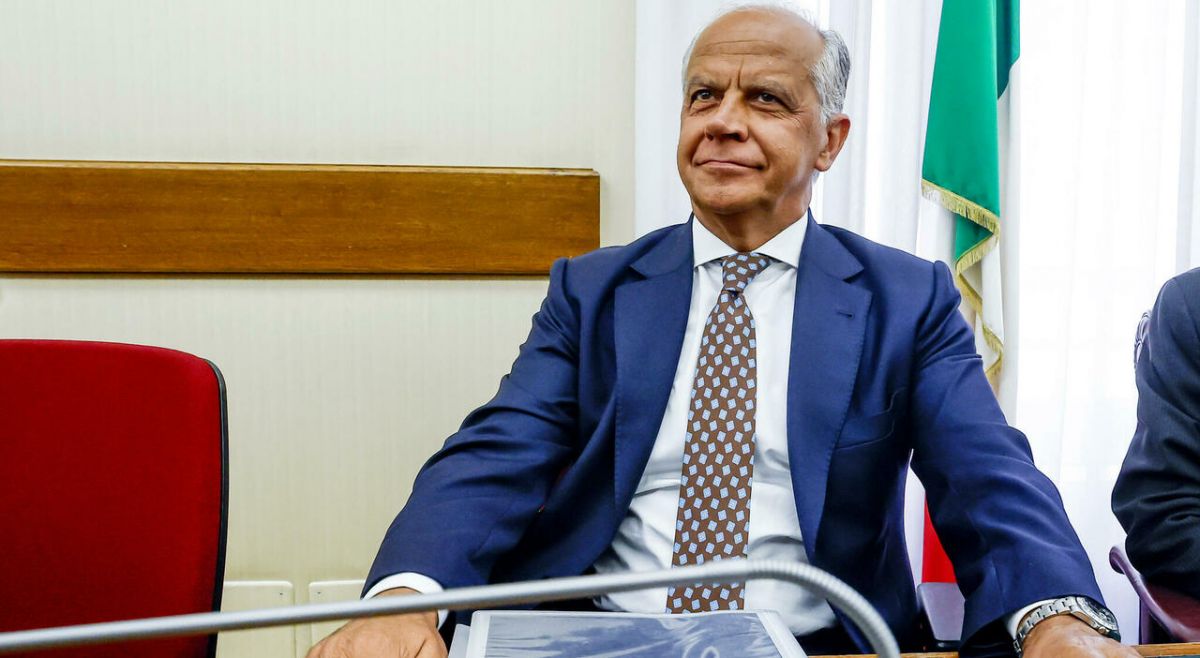
The Italian government, through a letter signed by Interior Minister Matteo Piantedosi, has informed the German government of Friedrich Merz that it will not accept the three designated Dublin migrants that Berlin intends to send back to Rome, citing current instability and excessive migratory pressure as reasons for its decision. (translated)

Migranti, l'Italia scrive al governo Merz: «I dublinanti non possono essere riaccolti»

Germany has announced the expulsion of Dublin asylum seekers to Italy, as part of a bilateral agreement with Rome and Athens, sparking controversy over the management of the migration crisis and the lack of solidarity from the Italian government towards Spain. (translated)

Germania: “Sorpresi dal clamore per l’espulsione dei Dublinanti verso l’Italia. Fa parte dell’accordo con Roma”
ANSA.it 3w

Germany, after Italy and Spain, has reactivated the transfers of migrants under the new Immigration Pact, amid growing internal political pressure and concerns about the further advance of the far right, while Italy considers the returns of 'Dubliners' who arrived before June 12, 2026, to be reset and is requesting compensation for migrants disembarked by German NGOs. (translated)

Linea dura di Berlino sui respingimenti. Roma: 'Nessuno da riprendere'
ANSA.it 3w

Germany, following the crisis in Ceuta, has reaffirmed the need to implement the new Pact on Migration and Asylum, requesting the return of 'Dubliners' migrants from Italy and Greece, further complicating the situation for the Italian government led by Giorgia Meloni, while the European Commission closely monitors migration dynamics and the upcoming elections in various member countries. (translated)

La linea dura di Berlino, verso i respingimenti in Italia e Grecia